Showing posts with label homosexuality. Show all posts

Monday, 13 April 2026

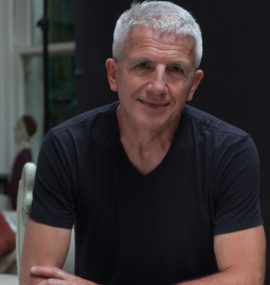
LOVE LANE by Patrick Gale, reviewed by Linda Newbery


"Harry is such an endearing character and his story so quietly compelling that I'm sure many readers will want to seek out or revisit his earlier incarnation in A Place Called Winter."


Linda Newbery edits Writers Review. Her latest novel is The One True Thing; her second for Writers Review Publishing, The Hide, will appear later this year.

It's twelve years since readers were introduced to Harry Cane in A Place Called Winter, a novel based on the experiences of Patrick Gale's great grandfather. Caught out in a scandalous affair with a male dancer, Harry leaves wife and baby to seek a new life in Canada. After many threats, trials and hardships, he finds a happy relationship with neighbouring farmer Paul, after first believing that he's been killed in the Great War.

As with all Patrick Gale's work, Love Lane welcomes readers to its pages with warmth and empathy. Although it's not essential to have read the first novel, we pick up Harry's story years later. First he suffers the hurt of seeing his lover marry a woman for the sake of respectability; then, when Paul dies unexpectedly, Harry is manipulated / blackmailed by Paul's stepson into parting with the house and land he's devoted years to, for far less than they're worth. Rootless, and prompted by a letter from his daughter Betty, Harry sails back to England to reunite with family members in Liverpool and Wakefield.

We're now in 1950s England in the company of characters based on the author's grandparents and parents. From these perspectives we see Harry as much older: a scruffy elderly man with meagre possessions who must be accommodated, entertained or tolerated, his future uncertain. Betty's husband Terry is a prison governor with little time for visiting relatives, in one episode deeply preoccupied with preparations for a double execution by hanging of two men in their twenties. The burden of supervising the deaths of these young men whose guilt is far from certain weighs heavily on Terry, yet he's contemptuous of men sent to prison for homosexuality and aghast when he realises that Harry, as described by his sister-in-law, is 'a sexual deviant of the Oscar Wilde sort. Not at all someone I'd consider safe around grandchildren.' 

Loneliness, repression and misunderstanding form a pattern; Harry isn't the only male character to conceal his sexuality. We experience the disappointment of compromise not only from the men but from the women they partner. The sad fate of an affectionate but huge and hungry (at a time of rationing) Pyrenean mountain dog seems to echo these unsatisfactory human accommodations. Throughout, in the background of various family groupings, Harry demonstrates a quiet empathy, often intuiting what others are feeling, or concealing - particularly with his troubled granddaughter, Whistle. But he knows he is in the way; how and where will he spend his remaining years? Several poignant surprises and developments keep us anxious for him until the end. 

As in the novel that preceded this, Mother's Boy, Patrick Gale is adept at conveying the demands and rituals of domestic life of the period: removing stains from clothing with Omo, the novelty of television, making the most of rations, recommending a meal of mashed brains to nourish an ailing baby. Harry is such an endearing character and his story so quietly compelling that I'm sure many readers will want to seek out or revisit his earlier incarnation in A Place Called Winter.

Love Lane is published by Tinder Press.

See also:

Q&A with Patrick about Mother's Boy

Take Nothing With You reviewed by Linda Newbery

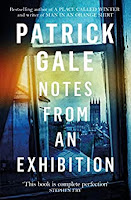
Notes from an Exhibition reviewed by Julia Jarman

Monday, 14 October 2024

MODERN NATURE by Derek Jarman, reviewed by Linda Newbery


"The New York Times described his film The Garden as 'a peculiar blend of reflectiveness and fury', which could apply equally well to this journal."

Linda Newbery
edits Writers Review.

"I have re-discovered my boredom here," Derek Jarman writes, finding at Prospect Cottage, his Dungeness home, an escape from the celebrity he earned through his films and his activism. "All around the traps were set. Traps of notoriety and expectation, of collaboration and commerce, of fame and fortune. At first a welcome trickle, something new. Then a raging flood of repetition, endless questions that eroded and submerged my work, and life itself. But now I have re-discovered boredom, where I can fight 'what next' with nothing."

Well, not exactly nothing. Beginning after Jarman's diagnosis as HIV positive (which gave, at that time, a grim outlook) his 1989-90 journal conveys a time filled with interviews, film projects and visits to London exhibitions and social events, interspersed with the making of his iconic Dungeness garden, constantly planting, propagating and making sculptures from objects found on the shore. The contrasts are stark, moving from the many demands on him in London to the quieter, reflective times at Dungeness. He writes of  "the separation of my two lives ...  work here (in London), sunsets and sunrises there." Always in the background is his sorrow at the death of friends from AIDS and the foreboding of his own, which by the end of the journal seems close, although he lived for another three and a half years, regaining enough health and energy to film Edward II, Wittgenstein and Blue.

Having visited Prospect Cottage and somewhat fallen under the strange spell of Dungeness, its flat horizons, big sky and sparse vegetation, I found that these sections appealed to me most, beautifully evoking that distinctive terrain with the nuclear power station looming in the background. "There are no walls or fences. My garden's boundaries are the horizon," he writes, and of the night sky: "So flat is the Ness that those stars that lie at the horizon touch your very feet and the moon tips the waves with silver ... The nuclear power station is an ocean liner moored in the firmament, ablaze with light: white, yellow, ruby." Both my visits have been in calm July sunshine; the place must be very different in harsh winter weather. Once in this memoir Jarman feared that the cottage roof would be torn off in a gale, while on another occasion a lightning strike at the power station sent him and other residents into a panic, rushing to pack for a hasty evacuation (which, fortunately, wasn't needed).

Derek Jarman is an engaging diarist, full of contradictions and charm. The boldly unconventional film-maker, rebellious activist and one of the first public figures to be open about his HIV diagnosis expresses a wistfulness for pre-decimal coinage and describes himself as too shy to try on clothes in shops; as a student at King's College in London he felt "frightened and confused," convinced that he was the only gay in the world. Almost every writer or artist will identify with the self-doubt he experiences: "All the way back on the train I was plagued with misgivings about The Garden. Looking at the rushes over the last six days, I discovered not one sequence that worked. Glaring faults everywhere ..." At the same time he feels a compulsion to write. "I find it difficult to write each day, but if I don't I'm swamped with guilt. Where does the compunction come from?" So strong was it that even when he temporarily lost his sight while being treated in hospital he dictated his journal entries to his devoted companion Keith Collins (referred to by his nickname HB in the book). 

Those us who were around in the 80s may remember how the AIDS epidemic was viewed by some who saw it as a punishment for homosexuals. "Last week a doctor in the mainstream of research with a leading drug company said that looking for drugs to combat the virus and to prolong the lives of those already infected posed an ethical problem, as keeping them (read me here) alive only exacerbated the situation. Better we should all die quickly. Every day, in many little ways, we are subjected to this terrorism. Our relationships unsanctioned, beyond the law." No wonder there is always anger simmering beneath the surface of Jarman's writing.

As it's a journal, events are understandably related without context, which can sometimes confuse the reader with a great many names, places, and visits whose purpose is unclear. Interspersed with these almost daily records are reminiscences from his childhood, spent in various countries with the RAF father with whom he had a difficult relationship. But it was early in childhood that his fascination with plants and gardening began: at four his parents gave him an illustrated Edwardian book, Beautiful Flowers and How to Grow Them, an unusual gift for so young a child but one which provided a lasting influence: "Flowers spring up and entwine themselves like bindweed along the footpaths of my childhood." The early part of Modern Nature refers constantly to plants in folklore, in herbalism, in classical literature. "If fate had turned out different," he writes, "I am sure I would have been a professional gardener, rather than an enthusiastic amateur."

In between making videos for the Pet Shop Boys, filming The Garden, beginning to research Edward II and frequently staying at his London flat, he spends his time at Prospect Cottage walking the shores of the Ness, collecting and arranging the driftwood, stones and found objects which give his garden its unique character. He reports constantly on the progress of his seedlings and cuttings. Even at his lowest, when friends' deaths are reported with horrible frequency, he finds solace in his plants. "I plant my herbal garden as a panacea, read up on all the aches and pains that plants will cure - and know they are not going to help. The garden as pharmacopeia has failed. Yet there is a thrill in watching the plants spring up that gives me hope."   

The New York Times described his film The Garden as 'a peculiar blend of reflectiveness and fury', which could apply just as well to this journal.


Modern Nature is published by Vintage.


Derek Jarman photograph from Wiki Commons. Others by Linda Newbery.

For more of Linda's nature and garden writing choices, see:


Walden by Henry David Thoreau

The Flow by Amy-Jane Beer


Monday, 19 August 2024

Q&A: Jane Rogers interviews Lesley Glaister about her new novel, A PARTICULAR MAN


"I always like to be utterly certain of each character’s motivation at any one time – even if they aren’t sure of it themselves ..."

Lesley Glaister has written numerous novels, as well as short stories, drama and poetry. Alongside her writing she has worked as a tutor and mentor in Creative Writing in settings ranging from Crete to The University of St Andrews. Her most recent novel, A Particular Man, is set in the 1940s, and looks at love, marriage and sexuality in the post-war period. Find out more on her website.

Jane Rogers: Congratulations on your 14th (??) novel, Lesley! It’s a completely engrossing read, and your characters continue to haunt me, especially Starling and Aida, that unlikely couple who almost certainly will not live happily ever after.

My first question is probably foolish, but I found myself puzzling over whether the ‘particular man’ of the title was Starling, or the absent Edgar?

Lesley Glaister: Thank you, Jane. It’s my 16th or 17th novel, depending on whether you count my YA novel, Aphra’s Child. The title: A Particular Man, came late. I had several other working titles including A Hole in the Corner Affair – but no-one else seemed to like that!  A Particular Man jumped into my mind while I was washing up one evening and it immediately felt right. It has both the meanings that you suggest. Starling is a particular man, of course, and he’s the particular man Aida falls in love with. But in a larger sense, the particular man who drives the whole dynamic of the novel is the absent Edgar.

JR: Speaking of Edgar - one of the things I love in the book is that everyone has their own story and secrets; Clem’s affair with famous artist Corin; Starling’s forbidden homosexual love for Edgar; Aida’s attraction to Starling which she tries to blot out by getting engaged to Neville. But the link between all the characters is Edgar, as son, as brother, as beloved comrade. And he is dead, and remains a total mystery. We have no idea if he returned Starling’s love, and even Starling doesn’t know. What made you decide to keep such a key character blank?

LG: Ha, good question! It wasn’t a decision. When I set out to write this novel, which has connections with Blasted Things, set twenty-five years earlier, I intended that Edgar, who was an infant in that novel, should be a central character. I kept trying to write scenes for him but he remained stubbornly inanimate. I couldn’t breathe life into him, or see him or hear him, and eventually I realised he was dead. For me writing is full of discoveries like this, rather than decisions. But I did decide to leave ambiguous the question of whether Starling’s love might have been requited if Edgar had lived. I think it would or might have been, but Edgar died so, like Starling, we will never know. 

JR: Your writing is wonderfully vivid, transporting the reader instantly into the scenes and characters’ feelings you describe. Here’s an example taken at random:

Aida hurries out of the hammering rain into the puddled shelter of St Pancras. As arranged, he’s waiting outside W H Smith, and her heart jerks like a bad dog on a lead.

How much revision does it take to achieve this kind of economy and joyous precision?

LG: Thank you! That is a huge compliment coming from a writer of your calibre. The honest answer is that those kind of similes and metaphors just seem to come naturally. Like many writers (and, of course, many people who aren’t writers) I tend to think in metaphor most of the time. Sometimes I drive myself mad with my habit of always thinking things are like this or that other thing. I have to work much harder at revising other elements of the narrative though: scenes where people have to move and act, dialogue, shifts through time etc. I always cut huge swathes in the editing process, and hone and sharpen scenes to try and rid them of any flab. I always like to be utterly certain of each character’s motivation at any one time – even if they aren’t sure of it themselves. 

JR: The novel is set in 1946 and also refers back to the war years and to the experiences of prisoners of war in Singapore. You don’t acknowledge any sources, but I’m guessing you did a huge amount of research, because the post-war world you conjure feels totally authentic. The menus are a particular delight (lobster mayonnaise and chocolate meringue!) and there are lots of details which are new to me, e.g. the choice of demob suits offered to ex-servicemen.  Can you tell us a bit about researching the background?

LG: One of my main sources was a box of family memorabilia. This includes photographs, letters, and artefacts relating to my father and his family. My dad was a Far East Prisoner of War in World War 2, a fact that was never spoken about in our family while he was alive. It was only after his death that I became fascinated both by his experience and the silence that surrounded it. In 1994 I wrote a novel called Easy Peasy, which is about that silence within a family.  At the time I did a fair amount of research, met a friend of my father from his time in Burma, read letters and newsletters written at the time. The tobacco tin of sketches in A Particular Man, was a real thing, though in real life it was a secret diary written on minute scraps of paper, also wrecked by a trapped ant. I find this idea very resonant. A letter from Edgar that Aida reads out loud to her mother is, in part, a letter that my father sent his mother when he was on his voyage to Singapore. There were also letters from my dad’s sister Kitty, who was killed during the Blitz and I was keeping her in mind for the character of Aida – though of course I never knew her.

As well as this family research, I also read reams of fiction set (and preferably written) during or shortly after the war as well as social histories. I watched films and TV documentaries and visited the Imperial War Museum. From all of these sources, I magpied away details of everyday life, such as those you mentioned, and the vocabulary of the times too. And of course I spent a lot of time Googling!

JR: I very much enjoyed the unsent letters from Aida to Starling. It’s a clever way of letting the reader into her thoughts. You also have Starling’s diary entries to reveal his inner feelings. But the larger part of the novel is written in the third person, from the restricted points of view of Aida, Starling and Clementine. How did you arrive at that writerly choice?

LG: Point of View is one of my obsessions and that close third person viewpoint is my favourite position from which to write. It means there is as little of the narrator showing as possible and all the narrative is filtered through the consciousness of the character in question. Sometimes, because of this restriction, it can be frustrating. For instance, I might think up just the right word, or image, but know that it wouldn’t be in the character’s vocabulary, or experience. With each novel I write I tend to wait for the first inklings of a voice to arrive. If it arrives in first person, I’ll go with that. The novel I’m writing at the moment, which spins off in an unusual direction from this one, is in the first person. One point of view I haven’t attempted yet is an omniscient third person – it simply looks too hard to control. I enjoyed using the first person for the letters and diaries and found it gave me extra insight into the characters of Starling and Aida. It was also a way of getting through a great deal of story in a reasonably economical way. 

 JR: How difficult was it to write using the point of view of a gay man in 1946?

LG: Oddly, I didn’t find it hard at all. I did a fair amount of reading including from a book called Curing Queers: Mental Nurses and Their Patients 1935-74 by Tommy Dickinson, which was excellent. I also did a lot of Googling and I was careful to run it past a gay male reader to ensure I hadn’t made any real howlers. 

 JR: And, leading on from that question, where do you stand on the whole vexed issue of appropriation? Do you think it’s OK for writers to write about people from different cultural/racial/social backgrounds to their own?

LG: Yes I do!  Of course, if a writer pretends to be something they’re not in order to write from a particular viewpoint, that’s wrong. If a writer writes cruelly or inaccurately or causes any hurt from their writing, that’s wrong too. But I can’t see why any human being can’t sensitively and intuitively try to enter into the experience of any other. Surely that’s part of what creative writing is about?

JR: I know this novel was originally slated to be published by Sandstone, and that Sandstone then went into receivership. Can you tell us about the bumpy road to publication?

LG: A miserable tale!  It’s so hard to get a novel published these days unless one is already a best-seller or a new writer on the brink of being discovered. For those of us that have published several (or many) novels, none of which have won a major prize, or been turned into a major movie (or maybe even if they have) publishers just aren’t interested. We are quite simply, out of fashion. This is true in my experience of the major traditional publishers, at least. Fortunately, there are smaller independent publishers – Sandstone was one – which work on a similar model but have more regard for quality rather than simply profitability. Sandstone published Blasted Things and I’d signed a contract with them for A Particular Man before they went into liquidation. I was left rather in the wilderness until Bloodhound came to my rescue. They differ from traditional publishers in being more focused on selling digital and audio copies than hard copies of books, though they do produce these too. I am very grateful that they have not only published A Particular Man but will also be reissuing Blasted Things later this year.

 JR: Finally – the limericks! They are great fun. Are they all your own work? I knew you were a poet, but I didn’t know you had a talent for limericks!

LG: They were fun to do. I sometimes think of limericks when I’m out walking my dog – it seems to suit the rhythm of my walking. Sometimes that rhythm drives me nuts. Most of the ones in the novel are my own, though one is adapted from someone else’s and the one that Peter quotes to Starling towards the end is, as he says, ‘an old chestnut’.

Thanks for these lovely questions. You have really made me think!

JR: Thank you for your generous answers, and for a fascinating novel! I think I like it even more now I know how closely it is based on your own family’s experiences. 

A Particular Man is published by Bloodhound Books.

Jane Rogers' review choices for Writers Review:

How the One Armed Sister Sweeps her House by Cherie Jones


Home Fire by Kamila Shamsie


The Great Derangement by Amitav Ghosh


On dramatising No Longer at Ease by Chinua Achebe


Jane's dramatisation of Clear Light of Day by Anita Desai, about one family's troubles during the partition of India in 1946, is currently on Radio 4. Listen here to the first of two parts.

Monday, 30 January 2023

Guest review by John Case: I AM NOT RAYMOND WALLACE by Sam Kenyon


"Sam Kenyon's stunning debut novel ... a beautifully written story of love, loss and redemption; a tale of the emotional costs we can so often suffer for failing to be true to our true selves ..."

Training initially as an actor, John Case spent his early 20s working in theatre in the UK, before moving into the Arts and Heritage Sector, working as a senior manager with Surrey County Council’s Cultural Service Department, covering Performing Arts, Libraries and Heritage. Since 2020 John has been the Festival Director of the Rye Arts Festival, one of the South-East’s largest multi-arts festival, held every September since 1971. John is now working on the establishment of an exciting new project - The Rye Bay Book Festival, which he hopes to launch in 2024.

‘It is Monday October 14th, 1963, Raymond is twenty-one years old, and by the time he leaves Manhattan a mere three months later, on January 8th, 1964, he will have made the greatest mistake of his life.’

So ends the first paragraph of Sam Kenyon’s stunning debut novel, spanning a 30 year period from Manhattan in the winter of 1963, a month before President Kennedy is assassinated, to Paris in 2003. It is a beautifully written story of love, loss and redemption; a tale of the emotional costs we can so often suffer for failing to be true to our true selves; of the role that parental pressure can exert throughout our lives, but it’s also a snapshot of the wider intolerance that existed in 1960s America towards homosexuality; a time when homosexuality was still considered by many to be a ‘disease’ that could, at best, be cured by the psychiatrist or by religious correction. A time when gay men were forced into a dangerous illicit underworld, where to gain entry to gay bars and clubs meant knowing that particular secret ‘knock’ on the door to gain entry, and where the danger of arrest or attack was ever present. It was also a time when the The New York Times could actively publish scaremongering articles about an homosexual epidemic spreading across America - ‘They’re sick, you know? The result of inadequate parenting; absent or detached fathers, overbearing mothers; lack of significant masculine figure in the household…”

Into this 1960s world comes Raymond Wallace, a virginal 21 year old, newly minted from Cambridge University, to work at the offices of  The New York Times on a three-month bursary, where he is assigned to work with top journalist Robert C. Doty (a real life figure, but in Kenyon’s novel Doty is fictionalised) to undertake research for a leading article about the ‘growth of overt homosexuality’ in New York city. Remember we are still four years away from the Sexual Offences Act 1967 in the UK which permitted homosexual acts between two consenting adults over the age of 21, and even further away from legalisation in the United States.

Raymond, encouraged by Doty to venture into the hidden underworld of the gay bars of Manhattan, meets the charismatic Joey Maniscalco, and quickly begins an intense relationship, a relationship that will last physically for a mere three months, but one that will resonate across a generation for the next thirty years.

The relationship between Raymond and Joey is liberating, joyful, loving and beautifully brought to life by Kenyon. Even the intimate sex scenes, which can so often be the downfall of many a writer, work well here, blending perfectly within the main narrative. Both these men will, in time, become famous - Joey, a free spirt, confident in his own sexuality, supported by his beloved Papa, possesses a rare singing talent, whilst Raymond, the ironic observer, the recorder of stories, will find fame as a writer. Kenyon is adept at creating fascinating believable characters - Joey’s relationship with his loving Papa contrasts with the intense controlling relationship Raymond himself has with his own mother, desperate to see her son live a stiflingly conventional life, and who is instrumental in Raymond’s decision to walk away from Joey and return to England, eventually marrying and having a son of his own called Joe.

The novel is divided into three parts - the first covers the intense relationship of Raymond and Joey over that winter of 1963/4, the second, epistolic in form, taking place 20 years later, are letters sent by Joey’s Papa to Raymond, and unsent letters by Raymond to Joey,. The third part, set in Paris, see’s Raymond’s son, Joe, seek out Joey, who has now become a world famous classical singer. The three separate parts and the range of characters and timescales demand a deft, accomplished writing style and Kenyon pulls this off admirably.

It is difficult to write about this book without giving too much away, and I don’t want to spoil the final part, so do grab a copy and read it. I’m pleased to say that despite a significant sadness that takes place, Kenyon does give us, and his characters, a happy ending, and happy endings are something that we all need, particularly right now!

Full praise to Nathan Evans and Justin David from that wonderful independent publisher, Inkandescent, for giving us Sam Kenyon’s novel. This book deserves a very wide audience, as its themes are universal, irrespective of sexuality.

I am not Raymond Wallace is published by Inkandescent.

Sam Kenyon is a writer, composer, performer and teacher. His most recent theatre work is Miss Littlewood exploring the life of Joan Littlewood, which opened at the RSC in 2018. Find out more from his website.

Inkandescent Publishers: website

Rye Arts Festival website

Monday, 21 March 2022

SPECIAL FEATURE: Q & A with guest Patrick Gale on his new novel MOTHER'S BOY


"This is really a novel about someone becoming a writer ... "

For this special feature we're honoured to welcome Patrick Gale, an author whose new books we always look forward to - and this is one we particularly admire. Thanks so much to Patrick for answering our questions.

Photograph by Jillian Edelstein
From the best-selling author of A Place Called Winter comes Mother's Boy, a superb historical novel of Cornwall, class, desire and two world wars.

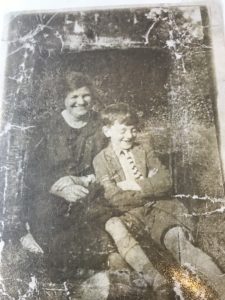
Laura, an impoverished Cornish girl, meets her husband when they are both in service in Teignmouth in 1916. They have a baby, Charles, but Laura's husband returns home from the trenches a damaged man, already ill with the tuberculosis that will soon leave her a widow. In a small, class-obsessed town she raises her boy alone, working as a laundress and gradually becomes aware that he is some kind of genius.

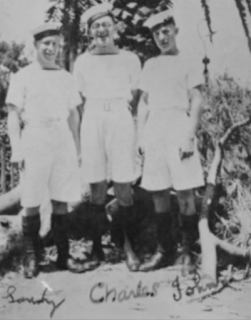
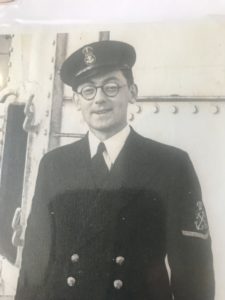
As an intensely private young man, Charles signs up for the navy with the new rank of coder. His escape from the tight, gossipy confines of Launceston to the colour and violence of war sees him blossom as he experiences not only the possibility of death, but the constant danger of a love that is as clandestine as his work.

Mother's Boy is the story of a man who is among yet apart from his fellows, in thrall to yet at a distance from his own mother; a man being shaped for a long, remarkable and revered life spent hiding in plain sight. But it is equally the story of the dauntless mother who will continue to shield him long after the dangers of war are past.

Patrick Gale answers questions from Jon Appleton, Adèle Geras, Linda Newbery and Celia Rees


Celia: What attracted you to Charles Causley as the focus for a novel?

Patrick:  He intrigued me. I loved the poems, in particular the ones which snatches of narrative which show a novelist’s gift for thumbnail characterisation or the ones which are downright spooky in what they suggest but don’t quite spell out. I wanted to piece together myself what shaped the man who wrote them. Whenever he was asked why he didn’t write his memoirs he answered that “it” was all in the poems. So in large part what this novel does is to go back to the poems in search of “it”.

Jon
: Could you have told Charles’s story without his mother Laura’s?

Patrick: I could but the danger then would have been that he’d have become even more chilly than he already is and she would have been reduced to his view of her, and early in life, at least, his view of her could be both patronising and dismissive. Also I found the challenge of telling such a private woman’s story utterly addictive, and not just because I’m a laundry obsessive…

Adèle:  Laura is an astonishing creation. Did you speak to many people who knew her?

Patrick:  Only one or two, and they only knew her as children. I largely got to know her through the numerous, often rather crotchety glimpses Charles gives of her in his tiny, scribbled diaries. And I extrapolated her from his poetry. Having been raised largely by her alone he must have drawn much of his nature and voice from hers, so I trusted in that. And then read up on things like nursing TB patients, and doing laundry by hand.  

Linda:  Did you immediately decide on the structure (alternating between Laura and Charles) before you began the novel, or did that solidify through the writing?

Patrick:  I’d settled on it from the start. This was partly because I always need a few unanswered questions to energise my fiction and the more I saw of Laura, in old photographs, the more I needed to know who she was. But it was equally because the more I found out of Charles’ character – which in many ways was chillingly like that of an expert spy, different things to different people but withholding his essential self from all – the more I realised I’d need to balance his story out with one that was warmer and kinder, more approachable.

Celia:  Were there details of his life that you had to change/add/ supply? How much did you find yourself deviating from his actual life?

Patrick:  I deviate very little from the established facts. I made Laura’s employers unmarried siblings, because that appealed more than the wealthy family of drapers who she actually worked for, but the accident with the boy and the cart that opens the novel actually happened to the Teignmouth doctor Charlie worked for. Beyond the two ships he was on, and the two “ stone frigates” where he also worked, Charles’ war story is largely cloaked in official secrecy so I was able to play with the facts to ensure that he and Ginger went to Malta on the incredible operation immortalised in C S Forester’s The Ship. The trips to Liverpool Playhouse are extrapolated from theatre programmes he’d retained from that period and the affair with a fellow officer is extrapolated from a letter he kept all his life, whose wording I barely alter. Laura’s adventures are made up in their details but she did have evacuees live with her, a black GI was murdered in just the way I describe and POWs did indeed construct a playground right outside her cottage on Tredydon Road. The dogs Jack and Wang were real but the kitten at the end is a simple prefiguring of the several cats in which Charles measured out the rest of his life.

Jon:  Do you think you’ve given Charles Causley a sexuality in the book or coaxed out – or simply given voice to – what was already there?

Patrick:  I was painfully aware of the temptation simply to “gay” Charles, to claim him for my team so I resisted it at every turn by trying to remain truthful to what he confided in his secret, minutely written diaries. These give a powerful sense of a young man who doesn’t fit the accepted mould of manhood, who knows himself to be special or different and who flinches from the sexual expressions of those around him. Then I found a letter he had kept to his dying day which I believe is proof that he had some kind of affair with a fellow officer when stationed at HMS Cabbala, one of those chilling “we need to put all that behind us now” letters probably all too common between men in the 40s and 50s. I will still correct anyone who says Charles was gay, as I think that word implies an acceptance of a sexual identity and, whatever fulfilment he may have found on British Council tours later in life, there’s no evidence that Charles ever arrived at such a self-acceptance.

Jon:  From Rough Music on, the dynamics of mother-son relationships have featured prominently in your novels. There’s a very strong sense in Mother’s Boy that Charles and Laura’s relationship isn’t instead of a marriage but a sexless marriage itself. Is this something you’ve noticed in families you’ve encountered, or was it specific to the Causleys?

Patrick:  
I’ve always been interested in what happens to sexuality when it’s denied natural expression. I think what grows between the Causleys is little different to what happens not just to widows and widowers but to nuns, priests, schoolteachers or anyone put in a position where sexuality is safest left unexpressed. The cliché is that it results in something warped or bad; the truth is that it often results in creative energy. I’m sure we can all think of at least one transformative teacher we had who never married…

Adèle:  Speaking as someone who’s also written a novel about a real person, I’m curious to know if there are any lines you felt you shouldn’t cross? What effect do you think any boundaries you may have set had on the novel?

Patrick:  Scary, isn’t it? I’m still nervous that Mother’s Boy will give offence. So many men and women are powerfully protective of Charles and his memory! My main rule was that I knew I was never going to flesh out the characters of anyone with living descendants, which is why Laura’s numerous siblings barely figure. I also knew I had to honour the known facts, however inconvenient. But it was always a novel, never a biography, so I felt free to combine Charles’ real boyhood and wartime friends into totally fictitious amalgams and to ensure that his tragically doomed ship (in real life HMS Eclipse not my HMS Starburst) played a small but heroic part in the incredible operation to break the siege of Malta.  

Adèle:  You live in Cornwall and one of the striking things about the book is the way you bring places to life. Launceston, Laura’s house, ships etc. Did you walk through all the places you describe? Would you ever write about a place you’d never been to?

Patrick:  Place is crucial to the way I write. Once I’ve settled on a setting for a book I have to go there and immerse myself because I know it’ll become a character in the book. I already knew Launceston well, from my first ten years in Cornwall, when it was just up the road from my house, but to see it through Charles and Laura’s eyes I was lucky to spend a week living in their little house, Cyprus Well, taking daily walks they’d have walked, and working to imagine the bustling industrial town it once was. I’ve never had the sense to set a novel in the Caribbean or Venice or wherever. This novel involved a research weekend in Skegness and my next one will immerse me in Liverpool and Durham!

Jon:  As a British novelist who began work in the late 20th century, do you think it was inevitable that you’d write about the experience of war? (In the way you simply had to write The Facts of Life in the oppressive mid-90s.) Do you even believe in inevitabilities when it comes to writers’ trajectories or inspirations?

Patrick:  I turned sixty in January, which places me squarely in the generation that grew up with bombsites and air raid shelters still very much in evidence. Our parents’ attitudes were so shaped by the direct experience of world war that inevitably that shaped us too. But I didn’t set out to write a war novel; I set out to explore what made Charles and Laura tick, and it rapidly became clear that two world wars were going to form a big part of their story. But I think these things are often accidental in writers’ lives. An idea will just catch and refuse to be shaken off. I’ve promised that my next novel is a sequel to A Place Called Winter, and it is, but I’m realising it’s actually a novel about my mother and grandmother and their marriages.

Linda: 
 All the detail of naval training and life seems so convincing. How did you immerse yourself in that?

Patrick:  It was very hard as I was never one of nature’s war comic readers or war film watchers. But I ended up using that, realising that Charles wasn’t remotely in his comfort zone either when he shipped out on Eclipse. From his diaries I knew the books he was reading, I knew he was a swot and would have swotted up on how to be a sailor. I spent time in Gibraltar and Malta tracking where he’d have gone and what he’d have experienced. The hardest part was the coding, as that part of the war story was kept so obsessively secret for so long that physical material relating to it hard to come by, even in the Imperial War Museum archives. Happily these contain a few relevant bits of recorded testimony from old men recalling their coding training which I could combine with surviving manuals and wonderful details from Charles’ unfinished wartime novel.

Jon:  I can’t imagine a Gale novel without music being described in a visceral way – but what was it like to write about a writer?

Patrick:  I think I cheat a bit in that this is really a novel about someone becoming a writer. For much of the period described, Charles was primarily a musician, which gave me a crucial way into understanding him. He went to war a playwright and returned a poet, and I think that transformation was partly down to the interplay of his rigorous coding training with his earlier training as a pianist.

Adèle:  The book reads as though it cost you no effort at all but just poured on to the page like a spring gushing from the rock. How much rewriting/ editing do you do?

Patrick:  You’re very kind! I do an awful lot of mental churning around and notetaking and try not to start writing the actual text until I’m really clear who my characters are and what their stories are going to be. In this case I benefited from the amazing, if relatively sparse, Causley archive held at Exeter University and spent a lot of time reading through that and trying to join the gaps. The challenge then was to decide both whether there was enough “story” for Laura to balance out Charles’ adventures, and to decide where the novel should end. From there on the process has always felt to be one of painstaking accuracy rather than one of making things up. Very early on I realised that what I was doing was inspired by his poem Angel Hill and seeking to unlock whatever story lay behind its writing and that gave me a great momentum.

Linda:   Now that you’ve finished writing the novel, have the real and fictional Charles Causleys merged in your mind, or do you see them as two separate characters?

Patrick:  I fear they may have done a bit. The same happened with my great grandfather when I turned him into the hero of  A Place Called Winter. The difference here is that we have this incredible body of poetry (and some wonderfully atmospheric prose) left by Charles along with recordings of his voice and I ventriloquised that to such an extent that I’m now having to make a big effort to remind myself what I made up.

Linda:  Do you find yourself thinking differently about his poems now that you’ve been inside his head, as it were?

Patrick:  I don’t, but only because his poems were my constant guide as to who he was. I had a lot of fun not fleshing them out, exactly, but lifting names and scenes and places from them in ways I hope will reward readers who already know them well. His unfinished novel about his time on Gibraltar, his naval short stories and his numerous autobiographical prose sketches are so vivid that at times I almost felt I was taking dictation and not making things up at all.

Linda:  I am struck by the ending of Eden Rock. Do you think Causley is referring to the distance between him and his parents as one brought about by time and death? Or do you think he is regretful that he could never have (or never allowed himself to have) such a close relationship with another person?

Patrick:  Eden Rock is a masterpiece, I think, because it packs so much into so few lines. I believe it was inspired by that moment that comes to us all when our parents have died and we sense most of our life is behind us. He has a sense of his own looming death and of how seductive it is then flinches because he’s not yet ready. But buried inside there is also, I think, the strange dichotomy of the only child – at once confident that they are loved and yet forever left on the emotional sidelines by the love their parents have for one another. Several women of his generation have insisted to me that Charles longed for a family of his own. They say that, irrationally, as though such a longing would be quite alien to a man who also longed for the love of another man . I’m sure he longed for a family because it’s natural to want to belong and a family is a concrete proof of fitting in whereas, whatever his sexuality may have been, he remained always on the edge of things, on the outside looking in.

Celia: What do you think Charles Causley would have made of his fictional self?

Patrick: I think he’d have been appalled. As would Laura. They were both deeply private people who didn’t put themselves forward. I hope he could see, though, that it’s a book driven by affection and admiration and from a desire that more people should visit Launceston and seek out the amazing work he left behind him there.

Celia: How much of the novel is Charles Causley, how much Patrick Gale?

Patrick:  That’s very hard to answer, so I won’t even try!


Adèle: Will there be another book about Charles? He lived to be very old.

Patrick:  Not from me, although he cries out for a scholarly, critical biography which has yet to be written. He needs a Hermione Lee! He lived to be very old but I have a powerful sense that he was a man who created a public persona behind which he could remain intensely private and in a way my job here is done if I’ve managed to suggest what he felt that persona was necessary and what the events were that led to its construction. I’ll be very happy if it simply leads new readers to his poetry, where they can make their own minds up about who he was.

Mother's Boy is published by Tinder Press.

See also: Notes from an Exhibition reviewed by Julia Jarman


Take Nothing With You reviewed by Linda Newbery


Monday, 24 June 2019

Guest review by Jon Appleton: AN HONEST MAN by Ben Fergusson


"For me, the closest parallel is a Stephen Poliakoff drama. Fergusson’s novels have all that wit, elegance and attention to detail."


Jon Appleton is a freelance writer and editor based in London.

‘The whole world had become unstable, the things that I believed, however laughable it may seem, to be permanent – my girlfriend, my friends, my family, my understanding of myself – had begun to shift. And I had the uneasy feeling that I was just old enough to see these things shifting for the first time, a snapshot of a much longer cycle, a split second in the inestimable history of my own deep time.’

It’s a moment that startles practically every eighteen-year-old, but the voice here is Ralf Dörsam’s, looking midway through his account of his summer in West Berlin, in 1989, living with his respectable parents and goofy younger brother, awaiting the results of exams that will send him to England – his mother’s birthplace – to study geology.

By now, we know he’s living through the Cold War and that the Berlin Wall will fall before his narrative ends. We know he is a parent and has married – but to whom? It’s a question that propels us through this exceptional thriller that’s as much about love as espionage.

An Honest Man is Ben Fergusson’s third novel, following the award-winning The Spring of Kasper Meier and The Other Hoffman Sister. His subject is Berlin, his adopted home, and he sets his novels at different periods of time, in the same house, Windscheidstrasse 53: a nineteenth-century apartment block which bears the scars of war but thrums with the complex, ambiguous relationships of its current inhabitants.

The story starts with Ralf idling his time away with his close group of friends – Stefan, Petra and his girlfriend Maike. It’s the kind of friendship group that thrives on shared interests – they make geeky field trips out into the forests around Berlin studying the natural world – as much as compatibility or attraction. It’s difficult to hide in such a close group, as Ralf finds when he is lured away by his fascination – and growing love – for Oz, a slightly older man, who has begun making a habit of parking his green Mercedes outside Windscheidstrasse 53, watching. Ralf wants to know why.

In Berlin in 1989 suspicion is everywhere and Ralf has form. A childish spy game for Stefan offered Ralf the chance to indulge in his one-sided obsession with his neighbour Tobias. But then Oz reveals his true intent: beneath his cover of a ‘brown-skinned newsagent’s son’, he works in surveillance. He believes that Tobias might be an agent for the East German government. Will Ralf help Oz prove Tobias’s guilt? Of course he’ll do it for love.

Once Ralf starts watching in earnest, so much else is revealed to him, including things about his own family which equip him with the power to destroy it. He gains the capacity to destroy his relationships and himself – will he go to university or stay in Berlin? Will he give up on Maike or will he choose Oz? Or will the choice be taken away from him? His life is unravelling just at the point where tensions all round – amid his own personal circle and the wider political sphere – are tightening. His own safety and security are compromised.

Beautifully done, An Honest Man is exciting, often funny, truthful and enlightening. The fact that Ralf is a geologist is no coincidence – it’s as if millions of years of seismic changes in the make-up of the earth happen to him over a period of weeks. Meticulously researched, it’s full of colour – here’s the food, clothes, TV, etc., of West and East Berlin thirty years ago. It’s a sparky flashback for fans of Deutschland 83 or 86. For me, however, the closest parallel is a Stephen Poliakoff drama. Fergusson’s novels have all that wit, elegance and attention to detail. Like Poliakoff, he celebrates maverick – or subversive or even deviant – behaviour in outwardly unassuming people.

But then, as Ralf painfully learns, once you realise your bedrock, your family, is just like everyone else’s, certainly no better, then you have to follow your heart wherever it leads. In turbulent times the pursuit of honesty might be the only way through.

An Honest Man is published by Little, Brown.

Monday, 17 July 2017

Guest review by Keren David: FAMILY SECRETS: LIVING WITH SHAME FROM THE VICTORIANS TO THE PRESENT DAY


"If you love watching Long Lost Family or Who Do You Think You Are? then this book is for you."


Keren David is the author of eight novels for Young Adults; she is also Features Editor for the Jewish Chronicle. Her latest book is The Liar's Handbook (Barrington Stoke)


There are some works of non-fiction that help and inspire me when I’m writing one book in particular. For my latest I've been reading books about Canadian life in the 1900s, and very interesting they have proved.

But there are other books which provide enlightenment and underpinning for almost everything I write. Deborah Cohen’s marvellous Family Secrets: Living with Shame from the Victorians to the Present Day is most definitely in the latter category and I commend it to any writer whose subject matter involves families, secrets, lies, shame or privacy; that is, very many of us.

Cohen examines areas of family life which have involved secrecy and shame, particularly in the twentieth century and examines social attitudes towards them. Adoption, homosexuality, learning and physical disabilities, race, domestic violence, incest and illegitimacy are all covered, as well as the prevailing attitudes towards secrecy itself, as society moved towards today’s confessional culture. Cohen tells the story of what happens within the family, a change from the usual accounts of social change which focus on protest movements and changes in the law.

To tell those stories she has looked at family letters and diaries, the files of adoption agencies and institutions for the mentally handicapped, the records of marriage counsellors and the divorce court. Just reading about her research (“In Edinburgh, staff had to cut the plastic bands strapped tightly around marriage-counselling files from the 1940s and 1950s before I could begin my research”) gives me a frisson of excitement. The curiosity, that need to know more and understand people better which fuels many a journalist or novelist (I am both), is very well satisfied in this book. It also helps place the current fascination for revealing more and more Love Island-style in a narrative starting in the teeming Victorian tenements where privacy was a luxury that the poor could not afford.

The book starts with a sentence that could come from a novel: “Celia Ward was resourceful and she was desperate.” Celia and her husband wanted to adopt a baby, and in 1920 she felt it had to be as secret as possible. She stayed in a nursing home for a month, pretending to have given birth, and told everyone that the child was her own. If you love watching Long Lost Family, or Who Do You Think You Are? then this book is for you, it puts many such stories in context, leaving enough to the imagination that to read just one chapter provides a writer with a fertile river of ideas to develop.

“There are an infinite number of stories to tell about families, for they are all famously unhappy (and perhaps also happy) in their own ways…” says Cohen, “Writing about the families of the past is an enterprise that necessarily balances the universal and the particular, for the emotions that families call forth (love as well as hate, the warmth of protection and the struggle against dependence) are uncannily familiar - whether considered from the standpoint of legal frameworks, social structures or the brute facts of demography - has often changed utterly.”

Her book made me reflect on my own family’s twentieth century secrets ; the ones I know about anyway, which include one great uncle in a mental asylum, another who was homosexual, and another uncle who disappeared from our lives when I was six, and then reappeared again when I was 14. My husband’s genealogical researches likewise turned up lies about a marriage and a great-aunt who died in a poorhouse. And when I wrote books about adoption and bisexuality, Cohen’s research and insights were invaluable; I can’t recommend it highly enough. And I will be reading it yet again this summer.

Family Secrets: Living with Shame from the Victorians to the Present Day is published in hardback by Viking, and in paperback by Penguin with the title Family Secrets: The Things we Tried to Hide