Showing posts with label protest. Show all posts

Monday, 2 February 2026

ETTA LEMON: The Woman who Saved the Birds by Tessa Boase, reviewed by Linda Newbery


'The RSPB was started by the determined efforts of four women ... but it was Etta's voice that spoke most clearly from the archives."

Photograph by Saira Archer
Linda Newbery
edits Writers Review. Her second novel for adults, The One True Thing, was published in 2025 as one of the launch titles for Writers Review Publishing. Her first adult novel, Quarter Past Two on a Wednesday Afternoon (in paperback as Missing Rose) was a Radio 2 Book Club Choice. In addition to her many fiction titles for young readers she has written This Book is Cruelty Free - Animals and Us, a guide to compassionate living for teenagers and adults. The Hide will be published this autumn. 

As I'm trying not to add to my already overflowing bookshelves, I attended Tessa Boase's event for Rye Arts Festival in September with no intention of buying Etta Lemon. But the talk was so packed, informative and entertaining that I couldn't resist, and bagged a copy before they'd all been snatched from the pile. 

As Tessa Boase points out, birdwatching - especially twitching - is still mainly the preserve of men. But the RSPB was started by the determined efforts of four women: Etta (Margaretta) Lemon, Emily Williamson, Eliza Brightwen and Eliza Phillips, names known to only a small fraction of the million-plus members of what's now one of our largest conservation bodies. Of the four, Boase says, it was always Etta's voice that spoke most clearly from the archives. Yet when she began her research, there was 'not a plaque, not a portrait at headquarters, not a mention in the canon .. It was as if (Etta Lemon) had been completely erased from the conservation narrative.' Part of Boase's achievement has been to right that wrong. Etta now has not only her plaque, and a portrait at RSPB headquarters, but this compelling tribute, too.

The trade in plumage, skins and entire birds in the late 19th and early 20th centuries was horrific, not only because it depended on the mass capture and slaughter of birds in many countries, but also because of harsh conditions for the workers involved in dyeing and tweaking feathers for the millinery industry - a labour force that included children. Millinery was certainly big business; in 1891, Boase records, there were 548 milliners in Greater London alone. Hats were adorned with feathers, wings (classed as 'novelties') and even whole birds; an illustration shows a grotesque hat with what appears to be three budgerigars flattened and fastened around it. 

It's widely known that the great crested grebe was driven to the verge of extinction by fashionable greed for its showy plumage. Whereas once ostrich plumes had been de rigeur, the choice widened alarmingly. Describing a plumage sale in London in 1888, Boase writes: "Here were birds by the shipload." The plumes of snowy egrets were much in demand: an undercover reporter noted that 16,000 packages of these were on sale, along with seven or eight thousand parrots, over 12,000 tiny hummingbirds and "several hundred each of Hawks, Owls, Gulls, Terns, Ducks, Ibises, Finches, Orioles ..." Horrible to contemplate, especially with our hindsight knowledge of the drastic decline in bird populations.

Noting the weekly parade of feathers in church each Sunday, Etta, in her late teens, began her campaign by writing individual letters to 'Feather Bedecked Women', soon joining the Fur, Fin and Feather Folk run by Eliza Phillips, a considerably older woman. The Society for the Protection of Birds was founded in Manchester by another campaigner, Emily Williamson, and began as an all-female group in which members signed a pledge not to wear feathers. These two groups - The Fur, Fin and Feather Folk and the SPB - were brought together by the RSPCA which then, as now, saw itself as a moderate pressure group, distancing itself from 'extremists'. The amalgamation of the two, with Etta as Honorary Secretary, attracted attention, allegiance and - crucially - donations. However, support from highly-placed women led to an exemption for feathers from so-called 'game' birds, the aristocracy not wishing to jeopardise its favoured occupation, field shooting. (Hmm, not much change there, then.) In 1904, with royal approval granted, the SPB became the RSPB.

Boase draws parallels between Etta Lemon and her contemporaries Emmeline Pankhurst and Millicent Fawcett, examining the various approaches to campaign strategies. The suffragettes, drawn mainly from well-heeled women, were highly fashion-conscious and publicity aware. To Etta's distress, bird plumage featured prominently on their headgear - just look at the photographs of suffragette marches - and certainly on the hats of Emmeline Pankhurst herself. (In fact this book was first published as Mrs Pankhurst's Purple Feather.) There are other ways, too, in which Etta Lemon's campaign was at odds with the suffrage campaign. It seems barely comprehensible to us now that there could have been an anti-suffrage counter-protest, led by women, yet Etta was one of its members. Ironically, as Boase points out, those women who led this faction were bold, articulate and determined - qualities which would have admirably fitted them for politics. 

Although it's taken so long for Etta's conservation work to be acknowledged, she was a public figure in other ways: she became lady mayoress in 1911 when her husband Frank was appointed mayor of Reigate, and during the First World War she took on the management of the Redhill War Hospital, for which she was awarded MBE. 

If it's hard to imagine nowadays that it could have been acceptable to use the feathers of a bird of paradise for adornment, consider one of the modern equivalents: the high status of reptile-skin bags sold by Hermès and other designers, including the iconic 'Birkin' bag. Apparently the singer and actress Jane Birkin wanted her name removed from the item when she learned that crocodiles and alligators were reared for the purpose in bleak conditions and horribly killed, but the name has stuck. If you should want one (though I hope you don't), be prepared to pay upwards of £450,000 - though the real price, of course, is in animal suffering. On the plus side, London Fashion Week declared itself fur-free from 2024, with a ban on wild animal skins too. A ban on the use of wild bird feathers is yet to come. Fashion has a way to go before it can be called cruelty-free, but fortunately there are plenty of latter-day Etta Lemons pushing for change. (Step forward, PETA - People for the Ethical Treatment of Animals, among other organisations.)

Tessa Boase is as engaging a writer as she is a speaker. Her book, an illuminating sweep of social history, illustrates the much-quoted maxim of the anthropologist Margaret Mead: “Never doubt that a small group of thoughtful, committed citizens can change the world. Indeed, it is the only thing that ever has.”

Etta Lemon: the Woman who Saved the Birds is published by Aurum

Linda Newbery's The One True Thing is published by Writers Review Publishing.


More bird-related reviews:

This Birding Life by Stephen Moss, reviewed by Nick Hodges


12 Birds to Save your Life - Nature's Lessons in Happiness by Charlie Corbett, reviewed by Linda Sargent


A Sweet Wild Note: what we hear when the birds sing by Richard Smyth, reviewed by Dawn Finch


Lost Animals, Disappearing Worlds - Stories of Extinctions by Barbara Allen, reviewed by Linda Newbery

Monday, 17 November 2025

SPECIAL FEATURE: Q&A with Sheena Wilkinson about her new novel MISS McVEY TAKES CHARGE


"I’m always keen to be historically accurate but of course Felicity, and to a lesser extent April, represent the more forward-thinking people of their time ..."

Miss McVey Takes Charge: Yorkshire,1936. April McVey is in charge of True Minds Marriage Bureau, trying to find happy futures for the lovelorn of Easterbridge, while the menace of fascism marches through the country.

After two years of matchmaking, she thinks she has seen it all. But when an old friend arrives from Ireland, with a broken heart that’s well beyond April’s experience, and then a young nun asks her to find a match for her lonely brother, the consequences are shattering.

And as political turmoil reaches their own community, will April have the courage to take charge and do the right thing?

Sheena answers questions from Linda Newbery.

Linda: First, congratulations! It's lovely to see this in print, with such an enticing cover. It'll be a treat for readers of Mrs Hart's Marriage Bureau, while for those who haven't yet read that, it'll surely send them to it. Did you already have a sequel in mind while you were finishing the first book?

Sheena: Yes and no! I wrote Mrs Hart’s Marriage Bureau as a standalone, but the acquiring editor at HarperCollins Ireland was very enthusiastic about its obvious series potential. Which got me thinking… So in my final edit I did drop in a few details I could pick up on for the sequel.

As it turned out, as is the way in publishing, that editor moved on and HarperCollins didn’t offer for the sequel next book because of what they termed ‘disappointing sales’ of Mrs Hart. But by then, encouraged by hundreds of reader reviews which asked for another story, I had written it! I couldn’t bear those readers not to get their sequel, and by then I had put a year’s hard work into it.

I had considered self-publishing but to be honest I was stalling, overwhelmed by what seemed the scariness of it, when Writers Review Publishing invited me on board. I was so thrilled! I was lucky enough to work with Michelle Griffin, the freelance editor who’d worked on Mrs Hart and so knew – and loved – the world, and with Niall McCormack, the illustrator who had designed four of my previous covers. He has a gorgeous style and a real understanding of the aesthetics of the period, and I adore what he’s done.

Linda: I like the way you show April and Felicity adjusting to their lives together - managing domestic and practical details as well as, in April's case, questioning Felicity's commitment. Did you find it tricky to strike the right balance between acceptance of same-sex relationships and giving a realistic impression of attitudes at that time?

Sheena: It was something to think very carefully about, but this is my seventh historical novel, albeit only my second for adults, so treading that line has become very natural. I’m always keen to be historically accurate but of course Felicity, and to a lesser extent April, represent the more forward-thinking people of their time. Because I have a range of characters it was easy enough to show a convincing spread of attitudes, not only about sexuality but about, for example, greyhound racing, which was a hugely-popular sport at the time, with some characters enjoying it without questioning the ethics, and others voicing the opinion that it’s cruel, which is more in keeping with modern sensibilities (and, I know, yours).

Linda: It's just as much Evelyn's story as April's, and this enables you to set some of the scenes in Lisnacashan, the town in northern Ireland where April grew up. When talking about the first book, you said that you'd chosen to set it in Yorkshire, rather than Ireland, to avoid some of the religious divisions that would hamper things in the marriage bureau, but did you immediately see a way to use those here?

Sheena: It's funny, but I never really thought about that until this question! The answer is that when you set anything in Northern Ireland, especially in the past, you simply can’t get away from engaging with religion. It’s just there in the ether and so it found its way into the book. It’s ironic, perhaps, that Protestant Irish Evelyn falls in love with a Catholic Englishman … I come from a mixed background myself which I think informs my outlook on life and my work and helps me to see things in a balanced way.

Linda: You've described the first book as 'feelgood feminism' which is just as apt here - romantic elements and will-they-won't-they combined with awareness of the growing threat of Fascism, which comes close to home in the form of meetings in Easterbridge, a march in nearby Leeds and violence towards some of your characters. There are phrases here that are all too relevant to the worrying surge of the far right in today's public life and politics, and in fact the current situation has worsened during the time you were writing and editing the book. Did you adapt what you were writing in the light of that?

Sheena: The book was a long time in the making, and it rested for a full year before the final edit in the spring of 2025. Even in that year, as you say, things grew much worse for women and other marginalised groups and we’ve seen a surge in far-right attitudes across the world. When Martha comments on the ‘nastiness’ in the atmosphere, I felt very sad that she could be commenting on Britain and other countries today. The best historical fiction should show us ourselves as well as our ancestors: I wish that Miss McVey Takes Charge wasn’t quite so relevant to today’s struggles, but I was grateful for the chance to explore the tension between the political and the personal, and the frustration of feeling up against what feels like an overwhelming tide of bigotry and hatred, in the relatively cosy world of Easterbridge.

Everyone knows about the Battle of Cable Street, which is mentioned at the end of the novel, but the Battle of Holbeck Moor in Leeds on 27th September 1936 is less famous. There was no way Felicity wouldn’t have attended that anti-fascist rally, so I always knew it would form an important part of the narrative. I’ve often written about real-life events but this is the first time I’ve put my fictional characters right in the thick of the action.

Linda: The story ends at a time when the threat of war in Europe is looming. Do you have any plans to continue the story of April and Felicity farther into the 30s or even into the war years?

Sheena: At present I don’t have any such plans. I’ve a novel nearly ready for submission which is set among the staff of a Belfast girls’ school in the 1920s, and my work in progress is a dual timeline set between 2024 and World War 2. So there are no immediate plans to go back to Easterbridge. Having said that, I love April and her friends and if I felt that there was a new story to tell – and, crucially, readers wanting it —I’d love to go back and tell it. And yes, Easterbridge at war would be the ideal focus. I can imagine the Colonel opening up his home to evacuees and the Mill running first aid classes.

As for the structure, I will always highlight the female perspective, but I like giving the men their say too. I love the challenge of writing from a male point of view, and both Fabian (in Mrs Hart’s Marriage Bureau) and Charlie (in Miss McVey Takes Charge) are the closest I have come to writing romantic heroes. I have to admit I fell in love with Charlie a bit so I hope readers do too!

Linda: The novel is cleverly plotted and moves on at quite a pace. Are you a detailed planner - did you plot each episode before you started writing? Were there any that grew out of the telling, and surprised you? Did any of the characters develop in ways you hadn't quite planned?

Sheena: I do plan, yes, and because of having three viewpoint characters I have to think about who’s best placed to carry the narrative at any given point. But that generally happens as the story unfolds rather than in advance. I always have a big notebook full of notes and planning but I don’t over-plan and I love to be surprised.

The first scene came to me in Shropshire in autumn 2023. I was walking in the woods and playing out the conversation between April and Margaret, who enlists the bureau’s help to find a wife for her brother, Charlie. I saw her as a handsome, but very plainly-dressed young girl, and then I thought, Good lord, she wants to be a nun! And that ushered in Charlie’s background and his faith – I hadn’t actually sat down and planned that, which seems odd now as it’s absolutely fundamental to the conflicts of the story. I love being open to that kind of thing; it makes the writing much more exciting.

Linda: Besides reading, are there other things you do to immerse yourself thoroughly in the social life of the 1930s - fashion, food, manners, idioms, etc?

Sheena: Oh yes! I have always been a geek about history and especially the kind that’s not too long ago. I read a lot of 1930s fiction, from Noel Streatfeild to Dorothy Whipple, and l love reading about the minutiae of daily life. I can get lost for hours on websites full of 1930s dress patterns and the like, and I love nothing better than a day at a museum, especially the kind with reconstructed houses, etc.

I was always very close to my granny, who was born in 1908 and lived until she was 96, and I loved hearing her stories about ‘the olden days’. She would have been a contemporary of the main characters and I’ve given April, Felicity and Evelyn some of her frocks, based on old photos of Gran and Aunt Annie and their chums on church outings and the like. Of course the snaps are all in black and white so I’ve had to guess at the colours. Isn’t that an ideal metaphor for what historical novelists try to do?

Linda: It absolutely is! Thanks, Sheena - I hope Miss McVey will continue to win the hearts of readers.

Miss McVey Takes Charge is published by Writers Review Publishing.

See also: Q&A with Sheena about Mrs Hart's Marriage Bureau


Also from Writers Review Publishing:

The Poet's Wife by Judith Allnatt

Monday, 14 July 2025

Q&A: Alison Layland talks to Linda Newbery about her new novel AFTER THE CLEARANCES


"It's not only a Welsh community, but also a large-scale environmental stewardship project that is threatened with destruction, uniting two of the key themes of the novel."

After the Clearances: They were eager to remind themselves, and teach the children, that nothing should be taken for granted; things didn’t just happen at the flick of a switch

In a fractured world, the past is never truly buried and the future depends on what we choose to remember.

On a remote island ravaged by storms, a community of exiles known as the Seeders fight to preserve a fragile, self-sufficient way of life. When Sandy arrives from the mainland bearing secrets, young Seeder Glesni is forced to confront long-hidden truths about her people.

Far away in the wild hills, Bela lives by her own rules. Fierce, unyielding and shaped by the land itself, her voice carries the weight of loss in a world scarred by collapse. But when she encounters Winter, a fugitive from a shadowy government programme, their unlikely bond forges a path that leads back to the Seeders and a reckoning with the myths that bind them all.

Rooted in Welsh history and rich with the rhythms of its language and landscape, After the Clearances is an evocative, hope-filled story of resilience, resistance and what it means to belong in the ruins of what came before.

Alison Layland answers questions from Linda Newbery.

Linda: First, congratulations on writing such a compelling follow-up to Riverflow. As you know, I admired and enjoyed that (a link to my review is below) and now find myself equally impressed by this new novel, which moves forward to 2056.

Alison: Thank you for the invitation; it’s lovely to chat with you here on Writers Review. I'm delighted you enjoyed both novels.

Linda: Although After the Clearances includes some of your earlier characters, it can also be read as a compelling stand-alone. It's difficult to say more without spoilers, but were you already thinking of this new setting and time period while working on Riverflow, or did the idea come to you later?

Alison: Although I knew the connections when I began writing After the Clearances, it wasn’t something I’d had in mind from the start. I was reluctant to let go of the Riverflow world, and since both novels are set against a background of concern for the environment, and the issues surrounding protest, it made sense to look at how my characters would be faring some 35 years on – the world has already changed considerably since 2019, with the effects of climate change becoming ever more apparent, and the UK laws on protest becoming increasingly draconian, so I wanted to imagine how things would be in the 2050s, when the Paris Agreement targets are supposed to have been met, but look unlikely to be achieved.

Linda: Clearances has a particular resonance in Scottish history and is equally dramatic here. Was After the Clearances always going to be your title?

Alison: It wasn’t; in fact, this is the first time I’ve been asked to change a title – no small feat, since I find titles difficult! My working title throughout the process of writing, which had become entrenched in my mind, was Tidings (reflecting both the ‘tide’ and ‘news’ meanings of the English word, as well as the Welsh word taid, grandpa, since Glesni’s grandfather is a significant figure). However, my publisher, Honno, had recently published a novel called Tiding, so we agreed to change it. The ‘Clearances’ in the novel refer to a government scheme of deliberate rural depopulation to new towns, with the aim of greater control and simpler distribution of scarce resources. This policy was officially dubbed the Resettlement, but popularly known as the Clearances (or Digartrefu in Welsh, with the added meaning of ‘making homeless’), with all the historical associations. There is a similar colonial feel to the hints in the novel at typical English attitudes to the Welsh language and culture.

Linda: I liked the framing of the story with the viewpoint of teenage Glesni, who was born on the island, Ynys Hudol, and has never known any other life. We meet the various other 'Seeders' as established members of the community (apart from Sandy, the new arrival), gradually learning about their occupations and experiences before coming to the island - Cai, for instance, had been a policeman who became disillusioned with increasingly draconian measures towards protestors. I found this effective - too much of this from the beginning would have taken our attention away from the island set-up. You obviously thought in great detail about Seeder philosophy and ground rules - there are sections of their manifesto, or creed, in the book. Was this your starting point, or did you elaborate as you got into the story?

Alison: My story always featured the Seeders as an idealistic community, living apart from the world but trying to establish a blueprint for a new way of life, kinder to both the environment and people. At first, I introduced various aspects of the community’s rules, customs and values, largely from Glesni’s point of view, within the main narrative, but at a later stage decided I could say more, while interfering less with the story, by incorporating extracts from Seeds of Change, the founders’ record of their experience and a blueprint for the community. I found it surprisingly easy, presumably since the community’s ethos was already embedded in my mind, and founder Edith Turner’s voice flowed readily (the pamphlet is credited to both founders, but for some reason I think of it as her voice). The hard part was slotting the extracts in, at the beginning of the relevant parts of the novel and at key points in the narrative, while taking care to edit out the previous references as appropriate, to avoid repetition.

Linda: Bela's sections are different in tone and style from the rest - first-person and very direct, a stream of consciousness. Living in the woods, in solitude until the fugitive Winter comes into her life, she is alone with her thoughts and impressions. Did you decide on this approach immediately, or was it something that grew from the writing?

Alison: Bela was there as a character from the start, as was her voice and attitudes. However, as I tend to make things up as I go along (I’m very much a ‘pantser’ rather than a ‘plotter’, to use the common writers’ terms), I only worked out where her story fits in as the novel developed.

Linda: It does take the reader a while to realise how Bela's sections connect with those about the islanders - it's a puzzle that slowly comes together, with hints along the way. Did this require careful tracking as you wrote - i.e. what you want the reader to guess at any point, and how soon the links and connections should be revealed?

Alison: It definitely required careful attention, but more at the redrafting and editing stages – which is how I tend to work. In the finished novel, some aspects are maybe revealed sooner than I intended, though it has varied from reader to reader. As I got feedback from early readers, it became clear that there were certain connections that some people were missing altogether, which made me realise I was perhaps being a little too subtle! I won’t talk about specific examples because of spoilers, but I hope I’ve managed to retain a certain amount of mystery without being downright confusing!

I did apply careful tracking throughout, as I always do when writing. I have a detailed timeline, both of characters’ backgrounds and events referred to – in the characters’ past but our future. I also have a detailed outline of each chapter with key points, both to ensure balance between chapters from different characters’ points of view, and also so I can detect and correct continuity issues if, or when, I move things around.

Linda: The main part of the story is set in 2056 but we're referred back to a dramatic incident in the 2030s in which some of the island community may have been involved. That the UK (not Welsh) government plans to take over lovingly restored land for a dam and reservoir to provide water supplies - for England! - was particularly poignant. Were you thinking of real-life settings where this sort of thing has happened?

Alison: Yes; the fictional Irlas Dam incident is based in part on the Llyn Celyn dam and reservoir. In the late 1950s/early 1960s, the Tryweryn river valley was dammed and the Welsh village of Capel Celyn drowned, to form what is now known as Llyn Celyn reservoir, which to this day provides water for the city of Liverpool. Despite extensive protests, both by the villagers themselves and much further afield, the project went ahead, drowning a traditional Welsh-speaking rural community. It was an significant event in the burgeoning Welsh language movement, which ultimately led to the language being given its due status in Wales, and to the fight for devolution. The beautiful and apparently peaceful waters of Lake Vyrnwy and the Elan valley reservoirs conceal similar tragedies, but it was Tryweryn captured the public imagination. This was partly due to its immortalisation in a famous graffitied slogan near Aberystwyth in the early 1960s that has become an icon – it even has its own Wikipedia page if you want to read more. The slogan Cofiwch Dryweryn (Remember Tryweryn) has seen a revival in recent years, with copies springing up throughout Wales.

In After the Clearances, it is not only a Welsh community, but also a large-scale environmental stewardship project that is threatened with destruction, uniting two of the key themes of the novel and highlighting the interconnectedness of social and environmental issues.

Linda: The 'Seeders' community on Ynys Hudol is convincingly drawn - the daily lives of the inhabitants, their communal beliefs and practices, but also the conflicts and tensions. Some members of the group are described as 'purists' - they want to live entirely self-sufficiently without recourse to trips to the mainland, or the use of money, and without harvesting fish from the sea - while others are more pragmatic. All this has the ring of truth about it which I feel must surely come from your own experiences with activist or community groups?

Alison: It’s largely human nature but yes, experience of community and activist groups comes into it! Although the Seeders are an idealistic community with a vision of how to live in the face of the effects of climate change, I wanted to make sure that they’re realistic, not all sweetness and light. There are always differences in opinion. For instance, there are constant debates within activist groups about whether it’s more effective to undertake direct action or concentrate on community-based activism, which takes time that we can ill afford to build up. I believe we need both – the attention-grabbing actions are still needed in the face of government inaction, but these need to be backed up by work at grass-roots level, both to do essential work in the community, but also to build up acceptance of, and support for, more radical protests.

Despite differences in opinion, the shared vision – both in real life and in the novel – is more important than the differences; my experience, for instance with deliberative democracy in people’s assemblies and guarding against the build-up of hierarchies, fed into the Seeders’ system of governance and decision-making, with Gatherings and regularly rotating co-leaders.

As far as the details of daily life are concerned, I enjoyed a number of fortnight-long stays on Ynys Enlli/Bardsey Island, which was the inspiration for my fictional Ynys Hudol. The guest accommodation there is lovely, the welcome warm and the island truly atmospheric, whatever the weather, but the houses have no electricity or running water and the facilities are basic (though there is excellent provision for guests, I hasten to add). These experiences helped to feed the detail of what life for the Seeders would be like. It also helped me become immersed in the atmosphere of the island – you can get a glimpse of this in the lovely video my daughter made on location to accompany the launch of the book. 

Linda: After the Clearances could be classified as cli-fi. All fiction set in the present day should surely at least include references to the existential crisis we all face, while stories set in the future will need to look at how the climate emergency has been addressed and how humanity has adapted (or failed to). Are there ‘cli-fi’ titles you particularly admire?

Alison: I recently loved The Wager and the Bear by John Ironmonger, published by Fly on the Wall press. With relatable characters and a brilliant combination of humour, tragedy and the tackling of serious issues, it’s the kind of enjoyable novel perfect for drawing people in – it’s made its way round my family with the speed of a calving glacier!

Another climate fiction novel I’ve particularly enjoyed is the magnificent Playground by Richard Powers, which does for oceans what The Overstory did so powerfully for trees.

And of course, there’s your own The One True Thing, a beautiful novel which may not immediately appear to be climate fiction, but has love of the environment and natural world firmly at its heart, as you suggest in your question.

Linda: Thank you! Can you give us any idea of what you'll write next? Are you thinking of making another leap forward in time with some of these characters, or will your next project go in a different direction?

Alison: I haven’t started writing a new book yet, but I’ve got ideas for Bela’s story in my mind – the events that led her to where she is now, and what shaped her unusual personality. Alternatively, I’m toying with the idea of connected short stories – before I began to write After the Clearances, I had an idea of people on Ynys Hudol sitting round a campfire, or the benches of the community’s roundhouse, sharing their stories. This didn’t come to pass, but may well make its way to the page in future!

Linda: Thanks so much for sharing these insights, and I hope After the Clearances will find its way to huge numbers of appreciative readers!

After the Clearances is published by Honno Press.

Linda's review of Alison Layland's Riverflow

Monday, 17 February 2025

Guest review by Alison Layland: SARN HELEN, a Journey through Wales, Past, Present and Future, by Tom Bullough


"What a journey he takes us on! Far more than a travelogue, far more than nature writing, far more than a social history of Wales, this is a cry from the heart." 

Photograph by Trina Layland
Alison Layland
 is the author of two psychological thrillers: Someone Else’s Conflict, a compelling narrative of storytelling and the aftermath of war, and Riverflow, a story of family secrets and community tensions against a background of flooding and environmental protest. She also writes short stories and flash fiction; she won the short story competition at the National Eisteddfod in 2002, and her story Quirky Robbers is featured in the Honno crime anthology, Cast A Long Shadow. Her new novel, After the Clearances, a climate fiction novel set in 2050 Wales, will be published by Honno in July 2025.

When not writing, she is an environmental and social campaigner, who enjoys walking, crafting, growing and foraging around her home on the beautiful coast of Anglesey. More on Alison's website.

Until recently, serious consideration of the climate and nature crises was relatively rare in books aimed at a general readership. How wonderful, then, to see the trend changing as this passionate book was chosen as the overall winner of the Welsh Book of the Year 2024.

The titular Sarn Helen – Helen’s Causeway, a Roman road running the length of Wales from Neath in the south to Llandudno and the Great Orme in the north – is the thread that binds Tom Bullough’s insightful observations together. The author began his long-distance walk, which he undertook in sections over the period of almost a year, in 2020, following the first Covid lockdown – potent timing, since this zoonotic pandemic was yet another consequence of the damage people are doing, and have done, to the natural world. The precise route of Sarn Helen has been lost in places, but with a blend of detective work and guesswork, he managed to follow to its end. Like the conquering Romans who built the road, it has been superseded and overlaid by centuries of development – a fitting portent for the direction in which our modern society is heading.

And what a journey he takes us on! Far more than a travelogue, far more than nature writing, far more than a social history of Wales, this is a cry from the heart. The writing is immersive and each chapter is preceded by a wonderful illustration by renowned artist, Jackie Morris, who also provides the cover. Yet even here, there is a dark undercurrent, for we are told in the introduction that each of the fifteen beautiful species – birds, mammals, insects and plants – are among the 17% of species threatened with imminent national extinction. This sets the tone, for while describing the landscapes he walks through, their people and wildlife, in all their glory and diversity, Tom Bullough never lets us forget the threats they are facing, or the damage that has been done – from over-grazed uplands to the all-pervasive noise pollution of aeroplanes and other vehicles.

It’s often hard to strike the right balance when writing about the climate – too much doom and gloom and readers either despair or are driven to feel there’s nothing they can do so why bother? Too much optimism and it’s easy to give the impression that all’s well with the world. Sarn Helen strikes just the right balance. The author’s passion for the Welsh landscape and people, its wildlife, mythology and history, shines through, celebrating what is all around us, but never shying away from the what we have lost and still stand to lose, as well as the desperate need for change. Although the nature writing, conveyed with a vivid attention to detail, is beautiful, the book shows that, as in the wider world, the problems facing Wales are not all directly related to the climate and nature. He explores Wales’s social and industrial history in some depth, even looking back to mythological times and chronicling a fascination with the Celtic saints, whose world was much closer to nature and more respectful of the ecosystems around us than our own.

For some chapters, and sections of his walk, he is joined by poet and novelist Chris Meredith, with whom he discusses the industrial history of the Valleys and the impact of the post-industrial legacy on both landscape and people, and by writer and fellow activist Jay Griffiths, whose observations add companionable touches of spark and humour. Throughout, from the industrial to the agricultural, people are the key. Miners or farmers, saints or Roman conquerors, people are placed in the context of their landscape. Climate breakdown and nature depletion not only impact the natural world, but the people who live there – and it is the people who hold the key to the solutions.

These moments of companionship are full of relatable debate, humour and fascinating dialogue. The other interludes, however, are a stark clarion call: the travelogue is punctuated by interviews with experts – a climate scientist, an ecologist, a coastal scientist and a geographer – which add scientific context but also a terrifying intensity. Although they set out the problems facing Wales, and the wider world, clearly and objectively, the interviewees’ despair at the lack of action to halt climate change and nature depletion is pervasive and their emotions all the more hard-hitting coming from professionals in their respective fields.

A similar authenticity is added by the author’s own campaigning. While protesting with Extinction Rebellion in September 2020, he was arrested, and his journey along Sarn Helen is interrupted in April 2021 by a court hearing. The text of his speech to the court is deeply personal and moving – the more poignant today as environmental protesters are now banned by law from presenting such defences.

Actions speak louder than words – or do they? In the case of Sarn Helen, Tom Bullough’s beautifully crafted words are as potent as many actions, in that they will hopefully inspire anyone who reads them, firstly, to love and value the world around them, and then to do all they can to try and put a stop to the damage that modern society is causing.

Sarn Helen by Tom Bullough, with illustrations by Jackie Morris, is published by Granta, 2023

Alison Layland's Riverflow is reviewed here by Linda Newbery.

Monday, 14 October 2024

MODERN NATURE by Derek Jarman, reviewed by Linda Newbery


"The New York Times described his film The Garden as 'a peculiar blend of reflectiveness and fury', which could apply equally well to this journal."

Linda Newbery
edits Writers Review.

"I have re-discovered my boredom here," Derek Jarman writes, finding at Prospect Cottage, his Dungeness home, an escape from the celebrity he earned through his films and his activism. "All around the traps were set. Traps of notoriety and expectation, of collaboration and commerce, of fame and fortune. At first a welcome trickle, something new. Then a raging flood of repetition, endless questions that eroded and submerged my work, and life itself. But now I have re-discovered boredom, where I can fight 'what next' with nothing."

Well, not exactly nothing. Beginning after Jarman's diagnosis as HIV positive (which gave, at that time, a grim outlook) his 1989-90 journal conveys a time filled with interviews, film projects and visits to London exhibitions and social events, interspersed with the making of his iconic Dungeness garden, constantly planting, propagating and making sculptures from objects found on the shore. The contrasts are stark, moving from the many demands on him in London to the quieter, reflective times at Dungeness. He writes of  "the separation of my two lives ...  work here (in London), sunsets and sunrises there." Always in the background is his sorrow at the death of friends from AIDS and the foreboding of his own, which by the end of the journal seems close, although he lived for another three and a half years, regaining enough health and energy to film Edward II, Wittgenstein and Blue.

Having visited Prospect Cottage and somewhat fallen under the strange spell of Dungeness, its flat horizons, big sky and sparse vegetation, I found that these sections appealed to me most, beautifully evoking that distinctive terrain with the nuclear power station looming in the background. "There are no walls or fences. My garden's boundaries are the horizon," he writes, and of the night sky: "So flat is the Ness that those stars that lie at the horizon touch your very feet and the moon tips the waves with silver ... The nuclear power station is an ocean liner moored in the firmament, ablaze with light: white, yellow, ruby." Both my visits have been in calm July sunshine; the place must be very different in harsh winter weather. Once in this memoir Jarman feared that the cottage roof would be torn off in a gale, while on another occasion a lightning strike at the power station sent him and other residents into a panic, rushing to pack for a hasty evacuation (which, fortunately, wasn't needed).

Derek Jarman is an engaging diarist, full of contradictions and charm. The boldly unconventional film-maker, rebellious activist and one of the first public figures to be open about his HIV diagnosis expresses a wistfulness for pre-decimal coinage and describes himself as too shy to try on clothes in shops; as a student at King's College in London he felt "frightened and confused," convinced that he was the only gay in the world. Almost every writer or artist will identify with the self-doubt he experiences: "All the way back on the train I was plagued with misgivings about The Garden. Looking at the rushes over the last six days, I discovered not one sequence that worked. Glaring faults everywhere ..." At the same time he feels a compulsion to write. "I find it difficult to write each day, but if I don't I'm swamped with guilt. Where does the compunction come from?" So strong was it that even when he temporarily lost his sight while being treated in hospital he dictated his journal entries to his devoted companion Keith Collins (referred to by his nickname HB in the book). 

Those us who were around in the 80s may remember how the AIDS epidemic was viewed by some who saw it as a punishment for homosexuals. "Last week a doctor in the mainstream of research with a leading drug company said that looking for drugs to combat the virus and to prolong the lives of those already infected posed an ethical problem, as keeping them (read me here) alive only exacerbated the situation. Better we should all die quickly. Every day, in many little ways, we are subjected to this terrorism. Our relationships unsanctioned, beyond the law." No wonder there is always anger simmering beneath the surface of Jarman's writing.

As it's a journal, events are understandably related without context, which can sometimes confuse the reader with a great many names, places, and visits whose purpose is unclear. Interspersed with these almost daily records are reminiscences from his childhood, spent in various countries with the RAF father with whom he had a difficult relationship. But it was early in childhood that his fascination with plants and gardening began: at four his parents gave him an illustrated Edwardian book, Beautiful Flowers and How to Grow Them, an unusual gift for so young a child but one which provided a lasting influence: "Flowers spring up and entwine themselves like bindweed along the footpaths of my childhood." The early part of Modern Nature refers constantly to plants in folklore, in herbalism, in classical literature. "If fate had turned out different," he writes, "I am sure I would have been a professional gardener, rather than an enthusiastic amateur."

In between making videos for the Pet Shop Boys, filming The Garden, beginning to research Edward II and frequently staying at his London flat, he spends his time at Prospect Cottage walking the shores of the Ness, collecting and arranging the driftwood, stones and found objects which give his garden its unique character. He reports constantly on the progress of his seedlings and cuttings. Even at his lowest, when friends' deaths are reported with horrible frequency, he finds solace in his plants. "I plant my herbal garden as a panacea, read up on all the aches and pains that plants will cure - and know they are not going to help. The garden as pharmacopeia has failed. Yet there is a thrill in watching the plants spring up that gives me hope."   

The New York Times described his film The Garden as 'a peculiar blend of reflectiveness and fury', which could apply just as well to this journal.


Modern Nature is published by Vintage.


Derek Jarman photograph from Wiki Commons. Others by Linda Newbery.

For more of Linda's nature and garden writing choices, see:


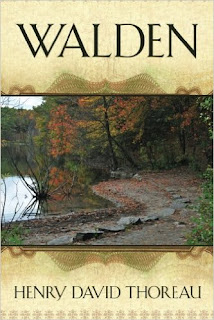
Walden by Henry David Thoreau

The Flow by Amy-Jane Beer


Monday, 7 February 2022

Guest review by Jane Russ: WIDOWLAND by C J Carey


"Widowland asks you to reconsider your life and where you would fit into this nightmare."
 

Jane Russ
is writer and series editor for the UK Nature series of books from Graffeg publishing. The books are not only about the physiology of the animal or bird but about myth, legend, art and literature too. Jane's sixth book, The Native Pony Book, came out in July and joins her others about hares, foxes, owls, red squirrels and robins in this very successful series.

A dystopic, feminist tale chillingly told.

It is 1953, Hitler won the war thirteen years ago and Edward and Wallis are within weeks of being crowned. England is a rundown outpost of Europe, with anything worth having being sent to the mainland. There is an overall feel of the shabby and the rundown.

In the early days after the war, the general populace do not take the ‘take-over’ lying down but the new regime is quick to establish that all transgressions will be dealt with promptly and firmly. If you are caught pulling down an Alliance flag, you will be hanged from the flagpole. Gilead reimagined in the UK.

A rigid individual classification code is in place. Created in Germany this caste system is imposed on the female population in all the subjugated lands of the Empire. At fourteen, all females are called for classification, with ‘Nordic type’ being the highest caste - ASA Female Class I (a). Naturally as time passes, the official titles are overtaken by the shorthand used in everyday life. All the names came from the Leader’s (Fuhrer's) female family members: Gelis are the top, the most perfect specimens. Klaras are fertile women, Lenis are professional women, Paulas are teachers, nurses and carers. Magdas are factory and shop workers, whilst Gretls are domestic and kitchen staff. At the very bottom of this female pyramid are Friedas, the widows and spinsters, over 50, without children and without a man to serve. There is nobody below a Frieda, they are literally the lowest of the low.

Naturally women moved around in these classifications as their fortunes ebbed and flowed. This ebb and flow showed in their general health and well-being too as benefits like better food and clothing were based on the caste classification. Where each group could shop, what they could wear, what rations they were allocated, every last thing was designated and administered by the Woman’s Service throughout the country. A Geli, whose work and general quality of life put her at the top of the ladder, had all the best of what was available and even, depending on who she knew, sometimes more than that.

The heroine of Widowland is Rose, a Geli. The state has decreed that any hint that the past was better than where you are now is to be outlawed. To this end Rose has the unenviable job of editing women of distinction, determination and strength out of books like Jane Eyre and even fairytales. Whilst this is of itself a vile thought, it is not what this book is about. (We should note here that some American states are, as we speak, outlawing books that do not fit their ultra-Conservative, ultra male dominated, racist, anti-Semitic take on what America should be. A vile thought indeed.)

Widowland asks you to reconsider your life and where you would fit into this nightmare, I have found it has really stayed with me as a concept. It is also about the awakening of the understanding that however much one is indoctrinated, the core human concept of right and wrong is much harder to eradicate. The populace are kept ignorant of the lives of other classifications. Everyone can spy on everyone and a Geli will not have a friend who is a Leni and certainly not a Gretl, and as far as Friedas are concerned, they know only other Friedas and are not considered as worthwhile by any other level of female.

Rose gets pulled into a secret assignment to find out who is writing graffiti on important buildings such as the British Museum and others across the country, all near libraries. The graffiti reads, Strengthen the female mind by enlarging it and there will be an end to the blind obedience. This is a quote from Mary Wollstonecraft, (never shy and retiring in her attitude to the position of woman in society) and Rose recognises it. The only lead on who is perpetrating this heretical street painting spreading across the country, is that it is coming from the Widowlands, the derelict and tumbledown areas of large conurbations where the Friedas live. There have been several incidents in Oxford so Rose is tasked with infiltrating the Widowlands there. The Alliance Leader is due to arrive from Germany in two weeks for the coronation and this has to be a thing of the past by then.

Rose’s cover is that she is gleaning information for a book being written by the Protector of Britain about the Folklore and family history of the indigenous peoples. On her trip to Oxford she is confronted with a world so outside her lived experience that she finds it hard to interview the Friedas she has been sent to meet. The house they live in is a broken slum, with no saving graces, except that Rose recognises that they have made it seem like a home. After about an hour and without preamble three men enter and, as if it were possible, wreck the tiny house even more from top to bottom. Every piece of repaired china is smashed, every sagging chair is slashed and, even though recognised as a Geli, Rose is powerfully manhandled and slammed against the wall. Having completed their destruction in a few short minutes, they leave without explaining or commenting.

This event starts the chain of events that will lead to the exhilarating climax of the novel. Several interesting and well drawn characters fill out the story on the way and we are drawn along in a whirlwind of emotions.

If you are female, the lives of the women in this book will ask questions of your understanding of what it takes to be one. If you are male it will show you where male supremacy could lead (and where America is heading at the moment?) Widowland is the heart of darkness in this all too believable tale of female segregation and subordination. Although set in 1953, this is a novel that deals with issues very relevant to the life of woman today.

Widowland is published by Quercus. C J Carey is the pseudonym of Jane Thynne.


Monday, 10 December 2018

SUFFRAGETTES IN FICTION: a round-up by Linda Newbery


A round-up of recent titles and reissues - adult and young adult fiction


Linda Newbery's own contributions to suffragette fiction for young readers are  GIRLS FOR THE VOTE, published by Usborne, and UNTIL WE WIN, Barrington Stoke.  

Perhaps it's surprising that there hasn't been more fiction set during the women's suffrage campaign - offering, as it does, strong roles for women with ample opportunity to show determination and physical courage and to defy expectations. The current centenary - 100 years since the Representation of the People Act granted the vote to women of property-owning women of 30 and over - has seen new publications, but my first choice, Half of the Human Race by Anthony Quinn, first appeared in 2011. I've shown the original hardback jacket here, as the paperback goes for romantic appeal, not even showing the suffragette colours or drawing attention to the theme.

I found this a really absorbing read, excellent on period detail and attitudes to women's roles, especially for ambitious women like main character Constance who wants to be a surgeon but whose family's limited finances are directed to her brother. She's poised to marry professional cricketer Will, but they fundamentally disagree over her campaigning activities and her refusal to promise to obey as part of her marriage vows. Constance goes to Holloway Prison and endures force-feeding but withdraws from the suffragette movement in horror when some of its more extreme supporters begin to use bombs, endangering life. Later, working as a wartime nurse, she goes beyond her role when she intervenes to save a life, at the risk of jeopardising her own career. Characters are strongly and sympathetically drawn, especially Andrew Tamberlain, a famed cricketer at the end of his career. A friend of Will's, he's introduced as a minor character but later becomes a significant ally to Constance, his fate interweaving with theirs in quite unexpected ways. By the end, accompanying them, you'll feel as if you've been on an epic journey.

All three of these novels take us to prison and through the ordeal of force-feeding. In Ajay Close's A Petrol Scented Spring I almost felt I'd been through it myself, so graphic are her descriptions. In a Perth prison, Dr Edward Watson is one of the few doctors willing to force-feed hunger strikers. Such invasive brutality may seem the unlikeliest start to a seduction, but Dr Watson finds himself increasingly drawn to Arabella, the defiant woman he tortures daily; he engages her in conversation, fascinated by her implacable will. The narrative, moving back and forth in time, is shared between Arabella and Donella, Dr Watson's wife, who marries him in 1916 in ignorance of his prison activities. Ajay Close's writing is animated and assured, with occasional humour alongside the grittier details.

In Jon Walters' Nevertheless She Persisted, Nancy doesn't shrink from detonating bombs. One of a pair of sisters, both sexually abused by their father, she takes up work at Holloway as a warden. But, fascinated by glamorous detainee Daisy Divine, an actress known as 'The Duchess', she's soon passing notes between prisoners and eventually finds herself on the wrong side of the cell door after adventures involving subterfuge, disguise, safe houses and the procurement of explosives. Sister Clara, meanwhile, ponders marriage to the too-conventional Ted at the cost of giving up a career in which her ability has been recognised. This novel stops short of the outbreak of war but leaves Nancy relishing the new freedom she's found in her activism and by dressing in men's clothes.
Young adult fiction has seen some excellent new publications this year and last, plus a welcome reissue. Sally Nicholls' Things a Bright Girl Can Do  is a substantial novel interweaving the stories of three young women - Evelyn, May and Nell - and introducing a range of attitudes and class backgrounds. Most suffragette fiction centres on the WSPU, but here's a wider view that identifies the differences between the various organisations. Evelyn joins the WSPU while May, a Quaker and staunch pacifist, favours the East London Federation of suffragettes, Sylvia Pankhurst's campaign against sweatshops and for fair conditions for working women as well as for the vote. Her new friend / lover Nell, from a poorer background, takes up work in a munitions factory for reasons May fails to understand: Nell is trying to support her large family. We follow all three characters through the war and beyond, to the point where new opportunities open up for them.

Sheena Wilkinson's Star by Star is set in Ireland in 1918, but sweeps both back to the war and forward to the new opportunities opening up for capable young women like Stella. Daughter of a campaigner who died in the flu epidemic that follows the war, she's excited by the forthcoming election and determined that no one eligible should miss their chance to vote. Sent to Ulster to live and work at her aunt's boarding house, she befriends a stricken army Captain - thus Wilkinson deftly takes the  reader back to the war years - and makes a discovery about the father she's never known. Readers will strongly identify with the resourceful, well-intentioned Stella and with the practical and moral dilemmas she faces, and will hope that she finds a role to suit her talents.

Julie Hearn writes with freshness and vivacity in Hazel, one of three novels that form an attractive family saga over three generations (though each can be read alone). The dashingly-named Hazel Mull-Dare is the daughter of Ivy, the pre-Raphaelite beauty and painter's model who was titular heroine of the previous book. Here we start with the dramatic death of Emily Wilding Davison in a novel that looks at various manifestations of power, privilege and emancipation.

Teenage fiction as involving and immediate as these three captivating novels will leave young readers in no doubt of the importance of voting as soon as they're of age - even if current political upheavals haven't already convinced them of that.
Finally, here's one for my ever-increasing reading pile: Old Baggage, set in 1928 when the vote was extended to all women but looking back to the suffragette years. It's by the versatile Lissa Evans, who was shortlisted for the Carnegie Medal this year with her children's book Wed Wabbit. If anyone's read it, do please leave comments below - also on any other suffragette fiction you'd like to recommend.

Adult fiction:
A Petrol Scented Spring is published by Sandstone Press.
Half of the Human Race is published by Vintage.
Nevertheless She Persisted is published by David Fickling Books.
Old Baggage is published by Doubleday.

Young adult fiction:
Hazel is published by Oxford University Press.
Star by Star is published by Little Island.
Things a Bright Girl Can Do is published by Andersen.

Since this post appeared, Lissa Evans' Old Baggage has been reviewed by Pippa Goodhart.