Showing posts with label cruelty. Show all posts

Monday, 2 February 2026

ETTA LEMON: The Woman who Saved the Birds by Tessa Boase, reviewed by Linda Newbery


'The RSPB was started by the determined efforts of four women ... but it was Etta's voice that spoke most clearly from the archives."

Photograph by Saira Archer
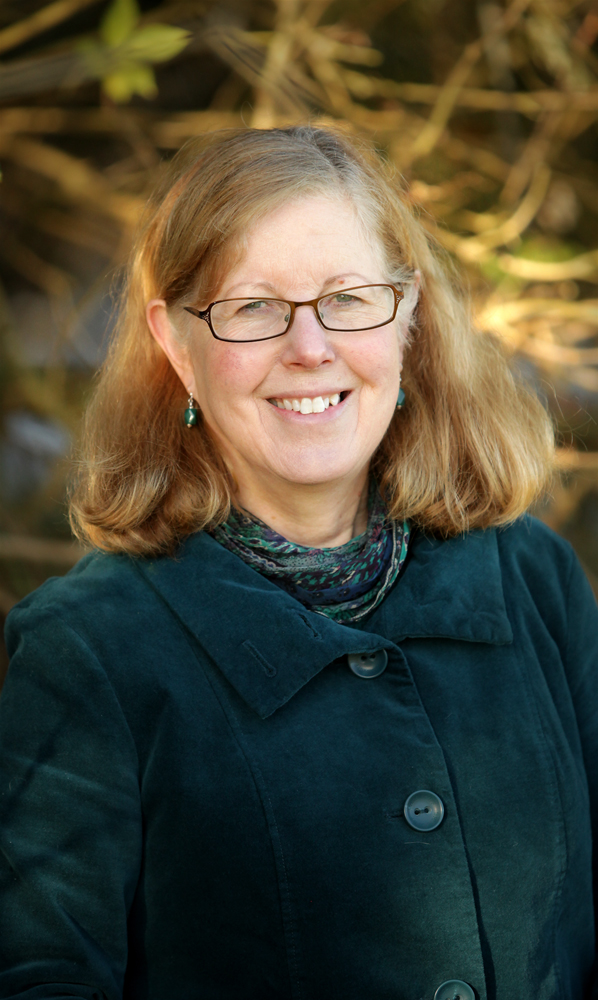
Linda Newbery
edits Writers Review. Her second novel for adults, The One True Thing, was published in 2025 as one of the launch titles for Writers Review Publishing. Her first adult novel, Quarter Past Two on a Wednesday Afternoon (in paperback as Missing Rose) was a Radio 2 Book Club Choice. In addition to her many fiction titles for young readers she has written This Book is Cruelty Free - Animals and Us, a guide to compassionate living for teenagers and adults. The Hide will be published this autumn. 

As I'm trying not to add to my already overflowing bookshelves, I attended Tessa Boase's event for Rye Arts Festival in September with no intention of buying Etta Lemon. But the talk was so packed, informative and entertaining that I couldn't resist, and bagged a copy before they'd all been snatched from the pile. 

As Tessa Boase points out, birdwatching - especially twitching - is still mainly the preserve of men. But the RSPB was started by the determined efforts of four women: Etta (Margaretta) Lemon, Emily Williamson, Eliza Brightwen and Eliza Phillips, names known to only a small fraction of the million-plus members of what's now one of our largest conservation bodies. Of the four, Boase says, it was always Etta's voice that spoke most clearly from the archives. Yet when she began her research, there was 'not a plaque, not a portrait at headquarters, not a mention in the canon .. It was as if (Etta Lemon) had been completely erased from the conservation narrative.' Part of Boase's achievement has been to right that wrong. Etta now has not only her plaque, and a portrait at RSPB headquarters, but this compelling tribute, too.

The trade in plumage, skins and entire birds in the late 19th and early 20th centuries was horrific, not only because it depended on the mass capture and slaughter of birds in many countries, but also because of harsh conditions for the workers involved in dyeing and tweaking feathers for the millinery industry - a labour force that included children. Millinery was certainly big business; in 1891, Boase records, there were 548 milliners in Greater London alone. Hats were adorned with feathers, wings (classed as 'novelties') and even whole birds; an illustration shows a grotesque hat with what appears to be three budgerigars flattened and fastened around it. 

It's widely known that the great crested grebe was driven to the verge of extinction by fashionable greed for its showy plumage. Whereas once ostrich plumes had been de rigeur, the choice widened alarmingly. Describing a plumage sale in London in 1888, Boase writes: "Here were birds by the shipload." The plumes of snowy egrets were much in demand: an undercover reporter noted that 16,000 packages of these were on sale, along with seven or eight thousand parrots, over 12,000 tiny hummingbirds and "several hundred each of Hawks, Owls, Gulls, Terns, Ducks, Ibises, Finches, Orioles ..." Horrible to contemplate, especially with our hindsight knowledge of the drastic decline in bird populations.

Noting the weekly parade of feathers in church each Sunday, Etta, in her late teens, began her campaign by writing individual letters to 'Feather Bedecked Women', soon joining the Fur, Fin and Feather Folk run by Eliza Phillips, a considerably older woman. The Society for the Protection of Birds was founded in Manchester by another campaigner, Emily Williamson, and began as an all-female group in which members signed a pledge not to wear feathers. These two groups - The Fur, Fin and Feather Folk and the SPB - were brought together by the RSPCA which then, as now, saw itself as a moderate pressure group, distancing itself from 'extremists'. The amalgamation of the two, with Etta as Honorary Secretary, attracted attention, allegiance and - crucially - donations. However, support from highly-placed women led to an exemption for feathers from so-called 'game' birds, the aristocracy not wishing to jeopardise its favoured occupation, field shooting. (Hmm, not much change there, then.) In 1904, with royal approval granted, the SPB became the RSPB.

Boase draws parallels between Etta Lemon and her contemporaries Emmeline Pankhurst and Millicent Fawcett, examining the various approaches to campaign strategies. The suffragettes, drawn mainly from well-heeled women, were highly fashion-conscious and publicity aware. To Etta's distress, bird plumage featured prominently on their headgear - just look at the photographs of suffragette marches - and certainly on the hats of Emmeline Pankhurst herself. (In fact this book was first published as Mrs Pankhurst's Purple Feather.) There are other ways, too, in which Etta Lemon's campaign was at odds with the suffrage campaign. It seems barely comprehensible to us now that there could have been an anti-suffrage counter-protest, led by women, yet Etta was one of its members. Ironically, as Boase points out, those women who led this faction were bold, articulate and determined - qualities which would have admirably fitted them for politics. 

Although it's taken so long for Etta's conservation work to be acknowledged, she was a public figure in other ways: she became lady mayoress in 1911 when her husband Frank was appointed mayor of Reigate, and during the First World War she took on the management of the Redhill War Hospital, for which she was awarded MBE. 

If it's hard to imagine nowadays that it could have been acceptable to use the feathers of a bird of paradise for adornment, consider one of the modern equivalents: the high status of reptile-skin bags sold by Hermès and other designers, including the iconic 'Birkin' bag. Apparently the singer and actress Jane Birkin wanted her name removed from the item when she learned that crocodiles and alligators were reared for the purpose in bleak conditions and horribly killed, but the name has stuck. If you should want one (though I hope you don't), be prepared to pay upwards of £450,000 - though the real price, of course, is in animal suffering. On the plus side, London Fashion Week declared itself fur-free from 2024, with a ban on wild animal skins too. A ban on the use of wild bird feathers is yet to come. Fashion has a way to go before it can be called cruelty-free, but fortunately there are plenty of latter-day Etta Lemons pushing for change. (Step forward, PETA - People for the Ethical Treatment of Animals, among other organisations.)

Tessa Boase is as engaging a writer as she is a speaker. Her book, an illuminating sweep of social history, illustrates the much-quoted maxim of the anthropologist Margaret Mead: “Never doubt that a small group of thoughtful, committed citizens can change the world. Indeed, it is the only thing that ever has.”

Etta Lemon: the Woman who Saved the Birds is published by Aurum

Linda Newbery's The One True Thing is published by Writers Review Publishing.


More bird-related reviews:

This Birding Life by Stephen Moss, reviewed by Nick Hodges


12 Birds to Save your Life - Nature's Lessons in Happiness by Charlie Corbett, reviewed by Linda Sargent


A Sweet Wild Note: what we hear when the birds sing by Richard Smyth, reviewed by Dawn Finch


Lost Animals, Disappearing Worlds - Stories of Extinctions by Barbara Allen, reviewed by Linda Newbery

Sunday, 7 June 2020

Special feature: Q&A with garden designer Cleve West on THE GARDEN OF VEGAN


"It’s not a subject you can really ignore any more, especially now mainstream media is making the connection between animal agriculture and climate change, not to mention the link with pandemics."

Photograph by Chaz Oldham
Cleve West is a highly-regarded garden designer, with six Chelsea gold medals and two Best Show Garden awards to his credit. Recent projects include his Horatio's Garden for Salisbury Hospital's Spinal Treatment Centre (the first of several, all by leading designers) and work with primary school children, bringing them to his own allotment and helping them to set up gardens at their schools. He is a passionate advocate for animals and a committed vegan, both of which inform his gardening practice. The Garden of Vegan covers a wide range of subjects: personal reflections, sustainable gardening and farming, ecosystems, animal abuse, the nutritional and environmental advantages of a plant-based diet, and even his own recipes. As well as photographic illustrations the book includes poignant portraits drawn by Cleve's wife, artist and printmaker Christine Eatwell, of animals photographed as they await slaughter.

Cleve West answers questions from Linda Newbery.

Find out more about Cleve's work and campaigns from his website, and on social media: Twitter @clevewest Facebook Cleve West and Instagram cleve_west


LN: You've been well known for years as a top garden designer. Now it seems from your social media activity that your animal advocacy and championing of the vegan lifestyle have become at least as important as your design career, if not more so. What triggered that change?

Cleve West: It was the shock of seeing the horrors of animal agriculture and the damage it’s doing to our health and the environment. Not speaking out about it felt like complicity. I spent a lot of time wondering whether I should use different social media platforms to keep my advocacy for animals separate from work, but that felt like an apologist approach. I may have lost followers/clients as a result but I’m only showing and speaking about the realities of animal agriculture and the threat it poses to life on earth. If people can’t handle the truth they can look away or keep scrolling until they find a photo of a pretty flower! What’s alarming is that, given the current circumstances, there is still reluctance to engage with these issues that are making the future increasingly uncertain for our children.

LN: In the introduction to your book you say that you'd begun to question the importance of your design work, in spite of (or because of?) having achieved such outstanding success. But you write movingly about the Horatio's Garden you designed at Salisbury, and since then you've brought school groups to your allotment and worked on gardens projects for their schools - in all of which plants and gardening contribute to the wellbeing of others. Does this mark a change in your work ethic?

Horatio's Garden
CW: Yes. Before I was vegan, while I understood the therapeutic value of gardens, I’d often consider my worth as a garden designer in terms of what I actually contribute to the world. Being vegan has accentuated that and made me question Thomas Church’s maxim that “gardens are for people”. I realise it’s impossible not to harm things unknowingly as we build our homes and gardens, but now that we understand more about the many other life-forms that share the garden with us (and that arguably they're more important in keeping things ticking over) it seems fair that they should be given consideration when planning our interventions. Horatio’s Garden and the Bee Kind Garden for Christ Church School have helped me understand how we can garden for both humans and non-human animals alike, but the emphasis is still from an anthropocentric point of view. Natural gardens or gardening for wildlife is still quite challenging as an aesthetic. I don’t have all the answers, so I suppose the short answer is that I’m still learning.

LN: Do you think the horticultural industry has been slow to embrace sustainability? What changes do you applaud, and what changes in attitude are still needed?

CW: Yes, I had a conversation about sustainability with Geoff Hamilton in 1994 when I built my first show garden. It’s disappointing in that almost twenty five years later people are still using herbicides, pesticides, slug pellets and peat products in their gardens. Revelations by Dave Goulson in his brilliant book The Garden Jungle about how chemicals in the plants we buy from nurseries can harm bees are really alarming.

As with transitioning to a plant-based lifestyle, convenience seems to play a major role in stopping consumers from making ethical choices. Profit is also a big factor for nurseries, so I hope that the current crisis will focus the industry on what they can do to create more sustainable products and practices.

LN: I love your book but need little persuading, as I'm already vegan and a veganic gardener (though I hadn't heard that term before!) Are you hoping to reach out more widely - to people who haven't considered veganism and in particular how it might relate to their gardening?

CW: Indeed, the intention is to inspire gardeners to adopt a plant-based lifestyle. When I first started speaking out for animals I used a lot of graphic footage to raise awareness about the cruelty involved in animal agriculture. Naturally, most people looked the other way, so it was a revelation to me when I realised that vegans and gardeners share the same USP… plants. As gardeners we all love plants. We love growing them and eating them, so if a plant-based diet can help us mitigate climate change, reduce the chances of future pandemics (I’m kicking myself for not including that in the book!), feed an ever growing population and relieve the pressure on the NHS by keeping us healthy, it’s a win-win situation on so many levels.

BUPA Garden, Chelsea Flower Show 2008: Gold Medal and BBC People's Choice Award
LN: It's clear on your website that you want your ethos to be evident in every garden you design. Have you ever had to curtail a project because the client wanted something you felt unable to deliver on principle, e.g. because it would destroy a habitat?

CW: To be honest I’m still finding my feet on that one. One or two current projects involve a fair amount of earth-moving which is something I’m feeling increasingly uncomfortable about these days. I’m encouraged by conversations I’ve had with prospective new clients about things like wildlife and biodiversity. People are beginning to acknowledge the importance of the environment and to be interested in enhancing the natural world in their own small way. What I keep reminding myself is that if I walk away from a job, then someone else is going to do it and that person may not be as sensitive to a site nor make any effort in mitigating disturbance to habitats, etc.

LN:  In a recent interview you said that the fire has gone out of you as regards making show gardens. But are you being offered chances either to create show gardens or to take on longer-lasting projects to demonstrate your principles? You're probably in a unique position to influence others by showing the way.

CW: There’s a vegan-inspired show garden on the back-burner (a collaboration with Darryl Moore and Heywood-Condie) but it needs a suitable sponsor. I’d prefer to concentrate on real gardens for now and will be happy to work with clients who appreciate the bigger picture, or indeed to encourage those who haven’t considered the wider environment before but are willing to learn. I’m sure there will be others joining the dots now - it’s going to be interesting to see how the Covid-19 experience will inspire the next generation of designers at future shows.

LN: Anyone involved in animal activism will inevitably come across harrowing evidence, much of it photographic, of gut-wrenching cruelty and abuse. How do you strike a balance between keeping yourself motivated on the one hand, and on the other, becoming so thoroughly sickened at the scale of brutality that campaigning seems hopeless?

CW: Yes, the reality and scale of the oppression, violence and exploitation is beyond anything we can imagine - if you dwell on it too much it can break you. I limit the amount I look at these days but use it to keep the fire stoked and help me remember that while using levers such as the environment and health to persuade people to go vegan, the main reason is to put an end to the unnecessary harm and suffering we cause to sentient beings.

LN: How is your campaigning zeal seen by your garden design peers? Are you seen as extremist / eccentric, or are they willing to listen to you and consider veganic principles in their own work?

CW: That’s a good question. To begin with, when the shock of watching films like Earthlings, Cowspiracy, Forks Over Knives made me try and turn the world vegan in a day, I think many of them thought I’d lost the plot and they were right, I had. A couple of people have called me an extremist but interestingly won’t watch films like Earthlings, Dominion or Land of Hope and Glory. If they did I’m sure they’d understand the true meaning of the word ‘extreme’. It’s difficult being patient when so many animals are slaughtered every second of each day, but over the years I’ve had enough encouraging messages from designers and gardeners (who have either gone vegan or are getting close to it) to feel encouraged, and have stood shoulder to shoulder with a couple at vigils and protests which is great. Of course, there are still quite a few who find the whole subject too challenging or inconvenient to take on board, but it’s not a subject you can really ignore any more, especially now mainstream media is making the connection between animal agriculture and climate change, not to mention the link with pandemics.

LN:  A question about the writing of your book. It's so wide-ranging, comprehensive and fully-referenced that I wonder how on earth you combined work on this with your design business. Did you set aside dedicated time to write, or were you fitting it around your other work?

CW: My assistant at the time, Ruth Lewis, did a great job keeping the design work on track so I could concentrate on writing. I tried to keep it personal to make it more digestible and to help readers relate to it. The fact-checking was a real pain and frustrating (my editor at Pimpernel Press, Nancy Martin, was brilliant at double-checking and keeping me on my toes) because I knew it would be out of date by the time the book was published with new studies and reports (not to mention pandemics!) coming to light. Some people might still look for loopholes or argue with the facts and figures, but even if they were only half-true they should still be more than enough to persuade anyone with an open mind to consider a vegan lifestyle.

LN: Finally, what gives you the most hope that attitudes towards animals will change?

CW: I’m not known for my optimism as far as the human race is concerned but I was buoyed by the heartening messages I received when the book was launched. That said, it’s a challenging read so it’s not going to fly off the shelves! I think economics, the threat of climate change and future (potentially far worse) pandemics will be the main drivers to a substantial shift to a plant-based world but, in the meantime, I’ll keep encouraging gardeners to join this important movement - plants might just be able to save us from ourselves.

LN: Thank you so much for this interview, Cleve. I hope your book will fly off the shelves, and give gardeners and others new insights and inspiration.

Killed at Newman's Abbatoir on 13 December 2017: drawing by Christine Eatwell
The Garden of Vegan is published by Pimpernel Press.

Also: find out more about Horatio's Gardens here, and see a short film about the Salisbury Hospital one (with Cleve talking about it) here:


Monday, 21 May 2018

MR PEACOCK'S POSSESSIONS by Lydia Syson, reviewed by Linda Newbery


"Readers will find various parallels and echoes in this vividly realised, compelling novel."

Linda Newbery has written widely for young readers and is now working on her second novel for adults.
Lydia Syson has successfully published young adult novels with historical settings, and now looks set to reach a wider audience with this dazzling tale of colonisation and corruption, enterprise and abuse.

Set in Oceania in the late 19th century, Mr Peacock's Possessions centres around a growing family and the hardships they face on moving to an uninhabited island. "Where's the snake?" Joseph Peacock asks, on being offered this fruitful, unsullied land, apparently a new Eden. And there certainly are dangers. Soon after being landed there the family members face starvation when finding to their dismay that their supplies have rotted in the ship's hold; they must learn to survive on limpets and roots until they can grow their own crops. Utterly isolated, they don't see so much as a passing ship for months on end, and can summon help only through signal fires. They don't at first realise that the island is volcanic, and that subterranean rumblings produce sulphurous, deadly steam which almost kills two of the girls when they sleep in a cave near the crater. But the title hints that the deadliest "snake" is the one Mr Peacock brings with him, part of his own temperament. His son Albert, frail and suffering from what appears to be rheumatoid arthritis, bears the brunt of this, receiving constant taunts and criticism.

Events are shown to us through two viewpoints: that of Lizzie, Joseph Peacock's favourite second daughter, and - in first person - that of Kalala, one of six Pacific islanders, all young men, brought to the island to work at clearing and building. Kalala, whose older brother Solomona is a preacher, is shocked to realise that the Peacock children can't read, while he, observant and devout, reads his brother's Bible, anxious not to lose his skill. Through the highly perceptive and intuitive Kalala, and the vivid, frightening dreams of pain and despair he attributes to aitu, troubling spirits that haunt him despite his Christianity, we learn of a recent tragedy of neglect and abuse that's left bitter marks on the island. When Lizzie explains, "Pa can get cross, I ought to tell you ... He wants everything done just so. You do, of course, when a thing is your very own, don't you? You want it perfect," she prompts Kalala's recognition of "the force I saw at once in him, light and dark together." Lizzie's words are truer than she realises, especially of the difficult relationship between Joseph Peacock and the boy Albert in whom he finds only disappointment; she wonders why her father didn't look to her, instead of to Albert, as his heir and capable apprentice. When Kalala incurs Peacock's anger and fear, though acting through the best of intentions, events escalate with horrifying inevitability.

There are nods to Lord of the Flies in the island setting and the struggle for orderliness that fails to prevent the eruption of violence - Lord of the Flies as if written by Barbara Kingsolver, perhaps, with a dash of The Wicker Man. But I think readers will find various other parallels and echoes in this vividly realised, compelling novel.

As I write this, the longlist for the Women's Prize has just been released. I'll be disappointed if Lydia Syson's name doesn't appear there next year.

Mr Peacock's Possessions is published by Zaffre.