Showing posts with label abuse. Show all posts

Monday, 21 May 2018

MR PEACOCK'S POSSESSIONS by Lydia Syson, reviewed by Linda Newbery


"Readers will find various parallels and echoes in this vividly realised, compelling novel."
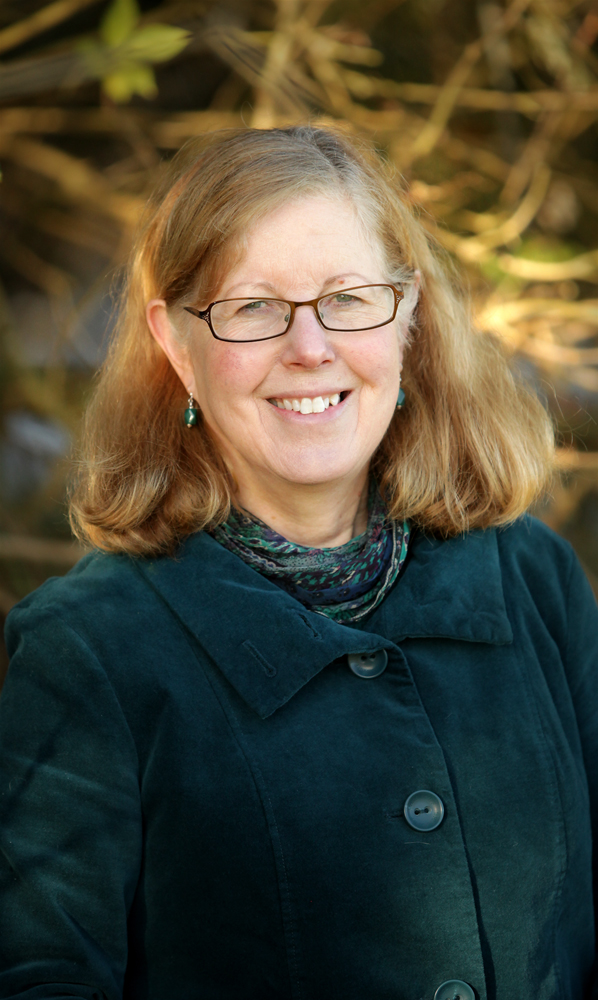
Linda Newbery has written widely for young readers and is now working on her second novel for adults.
Lydia Syson has successfully published young adult novels with historical settings, and now looks set to reach a wider audience with this dazzling tale of colonisation and corruption, enterprise and abuse.

Set in Oceania in the late 19th century, Mr Peacock's Possessions centres around a growing family and the hardships they face on moving to an uninhabited island. "Where's the snake?" Joseph Peacock asks, on being offered this fruitful, unsullied land, apparently a new Eden. And there certainly are dangers. Soon after being landed there the family members face starvation when finding to their dismay that their supplies have rotted in the ship's hold; they must learn to survive on limpets and roots until they can grow their own crops. Utterly isolated, they don't see so much as a passing ship for months on end, and can summon help only through signal fires. They don't at first realise that the island is volcanic, and that subterranean rumblings produce sulphurous, deadly steam which almost kills two of the girls when they sleep in a cave near the crater. But the title hints that the deadliest "snake" is the one Mr Peacock brings with him, part of his own temperament. His son Albert, frail and suffering from what appears to be rheumatoid arthritis, bears the brunt of this, receiving constant taunts and criticism.

Events are shown to us through two viewpoints: that of Lizzie, Joseph Peacock's favourite second daughter, and - in first person - that of Kalala, one of six Pacific islanders, all young men, brought to the island to work at clearing and building. Kalala, whose older brother Solomona is a preacher, is shocked to realise that the Peacock children can't read, while he, observant and devout, reads his brother's Bible, anxious not to lose his skill. Through the highly perceptive and intuitive Kalala, and the vivid, frightening dreams of pain and despair he attributes to aitu, troubling spirits that haunt him despite his Christianity, we learn of a recent tragedy of neglect and abuse that's left bitter marks on the island. When Lizzie explains, "Pa can get cross, I ought to tell you ... He wants everything done just so. You do, of course, when a thing is your very own, don't you? You want it perfect," she prompts Kalala's recognition of "the force I saw at once in him, light and dark together." Lizzie's words are truer than she realises, especially of the difficult relationship between Joseph Peacock and the boy Albert in whom he finds only disappointment; she wonders why her father didn't look to her, instead of to Albert, as his heir and capable apprentice. When Kalala incurs Peacock's anger and fear, though acting through the best of intentions, events escalate with horrifying inevitability.

There are nods to Lord of the Flies in the island setting and the struggle for orderliness that fails to prevent the eruption of violence - Lord of the Flies as if written by Barbara Kingsolver, perhaps, with a dash of The Wicker Man. But I think readers will find various other parallels and echoes in this vividly realised, compelling novel.

As I write this, the longlist for the Women's Prize has just been released. I'll be disappointed if Lydia Syson's name doesn't appear there next year.

Mr Peacock's Possessions is published by Zaffre. 


Monday, 11 December 2017

Guest review by Nicky Singer: MY ABSOLUTE DARLING by Gabriel Tallent


Nicky Singer is a novelist, playwright and librettist. Her first book for children, Feather Boy, won the Blue Peter ‘Book of the Year’ Award and was adapted for TV, winning a BAFTA for Best Children’s Drama. In 2010 she was asked by Glyndebourne to adapt her novel Knight Crew (a re-telling of the King Arthur legend set in contemporary gangland) for an opera with music by Julian Philips. 2012 saw the premiere of her play Island (about ice-bears and the nature of reality) at the National Theatre. She re-wrote Island as a novel and no mainstream publisher was remotely interested. So she published it herself via Kickstarter with illustrations by UK Children’s Laureate, Chris Riddell. Somehow it managed to claw its way onto the Carnegie longlist. Her new book (forthcoming July 2018) is already sold in France, Germany, Italy, Israel, China and Russia as well as the UK. #FunnyOldWorld

I know what reviews are supposed to be. They're supposed to be relatively impartial summations which allow a third party access to a book. This isn't going to be a review like that. This is a writers’ review blog and this is going to be one writer’s extremely personal – visceral even - reaction to a fellow writer’s work.

I gorged on this raw, pulsing, thrilling book.

My Absolute Darling is the story of a powerful man and his soon-to-be-powerful daughter locked in an appalling, abusive embrace. Set against a throbbing landscape of sea and pond, poison ivy and sodden spiderwebs, it’s a book that strips away much of how we live now – our technology, our twittery busy-ness - reducing things to ‘bloody marrow’ and ‘hollow thighbones’. It allows no easy assumptions – confronts you at every level. The monstrous, survivalist father sits by his guns reading Hume’s An Enquiry Concerning the Principles of Morals. Vile, loathsome and compelling, he is, of course, not always so: intelligent and damaged, he both defends and cares. His daughter, similarly, both loves and hates him, waiting for him at night ‘touching the cold blade of her pocketknife to her face’ because ‘by turns she wants and does not want it’. Violence lurks on every page but so does poetry. Not poetry of the rhyming sort but poetry which captures big thoughts, big landscapes or big emotions in small, exact ways: ‘His touch brings her skin to life, and she holds it all within the private theatre of her mind, where anything is permitted, their two shadows cast across the sheet and knit together’. The talent of Tallent (sic) is to insert this poetry - this quality - into the driving force of the narrative (the guns, the horror, our growing sense of where all this must end) without once slackening the pace.

This is not a book you read leisurely. You consume it – as it consumes you. And you also shout at it. Or at least I did, finding myself being confronted by all my own prejudices and story tropes. If someone doesn’t help this girl out in the next chapter, I shouted, I’m going to get in there and do it myself! Although, of course, I knew perfectly well that the only person who could save this girl – if she was to be saved – was the girl herself. Turtle. Turtle Alveston. And here’s another sly piece of Tallent’s genius - the heroine’s many names. Her ‘real’ name is Julia. This is what she’s called at school. Her Grandfather calls her ‘Sweetpea’. To her father she’s just ‘kibble’. Kibble without a capital ‘k’ – like a piece of dog food. It hurt me every time he named her so. Turtle is the name she gives herself. It’s never explained but one can guess about the hard shell and the retreating, hiding, quivering inside. In moments of real self-loathing she also uses one of her father’s other terms for her: ‘illiterate little slit’. Illiterate little slit? Right, that’s it. I’m going to go into the book to kill the bastard. Now. Because where the hell is the prince in this story anyway? The prince is Jacob. Only he doesn’t find her – she finds him, lost and without shelter one night in the harsh Mendocino landscape. The landscape which she knows like the back of her hand. So, of course, it is Turtle who does the saving and Jacob who does some more naming. Now she’s the ‘chainsaw-wielding, shotgun-toting, Zen Buddhist, once-and-future queen of post-apocalyptic America’. And yes, of course, part of Turtle is this magnificent, imagined person. Part of her is also way out of this privileged boy’s league. But he has access to the world outside Turtle’s closed life. So, he can do something, can’t he? Make something happen, save her after all? No, of course not.

If I’m being really snippy, I’d say Tallent doesn’t quite solve the final question of the would-be prince’s place in the final spectacular – and thrillingly expected – denouement. But I’m not being snippy because this is a big, passionate, written-from-the-soul book. And they don’t come often. Although when they do come they come, increasingly (for me, anyway) stripped to these same essentials - people, landscape. Take A Whole Life by Robert Seethaler, for instance. Quieter of course, but with the same truth. Or the 2017 Booker shortlisted Elmet by Fiona Mozley which features another powerful man and daughter in a wood you can also smell and chop. So now I’m thinking – is this some new trope? They used to say that to write a good kids’ book you need to get rid of the parents. Is it now that, to write a great adult book, you have to strip away the technology? That we can no longer say or mean deep things inside our everyday techno lives, and that we must return to the visceral dark and the hurting to understand the important and real? This jolts me to the realisation that my own new book follows a girl and a boy through six thousand miles of guess what – landscape: sand and stars and stone. I hope my book has some of the same blood and passion as Tallent’s book. Actually, I hope it has a tenth of the blood and passion of Tallent’s book. My Absolute Darling. Oh, my absolute darling. Read it, please. It’s the new way to be alive.

My Absolute Darling is published by 4th Estate.