Showing posts with label landscape. Show all posts

Monday, 29 June 2026

Guest review by Laura Parker: THE TATTOOED HILLS - JOURNEYS TO CHALK FIGURES, by Jon Woolcott


"Like all the best travelogues about Britain, this also reveals something of ourselves. The story of the chalk figures is a tale of human nature ..."

Laura Parker is the author of Stone on Stone, a journey along Britain’s drystone walls, due to be published in April 2027. She writes features and reviews for Country Life magazine, covering nature, art and the history of the countryside. She has also been published in Little Toller’s online nature collection The Clearing, and arts/nature/culture journal Caught by the River, as well as in Scottish Field and Scottish daily The Courier. Find out more on Laura’s website.

Countryside writers often find a natural feature to hang their words upon: rivers, paths, trees, coastlines. For Jon Woolcott it is geoglyphs: the white horses and giant figures cut into the hillside of southern England. This mostly limits him to the chalk downs that run through Dorset, Wiltshire and East Sussex – Jon admits to being ‘south-minded’ – but there is no shortage of material for a writer who loves to dig in for stories.

In a chapter about the Long Man of Wilmington, for example, he manages to fit in entertaining vignettes variously about William Blake, young men on the grand tour, Benjamin Britten, photographer Lee Miller, the Dissolution of the Monasteries, a weird far-right sect called Woden’s Folk, and Noughties TV stars Trinny and Susannah. This may sound a bit too eclectic for some, but it will appeal to magpie-minded readers who enjoy the company of someone able stitch the fun bits of history skilfully together.

He writes that many hill figures ‘emerge unsteadily from history, badly documented’, and this gives plenty of scope to explore the changing ways we have tried to interpret the past as he introduces Victorian antiquarians, archaeologists and opinionated clergymen.

The Cerne Abbas Giant, for example, the erect exhibitionist etched into a river valley north of Dorchester, has provoked much speculation. Is he a Romano-British Hercules? Or inspired by Oliver Cromwell and only etched out of the turf in the 17th century? Archaeologists using a novel dating technique have now discovered the giant was Saxon. At times revered, at others covered up in embarrassment, the 55-metre high figure has seen some modifications, such as when the National Trust inadvertently created a member increase during a restoration programme.

Woolcott makes most of his visits on foot, with all the frustrations of not being able to find the figures or see them clearly, and it would be surprising if the book did not inspire some readers to pull on their boots and figure-hunt for themselves.

In the book’s portraits of each figure, the timespan can readily shift from ancient days to the era that young people would call history but some of us just think of as fond memories. There are many rewarding diversions into popular culture, including his memories of growing up beneath the image of a giant Panda face, created by students, that appeared overnight near Salisbury. This figure – no longer visible – summons up the absurdities of the 1960s, but also shows how these figures have come and gone. Unlike standing stones, they are largely temporary. Examples of disappearances include the Red Horse of Tysoe in Warwickshire, initially lost to the enclosure movement and finally planted over in the 1950s, and the Black Horse of Bush Howe in Cumbria. Those that have endured have done so for an interesting variety of reasons; from deference (military badges, or the mounted figure of George III riding away from Weymouth) to expedience (the Westbury White Horse was concreted over by a penny-pinching council in the 1950s for easier maintenance). Chalk figures can fade or become overgrown. Often they survive thanks to the care and rechalking organised by the local community, which makes the longevity of the free-running Uffington white horse even more remarkable. This is one of the oldest and most enigmatic of chalk figures, dating back to the late Bronze Age. It, ‘more than any, haunts imaginations.’ The horse’s curiously modernist design appealed to artists such as Eric Ravilious and music idols such as XTC, with the cover of their album English Settlement, and Kate Bush, who made her Terry Gilliam-directed Cloudbusting video there.

Like all the best travelogues about Britain, this also reveals something of ourselves. The story of the chalk figures is a tale of human nature: how we create infeasible works of art, tell old stories and embroider new ones, disbelieve ancestors, celebrate the land, and look after things that are important to us, even if we don’t understand why.

The Tattoed Hills is published by Aurum.

More of Laura's choices:


The Place of Tides by James Rebanks


Monday, 25 May 2026

Guest review by Nick Manns: THE MAKING OF THE ENGLISH LANDSCAPE by W G Hoskins


"Once you’ve spent time in Hoskins’ company, you start to interrogate a familiar world in a new way..."

Nick Manns
taught English in comprehensive schools in south London and the Midlands for 20 years. He is the author of four novels for young adults, including Control Shift and Dead Negative, and is a founder and director of Dyslexia Lifeline, a company based at De Montfort University, Leicester. 


The stump of an old windmill can be seen a couple of hundred metres from the A43, just outside Easton on the Hill in Northamptonshire. The mill is situated at a high point on the upland that looks down on the Welland valley and its sails would have been turned by winds coming from the west.

The relic is a mile or so north of RAF Wittering, which is marked by the rotating clam-shell radar dish at the end of the runway. The aerodrome, originally constructed for the Royal Flying Corps, dispensed with the acres of arable farmland that would have given the windmill its reason for existing.

This process of picking up signs in the landscape and reconstructing a past world is at the heart of Hoskins’ book. Published in 1955, it expanded the notion of ‘landscape’ from simply an idea of ‘nature’ to include how people have interacted with (and changed) the natural world. In the case of RAF Wittering, that change could have been more than simply retiring an old technology: a Valiant bomber accidentally dropped a thermo-nuclear device onto the runway in the late 1950s.

Hoskins came from a family of Exeter bakers but after studying economics at the University College of South West England, he became a lecturer in the subject at University College Leicester, subsequently Leicester University). His research into local history and articles on ancient farming, deserted medieval villages and so on led (in 1948) to his appointment as head of the newly formed Department of English Local History. He became convinced that visual evidence was vital to understanding the historical landscape.

In the preface to his study, Midland England (1949), he wrote:

‘… the whole of the English landscape is a manuscript written on again and again, a palimpsest with endless discoveries waiting to be made; and one can learn, with sufficient patience, skill and imagination, how to decipher this manuscript and make it yield its hidden meaning.’

The phrase, ‘one can learn’, is inclusive. People don’t have to be academics to ask questions and seek answers, however tentative. And although it might be tempting to rely on the internet to find answers to questions about localities, sometimes those localities raise their own questions.

For example, three miles below the nuclear near miss at Wittering lies the market town of Stamford. It’s small and compact and largely consists of 17th and 18th-century houses. They’re made from the local limestone, weathered to a honey colour. One of the interesting features about the town is the great width of some of the streets. One of them is called Broad Street, and another, Sheepmarket. The town layout, the width of the streets, reflects its medieval past as a major market for sheep and wool. Great herds of sheep would fill the town on market days.

These observations are entirely in keeping with Hoskins. At the end of his book, he writes: ‘towns …ought to be approached for the first time on foot. For only on foot does one detect the subtle rise and fall of ground to which the earliest settlers were so sensitive, or alignments in the town scene that may throw light on some fundamental change of plan: or the names of streets and lanes that set the mind working at once.’

The Making of the English Landscape is, in modern parlance, a ‘mash-up’: it combines different elements that are normally encountered separately. With-it French cultural theorists in the 1960s would have regarded it as a work of bricolage and that Hoskins was a bricoleur. A bricoleur, since you ask, is an odd-job person who uses whatever is at hand to complete a project. A project is usually a problem-solving exercise: why was this village built here? How old is it? Why is the church on the edge of the settlement?

Consequently, once you’ve spent time in Hoskins’ company, you start to interrogate a familiar world in a new way, the book working as a kind of exemplar. He’s at home when commenting on the use of hawthorn to demarcate fields; ruminating on the significance of place-names; considering the bits of pottery found in his back garden. And he’s not afraid to express sympathy for past calamities that would seem strange in the pages of a standard academic work. When reflecting on the many abandoned medieval villages across England, he notes that rural depopulation following the Black Death meant that it was more cost-effective for some landowners to switch from arable (and labour-intensive) farming to pastoral practices. Large, open fields could be parcelled up into smaller units and tenant farmers evicted. Hoskins writes:

‘The village houses were demolished – an easy business, for above their rubble foundations they mostly had mud walls – and men, women and children departed in tears to find a new livelihood elsewhere.’

Easton on the Hill is not a site of dereliction: a compact village of limestone houses that date from the 18th century. Hoskins writes that hill-top villages are ‘suggestive of great antiquity’ where height (working like radar) might allow the early identification of hostile forces, but the oldest buildings here are the Priest’s House (late 15th century) and the charming All Saints Church (12th century). The name, Easton is probably Anglo-Saxon (the ‘-ton’ suffix indicating farm or settlement). So, what attracted the early settlers?

All Saints Church, Easton on the Hill: Les Hull (WikiCommons)

Part of the answer can be found if you park just off the main road, south of the village. Hoskins had emphasised the desirability of walking as an aid to discovery and the wisdom of those words was immediately apparent on the day of my visit. There was a stiff westerly wind blowing across the upland, but Easton lies below the crest of the escarpment, on gradually sloping ground. It is largely sheltered from the elements.

The village is clustered around the junction of Church Street and High Street. There’s a war memorial there now, but it’s probably the site of the village green. The streets themselves are narrow, originally designed for the passage of farm carts. That world is evoked by the sign on one of the houses, The Old Forge.

Google Easton on the Hill and you’ll find it’s recorded in Domesday Book and that Romano-British objects were found in various digs. It’s therefore quite possible that Easton on the Hill replaced an earlier name.

So, what drew the various settlers to this (obviously) desirable site? There’s no clue on Wikipedia, but on the village map, Spring Close pocket park is identified. Walk there, to the very northern edge of the village, and you’ll discover a grassed area and a pond, surrounded by flag irises and ragged robin. A sign warns of Deep Water (and danger to children). Although inconspicuous, this is the spring that explains thousands of years of settlement: the omphalos of the community – the centre of their world.

Hoskins noted the importance of ‘patience, skill and imagination’ as qualities necessary to make sense of a landscape and he went on to say: ‘I am not much interested in surface impressions. The three visible dimensions of a building or landscape are not enough: they may entrance for the moment, but they make no abiding impression on the mind. One needs the fourth dimension of time to give depth to the scene: one wants to know as much as possible about the past life of a place, about its human associations, and to feel the long continuity of human life on that spot before it can make its full impression on the mind.’

The Making of the English Landscape is published by Little Toller Books.


Photographs by Nick Manns

More of Nick's choices:


Billy No-Mates by Max Dickins

H is for Hawk by Helen MacDonald

Monday, 25 August 2025

Guest review by Linda Sargent: THE OLD WAYS - a Journey on Foot, by Robert Macfarlane


"What a complete joy it’s been, timely and so sustaining in these darkening times in our world."


Linda Sargent
is a writer who worked for twenty years as a publisher’s reader (David Fickling Books since 2002). She has published short stories and articles and her first novel, Paper Wings, appeared in 2010; she is also the author of Words and Wings, a training guide to creative reminiscence work, available as a free download from her website

Tosh's Island, a graphic novel for children and based on Linda's childhood experiences, written in collaboration with Joe Brady and illustrated by Leo Marcell, was published last October by David Fickling Books, having first appeared in serial form in The Phoenix Comic.

A book about walking might not seem like the obvious choice for me, now a full-time wheelchair user, but this is about so much more than the mere physical act itself. As well as the obvious meaning, the “old ways” explore and traverse humanity’s various journeyings and their resulting connections over the millennia; covering not just the more well-known tracks, but lesser-known ones too, over mountains and even the those more fleeting passages across the seas. These are journeys rooted both in the physical reality of walking and, perhaps more importantly, that of the imagination. Over the years I have been giving it to more agile friends, but now since moving to rural Wiltshire with our monthly trips down to the Mobile Library in the village hall car-park I decided to add it to my order reserve list. And what a complete joy it’s been, timely and so sustaining in these darkening times in our world. I messaged the author as much on Instagram, not expecting a reply, but one came in the form of a warm and thoroughly empathetic response. Since feet connecting with earth is clearly so vital for the author, he seemingly totally grasped what I was trying to say about how I nurture and ponder the memories of past walking times, as well as continue such journeying vicariously via writing such as his, in many ways even more enriching as they mostly are in settings I would never have visited and never shall. Although that isn’t true of all, since there are places featured that are familiar, including Cambridgeshire, the Downland country of the south of England, Sussex, Wiltshire and my old home in the Kentish Weald, landscapes referenced through the author’s deep admiration and connections with the work and lives of Edward Thomas and Eric Ravilious which thread through this book enriching the reader’s experience not only of the land, but also these two artists.

So many paths trodden here, from Scotland, the Camino, Tibet and more. And not all are land-bound. His descriptions of the Sea Paths show a more ethereal, yet equally powerful way marking. He tells the reader (p.88) of the many names of these paths, for example “In Old English the hwaell-weg/the whale’s way” – invisible currents bringing humanity together over thousands of years, leaving no trace on the water, but resulting in a sharing of trade, culture, stories, songs, invasion of course and the aftermath of man-made upheavals. The latter with such a profound modern resonance.

It is impossible to do this book justice. For me it worked and will continue to work in so many levels through my own imaginative, internal world. As the writer says these are (p.198) “the landscapes we bear with us in absentia, those places that live on in the memory long after they have withdrawn in actuality”.

Yes. Exactly this.

(NB: I have recently come across a newly formed organisation called Slow Ways, a community initiative mapping accessible walking and wheeling routes and encouraging more to be developed. More here.) – see slowways.org)

The Old Ways is published by Penguin.

See also Linda's review of 12 Birds to Save your Life - Nature's Lessons in Happiness by Charlie Corbett


Alison Layland reviews Sarn Helen by Tom Bullough

Monday, 6 February 2023

THE FLOW by Amy-Jane Beer, reviewed by Linda Newbery


" ... conjures natural surroundings, weathers, landscapes and of course flowing, falling and trickling water with striking immediacy." 

Linda Newbery edits Writers Review. Her latest publication, This Book is Cruelty Free: Animals and Us, is a guide to compassionate living for teenagers and adults.

"Something happens to our brains when we stare at moving water: a sort of broad, effortless attentiveness," Amy-Jane Beer wrote in a Guardian feature, and I think most of us recognise this. "Spend a quiet hour on a riverbank watching water slide by," she writes in her introduction here, "and you might find yourself wondering where it comes from, and where it might be going. You might even ask yourself What is a river? The answer is simultaneously simple enough that it is taught to nursery-age children, and vast enough that the mind struggles to hold it."

This expansion from immediate mental and physical sensations to the changes wrought over aeons of Earth history makes The Flow a thoroughly engaging read: personal, confiding and anecdotal, but also packed with information about geology, wildlife and botany, folklore and place-names. An experienced and apparently very brave kayaker, Amy-Jane Beer lost a close friend in a river accident. On a kind of pilgrimage to the river gorge in the Howgills where her friend Kate tragically died, she resolved to explore, know and appreciate waterways in all their moods and forms. She portrays natural surroundings, weathers, landscapes and of course flowing, falling and trickling water with striking immediacy.

"When we try to pick out anything by itself, we find it hitched to everything else in the Universe," wrote John Muir, and The Flow is a testament to this, showing the interconnectedness of ecosystems, how they can be damaged and how, sometimes, they can recover from human interventions, if given time and space to do so. 

No nature writing of our times can be free from a sense of grief at all we have to lose: or even, at times, seem intent on losing. There's anger and frustration here as well as appreciation: about the (now well-documented) pollution of the River Wye by run-off from intensive poultry units, and the inadequacy of the Environment Authority to prevent or even properly measure river pollution in general; about the modern love of tidiness that too often wants river-water channelled quickly downstream between neat banks, at the expense of water-meadows and floodplains which could do so much to absorb groundwater; and about the sobering fact that around 97% of rivers in England are legally the property of landowners, so in most cases to canoe, swim, paddle or snorkel in them is to trespass. (I didn't know that.) Amy-Jane Beer points, too, to the deliberate and false separation of town and country in attempts to keep control over land and resist change (something I'm well aware of, as a rural resident fiercely opposed to hunting and shooting). She comments on the hostility often shown to landscape restoration: "a minority in positions of significant influence continue stoking an 'us' and 'them' narrative." Every challenge she's met with on a river, she says, has come from a privileged white male - something that's come to media attention in recent weeks, with the attempt of Devon landowner Alexander Darwall to ban wild camping on Dartmoor; Amy-Jane Beer has been vocal about that on behalf of Right to Roam. More positively, she meets in her travels various people who share her deep love of ecosystems and work to improve them, whether by planting trees to slow the course of a river, introducing beavers to Devon rivers or rewilding their own patch of land.

Each chapter is focused on Beer's exploration of a particular place and habitat - by walking or climbing, wild camping or swimming in icy water.  She's a likeable and immensely knowledgeable companion, whose sense of wonder at the grandeur, variety and sheer incomprehensible age of the Earth pervades her writing.  Explaining rock formations to her young son, " ... for a moment I grasp a bigger picture. This weird formation isn't just on the surface. We're standing on millions of cubic metres of it - a structure that is both skeleton and shell, as much conduit as barrier - and all of it potentially subject to the influence of running water. There are rivulets and rivers down there. Some of that drizzle we walked through earlier - freshly condensed in the air above us - has already gone on below, on its way to becoming something else. Seeping, washing, leaching, dissolving, depositing, freezing or vaporising. It has no destination, only spaces and forms it passes through, and occasional organic or mineral partners, any of which might sit out of the dance for a matter of hours or billions of years, before the water whisks them back into play." Eloquent, insightful, exhilarating - it's no surprise to find in the acknowledgements that Beer is an admirer of Robert Macfarlane, whose readers will find much to enjoy and appreciate here. 

The Flow is published by Bloomsbury.

More nature writing reviewed on the blog:

Sightlines by Kathleen Jamie, reviewed by Sue Purkiss


Natural Selection: a Year in the Garden by Dan Pearson, reviewed by Linda Newbery


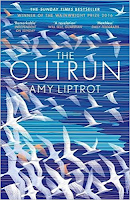
The Outrun by Amy Liptrot, reviewed by Paula Knight


12 Birds to Save your Life - Nature's Lessons in Happiness by Charlie Corbett, reviewed by Linda Sargent


Monday, 3 August 2020

Guest review by Ann Turnbull: THE STORY OF THE BRITISH ISLES IN 100 PLACES by Neil Oliver


'The author declares, "This is my love letter to the British Isles." It's this emotional response that makes the book such an engaging read.' 

Ann Turnbull has been writing stories for young people of all ages since 1974. Her most recent book is In That Time of Secrets, a young adult novel about the persecution of Catholics in 1605, set in the Black Country. Find out more at www.annturnbull.com

I've long been a fan of Neil Oliver's archaeology programmes on TV, but had not read any of his books until I was given this one for Christmas. 
It's a large, heavy hardback of over four hundred pages. I read it slowly, a chapter a day, looking up map references and photographs, and feeling frankly astonished that there were so many places in Britain that I'd never visited, and some I'd never even heard of. This is not a travel guide, although it will inspire readers to visit many of these places. It is very much Neil Oliver's personal response to the wonders of the British Isles.

He describes how all the islands were once part of a great land mass that later separated from continental Europe. The book is arranged chronologically, and the first chapter takes us to Happisburgh in Norfolk where, in 2013, archaeologists found the footprints of five people - two adults and three children - who were walking there in the mud some 950,000 years ago. I remember seeing a reconstruction of these footprints in an exhibition at the British Museum - the adults moving forward, the children criss-crossing as they scampered about. When the people (who were not Homo Sapiens) walked here, these islands were still joined to continental Europe. Aeons had passed before the events in the next story, the cave burial of the so-called 'Red Lady' of Paviland - a young man who died about 34,000 years ago.

The story progresses through time, between England, Scotland, Wales and Ireland. Here are rock carvings, axes, henges, ships, castles, bridges, churches, battlefields, an ancient tree, and even a chapter about an unknown place: the site of the Battle of Brunanburh - a critical battle, which ensured the permanent divide between Scotland and England. The people of Britain are here too: Captain Cook, Mary Anning, King Alfred, the Brontes, Robert Burns, the Tolpuddle Martyrs, the Penlee lifeboatmen, and many more.

The book ends at Dungeness on the Kent coast - a final chapter drawing the threads together, in which the author declares, "This is my love letter to the British Isles." It's this emotional response that makes the book such an engaging read.

The Story of the British Isles in 100 Places is published by Bantam Press.

Monday, 18 May 2020

Guest review by Ann Pilling: DRIVING SOUTH TO INVERNESS: POSTSCRIPT TO AN ACTIVE LIFE, by Phoebe Caldwell


"A brave, funny and inspired book."

Ann Pilling has written or edited over 40 books for children and has published three collections of poetry. A fourth, Jigsawis coming from Shoestring this October. She is married with two sons, six grandchildren, two cats and half a dog. She lives in the Yorkshire Dales which she calls 'the country of my heart', a phrase first used by D H Lawrence whose prose and poetry she greatly admires.

Not long ago Phoebe Caldwell, for 45 years a highly distinguished practitioner who worked, nationwide and abroad, with people on the Autistic Spectrum, decided reluctantly that she could no longer live independently. Now into her eighties she put her Yorkshire home up for sale and downsized to a small flat in a ‘retirement complex’ in nearby Settle. She can still be alone but help is at hand, should she fall, should the plumbing fail, or should the underfloor heating begin to roast the undersides of her feet. Such catastrophes, and the snail’s paced attempts of the ‘management’ to sort them out , are told with a wry mixture of frustration, humour, and sheer disbelief.

Phoebe dislikes the word ‘downsizing’, a euphemism for shrinkage and prefers ‘editing’ where the emphasis is on selection, rather than contraction. Her problem was to condense a library, a museum and an art gallery into two small rooms. When I first visited Phoebe she showed me round. I was moved by their beauty and enchanted by their diversity and their occasional eccentricity. Everything chosen was of significance to her. I recalled William Morris's  ‘Have nothing in your house that you do not know to be useful or believe to be beautiful.’

This book is the product of a richly furnished mind. It ranges widely, from the author’s knowledge of botany, zoology, chemistry to the workings of the brain. She writes with insight and passion about paintings and ceramics, about music, about poetry. Her descriptions of nature are those of a poet, her observations of the majestic limestone landscape which she inhabits are both precise and powerful. She writes of ‘drumlins, like green bubble wrap’, of how ‘Pen-y-Ghent, Ingleborough and Whernside rise from their limestone plateau like yolks sitting on the white of poached eggs.’

Phoebe married early and had five children with her biophysicist husband Peter. She describes his ‘most astonishing eyes, sea green with a pale circle round the edge, like that slither of light trapped under the crest of a breaking wave’. He died young. Half mad with grief she took scissors, sat on their Emperor size mattress and tried to cut it in half. Unsurprisingly her small curved nail scissors were inadequate. Phoebe sold the rambling ruin they had lived in, and moved to a small cottage and went back to work. She has been working ever since.

What do the old do all day, she asks, apart from continually looking for their glasses? Line-dancing, quizzes, craft-work, all feel to her ‘like colouring books for children, to keep them quiet on a car journey’. But she is realistic. ‘The struggle to keep the mind going is balanced precariously against inertia and the temptation to retire to bed and read thrillers.’ What she longs for is ‘humour, conversation, empathy, and psychological awareness’.

Phoebe has a religious faith. Life keeps posing unanswered questions. To someone whose working life has been given addressing the physical disorientation and emotional isolation experienced by people on the autistic spectrum, there must be so many. She writes of meditation, of the experience of being in ‘Presence’. There may be other kinds of mindfulness, she says, ‘but I don’t care, since it works for me and empowers my life and helps me to help others.’

This is a brave, funny and inspired book. Read it.

Driving South to Inverness is published by Pavilion Books.


Monday, 17 February 2020

Guest review by Graeme Fife: A TELLING OF STONES by Neil Rackham


"Fireside lure ... the heady smell of peat, the slight shifts on the chair by the hearth, the storyteller’s enhanced view through the refining aperture of the stone..."

Graeme Fife has written many plays, stories, features and talks for radio, stage plays and articles for newspapers and magazines, and is now a regular contributor to BBC Radio 4's From Our Own Correspondent. He's the author of a string of books - children's stories, biography and works of history. Great Cycling Climbs, which brings together his books on the French Alps, is published by Thames and Hudson. He says, 'I urge everyone to buy from their independent bookshop, if they're lucky enough - as I am - to have one nearby. If not, by any means possible to counter the sprawl of the online consumer graball.'

A legend told on Lewis in the Outer Hebrides talks of a storm and a shipwreck – no rarity in those gale-lashed waters – and a princess drowned in a pool below Baile na Cille on the island’s windswept west coast. A princess by her clothes but, strung round her neck, a seeing stone, destined one day to come into the possession of the Brahan Seer.

The story triggered a devouring curiosity in Rackham, who was drawn to the island through lifelong friendship with Catriona Nicholson, in whose cottage near Baile na Cille, where ‘a peat-brown river frets at the edge of the sea’, much of the book was written.

A seeing stone has one or more natural holes piercing it. A small aperture focuses the vision to close definition of distant objects – think the pinhole in a camera obscura – so it’s not surprising that these stones acquired a certain mystique. Not only could an early sailor use one as a sort of proto-telescope, but those with that other sight, the power of divination and prophesy, might associate their powers of foretelling with privileged touch and use of the stone. For, as Rackham tells us, where ‘all stones hold a remembrance of the past, Seeing Stones, or stones of vision, hold memories within them of things yet to come’. This reference to the fluidity of memory – proleptic and analeptic - is central. We dwell in the continuum of memory, whose eddies and currents tug our imagination through the enchantments, the bewitchments, of both light and shadow. The Latin for story, fabula, gives us fabulous, remember, and Rackham’s narrative is charged with the interweave of time and the magic of the stones, the constants of the sea, its everlasting presence and the unpredictability of its moods, of storm-knots and calms, of the troublesome gift of the sight…

The legends grew and the seeing stones acquired a potent force in the island’s saga which extends far across the flint-backed ocean to the other islands and the old kingdoms of Norway and Iceland. The introduction to this fascinating delve into the lore and the Hebridean spinning of magic and metamorphosis – young women into creatures of the briny flood - tells us ‘princes, pedlars, crofters, selkies and the Lewis Chessmen all encounter the awesome power of the Seeing Stone. Even the Blue Men of the Minch who drag folk and ships to a watery death cannot defeat it’.

You know about selkies…? Find them here.

The Brahan Seer, the Lewis Chessmen, The Blue Men of the Minch, that treacherous northern Charybdis, the choppy maw ready to engulf any unwary vessel and its crew…ah, but it’s tempting to reel off the stories recounted in this most absorbing, fascinating book, but this is a review, not the Reader's Digest version.

I begin with the scope and range of its telling. Rackham is a good companion. He tells the stories in an unaffected style, allowing the seduction of their fireside lure to entice without any need to embellish. The heady smell of the peat, the slight shifts on the chair by the hearth, the storyteller’s enhanced view through the refining aperture of the stone. As all good stories begin, there is that moment when the story-teller says, or gestures, behold…The tale of the Seeing Stone leads us into a fine mesh of myth and the importance of myth, for there is no tale without some hinterland of mortal disquiet or rapture, tragedy or wonderment. How else do we make sense of the perplexing riddles of our life but in the fabric of story? Stranger than fiction? You betcha.

Laced through the rich lore which accompanies the stories per se, here, too, are animadversions ‘on the nature of: Foretelling with Stones…Second Sight…Celtic Knots… Ravens…the Penalties of Foretelling…’ this last springing from the moving story of Brahan the Seer, himself.

As in other ancient cultures, a dangerous confrontation may be averted by the challenge of riddles – the Blue men of the Minch fling a cryptic rhyme at the Princess aboard the threatened boat. Undeterred she answers and they, knowing they’re beaten, ‘uttered loud curses and, slipping from the bow, disappeared beneath the waves’.

'It has been said of chance,’ Rackham writes, ‘that although it may be too intricate to understand, it is never without its own purpose.’ Wow. And, my word, what a concluding sequence...when 'all was caught in an eternity of stillness'.

My highest praise of this book, illustrated with superb line drawings by Alisdair Wiseman? It took me, last week, to Lewis.

A Telling of Stones is published by Acair

See also: Beside the Ocean of Time by George Mackay Brown, reviewed by Graeme Fife

The Outrun by Amy Liptrot, reviewed by Paula Knight

Moby Dick by Herman Melville, reviewed by Graeme Fife


Photographs by Graeme Fife


Monday, 4 November 2019

WILDING by Isabella Tree


"Essential, even exciting, reading for anyone interested in nature, wildlife, ecosystems and climate change." 

Linda Newbery is the editor of Writers Review. She has written widely for young readers and is currently completing a new adult novel.

'Until we understand what the land is, we are at odds with everything we touch.' Wendell Berry

What a fascinating book this is! It covers so much, overturning several preconceptions along the way, that I hardly know where to start. So I'll begin at the end, where Isabella Tree comments on the benefits of natural surroundings for mental health, and the sad fact that many people nowadays have little exposure - through choice or circumstance - to wild nature. Readers of this blog probably know that Robert Macfarlane and Jackie Morris were spurred to work together on The Lost Words - a beautiful book which won Jackie Morris a well-deserved Kate Greenaway Medal for illustration - by news that the Oxford Junior Dictionary was ditching such words as acorn, bluebell, wren and otter to make space for  terms deemed more relevant to today's world: celebrity, blog, broadband and suchlike. Macfarlane and Morris's widely-acclaimed collaboration is a timely and important book, and so in its different way is Wilding. 

Isabella Tree and her husband Charlie Burrell, inheriting his family estate of 3,500  acres, at first continued the arable and dairy farming already established there, but found that their hard-baked clay soil did not produce good yields. Could there be a way of letting their land fulfill its potential - not for commerce, but for wildlife? Inspired by a Dutch project on land earmarked for industry but then abandoned, they learned how the presence of grazing animals - greylag geese, then large herbivores - had produced surprising results; close grazing kept the water fringes clear and tree growth in check, providing habitat for a wealth of insects, birds and small mammals. It's often assumed that any fertile land, if left untended, will become mature woodland; but, as Isabella Tree points out, this notion overlooks the presence of grazing herbivores such as the ancient aurochs, tarpan and bison which preceded human intervention, later replaced by deer, domesticated cattle and pigs. Perhaps, she thinks, we have the wrong idea about ancient forests. She quotes Oliver Rackham: "To the medievals, a Forest was a place of deer, not of trees. If a Forest happened to be wooded it formed part of the wood-pasture tradition."

Wondering if this minimal-intervention approach would work with their own land, Isabella and Charlie sought grants from English Nature (now Natural England), the government's advisory body. Unlike most applicants for funding they had no clear plan for what was in effect an experiment: their plan was, over twenty-five years, to see what would happen if they fenced their land to make it deer-proof, a major expense, and introduced Longhorn cattle, fallow and later red deer, and Exmoor ponies. As in the Dutch project, they chose tough, sturdy animals that could fend and forage for themselves and withstand all weathers.

Copyright Knepp Wildland
Of course the Knepp project couldn't fully replicate natural ecosystems without including apex predators - lynxes or wolves - to keep the numbers of cattle, ponies and deer in check.The Dutch project, leaving weak and elderly animals to die from illness or starvation, had met with justifiable opposition; at Knepp, with the land crossed by footpaths, such a hands-off approach couldn't be justified on humane, aesthetic or even practical grounds. So the grazing animals are culled, and their meat sold. Apparently grass-fed beef is delicious, and pasture grazing is certainly the most environmentally efficient way of producing meat, although it's a luxury few can afford.

Copyright Knepp Wildland
The Knepp experiment, now sixteen years on, has produced inspiring results. Iconic species such as turtle dove, nightingale and purple emperor butterfly have moved in; beavers have been introduced, their dams creating marshy wetland which supports wading birds, amphibians and bog plants. The softening of water edges is so important for flood defences, another re-think: rather than funnelling water into hard-edged channels, it can effectively be dispersed and soaked up, to the benefit of pasture and wildlife. Another keystone creature is the humble earthworm, whose importance has been underestimated to the detriment of soil health.

Copyright Knepp Wildland
Few individuals will be able to replicate the Knepp experiment - Tree and Burrell owned a substantial swathe of land and were able to recruit expert help and funding. But I hope their findings will influence government and NGO policy on land management and conservation. Among many revelations, perhaps the most significant is that if we intervene less, nature can be trusted to restore itself. Whether there's time, in the face of climate breakdown, to attempt this on a wider scale, is impossible to know - we may be too far into our reckless uncontrolled global experiment with the world's climate and ecosystems.

I'd say that Wilding is essential, even exciting, reading for anyone interested in nature, wildlife, ecosystems and climate change - and I think most readers will find surprises and revelations to make them see the countryside, and our role in it, with fresh eyes. And I don't want to end without giving a flavour of the writing: although packed with information, comparisons and statistics, Wilding also has moments of lyrical joy, such as this description of a nightingale's song: "It throws the ear with unexpectedness ... florid trills, first rich and liquid, then mockingly guttural and discordant; now a sweet insistence of long, lugubrious piping; then bubbling chuckles and indrawn whistles; and then, suddenly, nothing - a suspended, teasing hiatus before the cascades and crescendos break forth again ... these pulsating strains issuing from tiny vocal chords belting out like organ pipes, throwing the music of the tropics into the English night air."

Wilding is published by Picador.

Find out more on the Knepp Wildland website.

Monday, 30 September 2019

Guest post by Cindy Jefferies: THE SOIL NEVER SLEEPS by Adam Horovitz


"A lyrical, humane collection of poetry, as sparkling as an upland stream and as far reaching as the branches of a great oak." 


First published in 2001 for children, Cindy Jefferies found success with her Fame School series with Usborne Books. They obtained 22 foreign rights deals and are still in print in the UK. Latterly writing fiction for adults as Cynthia Jefferies, her first title The Outrageous Fortune of Abel Morgan was published in November 2018. The Honourable Life of Thomas Chayne is out in November 2019 and is set during the English Civil Wars.

Towards the end of 2013, Adam Horovitz, poet son of poet parents, was invited by the chair of the Pasture-fed Livestock Association to consider a project. Would he like to write about pasture farming, and visit some of the farms that follow this practice?

A life-long vegetarian, he might have dismissed the idea, but he chose to engage. Knowing little of man’s relationship with landscape and animals he threw himself into his learning. And so, through four seasons and four farms, expanding to six farms with the second edition, he lodged with willing farmers, and got his hands and boots dirty. It must at times have seemed an odd way to be a poet in residence.

In Yorkshire during the winter

counting distant cattle
                     by stripe after stripe

             as clouds shift into sheep
& back to cloud

                     a distant peregrine pricks

                     at the great stone scab of Malham Cove

And in Kent during the summer

Crickets and bees drown out the rush of cars
as we wade through a Van Gogh sunset canvas


There’s a little sadness here, but humour too, struggle and a deep appreciation of the people, animals and land in all their variety. If you have ever been involved with farming you will likely meet a part of yourself here, even though this is a very particular, hands off way of caring for the land. If you have ever simply walked across grassland, or idly watched a field of animals you will learn more here, and you may, next time you see grazing animals, look at what they are eating. Listen for the noise they make, tearing or nibbling at the grass. If they are lucky, they will be consuming a huge variety of flowers and herbs.

This is a lyrical, humane collection of poetry, as sparkling as an upland stream and as far reaching as the branches of a great oak. Out in all weathers, seeing the beginning and end of life, feeling the rhythm of the seasons with their joys and challenges, this poet has created something quite wonderful. He wears his learning with both humility and enthusiasm, a difficult trick to pull off.

It may well be that soon there will be fewer animals being raised as food, for our health’s sake, and for the sake of our world. What few remain will, perhaps most likely, be kept in this way, treading the earth lightly. Maybe this is one reason why I return again and again to the title poem, The Soil Never Sleeps, for as Horovitz says,

The soil never sleeps.
Never slips into ideology or nostalgia.
It is place and purpose,
The perfection of decay.
A story that shifts
From mouth to mouth.
A crucible for rebirth.
A rooftop on another world.”


The Soil Never Sleeps is published by Palewell Press. 

Monday, 3 June 2019

Guest review by Linda Sargent: THE ORCHARDIST by Amanda Coplin


"...draws the reader in as surely as the landscape does, leaving a haunting and uplifting vision of the place and its inhabitants."


Linda Sargent is a writer who works as a publisher’s reader (David Fickling Books since 2002). She has published short stories and articles and her first novel, Paper Wings, appeared in 2010; she is also the author of Words and Wings, a training guide to creative reminiscence work, available as a free download from her website.

“I think we become desensitized to almost everything in life, especially those things that are part of our routine, that we encounter daily. The only way to shake ourselves awake and experience novelty in the everyday is to engage consistently with an art form. Art makes us see the world – right down to our smallest, most intimate experiences – with new eyes.”

So responds the author in the question and answer section at the back of this powerful and evocative first novel, one of my top choices for this year; and I’m sure it will remain there. Set, for the most part, at the turn of the twentieth century in the fertile valleys of the Pacific North-west, it centres on the life of William Talmadge. He is the orchardist of the title, arriving in the valley with his mother and sister in the late 1850’s; we follow his life as he plants and nurtures his fruit orchards of apples and apricots and establishes a home. At first, after the death of their mother, it’s just him and his sister, but one day while out gathering herbs in the forest she disappears and so, at seventeen, he is left alone, his only companionship gleaned from the native American horse-breakers, and specifically the elective mute, Clee (also bereft of family), and Caroline Middey, the healer and midwife from the nearby small town where he goes periodically to sell his fruit.

And so Talmadge (for this is how we know him by now) is, for the most part content tending his trees and expanding his acreage to include the forest and other uncultivated sections of this beautiful landscape, in some respects keeping it for and in memory of his lost sister, nurturing it in the way he is no longer able to nurture her. Until, one day two very pregnant, very young teenage girls, hungry and almost feral, arrive and begin to steal his fruit. From here on Talmadge’s life is changed and disturbed. With the girls comes violence, fear, loss and ultimately a kind of revenge; but what also comes is love and a deepening and most moving warmth between the principal characters. One that draws the reader in as surely as the landscape does, leaving a haunting and uplifting vision of the place and its inhabitants and where the stars are “so thick you could walk right into them...”

It is, overall, a story of nurturing and great humanity – and I loved it.

The Orchardist is published by Orion.

Monday, 6 May 2019

Guest review by Rosemary Hayes: THE SHEPHERD'S HUT by Tim Winton


"A wonderful, acutely observed, tautly-written book from a master storyteller set in a landscape he knows intimately."


Rosemary Hayes' first novel for children, Race Against Time (Penguin) won a national award. Since then she has written over forty books for children in a variety of genres but she particularly enjoys writing both contemporary and historical fiction for young adults. Forgotten Footprints and The Blue Eyed Aborigine are among her recent historical novels and The Mark, Taken, Loose Connections and Payback are stories set in the here and now. She is currently working on a fantasy trilogy for a 9+ readership.

Rosemary worked for Cambridge University Press and then for some years ran her own company, Anglia Young Books, which produced curriculum-related historical stories for primary schools. Now, as well as writing for children, she also runs creative writing courses for adults. She is Patron of Reading at Saffron Walden County High School. 
See more on her website.

The last few lines of the prologue to this book read: ‘For the first time in my life I know what I want and I have what it takes to get me there. … but it wasn’t always like this. I been through fire to get here. I seen things and done things and had shit done to me you couldn’t barely credit. So be happy for me. And for fucksake don’t get in my way.’

My first reaction as I began reading this book was that it would probably be loved and hated in equal measure and, indeed, there have been a few (a very few) reviews where readers couldn’t get past the bad language of the narrator, a brutalised teenager called Jaxie Clackton, even though his language has a unique rhythm and authenticity. How else would this boy speak, after all? He’s uneducated, his mother has recently died from cancer and his drunken, abusive and sadistic father (the local butcher) beats him mercilessly. Jaxie is a school delinquent mocked by his peers, who call him ‘Horsemeat’, and he spends much of his time wandering about the deadbeat rural settlement of Monkton in Western Australia, close to the highway but backing onto the wheat belt and then the inhospitable and desolate landscape of the Murchison gold fields, settling arguments with other teenagers in the only way he knows – with his fists – and wishing his father dead. A wish that is shockingly fulfilled when Jaxie returns home one evening to find his dad crushed beneath the roo bar on his car because he’d not bothered to use the right equipment to jack it up. ‘Being a cheap bastard is what killed him’ is Jaxie’s comment.

Everyone in the small community knows that Jaxie hated Captain Wankbag (Jaxie’s name for his father) and that the local policeman, ‘that fat ranga with the hissy laugh,’ was his dad’s bestie, so Jaxie doesn’t hang around to be accused of murder. Panicking, he puts together a few essentials and goes on the run, heading first into the wheat belt: ‘Nothing but stubble paddocks far and wide. Everything flat and bare. Shanksing across that country you stick out like a rat on a birthday cake, … houses rare as rocking horse turds.’

Jaxie heads north. There is one good thing in his life and that’s his girlfriend and cousin, Lee, 'the only person in the world who gets me,’ but Lee and her family live in Mt Magnet. It's only a couple of hours by car, but Jaxie has no transport avoids the highway in case he’s hauled in by he police. He sets off to walk across the desolate landscape of goldfields and salt flats to reach her and, as he soon realizes, it is a fool’s errand. It is hot, waterless and vast and although Jaxie is by no means ignorant about survival in the bush – he knows about camping, has a gun and can shoot and butcher meat – he is dangerously ill-equipped for the journey.

Jaxie is brave and devoid of self pity and we follow him as he lurches from one crisis to another, hardly able to see out of his injured eye (a legacy of his father’s brutality) and at one point nearly dying of thirst. He follows an old track to a deserted prospector’s camp where he stays for a while, and then, in a search for salt to preserve a great roo he’s shot, he comes upon a shepherd’s hut, in the middle of nowhere, on the edge of a great salt lake. Someone is living there and whoever it is has been there for a while as it is well set up, but there is no sign of a vehicle. Who could possibly survive in this desolate place for any length of time without supplies from the outside world? Suspiciously Jaxie observes the hut through his binoculars, keeping his distance and, he believes, keeping out of sight. But the old man who lives there has already sensed Jaxie’s presence and when they finally confront one another, it is, at first sight, at least, a meeting of two totally contrasting worlds - that of a well-travelled, highly-educated but disgraced Irish priest called Fintan MacGillis and of an illiterate and foul-mouthed teenager from a deadbeat rural settlement.

The oddest of odd couples, then. Jaxie never lets his guard down. No adult, apart from his mum, has shown him any kindness and he is narky and suspicious of this weird old man who talks to himself, reads books and sings. ‘With that accent of his and the way he said things fancy and musical, it was like camouflage and you knew deep down he’d been doing this all his life, hiding in clear sight. He had a boozer’s face but as far as I could see there was nothing to drink out here but rainwater and billy tea. He had skinny legs with ropey blue veins winding up them and his top teeth were plastic and they moved enough to make you seasick. His specs was always on crooked too, one hinge busted and the arm wired on rough as a pig’s tit. And it was clear he was half deaf. Anytime you said something he cocked his head like a kelpie.’

They insult one another, are exasperated with one another, but slowly they create a fragile bond. Jaxie often flares up and threatens to leave, but somehow he never does, in spite of his yearning to get to Lee. Through flashbacks, we learn a lot about Jaxie’s past life, how his relationship with Lee developed and of the abuse he’s suffered, but Fintan remains an enigma. We are never told why he lives here, who brings him supplies at Christmas and Easter (except this Christmas, when no one turned up) or for what crime he is doing penance. Jaxie immediately assumes it is ‘kiddy flddling’ and though Fintan assures him it is not he won’t say much about his background – just a tantalizing hint, here and there.

So, the weeks go by and Jaxie helps the old man with trapping and butchering goats and some of the heavier jobs around the place, giving the reader a well drawn picture of the harshness and tedium of the daily business of keeping alive in the bush. Then, after a furious row with Fintan, Jaxie finally leaves to continue his journey north. However, he has only gone a day’s walk when he makes a shocking discovery that changes everything. From here on the tension really ramps up and after one careless act and fatal indecision we are witness to a tragic conclusion with an extraordinary and heartbreaking description of stubborn loyalty and unexpected tenderness.

Writing in the vernacular is never easy to sustain but Jaxie’s dialogue rings absolutely true throughout and is a wonderful contrast to Fintan’s mellifluous tones. There’s a lot of humour, too, often quite dark and delivered through Jaxie’s one-liners; there's also lyricism, particularly through descriptions of the landscape with its huge skies, its mirages, the changing colours of the salt flats and the rocks, the hostile scrub and the well observed habits of the wildlife. In this Winton captures the essence of the utter isolation and vastness of the place and shows how both Jaxie and Fintan, in their very different ways, are in awe of it.

I have spent a lot of time in Western Australia and I’ve been through one horse towns such as Monkton and flown over the goldfields and salt flats. Winton’s descriptions, through the words of Jaxie and Fintan, are utterly convincing. I was immediately transported back there, seeing, smelling and experiencing it all again.

On the surface, Jaxie is unlovable and inexpressive but we're taken inside his thoughts from time to time - ‘Some nights there was so much feeling in me head I was glad it couldn’t get out. Christ, you could burn a skyscraper down with what’s in me’ - and we cannot help but empathise with him. Despite the rotten hand he’s been dealt Jaxie has soul and we end up loving him and longing for him to survive, to find Lee and ride off into the sunset with her. Though in many ways this is an unremittingly harsh story it is shot through with such bright streaks of perseverance, hope, love, loyalty and humanity that I found it an utterly compelling read - a real page turner. Quite an achievement, given that there are only two main characters.

I have long been an admirer of Tim Winton’s work and in The Shepherd’s Hut he is at his very best. I know I shall go back to it again to savour the rhythm of the writing, the sense of place, brilliantly fleshed out characters, humour and depth of insight. It's a wonderful, acutely observed, tautly-written book from a master storyteller set in a landscape he knows intimately.

The Shepherd's Hut is published by Picador. 

Monday, 22 April 2019

Guest review by Cindy Jefferies: THIRTEEN MOONS by Charles Frazier


"So lyrically written that I was quite bereft when I got to the end..."


First published in 2001 for children, Cindy Jefferies found success with her Fame School series with Usborne Books. They obtained 19 foreign rights deals and are still in print in the UK. Latterly writing fiction for adults as Cynthia Jefferies, her first title The Outrageous Fortune of Abel Morgan was published in November 2018. It comes out in paperback in August 2019. At present she is working on another title for adults.


Charles Frazier’s first book, Cold Mountain, was a best seller on both sides of the Atlantic. His second, Thirteen Moons, came nine years later, and it shows. I have enormous respect for writers who take their time against exhortations by publishers, booksellers and readers. A novel takes its own time, or it should, but everyone needs to make a living, and that can work against our best endeavours. I have no idea precisely why Thirteen Moons took nine years, but I like to think that at least one of the reasons might be because he refused to be rushed.

The title refers to the way the First Nations people in the novel trace their seasons. Frazier educates us as to where we are in the year by way of these thirteen named moons. They quietly pace his novel, the life story of Will Cooper told in the first person. He is a bound boy at the start, a twelve year old orphan, sent alone to the edge of the Cherokee Nation to run a trading post.

For anyone who loves to read of the natural world this is a delight, and also a sadness, especially now, as we appreciate just how much damage we continue to do to the world.

In this wonderful novel we get vivid images of how people think about the land and its inhabitants. The buffalo and elk for example are long gone from the mountains and valleys, and the deer are far fewer, but none of the Cherokee in this novel speak of the numbers of skins they traded being a reason for the animals' demise, just of their vanishment, as if they have simply moved on. That made me think a lot about the balance of nature, and how outside forces offering manufactured goods to make life easier can make change almost impossible to resist.

The Cherokee are a huge influence on Will Cooper, and as a white man he works hard in many ways to protect their land and their way of life. The fate of the First Nations is a matter of history, and shame, and so of course he does not have a quiet life, but even during the worst of times, when violence comes, his story is told reflectively, in the voice of an old man thinking about the past. That voice is so persuasive I could almost believe I was sitting by the fire, listening to him in person.

I was completely captivated by Will Cooper. His loves, his behaviour good and bad, his humour, and wonderful descriptions of riding through the country in good weather and bad. He describes deep snow, thrashing rainstorms and hot sun. The names of places are wonderful, and the way the flora and fauna were used to support life is fascinating. In addition, it is all so lyrically written that I was quite bereft when I got to the end.

Thirteen Moons is published by Sceptre.