Showing posts with label Ann Turnbull. Show all posts

Monday, 1 April 2024

Guest review by Ann Turnbull: THE SHEPHERD'S CALENDAR by John Clare


"I love this book, which takes the reader into the heart of rural life nearly two hundred years ago."

Ann Turnbull
has been writing stories for young people of all ages since 1974. Her most recent book is In That Time of Secrets, a young adult novel about the persecution of Catholics in 1605, set in the Black Country. Find out more at www.annturnbull.com

The Shepherd's Calendar 
was first published in 1827 and has been in print ever since.

John Clare knew village life intimately from his own experience as an agricultural worker in a village near Peterborough in north Cambridgeshire. This book consists of one long poem that takes the reader through a year in the life of country people - beginning with January:

      Withering and keen the winter comes
      While comfort flyes to close shut rooms
      And sees the snow in feathers pass
      Winnowing by the window glass...


It's very easy and pleasurable to read. Here, for instance, is the shepherd with his dog:

      The shepherd too in great coat wrapt
      And straw bands round his stockings lapt
      Wi' plodding dog that sheltering steals
      To shun the wind behind his heels...


And here, the linnets that

      ... flurt their wings and wet their feathers
      To cool them in the blazing weathers
      Dashing the water o'er their heads
      Then hie them to some cooling shed,
      Where dark wood glooms about the plain
      To pick their feathers smooth again.


I love this book, which takes the reader into the heart of rural life nearly two hundred years ago.


The edition shown of The Shepherd's Calendar is published by Carcanet.

Monday, 21 December 2020

Reading ahead - New Year anticipation, part 1


Here's part one of our yearly thank you to all those guests whose contributions keep us going! In this first part of three, some of our reviewers tell us what they're looking forward to reading in 2021 - whether it's a new publication, a return to an old favourite, or an author newly-discovered. What's on your reading pile or wishlist for the year to come?

Graeme Fife:
In these darkening, dark, days of 2020, this stuttering conclusion to such a strange year, yet inspirited by the promise of a vaccine and by a zephyr of hope from across the Atlantic – a woman soon to be a heartbeat away from the American presidency, (wishing no harm to Biden) – I will be reading a new study of All the Sonnets of Shakespeare, arranged in their probable chronological order of writing, by Paul Edmondson and Stanley Wells. The approach promises new insight. Having come late to Jonathan Coe’s novels, there remains only one of his titles to read, Mr Wilder and Me, his latest novel based on the work of the great film director, Billy Wilder, revisiting Coe’s fascination with cinema, the tropes of movie comedy and the refractions of the celluloid world. And JB Priestley, The Good Companions, the big novel which launched him. Hurray.
 
Also I aim to watch again the utterly superb Babylon Berlin. Don’t miss it.

Jonty Driver: I look forward to Jonathan Smith's latest book, Being Betjeman(n), recently published by Galileo. Described as "part biography, part fiction and part self discovery", it includes enough of Betjeman's poems for one to want to add "part anthology". I've resisted the temptation to begin it at once, because I have at least five other books piled up next to my reading-armchair, all interesting, all not finished yet; but dipping into Jonathan Smith's new book I am once again impressed by his style, which is I guess so like the voice he used when he was a schoolmaster at Tonbridge: clever, funny, casual, sharp-witted. On the back cover are three recommendations: from Sir Anthony Seldon, no longer a Master or Vice Chancellor but a full-time writer; Dan Stevens, the actor, and Christopher Reid, poet and publisher. What fun to have those three ex-pupils as enthusiastic readers.

Amanda Craig: 
I am particularly looking forward to Francis Spufford's new novel Light Perpetual, to be published in February. It imagines that five children whose lives are destroyed in 1944 by a bomb continue to live in an infinitesimal alternative fraction of time - an intriguing idea, and one that, as a devotee of CS Lewis, I am hoping he will develop with the imaginative zeal he showed in his classic book The Child That Books Built.

I'm also looking forward to Liz Kessler's YA novel, When the World Was Ours, coming in January, about three children in Nazi Europe, inspired by her father's escape. She's a terrific writer who keeps pushing her imagination and her readers' sympathies to engage with difficult, dark yet uplifting subjects. I can't wait to see what she's done with this material.

I'm also planning to tackle Saidiya Hartman's Wayward Lives Beautiful Experiments, about the first generation of black women in America after emancipation who refused to accept their degrading conditions and who became pioneers in pursuit of liberty. I was sold it by a passionate recommendation at Daunt's and it looks both intriguing and original.

Jean Ure: With the very recent death of my beloved husband I find that it is books which are my greatest solace and means of at least temporary escapism.   But they have to be a certain type of book.   Nothing to do with the here and now, which I feel would be too close to home for comfort.   Likewise nothing too distant – which immediately excludes an old friend such as Mary Renault – nor anything futuristic.  Nor anything too familiar – which excludes some of my all-time favourites such as Olivia Manning's two brilliant trilogies.    In the past I have often fallen back on Trollope, but for the moment he has lost his appeal.    Not quite sure why.    Maybe because for the most part he concentrates all his efforts on his characters, with not enough distractions to buoy me up in my present state.

By chance I have come upon an author I am scarcely acquainted with: Barry Unsworth.   I did read him once, long ago, but obviously at that time he made little impression.   Now he has come to my aid most wonderfully.   Tough, powerful, sufficiently removed from the present day - in-depth characters, much food for thought, plenty of distractions.

I started with Sacred Hunger, have now moved on to the sequel, and heaven be praised there are several more waiting for me.   Which doesn’t stop me from panicking in advance: where do I go next?    Any recommendations most gratefully received.

Cindy Jefferies: Among the teetering heaps of new fiction gasping for my attention next year, a more modest pile awaits me in 2021. These are some of the treats I have promised myself in between reading some more modern yarns. The Master, by Colm Toibin, his novel about Henry James. Roberto Calasso’s re-exploration of Greek mythology in The Marriage of Cadmus and Harmony. Finally, some of my grandfather’s bound copies of The Strand Magazine and the English Illustrated. These hold some of the writing thought best in1895, Mr A Conan Doyle amongst them. From fiction to cartoons, politics to the recollections of Sir John Everett Millais. They give a snapshot of English society during that year. Stories for children sit uneasily between notes from the Speaker’s Chair and an alarming drawing of a man being attacked by a pike. Cricket, railways, Balfour’s thoughts. Family entertainment in front of the fire on a Sunday afternoon over a hundred years ago.

Linda Newbery:
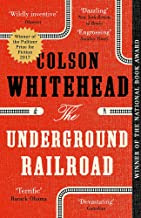
Bernardine Evaristo's Booker-winning Girl, Woman, Other is near the top of my pile, plus a shortlisted title The Underground Railroad, by Colson Whitehead,  and the latest winner Shuggie Bain. And I've got two climate change-related titles lined up: Jenny Offil's Weather, and The Good Ancestor by Roman Krznaric. So many wonderful things have been said about Piranesi that it sounds like a must-read - and I loved Maggie O' Farrell's Hamnet so much when I listened to it on Audible that I must read it in book form, too. Finally, the death of John Le Carre has made me realise how few of his novels I've read, so The Spy who came in from the Cold is next on my pile.

Gwen Grant: 
Poetry of the Committed Individual. Amongst the poets in Jon Silkin’s wonderful 1973 Stand anthology is the Israeli poet, Natan Zach, who died last month. His tiny poem ‘How is it that one star,’ about a star daring to shine on its own, is so beautiful that, unprepared for the savagery ribboned into his poem, ‘Against Parting,’ I found myself staring blindly at the page. Zach’s tailor once parted from his wife – Auschwitz, and from his three sisters – Buchenwald. Parted for ever.

Michèle Roberts is a writer who takes you into the very heart of her characters and their stories. So I am immensely looking forward to reading Negative Capability, an account of how she copes with the rejection of her latest novel.

More George! published by The Hallamshire Press in 1994 is the story of George Cunningham growing up in Sheffield. George is a fabulous amateur illustrator. His beguiling pictures and vivid accounts of his life are enchanting. ‘Get a Good Rise – Join the R.A.F. Pay 3/- to 18/- a day.’ Such a lovely book. 

Ann Turnbull: 
I'm planning to re-read some older books that have been sitting on my shelves for years and that I remember almost nothing about: 

Moon Tiger by Penelope Lively; 
Heat and Dust by Ruth Prawer Jhabvala; 
Half of a Yellow Sun by Chimamanda Ngozi Adichie; 
The Bridge of San Luis Rey by Thornton Wilder
and The Daughter of Time by Josephine Tey.

Lesli Wilson
: In the New Year, I'm hoping to read the Booker shortlisted Burnt Sugar, by Avni Doshi, as it sounds interesting and deals with a difficult mother-daughter relationship; I had one of those myself.. I also want to read The Black Jacobins, by CLR James, which is about Toussaint L'Ouverture and the rebellion of enslaved people in San Domingo. I have on my shelves Red Clocks, by Leni Zumas, which my sister-in-law recommended to me, and I intend to read that after Christmas. A long way into the New Year, I am very much looking forward to reading Katherine Langrish's From Spare Oom to War Drobe; Travels in Narnia with my nine year-old self. I also intend to read the latest book in the uncomfortably exciting Babylon Berlin series by Volker Kutscher, Marlow. As yet, it's not available in English, but I shall read it in German.


Monday, 3 August 2020

Guest review by Ann Turnbull: THE STORY OF THE BRITISH ISLES IN 100 PLACES by Neil Oliver


'The author declares, "This is my love letter to the British Isles." It's this emotional response that makes the book such an engaging read.' 

Ann Turnbull has been writing stories for young people of all ages since 1974. Her most recent book is In That Time of Secrets, a young adult novel about the persecution of Catholics in 1605, set in the Black Country. Find out more at www.annturnbull.com

I've long been a fan of Neil Oliver's archaeology programmes on TV, but had not read any of his books until I was given this one for Christmas. 
It's a large, heavy hardback of over four hundred pages. I read it slowly, a chapter a day, looking up map references and photographs, and feeling frankly astonished that there were so many places in Britain that I'd never visited, and some I'd never even heard of. This is not a travel guide, although it will inspire readers to visit many of these places. It is very much Neil Oliver's personal response to the wonders of the British Isles.

He describes how all the islands were once part of a great land mass that later separated from continental Europe. The book is arranged chronologically, and the first chapter takes us to Happisburgh in Norfolk where, in 2013, archaeologists found the footprints of five people - two adults and three children - who were walking there in the mud some 950,000 years ago. I remember seeing a reconstruction of these footprints in an exhibition at the British Museum - the adults moving forward, the children criss-crossing as they scampered about. When the people (who were not Homo Sapiens) walked here, these islands were still joined to continental Europe. Aeons had passed before the events in the next story, the cave burial of the so-called 'Red Lady' of Paviland - a young man who died about 34,000 years ago.

The story progresses through time, between England, Scotland, Wales and Ireland. Here are rock carvings, axes, henges, ships, castles, bridges, churches, battlefields, an ancient tree, and even a chapter about an unknown place: the site of the Battle of Brunanburh - a critical battle, which ensured the permanent divide between Scotland and England. The people of Britain are here too: Captain Cook, Mary Anning, King Alfred, the Brontes, Robert Burns, the Tolpuddle Martyrs, the Penlee lifeboatmen, and many more.

The book ends at Dungeness on the Kent coast - a final chapter drawing the threads together, in which the author declares, "This is my love letter to the British Isles." It's this emotional response that makes the book such an engaging read.

The Story of the British Isles in 100 Places is published by Bantam Press.

Sunday, 31 May 2020

Lockdown Sunday extra: Ann Turnbull chooses THE ANCHORESS by Robyn Cadwallader


"engrossing ... brought to life in an imaginatively convincing way."

Ann Turnbull has been writing stories for young people of all ages since 1974. Her most recent book is In That Time of Secrets, a young adult novel about the persecution of Catholics in 1605, set in the Black Country. Find out more at www.annturnbull.com

This compelling novel tells the story of a young woman in medieval England who becomes the anchoress in a rural church. Her difficulties in settling to a life of prayer and contemplation have been brought to life in an imaginatively convincing way. The anchorhold is minutely described. Sarah measures it out: nine paces long by seven paces wide. There are two small windows into outer rooms, one for her servant to use, the other for visitors. She is also provided with a squint into the body of the church, which gives her a view into part of its interior - but the squint is angled so that she has no direct view and cannot be seen. A large crucifix dominates her cell, and a small window high up lets in a little light.The door is bolted. Under the stone floor are the bones of one of the two previous anchoresses. In this damp, cold place she prepares to spend the rest of her life.

Sarah is attended by a servant and a young girl who are there to make her life run smoothly and give her time for reading, prayer and contemplation. But she is an object of much interest to the women of the surrounding villages, who call in, one by one, to see her and talk to her. They don't come in need of spiritual help so much as information about her and to chat about the life of the village. One of the women says she thought she'd pop in just to be friendly, because "don't you long for a good natter sometimes, Sister?" The villagers are fascinated by the anchoress, and as they talk about their own lives the story expands to include the entire community.

Some of the chapters switch to the point of view of Father Ranaulf, a priest at the priory. Ranaulf has been appointed Sarah's confessor and visits her regularly, advising her on her reading and how to practise her calling. From Ranaulf's chapters we get a sense of the wider context of the anchoress's life and how it is overseen.

Two dark events haunt Sarah. One is the memory of how the lord of the manor had pursued and tried to force her, and how he remains a danger to young women. The other is the death in childbirth of her beloved sister, Emma. Sex and childbirth and the danger and grief they present for women are at the heart of this story. There have been two previous anchoresses, one of whom is buried beneath the floor of the cell and causes Sarah fear in her darker moments. The story of the other one is gradually revealed. Sarah struggles to subdue hunger and cold and to keep up with her spiritual reading. At first she is too hard on herself and is embroiled in outside events, but in the end a way forward becomes clear.

This is an engrossing book, which brings to imagined life the experience of becoming an anchoress. The style is not at all archaic, even though Sarah's lifestyle seems so alien now. And I found the ending very satisfying.

The Anchoress is published by Faber.

Monday, 23 December 2019

CHRISTMAS ROUND-UP Part 1: What's on our to-read piles?


What's on our reading piles? Some of our contributors look ahead - to new publications, books they plan to re-read, authors they've neglected. We hope you'll find some great suggestions here. Thanks, as always, to all our guest reviewers for sharing their favourites - WRITERS REVIEW wouldn't exist without them! Come back next week for Part 2, and the first Monday in January for Part 3.

***


Piers Torday:  I am saving Bernardine Evaristo’s Booker Prize winning Girl, Woman, Other for the holidays, as following the election result, I need something urgently contemporary and modern that takes the novel forward to hopefully move me forward too. I am hugely looking forward to Salley Vickers’ latest, Grandmothers, as The Librarian was one of my favourite titles of the last year or so. For the New Year, I am anticipating a subterranean wander with Robert Macfarlane’s Underland, as the weather and political climate look set to make overground distinctly unappealing…

***


Yvonne Coppard:  Like many others, I eagerly await Hilary Mantel’s The Mirror and the Light, concluding the journey that started with the wonderful Wolf Hall. For non-fiction, I will re-read my old fave, Carlo Ravelli’s Seven Brief Lessons on Physics, and will eagerly move on to the new Unlocking the Universe, by Lucy and (the late) Stephen Hawking. Billed as ’the ultimate children’s guide to space, time and everything in between’, it sounds just about the right level for me in my quest to understand the basics of our extraordinary planet before I die.

***


Ann Turnbull:  I'll be reading Girl by Edna O’Brien – because I feel so inspired that at the age of 88 she has not only written another novel but chosen such a bold theme. Also The English Patient by Michael Ondaatje – because I loved the film, always meant to read the book, and recently read the first few pages and didn’t want to stop.

***


Marianne Kavanaugh:  I’m looking forward to Amanda Craig’s The Golden Rule, which comes out in June. It has a deliciously Patricia Highsmith-type premise – two women meet on a train and agree to murder each other’s husbands. Otherwise, as usual, I will be disappearing into books I should have read but somehow missed, like Carson McCullers’ The Member of the Wedding (with the added bonus of an introduction by Ali Smith). Also waiting for me is Leila Slimani’s first novel Adèle (Dans le jardin de l’ogre). I loved her best-selling Lullaby (Chanson Douce) – a taut, claustrophobic story told in dark, plain language.

***


Cindy Jefferies:  On my teetering to read pile is Portrait in Sepia by Isabel Allende. As more books get added , this novel is about half way down the pile now, but I have just teased it out and put it back to the top. Her work always cheers me if I need cheering. Reading her feels to me rather like meeting a friend after a long time and spending a few hours catching up.

Over Christmas, children and grandchildren will be in and out, giving little time for me to get immersed in anything other than board games, slices of cake and general frivolity. Making an Elephant by Graham Swift is one I keep for those snatched moments. It’s a collection of essays, interviews and memories along with some poetry. Swift tells us about reading aloud at Cheltenham and elsewhere, spending Christmas with Salman Rushdie in hiding, buying a guitar with Kazuo Ishiguro, the death of his father. I find every essay absorbing. Swift writes modestly, and isn’t afraid of laughing at himself. It’s always a pleasure to pick up the book and discover something else, and along the way some of his thoughts on writing slip in, to be mulled over. Perfect!

***


Gwen Grant:  Poems that make Grown Men Cry - Great poems. Great choices. Irish Colin McCann chooses American Wendell Berry’s moving dream of a dead friend. Malawi-born Jack Mapanje cried all right but with laughter at Bertold Brecht’s ‘The Book Burnings, as a furious poet learns his work is not going to be burnt.

Crime writer John Sandford’s latest book, Neon Prey, is lined up, too, his spare, laconic, writing married to high octane stories of murder and mayhem that make the hero, Lucas Davenport, very likable. The Letters of Vincent Van Gogh reveal the vulnerability, goodness and perseverance of a man slowly finding his way in life. Good writing draws you in; love has you walking alongside.

***


Jon Appleton: Spanning 40s America to 70s Ireland, Anne Enright’s new novel, Actress (Cape, February) promises to cast her unflinching gaze on the scars of childhood but will no doubt be just as vibrant and stimulating as I’ve found her other novels to be. Second, full disclosure: I was lucky to work, in a small way, on Chris Whitaker’s We Begin at the End (Zaffre, March) but I’ll be reading my finished copy afresh and recommending it widely. It’s going to be one of THE big books of 2020 – a powerfully realised, panoramic crime novel that offers every kind of readerly pleasure.

***


Judith Allnatt: I’m going to start 2020 with the delight of reading new novels by favourite authors, both of which are set in the years leading up to WW2. Sue Gee’s new novel Trio has settings that intrigue me straightaway “the isolated moors of Northumberland, a hill-town school and a graceful old country house”. Here, a grieving widower is awakened to both music and love.

A Single Thread by Tracey Chevalier on the other hand, concerns a ‘surplus woman’, unlikely to marry, seeking company in a group of embroiderers and becoming privy to their secrets. One can be sure that both writers will explore grief and desire with all their customary subtlety and insight.

***


Mary Hoffman: For me the big event of 2020 will be the March publication of The Mirror and the Light, Hilary Mantel’s third novel in the “Cromwell trilogy.” We pre-ordered it the minute it was announced. And there’s plenty of time to re-read Wolf Hall and Bring up the Bodies before then. (It will be the third time for me).

Mantel is the only fiction writer I buy in hardback, so I am waiting for paperbacks of Girl, Woman, Other by Bernardine Evaristo (also March), Big Sky by Kate Atkinson (late January) and possibly Margaret Atwood’s The Testaments (that’s not till July but I am in no hurry.

And a little bird told me that Celia Rees’s first adult novel, Miss Graham’s Cold War Cookbook, is coming from HarperCollins in May. I might have to break my no hardback fiction rule for that one!