Showing posts with label nature writing. Show all posts

Monday, 15 June 2026

Guest review by Sue Purkiss: RAISING HARE, by Chloe Dalton


"The writing shines with a crisp clarity ..."

Sue Purkiss
has enjoyed parallel careers in teaching and writing. Starting as an English teacher in secondary schools, she went on to work with children who were out of school for medical reasons, and with young offenders. She also spent five years working as a Royal Literary Fund Fellow at Bristol and Exeter Universities, and has taught creative writing in the community for more than twelve years.

Her books until now have been for children. They include historical fiction (Jack Fortune, Warrior King and Emily’s Surprising Voyage, which was long-listed for the Carnegie), and a contemporary novel, The Willow Man, as well as several retellings and a life of Shakespeare. This year will see the publication of her first adult novel, An Ordinary War, by Writers Review Publishing.

She lives in Somerset, whose magical landscapes provide the settings and inspiration for several of her stories. 

I'm not sure if there is such a thing as typical nature writer - but if there is, Chloe Dalton is definitely not it. Up until the 2020 pandemic, hers was an emphatically urban lifestyle. For over ten years she worked in the UK Parliament and the Foreign and Commonwealth Office - notably with William Hague - and her day job is still in this field. And I think that's important, because it explains a lot about the way she writes and the way she approaches and observes nature.

The story begins with an evocation of a bitterly cold day in the January of 2020. The writing shines with a crisp clarity which is the hallmark of Chloe's prose: "The trees were frosted white with windblown snowflakes, while icy cobwebs hung in the hedgerows like frozen cat's cradles. A lone kestrel brooded on the garden fence, spectral in the dim light." During the weeks that followed, a hare gives birth. And later, after the beginning of the pandemic, when Chloe has retreated to her house in the countryside, she hears a dog barking. This is unusual. She goes out to investigate - and comes across a tiny leveret lying on the grassy strip that runs down the middle of the track which she is following. She hesitates. Although in her current life she has nothing to do with animals, as a child she was used to her mother rescuing and caring for all kinds of creatures, and her sister has a small farm - so she knows enough to understand that she may do the leveret more harm by handling it than by leaving it alone. So she leaves it and goes home. After a few hours, she returns, hoping it will have found its way back into the undergrowth and been reunited with its mother.

But it's still there. And she sees that if she leaves it, there can be little hope for it. If its mother has not already found it, it's unlikely now that she will. It couldn't be more vulnerable: before long it will inevitably be predated. So she takes it home.

But now, what is she to do with it? The friend who is staying with her gently points out that this will surely end in tears: what will happen when Chloe goes back to London?

But Chloe doesn't take her friend's advice. Perhaps it's a reaction to the way the pandemic is robbing everyone of agency in their own lives - anyway, she decides that this small life is one she will try to save.

And she does. But she does it in her own way, which is firmly grounded in the understanding that this is a wild creature, and while she will do her best to enable it to live, she has no intention of trying to make it into a pet. She never names it, she doesn't put it in a cage, even for its own safety: it is wild and it will remain so - it will be free, even if this means it will put itself in danger.

But something extraordinary happens. The hare chooses to stay with her. Not all of the time; sometimes it disappears for weeks on end. But it clearly sees her home as a place of safety. When, eventually, she decided to write about the experience, the hare is often lying beside her, completely at ease in her company. And the experience changes her. She becomes so much more aware of nature, and how everything locks together: instead of seeing a green field, she notices all the different varieties of plants at her feet. When the local farmer harvests potatoes wth a machine, she sees the resulting carnage - dead wildlife, including many hares - and has a visceral sense of their fear and panic as the machine approaches. But she also sees that farmers are leaving wider margins for wildlife, and how these are resulting in a greater diversity of species - this book isn't about despair, it's about finding hope, and reconnecting with the natural world - which is not just an empty phrase, but which is in the end essential if we, and the planet, are to survive.

At the beginning, I suggested that Chloe Dalton is not a typical nature writer (if there is such a thing). Many books about nature foreground the writer's internal life. Many writers explain - often very movingly - how connecting with nature has helped to heal their inner turmoil, the damage which life has inflicted on them. That's not the aim of this book. Chloe does refer to her urban life, to her day job - and she does say how her experience with the hare has modified her attitude to that life. But she doesn't reject that side of her life - and her purpose doesn't seem to be predominantly to explore her own motivation: it's to observe, and understand, the nature of this creature. She fully understands that it's not her pet - it's its own creature, it's 'other', it's wild, and all the more to be respected and admired because of that.

She writes absolutely beautifully. Her prose is clear, precise, luminous. I came across an interesting quote from her in an interview about a piece of advice about writing that her father once gave her. It is, I think, excellent advice about writing in general, and it's advice that she has certainly followed.

'My first real job was as a researcher to a Member of Parliament. In my first week, my father came across me sitting at home, early in the morning, worrying over the text of something I’d drafted. When I asked for help, he pulled up a chair next to me, took my pencil, and after a few moments, drew a steady line through every superfluous word on the page. He told me that in Parliament I would write for people who didn’t have much time to read, and that I should learn to convey my point as briefly as possible. I’ve come across various iterations of that advice in the years since. ‘Know how complicated it is and then state it simply’, Hemingway wrote. But my father taught this to me first, and I’ve never forgotten it.'

I want to end this as Chloe Dalton ends her very beautiful book. She is contemplating the fact that one day the hare will not return, and she says:

'I tell myself not to count the years ahead in which she might never again come, but rather cherish the days she has given me of her own free will, when she lowered her species' instinctive guard against humans, and shared the beauty and mystery of her presence in silent and graceful companionship. I will remember her leaving, but will know that before she did, she always, first, looked back.'

Raising Hare is published by Canongate.

Sue's first novel for adults, An Ordinary War, will be published by Writers Review Publishing in July. 


More of Sue's choices:


Monday, 25 August 2025

Guest review by Linda Sargent: THE OLD WAYS - a Journey on Foot, by Robert Macfarlane


"What a complete joy it’s been, timely and so sustaining in these darkening times in our world."


Linda Sargent
is a writer who worked for twenty years as a publisher’s reader (David Fickling Books since 2002). She has published short stories and articles and her first novel, Paper Wings, appeared in 2010; she is also the author of Words and Wings, a training guide to creative reminiscence work, available as a free download from her website. 

Tosh's Island, a graphic novel for children and based on Linda's childhood experiences, written in collaboration with Joe Brady and illustrated by Leo Marcell, was published last October by David Fickling Books, having first appeared in serial form in The Phoenix Comic.

A book about walking might not seem like the obvious choice for me, now a full-time wheelchair user, but this is about so much more than the mere physical act itself. As well as the obvious meaning, the “old ways” explore and traverse humanity’s various journeyings and their resulting connections over the millennia; covering not just the more well-known tracks, but lesser-known ones too, over mountains and even the those more fleeting passages across the seas. These are journeys rooted both in the physical reality of walking and, perhaps more importantly, that of the imagination. Over the years I have been giving it to more agile friends, but now since moving to rural Wiltshire with our monthly trips down to the Mobile Library in the village hall car-park I decided to add it to my order reserve list. And what a complete joy it’s been, timely and so sustaining in these darkening times in our world. I messaged the author as much on Instagram, not expecting a reply, but one came in the form of a warm and thoroughly empathetic response. Since feet connecting with earth is clearly so vital for the author, he seemingly totally grasped what I was trying to say about how I nurture and ponder the memories of past walking times, as well as continue such journeying vicariously via writing such as his, in many ways even more enriching as they mostly are in settings I would never have visited and never shall. Although that isn’t true of all, since there are places featured that are familiar, including Cambridgeshire, the Downland country of the south of England, Sussex, Wiltshire and my old home in the Kentish Weald, landscapes referenced through the author’s deep admiration and connections with the work and lives of Edward Thomas and Eric Ravilious which thread through this book enriching the reader’s experience not only of the land, but also these two artists.

So many paths trodden here, from Scotland, the Camino, Tibet and more. And not all are land-bound. His descriptions of the Sea Paths show a more ethereal, yet equally powerful way marking. He tells the reader (p.88) of the many names of these paths, for example “In Old English the hwaell-weg/the whale’s way” – invisible currents bringing humanity together over thousands of years, leaving no trace on the water, but resulting in a sharing of trade, culture, stories, songs, invasion of course and the aftermath of man-made upheavals. The latter with such a profound modern resonance.

It is impossible to do this book justice. For me it worked and will continue to work in so many levels through my own imaginative, internal world. As the writer says these are (p.198) “the landscapes we bear with us in absentia, those places that live on in the memory long after they have withdrawn in actuality”.

Yes. Exactly this.

(NB: I have recently come across a newly formed organisation called Slow Ways, a community initiative mapping accessible walking and wheeling routes and encouraging more to be developed. More here.) – see slowways.org)

The Old Ways is published by Penguin.

See also Linda's review of 12 Birds to Save your Life - Nature's Lessons in Happiness by Charlie Corbett


Alison Layland reviews Sarn Helen by Tom Bullough

Monday, 7 July 2025

Guest review by Nick Hodges: THIS BIRDING LIFE by Stephen Moss


"Moss can see an everyday bird and take pleasure from it - every day. His enthusiasm is catching: boundless."

Photograph with king parrot
by Judith Ramage
Nick Hodges
is an Englishman living in Australia. He is a teacher and freelance journalist concentrating on Travel and Nature. His work has been published in Britain's Sunday Times, The Times Educational Supplement and the Tourist Board magazine, In Britain. Down Under, his work has appeared in leading newspapers, The Sydney Morning Herald, The Age and The Sun Herald. He has recently completed 20 years of writing a monthly Nature Notes article for a Sydney newspaper. He has designed and taught adult courses on The Birds of Sydney.

Nick Hodges is not a twitcher. Well - not really.


The book was old but still in good condition. I opened it and the phrase 'birds are so beautiful' grabbed me. That's right, I thought; that's why I like them.

The author, Stephen Moss, writer, broadcaster, TV producer and naturalist, knows what he's talking about. This Birding Life is a collection of essays on birds and birders which appeared many years ago at monthly intervals in The Guardian.

My copy had been half obscured at the back of a bookshelf and unread for a long time. I leafed through it and was struck by the similarities: I, too, had written once a month about nature. My pieces were published over a period of 20 years in a Sydney newspaper. But whereas Moss had written about birds my Nature Notes were more general: Kangaroos and Crocodiles as well as Cockatoos and Kookaburras.

I sat down, and read for several absorbing hours until I'd finished it: the book was that good.

Once, in northern Australia, 80 km from anywhere, I sat on the dusty bank of a tired, half-empty creek. Next to me was a naked tree, gaunt with what passes for winter in those parts. I waited. And waited. Then it happened. A great cloud passed over the sun before descending to immediately clothe the whole tree in what resembled a quivering mass of breeze-blown, green leaves. Winter became summer. And they weren't leaves - but Budgerigars! Thousands of them!

Corny perhaps to say it was a truly unforgettable sight. But it was. Who could I tell? Who would understand? Stephen Moss would.

Reading his book I felt a strong affinity with the man. When he sees his first Blue-cheeked Bee-eater he claims it to be 'the most breathtakingly beautiful bird I have ever seen: a vision of rich, warm colours somehow out of place in this harsh, grey landscape'. I know exactly what he means. That Bee-eater will stay with him always. And his first Little Bittern? 'One of the great moments of my birding life'. One suspects he means his entire life.

This Birding Life is divided into seven parts: Growing Up, Spreading my Wings, My Local Patch, Birding Britain, Birding Abroad etc. Each containing several essays. When you've read the lot you've also read much of the story of the author's life.

Stephen Moss's prose is straightforward but effective. His descriptions are illuminating. He says that Yellow Wagtails resemble flying lemons - and he's right. They do! On an offshore island of breeding seabirds he writes, 'The Puffins continued loafing about, posing for photographs until the boat came'. And he's right. They do! On Ivory Gulls, he writes, 'despite its name this species is not ivory coloured at all. A better name might be 'Persil Gull: its plumage is almost whiter than white'.

There are essays on birds seen on country walks, in car parks, while commuting and on his regularly visited local patch. There are essays about birds in childhood and on birders themselves, great men of ornithology. There are essays on bird names: Thekla Lark, Eleonora's Falcon, Montagu's Harrier. Why are they named thus? Who were these people? How do you pronounce Adouin's Gull? And what exactly is a twitcher? And a mass twitch? It's all here.

Have you ever had a good look at a house sparrow? Moss can see such an everyday bird and take pleasure from it - every day. His enthusiasm is catching; boundless.

Being a birder is a reason to visit new, maybe-unknown spots: Minsmere Nature Reserve, for example, is surely one of Britain's most lovely places. Ditto, Cley Reserve in Norfolk; or the Hebrides. The very mention of these places inspires awe among birders. Me too. Stephen Moss visits all of these destinations in order to see different and new species of birds. He writes about these hallowed birding spots with what amounts to reverence. These are the places to go in order see rarities and possibly 100 species in a day. Yes: 100!

The book has no illustrations or photographs. However, Moss's prose carries the day. A word of warning: be careful if you check out his birds online. The Blue-cheeked Bee-eater for example. You'll be so dazzled by the colours you'll find yourself considering air fares to the bird's homeland. And air fares to Africa aren't cheap. But with or without illustrations the book is a decided tick.

This Birding Life is published by Aurum.

See also: 

12 Birds to Save your Life - Nature's Lessons in Happiness by Charlie Corbett, reviewed by Linda Sargent


Bird Cottage by Eva Meijer, translated by Antoinette Fawcett, reviewed by Daniel Hahn


A Sweet, Wild Note: What we Hear when the Birds Sing by Richard Smyth, reviewed by Dawn Finch

Monday, 30 June 2025

LOST ANIMALS, DISAPPEARING WORLDS - STORIES OF EXTINCTIONS by Barbara Allen, reviewed by Linda Newbery


"Allen says that she wrote this book 'accompanied by many tears', but warns that it is too easy to judge the generations that came before us, while our own shows equal carelessness."

Linda Newbery
edits Writers Review. Her latest novel for adults is The One True Thing.
Mention extinction, and the first animals that come to most people's minds will be dinosaurs, followed by the iconic dodo, woolly mammoth and sabre-toothed tiger. Barbara Allen's book ranges more widely, taking in a number of creatures I (and probably you) had never heard of, and moving closer to the present day, to species whose demise is most definitely down to human activity. Inevitably a sad compilation, it's informative and engaging too, largely thanks to the author's device of giving a 'voice' to a member of each vanished species. Most famous of these is 'Lonesome George', the Pinta Island tortoise who died in 2012 at about a hundred and ten years old - like other animals here he was an 'endling', the poignant term for a lone survivor destined to die unmated and as the last recorded individual of its species.

In the opening, Barbara Allen, a minister in the Uniting Church in Australia, speculates about why she's included some animals rather than others - for example two of those I've just mentioned, the woolly mammoth and sabre-toothed tiger, don't appear here. "What I do know," she acknowledges, "is that no book, with one exception, can contain stories about every extinct species; the only volume that can, and does, cradle those sad tales close to its heart, its core, is Earth." 

The concept of extinction was first used in 1796 by the French naturalist Georges Cuvier, who spoke of animals living in "a world previous to ours". The religious establishment was affronted by this, just as it was sixty years later by the publication of Darwin's On the Origin of Species. We now know that extinctions are caused both by cataclysmic events such as asteroid strikes or volcanic eruptions and by more gradual changes such as pollution, competition for food or shelter, and habitat loss. But how can we know when a species truly is extinct? The IUCN (International Union for the Conservation of Nature) is the global authority, categorising a species as extinct if no sightings have been reported for fifty years - though there are sometimes comebacks from 'Lazarus' species such as the coelacanth, which until 1938 had been known only as a fossil. But it's sobering to note that 41% of amphibians, 27 per cent of mammals and 13% of birds are currently threatened with extinction. More optimistically, the IUCN's Green List analyses conservation efforts and their impact on species recovery.

Allen also writes about 'de-extinction' or 'resurrection science', and how this could be done through cloning and genetic engineering; but she examines the ethics of this, how feasibly it can be done, the effects on other species if, say, mammoths were reintroduced to the Arctic tundra, and whether hubris might result in humans thinking that by 'tinkering' they could do better than nature. And, as she points out, "If we think we can 'replace' a species, then apathy may set in, making us less inclined to protect others."

In the midst of the sixth mass extinction, or Holocene extinction, many of us experience the ecological grief referred to by the American conservationist Aldo Leopold when he wrote of the 'world of wounds' experienced by those who care and learn about the natural world. Allen wonders how best to 'memorialise' the lost creatures, recognising that each led its individual life and was not just a representative of its species. She describes the huge 'Lost Birds' sculptures of Todd McGrain: the passenger pigeon, the Carolina parakeet, the great auk, the heath hen and the Labrador duck, each sculpture positioned, where possible, at the site where the last known individual was shot or sighted. As McGrain says, "at those places haunted by what is missing". Some of the creatures in this book are illustrated with drawings, others by sad photographs of an animal alive or preserved: Qi Qi, the world's only captive Yangtze river dolphin; the Xerces blue butterfly; a stuffed ivory-billed woodpecker; a solitary Quagga in a cage in London Zoo.

Allen's own approach is to give an individual of each species a character and allow it to 'speak' to us, in tones of outrage, resignation, boastfulness or accusation. The Dodo, for example, introduces itself: "What a stupid name! Sets me up as a thing of ridicule; if one is not accorded respect, it is easier to kill ... some individuals in the past and in the present have found it had to believe that I was real, that I was not a made-up character for Alice's Adventures in Wonderland. I wonder when children realize that I was factual, real, rather than a creature of legend or fantasy? But fantasy doesn't exist and now neither do we." The Spectacled Cormorant, which inhabited Bering Island, complains that "Less than a century after we had been 'discovered', we were extinct" - thanks to its short wings and lack of suspicion of humans.

It's hard to comprehend how the once so numerous passenger pigeon could have been allowed to become extinct. The acclaimed bird artist John James Audubon wrote in the 1930s that when a flock passed over "the light of noonday was obscured as by an eclipse". (The book's cover shows a version of his painting of these pigeons, with the birds as blank silhouettes.) A flight of the massed birds could take three days to pass. Of course, they consumed grain and damaged trees and were not beloved by farmers, so they were shot in their thousands, sometimes as part of organised competitions. Forest depletion also led to a reduction in their numbers; efforts to save them came too late. The last known bird, Martha, died in 1914 at Cincinatti Zoo. 

Allen says that she wrote this book "accompanied by many tears". but warns that it is too easy to judge the generations that came before us, while our own shows equal carelessness. The penultimate chapter has the Bramble Cay Melomys, a rodent inhabitant of Papua New Guinea, lamenting as the tides rise higher that humans destroyed it: "not face to face but, rather, through greed, or ignorance, or indifference ... or apathy". Snails, small rodents and amphibians don't attract the attention given to polar bears or snow leopards, but their loss is just as significant as that of the bigger, more iconic species.

It could be argued that the fate of most species on Earth is to become extinct in time, but human activity has produced a current rate of loss estimated to be between 100 and 1000 times the rate of natural background extinction. Allen's book doesn't include any British species, but the recent State of Nature report found that an alarming one in six species, including the once-familiar water voles, hazel dormice and turtle doves, are at risk because of farming activity, pesticide use and habitat loss.

"May we endeavour," Allen concludes, "to add as few names and pages as possible to this book of extinction." Amen to that.

Lost Animals, Disappearing Worlds is published by Reaktion Books


Sightlines by Kathleen Jamie, reviewed by Sue Purkiss


Sarn Helen, a Journey through Wales, Past, Present and Future, by Tom Bullough, reviewed by Alison Layland

Monday, 2 June 2025

Guest review by Laura Parker: LAND BENEATH THE WAVES by Nic Wilson


"At one level, this is the story of how the natural world entranced, comforted and sustained her as she developed her expert eye ... there is a lot to learn and enjoy in her observations, and in her intense feeling for the land."

Laura Parker is the author of no books (yet), but she is working on one about drystone walls, and has written a growing collection of articles published by Country Life magazine. Her work covers animals and the art and history of the countryside. She has also been published in Little Toller’s The Clearing, an online journal in which writers explore and celebrate the landscape we live in, as well as in Scottish Field and Scottish daily The Courier. Find out more on Laura's website.

As one might expect from a Guardian Country Diarist, nature runs through this book like the chalk bedrock that unrolls beneath Nic Wilson’s adopted home territory of Hertfordshire. Despite its bold opening statement: ‘I am not a memoirist’, what ensues, initially, are some delicate childhood recollections of birding with her father and being introduced to nature close up: moths, rosebay willowherb, birds’ nests. At one level, this is the story of how the natural world entranced, comforted and sustained her as she developed her expert eye. Trained as a teacher, Nic is a natural educator and there is a lot to learn and enjoy in her observations, and in her intense feeling for the land. There is beautiful, tangible writing: ‘Oak bark knuckles my back, its touch reassuringly solid.’

But Nic’s past – and her present – is clouded with pain, both mental and physical. Some stems from the experience of her mother, struggling with undiagnosed ME in the 1970s, a time when women’s pain and illnesses were ignored to the point of tragedy: Nic and her brother were nearly taken away. The act of writing this book reveals to her the impact of a childhood spent not wanting to worry an ill parent. Counselling helps her to unlock her writing. ‘Can open; worms everywhere’ reads her journal.

A withdrawn but clever child, silent in class, Nic begins to find comfort in reading, and self-expression in drama. At university, she locates soulmates, a partner, and a land she really loves in the north-east of England. Happiness begins to percolate through habitual anxiety and mysterious seizures. But when she and her new husband are uprooted to move to Hertfordshire, the balance again becomes precarious, and she seeks a new anchor. It is her exploration of this unpromisingly (to her) tame landscape, that for me contains the most interesting and thoughtful writing. Through observation, research, and natural curiosity she digs below Hitchin’s historic reputation as a centre for lavender and finds it was also once famous for its nightingales. She learns which Victorian collector planted the giant sequoias, and how the land was worked, and enclosed. The fossils found in the railway embankment lead her to imagine how a Conulus (extinct sea urchin) made its way under Cretaceous oceans. She introduces her small children to nature, discovering plants and insects on the way to school, and starts to grow vegetables. Alongside the quotidian, she seeks to explore what the land means to her and why. ‘And what it could, or possibly should, mean to every one of us.’

The book is laced with personal pain. After suffering post-natal depression, Nic receives a late diagnosis of coeliac disease, and outlines the inconveniences of a diet that not only restricts food choices but inhibits her social life. In flashbacks, she uncovers how her dissociative seizures could have been caused by past trauma, subconsciously triggered by extreme emotion. Gradually, and against her natural instinct, she lays herself open about how these fits make her feel as though she is trapped in an alternative reality, horribly ashamed. Then her health crisis deepens: ‘fatigue and anxiety, my old nemeses, have called on a new accomplice, pain, to complete the unholy Trinity.’

Adenomyosis, an excruciating uterine condition, is tardily diagnosed and unsuccessfully treated, echoing her mother’s story.

She turns to landscape as her salvation, sitting it out in local wooded wetlands. As she hits rock bottom, her busy writer’s mind finds parallels. ‘When you reach that lowest point, it’s worth taking a careful look at the bedrock that caused your fall.’ She identifies with mineral beneath her feet: ‘Though I’d like to be flint…I’m all chalk.’

Parts of this book are cris de cœur, painful to read. And in contemplating the state of nature, Nic Wilson inevitably deals with loss. ‘What have my children done to deserve this?’ She also – not that this is a comfort – finds parallels in the past. The famous nightingales hit a sudden decline in the 1880s. And she asks a question about our relationship with history that resonated with me most:

‘I want to ask how, without an awareness of local landscape history, without some sense of what once existed – those plants, animals, habitats we have disregarded, forgotten and destroyed – we can ever truly assess the legacy we’re leaving for future generations.’

Land Beneath the Waves is published by Summersdale. 

Laura Parker has also reviewed The Place of Tides by James Rebanks


See also Nature Cure, by Richard Mabey, reviewed by Linda Newbery

Monday, 7 April 2025

BRAIDING SWEETGRASS by Robin Wall Kimmerer, reviewed by Linda Newbery


"The fear is that the world has been turned inside out, the dark side made to seem light."

Linda Newbery
 has published widely for young readers and was a Costa category prizewinner for her young adult novel Set in Stone. Her second novel for adults, The One True Thing, will be one of the launch titles for Writers Review Publishing this month.

This remarkable book had been mentioned to me so many times that it was about time I read it. First I listened to the audio version, read by Robin Wall Kimmerer herself, then had to buy a copy to keep. Combining poetic observation, botanical knowledge, folklore and social history, it compelled me to note down something from almost every page. It'll be difficult to do justice to this much-admired, wide-ranging exploration of our relationship to the natural world, but I'll have a go.

Robin Wall Kimmerer is a member of the Citizen Potawatomi Nation, a tribe of the Anishinaabe people of Canada and the northern United States. She's a professor of biology as well as founder and director of the Center for Native Peoples and the Environment, whose mission is to bring together science and indigenous wisdom to raise awareness, protect ecosystems and create true sustainability. References to 'sustainable food' and 'nature restoration' are everywhere now - but what do those terms truly mean? Can we live and feed ourselves in sustainable ways without fundamentally shifting our perception of nature and our place in it? 

The term 'ecological services', often heard in political discussions of growth and the economy, supposes that the natural world exists purely to support humanity. Indigenous wisdom holds the different view that humans are part of nature, no more important than other species or than trees, rivers or mountains. This fundamental difference, Wall Kimmerer suggests, is apparent in creation stories: the Genesis account of the expulsion from Eden is based on concepts of ownership, rights, permission and exclusion, whereas the Anishinaabe Skymother myth which begins her book emphasises co-operation, acceptance and natural generation - and, of course, femaleness.

Her explorations of language highlight differences in perception. Alarmed to realise how few fluent Potawatomi speakers are left in the world, and how much will be lost if the language dies out - its culture, myths, beliefs, traditions and practices - she sets out to learn. At first, she's exasperated by the lack of precision in nouns; rather than a noun equivalent for 'bay', for instance, the Potawatami word means 'to be a bay'. Then the realisation comes to her that this is part of the animacy of Potawatami language and world vision, with the profound difference that a tree is not objectified by the observer but seen as something with its own life, its being. Felling a tree that's seen as an animate being requires more thought and justification than if it's just an object for human use or disposal.

Central to the indigenous way of life is the 'honorable harvest'. This means taking only what's given and what's needed; being grateful; giving something in return ('reciprocity' is a term that appears often in this book); being responsible about what you take and using all of it, for example when an animal is killed for meat. 'I believe that the principles of the Honorable Harvest have great resonance in an era when over-consumption threatens every dimension of our well-being. But it can be too easy to shift the burden of responsibility to the coal company or the land developers. What about me, the one who buys what they sell, who is complicit in the dishonorable harvest?' Acknowledging her privilege in living in the country, growing her own fruit and vegetables, buying from neighbours or swapping with them, she takes herself to a shopping mall, far from her 'comfort zone' where, looking at many of the plastic items on sale, she feels no sense of their living origins and is overwhelmed by the power of the market economy. The idea of taking only what you need gets lost when 'our needs get so tangled with our wants.'

'If we are fully awake,' she writes, 'a moral question arises as we extinguish the other lives around us on behalf of our own' - (a question that surely can't occur to most consumers of animal flesh). She describes the return of salmon to inland waters to breed and the indigenous ritual of celebration, allowing four days' worth of salmon to swim upstream unhindered before catching any to eat. That way, there will always be fish: 'you never take the first, and you never take the last' is another core principle of the 'honorable harvest'. The bones of eaten fish are placed back in the river, enriching the water with minerals and demonstrating respect and gratitude. This watching and waiting for the year's marker-point is a far cry from the abysmal treatment of farmed salmon, denied their migratory instincts and kept in crowded pens. 

The book is a series of essays, several focusing on particular plant species and what they have to teach us: black ash, red cedars and especially sweetgrass. Why sweetgrass? Because it holds a special place indigenous lore: 'Our stories say that of all the plants, wiingaashk, or sweetgrass, was the very first to grow on the earth. Accordingly, it is honoured as one of the sacred plants of my people.' It is used to weave baskets and, along with the other three, tobacco, sage and cedar, it provides health and medicinal benefits. Learning from plants is crucial in chapters describing Wall Kimmerer's interactions with students, including camping trips. One student is dismayed to learn that they'll pitch camp miles from medical help or the nearest Walmart: "I mean, what if you need something?" Days in the wild reveal that everything the group needs can be provided by plants: food, building materials, shelter, comfort, kindling for their fires.

A chapter near the end focuses on Windigo, the legendary monster of the Anishinaabe people: a huge, fearsome figure, a terrorising cannibal. The more it eats, the more ravenous it becomes. The metaphor is all too clear. In Donald Trump's second term as President, Windigo is louder, brasher and more wasteful of the natural world than ever before. What chance does indigenous wisdom have of standing up to the brute forces of ignorance and greed? 

'The fear is that the world has been turned inside out, the dark side made to seem light. Indulgent self-interest that our people once held to be monstrous is now celebrated as success. We are asked to admire what our people viewed as unforgivable ... we have unleashed a monster.'

Can traditional wisdom save us, or have we already gone too far down the road of exploitation and neglect?

Braiding Sweetgrass is published by Penguin.

More reviews of nature writing:

Sarn Helen, by Tom Bullough, reviewed by Alison Layland


Featherhood by Charlie Gilmour, reviewed by Tina Jackson


Sightlines by Kathleen Jamie, reviewed by Sue Purkiss


The Invention of Nature: the Adventures of Alexander von Humboldt, the Lost Hero of Science, by Andrea Wulf, reviewed by Linda Newbery


The Place of Tides by James Rebanks, reviewed by Laura Parker


The Wild Silence by Raynor Winn, reviewed by Sue Purkiss


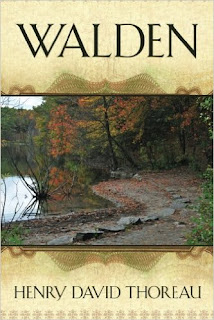
Walden by Henry David Thoreau, reviewed by Linda Newbery

Monday, 17 February 2025

Guest review by Alison Layland: SARN HELEN, a Journey through Wales, Past, Present and Future, by Tom Bullough


"What a journey he takes us on! Far more than a travelogue, far more than nature writing, far more than a social history of Wales, this is a cry from the heart." 

Photograph by Trina Layland
Alison Layland
 is the author of two psychological thrillers: Someone Else’s Conflict, a compelling narrative of storytelling and the aftermath of war, and Riverflow, a story of family secrets and community tensions against a background of flooding and environmental protest. She also writes short stories and flash fiction; she won the short story competition at the National Eisteddfod in 2002, and her story Quirky Robbers is featured in the Honno crime anthology, Cast A Long Shadow. Her new novel, After the Clearances, a climate fiction novel set in 2050 Wales, will be published by Honno in July 2025.

When not writing, she is an environmental and social campaigner, who enjoys walking, crafting, growing and foraging around her home on the beautiful coast of Anglesey. More on Alison's website.

Until recently, serious consideration of the climate and nature crises was relatively rare in books aimed at a general readership. How wonderful, then, to see the trend changing as this passionate book was chosen as the overall winner of the Welsh Book of the Year 2024.

The titular Sarn Helen – Helen’s Causeway, a Roman road running the length of Wales from Neath in the south to Llandudno and the Great Orme in the north – is the thread that binds Tom Bullough’s insightful observations together. The author began his long-distance walk, which he undertook in sections over the period of almost a year, in 2020, following the first Covid lockdown – potent timing, since this zoonotic pandemic was yet another consequence of the damage people are doing, and have done, to the natural world. The precise route of Sarn Helen has been lost in places, but with a blend of detective work and guesswork, he managed to follow to its end. Like the conquering Romans who built the road, it has been superseded and overlaid by centuries of development – a fitting portent for the direction in which our modern society is heading.

And what a journey he takes us on! Far more than a travelogue, far more than nature writing, far more than a social history of Wales, this is a cry from the heart. The writing is immersive and each chapter is preceded by a wonderful illustration by renowned artist, Jackie Morris, who also provides the cover. Yet even here, there is a dark undercurrent, for we are told in the introduction that each of the fifteen beautiful species – birds, mammals, insects and plants – are among the 17% of species threatened with imminent national extinction. This sets the tone, for while describing the landscapes he walks through, their people and wildlife, in all their glory and diversity, Tom Bullough never lets us forget the threats they are facing, or the damage that has been done – from over-grazed uplands to the all-pervasive noise pollution of aeroplanes and other vehicles.

It’s often hard to strike the right balance when writing about the climate – too much doom and gloom and readers either despair or are driven to feel there’s nothing they can do so why bother? Too much optimism and it’s easy to give the impression that all’s well with the world. Sarn Helen strikes just the right balance. The author’s passion for the Welsh landscape and people, its wildlife, mythology and history, shines through, celebrating what is all around us, but never shying away from the what we have lost and still stand to lose, as well as the desperate need for change. Although the nature writing, conveyed with a vivid attention to detail, is beautiful, the book shows that, as in the wider world, the problems facing Wales are not all directly related to the climate and nature. He explores Wales’s social and industrial history in some depth, even looking back to mythological times and chronicling a fascination with the Celtic saints, whose world was much closer to nature and more respectful of the ecosystems around us than our own.

For some chapters, and sections of his walk, he is joined by poet and novelist Chris Meredith, with whom he discusses the industrial history of the Valleys and the impact of the post-industrial legacy on both landscape and people, and by writer and fellow activist Jay Griffiths, whose observations add companionable touches of spark and humour. Throughout, from the industrial to the agricultural, people are the key. Miners or farmers, saints or Roman conquerors, people are placed in the context of their landscape. Climate breakdown and nature depletion not only impact the natural world, but the people who live there – and it is the people who hold the key to the solutions.

These moments of companionship are full of relatable debate, humour and fascinating dialogue. The other interludes, however, are a stark clarion call: the travelogue is punctuated by interviews with experts – a climate scientist, an ecologist, a coastal scientist and a geographer – which add scientific context but also a terrifying intensity. Although they set out the problems facing Wales, and the wider world, clearly and objectively, the interviewees’ despair at the lack of action to halt climate change and nature depletion is pervasive and their emotions all the more hard-hitting coming from professionals in their respective fields.

A similar authenticity is added by the author’s own campaigning. While protesting with Extinction Rebellion in September 2020, he was arrested, and his journey along Sarn Helen is interrupted in April 2021 by a court hearing. The text of his speech to the court is deeply personal and moving – the more poignant today as environmental protesters are now banned by law from presenting such defences.

Actions speak louder than words – or do they? In the case of Sarn Helen, Tom Bullough’s beautifully crafted words are as potent as many actions, in that they will hopefully inspire anyone who reads them, firstly, to love and value the world around them, and then to do all they can to try and put a stop to the damage that modern society is causing.

Sarn Helen by Tom Bullough, with illustrations by Jackie Morris, is published by Granta, 2023

Alison Layland's Riverflow is reviewed here by Linda Newbery.

Monday, 20 January 2025

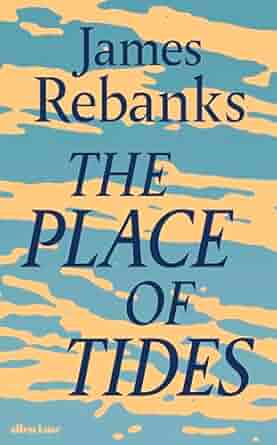
Guest review by Laura Parker: THE PLACE OF TIDES by James Rebanks


"This experience has caused Rebanks to dig much deeper as a writer. His enforced time out has him reaching for greater profundity while maintaining a simple, thoughtful style."

Photograph: Kitty Parker
Laura Parker
is the author of no books (yet), but she is working on one about drystone walls, and has written a growing collection of articles published by Country Life magazine. Her work covers animals and the art and history of the countryside. She has also been published in Little Toller’s
The Clearing, an online journal in which writers explore and celebrate the landscape we live in, as well as in Scottish Field and Scottish daily The Courier. Find out more on Laura's website.

James Rebanks made his name with two books: one about his life as a shepherd in Cumbria (A Shepherd’s Life) and the other on the changing face of agriculture over three generations (English Pastoral). So he was right to warn his 150,000 X-followers that his next book would be different.

The Place of Tides takes him to Fjaerøy, a Norwegian island just below the Arctic Circle where he sheds his modern existence: no internet, barely any phone, limited power, no running water. For seventy days.

It is his account of ten weeks spent in the company of Anna, a woman of seventy determined to continue an age-old way of existence that she herself took up only later in life. Anna harvests down from eider ducks, gathering a material used for centuries for luxurious warmth, and continuing a tradition which has provided a living for the women of this fishing community since Viking times. It is a way of life that is dying out, not just because of cheaper and more abundant alternatives, but because the ducks themselves are getting scarcer.

Highlighting the fine balance between human intervention and nature, the ‘duck women’ build shelters for the birds as they come ashore to lay their eggs, and protect them from predators such as sea eagles and mink (the latter introduced by humans). In earning the trust of the ducks, their protectors take their reward at the end of the season by gathering the down the birds use to line the nests.

Rebanks discovers there is more to his stay than deploying his farming skills through raking seaweed or repairing shelters. Bewildered, he struggles to contain his impatience as the two women (Anna has brought a friend, Imogen) settle down indoors to knit for their first two weeks on the island. Rebanks is left unmoored, reflecting on the frenetic existence he has left behind, along with his wife and four children. He resolves to be a better husband and father. There are still eight weeks to go.

So far, so satisfying to a nature book reader: being taken to a remote frontier world, guided to closely examine a new habitat – there are many intricate observations of the wildlife and weather on the island – and to be made aware of a diminishing natural resource.

Unexpectedly, it is the deepening human relationships that become the heart of this book. Anna turns out to be different from Rebanks’s first arresting sight of her, a tiny but fierce ‘half-wild’ woman standing proud on the shoreline. She is older, frailer, at first unable to work. Constantly trying to be respectful of her world, Rebanks is frequently unsure how to proceed, a Gulliver in a strange land.

“I had sensed I ought to make myself much smaller, working to their commands, relinquishing responsibility.”

He realises, for the first time in his life, that he is in a place entirely run by women. By ‘paying attention’, he begins to see how men treat women, and he cringes. He also learns a great deal from Anna’s attitude to her work.

“Rarely have I seen anyone so absorbed in each living moment .. This way of living demanded a loss of self, a surrendering to the rocks, rain, wind and tides.”

Amid the poignancy – this is Anna’s last season – there are lessons for him, and for us.

“In this radically pared-back life she had found peace and meaning. She was the waves, the light, and the terns rising and falling on the bay. She was the guardian of this place … powerless against the scale of the natural forces at work and against the issues affecting the oceans, yet fierce in her determination to try.”

This experience has caused Rebanks to dig much deeper as a writer. His enforced time out has him reaching for greater profundity while maintaining a simple, thoughtful style.

Rebanks and the women leave the island with a harvest amounting to 2kg of down, which must then be painstakingly cleaned. It is barely enough to make two quilts. But both he and his readers have gleaned so much more about our threatened world.

The Place of Tides is published by Allen Lane.

See also: James Rebanks' English Pastoral reviewed by Judith Allnatt


Monday, 14 October 2024

MODERN NATURE by Derek Jarman, reviewed by Linda Newbery


"The New York Times described his film The Garden as 'a peculiar blend of reflectiveness and fury', which could apply equally well to this journal."

Linda Newbery
edits Writers Review.

"I have re-discovered my boredom here," Derek Jarman writes, finding at Prospect Cottage, his Dungeness home, an escape from the celebrity he earned through his films and his activism. "All around the traps were set. Traps of notoriety and expectation, of collaboration and commerce, of fame and fortune. At first a welcome trickle, something new. Then a raging flood of repetition, endless questions that eroded and submerged my work, and life itself. But now I have re-discovered boredom, where I can fight 'what next' with nothing."

Well, not exactly nothing. Beginning after Jarman's diagnosis as HIV positive (which gave, at that time, a grim outlook) his 1989-90 journal conveys a time filled with interviews, film projects and visits to London exhibitions and social events, interspersed with the making of his iconic Dungeness garden, constantly planting, propagating and making sculptures from objects found on the shore. The contrasts are stark, moving from the many demands on him in London to the quieter, reflective times at Dungeness. He writes of  "the separation of my two lives ...  work here (in London), sunsets and sunrises there." Always in the background is his sorrow at the death of friends from AIDS and the foreboding of his own, which by the end of the journal seems close, although he lived for another three and a half years, regaining enough health and energy to film Edward II, Wittgenstein and Blue.

Having visited Prospect Cottage and somewhat fallen under the strange spell of Dungeness, its flat horizons, big sky and sparse vegetation, I found that these sections appealed to me most, beautifully evoking that distinctive terrain with the nuclear power station looming in the background. "There are no walls or fences. My garden's boundaries are the horizon," he writes, and of the night sky: "So flat is the Ness that those stars that lie at the horizon touch your very feet and the moon tips the waves with silver ... The nuclear power station is an ocean liner moored in the firmament, ablaze with light: white, yellow, ruby." Both my visits have been in calm July sunshine; the place must be very different in harsh winter weather. Once in this memoir Jarman feared that the cottage roof would be torn off in a gale, while on another occasion a lightning strike at the power station sent him and other residents into a panic, rushing to pack for a hasty evacuation (which, fortunately, wasn't needed).

Derek Jarman is an engaging diarist, full of contradictions and charm. The boldly unconventional film-maker, rebellious activist and one of the first public figures to be open about his HIV diagnosis expresses a wistfulness for pre-decimal coinage and describes himself as too shy to try on clothes in shops; as a student at King's College in London he felt "frightened and confused," convinced that he was the only gay in the world. Almost every writer or artist will identify with the self-doubt he experiences: "All the way back on the train I was plagued with misgivings about The Garden. Looking at the rushes over the last six days, I discovered not one sequence that worked. Glaring faults everywhere ..." At the same time he feels a compulsion to write. "I find it difficult to write each day, but if I don't I'm swamped with guilt. Where does the compunction come from?" So strong was it that even when he temporarily lost his sight while being treated in hospital he dictated his journal entries to his devoted companion Keith Collins (referred to by his nickname HB in the book). 

Those us who were around in the 80s may remember how the AIDS epidemic was viewed by some who saw it as a punishment for homosexuals. "Last week a doctor in the mainstream of research with a leading drug company said that looking for drugs to combat the virus and to prolong the lives of those already infected posed an ethical problem, as keeping them (read me here) alive only exacerbated the situation. Better we should all die quickly. Every day, in many little ways, we are subjected to this terrorism. Our relationships unsanctioned, beyond the law." No wonder there is always anger simmering beneath the surface of Jarman's writing.

As it's a journal, events are understandably related without context, which can sometimes confuse the reader with a great many names, places, and visits whose purpose is unclear. Interspersed with these almost daily records are reminiscences from his childhood, spent in various countries with the RAF father with whom he had a difficult relationship. But it was early in childhood that his fascination with plants and gardening began: at four his parents gave him an illustrated Edwardian book, Beautiful Flowers and How to Grow Them, an unusual gift for so young a child but one which provided a lasting influence: "Flowers spring up and entwine themselves like bindweed along the footpaths of my childhood." The early part of Modern Nature refers constantly to plants in folklore, in herbalism, in classical literature. "If fate had turned out different," he writes, "I am sure I would have been a professional gardener, rather than an enthusiastic amateur."

In between making videos for the Pet Shop Boys, filming The Garden, beginning to research Edward II and frequently staying at his London flat, he spends his time at Prospect Cottage walking the shores of the Ness, collecting and arranging the driftwood, stones and found objects which give his garden its unique character. He reports constantly on the progress of his seedlings and cuttings. Even at his lowest, when friends' deaths are reported with horrible frequency, he finds solace in his plants. "I plant my herbal garden as a panacea, read up on all the aches and pains that plants will cure - and know they are not going to help. The garden as pharmacopeia has failed. Yet there is a thrill in watching the plants spring up that gives me hope."   

The New York Times described his film The Garden as 'a peculiar blend of reflectiveness and fury', which could apply just as well to this journal.


Modern Nature is published by Vintage.


Derek Jarman photograph from Wiki Commons. Others by Linda Newbery.

For more of Linda's nature and garden writing choices, see:


Walden by Henry David Thoreau

The Flow by Amy-Jane Beer