Showing posts with label Gwen Grant. Show all posts

Monday, 21 December 2020

Reading ahead - New Year anticipation, part 1


Here's part one of our yearly thank you to all those guests whose contributions keep us going! In this first part of three, some of our reviewers tell us what they're looking forward to reading in 2021 - whether it's a new publication, a return to an old favourite, or an author newly-discovered. What's on your reading pile or wishlist for the year to come?

Graeme Fife:
In these darkening, dark, days of 2020, this stuttering conclusion to such a strange year, yet inspirited by the promise of a vaccine and by a zephyr of hope from across the Atlantic – a woman soon to be a heartbeat away from the American presidency, (wishing no harm to Biden) – I will be reading a new study of All the Sonnets of Shakespeare, arranged in their probable chronological order of writing, by Paul Edmondson and Stanley Wells. The approach promises new insight. Having come late to Jonathan Coe’s novels, there remains only one of his titles to read, Mr Wilder and Me, his latest novel based on the work of the great film director, Billy Wilder, revisiting Coe’s fascination with cinema, the tropes of movie comedy and the refractions of the celluloid world. And JB Priestley, The Good Companions, the big novel which launched him. Hurray.
 
Also I aim to watch again the utterly superb Babylon Berlin. Don’t miss it.

Jonty Driver: I look forward to Jonathan Smith's latest book, Being Betjeman(n), recently published by Galileo. Described as "part biography, part fiction and part self discovery", it includes enough of Betjeman's poems for one to want to add "part anthology". I've resisted the temptation to begin it at once, because I have at least five other books piled up next to my reading-armchair, all interesting, all not finished yet; but dipping into Jonathan Smith's new book I am once again impressed by his style, which is I guess so like the voice he used when he was a schoolmaster at Tonbridge: clever, funny, casual, sharp-witted. On the back cover are three recommendations: from Sir Anthony Seldon, no longer a Master or Vice Chancellor but a full-time writer; Dan Stevens, the actor, and Christopher Reid, poet and publisher. What fun to have those three ex-pupils as enthusiastic readers.

Amanda Craig: 
I am particularly looking forward to Francis Spufford's new novel Light Perpetual, to be published in February. It imagines that five children whose lives are destroyed in 1944 by a bomb continue to live in an infinitesimal alternative fraction of time - an intriguing idea, and one that, as a devotee of CS Lewis, I am hoping he will develop with the imaginative zeal he showed in his classic book The Child That Books Built.

I'm also looking forward to Liz Kessler's YA novel, When the World Was Ours, coming in January, about three children in Nazi Europe, inspired by her father's escape. She's a terrific writer who keeps pushing her imagination and her readers' sympathies to engage with difficult, dark yet uplifting subjects. I can't wait to see what she's done with this material.

I'm also planning to tackle Saidiya Hartman's Wayward Lives Beautiful Experiments, about the first generation of black women in America after emancipation who refused to accept their degrading conditions and who became pioneers in pursuit of liberty. I was sold it by a passionate recommendation at Daunt's and it looks both intriguing and original.

Jean Ure: With the very recent death of my beloved husband I find that it is books which are my greatest solace and means of at least temporary escapism.   But they have to be a certain type of book.   Nothing to do with the here and now, which I feel would be too close to home for comfort.   Likewise nothing too distant – which immediately excludes an old friend such as Mary Renault – nor anything futuristic.  Nor anything too familiar – which excludes some of my all-time favourites such as Olivia Manning's two brilliant trilogies.    In the past I have often fallen back on Trollope, but for the moment he has lost his appeal.    Not quite sure why.    Maybe because for the most part he concentrates all his efforts on his characters, with not enough distractions to buoy me up in my present state.

By chance I have come upon an author I am scarcely acquainted with: Barry Unsworth.   I did read him once, long ago, but obviously at that time he made little impression.   Now he has come to my aid most wonderfully.   Tough, powerful, sufficiently removed from the present day - in-depth characters, much food for thought, plenty of distractions.

I started with Sacred Hunger, have now moved on to the sequel, and heaven be praised there are several more waiting for me.   Which doesn’t stop me from panicking in advance: where do I go next?    Any recommendations most gratefully received.

Cindy Jefferies: Among the teetering heaps of new fiction gasping for my attention next year, a more modest pile awaits me in 2021. These are some of the treats I have promised myself in between reading some more modern yarns. The Master, by Colm Toibin, his novel about Henry James. Roberto Calasso’s re-exploration of Greek mythology in The Marriage of Cadmus and Harmony. Finally, some of my grandfather’s bound copies of The Strand Magazine and the English Illustrated. These hold some of the writing thought best in1895, Mr A Conan Doyle amongst them. From fiction to cartoons, politics to the recollections of Sir John Everett Millais. They give a snapshot of English society during that year. Stories for children sit uneasily between notes from the Speaker’s Chair and an alarming drawing of a man being attacked by a pike. Cricket, railways, Balfour’s thoughts. Family entertainment in front of the fire on a Sunday afternoon over a hundred years ago.

Linda Newbery:
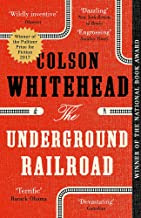
Bernardine Evaristo's Booker-winning Girl, Woman, Other is near the top of my pile, plus a shortlisted title The Underground Railroad, by Colson Whitehead,  and the latest winner Shuggie Bain. And I've got two climate change-related titles lined up: Jenny Offil's Weather, and The Good Ancestor by Roman Krznaric. So many wonderful things have been said about Piranesi that it sounds like a must-read - and I loved Maggie O' Farrell's Hamnet so much when I listened to it on Audible that I must read it in book form, too. Finally, the death of John Le Carre has made me realise how few of his novels I've read, so The Spy who came in from the Cold is next on my pile.

Gwen Grant: 
Poetry of the Committed Individual. Amongst the poets in Jon Silkin’s wonderful 1973 Stand anthology is the Israeli poet, Natan Zach, who died last month. His tiny poem ‘How is it that one star,’ about a star daring to shine on its own, is so beautiful that, unprepared for the savagery ribboned into his poem, ‘Against Parting,’ I found myself staring blindly at the page. Zach’s tailor once parted from his wife – Auschwitz, and from his three sisters – Buchenwald. Parted for ever.

Michèle Roberts is a writer who takes you into the very heart of her characters and their stories. So I am immensely looking forward to reading Negative Capability, an account of how she copes with the rejection of her latest novel.

More George! published by The Hallamshire Press in 1994 is the story of George Cunningham growing up in Sheffield. George is a fabulous amateur illustrator. His beguiling pictures and vivid accounts of his life are enchanting. ‘Get a Good Rise – Join the R.A.F. Pay 3/- to 18/- a day.’ Such a lovely book. 

Ann Turnbull: 
I'm planning to re-read some older books that have been sitting on my shelves for years and that I remember almost nothing about: 

Moon Tiger by Penelope Lively; 
Heat and Dust by Ruth Prawer Jhabvala; 
Half of a Yellow Sun by Chimamanda Ngozi Adichie; 
The Bridge of San Luis Rey by Thornton Wilder
and The Daughter of Time by Josephine Tey.

Lesli Wilson
: In the New Year, I'm hoping to read the Booker shortlisted Burnt Sugar, by Avni Doshi, as it sounds interesting and deals with a difficult mother-daughter relationship; I had one of those myself.. I also want to read The Black Jacobins, by CLR James, which is about Toussaint L'Ouverture and the rebellion of enslaved people in San Domingo. I have on my shelves Red Clocks, by Leni Zumas, which my sister-in-law recommended to me, and I intend to read that after Christmas. A long way into the New Year, I am very much looking forward to reading Katherine Langrish's From Spare Oom to War Drobe; Travels in Narnia with my nine year-old self. I also intend to read the latest book in the uncomfortably exciting Babylon Berlin series by Volker Kutscher, Marlow. As yet, it's not available in English, but I shall read it in German.


Monday, 23 December 2019

CHRISTMAS ROUND-UP Part 1: What's on our to-read piles?


What's on our reading piles? Some of our contributors look ahead - to new publications, books they plan to re-read, authors they've neglected. We hope you'll find some great suggestions here. Thanks, as always, to all our guest reviewers for sharing their favourites - WRITERS REVIEW wouldn't exist without them! Come back next week for Part 2, and the first Monday in January for Part 3.

***


Piers Torday:  I am saving Bernardine Evaristo’s Booker Prize winning Girl, Woman, Other for the holidays, as following the election result, I need something urgently contemporary and modern that takes the novel forward to hopefully move me forward too. I am hugely looking forward to Salley Vickers’ latest, Grandmothers, as The Librarian was one of my favourite titles of the last year or so. For the New Year, I am anticipating a subterranean wander with Robert Macfarlane’s Underland, as the weather and political climate look set to make overground distinctly unappealing…

***


Yvonne Coppard:  Like many others, I eagerly await Hilary Mantel’s The Mirror and the Light, concluding the journey that started with the wonderful Wolf Hall. For non-fiction, I will re-read my old fave, Carlo Ravelli’s Seven Brief Lessons on Physics, and will eagerly move on to the new Unlocking the Universe, by Lucy and (the late) Stephen Hawking. Billed as ’the ultimate children’s guide to space, time and everything in between’, it sounds just about the right level for me in my quest to understand the basics of our extraordinary planet before I die.

***


Ann Turnbull:  I'll be reading Girl by Edna O’Brien – because I feel so inspired that at the age of 88 she has not only written another novel but chosen such a bold theme. Also The English Patient by Michael Ondaatje – because I loved the film, always meant to read the book, and recently read the first few pages and didn’t want to stop.

***


Marianne Kavanaugh:  I’m looking forward to Amanda Craig’s The Golden Rule, which comes out in June. It has a deliciously Patricia Highsmith-type premise – two women meet on a train and agree to murder each other’s husbands. Otherwise, as usual, I will be disappearing into books I should have read but somehow missed, like Carson McCullers’ The Member of the Wedding (with the added bonus of an introduction by Ali Smith). Also waiting for me is Leila Slimani’s first novel Adèle (Dans le jardin de l’ogre). I loved her best-selling Lullaby (Chanson Douce) – a taut, claustrophobic story told in dark, plain language.

***


Cindy Jefferies:  On my teetering to read pile is Portrait in Sepia by Isabel Allende. As more books get added , this novel is about half way down the pile now, but I have just teased it out and put it back to the top. Her work always cheers me if I need cheering. Reading her feels to me rather like meeting a friend after a long time and spending a few hours catching up.

Over Christmas, children and grandchildren will be in and out, giving little time for me to get immersed in anything other than board games, slices of cake and general frivolity. Making an Elephant by Graham Swift is one I keep for those snatched moments. It’s a collection of essays, interviews and memories along with some poetry. Swift tells us about reading aloud at Cheltenham and elsewhere, spending Christmas with Salman Rushdie in hiding, buying a guitar with Kazuo Ishiguro, the death of his father. I find every essay absorbing. Swift writes modestly, and isn’t afraid of laughing at himself. It’s always a pleasure to pick up the book and discover something else, and along the way some of his thoughts on writing slip in, to be mulled over. Perfect!

***


Gwen Grant:  Poems that make Grown Men Cry - Great poems. Great choices. Irish Colin McCann chooses American Wendell Berry’s moving dream of a dead friend. Malawi-born Jack Mapanje cried all right but with laughter at Bertold Brecht’s ‘The Book Burnings, as a furious poet learns his work is not going to be burnt.

Crime writer John Sandford’s latest book, Neon Prey, is lined up, too, his spare, laconic, writing married to high octane stories of murder and mayhem that make the hero, Lucas Davenport, very likable. The Letters of Vincent Van Gogh reveal the vulnerability, goodness and perseverance of a man slowly finding his way in life. Good writing draws you in; love has you walking alongside.

***


Jon Appleton: Spanning 40s America to 70s Ireland, Anne Enright’s new novel, Actress (Cape, February) promises to cast her unflinching gaze on the scars of childhood but will no doubt be just as vibrant and stimulating as I’ve found her other novels to be. Second, full disclosure: I was lucky to work, in a small way, on Chris Whitaker’s We Begin at the End (Zaffre, March) but I’ll be reading my finished copy afresh and recommending it widely. It’s going to be one of THE big books of 2020 – a powerfully realised, panoramic crime novel that offers every kind of readerly pleasure.

***


Judith Allnatt: I’m going to start 2020 with the delight of reading new novels by favourite authors, both of which are set in the years leading up to WW2. Sue Gee’s new novel Trio has settings that intrigue me straightaway “the isolated moors of Northumberland, a hill-town school and a graceful old country house”. Here, a grieving widower is awakened to both music and love.

A Single Thread by Tracey Chevalier on the other hand, concerns a ‘surplus woman’, unlikely to marry, seeking company in a group of embroiderers and becoming privy to their secrets. One can be sure that both writers will explore grief and desire with all their customary subtlety and insight.

***


Mary Hoffman: For me the big event of 2020 will be the March publication of The Mirror and the Light, Hilary Mantel’s third novel in the “Cromwell trilogy.” We pre-ordered it the minute it was announced. And there’s plenty of time to re-read Wolf Hall and Bring up the Bodies before then. (It will be the third time for me).

Mantel is the only fiction writer I buy in hardback, so I am waiting for paperbacks of Girl, Woman, Other by Bernardine Evaristo (also March), Big Sky by Kate Atkinson (late January) and possibly Margaret Atwood’s The Testaments (that’s not till July but I am in no hurry.

And a little bird told me that Celia Rees’s first adult novel, Miss Graham’s Cold War Cookbook, is coming from HarperCollins in May. I might have to break my no hardback fiction rule for that one!


Monday, 7 January 2019

Guest review by Gwen Grant: WHAT LOVE COMES TO, new and selected poems by Ruth Stone


"Poems that shine with clarity, understanding and beauty."


Gwen Grant: I have been writing and publishing since 1968, the majority of my work for children but also publishing poetry. Private - Keep Out, which first came out in 1978, is to be re-issued in March 2019 by Penguin Vintage Children's Classics. 

The American poet Ruth Stone writes poems that shine with clarity, understanding and beauty, poems that I absolutely love and admire for their finely balanced, rhythmic elegance. Stone is witty, wise and, at times, funny, but she can also be a very tricky customer, for she has this great gift of being able to change course mid-poem, so that what seems all set for plain and simple will, quietly, unexpectedly, lead into much darker waters. It’s like being mugged by a feather. You don’t know it’s happened until you re-read a poem and find something new in it that you somehow missed before. Every Stone poem is a journey into a new understanding for she is a force of nature, a poet in possession of her world and ours.

In Second-Hand Coat, she begins with two words then in the following twelve short lines, turns this poem about an old coat into a surreal story of how, once it is taken home, it begins to talk, asking solicitously if its new owner has everything they need before leaving the house, the distinct impression being that it is speaking in the voice of the woman who once owned it. Alchemy of the highest order.

What Love Comes To is made up of new poems and poems selected from earlier books, witty, acerbic, hostile, elegiac, fierce poems, some political, some absorbed by science, some with rough sexual imagery, some deeply sensual and some so tender, you can hear the poet breathing, feel her heart beating.

All Ruth Stone’s poems have such integrity, you trust her to tell it how it is, which is a tall order for a woman who was no stranger to tragedy. Early in their marriage, Stone’s husband, Walter, killed himself, leaving her with three small girls to raise. She has said that all her poems are ‘love poems written to a dead man,’ whose suicide forced her to live in limbo. Yet Stone keeps this compact of honesty between herself and the reader, sparing herself nothing and, therefore, sparing the reader nothing. In Turn Your Eyes Away, so hard to read, so impossible to think of how hard it must have been to write, the Gendarme notifies her of the nature and death of the man she loved.

Each plain and unforgiving line of Turn Your Eyes Away stonily taps into the next line, telling the bleak sorrow of how Walter died. Of what happened when they pushed the door to his room open, of where his dead feet lay, then going on remorselessly to where his tagged body lies in the morgue. Then, almost before there is time to feel sadness for such suffering, Stone whirls around, remembering how they once lay together in a single bed, face to face, breath to breath, not wanting ever to part, that erotic love poem, the Song of Songs, lying open in the hotel’s Gideon Bible.

It is through Ruth Stone’s absolute honesty and unflinching gaze in this poem as in all her poems, that in these last lines, we are able to feel the passion and sexual desire these two had for each other; a love that seems to shatter sorrow, swipe death out of the way and burn up the page with longing.

In The Sperm and the Egg, another mid-course change poem, the egg hates the sperm and then the sperm hates the egg, wanting its tail back because then it was free. Dark waters here, for every reading throws up new thoughts. It is Ruth Stone’s genius that this poem ends with an absolutely apposite quotation from Hamlet. Then the lovely humour of Setting Type, where the semi-colon, the paragraph, the vocabulary and good punctuation get it together.

Finally, from The Widow's Muse, Poem XLII tells how the widow is triumphant having got through thirty years of widowhood, until her muse forces her to smell an old undershirt of Walter’s, which still retains his scent. At this, the widow whimpers with grief whereupon the muse knocks all the sense out of her. Harsh, hard and truthful.

Ruth Stone died in 2011, aged 96.

What Love Comes To is published by Bloodaxe Books.

Monday, 31 December 2018

READING AHEAD Part 2: what's in our sights?


More of our contributors - including some new faces to the blog - give us their reading choices. What was on their Christmas list? What have they been hoarding for a special treat? Old favourites, new publications, authors recently discovered ... 

As ever, a big thank you to our guests, thanks to whose generosity we post a new review every Monday. We hope you'll find something here to add to your own to-be-read pile.


Savita Kalhan: I am eagerly awaiting Crossfire by Malorie Blackman, the fifth book in the iconic Noughts and Crosses series, which is to be published next summer. The original series for children was inspired by political events and racial discrimination. Crossfire is no different. Brexit, Trump and the rise of the far right, have inspired Crossfire, and will no doubt spark discussions amongst teenagers and adults alike.

Can We All Be Feminists is a collection of essays by seventeen writers from diverse backgrounds. Listening to some of the essayists at a Waterstones’ event, and reading Eishar Kaur’s essay on the way home on the train highlights how slow change continues to be – she is writing as a third generation British Asian woman and I am second generation – and also how ‘feminism’ can mean radically different things according to your background, ethnicity and colour.


Hilary McKay: Helen Macdonald's H is for Hawk was my car book. I have car books, I’ve had them for years. Comes from the days of waiting with hot water bottles in the dark outside music lessons, party venues, gyms, schools, all those places that I don’t wait outside of anymore because the children are grown up(ish). So I’ve brought it into the warm, thing of beauty that it is, with that cover. That hawk. Now I’m two chapters in, and it’s as I guessed and as I’ve heard, long distance poetry. I have no fear of finishing it because I know already I’ll just turn to the beginning and start again.


Jon Appleton: A few years ago Paul Burston made the seamless transition from writing hilarious comedies to dark, searching crime fiction. I enjoyed The Black Path hugely so am looking forward to Paul’s creative exploration of the dark side of social media in The Closer I Get (Orenda Books, May). Paul is massively savvy about the online world so I’m sure his take will be insightful and persuasive and his story compelling.

I love it when Jill Dawson takes characters from real life and immerses them in turbulent semi-fictional scenarios - her next book, The Language of Birds (Sceptre, April) plunges us into the 1970s and the infamous disappearance of Lord Lucan. Can’t wait! In the meantime why not read The Crime Writer, her most recent novel which is about Patricia Highsmith? Chilling.


Leslie Wilson: I'm looking forward to reading The Pursuit of Power, Europe 1815-1914, by Richard J Evans. Evans is an author who I greatly esteem, because he has written about Nazi Germany in a dispassionate, enlightening and scholarly way. This book, however, deals with the period between Waterloo and the outbreak of World War 1, the era that my English and Silesian-German grandparents were born into (the latter part, anyway). There was so much going on during that period; the revolutions of 1848, the growth of cultural and political nationalism, colonialism, technological change, but also feminism and trade unionism. Can't wait.


Nick Manns: I caught Paul Broks on Radio 4 last Spring. From this fleeting hearing I gathered that he was a respected neuropsychologist, talking about the importance of magical thinking. The Darker the Night, the Brighter the Stars defies categorisation (so is every bookseller’s nightmare). Depending on where you jump in – and Broks is happy for readers to work through in any order – it’s autobiography, speculative philosophy, neuroscience, grief memoir and ghost story. It's also unsettling: “There is no clear dividing line in the brain between inner imaginings and perceptions of the real, solid ‘world out there’. Reality and fantasy are built into the same neural circuits." I’m about to reread it, letting into the house the quotidian, the strange, the dead.


Gwen Grant: A Place in the Woods, by Helen Hoover, is one of my most treasured books. Chicagoans Helen and her husband, Adrian, move to the vast forests on the edge of Minnesota’s northern wilderness. Helen’s deep love and respect for the forest and its wild inhabitants shines through as she shares the beauty and
danger of this world..

Environmentalists, they face many challenges. A violent storm almost destroys their cabin. Hunters appear. Their money runs out. Only when Helen starts to sell her detailed and lovely stories about the woods, illustrated with Ade’s beautiful pen and ink drawings, does the threat to their new life begin to lessen.


Chris Priestley: Having had the privilege of illustrating Jason Reynolds’ Long Way Down and hearing him speak at the Edinburgh Book Festival in August, I intend to work my way through his other books. I’m going to start with When I Was the Greatest. 

I am a big fan of the short story form as a writer and reader, but for some reason I’ve never got round to reading any Flannery O’Connor. I’m about to put that right with A Good Man Is Hard to Find. I also have Alice Munro’s Moons of Jupiter to look forward to.


Mary Hoffman: The book I am most looking forward to is Hilary Mantel’s The Mirror and the Light, whenever it comes out. I adored the first two, which I have read twice - and seen the stage plays and TV adaptation twice too. Meanwhile I am on the London Library's waiting list for Diarmaid MacCullough’s Thomas Cromwell: a Life, and I do have the 642 pages of Giles Tremlett’s Isabella of Castile: Europe’s first Great Queen, waiting by my bedside, for when I’ve finished Charles Ross’s Edward lV. Almost all my non-fiction reading is history these days. On the fiction front, I shall wait till Kate Atkinson’s Transcription comes out in paperback in March, since I don’t buy fiction in hardback (I make an exception for Hilary Mantel). Anne Tyler’s Clock Dance isn’t available till July next year but Madeleine Miller’s Circe is on my Christmas list. 


Paul Dowswell: Francis Spufford’s Golden Hill is now on my ‘read again pile’, and I’m happy to recommend it to anyone looking for a riveting read. Spufford’s tale, of a young man recently arrived in colonial New York with an exceedingly large cheque, is a glorious cinematic, smell-o-vision adventure. I can’t remember the last time I read a book I could see so clearly in my mind’s eye. Benedict Cumberbatch, Tom Wilkinson and Oona Chaplin strutted the stage and read the pages for me. Spufford teaches creative writing at Goldsmiths. If he teaches half as well as he writes they are very lucky to have him.


Patricia Elliott: Rosie, the wonderful writer Rose Tremain's memories of growing up in sooty post-war London, with school holidays spent at the country paradise of Linkenholt, her grandparents' home, is both delightful and disturbing. Her father deserts the family when Rose is ten. Her bleak childhood, dominated by her cold, unkind mother, is alleviated only by her loving nanny, and by teachers who encourage her creativity when she is banished to boarding school so her mother can marry a new man. Only after being 'finished' in France, does she finally rebel and escape to Oxford. Some of the most interesting parts refer to incidents that have inspired her novels.


Cynthia Jefferies: Having recently discovered the British Library Crime Classics, what better title to choose for Christmas reading than J.Jefferson Farjeon’s Mystery in White, his Christmas Crime story? First published in 1937 it has an evocative cover complete with deep snow, stars twinkling and a steam train stuck in a snow drift. Four murders in a dozen hours! I reckon I’ve earned my bit of turkey. So says the police inspector, belatedly arriving at the scene. Eleanor Farjeon’s brother was prolific so I will be looking out for more. I love crime within this period a lot, almost enough to try it myself!


Sheena Wilkinson: Christmas is a time for old friends. This year Linda Newbery’s The Key to Flambards sent me back to K.M. Peyton’s originals. My own work in progress is set in 1921, so revisiting the post-war atmosphere of Flambards Divided is fascinating– though my book is set in Belfast which had its mind on things other than horses and racing cars. I’ve recently loved Kate Atkinson’s Transcription, and I hear there’s a new Jackson Brodie on the horizon next year. So that has settled my Christmas reading – a leisurely reread of the first four Jackson Brodie books to get me in the mood.


Linda Newbery:  I keep seeing clips and mentions of Chimamanda Ngozi Adichie (not least interviewing Michelle Obama at the Festival Hall!) and am impressed by everything she says.  Americanah, a story of two returned Nigerian exiles, former lovers, sounds enticing - and I've just seen that Barack Obama has chosen it as one of his books of the year, too. Having been gripped by Michelle Paver's chilling Dark Matter, I've now got Thin Air, a ghost story set in the Himalayas in the 1930s. And I have high expectations of The Binding, a first adult novel by Bridget Collins, known for her bold and accomplished teenage fiction. We'll hear more about this for sure, and just look at that sumptuous cover!


Finally here is Bridget herself, who'll be a January guest:

Bridget Collins: I’m really looking forward to re-reading Naomi Novik’s Spinning Silver. It’s a
Photo: Symon Hamer
brilliant, immersive reworking of the Rumpelstiltskin story, with wonderfully rich world-building and great characters. The images that stay with me are so beautiful (think silver, ice, dissolving mirrors, silk) that I can’t wait to rediscover them. The first time I read it I just devoured it – but then, because it was so in demand, I had to give it straight back to the library! So I’m going to buy it and go more slowly this time, relishing every word.