Showing posts with label Hilary McKay. Show all posts

Monday, 31 December 2018

READING AHEAD Part 2: what's in our sights?


More of our contributors - including some new faces to the blog - give us their reading choices. What was on their Christmas list? What have they been hoarding for a special treat? Old favourites, new publications, authors recently discovered ... 

As ever, a big thank you to our guests, thanks to whose generosity we post a new review every Monday. We hope you'll find something here to add to your own to-be-read pile.


Savita Kalhan: I am eagerly awaiting Crossfire by Malorie Blackman, the fifth book in the iconic Noughts and Crosses series, which is to be published next summer. The original series for children was inspired by political events and racial discrimination. Crossfire is no different. Brexit, Trump and the rise of the far right, have inspired Crossfire, and will no doubt spark discussions amongst teenagers and adults alike.

Can We All Be Feminists is a collection of essays by seventeen writers from diverse backgrounds. Listening to some of the essayists at a Waterstones’ event, and reading Eishar Kaur’s essay on the way home on the train highlights how slow change continues to be – she is writing as a third generation British Asian woman and I am second generation – and also how ‘feminism’ can mean radically different things according to your background, ethnicity and colour.


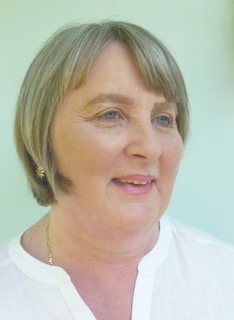
Hilary McKay: Helen Macdonald's H is for Hawk was my car book. I have car books, I’ve had them for years. Comes from the days of waiting with hot water bottles in the dark outside music lessons, party venues, gyms, schools, all those places that I don’t wait outside of anymore because the children are grown up(ish). So I’ve brought it into the warm, thing of beauty that it is, with that cover. That hawk. Now I’m two chapters in, and it’s as I guessed and as I’ve heard, long distance poetry. I have no fear of finishing it because I know already I’ll just turn to the beginning and start again.


Jon Appleton: A few years ago Paul Burston made the seamless transition from writing hilarious comedies to dark, searching crime fiction. I enjoyed The Black Path hugely so am looking forward to Paul’s creative exploration of the dark side of social media in The Closer I Get (Orenda Books, May). Paul is massively savvy about the online world so I’m sure his take will be insightful and persuasive and his story compelling.

I love it when Jill Dawson takes characters from real life and immerses them in turbulent semi-fictional scenarios - her next book, The Language of Birds (Sceptre, April) plunges us into the 1970s and the infamous disappearance of Lord Lucan. Can’t wait! In the meantime why not read The Crime Writer, her most recent novel which is about Patricia Highsmith? Chilling.


Leslie Wilson: I'm looking forward to reading The Pursuit of Power, Europe 1815-1914, by Richard J Evans. Evans is an author who I greatly esteem, because he has written about Nazi Germany in a dispassionate, enlightening and scholarly way. This book, however, deals with the period between Waterloo and the outbreak of World War 1, the era that my English and Silesian-German grandparents were born into (the latter part, anyway). There was so much going on during that period; the revolutions of 1848, the growth of cultural and political nationalism, colonialism, technological change, but also feminism and trade unionism. Can't wait.


Nick Manns: I caught Paul Broks on Radio 4 last Spring. From this fleeting hearing I gathered that he was a respected neuropsychologist, talking about the importance of magical thinking. The Darker the Night, the Brighter the Stars defies categorisation (so is every bookseller’s nightmare). Depending on where you jump in – and Broks is happy for readers to work through in any order – it’s autobiography, speculative philosophy, neuroscience, grief memoir and ghost story. It's also unsettling: “There is no clear dividing line in the brain between inner imaginings and perceptions of the real, solid ‘world out there’. Reality and fantasy are built into the same neural circuits." I’m about to reread it, letting into the house the quotidian, the strange, the dead.


Gwen Grant: A Place in the Woods, by Helen Hoover, is one of my most treasured books. Chicagoans Helen and her husband, Adrian, move to the vast forests on the edge of Minnesota’s northern wilderness. Helen’s deep love and respect for the forest and its wild inhabitants shines through as she shares the beauty and
danger of this world..

Environmentalists, they face many challenges. A violent storm almost destroys their cabin. Hunters appear. Their money runs out. Only when Helen starts to sell her detailed and lovely stories about the woods, illustrated with Ade’s beautiful pen and ink drawings, does the threat to their new life begin to lessen.


Chris Priestley: Having had the privilege of illustrating Jason Reynolds’ Long Way Down and hearing him speak at the Edinburgh Book Festival in August, I intend to work my way through his other books. I’m going to start with When I Was the Greatest. 

I am a big fan of the short story form as a writer and reader, but for some reason I’ve never got round to reading any Flannery O’Connor. I’m about to put that right with A Good Man Is Hard to Find. I also have Alice Munro’s Moons of Jupiter to look forward to.


Mary HoffmanThe book I am most looking forward to is Hilary Mantel’s The Mirror and the Light, whenever it comes out. I adored the first two, which I have read twice - and seen the stage plays and TV adaptation twice too. Meanwhile I am on the London Library's waiting list for Diarmaid MacCullough’s Thomas Cromwell: a Life, and I do have the 642 pages of Giles Tremlett’s Isabella of Castile: Europe’s first Great Queen, waiting by my bedside, for when I’ve finished Charles Ross’s Edward lV. Almost all my non-fiction reading is history these days. On the fiction front, I shall wait till Kate Atkinson’s Transcription comes out in paperback in March, since I don’t buy fiction in hardback (I make an exception for Hilary Mantel). Anne Tyler’s Clock Dance isn’t available till July next year but Madeleine Miller’s Circe is on my Christmas list. 


Paul Dowswell: Francis Spufford’s Golden Hill is now on my ‘read again pile’, and I’m happy to recommend it to anyone looking for a riveting read. Spufford’s tale, of a young man recently arrived in colonial New York with an exceedingly large cheque, is a glorious cinematic, smell-o-vision adventure. I can’t remember the last time I read a book I could see so clearly in my mind’s eye. Benedict Cumberbatch, Tom Wilkinson and Oona Chaplin strutted the stage and read the pages for me. Spufford teaches creative writing at Goldsmiths. If he teaches half as well as he writes they are very lucky to have him.


Patricia Elliott: Rosie, the wonderful writer Rose Tremain's memories of growing up in sooty post-war London, with school holidays spent at the country paradise of Linkenholt, her grandparents' home, is both delightful and disturbing. Her father deserts the family when Rose is ten. Her bleak childhood, dominated by her cold, unkind mother, is alleviated only by her loving nanny, and by teachers who encourage her creativity when she is banished to boarding school so her mother can marry a new man. Only after being 'finished' in France, does she finally rebel and escape to Oxford. Some of the most interesting parts refer to incidents that have inspired her novels.


Cynthia Jefferies: Having recently discovered the British Library Crime Classics, what better title to choose for Christmas reading than J.Jefferson Farjeon’s Mystery in White, his Christmas Crime story? First published in 1937 it has an evocative cover complete with deep snow, stars twinkling and a steam train stuck in a snow drift. Four murders in a dozen hours! I reckon I’ve earned my bit of turkey. So says the police inspector, belatedly arriving at the scene. Eleanor Farjeon’s brother was prolific so I will be looking out for more. I love crime within this period a lot, almost enough to try it myself!


Sheena Wilkinson: Christmas is a time for old friends. This year Linda Newbery’s The Key to Flambards sent me back to K.M. Peyton’s originals. My own work in progress is set in 1921, so revisiting the post-war atmosphere of Flambards Divided is fascinating– though my book is set in Belfast which had its mind on things other than horses and racing cars. I’ve recently loved Kate Atkinson’s Transcription, and I hear there’s a new Jackson Brodie on the horizon next year. So that has settled my Christmas reading – a leisurely reread of the first four Jackson Brodie books to get me in the mood.


Linda Newbery:  I keep seeing clips and mentions of Chimamanda Ngozi Adichie (not least interviewing Michelle Obama at the Festival Hall!) and am impressed by everything she says.  Americanah, a story of two returned Nigerian exiles, former lovers, sounds enticing - and I've just seen that Barack Obama has chosen it as one of his books of the year, too. Having been gripped by Michelle Paver's chilling Dark Matter, I've now got Thin Air, a ghost story set in the Himalayas in the 1930s. And I have high expectations of The Binding, a first adult novel by Bridget Collins, known for her bold and accomplished teenage fiction. We'll hear more about this for sure, and just look at that sumptuous cover!


Finally here is Bridget herself, who'll be a January guest:

Bridget Collins: I’m really looking forward to re-reading Naomi Novik’s Spinning Silver. It’s a
Photo: Symon Hamer
brilliant, immersive reworking of the Rumpelstiltskin story, with wonderfully rich world-building and great characters. The images that stay with me are so beautiful (think silver, ice, dissolving mirrors, silk) that I can’t wait to rediscover them. The first time I read it I just devoured it – but then, because it was so in demand, I had to give it straight back to the library! So I’m going to buy it and go more slowly this time, relishing every word.


Monday, 3 December 2018

Guest review by Hilary McKay: FRÄULEIN SCHMIDT AND MR ANSTRUTHER (Being the Letters of an Independent Woman), by Elizabeth von Arnim


"There is so much in this book to love, so many instant character sketches, so many turns of phrase, so many moments of clear sight, and jokes, and triumphs."

I grew up in Boston, Lincolnshire, the eldest of four sisters in a very small house. My entire family read books like starving wolves eat their dinners, reading was my first great escape. The second was St Andrew's University. After a variety of jobs I settled down in Derbyshire to write books, which has just about kept the show on the bumpy road these last twenty-five years or so.

Every few months, when the books in my home are heaped too high, horizontal above the vertical in the bookcases, sprawled across too many tables, at avalanching point on my desk, I have a cull. A horrible cull. I have to be in a bad-tempered, planet-saving, if-I-don’t-do-this-who-will mood to manage it, but it happens.

A year or two ago, Fräulein Schmidt was one of the victims. It was time. Her glue no longer held her together: her pages were yellow, and even worse, loose. She was quietly biodegrading, the tattiest of all my tatty green covered Viragos, and so off she went, too shabby for a charity shop, straight into paper recycling with the cereal boxes and bills.

I lasted about six months without her, before I went out and tracked down a replacement.

I would like  Fräulein Schmidt to live next door to me and come round often and borrow my books and lend me hers, and make me laugh and gather up my courage on dark days and rush outside with her on bright ones to appreciate the lovely, ludicrous, luminous corner of the planet in which we find ourselves planted. She is a heroine with a talent for friendship, she is one of those people you find in books who instantly make you feel better without making you feel needy. She is, if you ask me, but no one ever does, because it is one of the books I have never been able to get another soul to read, the very best of Elizabeth von Arnim.

Fräulein Schmidt is Rose-Marie, aged 25 at the start of the book, which is an epistolatory novel, all the letters being from Rose-Marie to the eponymous Mr Anstruther. Rose-Marie lives in a small, dull German town named Jena. Her mother is dead, her step-mother is dour and sour, her father is a professor and he suits Rose-Marie very well. He has a twinkle and a very nice way with words, and they love each other, but he does pipe on, as she says herself, rather too much about Goethe. And he never seems to earn anything in the way of money. Therefore, to make ends meet, the family take in rich English students who wish to learn German. Mr Anstruther is one of them, and one Tuesday night, at end of his year in Jena, Mr Anstruther kisses Rose-Marie.

Oh dear.

Or perhaps, why not? Reading between the lines (and in this book at least half of the story is between the lines) Rose-Marie is certainly as worthy as any Cinderella of meeting Prince Charming and going home to the castle, it could be a fairy tale…

One of Rose-Marie’s many qualities is her honesty. Her wit, intelligence, courage, resourcefulness and common decency are all based on her honesty. It is the rock which upon she stands in order to view her world. And so she writes to Roger, who is also Mr Anstruther, but Roger for the time being:

‘Do you know I’m poor? Of course you do. You couldn’t live with us for a year, and not see by the very sort of puddings we have that we are poor.’

She is anxious to have this understood, that she, Rose-Marie, loves him but is poor, and can bring no money to the marriage he has so rashly proposed. But perhaps it doesn’t matter, it certainly doesn’t to Rose-Marie, and of course it must not to Roger. After all, does she not remember, very clearly, what was said:

‘…the words rained down on me on Tuesday night between all those kisses… Roger, did I hear wrong, or were they not “Lovely-lovely-lovely” ? And always kisses between…’

We have to believe, given Rose-Marie’s honesty, that she didn’t hear wrong. This is the unexaggerated truth. She heard it, and for a few breathless chapters, she believed it.

It isn’t a fairy tale, or if it is, at this point it ends and real life begins. The sudden long silences from England, the Anstruther family expectations, the arrival in Roger’s life of a proper English Miss Cheriton. And more Rose-Marie courage:

‘I agree to everything. You must do what your father has set his heart on, since quite clearly your heart is set on the same thing. All the careful words in the world cannot hide that from me. And they shall not. Do you think I dare not look death in the face? I am just the girl you kissed once behind a door…’

Illness follows, and the further disasters, and suddenly Rose-Marie is no longer in Jena, but half way up a mountain, a good long walk out of town, with no one but her father and Joanna, their rambunctious maid, for company, and nothing but her own resources to save her from despair.

This is where the story really takes off.

Rose-Marie is a survivor, her resources are phenomenal, she has no interest in self pity, her goal is happiness for herself and those she loves, and by way of potato planting and neighbours and bean fields and books and much hard work she sets out to find it. In between she is still writing her letters to Roger (who has become Mr Anstruther again). She writes at first to prove that he has not flattened her, that she is still standing, so to speak. And because she believes, despite their different worlds, that in some way they can help each other and be friends. He writes because he is the sort of man who cannot quite let go. He’s dumped her for his English miss, but he not comfortable with himself. He wants Rose-Marie to soothe his conscience and understand him. He wishes very much to be understood, even when Rose-Marie writes: ‘I’m sorry you think me unsympathetic. Hard, I think was the word, but unsympathetic sounds prettier.’

She does sympathise, but not always, and not very much. He is so ludicrously privileged and so ridiculously sorry for himself. He cannot resist pronouncing on her world. Joanna’s wages, for instance, shock him completely. The amount Joanna earns in a year, he says, wouldn’t keep him in gloves and ties for a month.

‘There must be,’ writes Rose-Marie very plainly in return, ‘stacks of gloves and ties constantly growing higher in your path.’

Nevertheless, he can be well meaning, clumsily sometimes, but trying as best as he can. After her step mother dies, for instance, she says, ‘Your letters since you knew have been kindness itself,' and he is distressed to think she has so little money, more distressed than Rose-Marie, who is not grateful at all for his pity, remarking: ‘There is always a secret satisfaction in the soul of him who pities. He does hug himself…’

And she tells him about her new resolve to become vegetarian, which is not without difficulties:

‘For dinner, by which time I am curiously shakey,' she writes, 'we have salad and potatoes and fruit and lentils because they are so good for us (it is a pity they are also so nasty)...’

Vegetarianism is not something Mr Anstruther can approve of either, nor is Rose-Marie’s enjoyment of a neighbour's son, playing exquisitely on a violin. He enquires as to whether any other lodger has replaced him. He seems to be worrying a lot, unlike Rose-Marie who writes: 'The future looks quite pleasant to me- quite bright and sunny. It is only empty of what people call prospects, by which I take them to mean husbands, but I shall fill it with pigs instead.'

Which does not console him at all.

This book delights me. It comforts me over and over. I like so much the humanity and courage and brains of Rose-Marie (who between all her other endeavours is busily writing a book, and making a very good job of it). I love how she make friends with little Vicki, who arrives to live next door with a broken heart and is brilliantly engineered into happiness. I admire her warmth. I especially pleased to see the unworthy Mr Anstruther finally brought to his expensively tailored knees. There is so much in this book to love, so many instant character sketches, so many turns of phrase, so many moments of clear sight, and jokes, and triumphs.

Then, finally… But you must read it and decide for yourself. There is a point where the letters stop and become single sentences, and an ending which one reviewer claimed "would send hordes of young men travelling as fast as they could towards Jena.’

Well, as Rose-Marie so often remarked herself, perhaps…

Fräulein Schmidt and Mr Anstruther is published by Virago.