Showing posts with label Savita Kalhan. Show all posts

Monday, 28 December 2020

Reading ahead - New Year anticipation, part 2


Here's part two of what's ahead for some of our guest reviewers - whether it's a new publication, a return to an old favourite, or an author newly-discovered. What's on your reading pile or wishlist for the year to come? And it's our second chance to thank our wonderful contributors - this weekly blog wouldn't happen without them!

Daniel Hahn: 
2021 is the year that brings us a new David Grossman novel, which is always something to be grateful for. More than I Love My Life, translated by Jessica Cohen, comes out in August. I know very little about it, except that it’s by David Grossman and therefore will be clever and beautiful and generous and humane and surprising, which I reckon is a pretty good start. In the chidlren's/YA world, The Smell of Other People's Houses was one of my books of the year in 2016, and I couldn't be more excited that the next Bonnie-Sue Hitchcock book is on its way at last - Everyone Dies Famous in a Small Town comes from Faber in April. We’ve also got Hilary McKay’s follow-up to The Skylarks’ War to look forward to – anybody who read that first book will share my excitement; we only have to wait till May to meet the next generation, in The Swallows’ Flight. But before any of these comes Sasha Dugdale’s translation of In Memory of Memory by Maria Stepanova, due in February, a big and deliciously unusual-sounding multi-genre “exploration of cultural and personal memory”. Can’t wait. (Oh, and I’ve just started reading a proof of Chris Power’s debut novel A Lonely Man – coming in April – and I can already tell I’m going to love that, too.)

Rosemary Hayes
The reading pile never diminishes but Claire Tomlin’s biography of Charles Dickens and Hilary Mantel’s The Mirror and the Light have both languished on it for too long and I really will read them next year. The captivating Where the Crawdads Sing by Delia Owens has alerted me to the books she co-authored with Mark Owens about their time in Africa, Cry of the Kalahari and The Eye of the Elephant. I’ve not read any of John Lanchester’s books, so am looking forward to reading The Wall. A recent discovery is Lisa Jewell and I’m racing through several of her titles. Helen Dunmore’s A Spell of Winter is on my list as is Kate Grenville’s latest, A Room Made of Leaves. Extinctions by Australian author Josephine Wilson is another and, also with Australian connections, there’s the intriguing sounding Dangerous Women by Hope Adams, aka Adele Geras. Can’t wait for that one!

Sophia Bennett: 
One of the family’s favourite all-time books is The Martian by Andy Weir. His new book, Project Hail Mary, is also set in space, and I expect to be on the edge of my seat. I’ve recently discovered Louise Penny’s Three Pines series, set in a small village in Canada. If you love contemporary, classic crime fiction, I recommend her. I’m also looking forward to Andrew Marr’s look at twentieth century Elizabethans, which has resonances with my own series about Queen Elizabeth II (as a detective). And I have my eye on The Rose Code by Kate Quinn, is about three women who meet at Bletchley Park. Finally, I’m looking forward very much to Dangerous Women, by a certain Hope Adams. I’m a sucker for anything to do with needlework, history and women in the judicial system. A book that combines all three will be a perfect read.

Savita Kalhan: 
Kololo Hill  by Neema Shah, to be published by Picador, February 2021, promises to be a compelling debut. It is set in the tumultuous time of Idi Amin’s eviction of Asians from Uganda in 1972. I know that Asians were given ninety days to leave the country with only what they could carry, leaving behind their homes, their businesses and belongings, and their money. But I have not read any stories set at that time. In Kololo Hill there are secrets, disappearances, turmoil, violence and fear before Asha and Pran, newly married, and Pran’s mother Jaya, manage to escape into an unknown future.

I read Djinn Patrol on the Purple Line by Deepa Anapara when it came out in 2020, but already I know I must reread it in 2021. The story is told through the eyes of nine year old Jai, who, with his two best friends, investigates the disappearance of another friend from the slum they live in. It is a vivid and darkly realistic story, leavened by the humour, the naivety and optimism of the child detectives, and that makes this a very poignant read.

Linda Sargent: 
As usual the older I grow the greater the number of books I want to read grows too. So far, I have only one on my reading ahead list, but Christmas is coming and I live in hope. During this past year, as for many, poetry has become even more crucial in my life and from what I’ve heard and seen of Margaret Atwood’s latest collection, Dearly, it is high on my list. She manages that rare combination of wisdom, lyricism and simplicity – and, what’s more, reads her own work as if she’s addressing me personally and not some sacred congregation. Hamnet by Maggie O’ Farrell: how I’ve resisted buying this I don’t know and why it hasn’t been on more prize lists, well, I don’t know that either! Helen MacDonald’s Vesper Flights: I heard a couple of episodes on Radio 4 and knew it was one for the list. And, finally, Michael Rosen’s Book of Play is, I’m happy to report, sitting next to me on the to-read pile.

Ignaty Dyakov: 
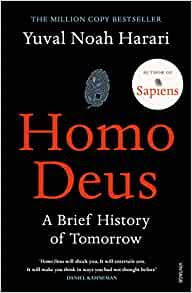
Two books I can’t wait to receive for Christmas and New Year are Homo Deus by Yuval Noah Harari and The Midnight Library by Matt Haig. I have discovered both authors only this November, having read Homo Sapiens, The Humans and How to Stop Time alongside each other. 

Despite obviously having been written independently of each other, together they have created a wonderful narrative about humankind, our past, and our impact on the Planet and fellow planetary residents, humanoid and otherwise.

Somehow, I feel that Homo Deus and The Midnight Library ought to be read side by side too and I treasure those – as yet only imaginary – moments of morning non-fiction reading and dark evening reads of a novel with modern jazz playing in the background.

Yvonne Coppard: 
In 2021 I will tackle the toppling stack of panic-bought titles from the first Lockdown, when I feared I might run out of good books. Lined up for the New Year are: Tidelands, Philippa Gregory, set in the English civil war. I know I’ll love it because, well, it’s Philippa Gregory, innit?

The Woman in Cabin 10, by Ruth Ware. ‘A passenger is missing. But was she ever on board at all?’ is a great tag. The author is new to me, but a Sunday Times bestseller seems a safe bet.

The Ode Less Travelled, by Stephen Fry, is one of my Lockdown projects. It’s a masterclass in poetry, complete with practical exercises. I made a start and promptly mislaid the book. It’s turned up now, and I’m looking forward to indulging a neglected love of poetry.

Gill Lewis: I’m really looking forward to Fifty Words for Snow by Nancy Campbell. Snow represents so much for many people across the world, and there is a palpable ecological grief at the loss of it in some regions due to climate change. And second in my TBR pile is What is Life? by Paul Nurse, where I hope to find some answers to this huge question.

Celia Rees: 
I’m looking forward to reading Mick Herron’s Slough House, due to be published February, 2021. I love spy novels and I love Mick Herron’s writing. I eagerly devoured books I - 6 and am eagerly anticipating the seventh in the Slough House series. I’m also thinking of re-reading the Master, John Le CarrĂ©.

I also like the Australian novelist Jane Harper, and notice that her next book, The Survivors, is to be published in February, 2021. I very much enjoyed The Dry and The Lost Man, so I’m looking forward to this one. 

The TV series of His Dark Materials has made me want to re-read the Philip Pullman novels, particularly The Subtle Knife and The Amber Spyglass. I fear I read them too quickly the first time round! 

Julia Jarman:
 I will read everything Patrick Gale has written, and am currently enthralled by A Perfectly Good Man.


Monday, 18 February 2019

Guest review by Savita Kalhan: Rachel Ward's ANT AND BEA books


"The plot for both books will keep you guessing right to the very end."


Savita Kalhan was born in India, but has lived in the UK most of her life. She got the writing bug when she was teaching in the Middle East, where she lived for several years. Now living in North London, she runs a teen reading group at her local library in Finchley, and writes for children.

Her debut novel, The Long Weekend, published by Andersen Press, is a tense thriller about two boys who are abducted after school. Her new book, The Girl in the Broken Mirror was published in May by Troika Books: 'an unflinching, multi-layered exposition of male privilege, male abuses of women, and the clash of cultures. With hard-hitting clarity it shows how girls are silenced.' Love Reading 4 Kids


When I found out that I had won two crime fiction books by Rachel Ward I knew I was in for a treat. As a children’s writer, I know of Rachel Ward’s fiction for teenagers and thoroughly enjoyed her Numbers series.

In The Cost of Living we meet the two amateur sleuths, who both work for the local supermarket, Costsave, in the fictional town of Kingsleigh. Bea, a check-out girl in her early twenties, lives with her agoraphobic mum, Queenie; and Ant, from the estates, who left school early and seems to be going nowhere, but who manages to get a trainee job at the supermarket. An unlikely friendship springs up between them as a crime draws them together. There is a stalker in Kingsleigh and he is attacking women. Then a woman is murdered. This is all too close to home for Bea and she begins to investigate and, gradually, Ant is co-opted to help. Everyone is a suspect – colleagues and locals alike.

Dead Stock is the second book in the series. It opens with a body being dropped from a bridge, a dead cat, and more complications in both Bea and Ant’s personal lives. Although both books can be read as stand-alone, it is best to read the two books in order to get fully immersed in the series.

The main characters are down to earth and immensely likeable. The dialogue is fresh and witty. The plots for both books will keep you guessing right to the very end. I love the way Bea and Ant’s friendship develops over the two books – and the same applies to the rest of the supporting cast. We get to know all the staff of Costsave, and the locals, and follow their stories through both books. The depiction of Bea’s relationship with her mum Queenie is just lovely. Then there’s Bea’s co-worker Dot, who is a real scream, Bob on Meat, the odious deputy manager Neville, and so many more.

And everything is in place for a third book in this series, which I can’t wait to read – I really need to know more about one of Bea’s regular customers, who I won't name!

Rachel Ward aptly describes her books as ‘cosy crime’: cosy they may be, but they are still thrillers complete with red herrings and killers, like a novelised Midsummer Murders. So to drive away the winter blues, I would highly recommend curling up in front of the fire with a cup of tea or a glass of wine and a copy of The Cost of Living. You'll move on to Dead Stock in no time.

The Cost of Living and Dead Stock are published by Sandstone Press.

Monday, 31 December 2018

READING AHEAD Part 2: what's in our sights?


More of our contributors - including some new faces to the blog - give us their reading choices. What was on their Christmas list? What have they been hoarding for a special treat? Old favourites, new publications, authors recently discovered ... 

As ever, a big thank you to our guests, thanks to whose generosity we post a new review every Monday. We hope you'll find something here to add to your own to-be-read pile.


Savita Kalhan: I am eagerly awaiting Crossfire by Malorie Blackman, the fifth book in the iconic Noughts and Crosses series, which is to be published next summer. The original series for children was inspired by political events and racial discrimination. Crossfire is no different. Brexit, Trump and the rise of the far right, have inspired Crossfire, and will no doubt spark discussions amongst teenagers and adults alike.

Can We All Be Feminists is a collection of essays by seventeen writers from diverse backgrounds. Listening to some of the essayists at a Waterstones’ event, and reading Eishar Kaur’s essay on the way home on the train highlights how slow change continues to be – she is writing as a third generation British Asian woman and I am second generation – and also how ‘feminism’ can mean radically different things according to your background, ethnicity and colour.


Hilary McKay: Helen Macdonald's H is for Hawk was my car book. I have car books, I’ve had them for years. Comes from the days of waiting with hot water bottles in the dark outside music lessons, party venues, gyms, schools, all those places that I don’t wait outside of anymore because the children are grown up(ish). So I’ve brought it into the warm, thing of beauty that it is, with that cover. That hawk. Now I’m two chapters in, and it’s as I guessed and as I’ve heard, long distance poetry. I have no fear of finishing it because I know already I’ll just turn to the beginning and start again.


Jon Appleton: A few years ago Paul Burston made the seamless transition from writing hilarious comedies to dark, searching crime fiction. I enjoyed The Black Path hugely so am looking forward to Paul’s creative exploration of the dark side of social media in The Closer I Get (Orenda Books, May). Paul is massively savvy about the online world so I’m sure his take will be insightful and persuasive and his story compelling.

I love it when Jill Dawson takes characters from real life and immerses them in turbulent semi-fictional scenarios - her next book, The Language of Birds (Sceptre, April) plunges us into the 1970s and the infamous disappearance of Lord Lucan. Can’t wait! In the meantime why not read The Crime Writer, her most recent novel which is about Patricia Highsmith? Chilling.


Leslie Wilson: I'm looking forward to reading The Pursuit of Power, Europe 1815-1914, by Richard J Evans. Evans is an author who I greatly esteem, because he has written about Nazi Germany in a dispassionate, enlightening and scholarly way. This book, however, deals with the period between Waterloo and the outbreak of World War 1, the era that my English and Silesian-German grandparents were born into (the latter part, anyway). There was so much going on during that period; the revolutions of 1848, the growth of cultural and political nationalism, colonialism, technological change, but also feminism and trade unionism. Can't wait.


Nick Manns: I caught Paul Broks on Radio 4 last Spring. From this fleeting hearing I gathered that he was a respected neuropsychologist, talking about the importance of magical thinking. The Darker the Night, the Brighter the Stars defies categorisation (so is every bookseller’s nightmare). Depending on where you jump in – and Broks is happy for readers to work through in any order – it’s autobiography, speculative philosophy, neuroscience, grief memoir and ghost story. It's also unsettling: “There is no clear dividing line in the brain between inner imaginings and perceptions of the real, solid ‘world out there’. Reality and fantasy are built into the same neural circuits." I’m about to reread it, letting into the house the quotidian, the strange, the dead.


Gwen Grant: A Place in the Woods, by Helen Hoover, is one of my most treasured books. Chicagoans Helen and her husband, Adrian, move to the vast forests on the edge of Minnesota’s northern wilderness. Helen’s deep love and respect for the forest and its wild inhabitants shines through as she shares the beauty and
danger of this world..

Environmentalists, they face many challenges. A violent storm almost destroys their cabin. Hunters appear. Their money runs out. Only when Helen starts to sell her detailed and lovely stories about the woods, illustrated with Ade’s beautiful pen and ink drawings, does the threat to their new life begin to lessen.


Chris Priestley: Having had the privilege of illustrating Jason Reynolds’ Long Way Down and hearing him speak at the Edinburgh Book Festival in August, I intend to work my way through his other books. I’m going to start with When I Was the Greatest. 

I am a big fan of the short story form as a writer and reader, but for some reason I’ve never got round to reading any Flannery O’Connor. I’m about to put that right with A Good Man Is Hard to Find. I also have Alice Munro’s Moons of Jupiter to look forward to.


Mary HoffmanThe book I am most looking forward to is Hilary Mantel’s The Mirror and the Light, whenever it comes out. I adored the first two, which I have read twice - and seen the stage plays and TV adaptation twice too. Meanwhile I am on the London Library's waiting list for Diarmaid MacCullough’s Thomas Cromwell: a Life, and I do have the 642 pages of Giles Tremlett’s Isabella of Castile: Europe’s first Great Queen, waiting by my bedside, for when I’ve finished Charles Ross’s Edward lV. Almost all my non-fiction reading is history these days. On the fiction front, I shall wait till Kate Atkinson’s Transcription comes out in paperback in March, since I don’t buy fiction in hardback (I make an exception for Hilary Mantel). Anne Tyler’s Clock Dance isn’t available till July next year but Madeleine Miller’s Circe is on my Christmas list. 


Paul Dowswell: Francis Spufford’s Golden Hill is now on my ‘read again pile’, and I’m happy to recommend it to anyone looking for a riveting read. Spufford’s tale, of a young man recently arrived in colonial New York with an exceedingly large cheque, is a glorious cinematic, smell-o-vision adventure. I can’t remember the last time I read a book I could see so clearly in my mind’s eye. Benedict Cumberbatch, Tom Wilkinson and Oona Chaplin strutted the stage and read the pages for me. Spufford teaches creative writing at Goldsmiths. If he teaches half as well as he writes they are very lucky to have him.


Patricia Elliott: Rosie, the wonderful writer Rose Tremain's memories of growing up in sooty post-war London, with school holidays spent at the country paradise of Linkenholt, her grandparents' home, is both delightful and disturbing. Her father deserts the family when Rose is ten. Her bleak childhood, dominated by her cold, unkind mother, is alleviated only by her loving nanny, and by teachers who encourage her creativity when she is banished to boarding school so her mother can marry a new man. Only after being 'finished' in France, does she finally rebel and escape to Oxford. Some of the most interesting parts refer to incidents that have inspired her novels.


Cynthia Jefferies: Having recently discovered the British Library Crime Classics, what better title to choose for Christmas reading than J.Jefferson Farjeon’s Mystery in White, his Christmas Crime story? First published in 1937 it has an evocative cover complete with deep snow, stars twinkling and a steam train stuck in a snow drift. Four murders in a dozen hours! I reckon I’ve earned my bit of turkey. So says the police inspector, belatedly arriving at the scene. Eleanor Farjeon’s brother was prolific so I will be looking out for more. I love crime within this period a lot, almost enough to try it myself!


Sheena Wilkinson: Christmas is a time for old friends. This year Linda Newbery’s The Key to Flambards sent me back to K.M. Peyton’s originals. My own work in progress is set in 1921, so revisiting the post-war atmosphere of Flambards Divided is fascinating– though my book is set in Belfast which had its mind on things other than horses and racing cars. I’ve recently loved Kate Atkinson’s Transcription, and I hear there’s a new Jackson Brodie on the horizon next year. So that has settled my Christmas reading – a leisurely reread of the first four Jackson Brodie books to get me in the mood.


Linda Newbery:  I keep seeing clips and mentions of Chimamanda Ngozi Adichie (not least interviewing Michelle Obama at the Festival Hall!) and am impressed by everything she says.  Americanah, a story of two returned Nigerian exiles, former lovers, sounds enticing - and I've just seen that Barack Obama has chosen it as one of his books of the year, too. Having been gripped by Michelle Paver's chilling Dark Matter, I've now got Thin Air, a ghost story set in the Himalayas in the 1930s. And I have high expectations of The Binding, a first adult novel by Bridget Collins, known for her bold and accomplished teenage fiction. We'll hear more about this for sure, and just look at that sumptuous cover!


Finally here is Bridget herself, who'll be a January guest:

Bridget Collins: I’m really looking forward to re-reading Naomi Novik’s Spinning Silver. It’s a
Photo: Symon Hamer
brilliant, immersive reworking of the Rumpelstiltskin story, with wonderfully rich world-building and great characters. The images that stay with me are so beautiful (think silver, ice, dissolving mirrors, silk) that I can’t wait to rediscover them. The first time I read it I just devoured it – but then, because it was so in demand, I had to give it straight back to the library! So I’m going to buy it and go more slowly this time, relishing every word.