Showing posts with label Judith Allnatt. Show all posts

Monday, 27 April 2026

WRITERS REVIEW PUBLISHING marks its first birthday


Great reissues and new fiction - more on the way this year!

Our new venture, an author publishing collaborative, launched last April with titles by Judith Allnatt, Mary Hoffman and Linda Newbery. Since then we've announced the publication of Sheena Wilkinson's Miss McVey Takes Charge and most recently Dennis Hamley's intriguing Spirit of the Place. 

We're very proud of our small but excellent list, which will soon see the addition of a sixth title: Sue Purkiss's first novel for adults, An Ordinary War, based on her father's experiences as prisoner of war in Poland. Christina Hardyment plans to join us with her next Alyce Chaucer mystery novel, and Linda Newbery's The Hide will appear in October. 

Coming soon on the blog - a piece by Dennis on the inspirations behind Spirit of the Place.

Find out more about our authors and their books on our website. 

See also:


Monday, 22 December 2025

BOOKS OF THE YEAR part 2 - chosen by our contributors


Here's our second batch of lovely recommendations. Thank you to our reviewers, all authors and booksellers, for your support - we couldn't do this without you - and also to all our followers. Come back next week for the final selection of great suggestions to kick off your reading for 2026!

Jaffé and Neale Bookshop: Patrick Neale's
Book of the Year is The Winter Warriors by Olivier Norek: A literary gem describing Russia's invasion of Finland in 1939. It's a thriller about the world's greatest sniper, capturing a forgotten piece of history that resonates strongly today. Rachel White's choice is Ian McEwan's What we can Know: McEwan is back on form with this time-spanning quest that expertly threads a literary mystery of a lost poem through a post-catastrophe future. Can hope be rescued from looming gloom? It's his best work since Atonement and Enduring Love. 

Jaffé and Neale is an independent bookshop in Chipping Norton, Oxfordshire.

Lissa Evans:
 I loved Ghosts of the Farm, by Nicola Chester.  This is a non-fiction book, but it has as much heart and plot as any good novel, interweaving the fascinating diaries of a simply splendid woman farmer in World War 2, with the author’s own passionate relationship with the land, as she attempts to advocate for a nature-depleted countryside.  Within it, there’s a marvellous account of Chester’s teenage years when she worked in stables at the weekends and early mornings, her reward being the opportunity to learn to ride;  I was always envious of those tough, responsible little girls that I glimpsed on the rare occasions I bumped into that world, but I'm not aware that they’ve ever been written about in non-fiction before.  It’s all part of the rich and riveting texture of a book that I’m already looking forward to reading again. 

Lissa Evans' latest novel is Small Bomb at Dimperley, reviewed on the blog by Penny Dolan.

Judith Allnatt
recommends The Book of Fire by Christi Lefteri. In Greece, a family is left physically and emotionally scarred by a fire that destroys their home and a vast tract of beautiful forest. They are Irini, a bazouka player, Tasso, an artist, and Chara, a sweet child. The story switches between the present with the family struggling to recover and the past – their terrifying jump from a cliff into the sea to escape and the fire’s aftermath.

Alongside the family’s journey from despair to hope there are questions to answer about who is responsible for the disaster. Is it Mr Monk, the man who illegally started to clear land for his hotel development, the emergency services that were slow to respond, the government, or is climate change and therefore all of us? To what extent are each to blame?

This is a moving book and, as with Lefteri’s other novels The Beekeeper of Aleppo and Songbirds, it brought me near to tears. The author has a clear-sighted view of human destructiveness but also has great compassion.

Judith Allnatt's latest publication is The Poet's Wife

Mary Hoffman: My Book of the Year is Helen Castor’s magnificent The Eagle and the Hart, an imaginative historical comparison of the two first cousins Richard II and Henry IV. Richard, with his effeminacy, love of luxury, preference for male “favourites” and refusal to name an heir, was unsuited to kingship in every way but he was the legitimate next in line to the throne, the remaining son of Edward (later known as the Black Prince). His grandfather, Edward III, and his older brother, another Edward, predeceased him, so Richard became king at the age of ten. 

Henry, on the other hand, had every quality needed in a king. He was intelligent, brave, a champion jouster, happily wedded to his childhood sweetheart and the father of four lusty sons and two daughters before tragedy struck and his wife Mary died in her last childbed. But Henry was not the heir. The two men were born within months of each other, married close together and lost their wives only weeks apart. 

Henry’s father was the great magnate John of Gaunt, the richest man in England after the king, Edward III’s third son. They were both mistrusted and overlooked by King Richard. Things came to a head when Richard sent Henry, who had not been tried or convicted for any crime, into exile in France. Gaunt died months later and Richard stole Henry’s great inheritance – all titles and lands. It was a disaster waiting to happen.

Historical storytelling at its best.

Mary Hoffman's latest publication is David: the Unauthorised Autobiography.

From Cathy Cassidy: This is Happiness by Niall Williams had me hooked from the first sentence. Fiction disguised as memoir, it's light on plot but brimful of heart, humanity, grief and love, a kind of time machine taking you back to 1950s rural Ireland. Both place and character are drawn perfectly, and the prose is clean, clever and beautiful in its simplicity. The novel charts the unlikely friendship between seventeen year old Noe, fresh from the seminary, and sixty-something Christy, who has been tasked with siting the poles that will connect the village of Faha to the National Grid. The novel unfolds slowly, but along with the details of village life come shards of pure beauty and insights into love, life and loss. I've read a LOT of books this year, but none have moved me as much as this one. I absolutely loved it.

Cathy Cassidy is the author of  the Chocolate Box Girls series and other children’s books.

Pippa Goodhart chooses The Ministry of Time by Kaliane Bradley: this novel is a breath of fresh air. Far from perfect, but full of energy, ideas and beautiful writing, it’s rich and original, and I’ll certainly read it again.

Kaliane Bradley is a Penguin book editor who found herself shut-in alone and bored during Covid lockdowns. She watched a television programme about the HMS Erebus polar expedition, and semi fell in love with naval officer Graham Gore (look online for his photo!) who died, but it isn’t known quite how. She found other enthusiasts online, and began writing a bit of time travel fantasy for their entertainment. To her surprise, that then grew into this, her first novel, The Ministry of Time.

It's written in the first person by disaffected female civil servant, brought into The Ministry of Time to become a ‘handler’ for an ‘expat’ brought from the past to be studied. Thus, gorgeous but of his time Graham Gore comes to live in her flat, bemused by washing machines, Spotify, doing your own cooking, feminism, computers, but gallantly trying to assimilate. Also brought from the past at moments when they died alone, and therefore history won’t be disturbed by their removal from it, come characters from 1645, 1665, 1793, and 1916, from whores to soldiers. Friendships and tensions arise, sometimes very funny, often poignant.

What to do with this situation she has created? The story becomes a tangle of sci-fi, rom-com, study of race and empire, and it doesn’t all convincingly resolve. But, no matter. The ride has been thought-provoking and fun!

Pippa Goodhart's latest publication is You Choose Bedtime, illustrated by Nick Sharratt.

Linda Newbery chooses Etta Lemon - the Woman who Saved the Birds by Tessa Boase, and will post a full review soon. Its wide sweep covers not only Etta Lemon's outrage at the mass killing of birds - almost driving some species to extinction - to provide feathers for fashionable hats, but also the suffragettes/suffragists, whose campaign began shortly after Etta Lemon's and who were of course far more prominent. There's much about social history, conditions of workers and the rise of feminism alongside the origins of the RSPB - now one of the UK's largest conservation organisations. Yet until now, and the publication of this book, Etta Lemon and her colleagues were barely acknowledged. There's much to learn and enjoy in this fascinating account.

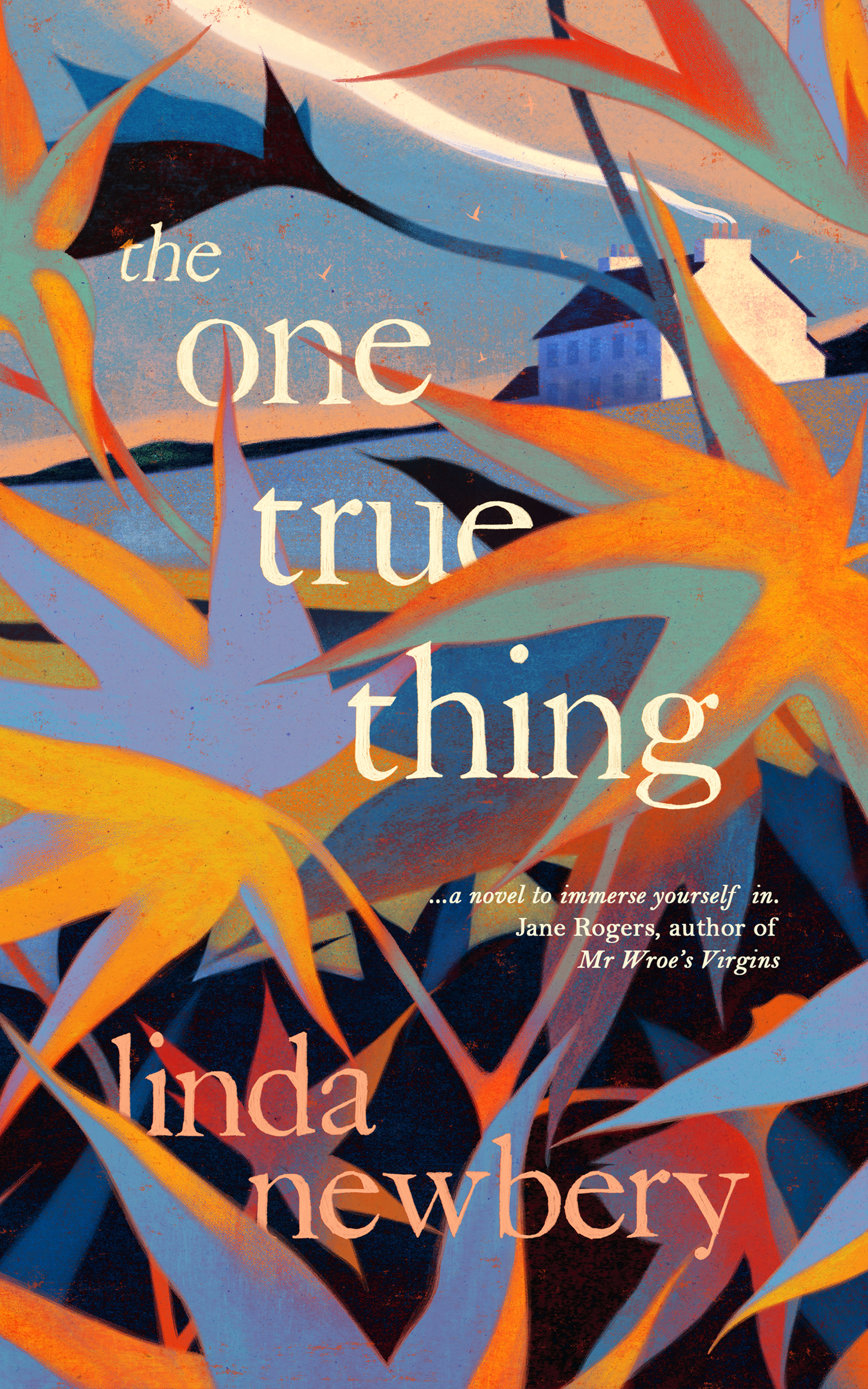
Linda Newbery's latest publication is The One True Thing.

Sarah LeFanu 
chooses Binocular Vision: New and Selected Stories by Edith Pearlman: My friend Hannah sent me this wonderful short story collection for my birthday in the summer. I had never heard of Edith Pearlman, although she has been writing short stories for 40 years and has won numerous awards in the USA. She’s nowhere near as famous as the writers to whom she is most often compared, Alice Munro and John Updike. Each of Pearlman’s sentences provides pleasure. She has a broader scope than Munro, and is more subtle and compassionate than Updike. The stories range widely in place (New England, old Russia, Central America, the remote mountains of Hungary), in character and voice, and in subject-matter. They are utterly serious, shot through with humour, and quietly surprising. Now I am slowly re-reading them, savouring their rich complexity. When I looked her up, I found she had died in early 2023. I shall track down her earlier collections.

Sarah LeFanu's latest publication is Talking to the Dead: Travels of a Biographer

Nick Hodges
: My book of the year? Sean Dooley's The Big Twitch: One Man, One Continent, A Race Against Time - a True Story about Birdwatching, wherein the writer spends his inheritance attempting to see and tick off 700 species of Australian birds. Dooley gives himself a year and when the book starts - dead on midnight - so does he: positioned with spotlight in a dark forest. A nocturnal sooty owl is the first target. And it's raining.

He could of course be partying; celebrating the arrival of the new year; doing what ordinary people do. But no: he's a twitcher. And so we follow Dooley's adventures as he travels and ticks his way through the country: its swamps and sewage works (yes, you read that right); its heat and dust. Seasickness plays its part as well as flat tyres in the desert. A book written by a man aware of his own eccentricities. And no girlfriend. 

Nick Hodges is a wildlife journalist living in Sydney.

Sam Barnes
of Books & Ink Bookshop recommends Craftland by James Fox: This is the most beautifully written book documenting the lives and careers of master craftspeople whose trades are critically endangered. James Fox demonstrates a vast breadth of research and a true, authentic passion for his subject, giving voice to craft trades spanning the length and breadth of the British Isles, incorporating not just rural crafts but those found in our towns and cities too. The author explores trades from the Scottish Islands in the north down to the Scilly Isles in the south. From watchmakers, coopers and bell founders, to bodgers, rush cutters and letter cutters. This isn’t a travelogue, though the author visits all these places and people; it is a love letter to crafts and trades, a living history and a reminder to us all to look around at all the crafted objects we use every day and consider their story. Britain is a nature of crafters and hopefully this book will also inspire a new generation to take up some of these threatened trades. A delight to read but also a delight to listen to as James Fox narrates his own audiobook, interjecting his passion for the trades he talks about into his audio delivery (available on Librofm and presumably on other audio platforms too).

Books & Ink is in Winchcombe, Gloucestershire. Proprietor Sam Barnes, back in the days when her shop was in Banbury, was our very first independent bookshop contributor.

Graeme Fife
chooses Facing Down the Furies by Edith Hall. I’ve known five men who committed suicide, two of them close to me, and nurse my own feelings as to their loss. In this remarkable book, Hall, with great candour, insight and courage explores her own emotional reaction to the suicide of past members of her family and the ‘miasma of corruption’ as she puts it, which clung to the survivors and lingers, yet, near irresistibly, in her. Into this investigation of her own emotional responses she weaves the result of deep study of many Greek tragedies which delve undaunted into the unkindly matter of self-destruction.

The Greek idea of three Furies, known, euphemistically, as Eumenides ‘kindly ones’ (an interesting paradox in itself) underpins this vital study of a dark corner of the human psyche. Greek myth emerged from an extraordinarily acute sensibility which, in its turn gave birth to the tragedies of Aeschylus, Euripides and Sophocles, the work that forms the very foundation of our own drama. Full review coming in 2026.

Graeme Fife's latest novel is Memory's Ransom.

From Caroline Pitcher: As Christmas hurtles near, I’m re-reading eight of Claire Keegan’s short stories in the collection Walk the Blue Fields.

The title story begins: the women came with flowers, each one a different shade of red. Later, the priest stares at the line of her scalp where the shining red hair is parted.

At the wedding feast there is humour, and threat. After the best man urinates, he turns before his cock is put away. It is a huge cock and he has difficulty getting it back into the rented trousers.

Walk the Blue Fields is the bittersweet story of a man whose love got away. The spare writing is full of sadness, yet after the visit to the mysterious Chinaman, the priest thinks after all that, The spring has come, dry and promising.

In Claire Keegan’s writing, there is so much more than meets the eye. Ireland struggles with its dark past. (Here I want to mention So Late in the Day, a shattering novella about Cathal’s inherited misogyny, which destroys his own happiness.

Hilary Mantel said that Keegan writes with a certain stony-eyed realism about human experience. Yes. And she doesn’t write enough stories for me.

Caroline Pitcher's latest book is Mariana and the Merchild, illustrated by Jackie Morris.

And finally: Julia Jarman's choice is The Glory Cloak by Patricia O’Brien. The glory cloak of the title fixes this novel in my memory, sparking others of people, places and actions, some of which I’d rather forget. The novel is an alternative biography of Louisa M Alcott, written from the point of view of a fictitious character, Susan Gray, who gets closer to her than even her sisters did, joining her in the Union Hospital in Washington DC where, during the American Civil War, Louisa nursed soldiers and fell in love. It’s a story of passionate love and passionate self-denial – and it rings true, because of the writer’s skill and meticulous historical research.

The glory cloak itself was real. Luxurious, made of red and green silk, it was confined to the dressing-up box in the Quakerish Alcott household. But Louisa’s mother once placed it round her shoulders to inspire her ‘to do great things’.

Julia Jarman's latest novel is Widows Waive the Rules.

What are your own best reads of the year? Please tell us in the comments, and do come back next week for our final selection.

Monday, 28 July 2025

SUMMER ROUND-UP by Adèle, Celia and Linda


Adèle Geras, Celia Rees and Linda Newbery are the hosts of Writers Review. Here we each share two books that have impressed us recently and one or more titles we're planning to read next. 

Linda's choices:

In The Lost Rainforests of Britain, Guy Shrubsole has almost single-handedly raised public awareness of the temperate rainforests we have in Britain – often in damp microclimates where a deep gorge creates the right conditions of moistness and protection from wind. He’s an engaging writer and the book ranges widely, recounting expeditions with his partner or friends to remote places in Wales or the West Country, describing in detail the species found in these ecosystems, and exploring references in poetry and folklore. We justifiably criticise other countries for destroying their rainforests, but Shrubsole points out that we're largely unaware of how much of our own has been lost. His campaign has resulted in government acknowledgment of these precious habitats and a commitment to protecting and restoring them. 

I went straight on to Guy Shrubsole's more recent The Lie of the Land (clever title) - an angrier but equally informative book that looks at who owns land in Britain (the wealthiest 1% owns 50% of it), what they do with it, and how they deny access to the rest of us. You won't be surprised to hear that Guy Shrubsole was a leading figure in the successful challenge to Dartmoor landowner Alexander Darwall when he attempted to ban wild camping. Shrubsole is outraged about the (mis)management of huge areas of moorland for grouse shooting, which includes practices such as burning moorland and the illegal slaughter of birds of prey, foxes and anything classed as 'vermin' which might reduce grouse numbers - all this subsidised by taxpayers. The mass release of pheasants each year, again in the interests of the shooting minority, receives equal condemnation - in what other circumstance would the widespread release of a non-native species into the countryside be considered acceptable, at a time when bird flu is rife and we're all aware of the risks of another pandemic? As recent parliamentary debates have shown, it's down to the lobbying power of those with vested interests in shooting estates. More optimistically, Shrubsole looks at instances of communal purchase of land for the benefit of all and for nature restoration. 

As for the books I'm looking forward to, I'm treating myself to a re-reading of Judith Allnatt's touching and beautifully-written The Poet's Wife, which tells the story of poet John Clare's descent into madness from the point of view of Patty, his wife. I first read this ten or more years ago and am now delighted to see it reissued in our own imprint, Writers Review Publishing. With wonderful evocations of the Northamptonshire countryside and rural life, it begins with Patty's deep concern when her husband John, who's walked eighty miles from a lunatic asylum in Epping Forest, appears to believe that he's still married to his first love, Mary. How will Patty cope, as his behaviour becomes increasingly delusional?

I'm also tempted by Anna Hope's Albion, having been captivated by the abridged version as Radio 4's Book of the Week. With a funeral, a will, a privileged family, a big country house, complex relationships and a big surprise sprung on the gathered relatives, it has elements in common with my own novel, which Celia's kindly chosen below. Here, no spoilers, but the revelation brought by outsider Clara shocks the family out of its smugness and leaves them with a difficult dilemma to face.  

And I can't omit to mention that I'm currently in thrall to Barbara Kingsolver's Demon Copperhead. It's been sitting on my reading pile for some time but now that I've started, I can't wait to get back to it - a marvellous and moving novel whether or not you're familiar with David Copperfield, which it cleverly shadows.


Celia's choices:

I have been reading…


The Dutch House by Ann Patchett. The house of the title is in Elk Park, a prosperous suburb of Pennsylvania. It is A large mansion, built in the 1920s, with a glass frontage ‘as big as storefront windows’. The use of glass in the design makes it possible to see right through it, which cannot be said of the characters who come to live there. The house is more than a setting – it is a powerful and enduring presence in the novel with a deep and lasting effect on those who inhabit it. The characters change. The house does not. It is named, not for the design, but for the Van Hoebeeks, the originally owners. It is acquired in 1946 by Cyril Conroy, a real estate developer, who buys it and moves in with his wife and two children, Danny and Maeve. He leaves the contents intact including a library of Dutch books no-one can read and large portraits of the Van Hoebeeks. Nothing about the house changes. It is as if his family have no impact on it. The house affects them, however. The mother loathes it and leaves house, husband and children. Cyril quickly installs a young widow, Andrea, with two children of her own. Danny and Maeve are pushed out, underlining the book’s fairy tale quality. Told over five generations, Pratchett continually plays on fairy tale elements and archetypes: rags to riches, absent fathers, neglectful mothers, abandoned children, wicked stepmothers, faithful retainers but it is done with such skill and delivered with such laconic, casual insouciance by narrator, Danny, that it all seems completely natural.


Our own Linda Newbery also has an iconic house, Wildings, and more importantly an iconic and beautiful garden in her novel The One True Thing. The garden is created by Bridget, a renowned gardener, who is married to Anthony who owns the house. There are two narrators, Bridget herself and her daughter, Jane. With echoes of E.M Forster’s Howard’s End and Dickens' Bleak House, the novel revolves around a death and a quirky will which leaves the future of house (and garden) in doubt. Her mother having pre-deceased her father, daughter Jane is doubly bereaved. The garden and the idyllic rural surroundings are so beautifully described that the reader begins to feel the imminent loss as acutely as Jane does. She is forced to confront not only the threat to her home, but a complex set of revelations that strike at her core beliefs about her family. The skilfully handled dual narrative gradually reveals the lies, evasions and emotional complexities of the past, leading to a resolution where past and present can be reconciled.


Having recently read The Dalai Lama’s Cat by David Michie, I'm now looking forward to The Claw of Attraction by the same author. Plucked as a tiny, dying kitten from the streets of New Delhi by His Holiness The Dalai Llama (who just happens to be passing - not coincidence {obv.} but karma), the eponymous heroine re-counts her life as HHC: His Holiness's Cat. Her day to day encounters and challenges, from the temptations offered by over generous food providers (she is, after all, the Dalai Lama’s Cat) to the sudden arrival of a dog, an abandoned Lhasa Apso, serve as lessons in timeless Buddhist wisdom, compassion and the way to true contentment. As a cat owner and therefore lover, I found The Dalai Lama’s Cat utterly charming and deceptively wise. It would work for dog lovers, too. Don’t like animals? What’s wrong with you?

Adèle's choices:


This year, I have discovered a writer I'd never heard of before and I really want to introduce her to readers of this blog. Her name is Laurie Colwin and she died in 1992 at the age of 46. She was mainly known as a short story writer and especially a food writer during her lifetime but her novels are wonderful and deserve the attention of anyone who is interested in the texture of life and relationships, food and houses, animals and children .... I'm highlighting her last novel, which was published posthumously in 1993. It's called A Big Storm Knocked it Over and it's about a woman preparing for her own wedding, while also working at a publishing house where she is the editor in charge of illustrations in adult books. Her run ins with recaltricant writers who will not listen to her excellent advice, her beautifully depicted dealings with her fiancé and her friends and the toings and froings with regard to the wedding...everything takes you straight in, and you're part of the proceedings which are described with grace, humour and attention to detail. She's comparable to Anne Tyler in her ability to absorb you into what's happening on the page, seemingly without any effort. Her writing, sentence to sentence, is elegant and considered and engaging. Here is a tiny example, picked at random: "The enormous manuscript of In the Polar Regions by Hugh Oswald-Murphy, had been placed on Jane Louise's desk three times and taken back three times by Erna Hendershot. Then, just as Jane Louise felt she had a grip on what this thing should look like, Erna would appear in a tearing rush and inform her that the author had added to it or taken something away, or that most likely it had been pushed off the spring list or that he had decided that some Eskimo artist would do little line cuts to be scattered throughout, and furthermore that his photographs -still to come- would have to be keyed in.

I really loved this book and have also read Home Cooking and More Home Cooking which are superb and also contain recipes in plenty. She's a writer to take to your heart.


If you’ve not come across the four police procedural novels of Simon Mason (The Wilkins and Wilkins books) then I urge you to find them and read them in the right order. I don’t think nearly enough readers have discovered them and they’re very good indeed.

Even fewer readers will know about the Finder novellas. These are short, spare books in which a man, who calls himself The Finder, turns up in a place (in the case of The Woman Who Laughed it’s a rather drab suburb of Sheffield) and sets about finding someone who has disappeared. In Sheffield, a young sex worker who was murdered some time ago is seen on a bus…. Then she disappears again…. The Finder begins to follow threads which lead into many strange places.

He always takes a novel with him when he travels. In this book, it’s Persuasion by Jane Austen. His reflections on the novel add to this reader’s pleasure.

My advice? Read Simon Mason!

Two books I’m looking forward to:


I’ve just downloaded Entangled Life by Merlin Sheldrake. His name seems to suit the subject very well. It’s about fungi which have complicated networks of communication and which behave in all kinds of very fascinating ways. I love books that open up a whole new world and I am looking forward greatly to learning much more about mushrooms than the fact that they’re delicious when they’re not poisonous.

And I’m about to start on a new novel by Stephen King. It’s called Never Flinch and is a follow up to a terrific and very gory thriller starring the private detective Holly Gibney. That’s called Holly. This story involves a murderer who embarks on a plan to kill 12 innocent people, to avenge the death of a prisoner who has just been stabbed to death in gaol…. but who was falsely imprisoned for a crime he didn’t commit.

One thing is sure: never a dull moment in a King book, and this one looks terrific!

Happy reading and have a great summer….

Monday, 12 May 2025

Q&A: Adèle Geras interviews Judith Allnatt about THE POET'S WIFE


"I wondered what it must have been like for Patty to deal with John absconding from an asylum not to return home to her and their seven children but to find his ‘other wife’, Mary Joyce."

Judith Allnatt discusses her newly-reissued novel with Writers Review's Adèle Geras.

Adèle: When did you first come across the work of John Clare? His absence from what’s generally taught in schools has always rather surprised me.

Judith: I’ve always loved both nature and poetry and as a youngster I read some of John Clare’s keenly observed poems about the natural world. One particularly stuck in my mind about a hedgehog collecting crab apples by rolling on them until they stuck to its spines and could be taken back to its nest. I was charmed by the picture of a ‘hedgepig’ trundling along and looking like a head of hair in curlers!

Years later, as a writer living in Northamptonshire, Clare’s native county, I was involved in an arts project that took me into Northampton Library to research local literary figures. I started by reading the journal John Clare wrote about his eighty-mile walk home from an asylum in Essex in which he survived on a diet of ‘grass and tobacco’. Reading his letters from a later period, when he was a long-term patient at Northampton General Lunatic Asylum moved me. Through his own words you could trace his heart-breaking mental decline.

Sometimes he thought himself to be Admiral Nelson or Byron or a boxer called Jack Randall. I became interested in him not just as a marvellous poet and naturalist but as a man. When I found out that John was obsessed with his childhood sweetheart, Mary Joyce, and believed himself to be twice married, to both his real wife, Patty, and to Mary, I knew that here lay the tinder for a novel. I wondered what it must have been like for Patty to deal with John absconding from an asylum not to return home to her and their seven children but to find his ‘other wife’, Mary Joyce.

Adèle: How well do you know Clare’s part of the world? Are you a native? If not, what drew you to this landscape, or perhaps it’s only through the poems that you met it…

Judith: I’ve lived in Northamptonshire for almost forty years but at the opposite end of the county to John Clare’s native village of Helpston, so it was a joy to explore an area that was new to me. As I drove towards Helpston for the first time, I remember performing the usual visual gymnastics of the historical writer to sweep away all evidence of modernity: cars, tarmac, bungalows, pylons and railway crossings. What was left was a blonde landscape of cut hay and pale, stone walls reminding me of John Clare’s description of wandering in such a scene before harvest ‘in the mealy light of waking day’.

The village evidences the esteem in which John Clare is held. The tiny cottage that once housed his family of eleven is restored and partnered by a museum. On a Victorian monument, his poems are carved in stone and in the churchyard on his birthday a living memorial surrounds his grave: a spread of Midsummer Cushions, squares of turf studded with flowers, placed there by local school children.

Over many trips, I also visited Northborough, on the edge of the fens, where the family later moved and where the copses and gentle slopes give way to the flat horizon and huge skies that John Clare found alien and unsympathetic. He longed for his old home and this homesickness perhaps contributed to his illness. From wandering knee deep in grass to find the family’s graves to visiting the mansion, Burghley House, where Clare worked as a gardener, I loved collecting all the little details I needed to build a convincing nineteenth century world.

Adèle: I’m very curious about the novel’s publishing history. What sort of publicity etc did you get? Was the book reviewed etc etc?

Judith: The book was favourably reviewed in The Times Literary Supplement, The Daily Mail and The Times, where Kate Saunders referred to it as ‘affecting and beautifully written.’ It was Book of the Month for Choice magazine and was shortlisted for the East Midlands Book Award. I was also delighted to have comments from writers whom I admire. Clare Morrall called it ‘A fascinating, compelling book written with subtlety and a delicate touch’ and ‘a tender family portrait’ and Charles Palliser said ‘This book is superb’, which is of course just what a writer hopes to hear!

As well as several bookshop launches, the novel also had a wonderful launch at the John Clare museum. There I had the opportunity to do a reading in the cottage itself, standing in the very place where Clare would have written some of his poems on old sugar bags and any scrap of paper he could find, and where Patty would have arrived as a new bride full of hope and excitement about their marriage.

Adèle: Following on from this, can you say anything about the new cover? It has quite a different feel to it … how did you choose it? Did you choose the first one?

Judith: Originally, when Random House published the book, I had only a minor input into the cover design. Having the book republished through Writers Review Publishing offered an opportunity for autonomy in its presentation. I collaborated with a designer who freelances for the mainstream publishers to produce a cover that is more contemporary in style and that includes more elements drawn from nature, to reflect the rural world in which the Clare family lived. This was important to me as I feel that John Clare’s love of his environment and the desire to protect it, and his awareness of the natural world and the place that Man has within it, have struck a chord with us now. Connections are being made between the depredations of enclosure and modern spoliation on a grander scale and John Clare’s words have found new resonance.

The kissing figures in silhouette are intended to emphasise Patty and John’s romance but as a touch of foreshadowing a wedding ring hangs, caught on a twig, as if lost or thrown away.

Adèle: What I always want to know from writers is the nitty gritty! Where do you work? Are you a plotter? Do you write on a laptop? Do you have stationery quirks? And so on…

Judith: My methods are quite ‘old school’! I always write the first draft by hand and do the main edit when putting it on to the computer later. I use big ‘Pukka Pad’ notebooks and write on alternate lines so I have room to insert changes. I write on the right hand side of the pad and make all kinds of notes on the left hand page – spider diagrams; sometimes even drawings that help me imagine a scene or decide the characters’ positions and attitudes within it. I have a very broad plan before I start but it might be no more than knowing the beginning, a climactic scene and the ending. I always have a picture in my head of the last scene and this acts as a kind of guiding light for the novel, the point I’m aiming towards even though at the start I may have little idea how I’ll get from A to B.

While I do jot down thoughts for a book anywhere, the heavy-duty work gets done at the library where there are no distractions. I usually do a six-hour stint and feel that I need that long to immerse myself properly in the novel’s world. I think of it as letting down a bucket into a deep well to find what’s at the bottom and it takes time to let down that rope.

Adèle: You seem to know a great deal about e.g. 19th century agriculture! Also childrearing…what kind of research did you do?

Judith: I was brought up on the farm of the Agricultural College where my father taught, so the rhythm of planting and harvest and the tending of livestock went on all around me. My dad, a born countryman, would tell me about the ‘old ways’ of farming as well as about modern practices. Later, when writing the book, he directed me to the sources I needed to answer such questions as ‘what are windrows’ and ‘why was a stook left at the field entrance when harvest was gathered in?’ The experience of walking the ground where the novel was to be set, was also invaluable as it gave me ways to describe the social history that I learnt about through reading: rural poverty, the greed of the powerful, the enclosure of the countryside and the passing of a way of life.

Finding out about Patty was the major research challenge; information about her is sparse. From the handful of poems written by John to Patty and from his letters and journal writing we know that she was attractive and ‘artless’ and that the lovers had a common interest in the natural world. We know that she was nineteen when she met John, that her family was above his in the social scale as they had six acres, pigs and a cow, and that her parents had aspirations for her to marry ‘up,’ and had a local shoemaker in mind. I rooted out other sources about the Clare family: paintings, photographs and artefacts handed down through generations. Then, through reading all the biographies, I looked at the events in the Clare family’s life: births and deaths, John’s courtship, his London popularity and his fall from publishing favour, the fragmentation of his personality and his delusion about being twice married. I imagined how each might have affected Patty and how she might have reacted.

Researching the social history provided detail too about the arduous labour of a countrywoman’s everyday life. To eat, you must first dig, sow, and hoe, to bake, you must first glean, thresh and grind, to have clothes on your back; you must first sew, alter or mend. I concluded that Patty must have been a strong woman to manage all this as well as seven living children and an elderly relative and grew very fond of her as I developed her character to reflect her warmth, good sense and grit.

The Poet's Wife is published by Writers Review Publishing

The other two launch titles for Writers Review Publishing are Mary Hoffman's David: the Unauthorised Autobiography and Linda Newbery's The One True Thing.


Monday, 24 March 2025

Special feature: WRITERS REVIEW PUBLISHING!


 Introducing our first three books!


Exciting news - we are branching out into publishing! Our new venture launches on April 24th with titles by Judith Allnatt, Mary Hoffman and Linda Newbery, and more on the way. We will publish both new fiction and reissues of well-reviewed novels that deserve to reach new readers. 

At present we're publishing only fiction, but as we develop that may change to include non-fiction, memoirs or poetry, depending on what comes our way. 

Find out more on our website.

*
The Poet's Wife by Judith Allnatt


It is 1841. Patty is married to John Clare: peasant poet, genius and madman.

Travelling home one day, Patty finds her husband sitting, footsore, at the side of the road, having absconded from a lunatic asylum over eighty miles away. She is devastated to discover that he has returned home not to find her, but to search for his childhood sweetheart, Mary Joyce, to whom he believes he is married.

Patty loves John deeply, but he seems lost to her. Plagued by jealousy, she seeks strength in memories: their whirlwind courtship, the poems John wrote for her, their shared affinity for the land. But as John descends further into delusion, hope seems to be fading. Will she ever be able to conquer her own anger and hurt, and reconcile with this man she now barely knows?

Affecting and beautifully written. Patty’s voice is at once homely and poetic, and her lyrical descriptions of the rhythms and customs of nineteenth century England – where it is unlucky to look at the moon through glass, and where a bundle of corn is left in the field at the end of every harvest, like an offering to the gods – are at the heart of the novel.’ The Times

‘This novel will leave you reaching for the nearest copy of John Clare’s powerful poems’ Daily Mail

'A subtle and sympathetic portrayal of losing a loved one to mental illness’ Times Literary Supplement  

‘A fascinating, compelling book, written with subtlety and a delicate touch, about the wife of John Clare, and the bewildering effects of her husband’s madness’ Clare Morrall  

*

David - the Unauthorised Autobiography by Mary Hoffman


Michelangelo's statue, David, is famous around the world. Millions flock to Italy every year to admire the physical perfection of the young man captured within the marble. But the identity of the model has never been known . . . until now.

Acclaimed author Mary Hoffman imagines the story of Gabriele, a naive but incredibly handsome young man who is hired as Michelangelo's model, only to find himself drawn into a world of spies, political treachery, and murder. Set against the vibrant backdrop of Florence in its most turbulent times, this rich, colourful, thrilling tale gives life to one of the world's greatest masterpieces.

"An engrossing political murder-mystery." Amanda Craig, The Times

"This is a meaty, satisfying piece of work, astute and convincing, detailing Gabriele's burgeoning sexual and artistic nature." Nicolette Jones, The Sunday Times

"Mary Hoffman has written an elegant novel which is totally believable, witty, and hard to put down." Kathy Stevenson, Daily Mail

"David brings a sexy immediacy to the creation of a sculptural marvel . . .the book makes palpable the contemporary meaning of the statue of a giant-killer - a (literally) gigantic anti-aristocratic gesture." Suzi Feay, Financial Times

"It is a brilliant premise for a novel. . . . Full of carefully-researched detail, David is at once the tale of a fictional character, the story of a work of genius and an evocation of a particularly compelling moment in Italy's past." Linda Buckley-Archer, The Guardian

*

The One True Thing by Linda Newbery


When the ground shifts, where is one true thing to be found?

Jane, in her twenties, is left parentless when her father dies suddenly; a second shock follows when his Will reveals the existence of a son no-one knew of. Now Wildings, the family home, must be sold. Spanning two generations, the novel tells the story of Bridget, Jane’s mother, trapped in an unhappy marriage on which her career depends, and of stone-carver Meg, who wants only independence but is enmeshed in conflicting loyalties and desires when Adam, a young artist, enters their lives, to devastating effect.

Now far from Wildings, Meg is bound by a promise to support Jane in her loss. Having thought of herself as an observer who saw everything, she’s forced to realise how much she failed to see – and the cost to those she loves.

‘A beautifully complex tapestry of lives and relationships … a novel to immerse yourself in.’ Jane Rogers, author of Mr Wroe’s Virgins

‘Newbery writes wonderfully.’ Financial Times

Cover artwork and design by Owen Gent.

*

See our Bookseller feature - Linda Newbery talks to Tom Tivnan about how Writers Review Publishing came about.

Monday, 23 January 2023

Guest review by Judith Allnatt: LILY by Rose Tremain


"Tremain writes with all her usual subtlety and feeling, imbuing everyday objects with the emotional charge they hold for her characters so that they become powerful symbols of love and loss."

Judith Allnatt
writes short stories and novels for adults. Her novels have been variously shortlisted for the Portico Prize for Literature, the East Midlands Book Award and featured as a Radio 5 Live Book of the Month. Short stories have appeared in the Bridport Prize Anthology and the Commonwealth Short Story Awards, and have been broadcast on BBC Radio 4 and the World Service.

Judith’s latest novel, The Silk Factory, is an eerie story of love and memory drawing on both the Luddite weavers’ rebellions in the nineteenth century and a modern day haunting. She has lectured widely on Creative Writing for over two decades and is a Royal Literary Fund Fellow. She lives with her family in Northamptonshire and is working on her fifth novel. For more information and blog posts see Judith’s website.  Twitter: @judithallnatt


I’ve been a great fan of Rose Tremain’s writing ever since discovering her short stories in the 1980s. I have since read her historical novels avidly, admiring both her style and the breadth of her reach as she seems just as at home writing of 17th century royalty in Denmark (Music and Silence) as she is writing of gold prospectors in 19th Century New Zealand (The Colour). What always strikes me is her deftness. Whether capturing a place or an era it is done so economically and precisely that one knows that her research must have been wide and meticulous to allow the careful choice of the telling details that really bring another world alive for the reader. Her characters are multi-faceted, and presented with subtlety. Tremain doesn’t shrink from showing the folly and wickedness that is part of human nature but through exposing the roots of it in her characters’ histories and motivations they remain relatable.

In Lily, subtitled A Tale of Revenge, Tremain writes of poverty, cruelty and crime in Victorian London. As a baby, the eponymous heroine is abandoned, found half frozen and delivered to Coram's Fields Foundling Hospital. She is first sent to a loving foster family but then wrenched away and returned to hardship as a pauper at the hospital. Now, as an adult, Lily has committed a murder and lives in fear of discovery. Tremain holds back the nature of the murder and the identity of the victim, masterfully managing the dramatic tension and creating a mystery that kept me turning the pages into the night. However, the truly fascinating thing for me was the relationship between Lily and the policeman who rescued her as a baby. She feels he may hold the key to her salvation but she dare not confess to him for fear of the rope.

Tremain writes with all her usual subtlety and feeling, imbuing everyday objects with the emotional charge they hold for her characters so that they become powerful symbols of love and loss: a scarf that Lily knits for her only friend at the hospital, a deep, black well at the farm where Lily was happily fostered that comes to symbolise her worst fear.

One of Tremain’s great strengths is that she looks unflinchingly at human darkness whilst still maintaining a feeling of authorial empathy and understanding. As did Trespass, The Road Home and The Gustav Sonata, this novel moved me to tears – it is heartrending, compassionate and brilliant.

Lily is published by Chatto and Windus.


More of Judith's choices:

Trio by Sue Gee  

The Lost Garden by Helen Humphreys

The Gustav Sonata by Rose Tremain, reviewed by Linda Newbery

Monday, 4 October 2021

Guest review by Judith Allnatt: ENGLISH PASTORAL - AN INHERITANCE, by James Rebanks


"In a world trembling at the brink of climate disaster, this is both a timely and a hopeful book..."

Judith Allnatt writes short stories and novels for adults. Her novels have been variously shortlisted for the Portico Prize for Literature, the East Midlands Book Award and featured as a Radio 5 Live Book of the Month. Short stories have appeared in the Bridport Prize Anthology and the Commonwealth Short Story Awards, and have been broadcast on BBC Radio 4 and the World Service.

Judith’s latest novel, The Silk Factory, is an eerie story of love and memory drawing on both the Luddite weavers’ rebellions in the nineteenth century and a modern day haunting. She has lectured widely on Creative Writing for over two decades and is a Royal Literary Fund Fellow. She lives with her family in Northamptonshire and is working on her fifth novel. For more information and blog posts see Judith’s website.  Twitter: @judithallnatt

English Pastoral is both urgent in its call to arms for the planet and poetic in its lyrical description of life on the author’s farm in the Cumbrian fells.

The book is structured in three acts. The first concerns the traditional farming that he learnt from his grandfather: rotating crop and pasture, using manure to nourish the soil and harvesting once a year. These were the farming methods evolved over centuries that worked both with and for nature. Spilt grain helped birds survive through the winter and cutting hay once for fodder rather than frequent grass cutting for silage allowed a habitat to survive for ground nesting birds such as curlews.

The second act explains the pressures of a growing world population and the industrialisation of farming: the growing of monoculture crops and the widespread use of pesticides, literally weeding out biodiversity; the spiralling use of fertilizers on soil ever more compacted and degraded; the use of massive machines on huge fields stripped of ancient hedgerows. These are practices that work efficiently to maximise production, but this drive for ever-lower food prices leaves little room for wild things and the cost to the natural world and the climate goes largely unheeded.

The third act explores hope for the future - the equivalent of the ‘redemption’ frequently used at this point in the structure of fiction. It describes James Rebanks’ return to some traditional farming methods. He chooses Herdwick sheep for their hardiness to Cumbrian weather. Belted Galloway cattle are introduced that can stand wintering outside and don’t need to eat silage indoors. Thus at one stroke he removes both the need for multiple crops of monoculture grass and the practice of spreading the resulting slurry: an acidic form of muck that destroys soil quality rather than well-rotted manure, which builds it. 12,000 trees are planted on his land. With the help of the Eden Valley River Authority, river and beck are rerouted and transformed from straightened, dredged, draining channels to meandering curved watercourses, slowing their pace to help protect towns downstream that were previously devastated by floodwater from unprecedented levels of rain. As the river wanders, gravel is deposited and salmon and trout that need gravel shoals on which to spawn return. He documents the otters, hares and owls returning to his land, alongside the rare wildflowers in the meadows. He speaks with equal enthusiasm of micro-organisms and numbers of earthworms - indicators of healthy soil. And what of the curlews? Driven out during the years of losing their chicks to the harvester, they are starting to return along with the swallows and swifts that dive to snatch the flies above muck-nourished fields.

Hung along the narrative thread that follows the farm’s fortunes, are vignettes of farming life: sheep stranded on an island of grass in floodwater, his father’s manic delight in the five yearly gorse burning, a son’s pride in winning a silver shield for being ‘best tup handler’.

The book is beautifully written. Old phrases such as ‘leading in the hay’ are used naturally as a matter of course. (Surely an echo of the thousands of years preceding this mechanical age, when men led horse and cart from field to yard). The face of the fells, changing with weather, the hour and the season is brought alive by the close observation and choice images of the writer.

In a world trembling at the brink of climate disaster, this is both a timely and a hopeful book. James Rebanks demonstrates that his farm is now not just carbon neutral but carbon positive – it is storing more carbon than it creates. Whilst pragmatically recognising that chemical intervention has its place, he makes the case for using traditional methods wherever possible and for encouraging and cherishing farming that improves the land and stewards the wildlife upon it. He points out that big corporations hunt in rural corners for genes in stock or crops in order to breed animals and plants capable of surviving new challenges such as climate changes. Yet, with every small farmer swallowed up by large scale monoculture farming these opportunities narrow and treasure is lost.

Most of us live in towns and cities and have little close contact with the land that feeds us. We buy packaged food from supermarkets and don’t think much about where it comes from or how it is produced. This book turns our eyes in this unwonted direction. What we see is that we can’t afford to ignore issues of regeneration and stewardship any longer, and that what happens to our land has far-ranging consequences for what will happen to our planet.

English Pastoral is published by Penguin.

See also: Wilding, by Isabella Tree, reviewed by Linda Newbery   


Monday, 11 May 2020

Guest review by Judith Allnatt: TRIO by Sue Gee


"A beautiful novel about loss, the process of grieving and coming alive again to beauty, friendship and love."

Judith Allnatt writes short stories and novels for adults. Her novels have been variously shortlisted for the Portico Prize for Literature, the East Midlands Book Award and featured as a Radio 5 Live Book of the Month. Short stories have appeared in the Bridport Prize Anthology and the Commonwealth Short Story Awards, and have been broadcast on BBC Radio 4 and the World Service.

Judith’s latest novel, The Silk Factory, is an eerie story of love and memory drawing on both the Luddite weavers’ rebellions in the nineteenth century and a modern day haunting. She
 has lectured widely on Creative Writing for over two decades and is a Royal Literary Fund Fellow. She lives with her family in Northamptonshire and is working on her fifth novel. For more information and blog posts see Judith’s website. 
Twitter: @judithallnatt

Trio  
is a beautiful novel about loss, the process of grieving and coming alive again to beauty, friendship and love. The main character, Steven Coulter, is not part of the eponymous musical trio but a teacher who tragically loses his young wife and is paralysed by grief. A year later when a colleague, Frank Embleton, invites him to a concert given by his sister and two friends, the music moves him. He begins to open to new possibilities for involvement in the world beyond his daily classes and his lonely house on the Northumberland moors and to the chance of new relationships.

Music is a healing power throughout, allowing feelings to form and be acknowledged. It releases the expression of feelings that are beyond words, as when a fellow teacher, morose Mr Dunn, veteran of the Somme, weeps to hear a young chorister sing Once in Royal David’s City.

Many of the pleasures of Sue Gee’s novels are here. Remote moorlands, Bamburgh Castle, Lindisfarne and the country house, with its pele tower and haha, where the trio practises, are lyrically described. Her subtle observation of human behaviour and her nuanced dialogue provide tantalising glimpses of her characters’ secret desires.

Set in 1937, the novel balances themes of stability and fragility. The English country house seems timeless with its ancient cedar still with its childhood swing. Its grandfather clock acts as a symbol of continuity with its rising moon and reliable quarter hour peal. Yet beneath this is the continuous sense that all can be turned in a moment: through the ravages of TB, the sense of war stalking ever closer; through loves revealed and rejection turning worlds upside down.

In a bold move, the story transitions from 1937 to the present day in the last section, and follows the next generation of Steven’s family. Although this might seem disconcerting and a challenge for the reader to engage with a new character, I quickly became fond of Geoff and interested in his nostalgic journey to his past. At first I thought the main purpose of the section was to show the reader what had become of the original characters through and after the war. I soon came to realise that something much more subtle was also going on. Gee shows us the past inextricably bound up in the present; the strength of attachment to childhood places, memories triggered by chance encounters, the need, near the end of life, to make a pilgrimage to one’s roots and to honour one’s ancestors.

This is a gentle, thoughtful and elegiac novel where appreciating the texture of the writing is as enjoyable as working out the characters’ secrets. It has the rare depth of insight one has come to expect from Sue Gee’s novels and I found myself pondering on loss, love and time, long after the last poignant scene. 

Trio is published by Salt.