Showing posts with label historical fiction. Show all posts

Monday, 6 July 2026

Remembering MARY HOOPER, 1945 - 2026, a tribute by Celia Rees and Jean Ure


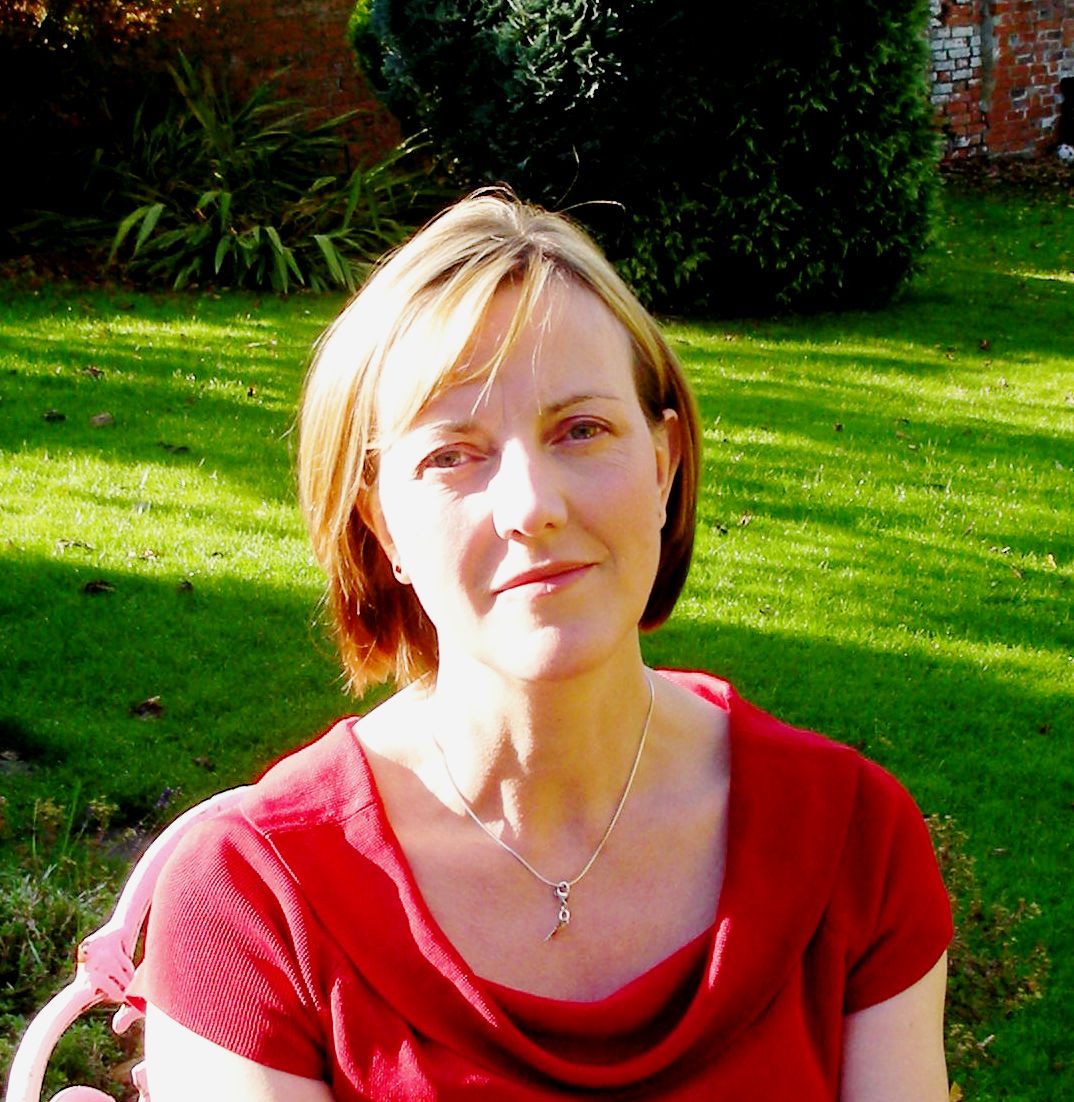
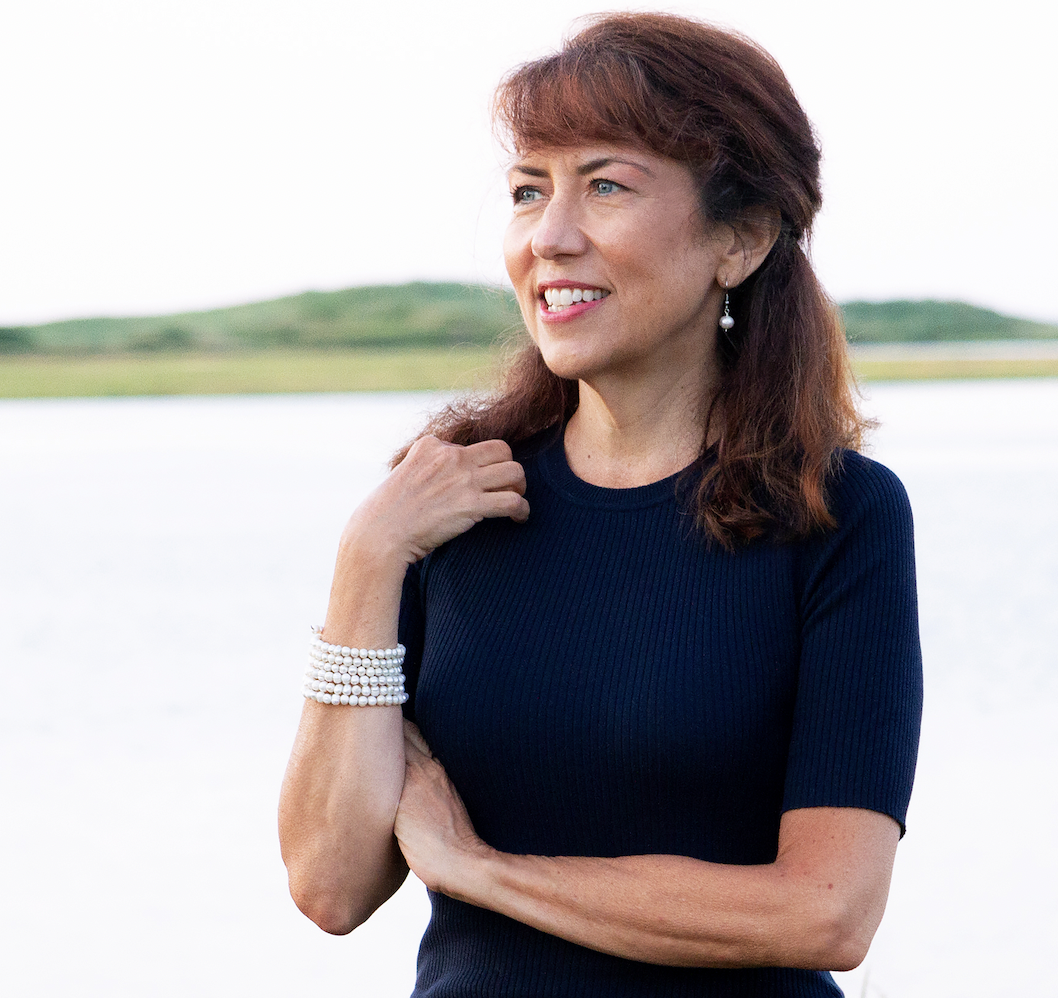
Celia: Here at Writers Review we were deeply saddened to hear of the death of our good friend, Mary Hooper. Mary’s death on 24th May this year was a shock to us all. She was not just a literary colleague but a friend, always there to celebrate, when celebrations were in order and commiserate when they were not. I had known her for over thirty years. She was an early member of the Scattered Authors’ Society, which is where I first met her. She was a regular participant in SAS get togethers and lunches in London with fellow authors Linda Newbery, Adèle Geras, Jean Ure, Anne Cassidy and Sally Prue. Mary was always excellent company and only ceased attending after her diagnosis of Parkinson’s Disease made travel difficult for her.

She and I both wrote historical fiction for Bloomsbury Children’s Books and were often paired together for events. Mary was very good company, ebulliently funny and always very supportive, on the platform and off it. We did some memorable events together all over the country. Mary was just the same, large audience or small, her warm, engaging personality came over, as did her knowledge of her subject, which was second to none.

Fallen Grace, nominated for the Carnegie Medal

She was a prolific writer, with over a hundred titles for children and young adults. Her main focus was writing for teenage girls. That focus continued when she moved, extremely successfully, into historical fiction and this is what I know her for best. She won multiple awards and was nominated for the Carnegie Medal. Her research was always meticulous but her real talent was to make her characters come alive on the page. She was fascinated by women’s past lives and her range was wide, from the 17th Century to the First World War. Her most acclaimed novel and one of our personal favourites, Newes From The Dead, was based on an obscure historical footnote, the true story of Anne Green, a woman who was hanged at Oxford Assizes and who came back from the dead on an Oxford University dissecting table. Mary took this snippet of historical fact and spun it into an extraordinary story of survival and resilience.

Newes from the Dead, based on a historical incident

Although she set her historical fiction in different periods, all her novels are in different ways celebrations of the lives of ordinary girls and women, the people that history too often ignores and forgets. Whether they are servant girls or shopkeepers, Mary made sure that the lives of her heroines were discovered. I know as a fellow writer of historical fiction how much work and research uncovering those lives takes and how much deep understanding and empathy it takes to make these girls and women live for modern young readers. The world of children’s and young adult fiction is the poorer for her passing. She will be mourned and missed by her fellow writers and I have lost an old and valued friend.

Jean: Mary was one of my oldest writing chums – oldest, that is, in the sense that we went back a long way, sharing moments of triumph and moments of authorial outrage (mostly to do with editorial and/or publishing iniquities). I look back fondly to all those happy, gossipy lunches we had with old friends such as Adele Geras, Celia Rees, Linda Newbery and Anne Cassidy, all of us happily moaning about said iniquities.

Mary was very down to earth – even, occasionally, dismissive when it came to her own writing. “Oh,” she once airily said, when I was complaining that I didn’t know how to wind up one of my books, “I just pile all my characters into a boat and have it capsize, or kill them off in a cash crash.”

In fact she used to do a lot of research for the historical novels, such as Newes from the Dead, having belatedly taken a history degree to make up for having, as she said, spent her schooldays giggling and talking “far too much” to concentrate on learning anything.

She was a lively and amusing correspondent – I could always rely on her to lighten the mood and give me something to laugh about.

She is a sad loss and I shall miss her terribly.

Poppy, winner of the Young Quills Historical Association Award


See also Mary's Guardian obituary by her daughter Rowan.

Monday, 28 October 2024

Guest review by Fiona Mountain: THIS THING OF DARKNESS by Harry Thompson


"An immense, brave, tragic and hauntingly profound story, richly told. I honestly believe it’s one of the best historical novels ever written."

Photograph by Hugh Dickens
Fiona Mountain
is an award-winning novelist. Her debut novel, Isabella, tells the haunting love story of Bounty mutineer Fletcher Christian and his cousin, Isabella Curwen, and was shortlisted for the Romantic Novel of the Year Award. It was followed with Pale as the Dead and Bloodline, which combine history with mystery and feature 'ancestor detective', Natasha Blake. Bloodline is the winner of an Edgar Award from the Mystery Writers of America. Fiona grew up in Sheffield and moved to London aged eighteen, where she worked for the BBC for ten years. She now lives in the Cotswolds with her family.


This is historical fiction at its finest; a based-on-fact novel with gripping, page-turning pace which at the same time engenders a fascination for its subject that is sure to send readers hunting out biographies to find out more about the real life protagonists and events surrounding them.

This Thing of Darkness recounts the legendary, world-changing voyage of HMS Beagle, shining the spotlight on the brilliant young captain, Robert FitzRoy, whose fate has been obscured by his famous passenger, Charles Darwin.

FitzRoy and Darwin were intellectual equals and it’s the deep friendship they shared which drives the novel and provides the source of conflict as the two friends turn into enemies, their ideological differences slowly tearing them them apart, leading one to great acclaim and the other to tragedy. The two men disagree over God’s creation and as Darwin grows in stature, FitzRoy slowly and painfully fades under the burden of his traditional morality and practical responsibilities. This Thing of Darkness is a thrilling seafaring adventure which fans of Patrick O'Brian will appreciate. As the Beagle sails around the Pacific there is plenty of violence and danger and storms at sea. But fundamentally it’s a novel about ideas and relationships.

Harry Thompson achieved success as a writer of comedy at the BBC: one of his credits being the creation of Have I got News For You. This is his only novel, written a few months before his untimely death, aged 45. It was long-listed for the Man Booker Prize and it’s a phenomenal achievement and legacy. The breadth and depth of the research is incredible, immersing readers in the life on board a ship on a voyage of discovery. The characterisation, the complexity of the debates and the sheer power of the story arc is sublime, and as all the best historical fiction should do, it makes you question thoughts and beliefs and look at the world and your place in it with fresh eyes. It teaches you and leaves you wanting to learn more.

An enigmatic figure, the fourth great-grandson of Charles I, Robert Fitzroy was a man ahead of his time. He believed in equal rights for those who, in Victorian drawing rooms, were considered to be savages. I was fascinated to learn that he’s the father of meteorology. He showed how storms can be predicted and he began telegraphing shipping forecasts and installing storm warning systems which saved countless lives at sea, but his work was delayed in England because ship owners lost money when their boats didn’t go out because of the forecasts.

The theory that was borne on The Beagle led to Darwin losing his belief in God. Emotionally fragile, Robert FitzRoy, a secret manic-depressive, eventually lost his life to suicide.

This is an immense, brave, tragic and hauntingly profound story, richly told. I honestly believe it’s one of the best historical novels ever written.

This Thing of Darkness is published by Headline Review.

Monday, 9 October 2023

Guest review by Sue Hampton: LET ME TELL YOU ABOUT A MAN I KNEW by Susan Fletcher


"Many books today are described as beautifully written but few earn that accolade with such simplicity and poetry." 


Photograph by Mikaela Morgan

Sue Hampton gave up primary school teaching to become a full-time author in 2008, and has now published more than forty titles for adults, including Shutdown and Ravelled and Other Stories, as well as for children and teens. "Having been praised by authors I respect, including Michael Morpurgo, I was booked by about 600 schools to deliver writing workshops, and supported many students with hair loss as an Ambassador for Alopecia UK. I now prioritise climate and peace activism and being a grandma. This is just as well, because schools won't touch me with a criminal record. For the last few years I have donated any author earnings to Extinction Rebellion."

I’ve read it at least five times but still my response to this novel is as passionate as love should be. Experiencing a washday as the story begins, with water rushing on stone and the wind tugging at the line, the reader might feel the weight of a slow, meditative quietness. But it’s deceptively full: a sensual, tender exploration of the ordinary as Jeanne, the warden’s wife at the asylum in Provence, bears through each day’s labour her secret longing and loss. Literature can boast many rite-of-passage storylines built around young protagonists but here the awakening comes late for a mature woman aching for her grown-up sons and long-used to the stone colours of her faded marriage. Used to being unseen, without power or voice. And what awakens her is not the kind of encounter fiction leads us to expect, not that kind of relationship but the symbiosis of art and nature. Because yes, Van Gogh comes to the hospital, but the author knows better than to inhabit his disturbed yet gifted spirit, showing us instead the beauty of a brown moth barely visible on a branch. The writing is in itself painterly, and like the artist’s work stirs the senses while connecting with something profoundly moving about unremarkable humanity.

There is deep sadness here, but the joy is overwhelmingly intense, and this slow, gentle novel delivers masterfully understated drama before the muted but emotional resolution. Jeanne is as ordinary and overlooked as the moth on the branch, yet richly sympathetic and somehow compelling, and as the reader becomes intimate with her, Fletcher gradually creates in her cold husband a man we slowly come to know (as we don’t know Vincent) and understand. With a generous author whose shifts are subtle and whose love embraces flawed reality, the minor characters live too, even when only presented from Jeanne’s perspective. From the starting point of a lesser-known portrait – one of a pair because Van Gogh painted the warden too – Susan Fletcher has opened up the vivid inner life the artist could only suggest, taking us back to the uninhibited girl and sacrificial mother, through the grief and anxiety that seem to her as natural as the weather and as impossible to resist. The Mistral rips through the climax but the work of a troubled painter can also recover and reshape a different kind of landscape between two people.

Reading it for the first time I hoped the author would shun the easy, predictable choices, the corrosively depressing, the sentimental or melodramatic. And she does, with restrained delicacy. There are no misjudgements in arc or tone as she keeps it all as real as Jeanne herself. Many books today are described as beautifully written but few earn that accolade with such simplicity and poetry. I’m a climate protester and it’s been with me in HMP Bronzefield and more than one police cell, where it’s meant a little light and warmth and hope and made a dark world seem worth saving.

Let me tell you about a Man I knew is published by Virago.

Monday, 25 September 2023

Guest feature by Dennis Hamley: THE SECOND PERSON FROM PORLOCK


"Each character, real or imaginary, had their own quest and I accompanied them on their journeys though the uneasy England of 1824. And I like to think I helped them find their destinations and their fulfilment."

Dennis Hamley has been writing for an unconscionably long time. His first book was published in 1962. Since then he's written more books than he can count, including The War and Freddy, Hare’s Choice, Spirit of the Place, Out of the Mouths of Babes, the six novels in the sequence of medieval mysteries The Long Journey of Joslin de Lay, Ellen’s People and Divided Loyalties. He says: "It's wonderful to see my Coleridge project in print at last, and published by Fairlight Books, based in Oxford where I live.  It came about when, after leaving hospital, I was visited by an ex-student of mine on the Oxford Creative Writing Diploma course - Louise Boland, a very good writer who had decided to set up as a small independent publisher specialising in literary fiction. That gave me the impetus to resurrect the project I'd been working on for years."

My interest in Samuel Taylor Coleridge merged into near-obsession at Cambridge, when my supervisor set our tutorial group an essay on STC’s theory of the imagination. This was in STC’s own college, Jesus. I loved this assignment, spent hours over it, found my understanding of literature changed utterly and received the supervisor’s comment ‘A noble effort’. Pleasing, but he omitted to say if it was actually any good. In 2002 a publisher, David Fickling, suggested I might write a novel about STC. So I did. It took me two years and he rejected it. And he was right. Incompetent and unreadable. So I got on with other things. But the resolve to write a proper novel about STC wouldn’t leave me. It took fifteen years for me to work out how to do it.

In 1972, a book called It’s a Don’s Life by Freddie Brittain, one-time fellow of Jesus (not to be confused with Mary Beard’s book) was published by Heinemann. Freddie mentioned a strange inscription in the first edition of Kubla Khan in the Old Library:

The writer of the above had much better have kept his sleeping thoughts to himself, for they are, if possible, worse than his waking ones.

It sounds damning. But perhaps it wasn’t. I needed someone to examine it closely. Who? A sizar, working as a library clerk, as had STC, perhaps?

My original failed novel depended on a what if? When in Sicily in 1804, Coleridge had a mysterious relationship with an opera singer, Anna-Cecilia Bertozzi. In 1808 he suddenly writes about her in his notebooks: ‘… her sincere vehemence of her attachment to me…Heaven forfend that I should call it Love.’

Back home, STC was in platonic love with Sara Hutchinson, the sister of Wordsworth’s wife, Mary. He called her ‘Asra’, to distinguish her from the other Saras, wife and daughter. And now, just in time, he sees ‘the heavenly vision’ of Asra’s face, ‘the guardian angel’ who saves him from the final temptation . I couldn’t resist thinking, ‘Yeah, right!’ What if STC had, unbeknown to him, left a son in Sicily and that son comes to England to find him?

So I had three main characters: one, STC, real; two fictional, George Scrivener, undergraduate who finds the Kubla inscription and works out its true significance, and Samuele Gambino, putative son in search of the truth. For George, an aspiring poet, the wish is that STC might be his mentor. Samuele needs to square his mother’s vision of genius with his teacher Mr Calvert’s of an opium-sodden wretch.

Perhaps the word ‘riff’ best describes what I was attempting. All facts would be accurate, but STC didn’t live by mere facts. We meet him with the line:

Samuel Taylor Coleridge had seen a ghost.

He was lodging with Dr Gilman and his wife on a sort of extended rehab. The ghost first appeares in Highgate High Street and then haunts him. Is this revenant the Second Person from Porlock? George Scrivener works out that there couldn’t even have been a first.

Mixing fictional and real characters is a risk worth taking. Samuele’s guide in his quest is Charles Lamb, who tells him who to visit and provides letters of introduction. So Samuele meetsTom Poole, STC’s friend in Nether Stowey, Wordsworth, Southey and, most important, STC’s brilliant daughter, Sara.

Once I had a structure in my mind, actually writing the book came relatively easily. Each character, real or imaginary, had their own quest and I accompanied them on their journeys though the uneasy England of 1824. And I like to think I helped them find their destinations and their fulfilment.

The Second Person from Porlock is published by Fairlight.  

‘With no discernible sleight of hand this master storyteller, with effortless assurance and prodigious skill, weaves his mighty spell and conjures before our very eyes all we will ever need to know about the most famous lines of poetry that English ever produced.’ — Robert Lipscombe, author of The Salamander Tree and The English Project


Monday, 11 September 2023

Guest review by Rowena Edlin-White: THE FAIR BOTANISTS by Sara Sheridan


"Here is a novel of passion, intrigue, and women’s ingenuity which I can thoroughly recommend."

Rowena Edlin-White: "I was born in Nottingham in 1948, to two penniless actors. In the fullness of time I followed them to stage and screen but that gradually gave way to writing and a passion for kitchen-table publishing. For some years I wrote for children before moving into journalism and non-fiction. These days I research and write about local history, women’s history and ‘forgotten’ authors. My most recent book is Exploring Nottinghamshire Writers (Five Leaves), and I edit The Quill, a little Anglo-American journal about early women author-travellers. My favourite occupation is foraging in second-hand bookshops."

I went to the Wigtown Book Festival in Dumfries and Galloway again last September and was delighted to find Sara Sheridan launching a new novel, The Fair Botanists – in fact there was a women-and-gardening theme this time, which led me into several gardens in the region which I hadn’t visited before.

The Fair Botanists takes us back to Edinburgh in 1822: the Botanic Gardens are being physically moved, trees and all, from Leith Walk to a new situation at Inverleith, because it is just possible that King George IV might decide to visit the city and why should not the Edinburgh Botanic Gardens rival Kew? The gardens contain many exotic plants of interest to the medical profession, none more so than the so-called ‘Great Aloe’ which flowers only once and then dies; this event is believed to be imminent and several people have a vested interest in it.

Many women of the time were interested in botany as artists, herbalists or for the special properties of different species. Sheridan’s female characters span those interests: Elizabeth Rocheid is a penniless widow brought to town to look after Clementina, an eccentric in-law; Elizabeth is an artist. Belle Brodie has a keen interest in exotic perfumery - and is also “Edinburgh’s most expensive courtesan.” An unlikely friendship develops between these two women as they watch for the Aloe to flower. Here is a novel of passion, intrigue, and women’s ingenuity which I can thoroughly recommend.

Sheridan’s fictional characters interact with real people, for example, the under-paid head gardener, William McNab and Robert Graham, Regius Keeper of the Gardens. Sir Walter Scott puts in an appearance and the Rocheid family really did exist but have acquired a couple more members.

Enter Mrs Brunton:


In a short scene (if this were a play it would take place in front of the curtain whilst the scenery was changed) in Canongate Kirkyard, Johann von Streitz, a minor royal, comes across the Rev Alexander Brunton tending his wife’s grave. “My dear Mary...” Brunton says, “You have perhaps heard of her? She wrote novels. Her work has appeared in translation...” That’s all. But even before I read Sheridan’s notes at the end of the book I had my suspicions about Mary Brunton who wrote novels – she had to be real. I also referred to Sheridan’s book Where are the Women?, an illuminating guide to many notable women un-memorialised in Scotland, and yes, she’s there!

My first resort in cases of long-forgotten authors is the venerable Bromley House Library in Nottingham. A glance at the catalogue proved me right – they have three volumes by Mary Brunton (1778-1818). Needless to say, after nearly 200 years they are rather fragile, but I was allowed to borrow Mrs Brunton: A Memoir which also includes her third and unfinished novel, Emmeline.

Mary Brunton nee Balfour, was born and brought up on Orkney, from where – it is said – she eloped in a rowing boat with Alexander at the age of twenty. He gave her the space and opportunity to pursue her literary interests and her first two novels, Self-Control (1811) and Discipline (1814), were much admired. The Memoir includes letters to her friends with news of the progress of her publishing career. With regard to Self-Control, she writes to her friend Mrs Izett:

“My hopes of popular favour are low – very low indeed. Of a work like mine, the wise and the good will not be at the trouble to judge... it may become popular, for that is a mere lottery. If it do, be assured, my dear friend, its faults, of which it has many, will draw down the censure of those who are, or think themselves entitled to decide for their neighbours... But I am positive that no part – no, not the smallest part – of my happiness can ever arise from the popularity of my book, further than that I think it may be useful. I would rather, as you well know, glide through the world unknown, than have (I will not call it enjoy) fame, however brilliant. To be pointed at – to be noticed and commented upon – to be suspected of literary airs – to be shunned, as literary women are, by the more unpretending of my own sex; and abhorred, as literary women are, by the more pretending of the other! – My dear, I would rather exhibit as a rope-dancer – “ [extract: Aug. 30, 1810]

Mary’s career was cut short at the age of thirty-nine when she died in child-birth; her only child, a boy, was still-born.

In Sheridan’s own words: “...an historical novel is a time machine that takes the reader back to where they come from. It casts light on the modern world.” (Author’s Historical Note: The Fair Botanists, p358). I find this happens again and again. Her excellent novel led me back to a pioneer woman novelist of the early 1800s contemplating her own position as a woman writer of the period. Magical!

The Fair Botanists is published by Hodder.

Monday, 10 July 2023

Guest review by Yvonne Coppard: THE MARRIAGE PORTRAIT by Maggie O'Farrell (Audiobook narrated by Genevieve Gaunt)


"Beautiful, lyrical writing in places, and always an absorbing story."

Yvonne Coppard
is a Writing Fellow of the Royal Literary Fund and writer of fiction for children and adults. See more on her website.


In 1560, fifteen-year-old Lucrezia di Cosimo Medici was married to Alfonso d’Este, the hereditary Prince of Ferrara. The marriage contract, a political alliance, had been signed two years earlier but Alfonso agreed to wait until Lucrezia reached puberty before consummating the marriage. It was a short and seemingly unhappy union. Within a year, Lucrezia was dead and there were rumours that her husband had arranged for her to be poisoned. Don’t be put off by knowing her fate before you start listening; even if you prefer stories with a happy ending, this one will be worth the journey.

From the tiny amount of information recorded about Lucrezia, O’Farrell creates a novel full of tension and suspense. She takes Lucrezia from a loved and protected child to a hopeful, then anxious, then terrified bride. Lucrezia tells her own story, in the present tense, and there is a lot of back and forth between the present moment and her life in Florence. For the audio listener, this means you need to pay proper attention to the date and location given at the start of each track.

Genevieve Gaunt gives a convincing evocation of a child bride who is forced to grow up too fast and use all her wit to survive. Some readers of the book have told me they found the pace too slow, with too much real-time detail of Lucrezia’s thoughts and memories. For me, this was an important part of the novel’s success. Maybe hearing a convincing voice, rather than reading the text, is what makes the difference. The listener is inside Lucrezia’s mind as she struggles to make sense of her situation, and then to cope with the growing awareness that her life is in danger and there is no one who can protect her. It’s beautiful, lyrical writing in places, and it’s always an absorbing story.

No spoilers, but a tip for the listener: finish the book before you listen to (or read about) O’Farrell’s explanation of how she approached the historical facts. Resist the urge to know ‘the truth’. Trust me, ignorance will make the story, and its ending, so much more satisfying.

The Marriage Portrait is published by Tinder Press.

See also: Maggie O'Farrell's Hamnet reviewed by Anne Cassidy


and a general appreciation of Maggie O'Farrell's writing, including After You'd Gone, by Graeme Fife.

Monday, 10 April 2023

SPECIAL FEATURE: Q & A with guest Sheena Wilkinson on her first novel for adults, MRS HART'S MARRIAGE BUREAU


Well-established as one of Ireland’s most acclaimed writers for young people, Sheena Wilkinson has won many prizes for her work, including five Children’s Books Ireland awards. Her first novel for adults, Mrs Hart’s Marriage Bureau, is just out from HarperCollins Ireland. Sheena lives in County Derry, on the shores of Lough Neagh, and when she’s not writing she is usually walking her dogs or singing.

Mrs Hart’s Marriage Bureau:  April McVey hasn’t a romantic bone in her body. So what makes her believe she’ll be the perfect assistant for Mrs Hart’s Marriage Bureau? Matchmaker Martha hopes the lively Irish girl will be a breath of fresh air for the business which has been her passion since her husband died at Passchendaele, but which is struggling to keep up with the turbulence of the 1930s. When lonely widower Fabian falls for April, Martha’s matchmaking skills are put to their greatest test. Is April as immune to romance as she claims? Is Martha’s interest in Fabian purely professional? Will there be enough happy endings to go round? Mrs Hart’s Marriage Bureau is an uplifting romance about friendship, loneliness, and the unexpected places where we find fulfilment.

Celia: Having moved, as you have, from Young Adult to Adult fiction, I'd love to know - what precipitated the move?

Sheena: I’ve always intended to write for different audiences, and always wrote short historical fiction for adults alongside my children’s books. My most recent children’s books, a historical trilogy, seemed to be appreciated more by adults so I suppose it was a logical step. Some of my favourite writers, like K.M. Peyton and Noel Streatfeild – and indeed all three of you! – write for children and adults, so it never seemed odd.

Linda:   How and why did you decide to set the novel in a fictitious Yorkshire town rather than in your native Northern Ireland?

Sheena:  I always wanted an Irish main character, and much of the book’s heart and humour lies in the culture shock experienced by both April, my Northern Irish heroine, and the English people she works with. After three novels based on Irish history, I was keen to escape from religion, cultural identity and politics, and that just wouldn’t have been possible in an Irish or Northern Irish marriage bureau! So it was a very pragmatic decision. I love inventing towns, and Easterbridge, a small Yorkshire town, feels very real to me. I hope it convinces the reader! I did live in the north of England for six years and of course much of my cultural background is English. I wouldn’t set a book in a country I didn’t know well.

Adele: You have a gift of bringing the physical details of both place and people to life in a way which reminded me sometimes of one of my favourite writers, Dorothy Whipple. Were you influenced at all by the women writers of the 30s. Or by any other writers?

Sheena: That’s really observant of you, Adele, because not only is Dorothy Whipple one of my favourite writers, but I discovered her during the first lockdown, which is when I started to write Mrs Hart. In both cases, I wanted something essentially positive and escapist, but not too light. I was amazed that I hadn’t read Whipple before. I love how she brings you straight into the middle of a household and, with just a few details, makes you feel you know these people intimately. It’s honestly the greatest compliment that you found even a tiny spark of comparison! When I’m writing, I like to read novels written at the time I’m writing about, so yes, Whipple, E.M. Delafield, Noel Streatfield, Dorothy L. Sayers, as well as slightly later writers such as Barbara Pym are all favourites.

Adele:  I was surprised by the turn of events, (no spoilers) and thought the use of the double point of view worked so well. Did you ever consider a first person narrative? Do you have strong views about the First Person/Third Person debate?

Sheena:  I’ve written in both first and third, but on the whole I prefer third – I tend to write very close third, and I find it can do everything that first does, in terms of intimacy but without the self-consciousness of first. There are three POV characters, April, Martha and Fabian, with the women taking on most of the story, but I did want to include a male point of view too. It was really interesting to present the same characters from both inside and outside.

And I’m glad that you were surprised by the turn of events! I’ll say more about that below!


Linda:  In an interview you said that you see the book as 'feelgood feminism' (great term). Were there any points at which the political background threatened to darken the novel more than you intended?

Sheena: Yes! That was probably the biggest issue I had – I really wanted to maintain an uplifting tone, with warmth and a sense of community and, above all, hope, but I also wanted to explore some of the darker realities of the 1930s, in particular the rise of fascism, refugees and gender politics. Two things helped me. One was my experience of writing more overtly political novels – Name upon Name, Star by Star and Hope against Hope – but trying not to let the politics take over because the books were for a younger audience. The other was exploring how Call the Midwife, of which I am a big fan, negotiates that juxtaposition of serious social realism with sweetness and fun, without awkward tonal shifts. Because life actually is bittersweet.

Linda:  Basing the story around a marriage bureau is a clever idea, and April is a delightful character! Did you plan from the beginning how the story would end for her, or did that grow out of the writing? (I know ... difficult to answer that without spoilers ... )

Sheena:  It’s a hard question to answer, possibly because of spoilers, but essentially, yes, I always knew precisely the form of fulfilment that April would find for herself. It was also important for me to write about a variety of characters, main and secondary, for whom marriage was not the best outcome. After decades of singleness, I was married myself last year, aged 53, to a widower I’d known as a friend for almost thirty years. I don’t think I would have been attracted to this subject otherwise. I was the – I won’t say victim, but certainly object – of some very ham-fisted matchmaking efforts over the years, and I must admit I had great fun matching characters and futures!

Sheena with her husband Seamus

Celia:  I noticed that, through Felicity, you had some observations to make about people's perception of Children's writers. Did you find any significant differences in writing for different audiences?

Sheena:  I’ve definitely found it easier to write for adults – for the first time in a long time I’m writing for the reader I am now, rather than the reader I used to be. I feel there’s more space to explore the characters’ inner lives, and I suppose more freedom. But I always tried to write with depth and precision, and care for language, so in that sense it’s not very different. I had quite a lot of fun making one of my characters a 1930s children’s author. She complains about not being taken seriously as a ‘proper’ writer, and I have to say some of that did come from the heart!

Celia: Do you think you will return to Children's / YA fiction any time soon?

Sheena:  At the moment, my heart is definitely with writing for adults. I have so many ideas I’d like to explore. If I do write for children again, it would definitely be historical – that’s my favourite genre. I’ve never written a girls’ school story, which was the subject of my PhD thesis, so that’s something I might consider – but I’m 54, and to be honest I’m not really reading children’s books these days, so I think other people are better suited to writing them.

Adele:  Will there be a sequel? I would love one….

Sheena:  So would I! The publishers, HarperCollins Ireland, mentioned a sequel quite early in our relationship, though I don’t yet have a contract for one. I had planned not to write one without a contract, but like you – and I’m very happy to say, many readers – I was very keen to find out what happened next, and couldn’t resist starting …  It’s set in 1936, with old and new characters.

Thanks so much, Sheena, for answering our questions - we hope a great many readers will enjoy your novel as much as we did!

Lough Neagh


Mrs Hart's Marriage Bureau is published by Harper Collins Ireland.

Monday, 13 March 2023

Guest review by Penny Dolan: HORSE by Geraldine Brooks


"Her historical and geographical settings feel convincingly well-researched, whether she is describing families and their great estates, life on the Mississippi or the horrors of the American civil war."

Penny Dolan
works as a children’s storyteller and writer. Her last novel for older children, A Boy Called Mouse, was nominated for the Young Quills Historical Fiction Award, and she is currently completing a companion book. As well as being a regular reviewer here, she posts on The History Girls, on An Awfully Big Blog Adventure and can be found on Twitter @PennyDolan1.


Horse,
by Geraldine Brooks, a Pulitzer winning novelist, appeared on my book group’s reading list. Its nomination by a member who, to our surprise, is a part-owner of a racehorse, gave Horse strong equestrian support. Additionally, when our local library supplied not four but eight new hardback copies, it was clear that somewhere in the county was a librarian who thought the novel worth purchasing. But was it worth reading? Here are my thoughts.

Brooks’ wide-ranging novel is spread between three American centuries, being a narrative about the early growth of horse-racing and about the meanings within that word “race”. Horse revolves around three specific ideas: a bay foal that became a prize-winning stallion, a lost equine portrait and a skeleton stored within the Smithsonian Museum.

The cover design gives a glimpse at an old painting which reveals a formally dressed black groom holding the rein of a tall brown horse and a black jockey in the coloured silks of the 1850s. Both men appear wary about being “uncovered”. This groom and the bay horse form the core of Brooks’ novel.

When the reader first meets Jarrett, he is an enslaved boy, working beside his father in the stables of a rich Kentucky landowner. After forming a deep bond with the new-born foal named Darley, Jarrett stays close to the creature during its early years. When the colt, re-named Lexington, passes to another landowner, Jarrett follows.

We see that his life is clearly easier than that of black slaves out in the fields. Jarrett is clothed, fed and treated well, principally because of his value to Lexington. Yet both are at the mercy of the wealth, whims and promises of their owners. For example, although gambler and race-course owner Ten Broek had given his word that Lexington would never be whipped, as soon as he has starts promoting timed, high-stakes races on his track, that promise gets forgotten:

Jarrett ‘could see the horse’s flanks heaving in obvious distress. He turned on (the jockey) Meichon. “What were you rowling him for?” he cried. “You could see it wasn’t in him.”

Meichon looked defiant. “Marse Ten Broek say I ‘ave to ride ‘ard. I think – they say – he ‘as bet against us so ‘e want no person to say he cheat.”

Jarrett threw his head back and cursed the sky.’

Even as Jarrett curses, he knows that challenging the master’s actions could mean being sent out to work in the fields or sold.

Moreover, throughout the book, Brooks emphasises his situation as evident in her chapter headings: at first he is Warfield’s Jarrett, then Ten Broek’s Jarrett and finally Alexander’s Jarrett. He is a man without independence.

Around this historical core, Brooks wraps a contemporary tale about two academics meeting in Washington in 2019. Jess, an Australian, and interested in bones since childhood, is an anthropologist and Smithsonian scholar. who starts to study a forgotten equine skeleton to discover more about the horse’s identity and power of endurance. Theo, an Afro-American art historian, is studying the role of Black men during the early years of horse-racing. When an energetic dog brings the pair together, their quest leads them through all the hidden archives of the Institute. However, their deepening relationship also emphasises social pressures within modern America and the insidious influence of prejudice.

The third thread in the novel lies in that mysterious painting partly seen on the cover. An early character, Thomas J. Scott, is a racing journalist and a hopeful equine portraitist. As he paints Dr Warfield’s horses, he notices how helpful and sensitive the boy is, and does something kind.

“I remembered I’d promised him a painting . . . and as sometimes happens when the stakes are small, the painting came together with an uncommon felicity. I captured the light on that rich bay coat and the intelligent look in the eye. I considered keeping the piece myself. I was glad in the end that I did not, when I saw the look of joy on the boy’s face. It occurred to me then his condition afforded him few possessions he might claim as his own.”

Scott’s painting passes through Jarrett’s family until, in 1954 it becomes the property of Martha Jackson, a New York gallery owner who exhibits bold modern paintings. She has her own secret reason for keeping the small portrait which, in due time, will unlock the equine mystery for Jess and Theo, and act as part of the powerful ending.

Knowing little about gambling or horse racing before reading Horse, I had not realised that equine paintings, such as Stubbs' famous “Whistlejacket”, are an aspect of the business of horse-breeding and were adverts promoting the best bloodlines.

Perhaps, because there are more passionate and personal novels that give a voice to the life on the plantations, Horse does not attempt to offer the reader a close inner experience. Brooks, as a white woman novelist, writes with a distanced third person narrative voice which allows her to expand her themes and also allows her concluding chapters to stand out clearly. In addition, her historical and geographical settings feel convincingly well-researched, whether she is describing families and their great estates, life on the Mississippi or the horrors of the American civil war. I appreciated the contrast between Jarrett’s time, the easy academic life within the museums and galleries and the edgy emotions within Jackson Pollock and the art scene of 50’s New York.

While I did not entirely love Horse, I did love Jarrett as a character, and I enjoyed the care and balance within Brook’s storytelling. I welcomed the world that the novel introduced me to, and the strength of its still-relevant messages. Yes: well worth the read.

Horse is published by Little, Brown.

Monday, 23 January 2023

Guest review by Judith Allnatt: LILY by Rose Tremain


"Tremain writes with all her usual subtlety and feeling, imbuing everyday objects with the emotional charge they hold for her characters so that they become powerful symbols of love and loss."

Judith Allnatt
writes short stories and novels for adults. Her novels have been variously shortlisted for the Portico Prize for Literature, the East Midlands Book Award and featured as a Radio 5 Live Book of the Month. Short stories have appeared in the Bridport Prize Anthology and the Commonwealth Short Story Awards, and have been broadcast on BBC Radio 4 and the World Service.

Judith’s latest novel, The Silk Factory, is an eerie story of love and memory drawing on both the Luddite weavers’ rebellions in the nineteenth century and a modern day haunting. She has lectured widely on Creative Writing for over two decades and is a Royal Literary Fund Fellow. She lives with her family in Northamptonshire and is working on her fifth novel. For more information and blog posts see Judith’s website.  Twitter: @judithallnatt


I’ve been a great fan of Rose Tremain’s writing ever since discovering her short stories in the 1980s. I have since read her historical novels avidly, admiring both her style and the breadth of her reach as she seems just as at home writing of 17th century royalty in Denmark (Music and Silence) as she is writing of gold prospectors in 19th Century New Zealand (The Colour). What always strikes me is her deftness. Whether capturing a place or an era it is done so economically and precisely that one knows that her research must have been wide and meticulous to allow the careful choice of the telling details that really bring another world alive for the reader. Her characters are multi-faceted, and presented with subtlety. Tremain doesn’t shrink from showing the folly and wickedness that is part of human nature but through exposing the roots of it in her characters’ histories and motivations they remain relatable.

In Lily, subtitled A Tale of Revenge, Tremain writes of poverty, cruelty and crime in Victorian London. As a baby, the eponymous heroine is abandoned, found half frozen and delivered to Coram's Fields Foundling Hospital. She is first sent to a loving foster family but then wrenched away and returned to hardship as a pauper at the hospital. Now, as an adult, Lily has committed a murder and lives in fear of discovery. Tremain holds back the nature of the murder and the identity of the victim, masterfully managing the dramatic tension and creating a mystery that kept me turning the pages into the night. However, the truly fascinating thing for me was the relationship between Lily and the policeman who rescued her as a baby. She feels he may hold the key to her salvation but she dare not confess to him for fear of the rope.

Tremain writes with all her usual subtlety and feeling, imbuing everyday objects with the emotional charge they hold for her characters so that they become powerful symbols of love and loss: a scarf that Lily knits for her only friend at the hospital, a deep, black well at the farm where Lily was happily fostered that comes to symbolise her worst fear.

One of Tremain’s great strengths is that she looks unflinchingly at human darkness whilst still maintaining a feeling of authorial empathy and understanding. As did Trespass, The Road Home and The Gustav Sonata, this novel moved me to tears – it is heartrending, compassionate and brilliant.

Lily is published by Chatto and Windus.


More of Judith's choices:

Trio by Sue Gee  

The Lost Garden by Helen Humphreys

The Gustav Sonata by Rose Tremain, reviewed by Linda Newbery

Monday, 12 December 2022

Guest review by Sophie Haydock: THE CHOSEN by Elizabeth Lowry


"A haunting and accomplished portrait of raw grief, of dissatisfied love, of regret, and the self-imposed sacrifices one makes in a bid for greatness." 

Sophie Haydock
's debut novel, The Flames, is about the four muses who posed for the artist Egon Schiele in fin-de-siècle Vienna. She is the winner of the Impress Prize for New Writers and in 2022 The Flames was longlisted for the Historical Writers' Association Debut Crown Award.

Sophie trained as a journalist at City University, London, and has worked at the Sunday Times Magazine, Tatler and BBC Three, as well as freelancing for publications including the Financial Times, Guardian Weekend magazine, Arts Council, Royal Academy and Sotheby’s.

She has interviewed leading authors, including Hilary Mantel, Maggie O’Farrell, Bernardine Evaristo, Sally Rooney and Amy Tan. Passionate about short stories, Sophie also works as a digital editor for the Sunday Times Audible Short Story Award and is associate director of the Word Factory literary organisation.

Her Instagram account @egonschieleswomen – dedicated to the women who posed for Egon Schiele – has a community of over 110,000 followers. For more information, visit: sophie-haydock.com

A marriage is a mysterious union, even to the people who are bound by it. It’s this sentiment that haunts Elizabeth Lowry’s judderingly poetic novel The Chosen, about the writer Thomas Hardy – a self-contained, single-minded man who’s lost the intimate connection to his wife, Emma, over the course of their forty-year marriage, to the extent that they pass in the house they share like ghosts, neither speaking to one another, nor touching; as cold as the grave.

It’s ironic, therefore, that when Hardy – the Victorian writer best known for Tess of the d’Urbervilles – finds the lifeless body of his wife after she dies unexpectedly in the hours after their final bitter argument, he is confronted, for the first time in decades, with a vibrant and urgent vision of a woman who he’s now unwilling to shake to the margins. Indeed, he’s unable to eat, sleep, or write. “Language has left him,” Lowry writes poignantly.

Hardy sees his wife everywhere – as a “smirk of light on the threshold”. She’s “on the cliffs, waving to him across that dark space as the spume flies up: waving or beckoning, goodbye or hello”. He cannot tear his thoughts away, even when Florence, the younger woman with whom he has been engaged in an affair, shows up to take her place by his side. Florence expects to meet a man relieved of his burden, but instead must grapple with a stranger who’s willingly withdrawing from life under the deluge of his grief. “It’s as if he’s being drawn down to the bottom of the sea. He has no choice but to sink. He wants to sink. He hasn’t been able to admit to Florence how powerful this urge is: the desire to slide from himself.”

Emma’s ghost is evoked more sharply when Hardy discovers a cache of notebooks that his downtrodden wife kept secret over their difficult marriage – detailing her resentment at her husband’s stubbornness, his selfish commitment to the imaginary characters he evokes alone in his study, his lack of intimacy, which deprived her of children: “He’s at a loss to know why Emma started keeping such a catalogue of grievances at all […] The uncertainty and unhappiness were, as he remembers things – as till now he’s always thought them – all his.”

Emma’s widow pores over her diaries with the intensity of a scholar. It’s here the poignancy of The Chosen truly deepens. We see Emma through her own eyes, her voice restored, her recollections of their shared life the central force. “I’ve offered my help,” she writes. “I think he’s accepted it – it’s hard to tell. His delicate irony is too often mistaken for tenderness.”

By doing so, the novel agitates themes of the (un)silencing of women, as well as the role of creativity and who takes ownership. Emma herself harboured a desire to write from before she married the then-unpublished author, and her efforts were ridiculed by her husband as his success grew, while her own contributions to his works wilfully dismissed and overlooked.

Hardy is suddenly faced with the most annihilating question of his life: did he know his wife at all, in any meaningful way? As a result, the writer’s inner world, his version of himself and his life’s work, his role as a husband, is detonated, blasted beyond all recognition, his own memories bleached by the accusation found in her words. He cannot believe he no longer has access to the woman who he now realises he has loved so insufficiently for most of her life.

Lowry, as author, blends the facts of the past delicately with her own fictional take on their relationship, and what may have passed between husband and wife. What’s true is that Emma wrote such diaries, the contents of which are a mystery. They were read by Hardy after her death. He was so moved and horrified by her verdict that he burned them, reducing her world to ash. We know of their existence thanks to references in letters made by his new wife.

The Chosen expertly spotlights the interplay of grief and regret, alongside renewed, almost obsessive, love. Hardy turns the problematic reality of Emma, a woman he found difficult when alive, into something concrete he can control – and sets about mourning her in an artistically selfish way, losing himself to her memory. He writes powerful love poetry in her honour, much to the chagrin of Florence, who before long becomes the second Mrs Hardy.

The poignant complexity of marriage is captured beautifully by Lowry, who towards the finale of The Chosen shares a detail that is the redemptive moment for Hardy – that Emma called for her husband from her sick bed: “She wanted you. She said it had to be you, sir.”

Emma’s final gift to her husband was to inspire the poetry that cemented his name as one of the great poets in the English language. “It’s difficult for me to grasp what it means to love you after you are dead, and what I can possibly put into words that you would want to hear.”

Lowry’s The Chosen is a haunting and accomplished portrait of raw grief, of dissatisfied love, of regret, and the self-imposed sacrifices one makes in a bid for greatness. As Hardy realises too late, he has dedicated his life to the wrong passions. “What have I ever written about, Em? he laughs. I thought I was writing about the world, but I was just writing words.”

The Chosen is published by Riverrun.

Sophie's The Flames is reviewed here by Alison MacLeod.

Monday, 23 May 2022

THE YOUNG PRETENDER by Michael Arditti, reviewed by Adèle Geras


"Sparkling with wit and shot through with sadness: a winning combination." 

(Before I begin , I'd like to thank Michael Arditti for sharing these pictures with me. I'm afraid that, probably owing to my own technological incompetence, I was unable to upload all of them straight to this blog, so I photographed some of Michael's images with my phone and what you are seeing is a photo of a photo. Apologies for this....to readers and to Michael, who was very helpful. The cartoon reproduced below is one of many contemporary cartoons, but Michael owns a copy of the one shown here. I hope that the layers of unreality might add to the theatrical tone of this piece. )

The Young Pretender: the dramatic return of Master Betty was published on April 28th, and has had a very good critical reception. All the reviews I've seen have been enthusiastic. This review was originally published on the History Girls blog but I'm posting it again here for Writers Review readers.

Michael Arditti has an interesting and varied backlist. I've reviewed another of his books on this blog. It's called Widows and Orphans and it's wonderful. It is also as different from The Young Pretender as you can imagine. It's the story of a man trying to rescue his local paper from being taken over and is also a novel about domestic dilemmas and personal lives. Arditti has also written two Biblical epics (Of Men and Angels and The Anointed) and I have read both. They're enormously erudite and very long so I recommend reading them on a Kindle, but I do recommend them. Michael Arditti is a brilliant writer. He is also a critic and is clearly enthralled by both the reality and the illusion of the theatre.

In the Acknowledgements, Arditti says: 'In writing The Young Pretender I have adhered to what is known of Betty's life, while freely filling in the extensive gaps.'

The method he's adopted to write about Master Betty is to adopt his voice. Indeed, he may be said to have become Betty, because every word seems so genuine, so heartfelt and so accurate that it's easy to imagine that this is a memoir by the actor. As a child star he was also known as The Young Roscius. He played Hamlet (and many other rôles) at a very young age and then fell out of favour. In 1806, Master Betty (now to be called Mister Betty, as he has to tell everyone he meets) returns to Bath, six years after his last starry appearance. "I am six years older now, ten inches taller.....Should my name spark a recollection,; my figure swiftly dispels it..."


We learn along the way about Betty's family, and his rise to fame. We see details of the huge acclaim that greeted his every appearance. William Pitt, the Prime Minister, came to see him perform and Betty was the toast of the town in every way. I make a point of providing no spoilers so I won't say more about the plot, but there is one, even in a book as short as this and which is so carefully based on the historical record.


Arditti's huge achievement is tuning in to the authentic voice of his protagonist, narrator and star. I am completely convinced that this is exactly how Betty spoke and how he would write. In the days when I used to visit schools, I sometimes told the children that writing novels was like having a huge dressing-up box at my disposal and that I was allowed to put on the costumes and pretend to be whatever I felt like being: a fat black cat or a retired ballerina or....anyone at all. Arditti has clearly enjoyed inhabiting the 18th century and he is fluent in its language and preoccupations.

It's also instructive to read about how our forefathers dealt with the matter of celebrity in the days long before Twitter and the rest of the social media we have to grapple with. Trolling, and cancelling and gaslighting etc have been part of our lives for a long time. Britney Spears would recognise much that befalls Betty and the way that audiences can consume their idols happens today as it did then. The young are vulnerable. Control is always there: eat this, don't eat that, see this person, don't see that person....some of the ways in which Betty was treated recall what we know of the childhood of Frances Gumm, who became Judy Garland. If you're a vessel for the dreams of many people, it's hard to be yourself.

Another thing I found interesting was the level of detail about the actual running of the theatres in the Georgian period. Actors had 'circuits'. Actor managers were the ones who arranged tours. Rehearsals were often negotiable. You met the other actors at the first rehearsal. Stage business was fixed on before you began: where you'd stand and how you'd move once on the stage and so forth. Then the words came in later. I learned, for example that at this time, what I used to call 'flats' when I was on the stage were called 'flat -scenes': literally flat pieces of wood and canvas which were pushed into place to depict the background. I enjoyed seeing what hasn't changed since those days as well as what has.

I hope very much that readers of this blog will try this most unusual short novel. It's both sparkling with wit and shot through with sadness: a winning combination.


The Young Pretender is published by Arcadia Books.

Monday, 18 April 2022

Guest review by Alison MacLeod: THE FLAMES by Sophie Haydock


"Haydock explores both the exhilaration and the pain of life lived outside society’s norms..."

Photograph: Kate MacLeod
Alison MacLeod has written four novels and two story collections, including Unexploded, which was Man-Booker longlisted, and Tenderness. A Book of 2021 for The Spectator and The New York Times, Tenderness is the story of the creation and unexpected aftermath of D. H. Lawrence's Lady Chatterley's Lover. Alison is Visiting Professor at the University of Chichester, where she lectured for 30 years in literature and creative writing. Find out more from her website. 

A painting – like a song, film or dream – is notoriously difficult to convey in words. On the page, it can easily elude the translation across forms. How can a writer evoke the live force of a painting, as we first experience it, across time, on a canvas or in a frame? In this accomplished first novel, Sophie Haydock plunges us into the heat and complexity of Egon Schiele’s art, and offers a remarkable sense of what Schiele’s sister, in Haydock’s story, calls ‘the magic in his fingertips’.

The Flames is the story of a rare and provocative talent cut short by illness; Schiele was just 28 in 1918 when he died of ‘Spanish flu’. But, more than this, it’s a tantalising story of life itself – of life seized and spent by each of its main characters. Haydock explores both the exhilaration and the pain of life lived outside society’s norms.

We are taken to Austria in the early years of the twentieth century. Here, Haydock reveals Egon Schiele, boy and man, largely through the stories and shifting perspectives of his four principal models: his younger sister Gertrude; his ‘muse’, Wally Neuzil (or Vally, as she is here); his wife Edith; and his sister-in-law Adele. Through their eyes, in an inspired story-collage, we discover Schiele’s childhood and his early compulsion to draw. We witness the harrowing descent of his stationmaster father, raging and ill with syphilis, and the poignant aftermath of his death for the Schiele family. Liberation for Egon comes with art school and the influence of his mentor, Gustav Klimt.

A fifth young woman, Eva, will meet the elderly, down-and-out Adele in flash-forward scenes set in 1968, when Eva looks back on the stories of all four women with the appraising eyes of modernity. She is perhaps a stand-in for Haydock herself as she comes face to face with the four women on the walls of a major Viennese exhibition, where she tries to unravel the enigma of each model. It’s a tribute to Haydock’s talent and the depth of her writing that her model-by-model approach never feels exercise-like or schematic. On the contrary, her rendering of the model-as-muse scenario is vivid and intriguingly ambivalent.

Who or what is a muse? A sought-after commodity? A powerhouse of energy transmitted to canvas? An object offered up for the male gaze? Haydock triumphs in nuanced, visceral evocations of the experience of modelling – possibly the best I’ve ever read. She reveals the weary spines, contorted limbs, cold hands, bared thighs and exposed breasts. She evokes, with precision and force, the queasy mixture of sacrifice and self-possession; objectification and intimacy.

The story of Egon’s sister, Gerti Schiele, is compelling. Haydock’s imagining of the incestuous element between sister and brother is restrained, layered and impressively unsensational. Indeed, her handling of it is so skilful I felt she might have dared slightly more in the development of this storyline. Instead, as Egon outgrows his sister, the characterisation of Gertie is flattened somewhat into minor displays of jealousy, and I wondered if something stranger or darker in this material was perhaps short-circuited.

The story of Vally is delivered with subtlety and grit, and she’s a beguilingly memorable character. In her story, too, the dark seams of controversial events – namely, a stint in jail for Schiele and unsavoury accusations – might have been mined a little more, to take us closer to Schiele’s flaws or contradictions. This said, the story of Egon and Vally is tender, fresh and involving – and was my personal favourite.

Throughout The Flames, the period detail is lovingly rendered, a quality that shines above all in the stories of Adele and Edith Harms. I thoroughly enjoyed the window on Secessionist Vienna, with its rigid etiquette, illicit outlets, and battles between commerce and art. At times perhaps, the sisterly relationship between Adele and Edith veers a touch unsteadily between bourgeois predictability and high drama but, in Edith’s story, something radical ultimately emerges. Under the day-to-day pressures of married life, Egon Schiele’s boundless charm and sensitivity give way. He becomes more objectionable to the reader, but more powerful as a character, with sharper, darker contours. We watch uncomfortably as he instructs Edith, his new wife, to masturbate as she poses naked for him. On another canvas, disturbingly, he immortalises her as a stiff, puppet-like figure.

Story by story, woman by woman, The Flames is kindled by mystery, desire, and Haydock’s own resonant prose. It’s an absorbing encounter with Schiele’s struggle, art and intimates, and it reminds us that his work still has the power to startle today, with its uncanny modernity and unselfconscious sexuality. In this auspicious debut, Sophie Haydock brings a striking sense of Schiele’s life and talent, blazing, to the page.

The Flames is published by Transworld.

Alison MacLeod's Tenderness is reviewed here by Jane Rogers.

Monday, 14 June 2021

Guest review by Berlie Doherty: A ROOM MADE OF LEAVES by Kate Grenville


"Grenville is a terrific storyteller and has an unerring sense of descriptive language..."

Berlie Doherty
writes novels, plays, stories and poetry for all ages, and is translated into over twenty languages. She has written over 60 books, including her best-selling Street Child and much-loved Blue John, several of which have been dramatised for radio, television and the stage. She has won many awards including the Carnegie Medal twice (Dear Nobody and Granny was a Buffer Girl, both of which were set in Sheffield). Her subjects cover many different genres, from folk and fairy tales, ghost stories and love stories, fantasy and historical fiction to enduring contemporary family novels. She lived in Sheffield for many years and now lives in Edale.

You can visit her website at www.berliedoherty.com  

I only recently came across the Australian author Kate Grenville, through her wonderful book The Secret River, which must be one of the most powerful novels I’ve read in the last few years. Since then I’ve been catching up with her many other novels, and I was really pleased to know that she has recently published a new book, A Room Made of Leaves.

I was a little disconcerted at first when I understood from her preface that Kate Grenville hadn’t in fact written this book, but curated and edited it from an eighteenth century manuscript written by the wife of the infamous John Macarthur, a British soldier serving in a pioneer settlement in New South Wales. Kate Grenville read through the manuscript with some difficulty, as the handwriting was faded in parts and crosshatched to save paper. She says, I have not altered the manuscript in any way …

I was deluded for a short time.

In fact, the whole novel is about truth and deception, pretence and forbearance.

The focus of the novel is the relationship between the real life Elizabeth Macarthur and John Macarthur, known as the pioneer of the wool industry in Australia. He was by all accounts an unpleasant man who had the reputation of being quarrelsome to the point of being vindictive, and was highly ambitious.

As the novel begins, Elizabeth, the daughter of a Cornish clergyman, is clever, wilful, and sexually aware. A moment spent behind the hedge with a young John Macarthur shapes the rest of her life. She is pregnant, and is forced into the deceit of a loveless marriage from which there can be no escape. There is no more seduction, no more romantic love. Before the year is out the Macarthurs travel to Sydney. During the long, dreadful journey on the convict ship Elizabeth gives birth to her baby, who dies. On board the ship, her husband is arrogant, bullying, hateful and uncaring. All this is historically documented.

In a series of letters sent to her cousin and friends in England, the real Elizabeth related the course of the relationship, and the rise to power of her husband. In the novel, her letters are deceits, heavily disguising the emotional truth. Her husband disgusts her in every way, but because he reads her letters, she can only write the opposite.

The heroine is determined to make the most of her new life in the strange, hostile environment she has been brought to. The landscape is scrubby and harsh, with thick clumps of grass like sharp blades. Their crude dwelling is close to where the marines and convicts are placed:

There were times when the screams could be heard all over the settlement …. Hunger and desperation, anger and fear, loss and yearning for home, brought out all that was worst in everyone. It was a place of sniping and slander and barbed rumours ..

Later in the book Elizabeth has a secret sexual relationship with William Dawes, an astronomer and botanist who keeps himself apart from the marines and soldiers. His hideway is the room full of leaves, a place of calm and natural beauty, and here she finds relief from the sterility of her marriage and the loneliness of her situation. In her encounters with him she observes but never comes close to the First Nation women and children who are his frequent visitors.

A Room Full of Leaves is familiar territory to Grenville and her readers. We have visited the settlements before in The Secret River and The Lieutenant – and met some of the characters. Grenville is a terrific storyteller and has an unerring sense of descriptive language. Macarthur’s character is powerfully drawn; he is morally brutal, yet infantile. He has no understanding of his wife, yet she understands him completely. In her quiet way, she controls him.

However, I was disappointed. I didn’t have any real sense of the presence of the First Nations, mostly simply figures who stroll through the settlement and appear and disappear at will. In the same way, the convicts are merely there, as a backdrop, and even Mrs Brown, a convict maid who becomes a companion, tells us little about the unbearable situation that these settlers find themselves in. I also find it hard to believe in Elizabeth’s relationship with Dawes as a love relationship rather than as a sexual one.

Elizabeth herself is resilient and resourceful. In England at that time she could have graced the living-rooms of Jane Austen’s novels. But what does she do every day? What on earth must it be like to adjust to the demands of daily life in that alien landscape? She survives, she’s strong, she makes the most of her life and the farm that she has created. She loves it, in the end. But I don’t feel I know her. The novel has left me in awe of a superb writer, but still hungry.


You can read my review of Hilary McKay’s The Skylarks’ War and Lilo Beil’s Shadow Time Stories in my blog https://berliedoherty.com/category/blog/

A Room Made of Leaves is published by Canongate.

It also features in a recent independent bookseller round-up, Her Story not His Story, by Madeleine Smith of P G Wells in Winchester.