Showing posts with label grief. Show all posts

Monday, 18 November 2024

Guest review by Linda Sargent: ALL THE BEAUTY IN THE WORLD by Patrick Bringley


"A truly life-affirming book full of riches to be savoured ... I loved it."

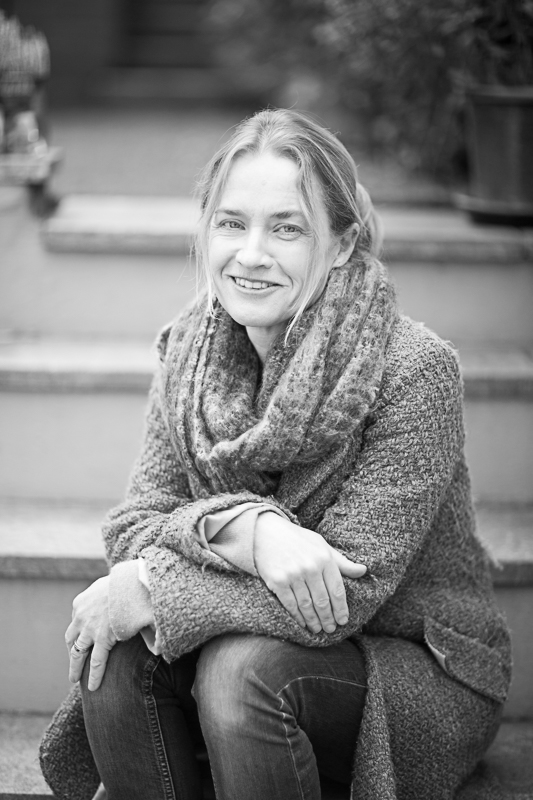
Linda Sargent
is a writer who worked as a publisher’s reader for David Fickling Books for twenty years. She has published short stories and articles and her first novel, Paper Wings, appeared in 2010; she is also the author of Words and Wings, a training guide to creative reminiscence work, available as a free download from her website. Over the past few years, she has been working along with Joe Brady and Leo Marcell, on the graphic novel Tosh's Island, published in October.

In Elizabeth Jennings’ poem, Into the Hour, she writes, “Grief’s surgery is over”, going on to use what may seem a surprising phrase of reaching “the time when grief begins to flower” and how through this process “Grief finds its good way home”. This book on dealing with profound loss, epitomises so many aspects of the poem. When Patrick’s brother, Tom, at twenty-six and just two years older than him, dies it is (unsurprisingly) a shattering blow. In the immediate aftermath, visiting an art gallery with his mother, the author, young and making his way upwards already on the ladder of the New Yorker magazine, experiences a sudden, profound echo of the atmosphere spent during his time by his brother’s hospital bed, “one of speechless mystery, beauty and pain” (p.31). And there he makes a decision to retreat into a calmer and, as it transpires, more healing and sustaining space for himself.

He leaves the New Yorker and gets a job as a Museum Guard at the Metropolitan Museum of Art in New York. Here, over ten years, he meditates on the many works of art held there, from the huge collection of ancient and classical works, paintings, sculptures and treasures from across the world, to more modern pieces, including quilts and furniture. And he takes us, the readers into this world along with him, giving us a chance to explore the pieces in a deeper and more meaningful way. It’s an open way too, he doesn’t preach, he shares. As well as his exploration and linking of art, life and the patterns of grief, the author also forms bonds and friendships in the community of other guards at the Met, a diverse and fascinating group. During this period, Patrick marries and now has two children and these biographical moments are expertly and lightly threaded through. Mostly, it focuses on the importance of having time to reflect, really reflect, on the way art and beauty can provide support during periods of struggle and grief. He manages to bring home the way even the greatest of art can function on this inclusively human level, at one point observing that in the end “all art is local”. He also talks about the “simplicity of stillness” amongst all this art, but adds: “…it is also about the head-down work of living and struggling and growing and creating”. Indeed. A truly life-affirming book full of riches to be savoured and I loved it.

There are illustrations in every chapter by Maya McMahon referencing some of the pieces he mentions. And at the end there is a comprehensive list and links to all the works of art mentioned.

All the Beauty in the World is published by Vintage.

Linda's graphic novel Tosh's Island, with Joe Brady and Leon Marcell, is published by David Fickling Books.


More of Linda's choices:


The Orchardist by Amanda Coplin


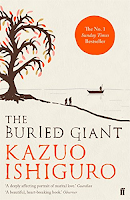
The Buried Giant by Kazuo Ishiguro


Monday, 16 September 2024

Guest review by Nick Manns: H IS FOR HAWK by Helen Macdonald


"The notion of ‘looking’ is a key term in this book, and a suitable one for someone on a quest."

Nick Manns
taught English in comprehensive schools in south London and the Midlands for 20 years. He is the author of four novels for young adults, including Control Shift and Dead Negative, and is a founder and director of Dyslexia Lifeline, a company based at De Montfort University, Leicester.

'Grief has no distance,’ wrote Joan Didion in The Year of Magical Thinking. ‘It comes in waves, paroxysms, sudden apprehensions that weaken the knees and blind the eyes and obliterate the dailiness of life.’ The ‘dailiness of life’ is that touching trust in stability; of everything in its place and all being right with the world.

With Didion that confidence crashed when her husband dropped dead one evening from a heart attack and she spent months trying to navigate a changed reality. With Helen Macdonald, her old world finished with a phone call: when her mother told her that her father, apparently recovering from a trivial injury to his arm, had suddenly died. His heart had stopped.

Whereas Didion struggled to believe John Gregory Dunne was really dead (she needed to be alone,' she wrote, ‘so that he could come back’), Macdonald describes her grief in Biblical terms: ‘the rain fell and the waters rose and I struggled to keep my head above them’. Worse still, this was a world that was indifferent to her suffering: ‘planes still landed, cars still drove, people still shopped’ and ‘nothing made any sense at all.’ She finds herself in Auden land, where the misery of the bereaved cannot be assuaged: clocks can’t be stopped; catastrophes are always someone else’s problem. Icarus drops into the water and no-one notices.

The likeness to Didion isn’t limited to a shared experience. As the American author believed (at some level) that her husband was still around (heading towards the front door), so Macdonald holds a similar fantasy about her father, except that she wasn’t hanging around for the doorbell to chime or for the phone to ring.

Although most readers (who aren’t writing book reviews) will probably pass by incidental details, a pleasure of this book is in the hints and clues that Macdonald builds into the narrative. Early on, whilst walking the blasted heath of the Brecklands – the broken lands – of Norfolk, in search of goshawks, she comments: ‘The goshawk is the birdwatcher’s dark grail.’ They’re rare and hard to see. And she adds, ‘Looking for goshawks is like looking for grace: it comes, but not often.’

Of course, the notion of the ‘grail’ is often the focus in stories of chivalry – of a search for something precious in the Christian tradition. The journey to attain the grail (or achieve some worthwhile end) may be uncertain and perilous. In Macdonald’s case, like Sir Gawain, she must find her own way and use her own resources. The ‘broken lands’ of East Anglia are as good a place to start as any.

Throughout – and running as a parallel narrative – she shares with us the tale of another traveller, who went before, and we realise that finding the grail or receiving grace isn’t a given. Although there are no maps to this terra incognita and no guarantees, in good medieval tradition, she takes guidance from those who had asked the important questions and knew the likely trail. For Freud and Klein, the grail for each of us is authenticity and this is earned through self-knowledge.

In the early days, after the fateful call from her mother, Macdonald had groped her way out of ‘madness’ by connecting with the certainties of her childhood. She says: ‘When you are broken, you run. But you don’t always run away. Sometimes, helplessly, you run towards’. She recalls that years before, when working in a falconry centre, an injured goshawk had been brought in for assessment. The bird was not seriously harmed and they took her outside and then, like a magic trick (or something out of Philip Pullman), ‘She opened her wings and in a second was gone. She disappeared over a hedge slant-wise into nothing. It was as if she’d found a rent in the damp Gloucestershire air and slipped through it.’

Years later, following her father’s death, and after a series of dreams about hawks, she drove to Scotland, to meet an Irishman, who would hand over a young female goshawk. Although she had been advised against this project (‘Hiding to nothing,’ comments her friend), she was by this time an experienced falconer and disregarded the note of caution. And yet. The travelling box is opened and the bird ‘came out like a Victorian melodrama: a sort of madwoman in the attack.’

Her training of the incongruously named ‘Mabel’ dominates the rest of the book. We’re educated in the process of feeding the young bird and how Macdonald painstakingly built trust. This is a creature that is given ‘roughly torn day-old chicks’ and bits of rabbit. She’s also a creature straight from the menagerie of Ted Hughes: ‘I see it all; I own all this world and more.’

The notion of ‘looking’ is a key term in this book, and a suitable one for someone on a quest. As a child Macdonald describes herself as a ‘watcher’ who would climb the hill behind her home, crawl under a rhododendron bush and ‘look down on the world below.’ This habit of quiet observation is reinforced by her companionship with her father, who worked as a press photographer and transmitted the need for patience.

At one point Macdonald recounts a dream in which she looks down on a Second World War bombsite and sees a boy amidst the rubble. He turns and she sees it is a figure of her father as a child, who points to an approaching aircraft. She later reflects: ‘I’ve come to realise that we were watching the same things: or at least the things that history conspires to make the same. Since the dawn of military aviation, birds of prey had been thought of as warplanes made flesh…Hawks fly and hunt and kill: aircraft do the same.’ She concludes: ‘I must have inherited being a birdwatcher from Dad.’

There’s also something of the photographer in the exactness of her metaphors: long-tailed tits in a willow were like ‘animated cotton buds’; the feathers down the front of the young goshawk are the colour of ‘sunned newsprint.’ She describes fieldfares as ‘netting the sky …like a 16th century sleeve sewn with pearls.’

To understand Mabel, to train her so that they can become a hunting partnership, she reads widely and returns to the work of T. H. White. She had read The Goshawk as a child, and as then, so now, she is disturbed by the cruelty meted out by White in his attempt to make his wild bird biddable. This cruelty contrasts with her own sensitivity and kindness to the young bird in her care.

For Macdonald, ‘running towards’ the source of her feelings, enabled her to get in touch with important elements of her childhood: she was able to make sense of her life by inspecting her past. White’s past included neglect at home and physical abuse at boarding school: a history in which the school sanctioned the punishment of younger children by older pupils. As a gay adult he tried to ‘pass’ as a straight man (with upper class pretensions.) His repeated attempts to form relationships with women were predictable failures. Macdonald sees his efforts to train ‘Gos’ as an (unconscious) desire to tame the ‘wild’ parts of himself. She writes: ‘White found himself in a strange, locked battle with a bird that was all the things he longed for but had always fought against.’

Whereas White’s training methods would today elicit a call to the RSPCA, Macdonald is able to empathise with Mabel: she’s a ‘baby’ who could be ‘happy’ or ‘contented’. She doesn’t have to control this creature but to collaborate with it: she isn’t conflicted in her role. White was both stern schoolmaster and wild child: both roles which would be depicted in his children’s novel of Arthurian adventure, The Sword in the Stone.

White never resolved the different parts of himself: the relationship with Gos (spoiler alert) ends tragically: the hawk escaped. Macdonald notes that he remained alone all his life. At the end of her book, Macdonald can symbolically ‘let go’ of Mabel (the hawk spends several months in an aviary so that she can moult) and Macdonald emerges from crushing grief: she ‘lets go’ of her father.

This ending takes us back to the start of the book: she notes that Melanie Klein had commented that children deal with states of mind akin to mourning and that adults return to this emotional world whenever grief is experienced. Macdonald tells us that as a child she comforted herself that White’s Gos wasn’t really dead, he was ‘out there’ in the woods and she had wanted to go and ‘bring him back’. As an adult, she had wanted to ‘slip through that rent in the air’ and fly her hawk to find her lost father.

In the early days of training Mabel, Macdonald had riffed on lines by John Keats: ‘My arm aches and a damp tiredness grips my heart’. The poet had been meditating on the beguiling charms of a nearby nightingale, a ‘deceiving elf’, who might help him escape ‘the weariness, the fever and the fret’ of life. At the very end of her book, Macdonald fully returns to the human world: she recognises that goshawks are ‘things of death and blood and gore’. The world we inhabit is shared – but separate. She concludes, ‘Hands are for other human hands to hold. They should not be reserved exclusively as perches for hawks.’

H is for Hawk is published by Vintage.

See Nick's previous reviews:

The Antidote: Happiness for People who can't stand Positive Thinking by Oliver Burkmann


The Darker the Night, the Brighter the Stars by Paul Broks


Monday, 12 December 2022

Guest review by Sophie Haydock: THE CHOSEN by Elizabeth Lowry


"A haunting and accomplished portrait of raw grief, of dissatisfied love, of regret, and the self-imposed sacrifices one makes in a bid for greatness." 

Sophie Haydock
's debut novel, The Flames, is about the four muses who posed for the artist Egon Schiele in fin-de-siècle Vienna. She is the winner of the Impress Prize for New Writers and in 2022 The Flames was longlisted for the Historical Writers' Association Debut Crown Award.

Sophie trained as a journalist at City University, London, and has worked at the Sunday Times Magazine, Tatler and BBC Three, as well as freelancing for publications including the Financial Times, Guardian Weekend magazine, Arts Council, Royal Academy and Sotheby’s.

She has interviewed leading authors, including Hilary Mantel, Maggie O’Farrell, Bernardine Evaristo, Sally Rooney and Amy Tan. Passionate about short stories, Sophie also works as a digital editor for the Sunday Times Audible Short Story Award and is associate director of the Word Factory literary organisation.

Her Instagram account @egonschieleswomen – dedicated to the women who posed for Egon Schiele – has a community of over 110,000 followers. For more information, visit: sophie-haydock.com

A marriage is a mysterious union, even to the people who are bound by it. It’s this sentiment that haunts Elizabeth Lowry’s judderingly poetic novel The Chosen, about the writer Thomas Hardy – a self-contained, single-minded man who’s lost the intimate connection to his wife, Emma, over the course of their forty-year marriage, to the extent that they pass in the house they share like ghosts, neither speaking to one another, nor touching; as cold as the grave.

It’s ironic, therefore, that when Hardy – the Victorian writer best known for Tess of the d’Urbervilles – finds the lifeless body of his wife after she dies unexpectedly in the hours after their final bitter argument, he is confronted, for the first time in decades, with a vibrant and urgent vision of a woman who he’s now unwilling to shake to the margins. Indeed, he’s unable to eat, sleep, or write. “Language has left him,” Lowry writes poignantly.

Hardy sees his wife everywhere – as a “smirk of light on the threshold”. She’s “on the cliffs, waving to him across that dark space as the spume flies up: waving or beckoning, goodbye or hello”. He cannot tear his thoughts away, even when Florence, the younger woman with whom he has been engaged in an affair, shows up to take her place by his side. Florence expects to meet a man relieved of his burden, but instead must grapple with a stranger who’s willingly withdrawing from life under the deluge of his grief. “It’s as if he’s being drawn down to the bottom of the sea. He has no choice but to sink. He wants to sink. He hasn’t been able to admit to Florence how powerful this urge is: the desire to slide from himself.”

Emma’s ghost is evoked more sharply when Hardy discovers a cache of notebooks that his downtrodden wife kept secret over their difficult marriage – detailing her resentment at her husband’s stubbornness, his selfish commitment to the imaginary characters he evokes alone in his study, his lack of intimacy, which deprived her of children: “He’s at a loss to know why Emma started keeping such a catalogue of grievances at all […] The uncertainty and unhappiness were, as he remembers things – as till now he’s always thought them – all his.”

Emma’s widow pores over her diaries with the intensity of a scholar. It’s here the poignancy of The Chosen truly deepens. We see Emma through her own eyes, her voice restored, her recollections of their shared life the central force. “I’ve offered my help,” she writes. “I think he’s accepted it – it’s hard to tell. His delicate irony is too often mistaken for tenderness.”

By doing so, the novel agitates themes of the (un)silencing of women, as well as the role of creativity and who takes ownership. Emma herself harboured a desire to write from before she married the then-unpublished author, and her efforts were ridiculed by her husband as his success grew, while her own contributions to his works wilfully dismissed and overlooked.

Hardy is suddenly faced with the most annihilating question of his life: did he know his wife at all, in any meaningful way? As a result, the writer’s inner world, his version of himself and his life’s work, his role as a husband, is detonated, blasted beyond all recognition, his own memories bleached by the accusation found in her words. He cannot believe he no longer has access to the woman who he now realises he has loved so insufficiently for most of her life.

Lowry, as author, blends the facts of the past delicately with her own fictional take on their relationship, and what may have passed between husband and wife. What’s true is that Emma wrote such diaries, the contents of which are a mystery. They were read by Hardy after her death. He was so moved and horrified by her verdict that he burned them, reducing her world to ash. We know of their existence thanks to references in letters made by his new wife.

The Chosen expertly spotlights the interplay of grief and regret, alongside renewed, almost obsessive, love. Hardy turns the problematic reality of Emma, a woman he found difficult when alive, into something concrete he can control – and sets about mourning her in an artistically selfish way, losing himself to her memory. He writes powerful love poetry in her honour, much to the chagrin of Florence, who before long becomes the second Mrs Hardy.

The poignant complexity of marriage is captured beautifully by Lowry, who towards the finale of The Chosen shares a detail that is the redemptive moment for Hardy – that Emma called for her husband from her sick bed: “She wanted you. She said it had to be you, sir.”

Emma’s final gift to her husband was to inspire the poetry that cemented his name as one of the great poets in the English language. “It’s difficult for me to grasp what it means to love you after you are dead, and what I can possibly put into words that you would want to hear.”

Lowry’s The Chosen is a haunting and accomplished portrait of raw grief, of dissatisfied love, of regret, and the self-imposed sacrifices one makes in a bid for greatness. As Hardy realises too late, he has dedicated his life to the wrong passions. “What have I ever written about, Em? he laughs. I thought I was writing about the world, but I was just writing words.”

The Chosen is published by Riverrun.

Sophie's The Flames is reviewed here by Alison MacLeod.

Monday, 2 May 2022

Guest review by Linda Sargent: 12 BIRDS TO SAVE YOUR LIFE - NATURE'S LESSONS IN HAPPINESS by Charlie Corbett


"Rediscovering his connection to the natural world through reacquainting himself with birds, their habitats and song."

Linda Sargent is a writer who works as a publisher’s reader (David Fickling Books since 2002). She has published short stories and articles and her first novel, Paper Wings, appeared in 2010; she is also the author of Words and Wings, a training guide to creative reminiscence work, available as a free download from her website. She is currently working, along with Joe Brady and Leo Marcell, on Tosh's Island, a middle grade graphic novel based on her childhood.

The line, “Grief finds its good way home” from Elizabeth Jennings' poem Into the Hour, is especially apt for this book, I think. The cliché of coming to terms with loss has always felt inadequate and often inappropriate to me, but “finding its good way home”, yes, that’s more like it. And this diary/essay form account that Charlie Corbett uses to chart the ten years following the death of his mother does feel so much like this kind of journey and one that most people are likely to recognise. Charlie’s mother was in her mid sixties when she was diagnosed with a brain tumour, which the author says at first, although a shock to the family, they all imagined it would be dealt with, sorted out and their mother would continue to be their centre, as he describes, “the glue that held our family together”. That this would no longer be the case seemed unimaginable and when she died there was inevitable fracture and despair, one which sent the author into dark times and which he admits never fully disappear. For him this “way home” involved rediscovering his connection to the natural world through reacquainting himself with birds, their habitats and song.

Although he chooses twelve birds to focus on, during the chapters he also includes many others, presenting a full picture of his relationship with nature as a whole and a reminder of things that he knew were important to him, but that he’d forgotten or neglected to remember over time. As well as the perhaps more obvious candidates like the skylark, the robin and the wren, there are other less predictable birds such as the magpie and the seemingly ordinary house sparrow (sadly like so many not so ordinary and common these days). And although every chapter begins with one bird, it soon broadens out into reflection and reminiscence, as he recalls earlier associations and memories of family life and the way in which he, his father and his siblings have to begin to live with their new reality. At the end of every chapter he gives a brief and nicely personal factual guide to his chosen bird and finally he includes what he calls a Gazetteer – A year in the life of birds, detailing what to look and listen for where and when. It is, as he says, a very personal account and is not meant to instruct, but rather to invite the reader to join him on his journey and in doing so to maybe find it easier to approach loss and grief in their life and find solace in the natural world which is fundamental to us all.

12 Birds to Save your Life is published by Penguin.

More reviews by Linda Sargent:

The Orchardist by Amanda Coplin   

The Buried Giant  by Kazuo Ishiguro 


Linda wheeling away into Blenheim Park


Monday, 19 February 2018

Guest review by Elizabeth Enfield: THE BEGINNER'S GOODBYE by Anne Tyler


Photograph by Sarah Ketalaars
Elizabeth Enfield is a journalist, novelist, short story writer and intermittent teacher of all. Her short stories have been published in various magazines and broadcast on Radio 4 and her latest novel, Ivy and Abe, is out now, published by Penguin. For more details see her website, or follow her on twitter @lizzieenfield

Anne Tyler has written twenty novels and, while only having read about a quarter of her output, I’m a huge fan of her work. In a world where the news and the bookshops often appear to be dominated by crime, tragedy and acts of inconceivable darkness, Tyler’s sphere is domestic: the quotidian drama of ordinary existence. She writes about it in a way that is utterly compelling, vividly imagining the smallest details and shining a sympathetic and understanding light on the human condition.

Tyler’s last novel, A Spool of Blue Thread, was nominated for the Booker Prize - an utterly deserving contender and one I loved, but I’ve chosen an earlier novel, The Beginner’s Goodbye, to review here. It’s a short, almost novella length book, but contains everything that Tyler does so well: turning the ordinary into something extraordinary, lending difficult characters a certain nobility and rendering the mundane remarkable.

I recently chose to revisit this novel as my next book is about grief, about what happens to the parents of a child, who are long separated, following the death of their only child. Grief is not the most uplifting subject to tackle and yet Tyler has addressed it repeatedly in her novels, teaming it with her familiar theme of regret, one of grief’s chief companions.

The chief protagonist and narrator of The Beginner’s Goodbye is Aaron Woolcott, an emotionally repressed man, with a partial paralysis that necessitates walking with a stick and a bad stutter. He works for the family publishing company, a vanity press and home to the Beginners series of guides to small slices of life, mirroring Tyler’s own fictional territory.

Aaron’s wife Dorothy, a no nonsense doctor and eight years older, is a “non caretaker” where his mother and sister are cosseters, even in Aaron’s mid thirties. Their marriage functions on lack of fuss and fairly minimal interaction. But when Dorothy dies in a freak accident – involving an oak tree, a sun porch and elusive biscuits - Aaron’s carefully constructed world begins to fall apart.

He rejects the sympathy of friends and colleagues, throws away their kindly meant casseroles and appears to take a self-punishing delight in not needing anyone.

But then Dorothy starts showing up, the most un-spectral ghostly apparition ever: a solid presence, which Aaron summons up out of his loneliness.

Initially, she only drops by briefly but then she stays for longer. They talk, and bicker the way ordinary perfectly happily but not that happily married people do. Through their encounters, the limitations of the marriage are gradually revealed and Aaron begins to realize and regret the cost of his self-protective shell and unwillingness to open up to others.

With solid spectral Dorothy he finds it much easier to talk honestly and openly than he did with the real one. He even loses his stutter when they chat! And slowly he begins to say goodbye, and at the same time to say hello to the world, in a way he has never done before.

What Tyler captures here, so well, is the contradictions of the human condition: how we can love so imperfectly and feel so deeply the loss of someone to whom we are almost tragically mismatched.

In the pages of crime novels, we find resolution about what’s happened. In Tyler’s slices of life we find emotional resolutions – small but truthful ones.

On the penultimate page of The Beginner’s Goodbye, Aaron discusses whether the dead ever really visit with his friend Luke.

Luke thinks they don’t. “But I think if you knew them well enough, if you’d listened to them closely enough, while they were still alive, you might be able to imagine what they would tell you even now.”

It’s a beautiful sentiment, one which Aaron decides to heed. And one which beautifully illustrates the appeal of Tyler’s writing. She pays close attention to her characters; so close that still talk to you, long after the final pages of the novels they grace.

The Beginner's Goodbye is published by Vintage.


Monday, 2 October 2017

Guest review by Miriam Moss: GRIEF IS THE THING WITH FEATHERS by Max Porter


Miriam is an award-winning writer of fiction - short stories, novels and picture books. She grew up in Africa, China and the Middle East before living in England. After graduating, she taught English until the arrival of her first child, when she began writing.

Her latest short story, Salvage, is published in the Fish Anthology 2017, and her novel, Girl on a Plane, a fictionalised account of a real life hijacking experienced while travelling alone in the Middle East aged 15, is published by Andersen/ Penguin Random House. Her next novel is set in Africa.

She has published many picture books, including Matty takes Off (Andersen), Bare Bear (Hodder), Wibble Wobble (Orchard), I Forgot to Say I Love You! (Macmillan) and Bad Hare Day (Bloomsbury). Her latest is Dr Molly’s Medicine Chest (Walker).

Miriam lives in Lewes, Sussex, has three grown up children and works in a converted triangular potting shed in the garden. See more on her website.


Behind the Emily Dickinson–derived title – her poem is called Hope is the Thing with Feathers - is a short, finely crafted prose poem. The wonderfully compact, moving narrative is a meditation on grief, but it’s also a surprisingly funny book, as well as a clever and highly original read.

A mother has died suddenly, leaving a grieving writer. the father of two young sons, bereft and in disarray. The father, who attempts to come to terms with his wife’s death, is writing a book about Ted Hughes (called Ted Hughes’ Crow on the Couch: A Wild Analysis) when, one night, a huge crow bursts through the door of their London flat.

Crow, the mythic creature from Ted Hughes’ poetry, is a trickster, a philosopher of death and rebirth, who intends to stay, and he joins Dad and Boys in a trio of alternating voices, full of energy and unpredictability.

Crow, who has elements of the shaman, describes himself as ‘ … friend, excuse, deus ex machina, joke, symptom, figment, spectre, crutch, toy, phantom, gag, analyst and babysitter.’ His relationship to the father is as chaotic and unpredictable as grief itself. He’s protective, predatory - and then suddenly sensuous: ‘I prised open his mouth and counted bones, snacked a little on his unbrushed teeth, flossed him, crowly tossed his tongue hither, thither, I lifted the duvet. I Eskimo kissed him. I butterfly kissed him.’

Though the book’s emotional landscape is desolate, there’s plenty of black humour that playfully derails the reader’s expectations. The writing shifts from tragic to uplifting, from Crow’s mocking hilarity to the awful sorrow of the father and the heart-wrenching sadness of the two boys.

The domestic landscape is never far off. Grief, we are told, needs time to heal, but from the father the boys have other more ordinary needs: ‘washing powder, nit shampoo, football stickers, batteries, bows, arrows, bows, arrows’.

The mother, whose life has been cut cruelly short, is evoked by the details of how she lived: ‘She won’t ever use (make-up, turmeric, hairbrush, thesaurus)./She will never finish (Patricia Highsmith novel, peanut butter, lip balm)./And I will never shop for green Virago Classics for her birthday.’ And it is only at Crow’s leave-taking that we hear how she died. ‘Accident in the home./She banged her head, dreamed a bit, was sick, slept, got up and fell,/Lay down and died. A trickle of blood from an ear.’

Together, Crow and Dad work through his grief, and, during the final session, they look back: ‘You’ll remember with some of my early work with you,’ Crow says, ‘that what appeared to be primal corvid vulgarity was in fact a highly articulated care programme, designed to respond to the nuances of your recovery.’

I particularly enjoyed the fact that the story also becomes a meditation on the difficulty of writing. Porter, at one point, advises that the only way to write, in this case about love and loss, is ... to begin.

Summary: Grief is as unique as you are.

Grief Is the Thing with Feathers is published by Faber.