Showing posts with label Anne Tyler. Show all posts

Sunday, 17 May 2020

Lockdown Sunday extra: REDHEAD BY THE SIDE OF THE ROAD - reading Anne Tyler in Lockdown, by Paul Magrs

"Four novels in five years from her. That's amazing, and I'm so grateful for that quiet, calm, sane voice still being here."


Paul Magrs brought out his first novel in 1995. Last year he published his book on writing, The Novel Inside You. This year Snow Books are republishing his Brenda and Effie Mystery series of novels. He lives and writes in Manchester with Jeremy and Bernard Socks.

Easter Weekend, 2020

Sometimes I think I’ve lived my whole life in lockdown. Many readers and writers I know secretly hanker to live like this. It must be why I’ve always been drawn to the novels of Anne Tyler, these past thirty years, since I discovered her. Tyler heroes tend to hanker for locked down lives, and they spend their days quietly aghast at the way everyone else goes flitting and changing about.

Up much of the night worrying and lying awake, fretting about Bernard Socks not being indoors, even though I know he's all right really. These are warm, moony nights for cats to go crazy in. At three I put on my slippers and take my keys to have a look at the bottom of the garden and of course, there he is, sleeping in the Beach House chair. I carry him indoors and he indulges me, running straight back out once I’m in bed.

This morning is beautiful. The sun so strong and the cherry blossom like great cumbersome sleeves on the branches outside my study window. The petals are starting to fly off already. There's just a few days of this.

Jeremy gets up saying, ‘It's like waking up each day and thinking that you've gone deaf. There's no city noise at all.’

A thousand people dead each and every day. Our rates are worse than anywhere in Europe. After us looking at Italy and Spain in horror for those weeks, it turns out those were the precise weeks our government should have been taking action, when they were simply telling us to wash our hands and to carry on as normal.

My treat to myself is the new Anne Tyler, which arrived the other day. It was on order for months. I take the parcel and open it and immediately wash my hands. Does cardboard carry the virus? Was the postman wearing gloves?

I've read her for thirty years and now she's writing characters slightly younger than me: characters who are already middle-aged, faded and disappointed. Characters who've missed out somehow. Taciturn, diffident characters who we meet on the very day that they try to catch hold of their lives again.

I always love her characters. They’re kind and they've usually lost out and, if it's through fault of their own, it's not a bad fault. Not usually. It's to do with a one-time hesitation, a fatal stepping back in order to let other, more pushy people dart forward. Her characters let others get on with being self-centred and ruthless and unkind.

Straight away I'm thinking of people who have leapfrogged their way onto and then over me in the past. It’s the same in Micah’s backstory here, when we learn a little from his college years. He stood by and let himself be robbed. There was a rich boy who simply took the patent for a software programme away from him. You’ve had comparable situations in the past, when you let people get away with stuff. And, like Micah, all you think you can do in these situations is pity the thief. Yes, I guess I might have been daft, letting them get away with it, but really… don't they have any ideas of their own? No talents? How desperate must they be to steal ideas, or to use up and exploit people and then move on past them?

I've been unlucky and foolish in the past. Hapless as an Anne Tyler character. I'm thinking of people I thought were friends and, looking back, realizing that there was always something smarmy about them. I look back at particular ones and think, Yes, the way they grinned was just like the Blue Meanie in the Yellow Submarine cartoon and that should have been a danger sign.

At the moment I'm feeling sadder and more demoralised about my own work than I even realised. I took the week off to read and do very little work. I learned a bit more about painting with gouache and I gloried in 1970s Jackie Collins and that really was about it for me, this week. But I was also reading Anne Tyler and she put me into a kind of reflective, mopey mood. I love to read her but she makes me feel terrible, too, when I realise, like many of her characters, that I might have done my life wrong. I start to suspect I ought to have had harder edges, maybe… or fewer mixed feelings.

A tough day, feeling claustrophobic indoors. The only place I can sit is my study and that is wholly infused with the idea and atmosphere of work. I'd love to be able to spend the day in the garden. I think how lovely it used to be in the Beach House. I go out to take a look and the garden is so neglected. The Beach House is damaged and crammed with furniture we don't want and can't fit indoors. It's impossible to sit out here.

Jeremy started work in the garden, putting it all back together at the end of February. And I thought: maybe this year he'll sort it again. Then he found all those bones under the fallen tree at the far end and we had to get the police and CSI round, and that was a whole drama for a day. A ridiculous drama – soon resolved. (‘My money is on the remains of a badger,’ said the woman from CID.) The next day we visited my family in Trimdon and it was on the drive back we listened to the news and realised how close the pandemic was coming. We suddenly understood we were all going to be locked in for months, likely as not. So here we are.

Jeremy sits for two hours each day, transcribing the government broadcasts, decoding and fact-checking and commenting on them. Then he posts them online. The local groups are full of people he argues about politics with and they barely acknowledge the work he puts into this and other community initiatives.

I can hear the reasonable, doom-laden voice of the minister and the health experts playing through his laptop in the garden under my window. I want to tear out my hair. I did actually cut my own hair this morning. We’ll all be doing it before long.

I've been sleeping so badly. Lying awake worrying about Jeremy and our parents and Socks and everyone. Lying awake, too hot and thinking: a thousand dead every day. In hospitals I read that they have to turn everyone over and over again. It's best when they lie you face down: best for the lungs and the fluid on them. This image of passivity is horrifying in a way, so that everyone looks like giant babies, being turned over, helplessly.

Finishing the new Anne Tyler this morning, Easter Sunday. Jeremy and Socks have just got up and gone back into the garden. Reading and thinking, that's four novels in five years from her. That's amazing, and I'm so grateful for that quiet, calm, sane voice still being here. Telling us that it's okay to be wrong, imperfect, messy, timewasting… and it's never too late to go back and to make a change. Maybe.

And the theme of quietness! I just read a review of the new one on Amazon where someone says that when they give friends Tyler's books they complain about nothing happening! I think you might as well say that about your own life. (Well, perhaps some people do.) There's absolutely everything happening in her novels, I think. It's all there.

Oh, remember, when you wrote your little play about going to see your granda at the end of his life and you'd been chatting with a very famous producer friend and he said send it to so-and-so at such-and-such productions, his great supporter, all these years. Well, you had the assistant put onto you, of course, and you explained (modestly, stupidly) that perhaps the script was a bit quiet and a bit small scale for them. Then, of course, the assistant gave it a day or so before writing back, and telling you she found it a bit quiet and a bit small scale for them.

Oh well, it doesn't matter. Do you remember your first agent and how she used to say that you had to find something ‘high concept’ to hang all that ‘beautiful writing’ on, or else no one will care, because nothing really happens?

They only notice Anne Tyler now because they've been told to. All these years, and she's finally caught on. Thirty years ago I was lying in the park in Lancaster after my second year at University. That summer I read fifty novels in an empty house and wrote one of my own. I was living in lockdown back then, without even knowing it. All I did was read and write and venture out once a day to the park. Just the same as now.

And just like in an Anne Tyler novel, those thirty years went by and, though all the changes seemed very dramatic at the time, I’m doing all the same stuff as ever. I’m happy to, with the world around me in such constant disarray.

Redhead by the Side of the Road is published by Chatto and Windus

Monday, 19 February 2018

Guest review by Elizabeth Enfield: THE BEGINNER'S GOODBYE by Anne Tyler


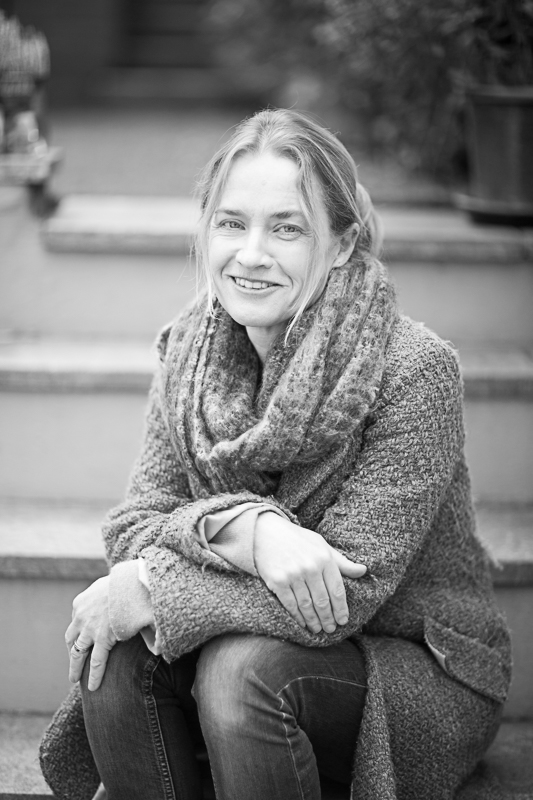
Photograph by Sarah Ketalaars
Elizabeth Enfield is a journalist, novelist, short story writer and intermittent teacher of all. Her short stories have been published in various magazines and broadcast on Radio 4 and her latest novel, Ivy and Abe, is out now, published by Penguin. For more details see her website, or follow her on twitter @lizzieenfield

Anne Tyler has written twenty novels and, while only having read about a quarter of her output, I’m a huge fan of her work. In a world where the news and the bookshops often appear to be dominated by crime, tragedy and acts of inconceivable darkness, Tyler’s sphere is domestic: the quotidian drama of ordinary existence. She writes about it in a way that is utterly compelling, vividly imagining the smallest details and shining a sympathetic and understanding light on the human condition.

Tyler’s last novel, A Spool of Blue Thread, was nominated for the Booker Prize - an utterly deserving contender and one I loved, but I’ve chosen an earlier novel, The Beginner’s Goodbye, to review here. It’s a short, almost novella length book, but contains everything that Tyler does so well: turning the ordinary into something extraordinary, lending difficult characters a certain nobility and rendering the mundane remarkable.

I recently chose to revisit this novel as my next book is about grief, about what happens to the parents of a child, who are long separated, following the death of their only child. Grief is not the most uplifting subject to tackle and yet Tyler has addressed it repeatedly in her novels, teaming it with her familiar theme of regret, one of grief’s chief companions.

The chief protagonist and narrator of The Beginner’s Goodbye is Aaron Woolcott, an emotionally repressed man, with a partial paralysis that necessitates walking with a stick and a bad stutter. He works for the family publishing company, a vanity press and home to the Beginners series of guides to small slices of life, mirroring Tyler’s own fictional territory.

Aaron’s wife Dorothy, a no nonsense doctor and eight years older, is a “non caretaker” where his mother and sister are cosseters, even in Aaron’s mid thirties. Their marriage functions on lack of fuss and fairly minimal interaction. But when Dorothy dies in a freak accident – involving an oak tree, a sun porch and elusive biscuits - Aaron’s carefully constructed world begins to fall apart.

He rejects the sympathy of friends and colleagues, throws away their kindly meant casseroles and appears to take a self-punishing delight in not needing anyone.

But then Dorothy starts showing up, the most un-spectral ghostly apparition ever: a solid presence, which Aaron summons up out of his loneliness.

Initially, she only drops by briefly but then she stays for longer. They talk, and bicker the way ordinary perfectly happily but not that happily married people do. Through their encounters, the limitations of the marriage are gradually revealed and Aaron begins to realize and regret the cost of his self-protective shell and unwillingness to open up to others.

With solid spectral Dorothy he finds it much easier to talk honestly and openly than he did with the real one. He even loses his stutter when they chat! And slowly he begins to say goodbye, and at the same time to say hello to the world, in a way he has never done before.

What Tyler captures here, so well, is the contradictions of the human condition: how we can love so imperfectly and feel so deeply the loss of someone to whom we are almost tragically mismatched.

In the pages of crime novels, we find resolution about what’s happened. In Tyler’s slices of life we find emotional resolutions – small but truthful ones.

On the penultimate page of The Beginner’s Goodbye, Aaron discusses whether the dead ever really visit with his friend Luke.

Luke thinks they don’t. “But I think if you knew them well enough, if you’d listened to them closely enough, while they were still alive, you might be able to imagine what they would tell you even now.”

It’s a beautiful sentiment, one which Aaron decides to heed. And one which beautifully illustrates the appeal of Tyler’s writing. She pays close attention to her characters; so close that still talk to you, long after the final pages of the novels they grace.

The Beginner's Goodbye is published by Vintage.


Monday, 18 September 2017

Guest post by Mary Hoffman: VINEGAR GIRL by Anne Tyler


"A new Anne Tyler is always a big event for me ..."


Mary’s first book, a YA novel, was published in 1975. Since then she has written 120 books, mainly for children and teenagers but lately also a couple of adult novels under pseudonyms. After graduating in English Literature from Cambridge and spending a couple of years studying Linguistics at UCL, Mary wrote courses for the Open University for five years but then went freelance. She recently started The Greystones Press, a small independent publishing house, with her husband. Mary’s books have been translated into 30 language and won some prizes. She runs the popular History Girls blog, which can be read every day. Mary lives in a converted barn in West Oxfordshire with her husband and three demanding Burmese cats. Her three daughters are all grown up: one is a writer, one a theatre producer and the youngest, a designer, is sailing round the world. Mary has four grandchildren and her latest picture book, Pirate Baby, is dedicated to the two on the boat.


A new Anne Tyler novel is always a big event for me. I wait till it is available in paperback and when I saw this one in Oxford Waterstones, as I was buying my holiday stash, I snatched it up with joy. It was only when I opened it in Cornwall that I realised I hadn’t meant to buy this one.

For it is part of the Hogarth Shakespeare project that invites top fiction writers to re-tell – or re-imagine rather – one of the plays as a novel. I really didn’t like the concept and, of all Shakespeare’s plays, The Taming of the Shrew is one of my least favourite, only just above Titus Andronicus.

But, as the quotation from Good Housekeeping says on the back, “a new Anne Tyler book is always a treat,” so I set aside my reservations.

There is a typical Anne Tyler female protagonist. She is usually well into middle age or older, looking back on a life of devotion to a more or less grateful family when something jolts her into a re-evaluation of her life. It might be something as dramatic as a kidnap or as mundane as a walk along the beach but it leads to a major shift in outlook, a desire to do some things differently.

And just as there is often a woman like this, somewhat faded and disappointed in life, there can instead be a male main character, who is finding life something he has to wrestle with. It can be because of bereavement like Aaron, the hero of The Beginner’s Goodbye, whose wife has been killed in freak accident or like Macon in The Accidental Tourist, whose young son has been murdered, though you don’t find that out till the end.

Or he may just be someone who hasn’t quite got the hang of how things work for most people. Tyler males often seem eccentric and obsessive, hovering on the edge of the spectrum.

So I wasn’t sure how frustrated young Katharina and Petruchio, with his exuberant and outlandish behaviour were going to fit into the Tyler mould. I needn’t have worried; she is more than ready for the challenge.

It’s true that her Kate Battista has sleepwalked into finding herself the person who runs the house for her scientist father and ditsy, boy-mad fifteen-year-old sister Bunny. And into a job as a teaching assistant for four-year-olds in a nursery school. But she is only twenty-nine and not yet the faded and frazzled norm for a Tyler heroine.

Her “Petruchio” is Pyotr, her father’s research assistant in his lab, whose three year visa is about to run out. Dr. Battista, whose speciaiism is autoimmunology, feels he is on the verge of a breakthrough that only Pyotr can help him realise. So he hits on the bright idea that his daughter Kate might marry him to get him his green card and enable their research to continue.

This absurd notion is certainly worthy of Shakespeare’s play, though Dr Battista is a much more significant figure than Kate’s father in the Shrew. In fact, he is that male character whose eccentricities about domestic life mark him out as a Tyler creation. He might not arrange his groceries alphabetically like the Learys in The Accidental Tourist but he has devised a ghastly-sounding solution to nurturing his family after his wife’s death: “Meat mash, they called it, but it was mainly dried beans and green vegetables and potatoes, which [Kate} mixed with a small amount of stewed beef every Saturday afternoon and puréed into a sort of grayish paste to be served throughout the week.”

Is it any wonder Kate is “a picky eater” and Bunny tries ineffectually to become a vegetarian? (Actually, this was something I didn’t like about the book: that Bunny’s vegetarianism is sneered at as a passing adolescent phase. I am so tired of novelists taking this line or the other one that we veggies secretly yearn for and scoff bacon butties when we can).

Anyway, amazingly considering Pyotr’s disregard for social niceties and the pressure on Kate to provide him with a new immigration status, she does agree to a marriage blanc. Tyler doesn’t shirk the groom’s inappropriate wedding gear but it and his lateness are explained by a crisis at the lab: the experimental mice have been stolen by animal activists.

She even has a heroic stab at Katharina’s “thy husband is thy lord, thy life, thy keeper” speech so beloved of would be female actors when auditioning for drama school. But this is not entirely successful – how could it be?

“It’s hard being a man,” says Kate to her sister and the assembled company at the wedding reception her aunt has been allowed to give the happy couple, sounding like a mixture of Robert Webb and Matt Haig.

But a touching epilogue told through the eyes of their six-year-old son shows them to have become just that – a happy couple. Only Kate has gone back to college and she and Pyotr have both won scientific prizes. The further away it got from Shakespeare, the more I liked it.

Vinegar Girl is published by Vintage.

Wednesday, 21 December 2016

PICK OF THE YEAR by Adèle Geras

There are an awful lot of variations of the name ANNE in my pick of the year but that's a pure coincidence. This list will leave out many  books I liked a lot, but that can't be helped.  It's not in order of merit but roughly in the order I read them.  I cannot account for why Tana French's cover image is larger than anyone else's. Here goes!

1) THE ESSEX SERPENT by Sarah Perry.


I was an early adopter of this splendid novel. I read it in a black and white covered proof so was not seduced by the astonishingly beautiful cover.  It's a most enjoyable and deliciously Gothic historical novel, with so much in it that you wonder how Perry has covered the ground, without losing impetus, structure or  interest. The prose is fabulous throughout. It's on the Costa shortlist and I'd be thrilled if it won.

2) THE GUSTAV  SONATA   by Rose Tremain. 


 Tremain has been a favourite writer of mine for many years but this is perhaps her most moving novel. Set in Switzerland and covering a period from the Second World War to the 70s, it is the story of a friendship like no other I've read. Warning: it is also almost unbearably sad at times. Also on the Costa shortlist and I would not be sorry if it won. Could we have two main prizes?

3) A LITTLE LIFE by Hanya Yanagihara.


This novel was very controversial when it appeared, dividing readers. Those who loved it were enthusiastic. Those who didn't said it was too violent, the child abuse themes were too graphic and so forth. They objected to the 'realism' of having four best friends in New York who were quite so successful. Unlikely, they said. Not convincing. They objected to a portrait of the city which didn't even mention 9/11. I read it over my summer holiday (it is 900 pages long but you don't notice on a Kindle) and I can truthfully say that it's the best novel I've read not just this year but for many years. I  think people misunderstood it. I reckon it's a fairytale. I think the child abuse elements are the Dark Forest we know from so many of the Grimm stories. And the moral: what will survive of us is love seems to me to be a good one.  Jude is a fairytale hero. I was moved, excited, and overcome with admiration for the writing and the way Yanagihara makes New York a magical place, full of strange enchantments and ogres in plenty. Do try it, but don't beat yourself up if it isn't your sort of thing. As I say: this book divided readers. 

4) THE TRESPASSER by Tana French.


French ought to be more widely read and much more admired. Her novels, set in Ireland, are just as good as many of the Irish books which win  prizes, but with added crime. Do not miss FAITHFUL PLACE and BROKEN HARBOUR. This one is also terrific and different from those. It's a first person police procedural which will make you feel part of the group of cops at this particular station. Good crime, characters you can warm to and a narrator who has a great line in humour too. If you like detective/crime/psychological thrillers, make 2017 the year you get to know Tana French. 

5) EXPOSURE by Helen Dunmore.


Dunmore is a safe pair of hands and this novel is very good indeed. It's a rather unusual spy story with elements that will remind you of Graham Greene. A moral dilemma, interesting characters, a spot-on evocation of the post-War period and just ripe to be turned into a television series. Read it first before that happens. Dunmore is also a poet and it shows.

6) THE SEARCH WARRANT:DORA BRUDER  by Patrick Modiano.


Prize for the most extraordinary reading experience of the year goes to this book by the Nobel prizewinning French writer. When he won the Nobel, I had not heard of him. I have now downloaded three more books. This one is very short, and in a way, not really a novel at all. Nothing much happens. A man looks for someone. That's it. It's a novel full of spaces, gaps in narrative, holes in the fabric of the world and it manages to say so much precisely because of these gaps about the Occupation of Paris in the Second World War. It reads very easily. The narrator tells us street names. What was there once. What is now there. He mentions people and speculates on what has happened to them. He walks around. At the end, you're shattered and wonder what the magic of this book is, exactly. It was a complete eye-opener.

7) LES PARISIENNES by Anne Sebba.


After reading Modiano, I really wanted to know more about the time of the Occupation of Paris and this book came along right on cue.  Sebba takes us in detail through those days as seen through the lives of the women of the city: those who resisted, those who collaborated, those who did the best they could. It's a lavishly produced doorstopper with lots of photographs and by the time you've read it, you have lived vicariously through those days and experienced them through the words, and memories of the living and the dead. Sebba interviews many survivors of that time and their testimony is particularly moving. For anyone who loves truly readable history.

8)VINEGAR GIRL by Anne Tyler.


There's no question in my mind that Tyler is the Great American  Novelist and I would love her to win the Nobel prize. For decades, she's written about a small corner of the USA, (Baltimore) and made it her own. She is an elegant but unostentatious writer; one of those whose prose seems organic, as though it has grown naturally on the page with no  discernible effort  from the writer. Her subject is families and their eccentricities and emotions and relationships, which is probably why she is not a Nobel Laureate.  Her books count as  Domestic Fiction which of course is regarded as Lesser. It's not War. It's not Politics. It's not Fantasy. It's not Crime...it's people doing the best they can to get through life. 
VINEGAR GIRL is her take on Shakespeare's  The Taming of the Shrew, part of the Hogarth series of novellas,  and it's quite delightful. It's short and slight and perfect. You will laugh, and cry and fall in love with the heroine and her unlikely hero. I thought it was great. 

9) MILLER'S VALLEY by Anna Quindlen.


I love Quindlen's novels. She ought to be better known here and I thought this book was so good I reviewed it on this site, so won't go on about it too much... do read it, and try also STILL LIFE WITH BREADCRUMBS which is also very good indeed.

10) COMMONWEALTH by Ann Patchett.


Almost at the end of the year comes one of the best novels of all. Patchett has used her own family history, I think, to write about what are now known as Blended Families and she does it so well and so movingly and sensitively that you feel by the end as if you've met and known every one of the many characters. It's a warm-hearted, generous and enthralling story of flawed but very recognisable people. I really loved it.

Merry Christmas and Happy 2017 to all readers of this blog. Hope  your own reading experiences prove enjoyable. DO NOT READ A BOOK  YOU'RE NOT ENJOYING....your life is too short.