Showing posts with label coronavirus. Show all posts

Monday, 11 July 2022

Guest review by Jane Rogers: THE SENTENCE by Louise Erdrich


 "The Sentence of the title has multiple meanings, which go on reverberating right to the end: but I won’t say any more about that. Go read!"

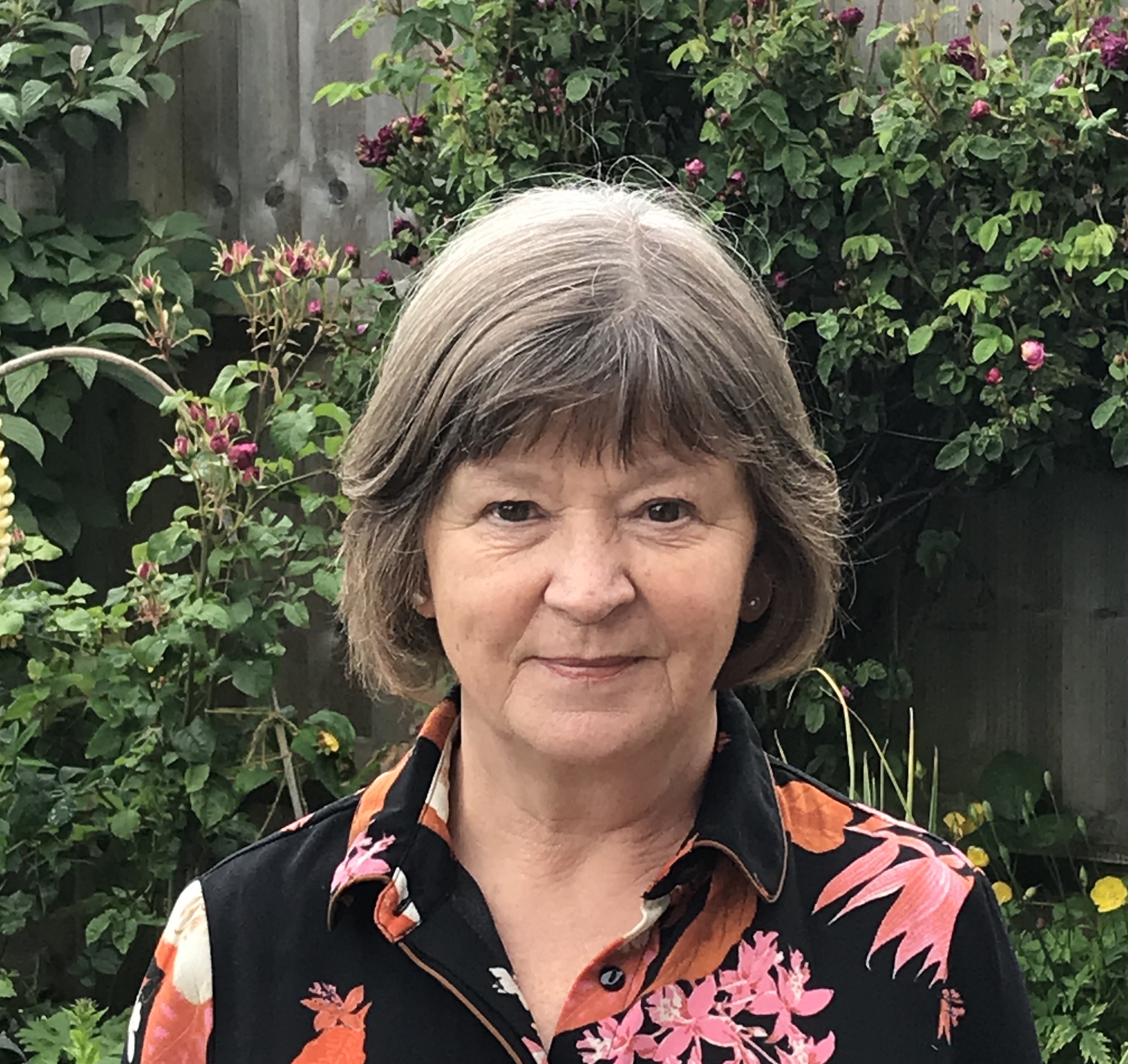
Jane Rogers has written ten novels, including The Testament of Jessie Lamb, Man-Booker longlisted and winner of the Arthur C Clarke Award 2012. Other works include Mr Wroe's Virgins (which she dramatised as a BBC drama series), and Promised Lands (Writers' Guild Best Fiction Award). Jane also writes short stories, radio drama and adaptations, and has taught writing to a wide range of students.

Her latest novel,
Body Tourists, is now available in paperback, and reviewed on this blog (see below). For more information, see Jane's website.

Erdrich is the Pulitzer-prize winning author of no less than 17 novels, and I’m ashamed that I haven’t read one of them till now. The Sentence, which was on this year’s Women’s Prize shortlist, has sent me scurrying for her backlist.

Erdrich is a member of the Turtle Mountain Band of Chippewa, and owns Birchbark Books, a small independent bookstore. Elements of the novel are clearly rooted in this biography, since most of the action takes place in a similar Minneapolis bookstore, which specialises in books by and about indigenous people. The first person narrator, Tookie, ends up working at the store, and real Minneapolis comes crashing into the narrative when coronavirus hits,  George Floyd is murdered, and the city becomes a war zone.

Tookie is a one off; tough, funny, sarcastic, prickly, thoroughly off the rails (in her early life, at least), and convinced she is unlovable. She reminds me a little of the cranky heroine/narrator of Olga Tokarczuk’s magnificent Drive Your Plow Over the Bones of the Dead. (One of many books which Tookie recommends to the reader.)  Chapter one charts her hilarious route to a ten year stint in prison for stealing a corpse whilst under the influence of various drugs and an unrequited passion for a horribly manipulative woman.

In prison she becomes a reader. The book changes tone and settles down to a steadier kind of story, when she comes out of prison in 2015. There’s a ghost, Flora, with a complex plot which provides the pretext for increasingly strange behaviour on Tookie’s part; there are bookstore friends and colleagues; there is the ever-lovable Pollux, the man who arrested her and eventually marries her; and all these are expertly drawn. But what fascinated me most about the novel was the insider view it gave me of Tookie’s Potawatomi world-view. For her, the veil between the mundane and the supernatural is thin; she is alert to signs and tokens which mean nothing to me; her cultural identity means she experiences life differently, and it feels like a great privilege to be let into that.

Here she is talking about Flora, the customer who has died;

Flora’s stubborn refusal to vanish began to irk me. Although it figured. She would haunt the store. Flora was a devoted reader, a passionate book collector. Our speciality is Native books, of course, her main interest. But here comes the annoying part: she was a stalker – of all things Indigenous. Maybe stalker is too harsh a word. Let’s say instead that she was a very persistent wannabe.

As you can see, it’s all in the tone; Tookie’s deadpan humour and her matter-of-fact honesty.

I’ve mentioned the novel’s plotting and characters, but I should also flag up its crafts-womanship and poetic skill. The Sentence  of the title has multiple meanings, which go on reverberating right to the end: but I won’t say any more about that. Go read!

The Sentence is published by Corsair.

Jane Rogers' Body Tourism is reviewed here.


Jane is a regular contributor to Writers Review. Here are more of her choices:


Home Fire by Kamila Shamsie

The Great Derangement by Amitav Ghosh

On dramatising No Longer at Ease by Chinua Achebe for radio

Sunday, 17 May 2020

Lockdown Sunday extra: REDHEAD BY THE SIDE OF THE ROAD - reading Anne Tyler in Lockdown, by Paul Magrs

"Four novels in five years from her. That's amazing, and I'm so grateful for that quiet, calm, sane voice still being here."


Paul Magrs brought out his first novel in 1995. Last year he published his book on writing, The Novel Inside You. This year Snow Books are republishing his Brenda and Effie Mystery series of novels. He lives and writes in Manchester with Jeremy and Bernard Socks.

Easter Weekend, 2020

Sometimes I think I’ve lived my whole life in lockdown. Many readers and writers I know secretly hanker to live like this. It must be why I’ve always been drawn to the novels of Anne Tyler, these past thirty years, since I discovered her. Tyler heroes tend to hanker for locked down lives, and they spend their days quietly aghast at the way everyone else goes flitting and changing about.

Up much of the night worrying and lying awake, fretting about Bernard Socks not being indoors, even though I know he's all right really. These are warm, moony nights for cats to go crazy in. At three I put on my slippers and take my keys to have a look at the bottom of the garden and of course, there he is, sleeping in the Beach House chair. I carry him indoors and he indulges me, running straight back out once I’m in bed.

This morning is beautiful. The sun so strong and the cherry blossom like great cumbersome sleeves on the branches outside my study window. The petals are starting to fly off already. There's just a few days of this.

Jeremy gets up saying, ‘It's like waking up each day and thinking that you've gone deaf. There's no city noise at all.’

A thousand people dead each and every day. Our rates are worse than anywhere in Europe. After us looking at Italy and Spain in horror for those weeks, it turns out those were the precise weeks our government should have been taking action, when they were simply telling us to wash our hands and to carry on as normal.

My treat to myself is the new Anne Tyler, which arrived the other day. It was on order for months. I take the parcel and open it and immediately wash my hands. Does cardboard carry the virus? Was the postman wearing gloves?

I've read her for thirty years and now she's writing characters slightly younger than me: characters who are already middle-aged, faded and disappointed. Characters who've missed out somehow. Taciturn, diffident characters who we meet on the very day that they try to catch hold of their lives again.

I always love her characters. They’re kind and they've usually lost out and, if it's through fault of their own, it's not a bad fault. Not usually. It's to do with a one-time hesitation, a fatal stepping back in order to let other, more pushy people dart forward. Her characters let others get on with being self-centred and ruthless and unkind.

Straight away I'm thinking of people who have leapfrogged their way onto and then over me in the past. It’s the same in Micah’s backstory here, when we learn a little from his college years. He stood by and let himself be robbed. There was a rich boy who simply took the patent for a software programme away from him. You’ve had comparable situations in the past, when you let people get away with stuff. And, like Micah, all you think you can do in these situations is pity the thief. Yes, I guess I might have been daft, letting them get away with it, but really… don't they have any ideas of their own? No talents? How desperate must they be to steal ideas, or to use up and exploit people and then move on past them?

I've been unlucky and foolish in the past. Hapless as an Anne Tyler character. I'm thinking of people I thought were friends and, looking back, realizing that there was always something smarmy about them. I look back at particular ones and think, Yes, the way they grinned was just like the Blue Meanie in the Yellow Submarine cartoon and that should have been a danger sign.

At the moment I'm feeling sadder and more demoralised about my own work than I even realised. I took the week off to read and do very little work. I learned a bit more about painting with gouache and I gloried in 1970s Jackie Collins and that really was about it for me, this week. But I was also reading Anne Tyler and she put me into a kind of reflective, mopey mood. I love to read her but she makes me feel terrible, too, when I realise, like many of her characters, that I might have done my life wrong. I start to suspect I ought to have had harder edges, maybe… or fewer mixed feelings.

A tough day, feeling claustrophobic indoors. The only place I can sit is my study and that is wholly infused with the idea and atmosphere of work. I'd love to be able to spend the day in the garden. I think how lovely it used to be in the Beach House. I go out to take a look and the garden is so neglected. The Beach House is damaged and crammed with furniture we don't want and can't fit indoors. It's impossible to sit out here.

Jeremy started work in the garden, putting it all back together at the end of February. And I thought: maybe this year he'll sort it again. Then he found all those bones under the fallen tree at the far end and we had to get the police and CSI round, and that was a whole drama for a day. A ridiculous drama – soon resolved. (‘My money is on the remains of a badger,’ said the woman from CID.) The next day we visited my family in Trimdon and it was on the drive back we listened to the news and realised how close the pandemic was coming. We suddenly understood we were all going to be locked in for months, likely as not. So here we are.

Jeremy sits for two hours each day, transcribing the government broadcasts, decoding and fact-checking and commenting on them. Then he posts them online. The local groups are full of people he argues about politics with and they barely acknowledge the work he puts into this and other community initiatives.

I can hear the reasonable, doom-laden voice of the minister and the health experts playing through his laptop in the garden under my window. I want to tear out my hair. I did actually cut my own hair this morning. We’ll all be doing it before long.

I've been sleeping so badly. Lying awake worrying about Jeremy and our parents and Socks and everyone. Lying awake, too hot and thinking: a thousand dead every day. In hospitals I read that they have to turn everyone over and over again. It's best when they lie you face down: best for the lungs and the fluid on them. This image of passivity is horrifying in a way, so that everyone looks like giant babies, being turned over, helplessly.

Finishing the new Anne Tyler this morning, Easter Sunday. Jeremy and Socks have just got up and gone back into the garden. Reading and thinking, that's four novels in five years from her. That's amazing, and I'm so grateful for that quiet, calm, sane voice still being here. Telling us that it's okay to be wrong, imperfect, messy, timewasting… and it's never too late to go back and to make a change. Maybe.

And the theme of quietness! I just read a review of the new one on Amazon where someone says that when they give friends Tyler's books they complain about nothing happening! I think you might as well say that about your own life. (Well, perhaps some people do.) There's absolutely everything happening in her novels, I think. It's all there.

Oh, remember, when you wrote your little play about going to see your granda at the end of his life and you'd been chatting with a very famous producer friend and he said send it to so-and-so at such-and-such productions, his great supporter, all these years. Well, you had the assistant put onto you, of course, and you explained (modestly, stupidly) that perhaps the script was a bit quiet and a bit small scale for them. Then, of course, the assistant gave it a day or so before writing back, and telling you she found it a bit quiet and a bit small scale for them.

Oh well, it doesn't matter. Do you remember your first agent and how she used to say that you had to find something ‘high concept’ to hang all that ‘beautiful writing’ on, or else no one will care, because nothing really happens?

They only notice Anne Tyler now because they've been told to. All these years, and she's finally caught on. Thirty years ago I was lying in the park in Lancaster after my second year at University. That summer I read fifty novels in an empty house and wrote one of my own. I was living in lockdown back then, without even knowing it. All I did was read and write and venture out once a day to the park. Just the same as now.

And just like in an Anne Tyler novel, those thirty years went by and, though all the changes seemed very dramatic at the time, I’m doing all the same stuff as ever. I’m happy to, with the world around me in such constant disarray.

Redhead by the Side of the Road is published by Chatto and Windus

Sunday, 19 April 2020

Lockdown Sunday extra: NATURE CURE by Richard Mabey


"In these days of coronavirus lockdown and climate emergency, the finding of solace in the natural world is ever more significant."


Linda Newbery edits Writers Review. She has published widely for young readers and is currently working on a new adult novel.

A version of this review first appeared on Normblog in 2006 as part of a Writer's Choice feature hosted by the late Professor Norman Geras.

A chance hearing of Radio 4’s Book of the Week first alerted me to this wise and compelling account of Mabey’s decline into depression, and re-emergence. This was in 2005, but in these days of coronavirus lockdown and climate emergency, the finding of solace in the natural world is ever more significant for those of us lucky enough to have gardens, parks or countryside at hand.

Mabey’s book strikes many chords with me, from page 2 where he describes the finding of a grounded swift. I had the same rare experience when one of my cats somehow caught one and brought it indoors through the cat-flap. Handling the bewildered but unharmed bird, I saw the perfection of its aeronautical design – strong, swept-back wings, wide gape, tough eyelids with bristly lashes. Like Mabey, I realised that the only way to return it to the air was to launch it like a paper aeroplane, and watched in amazed delight as it skimmed the grass before soaring high to rejoin the flock. (NOTE: since writing this piece I have learned that this isn't advisable as it could risk injuring the bird. Better to see if there's a wild bird sanctuary near you that can examine and release the swift.)

Swifts, epitomising English summer with their screaming flight, hold a special significance for Mabey, echoing Ted Hughes for whom their return each May proved that “the globe’s still working”. So it was a sure sign of the depression he’d sunk into that he lay in bed too lethargic to turn his head while the swifts whizzed and shrieked outside his window. Many writers will recognise the odd, bereft feeling of completing a book. For Mabey the work had been a massive one, Flora Britannica*, and the sense of loss was compounded by the death of his mother from Parkinson’s disease, through which he and his sister had shared the nursing.

His home for most of his life had been in his parents’ house in the Chilterns. There, he owned a piece of woodland, from which he banned the local hunt (hurrah!) while encouraging neighbours to wander and collect wood. Debilitated and purposeless in his illness, he was encouraged by friends – and a new lover - to resume his absorption in the natural world and in writing, the twin passions which had always sustained him. Acknowledging that he’d never really “fledged”, and that the process of maturation demanded a move, he decamped with three cats to the Norfolk Breckland, as lodgers in an isolated seventeenth-century farmhouse. Here, through a solitary but cathartic winter, he finds new bearings and rediscovers his connection with the land. He examines maps, he ponders over interesting names, he reflects on the shaping of the landscape by human intervention and the enclosure of the commons, he becomes fascinated by “westing” – what seems an instinctive alignment of buildings and field boundaries towards the setting sun.

This isn’t only the story, though, of Mabey’s illness and recovery. There are frequent digressions – into the effects of the Enclosures Act on Norfolk life and landscape, glaciation and land-forms, language and folklore, flora and fauna. The Northamptonshire poet John Clare, like the swifts, is present throughout. Mabey feels a strong affinity with Clare, “ecological minstrel”, not only because of Clare’s mental illness and shared habitats, including the same Northampton hospital, but for Clare’s deep empathy with wild creatures and his skill in capturing their “jizz” (the concise term used by birdwatchers).

He found little solace in mainstream environmentalism, seeing it as merely utilitarian, "based on enlightened self-interest: we want a healthy, unpolluted, species-rich ecosystem because our material future depends on it,” while we assume “the right, or the duty, to determine every other species’ share, too.” (Has he seen a change, I wonder, since publication of this book in 2005? Extinction Rebellion, Friends of the Earth and Greenpeace value the planet and its ecosystems for themselves, not solely for the benefits they bring to us. According to the organisation EcocideLaw, drawing on the work of the late Polly Higgins, "Ecocide is a crime against the Earth itself, not just against humans.")

Mabey sees our connection to the natural world as essential to our spiritual and physical well-being. In the worst slumps of depression, he had become, like the grounded swift, “the incomprehensible creature adrift in some insubstantial medium, out of kilter with the rest of creation. It didn’t occur to me at the time, but maybe that is the way our whole species is moving.” To read Nature Cure, at least, is to slow that progress. As well as the honesty of Mabey’s self-revelation and the range of his knowledge, it’s the quality of his prose – the Ruskin-like attentiveness to shifts of light, patterns of growth, and behaviour of even the most common bird - that makes this book so memorable.

Nature Cure is published by Vintage.

* Flora Britannica is another of my treasures, joined now by Birds Britannica (by Mark Crocker and Richard Mabey) which similarly combines natural history, folklore and anecdote.

See also The Salt Path by Raynor Winn, reviewed by Sue Purkiss

The Outrun by Amy Liptrott, reviewed by Paula Knight

Walden by Henry David Thoreau, reviewed by Linda Newbery

Sightlines by Kathleen Jamie, reviewed by Sue Purkiss

Corduroy by Adrian Bell, reviewed by Andrew Fusek Peters

Wilding by Isabella Tree, reviewed by Linda Newbery

Natural Selection: a Year in the Garden by Dan Pearson, reviewed by Linda Newbery