Showing posts with label American writers. Show all posts

Monday, 1 June 2026

Guest feature by Jon Appleton: 'This is the Time We Have' - my decade with Ann Patchett


"I’ve reviewed Ann Patchett’s most recent decade of writing here on Writers Review across various posts. Maybe you’ve been reading alongside me, but if you’ve yet to read her work, perhaps I might suggest a roadmap ... "

Jon Appleton
is a freelance editor and writer. He publishes his research into the history of children's literature in a free e-zine called the gab. Visit: lettersfromrobin.com/the-gab

There is a moment about 50 pages into Whistler, Ann Patchett’s new novel, her tenth, where the narrator, 53-year-old Daphne Fuller, is speaking with Jonathan, her husband of two decades, and her senior by almost as many years. Jonathan is adjusting to retirement but Daphne isn’t ready for that change. They’re talking about their lives – what’s worked for them so far, and what may work for them in the future. Or not.

Jonathan looks at Daphne and says, ‘This is the time we have.’

Later in the novel, ‘They had nothing but time’ is even more resonant.

For me, these are a-ha moments, where a decade of reading thrillingly coalesced. I’ve actually been a fan of Ann Patchett for much longer than that – since her Women’s Prize-winning novel Bel Canto – but my appreciation has deepened over the last five books, a mixture of fiction and non-fiction.

Patchett’s novels are about the time we have available to us and the memories we can fit within the framework of now. These aren’t ‘what if’ scenarios but ‘what can we do with what’s happened’. She once wrote of her own personal experience: ‘we were so in the middle of history that we had no way to understand what we were seeing.’*  Her novels reveal a process of restricted reclamation. That means rejecting a bunch of things that don’t fit – and people, too. The people we can make room for aren’t necessarily our nearest and dearest. That often makes things … awkward.

Jonathan was widowed when he and Daphne met. Weirdly enough, they met in a professional capacity – surgical Jonathan treated Daphne’s dad, Buddy Zabriskie, late in life. Jonathan had two daughters with his first wife. Daphne does her best to get on with her stepchildren but she knows the limitations of the relationship. She sees what they see: ‘You make me sad, was what she was saying. You who weren’t supposed to be here.’ But here she is. They’re dealing with it.

Another brilliant line gives us ‘when you start to wonder about who you’ve hurt in this life, you can easily lose your mind.’ That’s Eddie Triplett advising against retrospective angst. He’s the disrupter of the novel. More than 40 years ago, he was briefly married to Daphne’s mother, Abigail, after she’d divorced Buddy, her girls’ father. In divorcing Eddie, Abigail not only banished him from the family but the publishing house for whom they both worked. The reason was apparently simple. One night, when Daphne was nine and her younger sister was fighting for her life in hospital, Eddie took Daphne – whom he adored and was fiercely adored by in turn – for a drive, and ran the car off the road. He smashed his foot and Daphne’s face was cut – she also had to free herself from the wreckage to seek help in deep snow. Nobody died, as Abigail has always admitted. So why the fierce ejection? Could there be another reason?

After Daphne meets Eddie unexpectedly one day in New York’s Metropolitan Museum of Art in the first pages of the novel, they have to address that reason.

She also has to finally explain that night to Leda, her brilliant sister, and so, alongside the story of Daphne and Eddie’s renewed acquaintance, we revisit the events of January 1980 and ultimately learn the story of a story Eddie told Daphne in the smashed-up car about a horse called Whistler which illustrates the many ways we fail each other and what a truly spectacular – yet almost mythic – thing it is to be capable of offering unequivocal loyalty.

Most of us will never manage that. We might be ‘decent people, smart people’, like the characters in this book, but acts of transcendence are generally elusive.

This dilemma applies to the characters in Tom Lake, Patchett’s previous novel, set during the Coronavirus lockdown where a mother reclaims her family – no mean feat, in the circumstances – and bows to their request to explain her past. It’s true, too, of Commonwealth, Patchett’s glorious seventh novel, which also concerns a moment in the past that shatters the status quo and a reciprocal moment in the present which has its own deep repercussions. But Commonwealth delves and weaves between the decades in a way that Whistler doesn’t. Whistler felt like a slighter novel as I read it – it’s certainly shorter – but the funny thing is, it’s stayed in my mind more vividly than any other Patchett novel I’ve read. Whistler makes fewer promises but to my mind it delivers most assuredly on the pledges it makes.

And actually, if you read Whistler (which I hope you do), you might agree with me that Buddy Zabriskie, though perhaps a failure as a husband and father, manages the transcendental.

While we’re speaking of fathers, I should mention that Daphne and Leda had a third – after Eddie, Abigail married again, an author, and lived with him for forty years, bearing him two sons. Daphne hasn’t ever felt attached to Lucas, but there he is, in her life, anyway, and in her story. And I should also mention that Ann Patchett herself has had three fathers. She wrote about them in an essay called Three Fathers in her essay collection, These Precious Days. She also has an older, surgical husband, and has narrated the audiobook of Whistler. Know that her non-fiction and fiction flow into each other unapologetically. It’s the time she has, right?

I’ve reviewed Ann Patchett’s most recent decade of writing here on Writers Review across various posts. Maybe you’ve been reading alongside me, but if you’ve yet to read her work, perhaps I might suggest a roadmap.

I would start with Commonwealth, and then segue into the essays in These Precious Days.

Then I’d dive into her exotic novels – where she comes as close to ‘what if’ as she dares – Bel Canto and State of Wonder.

Then I’d read The Dutch House.

And then Whistler – and hope you’ll feel as willing as I do to go where she’ll take us next.

Whistler is published by Bloomsbury.


Jon's other reviews of Ann Patchett:


*From ‘These Precious Days’, These Precious Days by Ann Patchett, Bloomsbury, 2021

Monday, 13 March 2023

Guest review by Penny Dolan: HORSE by Geraldine Brooks


"Her historical and geographical settings feel convincingly well-researched, whether she is describing families and their great estates, life on the Mississippi or the horrors of the American civil war."

Penny Dolan
works as a children’s storyteller and writer. Her last novel for older children, A Boy Called Mouse, was nominated for the Young Quills Historical Fiction Award, and she is currently completing a companion book. As well as being a regular reviewer here, she posts on The History Girls, on An Awfully Big Blog Adventure and can be found on Twitter @PennyDolan1.


Horse,
by Geraldine Brooks, a Pulitzer winning novelist, appeared on my book group’s reading list. Its nomination by a member who, to our surprise, is a part-owner of a racehorse, gave Horse strong equestrian support. Additionally, when our local library supplied not four but eight new hardback copies, it was clear that somewhere in the county was a librarian who thought the novel worth purchasing. But was it worth reading? Here are my thoughts.

Brooks’ wide-ranging novel is spread between three American centuries, being a narrative about the early growth of horse-racing and about the meanings within that word “race”. Horse revolves around three specific ideas: a bay foal that became a prize-winning stallion, a lost equine portrait and a skeleton stored within the Smithsonian Museum.

The cover design gives a glimpse at an old painting which reveals a formally dressed black groom holding the rein of a tall brown horse and a black jockey in the coloured silks of the 1850s. Both men appear wary about being “uncovered”. This groom and the bay horse form the core of Brooks’ novel.

When the reader first meets Jarrett, he is an enslaved boy, working beside his father in the stables of a rich Kentucky landowner. After forming a deep bond with the new-born foal named Darley, Jarrett stays close to the creature during its early years. When the colt, re-named Lexington, passes to another landowner, Jarrett follows.

We see that his life is clearly easier than that of black slaves out in the fields. Jarrett is clothed, fed and treated well, principally because of his value to Lexington. Yet both are at the mercy of the wealth, whims and promises of their owners. For example, although gambler and race-course owner Ten Broek had given his word that Lexington would never be whipped, as soon as he has starts promoting timed, high-stakes races on his track, that promise gets forgotten:

Jarrett ‘could see the horse’s flanks heaving in obvious distress. He turned on (the jockey) Meichon. “What were you rowling him for?” he cried. “You could see it wasn’t in him.”

Meichon looked defiant. “Marse Ten Broek say I ‘ave to ride ‘ard. I think – they say – he ‘as bet against us so ‘e want no person to say he cheat.”

Jarrett threw his head back and cursed the sky.’

Even as Jarrett curses, he knows that challenging the master’s actions could mean being sent out to work in the fields or sold.

Moreover, throughout the book, Brooks emphasises his situation as evident in her chapter headings: at first he is Warfield’s Jarrett, then Ten Broek’s Jarrett and finally Alexander’s Jarrett. He is a man without independence.

Around this historical core, Brooks wraps a contemporary tale about two academics meeting in Washington in 2019. Jess, an Australian, and interested in bones since childhood, is an anthropologist and Smithsonian scholar. who starts to study a forgotten equine skeleton to discover more about the horse’s identity and power of endurance. Theo, an Afro-American art historian, is studying the role of Black men during the early years of horse-racing. When an energetic dog brings the pair together, their quest leads them through all the hidden archives of the Institute. However, their deepening relationship also emphasises social pressures within modern America and the insidious influence of prejudice.

The third thread in the novel lies in that mysterious painting partly seen on the cover. An early character, Thomas J. Scott, is a racing journalist and a hopeful equine portraitist. As he paints Dr Warfield’s horses, he notices how helpful and sensitive the boy is, and does something kind.

“I remembered I’d promised him a painting . . . and as sometimes happens when the stakes are small, the painting came together with an uncommon felicity. I captured the light on that rich bay coat and the intelligent look in the eye. I considered keeping the piece myself. I was glad in the end that I did not, when I saw the look of joy on the boy’s face. It occurred to me then his condition afforded him few possessions he might claim as his own.”

Scott’s painting passes through Jarrett’s family until, in 1954 it becomes the property of Martha Jackson, a New York gallery owner who exhibits bold modern paintings. She has her own secret reason for keeping the small portrait which, in due time, will unlock the equine mystery for Jess and Theo, and act as part of the powerful ending.

Knowing little about gambling or horse racing before reading Horse, I had not realised that equine paintings, such as Stubbs' famous “Whistlejacket”, are an aspect of the business of horse-breeding and were adverts promoting the best bloodlines.

Perhaps, because there are more passionate and personal novels that give a voice to the life on the plantations, Horse does not attempt to offer the reader a close inner experience. Brooks, as a white woman novelist, writes with a distanced third person narrative voice which allows her to expand her themes and also allows her concluding chapters to stand out clearly. In addition, her historical and geographical settings feel convincingly well-researched, whether she is describing families and their great estates, life on the Mississippi or the horrors of the American civil war. I appreciated the contrast between Jarrett’s time, the easy academic life within the museums and galleries and the edgy emotions within Jackson Pollock and the art scene of 50’s New York.

While I did not entirely love Horse, I did love Jarrett as a character, and I enjoyed the care and balance within Brook’s storytelling. I welcomed the world that the novel introduced me to, and the strength of its still-relevant messages. Yes: well worth the read.

Horse is published by Little, Brown.

Monday, 29 August 2022

THE NICKEL BOYS by Colson Whitehead, reviewed by Linda Newbery


"In spite of the grimness and its foundation in reality, The Nickel Boys somehow isn't an overwhelmingly bleak read."

Linda Newbery edits Writers Review. Her latest publication is This Book is Cruelty Free - Animals and Us, a guide to compassionate living for teenagers and adults.

There's something so mesmerising about Colson Whitehead's writing. I wondered what he'd do to follow his harrowing epic of slavery, The Underground Railroad, and this is it - a shorter, slimmer novel than its predecessor. (He's since written another, during lockdown - Harlem Shuffle). Both The Underground Railroad and The Nickel Boys were awarded the Pulitzer Prize, making Whitehead the fourth American writer to win this prestigious award twice.

While The Underground Railroad employs magical realism in its portrayal of the escape routes for slaves in the southern states, imagining an actual secret underground rail network with tunnels, stations, sidings and escape hatches to the surface, we're in realistic territory here. The story is simpler, yet every bit as gripping. 

We follow the fortunes of Elwood Curtis, a bright African-American boy brought up in Florida by his grandmother, "a slight humming-bird of a woman who conducted herself in everything with furious purpose", to be serious, responsible and ambitious. It's the 1960s, when segregation under the Jim Crow laws has only recently ended, not yet to much effect. Scholarly, teaching himself from the single volume of an encyclopaedia that comes his way by chance, and inspired by the speeches of Martin Luther King, which he plays repeatedly from the single record he owns, Elwood vows always to follow the great man's guidance. Once, attending a demonstration for which he's later punished by his grandmother, he "felt closer to himself for a moment". Helped by a teacher who sees his intelligence and ambition, he wins a scholarship to a college founded to help young people from poor backgrounds. But his ambition is immediately thwarted when, hitching a lift for his first journey to the college, he's unfairly implicated in car theft and with no more than minimal investigation sent to a harsh reform school, Nickel.

Endearingly idealistic, Elwood vows even here to make the best of his situation, earn points for good conduct and to be released as early as possible. But the school's promises are hollow ones. The story's split structure moves us forward to the nineteen-eighties, where we learn that excavations of the school's old site prior to the construction of an office park and lunch plaza have revealed not only graves marked perfunctorily by crosses but other human bodies as well. "Even in death, the boys were trouble." Elwood, apparently, has weathered his ordeal, building a new life and a successful business, yet the scars remain. The discovery of the bodies prompts a small group of former inmates either to hide or excavate their own archaeology. 

Moving back and forth in time, we experience daily life at Nickel - the meagre rations, the punishments and other abuses, the hard labour and the trips 'out back' from which some boys never return. Supposedly a school, it offers little educational stimulus to a bright and inquisitive boy like Elwood, and there is racial segregation here, as in the world outside - the new black arrivals are given clothing that's already threadbare. Of Elwood's friendship with the more cynical Jack Turner, Whitehead has said that these characters represent two different sides of his own personality: Elwood Curtis is "the optimistic or hopeful part of me that believes we can make the world a better place if we keep working at it", while Jack Turner represents "the cynical side that says no—this country is founded on genocide, murder and slavery, and it will always be that way." A long-kept secret about the escape from Nickel packs a powerful punch at the end.

The Nickel Boys is based on a real reform school run by the state of Florida, the Arthur G Dozier School for Boys, subject to a similar investigation after the discovery of bodies, amounting now to some 81. My reading took place against a background of disturbing news from America: the overturning of abortion rights in some states, more mass shootings alongside plans to extend rights to gun ownership, while the hearing was in progress to investigate Trump's incitement of supporters to storm the Capitol. Sometimes the era of Jim Crow laws and the Ku Klux Klan doesn't seem all that long ago; in fact the KKK still exists, and the ugly, misogynist, white supremacist side of America is all too visible. 

In spite of the grimness and its foundation in reality, The Nickel Boys somehow isn't an overwhelmingly bleak read - I think because of the hope, dignity and perseverance Elwood somehow manages to maintain, our total immersion in his world and our belief that he'll come through.

I'll certainly read more of Colson Whitehead. Next will be his latest, Harlem Shuffle.

The Nickel Boys is published by Doubleday.


More of Linda's recent choices:

The Goldfinch by Donna Tartt

Burntcoat by Sarah Hall


The Invention of Nature: The Adventures of Alexander von Humboldt, the Lost Hero of Science, by Andrea Wulf

Monday, 15 August 2022

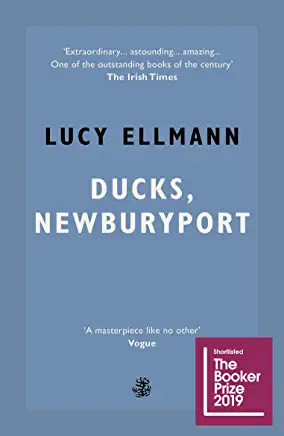
DUCKS, NEWBURYPORT by Lucy Ellmann reviewed by Adèle Geras in conversation with guest Sally Christie


"We agreed we’d learned a huge amount but also that we’d laughed aloud often."

Sally Christie has been a children's book editor and a writer of young fiction. She has also been a goat keeper and a cheese maker, both of which were a lot less stressful. She lives in Cambridgeshire with her husband; they have two grown up children.

Towards the end of March, my friend Sally Christie (author of The Icarus Show and Spirit) wrote to ask me whether I’d heard of a book called Ducks, Newburyport by Lucy Ellmann and whether I’d consider reading it so that she might have someone with whom she could discuss it. Sally thought the length might deter me (1100 odd pages) but I’d not read it up to now for quite another reason. I knew its reputation. It was shortlisted for the Booker Prize in 2019. I'd avoided it because it was written in a ‘stream of consciousness’ style and I’m very bad at that. I do not wish to read Ulysses by James Joyce (we'll return to that) and struggle sometimes with Virginia Woolf.

But Sally is a discerning reader whose judgment I trust, and the Kindle app is very obliging, so I downloaded a free sample. As soon as I’d read that, I bought the rest of the book.

It took me an entire month to read it. I can finish a normal sized book in a few days. So, on a perfect May morning, Sally and I sat in her glorious garden, and encouraged by Mouser the cat and sustained by Sally’s delicious home-made chocolate biscuits, we began to talk about Ducks, Newburyport.

I described my experience of reading it as being like jumping into someone’s head and going round and round on a kind of helter-skelter through every one of her thoughts. The unnamed heroine is a housewife in Ohio, baking cinnamon rolls at the start of the book. She has a husband and children. Her parents are dead, but her relationship with them is still very much alive.

The narrative takes the form of a list, and every separate item begins with the words: The fact that. They return like a refrain, (or less romantically, like bullet points) all through the book. Sally suggested that perhaps Ellmann was in a way laying out evidence for a case she’s making. She imagined a US attorney standing up and putting a whole lot of different facts before the jury. This makes perfect sense to me.

A case for what? We decided it was all sorts of things: the desperate state of so many aspects of life in Ohio in 2019, the weight of a history both blood-soaked, cruel and tragic but also inspirational. The works of Laura Ingalls Wilder figure large. We agreed we’d learned a huge amount but also that we’d laughed aloud often. I saw one thing coming long before it arrived in the book. And we both wondered about what we referred to as ‘the lion bits’.

There are passages scattered through the novel in which the life of a mountain lion, her cubs and their adventures are described. I have to confess I rather skim-read my way though some of these, but we decided that even though they play a part in the plot, especially for one of the characters, they were partly there as a kind of palate cleanser, for anyone who needed a break from rivers and rivers of prose.

We could both see that this book was very carefully put together and worked out. It gives the impression of a torrent erupting naturally from the earth, but in reality it's more like an intricate 18th century water feature: complex in design and spectacular in appearance. A miracle of engineering.

When you reach the end (and there are events. Things happen. People are changed...) you see the world differently. We now both miss our Ohio housewife. I think of her as Lucy, but Lucy Ellmann may or may not resemble her. One thing is true, though: she’s the daughter of Richard Ellmann, biographer of both Oscar Wilde and James Joyce. Perhaps this book is Ellmann’s tribute to Ulysses. Sally said she intends to read that. I do not.

To sum up: we both loved it and are very happy that it’s now part of the furniture of our minds. Mouser is reserving judgement….


Ducks, Newburyport is published by Galley Beggar Press

Monday, 11 October 2021

Guest review by Doug Johnstone: THE NIGHT ALWAYS COMES by Willy Vlautin


"Even as a writer in a similar genre I couldn’t predict how Vlautin would end this beautiful but excruciating tale. But when it comes, the ending is just perfect."


aAuthor photo by Duncan McGlynn
Photograph by Duncan McGlynn
Doug Johnstone is the author of thirteen novels, most recently The Great Silence. His previous book, The Big Chill was longlisted for the Theakston Crime Novel of the Year. Several of his books have been bestsellers and three, A Dark Matter, Breakers and The Jump, were shortlisted for the McIlvanney Prize for Scottish Crime Novel of the Year. He’s taught creative writing and been writer in residence at various institutions over the last two decades including festivals, libraries, universities, schools, prisons and a funeral directors.

Doug is a Royal Literary Fund Consultant Fellow and works as a mentor and manuscript assessor for many organisations, including The Literary Consultancy, Scottish Book Trust and New Writing North. He’s been an arts journalist for over twenty years and has also written many short stories and screenplays. He is a songwriter and musician with six albums and three EPs released, and plays drums for the Fun Lovin’ Crime Writers, a band of crime writers. He’s also co-founder of the Scotland Writers Football Club.

Willy Vlautin is something of a hidden gem of American fiction. He is occasionally blessed (and maybe cursed) by that phrase ‘a writer’s writer’, but that might give the wrong impression of him as someone who is showy and flamboyant in his writing style. Nothing could be further from the truth – Vlautin’s novels contain the cleanest and clearest prose around, simple yet devastatingly effective. He brings to mind the words of Orwell, that good writing should be like a windowpane. It feels as if you can see straight through Willy’s words to the story, the characters and the pain he puts them through.

The Night Always Comes is Vlautin’s sixth novel. His previous outings have all been heartfelt examinations of the dark underbelly of the American dream – stories that look at the downtrodden and hard-done-by people at the bottom of that country’s society, and how they cope with the hardships that their situations throw at them. This latest book sees him finessing this formula masterfully, while also marrying it to a breathless thriller plot that feels like it owes a debt to the classic American noir canon.

The beating heart of the book is Lynette, a thirty-year-old with a troubled past, currently working three jobs, living with her mother and caring for her older brother who has learning difficulties. The book is set in Portland in the recent past, as the city is being rapidly gentrified, pricing people like Lynette out of the housing market and forcing them out of the city.

Lynette’s plans to scrape together enough cash to buy the house she rents are scuppered when her mother gets cold feet. Because of her dubious history, Lynette has no credit rating and needs her mother on board. She is left trying to claw back money that she’s owed from various less than savoury people, taking her on a long dark night of the soul as she travels across the changing city getting deeper and deeper into trouble.

The whole book takes place over two nights, as Lynette is forced to make hard decisions, then is forced to deal with the consequences of those decisions. One of her jobs is as a part-time sex-worker, and when she asks a rich returning client for a loan, his disgusted reaction forces her to take matters into her own hands for once. From there it’s a classic noir trajectory, as the momentum of her actions becomes impossible to resist.

From the opening few pages this is a heart-in-the-mouth read, both in terms of the action and the depth of empathy that Vlautin conjures up for Lynette. It’s impossible not to care about what happens to her even as she makes terrible mistakes, and even as a writer in a similar genre I couldn’t predict how Vlautin would end this beautiful but excruciating tale. But when it comes, the ending is just perfect.

The framing of Lynette’s story against the backdrop of rampant commercialism and consumerism in a modern American city allows Vlautin some social commentary, but it’s handled deftly and never polemical, always in service of his story.

This is a short novel, but one that takes structural and stylistic risks too. There are elements here that go against the standard creative writing lessons, things that shouldn’t work but just do because of Vlautin’s care and attention to the words on the page. There’s a large section of Lynette’s backstory inserted later on, not something I usually care for but it works brilliantly here. Then there is a lengthy discussion near the end between Lynette and her mother that by rights should bore the reader at a time when action is required, but which actually becomes a profound treatise on how we live our lives and relate to others.

As a writer, it can become harder to be blown away by others’ work when you can see the nuts and bolts of what they’re doing. But sometimes a book is just so good that you’re blown away. This is just such a book.

The Night Always Comes is published by Faber.

Doug Johnstone's  A Dark Matter was the choice of our birthday guest Val McDermid. Read her review here.


Monday, 13 April 2020

Guest review by Jane Bailey: AMY AND ISABELLE by Elizabeth Strout


"We are used to love-hate stories between lovers, but this one is a ruthlessly astute observation of the relationship between mother and daughter ..."

JANE BAILEY is the author of six novels, and has edited many anthologies of work by
young people for First Story. Her fifth novel, What Was Rescued, became an Amazon
bestseller.
Jane Bailey is the author of six novels, and has edited many anthologies of work by young people for First Story. Her fifth novel, What Was Rescued, became an Amazon bestseller. 
JANE BAILEY is the author of six novels, and has edited many anthologies of work by
young people for First Story. Her fifth novel, What Was Rescued, became an Amazon
bestseller.
JANE BAILEY is the author of six novels, and has edited many anthologies of work by
young people for First Story. Her fifth novel, What Was Rescued, became an Amazon
bestseller.

North America seems to have a number of respected writers who write about ordinary lives with razor-sharp observation: Alice Munro, Carol Shields and Ann Tyler spring to mind. Elizabeth Strout is another such writer who burrows beneath the surface of her characters and finds the real, gripping drama in everyday lives.

Amy and Isabelle gets us right into the deepest and most subtle thoughts of single mother Isabelle Goodrow, and her teenaged daughter, Amy. They resent each other, hate each other and love each other with equal passion.

The novel is set in the fictitious small mill town of Shirley Falls, which is divided in two by ‘a dead brown snake’ of a river. Isabelle, who works as a secretary there, has rented a house ‘temporarily’ on the affluent side – for the last fourteen years – in the hope of finding a husband. She dotes instead on her staggeringly dull, married boss, who has suddenly stopped looking at her.

What has happened, to change everything, is gradually revealed in a time-shifting narrative, and it involves a terrible shame which her daughter, Amy, brought upon her. This is the more dreadful because it is clear that Amy has a pre-arranged summer job in her mother’s office, so that mother and daughter are condemned to spend the hottest summer on record breathing the same stultifying air as each other in a room shared with other women at the mill.

Amy recognises that they are not like other mothers and daughters, and longs for a different, more normal parent. Her mother is prim, wears pantyhose even in the heat, and keeps herself apart from the other office workers (Fat Bev, for example, who sits opposite Amy, and smokes and eats and talks incessantly). Amy likes Fat Bev and is nauseated by her mother’s stuffiness and her obvious attraction to the boss, Avery. But when she sees her mother’s hopeless attempts to flirt with him, Amy is also moved by her: ‘It was terrible, what she had seen, the nakedness of her mother’s face. She loved her.’

But this is a novel of carefully crafted parallels, and just as Amy feels this contradictory tenderness, so her mother, whilst enraged with her daughter’s burgeoning sexuality and inappropriate behaviour with her maths teacher, is actually offended - when she confronts him - that he didn’t even really care for Amy.

Similarly, the shears that Isabelle uses to savagely cut off her daughter’s hair in a fit of rage at her sluttish behaviour, are the same shears she will use to cut and curl ribbon on a basket of flowers she has tenderly put together for Amy’s friend, a teenager who has just had an unwanted baby.

Isabelle has had to curtail her own education to bring up Amy, and resents it when Amy gently tells her that she has mispronounced ‘Yeats’. But mostly she feels angry and intimidated by her daughter’s beauty and the fact that she has enjoyed sexual relations with a man while she herself has been wilting with longing for them. The anger generated by this leads to the most cruelly shocking scene in the book. Amy picks up her chopped hair ‘like an amputated leg with its shoe still on.’

If this all sounds like a depressing read, it is anything but. The kindness of the women in the office - women Isabelle has always felt slightly beneath her - brings about revelations which transform the lives of both mother and daughter.

The characters have entertainingly active imaginations. Isabelle often lives so much in her mind that she almost forgets what is real and what she’s imagined. For example, unable to face asking her sister for advice, she imagines what her sister would say: ‘All this imagined advice Isabelle agreed with, found inspiring.’

Although the focus is firmly on Amy and Isabelle, Strout sometimes zooms out to consider the inhabitants of Shirley Falls as a whole. She has an almost Dickensian way of slipping into each of their lives and examining their relationship dilemmas, affairs and betrayals with a quick brush stroke here and there.

This is a story about women, their guilt, their denial, their longings, and how they relate to one another. We are used to love-hate stories between lovers, but this one is a ruthlessly astute observation of the relationship between mother and daughter. It is also a story about kindness and, in Strout’s hands, heartbreakingly moving.

Amy and Isabelle is published by Vintage.