Showing posts with label American fiction. Show all posts

Monday, 1 June 2026

Guest feature by Jon Appleton: 'This is the Time We Have' - my decade with Ann Patchett


"I’ve reviewed Ann Patchett’s most recent decade of writing here on Writers Review across various posts. Maybe you’ve been reading alongside me, but if you’ve yet to read her work, perhaps I might suggest a roadmap ... "

Jon Appleton
is a freelance editor and writer. He publishes his research into the history of children's literature in a free e-zine called the gab. Visit: lettersfromrobin.com/the-gab

There is a moment about 50 pages into Whistler, Ann Patchett’s new novel, her tenth, where the narrator, 53-year-old Daphne Fuller, is speaking with Jonathan, her husband of two decades, and her senior by almost as many years. Jonathan is adjusting to retirement but Daphne isn’t ready for that change. They’re talking about their lives – what’s worked for them so far, and what may work for them in the future. Or not.

Jonathan looks at Daphne and says, ‘This is the time we have.’

Later in the novel, ‘They had nothing but time’ is even more resonant.

For me, these are a-ha moments, where a decade of reading thrillingly coalesced. I’ve actually been a fan of Ann Patchett for much longer than that – since her Women’s Prize-winning novel Bel Canto – but my appreciation has deepened over the last five books, a mixture of fiction and non-fiction.

Patchett’s novels are about the time we have available to us and the memories we can fit within the framework of now. These aren’t ‘what if’ scenarios but ‘what can we do with what’s happened’. She once wrote of her own personal experience: ‘we were so in the middle of history that we had no way to understand what we were seeing.’*  Her novels reveal a process of restricted reclamation. That means rejecting a bunch of things that don’t fit – and people, too. The people we can make room for aren’t necessarily our nearest and dearest. That often makes things … awkward.

Jonathan was widowed when he and Daphne met. Weirdly enough, they met in a professional capacity – surgical Jonathan treated Daphne’s dad, Buddy Zabriskie, late in life. Jonathan had two daughters with his first wife. Daphne does her best to get on with her stepchildren but she knows the limitations of the relationship. She sees what they see: ‘You make me sad, was what she was saying. You who weren’t supposed to be here.’ But here she is. They’re dealing with it.

Another brilliant line gives us ‘when you start to wonder about who you’ve hurt in this life, you can easily lose your mind.’ That’s Eddie Triplett advising against retrospective angst. He’s the disrupter of the novel. More than 40 years ago, he was briefly married to Daphne’s mother, Abigail, after she’d divorced Buddy, her girls’ father. In divorcing Eddie, Abigail not only banished him from the family but the publishing house for whom they both worked. The reason was apparently simple. One night, when Daphne was nine and her younger sister was fighting for her life in hospital, Eddie took Daphne – whom he adored and was fiercely adored by in turn – for a drive, and ran the car off the road. He smashed his foot and Daphne’s face was cut – she also had to free herself from the wreckage to seek help in deep snow. Nobody died, as Abigail has always admitted. So why the fierce ejection? Could there be another reason?

After Daphne meets Eddie unexpectedly one day in New York’s Metropolitan Museum of Art in the first pages of the novel, they have to address that reason.

She also has to finally explain that night to Leda, her brilliant sister, and so, alongside the story of Daphne and Eddie’s renewed acquaintance, we revisit the events of January 1980 and ultimately learn the story of a story Eddie told Daphne in the smashed-up car about a horse called Whistler which illustrates the many ways we fail each other and what a truly spectacular – yet almost mythic – thing it is to be capable of offering unequivocal loyalty.

Most of us will never manage that. We might be ‘decent people, smart people’, like the characters in this book, but acts of transcendence are generally elusive.

This dilemma applies to the characters in Tom Lake, Patchett’s previous novel, set during the Coronavirus lockdown where a mother reclaims her family – no mean feat, in the circumstances – and bows to their request to explain her past. It’s true, too, of Commonwealth, Patchett’s glorious seventh novel, which also concerns a moment in the past that shatters the status quo and a reciprocal moment in the present which has its own deep repercussions. But Commonwealth delves and weaves between the decades in a way that Whistler doesn’t. Whistler felt like a slighter novel as I read it – it’s certainly shorter – but the funny thing is, it’s stayed in my mind more vividly than any other Patchett novel I’ve read. Whistler makes fewer promises but to my mind it delivers most assuredly on the pledges it makes.

And actually, if you read Whistler (which I hope you do), you might agree with me that Buddy Zabriskie, though perhaps a failure as a husband and father, manages the transcendental.

While we’re speaking of fathers, I should mention that Daphne and Leda had a third – after Eddie, Abigail married again, an author, and lived with him for forty years, bearing him two sons. Daphne hasn’t ever felt attached to Lucas, but there he is, in her life, anyway, and in her story. And I should also mention that Ann Patchett herself has had three fathers. She wrote about them in an essay called Three Fathers in her essay collection, These Precious Days. She also has an older, surgical husband, and has narrated the audiobook of Whistler. Know that her non-fiction and fiction flow into each other unapologetically. It’s the time she has, right?

I’ve reviewed Ann Patchett’s most recent decade of writing here on Writers Review across various posts. Maybe you’ve been reading alongside me, but if you’ve yet to read her work, perhaps I might suggest a roadmap.

I would start with Commonwealth, and then segue into the essays in These Precious Days.

Then I’d dive into her exotic novels – where she comes as close to ‘what if’ as she dares – Bel Canto and State of Wonder.

Then I’d read The Dutch House.

And then Whistler – and hope you’ll feel as willing as I do to go where she’ll take us next.

Whistler is published by Bloomsbury.


Jon's other reviews of Ann Patchett:


*From ‘These Precious Days’, These Precious Days by Ann Patchett, Bloomsbury, 2021

Monday, 15 August 2022

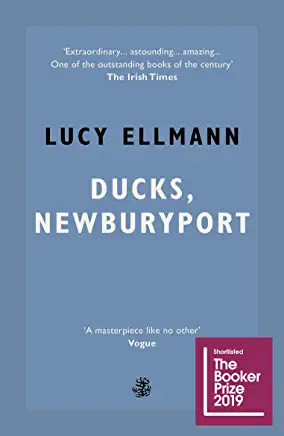
DUCKS, NEWBURYPORT by Lucy Ellmann reviewed by Adèle Geras in conversation with guest Sally Christie


"We agreed we’d learned a huge amount but also that we’d laughed aloud often."

Sally Christie has been a children's book editor and a writer of young fiction. She has also been a goat keeper and a cheese maker, both of which were a lot less stressful. She lives in Cambridgeshire with her husband; they have two grown up children.

Towards the end of March, my friend Sally Christie (author of The Icarus Show and Spirit) wrote to ask me whether I’d heard of a book called Ducks, Newburyport by Lucy Ellmann and whether I’d consider reading it so that she might have someone with whom she could discuss it. Sally thought the length might deter me (1100 odd pages) but I’d not read it up to now for quite another reason. I knew its reputation. It was shortlisted for the Booker Prize in 2019. I'd avoided it because it was written in a ‘stream of consciousness’ style and I’m very bad at that. I do not wish to read Ulysses by James Joyce (we'll return to that) and struggle sometimes with Virginia Woolf.

But Sally is a discerning reader whose judgment I trust, and the Kindle app is very obliging, so I downloaded a free sample. As soon as I’d read that, I bought the rest of the book.

It took me an entire month to read it. I can finish a normal sized book in a few days. So, on a perfect May morning, Sally and I sat in her glorious garden, and encouraged by Mouser the cat and sustained by Sally’s delicious home-made chocolate biscuits, we began to talk about Ducks, Newburyport.

I described my experience of reading it as being like jumping into someone’s head and going round and round on a kind of helter-skelter through every one of her thoughts. The unnamed heroine is a housewife in Ohio, baking cinnamon rolls at the start of the book. She has a husband and children. Her parents are dead, but her relationship with them is still very much alive.

The narrative takes the form of a list, and every separate item begins with the words: The fact that. They return like a refrain, (or less romantically, like bullet points) all through the book. Sally suggested that perhaps Ellmann was in a way laying out evidence for a case she’s making. She imagined a US attorney standing up and putting a whole lot of different facts before the jury. This makes perfect sense to me.

A case for what? We decided it was all sorts of things: the desperate state of so many aspects of life in Ohio in 2019, the weight of a history both blood-soaked, cruel and tragic but also inspirational. The works of Laura Ingalls Wilder figure large. We agreed we’d learned a huge amount but also that we’d laughed aloud often. I saw one thing coming long before it arrived in the book. And we both wondered about what we referred to as ‘the lion bits’.

There are passages scattered through the novel in which the life of a mountain lion, her cubs and their adventures are described. I have to confess I rather skim-read my way though some of these, but we decided that even though they play a part in the plot, especially for one of the characters, they were partly there as a kind of palate cleanser, for anyone who needed a break from rivers and rivers of prose.

We could both see that this book was very carefully put together and worked out. It gives the impression of a torrent erupting naturally from the earth, but in reality it's more like an intricate 18th century water feature: complex in design and spectacular in appearance. A miracle of engineering.

When you reach the end (and there are events. Things happen. People are changed...) you see the world differently. We now both miss our Ohio housewife. I think of her as Lucy, but Lucy Ellmann may or may not resemble her. One thing is true, though: she’s the daughter of Richard Ellmann, biographer of both Oscar Wilde and James Joyce. Perhaps this book is Ellmann’s tribute to Ulysses. Sally said she intends to read that. I do not.

To sum up: we both loved it and are very happy that it’s now part of the furniture of our minds. Mouser is reserving judgement….


Ducks, Newburyport is published by Galley Beggar Press

Monday, 30 May 2022

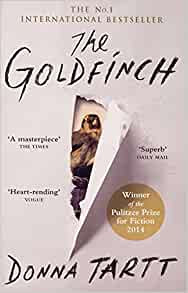
THE GOLDFINCH by Donna Tartt, reviewed by Linda Newbery


"Donna Tartt is a simply wonderful writer: I was captivated by her descriptions of art, the deft characterisations of even the most minor characters, the setting of scene, the insights and honesty."

Linda Newbery edits Writers Review. Best known for fiction for children and young adults, with titles including the Costa Category winner Set in Stone, she has also published one novel for adults, Quarter Past Two on a Wednesday Afternoon, and is currently working on another. Her latest title, This Book is Cruelty Free: Animals and Us, is a guide to compassionate living for teenagers and adults.

I didn't rush to read The Goldfinch, having given up on Donna Tartt's The Little Friend after reading about a third. Although that's something I rarely do, I was finding it a chore rather than a pleasure; hence my delay in reading this. Now, though, nine years after publication, I've completed it and am full of admiration.

My reading was hybrid: part reading, part listening to the audio version (wonderfully read by David Pittu). At more than 770 pages it's a brick of a book, too heavy to carry on buses and trains, and this tactic made the length seem less daunting, though before long I was absorbed and by the end felt the sense of loss at finishing that great books can leave you with, and a need to return to several episodes for a second reading.  

Aged thirteen, Theo Decker survives an explosion that kills his mother and dominates his life from then on. Minutes before the catastrophe, the pair had been admiring The Goldfinch, a painting by the Dutch artist Carel Fabritius, in a New York gallery. In the confusion that follows, the boy tries to help a dying man and a strange, intense bond is formed between them, one that will dictate the course of the adult Theo's life. This elderly man, Welty, a furniture restorer, asks of Theo two things: to take the goldfinch painting, and to go to his shop with a warning for his colleague. Welty's charge, a girl a little younger than Theo, is also badly injured in the explosion, and the two will form a close attachment.

The painting's totemic significance stays with us to the end, prompting meditations on the meaning of art, the power of communication, and the sense of loss. Fabritius was himself killed in a gunpowder explosion at the age of 32, and The Goldfinch (Het puttertje in Dutch) may have been in his workshop at the time. It's a small trompe l'oeil painting showing a beautiful but pitiable finch chained by one leg to a wall-mounted box: kept as a pet or ornament, suffering, unable to escape. That Fabritius painted it in the year of his death adds poignancy. In real life it's safely in the Mauritshuis in The Hague, but in Tartt's novel the painting is taken by Theo who for various reasons keeps it, the secrecy weighing heavy on him: "How had I ever thought I would keep it hidden? I'd meant to deal with the painting for years, get it back where it belonged, and yet somehow I had kept on and on finding reasons not to. To think of it wrapped and sealed uptown make me feel self-erased, blanked-out, as if burying it away had only increased its power and given it a more vital and terrible form. Somehow, even shrouded and entombed in the storage locker, it had worked itself free and into some fraudulent public narrative, a radiance that glowed in the mind of the world."

Theo's father having deserted the family, Theo is for a while looked after by the wealthy parents of a school acquaintance, later being claimed when his father reappears and takes him to a haphazard life in Las Vegas. Here he meets Boris, a Ukrainian boy used to fending for himself, until circumstances force a return to New York. Home and employment are provided by the kindly, self-contained James Hobart (Hobie), Welty's business partner, who introduces Theo to the techniques of furniture restoration. The love with which Hobie practises his craft is touching: "Hobie lived and wafted like some great sea mammal in his own mild atmosphere, the dark brown of tea-stains and tobacco, where every clock in the house said something different, and time didn't actually correspond to the standard measure but instead meandered along at its own sedate tick-tock, obeying the pace of his antique-crowded back-water ... In blameless quiet, he buried himself in his work, steam-bending veneers or hand-threading table legs with a chisel, and his happy absorption floated up from the workshop and diffused through the house with the warmth of a wood-burning stove in winter ... " We sense that lasting security, and mutual love with Pippa, the damaged girl, could be Theo's future, were it not for his involvement in dubious sale deals and the re-emergence of Boris with a revelation that leads him into serious crime. 

It's partly a coming-of-age story, partly a crime thriller, and I admit that the convolutions of the latter plot lost me somewhat; I'd struggle to explain in detail who was who and exactly what happened. But, beyond being concerned for the fate of Theo and the painting, this wasn't what interested me most. Donna Tartt is a simply wonderful writer: I was captivated by her descriptions of art, the deft characterisations of even the most minor characters, the setting of scene, the insights and honesty, in this narrative supposedly written by Theo himself. I marked several passages that particularly struck me, but really could have noted something on almost every page - an indication of a brilliant novel. Surely if I return now to The Little Friend I'll find the same qualities there.

The Goldfinch is published by Little, Brown


Monday, 8 June 2020

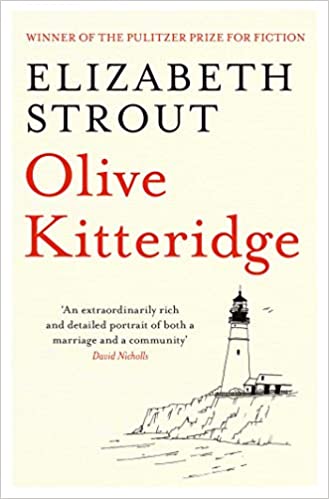
Guest review by Julia Jarman: OLIVE KITTERIDGE by Elizabeth Strout


"Isn’t that why reading is fascinating – it reveals what we don’t and can’t know about each other in real life?"

Photograph by Linda Newbery
Julia Jarman has written books for children of all ages. Her work includes The Time Travelling Cat series for readers of eight to twelve or thereabouts and the acclaimed picture book, Big Red Bath. She is currently trying her hand at writing for adults ‘to see if I can’.

Olive Kitteridge, a retired maths teacher, lives in Crosby, a seaside town in Maine, USA, which is the constant in these short stories. Sometimes central, sometimes peripheral, Olive moves in and out of them as she does in the community, influencing and influenced by the other inhabitants, though I need to qualify what I mean by ‘influenced by’. Olive is cranky and contradictory and always, always herself, so it would be more accurate to say she’s ‘affected by’ other inhabitants rather than influenced. She reacts to other people, but she is also proactive, a law unto herself, often barging in where others would fear to tread, sometimes saving a situation, as in Incoming Tide where her intervention stops a man, a former pupil, from committing suicide; sometimes making it worse, as in A Little Burst when she overhears the bride, her new daughter-in-law, criticising the dress she’s wearing and worse, mortifyingly, her mothering. What has her son said about her? What criticism has he made? Olives suffers and takes revenge. Overweight, under-charmed, amazingly intuitive, she arouses strong feelings in the people she comes across – and in readers. Our book group divided into those who thought it the best book they’d read in ages, because the characters were so real, and those who couldn’t finish it for the same reason. ‘I know there are people like that in real life,’ said one, ‘but I don’t want to read about them.’

I crave books which show me how things are. I loved the late Margaret Forster for giving me those sort of books. I don’t want dystopias – hate them. I don’t want make-believe – can rarely engage with other writers’ fantasies though I create my own, but I do want books which throw light on how we are. To be honest, I might avoid Olive in real life, unless perhaps by lucky chance I’d discovered her hidden depths, but I find reading about her fascinating and keep returning to these stories, always finding something I’d missed. And isn’t that why reading is fascinating – it reveals what we don’t and can’t know about each other in real life? Books are better than real life. I remember a character in Absolute Beginners by Colin MacInnes saying books were great because they ‘sliced the top off people’s heads’ so you could see inside. Exactly.

Part of the fascination of Olive is to do with the fact that she can’t pretend. She can’t tell the social lies most of us tell to keep things running smoothly. So she’s rude and inhospitable when her nice-to-everyone husband invites a young couple to dinner – after she has said she doesn’t want him to, because after a hard day’s work, she doesn’t want to cook fancy food and be sociable; and also maybe, because she’s intuited that her husband is a little enamoured by the young wife, his employee, not that he realises this. He’s so nice he doesn’t know himself, well not the not-so-nice bits. Is that why we admirers admire Olive? Because she does know herself, or is willing to find out, because she dares where we daren’t?

Olive is complex and complicated and it is of course the writing which conveys this with amazing economy. Each short story is like a mini-novel and added together they are like a maxi-novel in the way they reveal human nature in all its variety. I love The Piano Player, a story in which Olive has only a walk-on role. Focused on one night in the life of Angela O’Meara who plays the piano in the cocktail lounge of a local eating place, it spans generations of several lives, shows how others see her and why they see her as they do, and reveals her as loving and loveable, in marked contrast to some of the major players in her life. Be warned, there is cruelty. I love . . . but I love all these stories, none more though than A Little Burst where Olive is central. Wounded by that daughter-in-law, Olive aches to make her understand. ‘She would like to say, Listen, Dr Sue, deep down there is a thing inside me and sometimes it swells up like the head of a squid and shoots blackness through me.’ She is picturing the depression and the grief – after her own father committed suicide - that stopped her being the sort of mother she wanted to be, but also possibly the dark side of her character, of all our characters. Am I fanciful in seeing the squid as serpent? It’s the author’s ability to make us see, the external and the internal, that makes these stories so intense and vivid. They are I think modern morality tales, showing us good and bad characters, not simplistically, not in black and white, but in shades of grey, the tone, dark or light, depending where they come on a scale of cruelty to kindness.

And Olive is kind, mostly.

Olive Kitteridge is published by Scrivener / Simon & Schuster

See also: Elizabeth and Amy by Elizabeth Strout, reviewed by Jane Bailey

Monday, 13 April 2020

Guest review by Jane Bailey: AMY AND ISABELLE by Elizabeth Strout


"We are used to love-hate stories between lovers, but this one is a ruthlessly astute observation of the relationship between mother and daughter ..."

JANE BAILEY is the author of six novels, and has edited many anthologies of work by
young people for First Story. Her fifth novel, What Was Rescued, became an Amazon
bestseller.
Jane Bailey is the author of six novels, and has edited many anthologies of work by young people for First Story. Her fifth novel, What Was Rescued, became an Amazon bestseller. 
JANE BAILEY is the author of six novels, and has edited many anthologies of work by
young people for First Story. Her fifth novel, What Was Rescued, became an Amazon
bestseller.
JANE BAILEY is the author of six novels, and has edited many anthologies of work by
young people for First Story. Her fifth novel, What Was Rescued, became an Amazon
bestseller.

North America seems to have a number of respected writers who write about ordinary lives with razor-sharp observation: Alice Munro, Carol Shields and Ann Tyler spring to mind. Elizabeth Strout is another such writer who burrows beneath the surface of her characters and finds the real, gripping drama in everyday lives.

Amy and Isabelle gets us right into the deepest and most subtle thoughts of single mother Isabelle Goodrow, and her teenaged daughter, Amy. They resent each other, hate each other and love each other with equal passion.

The novel is set in the fictitious small mill town of Shirley Falls, which is divided in two by ‘a dead brown snake’ of a river. Isabelle, who works as a secretary there, has rented a house ‘temporarily’ on the affluent side – for the last fourteen years – in the hope of finding a husband. She dotes instead on her staggeringly dull, married boss, who has suddenly stopped looking at her.

What has happened, to change everything, is gradually revealed in a time-shifting narrative, and it involves a terrible shame which her daughter, Amy, brought upon her. This is the more dreadful because it is clear that Amy has a pre-arranged summer job in her mother’s office, so that mother and daughter are condemned to spend the hottest summer on record breathing the same stultifying air as each other in a room shared with other women at the mill.

Amy recognises that they are not like other mothers and daughters, and longs for a different, more normal parent. Her mother is prim, wears pantyhose even in the heat, and keeps herself apart from the other office workers (Fat Bev, for example, who sits opposite Amy, and smokes and eats and talks incessantly). Amy likes Fat Bev and is nauseated by her mother’s stuffiness and her obvious attraction to the boss, Avery. But when she sees her mother’s hopeless attempts to flirt with him, Amy is also moved by her: ‘It was terrible, what she had seen, the nakedness of her mother’s face. She loved her.’

But this is a novel of carefully crafted parallels, and just as Amy feels this contradictory tenderness, so her mother, whilst enraged with her daughter’s burgeoning sexuality and inappropriate behaviour with her maths teacher, is actually offended - when she confronts him - that he didn’t even really care for Amy.

Similarly, the shears that Isabelle uses to savagely cut off her daughter’s hair in a fit of rage at her sluttish behaviour, are the same shears she will use to cut and curl ribbon on a basket of flowers she has tenderly put together for Amy’s friend, a teenager who has just had an unwanted baby.

Isabelle has had to curtail her own education to bring up Amy, and resents it when Amy gently tells her that she has mispronounced ‘Yeats’. But mostly she feels angry and intimidated by her daughter’s beauty and the fact that she has enjoyed sexual relations with a man while she herself has been wilting with longing for them. The anger generated by this leads to the most cruelly shocking scene in the book. Amy picks up her chopped hair ‘like an amputated leg with its shoe still on.’

If this all sounds like a depressing read, it is anything but. The kindness of the women in the office - women Isabelle has always felt slightly beneath her - brings about revelations which transform the lives of both mother and daughter.

The characters have entertainingly active imaginations. Isabelle often lives so much in her mind that she almost forgets what is real and what she’s imagined. For example, unable to face asking her sister for advice, she imagines what her sister would say: ‘All this imagined advice Isabelle agreed with, found inspiring.’

Although the focus is firmly on Amy and Isabelle, Strout sometimes zooms out to consider the inhabitants of Shirley Falls as a whole. She has an almost Dickensian way of slipping into each of their lives and examining their relationship dilemmas, affairs and betrayals with a quick brush stroke here and there.

This is a story about women, their guilt, their denial, their longings, and how they relate to one another. We are used to love-hate stories between lovers, but this one is a ruthlessly astute observation of the relationship between mother and daughter. It is also a story about kindness and, in Strout’s hands, heartbreakingly moving.

Amy and Isabelle is published by Vintage.


Monday, 4 March 2019

Guest review by Anna Wilson: UNSHELTERED by Barbara Kingsolver


Anna Wilson started out as a picture book editor at Macmillan Children’s Books and went on to be an editor at HarperCollins. She has also freelanced for several years as a fiction editor for Bloomsbury, Puffin and Hachette children’s book publishers. Her writing career began twenty years ago with a picture book, published for very young children. Since then Anna has published over 38 books for children and young teens including picture books, short stories, poems and fiction series. Her books have been chosen for World Book Day and been shortlisted for the Hull Libraries Award and the Lancashire Book of the Year Award. Anna’s recent young fiction series Vlad the World’s Worst Vampire is published by Stripes. Her memoir Missing the Boat is her first adult book.

Anna also gives talks, runs writing workshops in schools and teaches at Bath Spa University on the BA and MA creative writing courses and is a tutor for the Arvon Foundation.

Unsheltered contains two interlinking stories, both set in and around the same house in Vineland, New Jersey and both containing elements taken from real life events. One storyline takes place in 2016 as Trump (referenced as ‘The Bullhorn’ rather than by name) is banging his fist on the campaign-trail podium; the other unfolds in 1871 when Vineland was a community conceived as a Christian utopia by the landowner Charles Landis to give shelter to citizens shaken by the aftermath of the civil war. Kingsolver skilfully interweaves these stories, using the house as a metaphor for ideas built on shaky foundations and for the collapse of ideals and mores taken for granted in both the twenty-first and nineteenth centuries. If this makes the novel sound dry, there are far more ingredients to whet the appetite. This is, at heart, a story of two individuals struggling against similar themes in eras which turn out to be not so different from one another as they might at first appear.

The novel starts in 2016 with Willa Knox. Willa is a woman with more than her fair share of problems: she has inherited a house which, we learn in the first line of the novel, is in such poor shape, ‘The simplest thing would be to tear it down.’ Not only this, but her academic husband Iano has recently lost tenure, forcing the family to move into the ‘shambles’ of a house, her heartbroken adult daughter has come back from Cuba in need of shelter and Willa’s son’s wife has committed suicide, leaving a new born baby in need of love and care. Willa is also caring for her ailing and cantankerous father-in-law. Willa and Iano have worked hard all their lives to provide for their family, but this is not enough. As Willa says, ‘It’s like the rules don’t apply anymore’. But she is strong (at times, perhaps, unbelievably so) and manages to keep her head while all about her, including, one could argue, the house, are losing theirs. She is a journalist and puts her powers of investigation to good use in digging into the archives to find out if the house can benefit from a preservation grant to stop it falling down.

Back in 1871, science teacher Thatcher Greenwood has moved into the house with his new bride and has taken up a post at the local school. He soon runs into problems when he dares to mention Darwin’s theory of evolution in class – something which goes very much against the accepted orthodoxy of the Christian community. He finds solace in friendship with his neighbour, the ‘amateur’ naturalist Mary Treat. Treat, like Landis and his Vineland community, really did exist in 1870s New Jersey and Kingsolver had the benefit of sifting through an incredible amount of correspondence between Treat and Darwin when writing her novel. Nineteenth century Vineland’s blinkered reactions to advances in science versus the accepted status quo tally well with the backdrop to a twenty-first century America which lauds a man who could ‘stand in the middle of Fifth Avenue and shoot somebody, and people would still vote for him’. Indeed, this comment is mirrored by the storyline that unfolds around the real-life murder from which Landis escaped conviction in 1871.

Sometimes split narratives can be unsatisfactory: readers can find themselves preferring one over the other and skipping ahead to get to the story that holds their attention more. I didn’t feel this way, as both Thatcher and Willa held me captive. My only criticism would be that Kingsolver likes to push a point home and sometimes uses her characters as speechifiers, allowing them to stand on their soap boxes for a beat too long. I felt this particularly in the conversations between Willa’s son and daughter who have chosen opposing routes in life: the one as a capitalist wealth-maker, the other as a hippy dreadlock-wearing drop-out. However, the novel ends on a gentle, hopeful note and I was sad to say goodbye to both strands of the story and the engaging characters that people it.

Unsheltered is published by Faber & Faber.

Monday, 11 June 2018

Guest review by Miriam Halahmy - THE RELIVE BOX AND OTHER STORIES by T. C. Boyle


Miriam Halahmy writes novels for children and young adults. Her books have been published in the UK, America and other territories. Miriam’s books look at some of the most challenging issues of our time, dealing with immigration and asylum seekers currently and in the past, as well as homelessness, racism and family relationships. A new edition of her Carnegie nominated novel, Hidden  (Troika Books, 2018), has been adapted for the stage and will tour in the autumn. Her latest novel, Behind Closed Doors (Firefly Press, July) focuses on two fifteen year old girls on the verge of becoming homeless. Behind Closed Doors examines what it means to love and be loved, and how to make a life when there is no security at home. More on Miriam's website.

T.C. Boyle, an award winning American novelist and short story writer, is not widely known here in the UK. I was first introduced to his talents in a lengthy short story called Balto, set around a court case. A drunken father forces his twelve year old daughter to drive them home from school and she hits a cyclist. Will she lie for him under oath? Great dilemma!

This new collection, The Relive Box, shows off Boyle’s mastery of the form. As in poetry, not a word, a syllable or a line break are out of place. Each story is beautifully crafted with memorable phrases such as “the light making a cathedral of the street trees” and “dandruff like sleet in her hair.” Set now or in the near future, this is a prophetic, provoking, challenging and at times, downright scary collection; a call to arms, reflecting the current state of society and the rocky road we are heading down.

In the title story, every home has a Relive Box and Boyle shows us the terrifying potential of the digital age. The Box consumes every waking minute and most of the night. The children fight the adults for access and work has become an irritating distraction from the real purpose of life – time on the Relive Box. Read this story at your peril. It still lives with me weeks later.

Are We not Men?’ opens with a man’s arm being gripped in the locked down jaws of a deep red pitbull terrier. Have no fear; the animal (like many others in the story, including the ‘dogcat’) has been genetically modified. “She’s a Cherry Pit, germline immunity comes with the package,” says her owner, the eleven year old girl next door. Babies are equally modified, every nuance picked out in a catalogue for those who can pay. Height seems to be particularly valued for females. The child with the pitbull is six foot, two inches. How far will such modification go? In the street ‘crowparrots’ screech in the trees, commenting relentlessly; “Your mother…Up yours! ... f*** you.”

Other stories take current concerns and turn them on their head. In  She’s the Bomb terrorism is the focus but as a convenience tool. A student abrogates all responsibility for fellow human beings and invokes a fake terrorist scare twice for her own selfish purposes.

The Argentine Ant is a reflection on moving between cultures, a sting in the tail and the startling way creative thought can emerge from totally unexpected quarters.

We are drowning under a deluge of films, books, op eds, etc etc on the fate of humanity in the post-digital, post-genetic modification age. What if this has already happened? What will it look like? How will it affect us? Boyle considers these questions (almost with glee) and hits below the belt, sparing no feelings. Thoroughly recommended.

The Relive Box is published by Bloomsbury.


Monday, 5 March 2018

Guest review by Graeme Fife: MOBY DICK by Herman Melville


Graeme Fife has written many plays, stories, features and talks for radio, stage plays and articles for newspapers and magazines. He's the author of a string of books - children's stories, biography, works of history, four studies of the mountain ranges of southern Europe and, like many of us, waits with the patience of Job for decision on a number of manuscripts.

At this teeming novel’s heart lie both the essential impulse that sustains human endeavour – above all love, and in this case, the sodality of men in extremis – and the tragedies which compromise the search for answer, survival, triumph, endeavour. Ahab’s monomanic obsession with the whale, symbolised by the artificial leg carved from its bone, a doom-laden clumping along the hollow deck keeping the men below awake, epitomises the folly of human struggle when it’s driven by a narrowness of ego, bereft of fellow-feeling. Ahab has married late in life, he has a little boy whom his mother will carry ‘to the hill to catch the first glimpse of his father’s sail’. When the mate Stubb pleads with him to abandon his insane pursuit of the creature, Ahab declares, like the enraged prophet before the priests of Baal: ‘Ahab is for ever Ahab, man. This whole act’s immutably decreed. ’Twas rehearsed by thee and me a billion years before this ocean rolled. Fool! I am the Fates’ lieutenant; I act under orders.’ The ‘divinity which shapes our ends,’ no less. He even baptises his harpoon ‘in the name of the Devil’, fully aware that, in Melville’s words, ‘the infernal nature has a valor often denied to innocence.’ For the challenge of courage underpins the epic chase of the White Whale, incarnation of Nature’s elemental powers: we either ride out life’s climactic storms, by fortitude, or succumb by moral failure, knowing fear and overcoming it. ‘I will have no man in my boat who is not afraid of the whale,’ declares Starbuck, ship’s mate.

The innocence reflects that of the America in which Melville was formed, in its infancy as an independent unity of states – just as the ship comprises many parts, its crew a unity of disparate individuals. Like young Ishmael, face to face with a new world of dangers, callow America needed to wise up, toughen up, embrace the pioneer spirit, as on land, so on the sea.

Bulkington, ‘six feet in height, with noble shoulders, and a chest like a coffer dam,’ strides briefly into the narrative, a man who, ‘by deep, earnest thinking,’ goes to sea, rejecting the pull of the land, precisely because ‘in landlessness alone resides the highest truth, shoreless, indefinite as God’. The highest knowledge is, surely, self-knowledge.

Two things bind the crew of the Pequod (named for an Algonquian tribe): the thrill - and danger – of the chase, and the intimacy of friendship. The bond between the novice whaler, Ishmael, and Queequeg, master harpooneer, is a friendship which Melville characterises as closer than marriage perhaps because (though he does not say so) it eschews sex. It is of the higher union, the spiritual. Not the love that dare not speak its name, rather the greater love, expressed in laying down one’s life, thus Queequeg, leaping into a turbulent sea to save a crew member who’d fallen overboard.

Early in the book, Melville warns the reader against becoming snared in the digressions about whales – their place and representation in culture, history, art – and about whaling per se. Eschew them, if you will, these treatises on an animal which inhabits the profundity of the ocean yet must rise to the surface, periodically, to fill its lung with air. A creature of two worlds: the mortal and the mysterious. Does chasing and killing it, draining its flesh for oil to fill the lamps which light the world, spooning out the ambergris to supply perfume to scent the rooms lit by those lamps, condemn or ennoble the men who go out in the oared boats, facing the possibility of catastrophe when the Leviathan is speared and held tight on the rope till it tires and dies? That is the nub of Melville’s tragic crux, the clash at the heart of his poetic drama, wherein ‘man’s insanity is heaven’s sense’.

Poetic? Why, yes. I think of Whitman’s poetry, in its search for a diverse new language to fund the examination of this burgeoning America. Melville’s sonorous writing shows many influences - Bible, homily, Shakespeare - maybe not to every taste, memorable, nevertheless.

Melville unfurls a compelling story pitched on ‘the great shroud of the sea [which] rolled on as it rolled five thousand years ago’. It is part of Melville’s own meditation on America in the heave and swell of its gestation: what is this vast land? What tribulation and beauty does it contain? Who people it? How is it theirs? How do they live? In what and of what is their being?


Wednesday, 26 July 2017

FIRST ANNIVERSARY - reading pile roundup: Linda Newbery

A side-effect of hosting WRITERS REVIEW is that my to-be-read pile (both virtual and actual) is out of control, with new additions almost every week. I have two overcrowded shelves of books-in-waiting: charity shop bargains rubbing shoulders with overdue library books, loans from friends, occasional advance proofs, impulse buys and the next choice for Reading Group. Inevitably, some books wait there for a very long time, as others jump the queue - and that's without including the titles lined up on my Kindle. At least I shall never be short of a good read. 

One that will go straight to the front is Alan Hollinghurst's The Sparsholt Affair, due in October. I particularly enjoyed his most recent novel, The Stranger's Child, and this one - beginning in Oxford in the Blitz and following three generations to the present-day - promises everything Hollinghurst is known for: elegance of style, insights into social mores and changing times, a focus on art and architecture. 

Time Will Darken It, by William Maxwell, is the book I've chosen for my Reading Group. I have yet to read anything by Maxwell, but his reputation gives me high expectations. Tom Cox, of the New York Times, listed it as an underrated classic of American literature, a "quiet, mid-career masterpiece". ("Quiet" is the kiss of death to marketing departments these days, making me wonder if the novel would even find a publisher today.) Nicholas Lezard, whose Paperback of the Week feature in the Guardian has sadly come to an end but was such a reliable source of books otherwise at risk of being overlooked, said of it: "This is such a good novel that I'm still shaking thinking about it ... A novel not to be recommended to people but to be pressed on them, urgently." So I am pressing it on my Reading Group, for September.

Longbourn, by Jo Baker, unaccountably had a long wait on the shelf before I started it this week. Such a clever idea: Pride and Prejudice from the viewpoint of the family servants - a sort of Rosencrantz and Guildenstern are Dead set in Jane Austen's world, or at least the long hours and repetitive toil behind the scenes which allow her main players to lead their lives of comfort and leisure. Of course the servants have their own secrets and desires, and in one case a background that takes us far beyond the confines of Longbourn. I'm already hooked, by the writing as well as by the premise. Jo Baker is certainly a striking talent; far from imitating Jane Austen she has found a distinctive style of her own, and a sense of wild landscape in some of the scenes which is more reminiscent of Charlotte Bronte. 
There's usually some nature writing on my waiting pile. Currently heading that section is The Seabird's Cry  by Adam Nicholson, from which I expect eloquent writing on marine ecosystems, the lives of birds and how we're casually destroying the environment.

I enjoyed Rachel Joyce's The Unlikely Pilgrimage of Harold Fry,  was even more impressed by The Love Song of Miss Queenie Hennessy, and am looking forward to her new novel, The Music Shop. She has a wonderful way of combining simplicity and profundity in writing about unexceptional lives. For a taster, catch it on Radio 4's Book at Bedtime last week and this.


What are you looking forward to reading? Please tell us in the comments!