Showing posts with label Elizabeth Strout. Show all posts

Monday, 8 June 2020

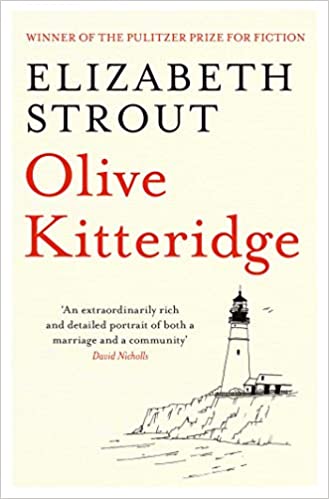
Guest review by Julia Jarman: OLIVE KITTERIDGE by Elizabeth Strout


"Isn’t that why reading is fascinating – it reveals what we don’t and can’t know about each other in real life?"

Photograph by Linda Newbery
Julia Jarman has written books for children of all ages. Her work includes The Time Travelling Cat series for readers of eight to twelve or thereabouts and the acclaimed picture book, Big Red Bath. She is currently trying her hand at writing for adults ‘to see if I can’.

Olive Kitteridge, a retired maths teacher, lives in Crosby, a seaside town in Maine, USA, which is the constant in these short stories. Sometimes central, sometimes peripheral, Olive moves in and out of them as she does in the community, influencing and influenced by the other inhabitants, though I need to qualify what I mean by ‘influenced by’. Olive is cranky and contradictory and always, always herself, so it would be more accurate to say she’s ‘affected by’ other inhabitants rather than influenced. She reacts to other people, but she is also proactive, a law unto herself, often barging in where others would fear to tread, sometimes saving a situation, as in Incoming Tide where her intervention stops a man, a former pupil, from committing suicide; sometimes making it worse, as in A Little Burst when she overhears the bride, her new daughter-in-law, criticising the dress she’s wearing and worse, mortifyingly, her mothering. What has her son said about her? What criticism has he made? Olives suffers and takes revenge. Overweight, under-charmed, amazingly intuitive, she arouses strong feelings in the people she comes across – and in readers. Our book group divided into those who thought it the best book they’d read in ages, because the characters were so real, and those who couldn’t finish it for the same reason. ‘I know there are people like that in real life,’ said one, ‘but I don’t want to read about them.’

I crave books which show me how things are. I loved the late Margaret Forster for giving me those sort of books. I don’t want dystopias – hate them. I don’t want make-believe – can rarely engage with other writers’ fantasies though I create my own, but I do want books which throw light on how we are. To be honest, I might avoid Olive in real life, unless perhaps by lucky chance I’d discovered her hidden depths, but I find reading about her fascinating and keep returning to these stories, always finding something I’d missed. And isn’t that why reading is fascinating – it reveals what we don’t and can’t know about each other in real life? Books are better than real life. I remember a character in Absolute Beginners by Colin MacInnes saying books were great because they ‘sliced the top off people’s heads’ so you could see inside. Exactly.

Part of the fascination of Olive is to do with the fact that she can’t pretend. She can’t tell the social lies most of us tell to keep things running smoothly. So she’s rude and inhospitable when her nice-to-everyone husband invites a young couple to dinner – after she has said she doesn’t want him to, because after a hard day’s work, she doesn’t want to cook fancy food and be sociable; and also maybe, because she’s intuited that her husband is a little enamoured by the young wife, his employee, not that he realises this. He’s so nice he doesn’t know himself, well not the not-so-nice bits. Is that why we admirers admire Olive? Because she does know herself, or is willing to find out, because she dares where we daren’t?

Olive is complex and complicated and it is of course the writing which conveys this with amazing economy. Each short story is like a mini-novel and added together they are like a maxi-novel in the way they reveal human nature in all its variety. I love The Piano Player, a story in which Olive has only a walk-on role. Focused on one night in the life of Angela O’Meara who plays the piano in the cocktail lounge of a local eating place, it spans generations of several lives, shows how others see her and why they see her as they do, and reveals her as loving and loveable, in marked contrast to some of the major players in her life. Be warned, there is cruelty. I love . . . but I love all these stories, none more though than A Little Burst where Olive is central. Wounded by that daughter-in-law, Olive aches to make her understand. ‘She would like to say, Listen, Dr Sue, deep down there is a thing inside me and sometimes it swells up like the head of a squid and shoots blackness through me.’ She is picturing the depression and the grief – after her own father committed suicide - that stopped her being the sort of mother she wanted to be, but also possibly the dark side of her character, of all our characters. Am I fanciful in seeing the squid as serpent? It’s the author’s ability to make us see, the external and the internal, that makes these stories so intense and vivid. They are I think modern morality tales, showing us good and bad characters, not simplistically, not in black and white, but in shades of grey, the tone, dark or light, depending where they come on a scale of cruelty to kindness.

And Olive is kind, mostly.

Olive Kitteridge is published by Scrivener / Simon & Schuster

See also: Elizabeth and Amy by Elizabeth Strout, reviewed by Jane Bailey

Monday, 13 April 2020

Guest review by Jane Bailey: AMY AND ISABELLE by Elizabeth Strout


"We are used to love-hate stories between lovers, but this one is a ruthlessly astute observation of the relationship between mother and daughter ..."

JANE BAILEY is the author of six novels, and has edited many anthologies of work by
young people for First Story. Her fifth novel, What Was Rescued, became an Amazon
bestseller.
Jane Bailey is the author of six novels, and has edited many anthologies of work by young people for First Story. Her fifth novel, What Was Rescued, became an Amazon bestseller. 
JANE BAILEY is the author of six novels, and has edited many anthologies of work by
young people for First Story. Her fifth novel, What Was Rescued, became an Amazon
bestseller.
JANE BAILEY is the author of six novels, and has edited many anthologies of work by
young people for First Story. Her fifth novel, What Was Rescued, became an Amazon
bestseller.

North America seems to have a number of respected writers who write about ordinary lives with razor-sharp observation: Alice Munro, Carol Shields and Ann Tyler spring to mind. Elizabeth Strout is another such writer who burrows beneath the surface of her characters and finds the real, gripping drama in everyday lives.

Amy and Isabelle gets us right into the deepest and most subtle thoughts of single mother Isabelle Goodrow, and her teenaged daughter, Amy. They resent each other, hate each other and love each other with equal passion.

The novel is set in the fictitious small mill town of Shirley Falls, which is divided in two by ‘a dead brown snake’ of a river. Isabelle, who works as a secretary there, has rented a house ‘temporarily’ on the affluent side – for the last fourteen years – in the hope of finding a husband. She dotes instead on her staggeringly dull, married boss, who has suddenly stopped looking at her.

What has happened, to change everything, is gradually revealed in a time-shifting narrative, and it involves a terrible shame which her daughter, Amy, brought upon her. This is the more dreadful because it is clear that Amy has a pre-arranged summer job in her mother’s office, so that mother and daughter are condemned to spend the hottest summer on record breathing the same stultifying air as each other in a room shared with other women at the mill.

Amy recognises that they are not like other mothers and daughters, and longs for a different, more normal parent. Her mother is prim, wears pantyhose even in the heat, and keeps herself apart from the other office workers (Fat Bev, for example, who sits opposite Amy, and smokes and eats and talks incessantly). Amy likes Fat Bev and is nauseated by her mother’s stuffiness and her obvious attraction to the boss, Avery. But when she sees her mother’s hopeless attempts to flirt with him, Amy is also moved by her: ‘It was terrible, what she had seen, the nakedness of her mother’s face. She loved her.’

But this is a novel of carefully crafted parallels, and just as Amy feels this contradictory tenderness, so her mother, whilst enraged with her daughter’s burgeoning sexuality and inappropriate behaviour with her maths teacher, is actually offended - when she confronts him - that he didn’t even really care for Amy.

Similarly, the shears that Isabelle uses to savagely cut off her daughter’s hair in a fit of rage at her sluttish behaviour, are the same shears she will use to cut and curl ribbon on a basket of flowers she has tenderly put together for Amy’s friend, a teenager who has just had an unwanted baby.

Isabelle has had to curtail her own education to bring up Amy, and resents it when Amy gently tells her that she has mispronounced ‘Yeats’. But mostly she feels angry and intimidated by her daughter’s beauty and the fact that she has enjoyed sexual relations with a man while she herself has been wilting with longing for them. The anger generated by this leads to the most cruelly shocking scene in the book. Amy picks up her chopped hair ‘like an amputated leg with its shoe still on.’

If this all sounds like a depressing read, it is anything but. The kindness of the women in the office - women Isabelle has always felt slightly beneath her - brings about revelations which transform the lives of both mother and daughter.

The characters have entertainingly active imaginations. Isabelle often lives so much in her mind that she almost forgets what is real and what she’s imagined. For example, unable to face asking her sister for advice, she imagines what her sister would say: ‘All this imagined advice Isabelle agreed with, found inspiring.’

Although the focus is firmly on Amy and Isabelle, Strout sometimes zooms out to consider the inhabitants of Shirley Falls as a whole. She has an almost Dickensian way of slipping into each of their lives and examining their relationship dilemmas, affairs and betrayals with a quick brush stroke here and there.

This is a story about women, their guilt, their denial, their longings, and how they relate to one another. We are used to love-hate stories between lovers, but this one is a ruthlessly astute observation of the relationship between mother and daughter. It is also a story about kindness and, in Strout’s hands, heartbreakingly moving.

Amy and Isabelle is published by Vintage.