Showing posts with label war. Show all posts

Monday, 22 June 2026

Guest review by Graeme Fife: THE WOMEN by Kristin Hannah


‘People made us think we had done something wrong, the women especially.’

Graeme Fife is a regular reviewer here. He has written many plays, stories, features and talks for radio, stage plays and articles for newspapers and magazines, and is a regular contributor to BBC Radio 4's From Our Own Correspondent. He's the author of a string of books - children's stories, biography, works of history and fiction. His novel of the French Revolution, No Common Assassin, tells the story of Charlotte Corday. His new novel, Memory's Ransom, a compelling wartime story, is published by Conrad Press.

On the train home from Norfolk recently, I observed a man reading a book whose title, about spies, intrigued me; also a woman reading this book. I noted both and bought them. The spies thing was a dud and I gave it to the charity bookshop. The Hannah, however, captivated me. Its subject is the women who volunteered as nurses to work in the evacuation hospitals in Vietnam during that other misguided conflict. The experiences she describes – all derived from very broad research, cited at the back of the book - are breathtaking, terrible, near unimaginable.

Whilst this is cast as a novel and therefore at its core an imagined story with relationships lost, broken, betrayed, held to, its fiction follows the best example of show not tell: auditory, visual and emotional encounter, sensory in all aspects – you can smell it, too, the hospital, the clothes they wear, their kitbags - fill out a narrative of soul-searching depth. I cried.

To be remembered, also – and Hannah sheds vital light on this – back in America, a society forever torn by its own inner conflicts, was further assaulted by a new age of self-expression, hippies growing their hair and dropping out…anti-war protest marches, the Gay Liberation movement, Civil Rights…

The chaos and urgency of a Big Push in the hospital when casualties flooded in, brought by Dust-Offs, helicopters, the injuries, the incessant calls of work work work, with little respite, the agonies of death, a nurse holding a dying man’s hand…

The central character, at first a barely trained nurse, is flung into action with a terse ‘you can do this’ from a surgeon who doesn’t want dither, he wants determination, and help right now and the novel draws in stark detail the process through which a tiro becomes an expert often through the sheer propulsion of expectation. There is no time for hesitation, never any time, for, just as on the battlefield some kilometres away, the bullets fly without delay from the pressure on a trigger, so the injury, very often mortal, nevertheless has to be seen to immediately. As a catalogue of how the human heart and moral power are strengthened by this intensely stressful experience, I have read few novels which do it more poignantly. As Hannah shows: torment can lead to compassion, a strength we may not have known lay inside us.

There are lies, misunderstandings, misreports of death and the anguish of love found and snatched away by the imperatives of war and its terrible repercussions – not only on the soldiers of the army, navy and air force, but on the civilians, women and children, the horror of Agent Orange and indiscriminate bombing … the cruelties perpetrated by men dehumanised by conflict.

There is, too, and powerfully exposed, the generation gap and the mutual incomprehension. Thus the father to his volunteer nurse daughter: ‘Your generation, the need to talk, talk, talk…’

Gone the days of put up and shut up. Hannah makes no judgement – that is for the reader. She does lapse occasionally and when a mother makes an emergency call to see her son in hospital, do we really need to know exactly what she is wearing? But it’s s small flaw. Everyone wants a best seller and one thing which is evident in best sellers is the writer’s obsession with detail, detail, detail. Hannah avoids that. She knows her own heart and that emotional sensibility is evident on every page, without show or personal reflection and intervention. She sees, she hears, she brings it all to life, even life teetering on the edge of death.

I have asked American friends about this and their reaction varies, depending on what neighbourhood they live in, but Hannah brings to the surface the way in which returning veterans were reviled, even spat at, called unpatriotic. But veterans were only ever seen as the men. Groups of veterans gathering in therapeutic sessions to talk about the way their psyche unravelled on their return home - nightmares, broken relationships, alienation – were male clubs, women disbarred. As the returning nurse says to one Marine: ‘If you didn’t see a woman in Vietnam, you were lucky because it means you didn’t end up in hospital.’

The Women is published by Macmillan

Monday, 19 August 2024

Q&A: Jane Rogers interviews Lesley Glaister about her new novel, A PARTICULAR MAN


"I always like to be utterly certain of each character’s motivation at any one time – even if they aren’t sure of it themselves ..."

Lesley Glaister has written numerous novels, as well as short stories, drama and poetry. Alongside her writing she has worked as a tutor and mentor in Creative Writing in settings ranging from Crete to The University of St Andrews. Her most recent novel, A Particular Man, is set in the 1940s, and looks at love, marriage and sexuality in the post-war period. Find out more on her website.

Jane Rogers: Congratulations on your 14th (??) novel, Lesley! It’s a completely engrossing read, and your characters continue to haunt me, especially Starling and Aida, that unlikely couple who almost certainly will not live happily ever after.

My first question is probably foolish, but I found myself puzzling over whether the ‘particular man’ of the title was Starling, or the absent Edgar?

Lesley Glaister: Thank you, Jane. It’s my 16th or 17th novel, depending on whether you count my YA novel, Aphra’s Child. The title: A Particular Man, came late. I had several other working titles including A Hole in the Corner Affair – but no-one else seemed to like that!  A Particular Man jumped into my mind while I was washing up one evening and it immediately felt right. It has both the meanings that you suggest. Starling is a particular man, of course, and he’s the particular man Aida falls in love with. But in a larger sense, the particular man who drives the whole dynamic of the novel is the absent Edgar.

JR: Speaking of Edgar - one of the things I love in the book is that everyone has their own story and secrets; Clem’s affair with famous artist Corin; Starling’s forbidden homosexual love for Edgar; Aida’s attraction to Starling which she tries to blot out by getting engaged to Neville. But the link between all the characters is Edgar, as son, as brother, as beloved comrade. And he is dead, and remains a total mystery. We have no idea if he returned Starling’s love, and even Starling doesn’t know. What made you decide to keep such a key character blank?

LG: Ha, good question! It wasn’t a decision. When I set out to write this novel, which has connections with Blasted Things, set twenty-five years earlier, I intended that Edgar, who was an infant in that novel, should be a central character. I kept trying to write scenes for him but he remained stubbornly inanimate. I couldn’t breathe life into him, or see him or hear him, and eventually I realised he was dead. For me writing is full of discoveries like this, rather than decisions. But I did decide to leave ambiguous the question of whether Starling’s love might have been requited if Edgar had lived. I think it would or might have been, but Edgar died so, like Starling, we will never know. 

JR: Your writing is wonderfully vivid, transporting the reader instantly into the scenes and characters’ feelings you describe. Here’s an example taken at random:

Aida hurries out of the hammering rain into the puddled shelter of St Pancras. As arranged, he’s waiting outside W H Smith, and her heart jerks like a bad dog on a lead.

How much revision does it take to achieve this kind of economy and joyous precision?

LG: Thank you! That is a huge compliment coming from a writer of your calibre. The honest answer is that those kind of similes and metaphors just seem to come naturally. Like many writers (and, of course, many people who aren’t writers) I tend to think in metaphor most of the time. Sometimes I drive myself mad with my habit of always thinking things are like this or that other thing. I have to work much harder at revising other elements of the narrative though: scenes where people have to move and act, dialogue, shifts through time etc. I always cut huge swathes in the editing process, and hone and sharpen scenes to try and rid them of any flab. I always like to be utterly certain of each character’s motivation at any one time – even if they aren’t sure of it themselves. 

JR: The novel is set in 1946 and also refers back to the war years and to the experiences of prisoners of war in Singapore. You don’t acknowledge any sources, but I’m guessing you did a huge amount of research, because the post-war world you conjure feels totally authentic. The menus are a particular delight (lobster mayonnaise and chocolate meringue!) and there are lots of details which are new to me, e.g. the choice of demob suits offered to ex-servicemen.  Can you tell us a bit about researching the background?

LG: One of my main sources was a box of family memorabilia. This includes photographs, letters, and artefacts relating to my father and his family. My dad was a Far East Prisoner of War in World War 2, a fact that was never spoken about in our family while he was alive. It was only after his death that I became fascinated both by his experience and the silence that surrounded it. In 1994 I wrote a novel called Easy Peasy, which is about that silence within a family.  At the time I did a fair amount of research, met a friend of my father from his time in Burma, read letters and newsletters written at the time. The tobacco tin of sketches in A Particular Man, was a real thing, though in real life it was a secret diary written on minute scraps of paper, also wrecked by a trapped ant. I find this idea very resonant. A letter from Edgar that Aida reads out loud to her mother is, in part, a letter that my father sent his mother when he was on his voyage to Singapore. There were also letters from my dad’s sister Kitty, who was killed during the Blitz and I was keeping her in mind for the character of Aida – though of course I never knew her.

As well as this family research, I also read reams of fiction set (and preferably written) during or shortly after the war as well as social histories. I watched films and TV documentaries and visited the Imperial War Museum. From all of these sources, I magpied away details of everyday life, such as those you mentioned, and the vocabulary of the times too. And of course I spent a lot of time Googling!

JR: I very much enjoyed the unsent letters from Aida to Starling. It’s a clever way of letting the reader into her thoughts. You also have Starling’s diary entries to reveal his inner feelings. But the larger part of the novel is written in the third person, from the restricted points of view of Aida, Starling and Clementine. How did you arrive at that writerly choice?

LG: Point of View is one of my obsessions and that close third person viewpoint is my favourite position from which to write. It means there is as little of the narrator showing as possible and all the narrative is filtered through the consciousness of the character in question. Sometimes, because of this restriction, it can be frustrating. For instance, I might think up just the right word, or image, but know that it wouldn’t be in the character’s vocabulary, or experience. With each novel I write I tend to wait for the first inklings of a voice to arrive. If it arrives in first person, I’ll go with that. The novel I’m writing at the moment, which spins off in an unusual direction from this one, is in the first person. One point of view I haven’t attempted yet is an omniscient third person – it simply looks too hard to control. I enjoyed using the first person for the letters and diaries and found it gave me extra insight into the characters of Starling and Aida. It was also a way of getting through a great deal of story in a reasonably economical way. 

 JR: How difficult was it to write using the point of view of a gay man in 1946?

LG: Oddly, I didn’t find it hard at all. I did a fair amount of reading including from a book called Curing Queers: Mental Nurses and Their Patients 1935-74 by Tommy Dickinson, which was excellent. I also did a lot of Googling and I was careful to run it past a gay male reader to ensure I hadn’t made any real howlers. 

 JR: And, leading on from that question, where do you stand on the whole vexed issue of appropriation? Do you think it’s OK for writers to write about people from different cultural/racial/social backgrounds to their own?

LG: Yes I do!  Of course, if a writer pretends to be something they’re not in order to write from a particular viewpoint, that’s wrong. If a writer writes cruelly or inaccurately or causes any hurt from their writing, that’s wrong too. But I can’t see why any human being can’t sensitively and intuitively try to enter into the experience of any other. Surely that’s part of what creative writing is about?

JR: I know this novel was originally slated to be published by Sandstone, and that Sandstone then went into receivership. Can you tell us about the bumpy road to publication?

LG: A miserable tale!  It’s so hard to get a novel published these days unless one is already a best-seller or a new writer on the brink of being discovered. For those of us that have published several (or many) novels, none of which have won a major prize, or been turned into a major movie (or maybe even if they have) publishers just aren’t interested. We are quite simply, out of fashion. This is true in my experience of the major traditional publishers, at least. Fortunately, there are smaller independent publishers – Sandstone was one – which work on a similar model but have more regard for quality rather than simply profitability. Sandstone published Blasted Things and I’d signed a contract with them for A Particular Man before they went into liquidation. I was left rather in the wilderness until Bloodhound came to my rescue. They differ from traditional publishers in being more focused on selling digital and audio copies than hard copies of books, though they do produce these too. I am very grateful that they have not only published A Particular Man but will also be reissuing Blasted Things later this year.

 JR: Finally – the limericks! They are great fun. Are they all your own work? I knew you were a poet, but I didn’t know you had a talent for limericks!

LG: They were fun to do. I sometimes think of limericks when I’m out walking my dog – it seems to suit the rhythm of my walking. Sometimes that rhythm drives me nuts. Most of the ones in the novel are my own, though one is adapted from someone else’s and the one that Peter quotes to Starling towards the end is, as he says, ‘an old chestnut’.

Thanks for these lovely questions. You have really made me think!

JR: Thank you for your generous answers, and for a fascinating novel! I think I like it even more now I know how closely it is based on your own family’s experiences. 

A Particular Man is published by Bloodhound Books.

Jane Rogers' review choices for Writers Review:

How the One Armed Sister Sweeps her House by Cherie Jones


Home Fire by Kamila Shamsie


The Great Derangement by Amitav Ghosh


On dramatising No Longer at Ease by Chinua Achebe


Jane's dramatisation of Clear Light of Day by Anita Desai, about one family's troubles during the partition of India in 1946, is currently on Radio 4. Listen here to the first of two parts.

Monday, 17 April 2023

Guest review by Helena Pielichaty: THE LAST BOAT OUT OF SHANGHAI by Helen Zia


"The broken paths are still being trodden, not mended. That is why stories like this are so important and need to be told."

Helena Pielichaty
is a children’s writer. She has had over thirty books published, mainly by Oxford University Press and Walker Books. More on her website. 

Although there have been other works set around Shanghai during the turbulent 1930s-1950s, such as J G Ballard’s Empire of the Sun (1984) and Lilane Willens’ Stateless in Shanghai (2010), Helen Zia is the first to tell the story from a Chinese perspective. During an interview following the publication of Last Boat Out of Shanghai, the Chinese-American author, academic and activist declared: ‘There isn’t a single book in English about this; not even a dissertation.’

By ‘this’ she means what she calls ‘the forgotten exodus’ when, during the late 1940s, Shanghai became the epicentre for tens of thousands of people fleeing both the city and Chairman Mao Tse-Tung’s Communist regime. The book is the result of twelve years of meticulous research, including hundreds of hours of interviews with survivors, most of whom were in their seventies and eighties by then.

It is divided into four parts: ‘The Drumbeat of War’ (covering 1937), ‘Childhood under Siege’ (1939-1947) ‘Exodus’ (1948-1949) and ‘War’s Long Shadow’ (1949 -1957). Zia focuses on four of the interviewees: Benny Pan, Ho Chow, Bing Woo and Annabel Annuo Liu, beginning in 1937 when the Japanese took control of parts of Shanghai by force. Like all good non-fiction, Last Boat Out of Shanghai reads like fiction; and gripping fiction at that.

We are introduced first to Benny, a nine-year old boy with ‘unruly black hair, his knee socks bunched at the ankles.’ Benny is the favoured son of social-climbing parents, who, thanks to his father’s connections as an officer in the police auxiliary, enjoy a comfortable life-style. Like Jim in Ballard’s Empire of the Sun, Benny has learned to cycle past the dilapidated shacks and squalid tenements ‘reeking of raw sewage’ and to look the other way if he sees a dead body.

Next, we meet Ho, an earnest 13-year-old: ‘lanky, bedraggled and bewildered’ who has accompanied his grandmother to the ‘safety’ of the city, mistakenly thinking, like many others, that Shanghai, with its foreign concessions populated by Americans, British, French, Russian Jews and - since 1941 - German Jews, would offer protection. On Ho’s shoulders rests the fate of his family’s future; he must not let them down.

Then we have eight-year-old ‘Bing’ formerly known as ‘Little Sister’ before her poverty-stricken father sold her two years earlier. She was re-named Bing by her new ‘Mama’, whom she had grown to love but who now appears to have deserted her, just like Baba had. A new home beckons in Shanghai with a different ‘mama’ - Miss Woo - and Miss Woo’s foul-tempered mother. Numbly, Bing awaits her fate.

Finally, there is Annuo, barely two years old. Annuo has a big brother, Charley, who swears to protect her from the incessant bombs, and a doting mother who is a trained physician. Of her father, Yongchio, away fighting for the Republic of China’s Nationalist Party, she is less certain. She senses he has an antipathy towards her for some reason and she is right. This antipathy grows as Annuo does; Yongchio’s anger flaring at every perceived wrong doing and any spark of independence.

Zia follows these four people’s shared histories for two decades. I learned so much about Chinese and Shanghai's culture, family hierarchies, food, the vibrant street life, and the volatile politics. Yet one of the hardest parts to read about is the period during the 1950s, when, having witnessed so much cruelty and overcome all kinds of odds to reach safety, Benny, Bing, Ho and Annuo then have to endure further hostility in their new countries. Those bound for America, especially, arrive at a time when Senator McCarthy’s ‘Reds under the Beds’ hysteria had whipped up suspicion and prejudice against any Chinese refugee, regardless of their background and political affiliations.

In the epilogue Zia concludes ‘…If told often enough, one day such stories may become lessons for historical reflection, not broken paths to be retrod.’ I’d like to think so, too, but given what happened during a recent, similar ‘exodus’ – that of Afghans fleeing the Taliban in 2021 - the broken paths are still being trodden, not mended. That is why stories like this are so important and need to be told.

The Last Boat out of Shanghai is published by Ballantine Books.

Monday, 5 December 2022

Guest review by Keren David: DAUGHTERS OF THE LABYRINTH by Ruth Padel


"In an age of Holocaust fiction which is often sentimental and offers a false narrative of hope, this book gets it right again and again."

Keren David 
Keren David is the author of 13 books for teenagers. Her latest is Say No to the Dress (Barrington Stoke). She is also editor of the Jewish Chronicle's JC2 arts and lifestyle section. 

“It is a small peaceful hall, full of silence, glinting with textiles in deep earth-colours like a rusty rainbow, amethyst, chocolate, burgundy. White arches. A sheaf of open doors through which I see a patch of garden. Light filters down from high windows onto polished benches glimmering with embroidered cushions. On the left is a wood panel hung with taffeta of smoky topaz. Rose-brown silk lies lightly over a large book open on a lectern.” 

The description is of the Etz Hayyim (‘Tree of Life’) synagogue in Chania, Crete, and it comes from Ruth Padel’s novel Daughters of the Labyrinth which was published in 2021. I visited the synagogue this year - a tiny building tucked away in a corner of the maze of streets and alleyways which were once the port’s Jewish quarter. An exhibition at the synagogue tells the story of the Jewish community, which had lived there for thousands of years, until the Nazis invaded. Rounded up and imprisoned, the Jews of Chania died when they were put onto a ship to be taken to the death camps. A British torpedo, fired in the belief that the ship was carrying munitions, killed them all. The synagogue was neglected and despoiled, but in later years restored, despite several arson attacks.  

I found Daughters of the Labyrinth in the synagogue’s bookshop and spent the rest of our week in Crete reading it. Undoubtedly the effect of the book was enhanced by my surroundings – there is something very special about being able to compare a writer’s descriptions with the places around you. But I think the emotional impact of the story - which moved me to tears several times - and my admiration for the writing and the authenticity with which Padel writes would have been the same wherever in the world I was. And in fact the book begins and ends in the part of north London where I live, and right at the end Ri, the protagonist, visits the synagogue which I belong to. Ri is an artist, from Crete but living in London, recently widowed and adjusting to life alone. One of the many joys of the book is the way Padel thinks and writes about art, and the artist’s eye that Ri beings to her descriptions. She is planning a trip to India to paint, but a call comes from her family in Crete – her mother is ill. So she returns to Chania where her mother asks a question which changes everything she thought she knew about her family and her history. “Will you say kaddish for me?”  

Kaddish is the prayer that Jewish mourners say for their loved ones (and indeed, in that tiny, restored synagogue in Chania, I said kaddish for my mother). But Ri’s mother, as far as she knows, is not Jewish. While her mother lies ill in the hospital Ri asks her father what on earth her mother means. And slowly a story unfolds – of heroism, tragedy and a girl who had to hide who she was, a Sara who became Sophia in order to survive and live with the huge trauma of being the lone survivor of her family and her community.  

The pictures that Padel paints, of the lost Jewish community, the Cretan world around them, of Chania in the 1940s and now, of post Brexit Britain, of a world in the grip of Covid, all ring true. Padel’s deep knowledge of Greek mythology underpins the story and so does her 13 years of research. In an age of Holocaust fiction which is often sentimental and offers a false narrative of hope, this book gets it right again and again. Padel is better known as a poet and an academic, this is only her second novel. I will be seeking out her first, and also her poetry and non-fiction. If you are looking for a book which is satisfying on every level, I recommend Daughters of the Labyrinth.

Daughters of the Labyrinth is published by Corsair.

Below: the synagogue and streets of Chania. Photographs by Keren David.


Monday, 7 November 2022

Guest review by Leslie Wilson: WE GERMANS by Alexander Starritt


"The great strength of this part of the novel is that it makes the soldiers, and particularly Meissner, real people. Not monsters, but human beings who might be ourselves under other circumstances."

Leslie Wilson is the author of two novels for adults and three for young adults. Last Train from Kummersdorf was shortlisted for the Guardian Children's Fiction Prize and the Branford Boase Award; Saving Rafael was nominated for the Carnegie Medal and Highly Commended for the Southern Schools Book Award. The first two deal with Nazi Germany: The War’s Not Over Yet is just out as a Kindle e-book and is set at the time of the Russian blockade of Berlin in 1948. Leslie Wilson is half German, was brought up bilingual, and has spent considerable amounts of time in Germany.


My grandfather fought in Ukraine, though only up till 1943, but unlike the fictional grandfather here, my Opa never spoke to me or to my brother about his experiences (or anything he might have perpetrated). In fact, since he was an officer, his experience would have been different from those of the ordinary Landser, or squaddies. But when I read Alexander Starritt’s description of those men, some of them only lads, ‘fleeing on foot, broken, bedraggled, our tanks blown up, our artillery abandoned, our good name blackened for generations, our friends and brothers-in-arms buried in hostile soil', I did remember my mother’s description of my grandfather returning from the Front, haggard, unshaven, dressed in rags, drinking morosely in the kitchen. I also remember watching Gone with the Wind, when the movie showed the shattered Confederate army limping back, and my mother whispered to me: ‘That’s what our soldiers looked like when I saw them retreating.’ By the time she saw that, the soldiers had been beaten back to Graz, with the Russians hard on their heels. All the same. Not only defeated, but on the wrong side of history.

Meissner, the protagonist of We Germans, is one of a group of soldiers who are authorised by their captain to go hunting for a ‘food depot’ which, it’s rumoured, is about to be abandoned to the enemy. They don’t even half believe in its existence, but by now (1944) supplies aren’t getting to them and the ordinary soldiers, at least, are starving. Some of them are shooting themselves, or just wandering out to let the Russians kill them. The survivors will do anything if they think it might just fill their bellies.

What the soldiers first happen on, though, are the inhabitants of an entire village who have been strung up on ‘a single big tree ... in bunches, like swollen plums.’ Too hardened by the war, by the things they have seen and done, the soldiers leave them there, foraging onwards, arguing with each other and threatening each other, till they find an empty champagne bottle, Bollinger. That gets them on the scent. They follow a trail of empty bottles till they find a hunting lodge guarded by the much hated, brutal military police (hated because they’re brutal to their own side), Feldgendarmerie. At this point, Meissner tells us, ‘the desperate animal part of me barged any more complex sentiment out of the way. We stormed the compound just as we would have a Russian outpost.’ The soldiers kill most of the policemen. When they get inside, they find two frightened and teary Polish prostitutes. This novel is definitely not one for the squeamish, but the soldiers are more interested in food than in rape, and the Polish girls get away.

Meissner and his comrades (if that word is appropriate) help themselves to unimagined riches; ‘Italian sardines, French cheese, rollmops.. tinned peaches from Greece, sacks and sacks of firm, hale potatoes,’ also cigarettes and ‘fancy drinks.’ Finally, they torch the hunting lodge and leave it, having committed murder and treason. Yet the line they have crossed has given them ‘the taste of a certain destructive freedom.’ They escape out into the countryside, get huge quantities of the food down themselves, get the squitters because it’s too rich, torment each other.

Brutal and licentious soldiery, indeed. Meissner does have some human feeling left, but it’s too ‘deeply buried.’ Or driven out by the nagging misery of foot-rot, by, confusion, a vicious irritability, by fears for family at home, fear of death or capture, by, in Meissner’s case, a dogged determination to survive.

And yet these disaffected soldiers manage to seize a Russian tank and drive it towards the enemy, knocking out a great many tanks as they go. The story might end with their deaths, but they then get out of the tank and escape into the forest once more.

All this is portrayed with consummate and convincing skill; the reader is drawn into the ghastly reality of the soldiers’ existence, and the great strength of this part of the novel is that it makes the soldiers, and particularly Meissner, real people. Not monsters, but human beings who might be ourselves under other circumstances. Hunger does dreadful things to us; makes us more inclined to violence, sharpens the survival instinct to a lethal extent.

So far, so convincing. However, this is a novel of layers, and there are other layers which are less accomplished. Meissner’s narrative is a written document he leaves for his grandson, Callum, to read after his death, and it is heavily mediated. We have Meissner’s story from 1944, and then, like voiceovers, the older Meissner, and Callum speak to us; my reaction to those voices often veered from irritation to indignation.

I did at first wonder if what I was reading was the well-worn (in my youth) myth of the ordinary ‘Landser’ or squaddie, who fought a largely decent war, while police regiments and SS committed the atrocities. Then I thought, no, it’s not this kind of story. On the surface, Meissner is brutally honest; he describes how he and his fellow soldiers went ‘foraging,’ which meant stealing food from civilians, who were going to starve, but then you read: ‘What I want to tell you isn’t about atrocities or genocide’. Yet there is an episode where the soldiers come upon more Feldgendarmen and men from a ‘penal battallion’ (composed of convicted criminals), who are hanging German deserters, raping Polish housemaids and crucifying them and Polish labourers against the sides of a barn. So what, exactly, is Meissner’s definition of an atrocity? To be fair, he is quite clear that by merely fighting as a conscript he was complicit in the whole thing, but we know now that ordinary soldiers did murder civilians, incluidng Jews. Not Meissner, apparently.

Meissner also claims that the story is really about courage. Does he mean the naked instinct to survive (if so, are the others, who gave up, cowards?) or is it only about the capture of the tank? The tank capture actually prevents the Russians getting to the atrocities against the Poles and perhaps rescuing the victims before they died.

‘Did we do wrong?’ Meissner reflects. ‘By the morality of consequences, yes, undoubtedly. But it’s hard for me to accept that so baldly, because by the morality of virtues, of character, the others at least were brave and loyal.’

The elephant in the room here is that warfare is actually about killing people (though the expression ‘killing for your country’ is never used.) Nowadays it’s always justified in terms of some future good; the Russians, right now, are freeing Ukraine from ‘Nazis’, or so Putin tells us. We still feel that World War 2 was largely a just war, because it defeated Nazism (though it failed to protect the territorial integrity of Poland, which was where it started). In the post-war moral system, admittedly flawed, that Meissner is supposed to adhere to now, the morality of consequences is what it’s all about. What I would see in the tank capture is a kind of resetting of psychological equilibrium: the soldiers compensate for the treason they have committed. Or else they are simply doing what they have been programmed, by years of training and propaganda, to do.

Meissner does make one very valuable observation, a conclusion I came to myself after years of reading about Nazi Germany and thinking it through: ‘Only a very few of us were stronger than our times. Not me. A handful who somehow knew how to act beyond themselves, even then.’ Look at our own society. How many people dare blow the whistle on their employers, no matter what those employers do? He also writes: ‘I think that we were blemished by the consequences of what other people decided. No one ever has complete responsibility for his own moral balance. And the unforgiving truth, the severe, ancient truth, is that you can be culpable for something that you weren’t in control of.’

As one who has looked back at her own grandfather and wondered how he could live after participating in that war, and being part of that machinery, I have had similar thoughts. I cannot be indignant about the horrors of his internment after the end of the war, even though the investigators found nothing to convict him of in the end. He began by hating the Nazis; I do know that after the war he hated them, yet he became part of the machinery, to survive. To me, not the least crime of Nazis great and small is that the society they created made criminals of so many others. But I did feel that it might have been possible to get this view across through the narrative (indeed, I have passed quite a few moments, when walking the dog or dealing with mundane household tasks, working out how it could be done). I also wondered how far the opinions I heard were Starritt’s, rather than those of his characters.

Some of the interventions in the story are frankly off-beam, and why does Callum have to end an exposition of the myth of Ragnarok by sniping that dedicated recyclers are driven by an ‘end-of-days fixation’ which is a ‘narrow, atavistic niche in German culture, brought out by the extreme despair of losing two world wars’? It is news to me that recycling is a purely German concern. But what made me indignant (not to mention furious) was the attitude (whether Starritt’s or Meissner’s) towards the atrocities the Russians in their turn committed when they conquered Germany.

‘We were in the wrong,’ Starritt has Meissner write. ‘We had that knowledge hammered into us with the deaths of friends and the rape of our families. And the enormity of our crime meant we had to accept that the punishment, though terrible, was not unjust.’ Leaving aside the fact that the Russians also raped Polish and Yugoslav women (and what were they punished for?) what that boils down to is that the rape of women, girls and even young children and babies was a matter between men; the German army, the Red Army. Women, then, are property, what’s done to them is primarily an act of retribution against the males who own them?

But if there is ‘no fair, except what people effortfully construct’, as Starritt has Meissner tell us, then we need absolute clarity about what is just and what is not. What happened in Germany and Austria in 1945 was certainly the consequence of Hitler’s invasion of Russia in 1941; it doesn’t follow that it is right for a child to wake up and find a Russian soldier on top of her. ‘And then,’ (the adult woman, speaking on a video I once watched, shuddered) ‘the next one came, and the next one, and the next one-’

Imagine what that was like, if you can bear to, and see if you can comfortably talk about justice.

We Germans is published by John Murray.

The War's Not Over Yet is available from Amazon Kindle.


Monday, 21 March 2022

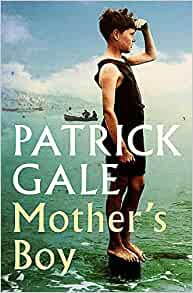
SPECIAL FEATURE: Q & A with guest Patrick Gale on his new novel MOTHER'S BOY


"This is really a novel about someone becoming a writer ... "

For this special feature we're honoured to welcome Patrick Gale, an author whose new books we always look forward to - and this is one we particularly admire. Thanks so much to Patrick for answering our questions.

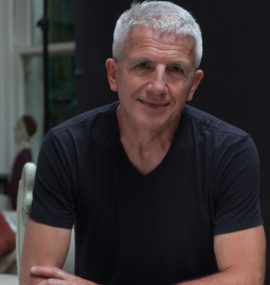
Photograph by Jillian Edelstein
From the best-selling author of A Place Called Winter comes Mother's Boy, a superb historical novel of Cornwall, class, desire and two world wars.

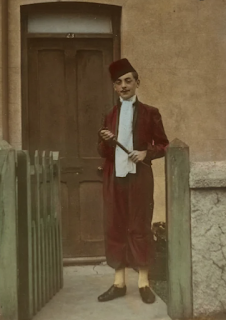
Laura, an impoverished Cornish girl, meets her husband when they are both in service in Teignmouth in 1916. They have a baby, Charles, but Laura's husband returns home from the trenches a damaged man, already ill with the tuberculosis that will soon leave her a widow. In a small, class-obsessed town she raises her boy alone, working as a laundress and gradually becomes aware that he is some kind of genius.

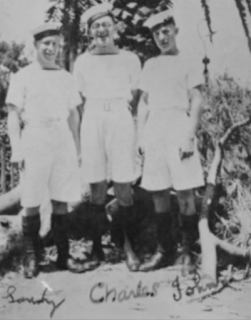
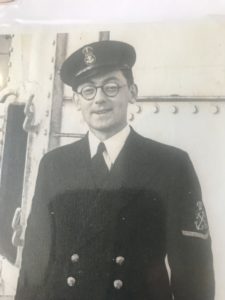
As an intensely private young man, Charles signs up for the navy with the new rank of coder. His escape from the tight, gossipy confines of Launceston to the colour and violence of war sees him blossom as he experiences not only the possibility of death, but the constant danger of a love that is as clandestine as his work.

Mother's Boy is the story of a man who is among yet apart from his fellows, in thrall to yet at a distance from his own mother; a man being shaped for a long, remarkable and revered life spent hiding in plain sight. But it is equally the story of the dauntless mother who will continue to shield him long after the dangers of war are past.

Patrick Gale answers questions from Jon Appleton, Adèle Geras, Linda Newbery and Celia Rees


Celia: What attracted you to Charles Causley as the focus for a novel?

Patrick:  He intrigued me. I loved the poems, in particular the ones which snatches of narrative which show a novelist’s gift for thumbnail characterisation or the ones which are downright spooky in what they suggest but don’t quite spell out. I wanted to piece together myself what shaped the man who wrote them. Whenever he was asked why he didn’t write his memoirs he answered that “it” was all in the poems. So in large part what this novel does is to go back to the poems in search of “it”.

Jon
: Could you have told Charles’s story without his mother Laura’s?

Patrick: I could but the danger then would have been that he’d have become even more chilly than he already is and she would have been reduced to his view of her, and early in life, at least, his view of her could be both patronising and dismissive. Also I found the challenge of telling such a private woman’s story utterly addictive, and not just because I’m a laundry obsessive…

Adèle:  Laura is an astonishing creation. Did you speak to many people who knew her?

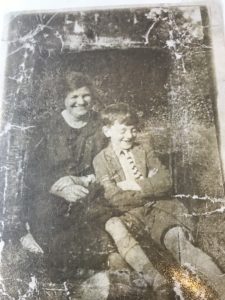
Patrick:  Only one or two, and they only knew her as children. I largely got to know her through the numerous, often rather crotchety glimpses Charles gives of her in his tiny, scribbled diaries. And I extrapolated her from his poetry. Having been raised largely by her alone he must have drawn much of his nature and voice from hers, so I trusted in that. And then read up on things like nursing TB patients, and doing laundry by hand.  

Linda:  Did you immediately decide on the structure (alternating between Laura and Charles) before you began the novel, or did that solidify through the writing?

Patrick:  I’d settled on it from the start. This was partly because I always need a few unanswered questions to energise my fiction and the more I saw of Laura, in old photographs, the more I needed to know who she was. But it was equally because the more I found out of Charles’ character – which in many ways was chillingly like that of an expert spy, different things to different people but withholding his essential self from all – the more I realised I’d need to balance his story out with one that was warmer and kinder, more approachable.

Celia:  Were there details of his life that you had to change/add/ supply? How much did you find yourself deviating from his actual life?

Patrick:  I deviate very little from the established facts. I made Laura’s employers unmarried siblings, because that appealed more than the wealthy family of drapers who she actually worked for, but the accident with the boy and the cart that opens the novel actually happened to the Teignmouth doctor Charlie worked for. Beyond the two ships he was on, and the two “ stone frigates” where he also worked, Charles’ war story is largely cloaked in official secrecy so I was able to play with the facts to ensure that he and Ginger went to Malta on the incredible operation immortalised in C S Forester’s The Ship. The trips to Liverpool Playhouse are extrapolated from theatre programmes he’d retained from that period and the affair with a fellow officer is extrapolated from a letter he kept all his life, whose wording I barely alter. Laura’s adventures are made up in their details but she did have evacuees live with her, a black GI was murdered in just the way I describe and POWs did indeed construct a playground right outside her cottage on Tredydon Road. The dogs Jack and Wang were real but the kitten at the end is a simple prefiguring of the several cats in which Charles measured out the rest of his life.

Jon:  Do you think you’ve given Charles Causley a sexuality in the book or coaxed out – or simply given voice to – what was already there?

Patrick:  I was painfully aware of the temptation simply to “gay” Charles, to claim him for my team so I resisted it at every turn by trying to remain truthful to what he confided in his secret, minutely written diaries. These give a powerful sense of a young man who doesn’t fit the accepted mould of manhood, who knows himself to be special or different and who flinches from the sexual expressions of those around him. Then I found a letter he had kept to his dying day which I believe is proof that he had some kind of affair with a fellow officer when stationed at HMS Cabbala, one of those chilling “we need to put all that behind us now” letters probably all too common between men in the 40s and 50s. I will still correct anyone who says Charles was gay, as I think that word implies an acceptance of a sexual identity and, whatever fulfilment he may have found on British Council tours later in life, there’s no evidence that Charles ever arrived at such a self-acceptance.

Jon:  From Rough Music on, the dynamics of mother-son relationships have featured prominently in your novels. There’s a very strong sense in Mother’s Boy that Charles and Laura’s relationship isn’t instead of a marriage but a sexless marriage itself. Is this something you’ve noticed in families you’ve encountered, or was it specific to the Causleys?

Patrick:  
I’ve always been interested in what happens to sexuality when it’s denied natural expression. I think what grows between the Causleys is little different to what happens not just to widows and widowers but to nuns, priests, schoolteachers or anyone put in a position where sexuality is safest left unexpressed. The cliché is that it results in something warped or bad; the truth is that it often results in creative energy. I’m sure we can all think of at least one transformative teacher we had who never married…

Adèle:  Speaking as someone who’s also written a novel about a real person, I’m curious to know if there are any lines you felt you shouldn’t cross? What effect do you think any boundaries you may have set had on the novel?

Patrick:  Scary, isn’t it? I’m still nervous that Mother’s Boy will give offence. So many men and women are powerfully protective of Charles and his memory! My main rule was that I knew I was never going to flesh out the characters of anyone with living descendants, which is why Laura’s numerous siblings barely figure. I also knew I had to honour the known facts, however inconvenient. But it was always a novel, never a biography, so I felt free to combine Charles’ real boyhood and wartime friends into totally fictitious amalgams and to ensure that his tragically doomed ship (in real life HMS Eclipse not my HMS Starburst) played a small but heroic part in the incredible operation to break the siege of Malta.  

Adèle:  You live in Cornwall and one of the striking things about the book is the way you bring places to life. Launceston, Laura’s house, ships etc. Did you walk through all the places you describe? Would you ever write about a place you’d never been to?

Patrick:  Place is crucial to the way I write. Once I’ve settled on a setting for a book I have to go there and immerse myself because I know it’ll become a character in the book. I already knew Launceston well, from my first ten years in Cornwall, when it was just up the road from my house, but to see it through Charles and Laura’s eyes I was lucky to spend a week living in their little house, Cyprus Well, taking daily walks they’d have walked, and working to imagine the bustling industrial town it once was. I’ve never had the sense to set a novel in the Caribbean or Venice or wherever. This novel involved a research weekend in Skegness and my next one will immerse me in Liverpool and Durham!

Jon:  As a British novelist who began work in the late 20th century, do you think it was inevitable that you’d write about the experience of war? (In the way you simply had to write The Facts of Life in the oppressive mid-90s.) Do you even believe in inevitabilities when it comes to writers’ trajectories or inspirations?

Patrick:  I turned sixty in January, which places me squarely in the generation that grew up with bombsites and air raid shelters still very much in evidence. Our parents’ attitudes were so shaped by the direct experience of world war that inevitably that shaped us too. But I didn’t set out to write a war novel; I set out to explore what made Charles and Laura tick, and it rapidly became clear that two world wars were going to form a big part of their story. But I think these things are often accidental in writers’ lives. An idea will just catch and refuse to be shaken off. I’ve promised that my next novel is a sequel to A Place Called Winter, and it is, but I’m realising it’s actually a novel about my mother and grandmother and their marriages.

Linda: 
 All the detail of naval training and life seems so convincing. How did you immerse yourself in that?

Patrick:  It was very hard as I was never one of nature’s war comic readers or war film watchers. But I ended up using that, realising that Charles wasn’t remotely in his comfort zone either when he shipped out on Eclipse. From his diaries I knew the books he was reading, I knew he was a swot and would have swotted up on how to be a sailor. I spent time in Gibraltar and Malta tracking where he’d have gone and what he’d have experienced. The hardest part was the coding, as that part of the war story was kept so obsessively secret for so long that physical material relating to it hard to come by, even in the Imperial War Museum archives. Happily these contain a few relevant bits of recorded testimony from old men recalling their coding training which I could combine with surviving manuals and wonderful details from Charles’ unfinished wartime novel.

Jon:  I can’t imagine a Gale novel without music being described in a visceral way – but what was it like to write about a writer?

Patrick:  I think I cheat a bit in that this is really a novel about someone becoming a writer. For much of the period described, Charles was primarily a musician, which gave me a crucial way into understanding him. He went to war a playwright and returned a poet, and I think that transformation was partly down to the interplay of his rigorous coding training with his earlier training as a pianist.

Adèle:  The book reads as though it cost you no effort at all but just poured on to the page like a spring gushing from the rock. How much rewriting/ editing do you do?

Patrick:  You’re very kind! I do an awful lot of mental churning around and notetaking and try not to start writing the actual text until I’m really clear who my characters are and what their stories are going to be. In this case I benefited from the amazing, if relatively sparse, Causley archive held at Exeter University and spent a lot of time reading through that and trying to join the gaps. The challenge then was to decide both whether there was enough “story” for Laura to balance out Charles’ adventures, and to decide where the novel should end. From there on the process has always felt to be one of painstaking accuracy rather than one of making things up. Very early on I realised that what I was doing was inspired by his poem Angel Hill and seeking to unlock whatever story lay behind its writing and that gave me a great momentum.

Linda:   Now that you’ve finished writing the novel, have the real and fictional Charles Causleys merged in your mind, or do you see them as two separate characters?

Patrick:  I fear they may have done a bit. The same happened with my great grandfather when I turned him into the hero of  A Place Called Winter. The difference here is that we have this incredible body of poetry (and some wonderfully atmospheric prose) left by Charles along with recordings of his voice and I ventriloquised that to such an extent that I’m now having to make a big effort to remind myself what I made up.

Linda:  Do you find yourself thinking differently about his poems now that you’ve been inside his head, as it were?

Patrick:  I don’t, but only because his poems were my constant guide as to who he was. I had a lot of fun not fleshing them out, exactly, but lifting names and scenes and places from them in ways I hope will reward readers who already know them well. His unfinished novel about his time on Gibraltar, his naval short stories and his numerous autobiographical prose sketches are so vivid that at times I almost felt I was taking dictation and not making things up at all.

Linda:  I am struck by the ending of Eden Rock. Do you think Causley is referring to the distance between him and his parents as one brought about by time and death? Or do you think he is regretful that he could never have (or never allowed himself to have) such a close relationship with another person?

Patrick:  Eden Rock is a masterpiece, I think, because it packs so much into so few lines. I believe it was inspired by that moment that comes to us all when our parents have died and we sense most of our life is behind us. He has a sense of his own looming death and of how seductive it is then flinches because he’s not yet ready. But buried inside there is also, I think, the strange dichotomy of the only child – at once confident that they are loved and yet forever left on the emotional sidelines by the love their parents have for one another. Several women of his generation have insisted to me that Charles longed for a family of his own. They say that, irrationally, as though such a longing would be quite alien to a man who also longed for the love of another man . I’m sure he longed for a family because it’s natural to want to belong and a family is a concrete proof of fitting in whereas, whatever his sexuality may have been, he remained always on the edge of things, on the outside looking in.

Celia: What do you think Charles Causley would have made of his fictional self?

Patrick: I think he’d have been appalled. As would Laura. They were both deeply private people who didn’t put themselves forward. I hope he could see, though, that it’s a book driven by affection and admiration and from a desire that more people should visit Launceston and seek out the amazing work he left behind him there.

Celia: How much of the novel is Charles Causley, how much Patrick Gale?

Patrick:  That’s very hard to answer, so I won’t even try!


Adèle: Will there be another book about Charles? He lived to be very old.

Patrick:  Not from me, although he cries out for a scholarly, critical biography which has yet to be written. He needs a Hermione Lee! He lived to be very old but I have a powerful sense that he was a man who created a public persona behind which he could remain intensely private and in a way my job here is done if I’ve managed to suggest what he felt that persona was necessary and what the events were that led to its construction. I’ll be very happy if it simply leads new readers to his poetry, where they can make their own minds up about who he was.

Mother's Boy is published by Tinder Press.

See also: Notes from an Exhibition reviewed by Julia Jarman


Take Nothing With You reviewed by Linda Newbery


Monday, 28 February 2022

Guest review by Sue Purkiss: THE WOMEN OF TROY by Pat Barker


"Pat Barker doesn’t let the reader off the hook, doesn’t put a gloss on things. This is what war does, she tells us. This is how it is."

Sue Purkiss writes for children and young people. She has been a Royal Literary Fellow at Exeter and Bristol Universities, and has also taught English and worked with young offenders. Her latest novel for children, Jack Fortune and the Search for the Hidden Valley, is an adventure story set in the Himalayas at the end of the 18th century, featuring plant hunters, a sacred mountain – and its mysterious guardian! For more information, see Sue's website. She also has her own literary review blog, A Fool on a Hill, and is a contributor to The History Girls.

One of the joys of Christmas is that, in my family, we’re very big on giving books for presents. One year this all went horribly wrong, when nearly every book one of us had loving selected had also been lovingly selected by someone else, so at least half of them had to be exchanged – but this year all was well, and this book was part of my haul.

It follows on from Pat Barker’s first book about the Trojan War, The Silence of the Girls, which I had not read before reading this one, though I have now. It’s perfectly possible to read the second one without having read its predecessor – partly, I suppose, because the legend on which both books are based is very familiar: but also because Briseis, the narrator, naturally refers to the past as she takes up her story.

I write books for children, and I think, if I was setting out to write one about the Trojan War and its aftermath, I would seek out a child character – who would need to have some agency: to be a hero in some measure – to make things better. But this retelling concerns war in all its horror and savagery: it’s a bleak tale with few shafts of light. There are certainly heroes, but they all have the capacity for horrifying violence and unthinking cruelty. And, incidentally, the only children in this narrative are girls – because when the Greeks finally conquered the Trojans by means of Odysseus’ wooden horse, they slaughtered the boys. They even, Briseis tells us, killed pregnant women in case the children in their wombs were boys.

Briseis had been a queen, captured when her city was laid waste by the Greeks almost as a sideshow to the main war against the Trojans. When we read retellings of the Greek legends, what we remember and enjoy are the exploits of the famous heroes. Pat Barker, through Briseis, lays bare the brutal treatment of the vanquished by the victors. The Trojan men are almost all slaughtered, while the women are raped and led into slavery. Briseis is relatively fortunate: as a high status captive, she is made available to be a trophy for one of the ‘heroes’. She is chosen by Achilles. In some books, this could have been the prelude to a romance, but there is no romance here. She is a commodity, no more. She only finally receives any consideration when she becomes pregnant with Achilles’ child, and is given in marriage to one of his friends: Achilles knows he is going to die, and knows also that his slave girl could easily be given after his death as a plaything for the ordinary soldiers. Because she bears his son, he doesn’t want that to happen – but only because of that, not because of any tender feelings towards Briseis herself.

The story takes place in the Greek camp on the shores of Troy. The Greeks want to go home, but the winds are against them, and they cannot leave. There is no beauty in this place: it’s windswept and desolate. “On the shoreline, there were stinking heaps of bladderwrack studded with dead creatures, thousands of them…The sea was murdering its children.”

There is another dead creature on this beach. It is the body of Priam, the King of Troy and one of the few characters in this story who retains nobility – until, that is, he is dishonoured by his killer, Pyrrhus, the son of Achilles, who drags Priam’s body behind his chariot every day round the walls of Troy, and refuses to allow it to be cremated. One of the Trojan women is determined to put a stop to this, and buries the body, to the fury of Pyrrhus. In a bewildered way he observes that there are only two Trojans in the camp, a priest called Calchas and one of Hector’s brothers, and that neither of these would have defied him in this way, so who can have defied him so flagrantly? He is quite oblivious to the women: they are slaves, and they are women – they simply don’t count. They are invisible to him.

But Briseis renders herself visible to us, because she tells us her story, and those of the other women in the camp: Helen, Cassandra, Andromache – but also the women of lower status, who nevertheless have their own stories, their own individual tragedies. She is courageous and she is kind: I look forward to reading the next book, which I suspect will bring her happiness in some degree.

It’s a wonderful book but a bleak read, harsh in many ways. The language reflects this. Pat Barker doesn’t let the reader off the hook, doesn’t put a gloss on things. This is what war does, she tells us. This is how it is.

How it still is, in many parts of the world.

The Women of Troy is published by Hamish Hamilton

See also: Circe by Madeline Miller, reviewed by Judith Lennox


Monday, 19 April 2021

Guest review by C J Driver: THE MOTH AND THE MOUNTAIN by Ed Caesar


"This is a man who can't turn back, won't turn back, doesn't turn back ..."

Jonty Driver has kept himself busy in lockdown working with a local firm, Artwrite of Rye, to produce four booklets of his poems, some illustrated by himself, and a card, The Slave-Bell at Doornhoek, a poem and a painting. The booklets are: Image & Image, some old photographs & a dozen unrhymed sonnets; The Journey Back; The Chinese Poems, 1979-2020; and A Winter’s Day at Westonbirt & other poems. All are available from Artwrite. See more on Jonty's website.

I’d better start by mentioning that, though I didn’t teach him, Ed Caesar was a pupil at Wellington College when I was Master there. I admitted him to the school in 1993 as a non-fee-paying Foundationer because his father had been killed on active service with the Royal Navy in 1982. After taking a degree from Edinburgh, Ed has made a successful career for himself as a journalist and is now writing books too: the first, Two Hours, was about the marathon and the chances of someone’s breaking two hours to run it. This one is about an attempt in 1934 by a brave but largely deluded Englishman to be the first to climb to the top of Everest. 

“By any rational measure, he (Maurice Wilson) had not the tiniest chance of reaching the summit.” The third son of a Yorkshire family, he had fought through  the First World War, joining as a private and then being commissioned, and winning a Military Cross for his bravery. Recovered from his wounds, but still mentally damaged, he had left Bradford and emigrated to New Zealand. After various mishaps, marital and otherwise, he returned to the UK and then settled on a scheme to buy an aeroplane to fly, solo, to the lower slopes of Mount Everest, and then to climb the mountain, on his own. He didn’t know how to fly, and he had never climbed a mountain. But he does fly solo all the way to India in his Moth, and evades all efforts to stop him getting to the mountain. And he does set off to climb what no one has climbed before.

It is an extraordinary story, garnered from a variety of sources, including Wilson’s own diary and letters he wrote to a woman he was in love with (she was married to someone else). Ed Caesar is, I think, meticulously truthful; he doesn’t pretend to know what he can’t know and, when he guesses, he makes it clear that he is guessing. In the end, the story becomes somehow close to tragic: this is a man who can’t turn back, who won’t turn back, who doesn’t turn back, even when any rational being would realise he can’t survive. I found the book utterly absorbing, and I recommend it wholeheartedly.


The Moth and the Mountain is published by Viking

See also: Touching the Void by Joe Simpson


Monday, 2 November 2020

Guest review by Jon Appleton: THE BISCUIT FACTORY GIRLS by Elsie Mason


 "As the nights draw in, there will be plenty of readers seeking total immersion and escapism in saga-length novels, especially those with the promise of further volumes to come."

Jon Appleton is a freelance writer and editor based in London.

As the nights draw in, there will be plenty of readers seeking total immersion and escapism in saga-length novels, especially those with the promise of further volumes to come. I can heartily recommend Elsie Mason’s The Biscuit Factory Girls.

The cosy cover image is essential to the genre and it’s true that for the first part of the book, the comforting scent of baking biscuits permeates the air which the employees of Wight’s Biscuit Factory in the north-east live and breathe. The latest recruit is newlywed Irene Farley, who joins her sisters-in-law Beryl and Megan working to make the biscuits that will offer a little comfort to the men on the front line of the Second World War which rages all around them.

But the story gets a lot darker, and fast. (This is an incredibly pacey novel.) Irene – a former land girl from Norfolk – has known handsome airman Tom Farley for just three months before she leaves her parents and sisters to join him, his three brothers, sisters-in-law. This memorable family has been led by the indomitable Ma Ada since the early death of her good-for-nothing husband.

Throughout the novel, Irene is forced to question the wisdom of her actions. First the prospect that she doesn’t belong amongst the Farleys, their extended family and neighbours, all living cheek by jowl in the Sixteen Streets – ‘where everyone’s watching each other’s comings and goings and there’s gossip about everyone’ – near the shipyards of Tyneside. Second, the mounting fear that her presence is somehow jinxing the safety and happiness of the Farley clan.

Of course, for Irene there also looms the threat of losing her new husband in the war, a threat which compounds the anxiety of her unexpected pregnancy.

As the weeks pass, with work and the occasional treat punctuating the constant threat of the nightly bombing raids, Irene settles into life and forms important, unconventional friendships – with beautiful Bella, daughter of the Italian ice-cream parlour owner and Arthur, rule-abiding usher by day and someone utterly different by night. But most demanding of all is her relationship with her sister-in-law, Megan, who resents Irene from the start. As the story develops, she unravels the stories of Megan and her husband Bob and can understand better why their marriage has become so corrosive. A great pleasure of the book is unfurling such stories within the story.

There are moments of scandal, of elation, of tension, of triumph. There’s even a thread of vivid queer glamour bursting through the leaden winter and the rubble which adds a welcome vein of colour. There’s a great deal of love, too, waiting to ripen and as we race to the end we eagerly wonder what lies in store for these characters in Elsie Mason’s next book.

The Biscuit Factory Girls is published by Orion.