Showing posts with label Patrick Gale. Show all posts

Monday, 20 July 2026

10th Birthday Special Feature: PATRICK GALE tells us what's on his radar


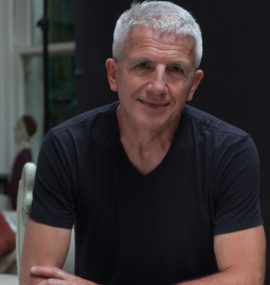
Photograph by Jo and Rob Whitworth

It's our tenth birthday! Since we started in July 2016, we've published weekly, welcomed more guests than we can count (all authors or booksellers), produced end-of-year roundups, special features and lockdown extras, and have had over a million viewings. To mark the occasion we're doing a new kind of birthday feature, On My Radar (pinched from The Observer ...) and who better to launch this for us than the popular and highly acclaimed novelist Patrick Gale

Patrick is a favourite here - we've reviewed several of his novels and he did a Q&A feature with us on publication of Mother's Boy (find links to all these at the end of this piece). Pictured above in his west Cornwall garden, Patrick is currently on tour with his latest novel Love Lane, but kindly found time to give us his choices in various categories.


Book? It’s impossible to pick a favourite book as I so love reading that frequently my favourite is the one currently holding me in thrall. In homage to my father, who loved them dearly, I’m currently rereading Trollope’s Barchester novels and finding them infinitely more subtle and feminist than I remember them. Doctor Thorne and Framley Parsonage are wonderful on love and economics, but they also contain marvellously free spirited women like Miss Dunstable. Highly recommended.

Film? Bette Davis’ masterpiece, Now Voyager, is always deeply nourishing on revisiting. It’s at once witty, sad and wonderfully clear eyed in its portrayal of depression, maternal oppression and the small, but significant triumphs in life.


Podcast or radio programme? I’m afraid that, since being diagnosed with Ménière’s Disease and having to wear hearing aids, I have become such an audiobook addict that podcasts and radio programmes have been elbowed aside. I’m currently doing a lot of dog walking and gardening to the accompaniment of David Rintoul’s heroic reading of Proust.

TV drama? We’re addicted to the world drama offerings on Channel 4. However terrible - and many are marvellously gripping - they give such fascinating insights into domesticity in other cultures.

Photograph by Jim Champion

Favourite walk? Right on my doorstep lies the beautiful 3 kilometre circuit across our fields and down the cliff path to Nanjizal then along the cliffs around Mill Bay towards Land’s End and home again across a different run of our fields. It may bore the dogs but I love noting the small changes from week to week on the same walk, the flowers, the weather, the insect and bird life.


Place to eat? A great treat of the Penzance LitFest is nipping across the road after a really good author talk to feast in the Honey Pot. They do delicious cakes and serious brunches.

Photograph by Tim Sheerman-Chase

A place that's inspired your writing? People always assume that Cornwall must be a great inspiration to me, but I seem to have drawn equally on my childhood memories of growing up in Winchester, the beautiful cathedral city where I lived from seven to twenty-one.

Ideal day?  I never lie in but I love waking really early and going back to bed with tea and biscuits for us both. I’d like that to be followed by a beehive inspection where I found only good things, an unexpected jaunt somewhere pretty for lunch with Aidan and then a sunny walk by the sea with the dogs. I’ve included no work in there but a few good hours of writing between bees and the unexpected lunch would lend the day an extra fillip.

Photograph by Krzysztof Ziarnek

Tree? Right outside out library window is a melaleuca linarifolia or Snow In Summer. Its delicate leaves smell like the best, headiest cough sweets and every July it is covered in flowers that look exactly like snowflakes. It’s one of the first trees we planted when we met and I’m moved that it not only survived but is thriving somewhere so unlike its native Australia.

Photograph by Linda Newbery

Season? Autumn. I love the drawing in of nights, the reaching for knitwear, the lighting of the season’s first log fire.

Dawlish Warren: photograph by David Gubler

Mode of transport? Happily, given how many hours I spend on them during a year when I have a novel to promote, I adore train journeys. I hardly ever drive beyond the Tamar but think nothing of spending nine hours staring out of a train window.

Thank you, Patrick, and we hope your tour is bringing Love Lane to a great many appreciative readers!

See also our reviews of


Monday, 13 April 2026

LOVE LANE by Patrick Gale, reviewed by Linda Newbery


"Harry is such an endearing character and his story so quietly compelling that I'm sure many readers will want to seek out or revisit his earlier incarnation in A Place Called Winter."


Linda Newbery edits Writers Review. Her latest novel is The One True Thing; her second for Writers Review Publishing, The Hide, will appear later this year.

It's twelve years since readers were introduced to Harry Cane in A Place Called Winter, a novel based on the experiences of Patrick Gale's great grandfather. Caught out in a scandalous affair with a male dancer, Harry leaves wife and baby to seek a new life in Canada. After many threats, trials and hardships, he finds a happy relationship with neighbouring farmer Paul, after first believing that he's been killed in the Great War.

As with all Patrick Gale's work, Love Lane welcomes readers to its pages with warmth and empathy. Although it's not essential to have read the first novel, we pick up Harry's story years later. First he suffers the hurt of seeing his lover marry a woman for the sake of respectability; then, when Paul dies unexpectedly, Harry is manipulated / blackmailed by Paul's stepson into parting with the house and land he's devoted years to, for far less than they're worth. Rootless, and prompted by a letter from his daughter Betty, Harry sails back to England to reunite with family members in Liverpool and Wakefield.

We're now in 1950s England in the company of characters based on the author's grandparents and parents. From these perspectives we see Harry as much older: a scruffy elderly man with meagre possessions who must be accommodated, entertained or tolerated, his future uncertain. Betty's husband Terry is a prison governor with little time for visiting relatives, in one episode deeply preoccupied with preparations for a double execution by hanging of two men in their twenties. The burden of supervising the deaths of these young men whose guilt is far from certain weighs heavily on Terry, yet he's contemptuous of men sent to prison for homosexuality and aghast when he realises that Harry, as described by his sister-in-law, is 'a sexual deviant of the Oscar Wilde sort. Not at all someone I'd consider safe around grandchildren.' 

Loneliness, repression and misunderstanding form a pattern; Harry isn't the only male character to conceal his sexuality. We experience the disappointment of compromise not only from the men but from the women they partner. The sad fate of an affectionate but huge and hungry (at a time of rationing) Pyrenean mountain dog seems to echo these unsatisfactory human accommodations. Throughout, in the background of various family groupings, Harry demonstrates a quiet empathy, often intuiting what others are feeling, or concealing - particularly with his troubled granddaughter, Whistle. But he knows he is in the way; how and where will he spend his remaining years? Several poignant surprises and developments keep us anxious for him until the end. 

As in the novel that preceded this, Mother's Boy, Patrick Gale is adept at conveying the demands and rituals of domestic life of the period: removing stains from clothing with Omo, the novelty of television, making the most of rations, recommending a meal of mashed brains to nourish an ailing baby. Harry is such an endearing character and his story so quietly compelling that I'm sure many readers will want to seek out or revisit his earlier incarnation in A Place Called Winter.

Love Lane is published by Tinder Press.

See also:

Q&A with Patrick about Mother's Boy

Take Nothing With You reviewed by Linda Newbery

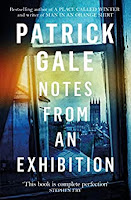
Notes from an Exhibition reviewed by Julia Jarman

Monday, 2 January 2023

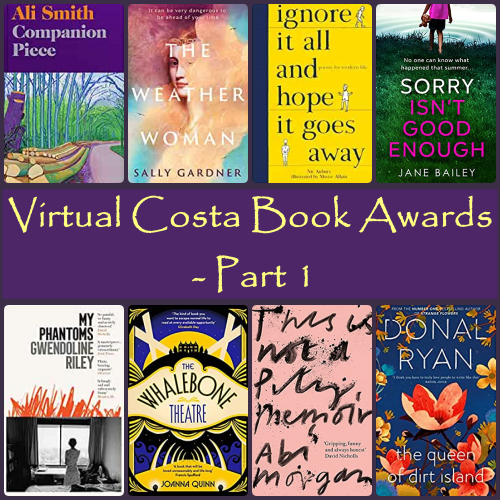
Virtual Costa Book Awards Part 3: Linda Newbery and guests


Here's the final batch of virtual awards. We're luckier than the real Costas - we can award as many as we like! For this final post, alongside some of our regular or previous guests we welcome two new ones: Louise Ellis-Barrett, editor of Armadillo, the online children's book magazine and blog, and author and screenwriter Frank Cottrell-Boyce. Thank you to all our guests for their choices, and congratulations to all our virtual winners.

JOHN NEWMAN of Newham Books awards the Virtual Costa Novel Prize to Seven Steeples by Sara Baume.


Sarah Baume’s latest work, shortlisted for the Goldsmiths Prize, traces seven years in the lives of Bell and Sigh as they inhabit a rented cottage in rural Ireland along with their two dogs. What they do in their cottage is never explained; instead the minutia of their lives is explored with real warmth and a level of detail never applied to their actual relationship. We learn about the contents of each room and how their routines shape them. We discover ways the cottage and its environs are changed by the weather and the seasons. This is a greater focus then how they adapt and relate to each over time. Even so, you feel they want to be together and there is something deeply reassuring about this. And all the time you wonder if they will ever climb an overshadowing mountain to view those Seven Steeples. This is a small book with big themes and not a word is wasted.

PENNY DOLAN's choice is a second Virtual Costa Novel Prize vote for Bonnie Garmus for Lessons in Chemistry (also chosen by Helena Pielichaty in Part 2):

Set in 1960’s America, the novel is about a brilliant young chemist, Elizabeth Zott, whose life’s purpose is scientific study, no matter what. And there is an awful lot of what in Zott’s life: an unschooled childhood; loneliness and loss, single motherhood, type-casting and brutal misogyny from the academic establishment.

Yet Lessons in Chemistry is a delight. As light and swift to read as a fairy tale, the sometimes painful plot turns with wit and humour until the clues and relationships click into place or as deserved. This is a book about determination, hope and the fight for equality, with a fictional heroine I could not help cheering for, despite the fact she would not care whether I did or not. Besides, how often does good fortune spring from one daughter stealing another’s perfectly packed lunchbox? Thank you, Bonnie Garmus, for a bright book in a dark time.

JON APPLETON awards the Virtual Costa First Novel Prize to Taymour Soomro for Other Names for Love:

A dazzling coming-of-age novel in which Fahad is flung from his comfortable, knowable London life into unfamiliar, primitive-seeming Pakistan at the demands of his formidable father who wants to mould his son in his own uncompromising image. Both father and son are grappling with their identities: Fahad is gay but is forced to be restrained and secretive while his outgoing, fearless father is facing the erosion of his authority and influence in his local community. The novel is about love and taboo and family ties, all sparely evoked with a strangely haunting immediacy. Perhaps most impressive of all is the way the story leaps across time and space to begin again, years later, losing none of the novel's cohesion.

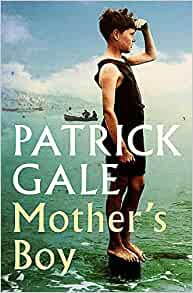
LINDA NEWBERY awards the Virtual Costa Novel Prize to Patrick Gale for Mother's Boy:

Mother's Boy
is a thoroughly engrossing, moving and informative novel based on the life of the reclusive Cornish poet, Charles Causley - taking in his wartime experiences as a coder and his first forays into writing drama. The viewpoint alternates between Causley and his devoted mother, Laura, who has her own story. With a sure eye for detail Patrick Gale conjures social and domestic life and draws inferences from Causley's poetry and correspondence to portray his secretive inner life and sexuality. As I'd felt sure that Mother's Boy would feature strongly in the real Costas this year had they happened, it has to be my choice for the novel award.

JANE ROGERS awards the Virtual Costa Biography Prize to Osman Yousefzada for The Go-Between:

This memoir tells the magical tale of a Pashtun boy born into a poor immigrant community in Birmingham, who has become a world-celebrated artist and designer. His mother is a skilled seamstress but it is Osman, as a young boy, who chooses the fabric and delivers the garments. The loving descriptions of his mother’s fabrics reveals a fascination and talent which has since shaped his life, as a fashion designer for the likes of Beyonce and Lady Gaga. Both parents are illiterate, deeply devout Muslims. At puberty Osman, like other Pashtun boys, is banished to his father’s side, the world of men. He fares better than his sisters, though; they are removed from education around the age of 11, and from then onwards kept hidden from the sight of any men. Yousefzada finds himself torn between his people’s culture and the white culture he has to absorb at school, where racism and ignorance are meted out by pupils and teachers alike.

What is most compelling about this wonderful book is its child’s eye view of the complications and contradictions which surround him. He never judges, he simply tries to understand.

YVONNE COPPARD gives the Virtual Costa Biography Prize to Stanley Tucci for Taste - My Life in Food:

If you love Italian food, you will surely love this. Have a napkin handy just in case you start drooling. Stanley Tucci’s obsession with food borders on the disturbing in places - is he really joking when he insists that cutting spaghetti with a knife is an unforgiveable, if not capital, offence?

Tucci writes with warmth, wit and occasional flashes of insight about the life passion for good food that was instilled by his Italian American family. Humour, like the food, infuses everything, even the brief poignant passages touching on matters such the untimely death of his first wife.

Best of all, there are recipes scattered throughout the book. I will not be trying timpano anytime soon; Tucci’s savagely funny description of Christmases ruined by this monstrous culinary beast is persuasive. Thankfully, though, most of the recipes seem to infuse the very pages with aromas and tastes that will draw you into the kitchen to have a go.

LOUISE ELLIS-BARRETT awards the Virtual Costa Children's Book Prize to Belladonna by Adalyn Grace:

It was not a difficult choice to nominate the deliciously, captivatingly dark Belladonna as my book of the year. It is a richly imagined web of intrigue, a rich gothic romance, dark and spectacular. Jinxed as a baby to see all those around her fall and die, it is perhaps a wonder that Signa comes of age and reaches the time at which she will inherit her family wealth. Signa is a mystery; her life is full of mystery, one that only deepens as the story unfolds. Never far from her side Death makes a fascinating and dangerous shadow and primary character in the story causing us, as readers, to question our own preconceived ideas. I was quickly addicted to the writing, the characters and this story which promises and delivers so much. A sequel is promised in 2023, I for one cannot wait!  

FRANK COTTRELL-BOYCE awards the Virtual Costa Children's Book Prize to Lissa Evans for Wished:

It was unusually difficult to choose a winner as it’s been a year of terrific books by the likes of Maisie Chan, Phil Earle and SF Said but I’m going to go for Wished by Lissa Evans. Because - like Groundhog Day or The Phoenix and the Carpet - it takes a really simple, funny conceit and works it until every possible laugh, tear and scrap of wisdom has been wrung from it. Ed and Roo are sent to stay with an elderly neighbour - Miss Filey - while their house is being done up.
 
There they discover that Miss Filey’s birthday candles really do grant wishes. But only for as long as the candle is burning. LIssa Evan’s background is comedy and this is a VERY funny book. It contains the funniest cut from one scene to another I’ve ever come across. But it’s also full of heart and wisdom. When the children finally come to realise that Miss Filey has unfulfilled wishes of her own, I defy you not to shed a tear.

PATRICK GALE awards the Virtual Costa Novel Prize to Jessica Andrews for Milk Teeth:

My nomination is a fantastically original novel that was oddly overlooked given how well her debut, Saltwater, was received: Jessica Andrews' Milk Teeth.


What would you have chosen, in any of the five categories? (Novel, First Novel, Biography, Poetry, Children's). Please tell us in the comments!


Monday, 1 August 2022

Sixth birthday round-up: Adèle Geras, Celia Rees and Linda Newbery


Adèle, Celia and Linda share the books that have impressed them so far this year.

Adèle:

Tansy Devoy
 by Anne Fine.  A disclaimer: Anne is a friend, but alas, many of my closest friend are excellent writers (cf Linda Newbery and Celia Rees of this parish). This tale is of a social worker trying to find out whether the young girl she's investigating is sad or bad. Is the way she's behaved seemingly since the day she was born the result of nature or nurture?  We don't find out till quite late in the story what Tansy has done and along the way, we meet teachers, family and see what effect Tansy has had on everyone she's met. Fine grabs your attention with her first person narrative and you can't stop reading. I loved it.

Bad Actors
by Mick Herron: I've been a passionate Herron fan since the appearance of the first novel in his Slough House series, Slow Horses. This has now been turned into a wonderful TV series on Apple TV. I'm so glad that this has catapulted the denizens of Slough House to the top of the spy genre pile. I adore these books, because not only are they exciting and hilarious, but they're also some of the best-written books I've come across in a long while. The beginning of Slow Horse is knowingly  Dickensian. I'm delighted at Herron's success. It's very well-deserved.

Left on Tenth: a second chance at life
by Delia Ephron. Readers of this blog will know how much I love Delia Ephron. I reviewed her novel Siracusa and I do still recommend that, especially if you're  going on  holiday any time soon. This book is non-fiction and it's just as brilliant. It begins with the death of Delia's beloved husband. After becoming a widow, Delia finds love again and it's this late love that gets her through the terrible disease that strikes her. The writing of this book tells us at the outset that cancer was overcome, but the oonclusion is: love helps enormously. Delia's sister, Nora Ephron, died of cancer and that haunts Delia as she lies on her sickbed. It's a warm, heartfelt, funny and terribly sad story but most of all it proves the truth of Larkin's words: "What will survive of us is love."

Linda: 

Regenesis: how to feed the world without devouring the planet 
by George Monbiot. Like many readers, I know and admire George Monbiot as environment writer for The Guardian and as an eloquent speaker and campaigner. This being a subject close to my heart, I bought a copy on publication. I didn't know that his background is in zoology, one of many areas in which he's tremendously knowledgeable. Regenesis looks at our farming systems and how we must urgently move away from intensive animal farming (though as I know from experience, it's an uphill struggle to convince people to change long-established eating habits) if we're to have any chance of reducing carbon emissions, and how we must understand and respect the soil and its complex ecosystems if we're to avoid exhausting its potential for growing crops to feed us. A must-read for those of us who recognise that business as usual will destroy the planet. 

Tenderness
by Alison MacLeod has been reviewed here by Jane Rogers and it was on her recommendation that I read it. What a tour de force! Daring, original and wide-ranging, it moves from D H Lawrence's death in Italy, back to his stay in a Sussex artistic community and forward to the Lady Chatterley trial. Another thread portrays Jackie Kennedy in the months leading up to her husband's election as President, and her interest in the novel which FBI chief J Edgar Hoover tries to use as a gambit against Kennedy's campaign. Wonderful, eloquent writing throughout. I shall look out for more by this bold, accomplished author.

Derek Jarman's Garden: After seeing photographs and reading about Prospect Cottage, I at last visited in July and was captivated both by this iconic garden and by the unique landscape and atmosphere of Dungeness, with the nuclear power station looming in the background. On my return a friend lent me this book: Derek Jarman's notes, reflections and poems, the last book he wrote before his death in 1994. Weakened by illness he finds inspiration in the garden he's shaped, collecting stones, driftwood and rusted metal to make sculptures and pebble garlands. "A cold, grey day. I write the poems, and while the poems form the rain blows in. Slowly the puddles gather at the roadside. Then, as the day draws to a close, sunlight floods the Ness and the wet shingle glistens like pearls of Vermeer light." Photography by Howard Sooley lovingly captures the uniqueness of the garden and its maker.

I couldn't possibly leave out Mother's Boy by Patrick Gale (I think we all loved this, but I got here first). It's based on the life of Cornish poet Charles Causley, relating his childhood, adolescence and naval experience, Charles's viewpoint alternating with that of his devoted mother Laura. Patrick Gale has described this as ‘a story of someone becoming a writer’, and although Charles was musically talented too, we see his early efforts at drama win him popularity in service life, where he became a coder first at sea (difficult, as he was hopelessly seasick), then in Gibraltar. He lived an uneventful life post-war, living with his mother until her death in a small Cornish town, but Gale draws on the poetry to enlarge on his inner life and sexuality, while Laura, in his depiction, has her own story. A poignant, absorbing read, as readers of Patrick Gale will expect. Read our Q&A with Patrick here.

Celia:

The Wrath To Come: Gone With The Wind and The Lies America Tells
 by Sarah Churchwell: I have long admired Professor Sarah Churchwell for her fearless writing and journalism; her powerful and distinguished work as historian and academic. The Wrath To Come examines the American Civil War and its legacy through the lens of Margaret Mitchell's novel Gone With The Wind and David O. Selsnick's subsequent film adaptation. Margaret Mitchell, a native of Atlanta, Georgia, from an antebellum plantation and thus slave owning family, published Gone With The Wind in 1938. The novel sold a million copies in the first six months of publication and remains one of the best selling novels of all time. The film was similarly successful. It won a slew of Oscars, including Vivian Leigh for her Scarlett O'Hara and is one of the highest grossing films ever. This huge success has promoted both film and book to 'cultural phenomenon'. Everyone has seen it, read it, or at least heard of it. Rhett Butler's 'Frankly, my dear, I don't give a damn' tops the list of the most famous movie lines. The trouble, as Sarah Churchill sees it, is the whole novel is based on romantic myths and lies about the Confederacy, the Old South, the Lost Cause. It deliberately ignores the realities of slavery, of a slave owning society with its implicit assumption of White Supremacy and its legacy of routine violence, judicial and actual, against African Americans. It is all there in the novel, but it is mediated by Mitchell. Sarah Churchwell looks with different eyes. She teases myth from reality and forensically demonstrates how the extraordinary success of Gone With The Wind, book and film, amplified these myths down through the years, becoming one of the defining stories  America tells itself and making it possible for a Confederate flag to be unfurled in an insurrectionist storming of the Capitol, a place where it had never flown before. Some things cannot be consigned to History. Some myths have to be debunked.     

Dead Lions
by Mick Herron. Like my fellow Writers Reviewer, Adèle Geras, I am a huge Mick Herron fan, and I would have been reviewing Bad Actors, if she hadn't got there first. I'm re-reading his second book, Dead Lions and I may re-read the others. I rarely re-visit anything but I have to confess to gobbling his books too quickly the first time round.  The novels are extremely funny and hugely entertaining, the closest we've got to a satire of modern politics, politicians, apparatchiks and Whitehall obfuscation and general incompetence. As he says, 'In the past couple of years, no matter how far you push [the story], something stupider and even worse is going on in the real world.' Herron's novels are the opposite of the conventional spy novel, although he acknowledges a debt to Le Carré: 'John Le Carré gave me permission to become a writer - he showed me you could invent an entire world, invent its language, too.' Like Adèle, I am mighty pleased to see Mick Herron enjoying such well deserved success and thoroughly enjoyed the Apple TV series and Gary Oldman's playing of the appalling Jackson Lamb, the boss of the Slow Horses. Not exactly an overnight success, Dead Lions was turned down by his first publisher. Herron jumped ship, found a publisher who could see the potential and who was willing to give the books another chance. He describes himself as a 'rescue author'. I like that. 

The Power of The Dog
by Thomas Savage. During lockdown, I joined a book club run by my friend Julia in South Wales by the magic of Zoom, I'd never been in a book club before and it was a new experience to read books I would not necessarily have chosen. One of these titles was The Power of The Dog. I had seen and enjoyed the Jane Campion film, as had the rest of the group (there was some discussion as to whether Benedict Cumberbatch has the legs for a cowboy) and I welcomed the chance to read the book that had inspired the adaptation. My first surprise was to discover that the book was written in 1967. The author was Montana born and ranched raised so the novel, set in 1924, is his lived and remembered experience. It casts an unusual and authentic light on another of America's myths about itself, 'The American West'. As a Western novel, it is out of time. There are motor cars and wirelesses. It contained none of the tropes of the traditional Western. This is a real world and it's  changing. The two brothers, George and Phil, reflect this. George is a prosperous, modern rancher, he has a wife, a house, meetings with the bank manager. Phil hankers for a romanticised past that may never have really existed. He is full of contradictions: classically educated, he won't even wash before eating. His overt, über masculinity is an elaborate cloak for his homosexuality which is ultimately his nemesis. A clever book and an impressive movie. Thank you Book Club for making me read it.  

Don't miss our special birthday guest post by Michael Arditti!


Monday, 21 March 2022

SPECIAL FEATURE: Q & A with guest Patrick Gale on his new novel MOTHER'S BOY


"This is really a novel about someone becoming a writer ... "

For this special feature we're honoured to welcome Patrick Gale, an author whose new books we always look forward to - and this is one we particularly admire. Thanks so much to Patrick for answering our questions.

Photograph by Jillian Edelstein
From the best-selling author of A Place Called Winter comes Mother's Boy, a superb historical novel of Cornwall, class, desire and two world wars.

Laura, an impoverished Cornish girl, meets her husband when they are both in service in Teignmouth in 1916. They have a baby, Charles, but Laura's husband returns home from the trenches a damaged man, already ill with the tuberculosis that will soon leave her a widow. In a small, class-obsessed town she raises her boy alone, working as a laundress and gradually becomes aware that he is some kind of genius.

As an intensely private young man, Charles signs up for the navy with the new rank of coder. His escape from the tight, gossipy confines of Launceston to the colour and violence of war sees him blossom as he experiences not only the possibility of death, but the constant danger of a love that is as clandestine as his work.

Mother's Boy is the story of a man who is among yet apart from his fellows, in thrall to yet at a distance from his own mother; a man being shaped for a long, remarkable and revered life spent hiding in plain sight. But it is equally the story of the dauntless mother who will continue to shield him long after the dangers of war are past.

Patrick Gale answers questions from Jon Appleton, Adèle Geras, Linda Newbery and Celia Rees


Celia: What attracted you to Charles Causley as the focus for a novel?

Patrick:  He intrigued me. I loved the poems, in particular the ones which snatches of narrative which show a novelist’s gift for thumbnail characterisation or the ones which are downright spooky in what they suggest but don’t quite spell out. I wanted to piece together myself what shaped the man who wrote them. Whenever he was asked why he didn’t write his memoirs he answered that “it” was all in the poems. So in large part what this novel does is to go back to the poems in search of “it”.

Jon
: Could you have told Charles’s story without his mother Laura’s?

Patrick: I could but the danger then would have been that he’d have become even more chilly than he already is and she would have been reduced to his view of her, and early in life, at least, his view of her could be both patronising and dismissive. Also I found the challenge of telling such a private woman’s story utterly addictive, and not just because I’m a laundry obsessive…

Adèle:  Laura is an astonishing creation. Did you speak to many people who knew her?

Patrick:  Only one or two, and they only knew her as children. I largely got to know her through the numerous, often rather crotchety glimpses Charles gives of her in his tiny, scribbled diaries. And I extrapolated her from his poetry. Having been raised largely by her alone he must have drawn much of his nature and voice from hers, so I trusted in that. And then read up on things like nursing TB patients, and doing laundry by hand.  

Linda:  Did you immediately decide on the structure (alternating between Laura and Charles) before you began the novel, or did that solidify through the writing?

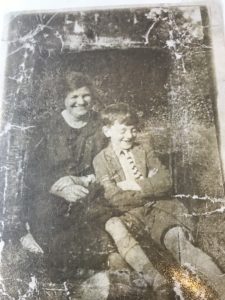
Patrick:  I’d settled on it from the start. This was partly because I always need a few unanswered questions to energise my fiction and the more I saw of Laura, in old photographs, the more I needed to know who she was. But it was equally because the more I found out of Charles’ character – which in many ways was chillingly like that of an expert spy, different things to different people but withholding his essential self from all – the more I realised I’d need to balance his story out with one that was warmer and kinder, more approachable.

Celia:  Were there details of his life that you had to change/add/ supply? How much did you find yourself deviating from his actual life?

Patrick:  I deviate very little from the established facts. I made Laura’s employers unmarried siblings, because that appealed more than the wealthy family of drapers who she actually worked for, but the accident with the boy and the cart that opens the novel actually happened to the Teignmouth doctor Charlie worked for. Beyond the two ships he was on, and the two “ stone frigates” where he also worked, Charles’ war story is largely cloaked in official secrecy so I was able to play with the facts to ensure that he and Ginger went to Malta on the incredible operation immortalised in C S Forester’s The Ship. The trips to Liverpool Playhouse are extrapolated from theatre programmes he’d retained from that period and the affair with a fellow officer is extrapolated from a letter he kept all his life, whose wording I barely alter. Laura’s adventures are made up in their details but she did have evacuees live with her, a black GI was murdered in just the way I describe and POWs did indeed construct a playground right outside her cottage on Tredydon Road. The dogs Jack and Wang were real but the kitten at the end is a simple prefiguring of the several cats in which Charles measured out the rest of his life.

Jon:  Do you think you’ve given Charles Causley a sexuality in the book or coaxed out – or simply given voice to – what was already there?

Patrick:  I was painfully aware of the temptation simply to “gay” Charles, to claim him for my team so I resisted it at every turn by trying to remain truthful to what he confided in his secret, minutely written diaries. These give a powerful sense of a young man who doesn’t fit the accepted mould of manhood, who knows himself to be special or different and who flinches from the sexual expressions of those around him. Then I found a letter he had kept to his dying day which I believe is proof that he had some kind of affair with a fellow officer when stationed at HMS Cabbala, one of those chilling “we need to put all that behind us now” letters probably all too common between men in the 40s and 50s. I will still correct anyone who says Charles was gay, as I think that word implies an acceptance of a sexual identity and, whatever fulfilment he may have found on British Council tours later in life, there’s no evidence that Charles ever arrived at such a self-acceptance.

Jon:  From Rough Music on, the dynamics of mother-son relationships have featured prominently in your novels. There’s a very strong sense in Mother’s Boy that Charles and Laura’s relationship isn’t instead of a marriage but a sexless marriage itself. Is this something you’ve noticed in families you’ve encountered, or was it specific to the Causleys?

Patrick:  
I’ve always been interested in what happens to sexuality when it’s denied natural expression. I think what grows between the Causleys is little different to what happens not just to widows and widowers but to nuns, priests, schoolteachers or anyone put in a position where sexuality is safest left unexpressed. The cliché is that it results in something warped or bad; the truth is that it often results in creative energy. I’m sure we can all think of at least one transformative teacher we had who never married…

Adèle:  Speaking as someone who’s also written a novel about a real person, I’m curious to know if there are any lines you felt you shouldn’t cross? What effect do you think any boundaries you may have set had on the novel?

Patrick:  Scary, isn’t it? I’m still nervous that Mother’s Boy will give offence. So many men and women are powerfully protective of Charles and his memory! My main rule was that I knew I was never going to flesh out the characters of anyone with living descendants, which is why Laura’s numerous siblings barely figure. I also knew I had to honour the known facts, however inconvenient. But it was always a novel, never a biography, so I felt free to combine Charles’ real boyhood and wartime friends into totally fictitious amalgams and to ensure that his tragically doomed ship (in real life HMS Eclipse not my HMS Starburst) played a small but heroic part in the incredible operation to break the siege of Malta.  

Adèle:  You live in Cornwall and one of the striking things about the book is the way you bring places to life. Launceston, Laura’s house, ships etc. Did you walk through all the places you describe? Would you ever write about a place you’d never been to?

Patrick:  Place is crucial to the way I write. Once I’ve settled on a setting for a book I have to go there and immerse myself because I know it’ll become a character in the book. I already knew Launceston well, from my first ten years in Cornwall, when it was just up the road from my house, but to see it through Charles and Laura’s eyes I was lucky to spend a week living in their little house, Cyprus Well, taking daily walks they’d have walked, and working to imagine the bustling industrial town it once was. I’ve never had the sense to set a novel in the Caribbean or Venice or wherever. This novel involved a research weekend in Skegness and my next one will immerse me in Liverpool and Durham!

Jon:  As a British novelist who began work in the late 20th century, do you think it was inevitable that you’d write about the experience of war? (In the way you simply had to write The Facts of Life in the oppressive mid-90s.) Do you even believe in inevitabilities when it comes to writers’ trajectories or inspirations?

Patrick:  I turned sixty in January, which places me squarely in the generation that grew up with bombsites and air raid shelters still very much in evidence. Our parents’ attitudes were so shaped by the direct experience of world war that inevitably that shaped us too. But I didn’t set out to write a war novel; I set out to explore what made Charles and Laura tick, and it rapidly became clear that two world wars were going to form a big part of their story. But I think these things are often accidental in writers’ lives. An idea will just catch and refuse to be shaken off. I’ve promised that my next novel is a sequel to A Place Called Winter, and it is, but I’m realising it’s actually a novel about my mother and grandmother and their marriages.

Linda: 
 All the detail of naval training and life seems so convincing. How did you immerse yourself in that?

Patrick:  It was very hard as I was never one of nature’s war comic readers or war film watchers. But I ended up using that, realising that Charles wasn’t remotely in his comfort zone either when he shipped out on Eclipse. From his diaries I knew the books he was reading, I knew he was a swot and would have swotted up on how to be a sailor. I spent time in Gibraltar and Malta tracking where he’d have gone and what he’d have experienced. The hardest part was the coding, as that part of the war story was kept so obsessively secret for so long that physical material relating to it hard to come by, even in the Imperial War Museum archives. Happily these contain a few relevant bits of recorded testimony from old men recalling their coding training which I could combine with surviving manuals and wonderful details from Charles’ unfinished wartime novel.

Jon:  I can’t imagine a Gale novel without music being described in a visceral way – but what was it like to write about a writer?

Patrick:  I think I cheat a bit in that this is really a novel about someone becoming a writer. For much of the period described, Charles was primarily a musician, which gave me a crucial way into understanding him. He went to war a playwright and returned a poet, and I think that transformation was partly down to the interplay of his rigorous coding training with his earlier training as a pianist.

Adèle:  The book reads as though it cost you no effort at all but just poured on to the page like a spring gushing from the rock. How much rewriting/ editing do you do?

Patrick:  You’re very kind! I do an awful lot of mental churning around and notetaking and try not to start writing the actual text until I’m really clear who my characters are and what their stories are going to be. In this case I benefited from the amazing, if relatively sparse, Causley archive held at Exeter University and spent a lot of time reading through that and trying to join the gaps. The challenge then was to decide both whether there was enough “story” for Laura to balance out Charles’ adventures, and to decide where the novel should end. From there on the process has always felt to be one of painstaking accuracy rather than one of making things up. Very early on I realised that what I was doing was inspired by his poem Angel Hill and seeking to unlock whatever story lay behind its writing and that gave me a great momentum.

Linda:   Now that you’ve finished writing the novel, have the real and fictional Charles Causleys merged in your mind, or do you see them as two separate characters?

Patrick:  I fear they may have done a bit. The same happened with my great grandfather when I turned him into the hero of  A Place Called Winter. The difference here is that we have this incredible body of poetry (and some wonderfully atmospheric prose) left by Charles along with recordings of his voice and I ventriloquised that to such an extent that I’m now having to make a big effort to remind myself what I made up.

Linda:  Do you find yourself thinking differently about his poems now that you’ve been inside his head, as it were?

Patrick:  I don’t, but only because his poems were my constant guide as to who he was. I had a lot of fun not fleshing them out, exactly, but lifting names and scenes and places from them in ways I hope will reward readers who already know them well. His unfinished novel about his time on Gibraltar, his naval short stories and his numerous autobiographical prose sketches are so vivid that at times I almost felt I was taking dictation and not making things up at all.

Linda:  I am struck by the ending of Eden Rock. Do you think Causley is referring to the distance between him and his parents as one brought about by time and death? Or do you think he is regretful that he could never have (or never allowed himself to have) such a close relationship with another person?

Patrick:  Eden Rock is a masterpiece, I think, because it packs so much into so few lines. I believe it was inspired by that moment that comes to us all when our parents have died and we sense most of our life is behind us. He has a sense of his own looming death and of how seductive it is then flinches because he’s not yet ready. But buried inside there is also, I think, the strange dichotomy of the only child – at once confident that they are loved and yet forever left on the emotional sidelines by the love their parents have for one another. Several women of his generation have insisted to me that Charles longed for a family of his own. They say that, irrationally, as though such a longing would be quite alien to a man who also longed for the love of another man . I’m sure he longed for a family because it’s natural to want to belong and a family is a concrete proof of fitting in whereas, whatever his sexuality may have been, he remained always on the edge of things, on the outside looking in.

Celia: What do you think Charles Causley would have made of his fictional self?

Patrick: I think he’d have been appalled. As would Laura. They were both deeply private people who didn’t put themselves forward. I hope he could see, though, that it’s a book driven by affection and admiration and from a desire that more people should visit Launceston and seek out the amazing work he left behind him there.

Celia: How much of the novel is Charles Causley, how much Patrick Gale?

Patrick:  That’s very hard to answer, so I won’t even try!


Adèle: Will there be another book about Charles? He lived to be very old.

Patrick:  Not from me, although he cries out for a scholarly, critical biography which has yet to be written. He needs a Hermione Lee! He lived to be very old but I have a powerful sense that he was a man who created a public persona behind which he could remain intensely private and in a way my job here is done if I’ve managed to suggest what he felt that persona was necessary and what the events were that led to its construction. I’ll be very happy if it simply leads new readers to his poetry, where they can make their own minds up about who he was.

Mother's Boy is published by Tinder Press.

See also: Notes from an Exhibition reviewed by Julia Jarman


Take Nothing With You reviewed by Linda Newbery