Showing posts with label climate change. Show all posts

Monday, 14 July 2025

Q&A: Alison Layland talks to Linda Newbery about her new novel AFTER THE CLEARANCES


"It's not only a Welsh community, but also a large-scale environmental stewardship project that is threatened with destruction, uniting two of the key themes of the novel."

After the Clearances: They were eager to remind themselves, and teach the children, that nothing should be taken for granted; things didn’t just happen at the flick of a switch

In a fractured world, the past is never truly buried and the future depends on what we choose to remember.

On a remote island ravaged by storms, a community of exiles known as the Seeders fight to preserve a fragile, self-sufficient way of life. When Sandy arrives from the mainland bearing secrets, young Seeder Glesni is forced to confront long-hidden truths about her people.

Far away in the wild hills, Bela lives by her own rules. Fierce, unyielding and shaped by the land itself, her voice carries the weight of loss in a world scarred by collapse. But when she encounters Winter, a fugitive from a shadowy government programme, their unlikely bond forges a path that leads back to the Seeders and a reckoning with the myths that bind them all.

Rooted in Welsh history and rich with the rhythms of its language and landscape, After the Clearances is an evocative, hope-filled story of resilience, resistance and what it means to belong in the ruins of what came before.

Alison Layland answers questions from Linda Newbery.

Linda: First, congratulations on writing such a compelling follow-up to Riverflow. As you know, I admired and enjoyed that (a link to my review is below) and now find myself equally impressed by this new novel, which moves forward to 2056.

Alison: Thank you for the invitation; it’s lovely to chat with you here on Writers Review. I'm delighted you enjoyed both novels.

Linda: Although After the Clearances includes some of your earlier characters, it can also be read as a compelling stand-alone. It's difficult to say more without spoilers, but were you already thinking of this new setting and time period while working on Riverflow, or did the idea come to you later?

Alison: Although I knew the connections when I began writing After the Clearances, it wasn’t something I’d had in mind from the start. I was reluctant to let go of the Riverflow world, and since both novels are set against a background of concern for the environment, and the issues surrounding protest, it made sense to look at how my characters would be faring some 35 years on – the world has already changed considerably since 2019, with the effects of climate change becoming ever more apparent, and the UK laws on protest becoming increasingly draconian, so I wanted to imagine how things would be in the 2050s, when the Paris Agreement targets are supposed to have been met, but look unlikely to be achieved.

Linda: Clearances has a particular resonance in Scottish history and is equally dramatic here. Was After the Clearances always going to be your title?

Alison: It wasn’t; in fact, this is the first time I’ve been asked to change a title – no small feat, since I find titles difficult! My working title throughout the process of writing, which had become entrenched in my mind, was Tidings (reflecting both the ‘tide’ and ‘news’ meanings of the English word, as well as the Welsh word taid, grandpa, since Glesni’s grandfather is a significant figure). However, my publisher, Honno, had recently published a novel called Tiding, so we agreed to change it. The ‘Clearances’ in the novel refer to a government scheme of deliberate rural depopulation to new towns, with the aim of greater control and simpler distribution of scarce resources. This policy was officially dubbed the Resettlement, but popularly known as the Clearances (or Digartrefu in Welsh, with the added meaning of ‘making homeless’), with all the historical associations. There is a similar colonial feel to the hints in the novel at typical English attitudes to the Welsh language and culture.

Linda: I liked the framing of the story with the viewpoint of teenage Glesni, who was born on the island, Ynys Hudol, and has never known any other life. We meet the various other 'Seeders' as established members of the community (apart from Sandy, the new arrival), gradually learning about their occupations and experiences before coming to the island - Cai, for instance, had been a policeman who became disillusioned with increasingly draconian measures towards protestors. I found this effective - too much of this from the beginning would have taken our attention away from the island set-up. You obviously thought in great detail about Seeder philosophy and ground rules - there are sections of their manifesto, or creed, in the book. Was this your starting point, or did you elaborate as you got into the story?

Alison: My story always featured the Seeders as an idealistic community, living apart from the world but trying to establish a blueprint for a new way of life, kinder to both the environment and people. At first, I introduced various aspects of the community’s rules, customs and values, largely from Glesni’s point of view, within the main narrative, but at a later stage decided I could say more, while interfering less with the story, by incorporating extracts from Seeds of Change, the founders’ record of their experience and a blueprint for the community. I found it surprisingly easy, presumably since the community’s ethos was already embedded in my mind, and founder Edith Turner’s voice flowed readily (the pamphlet is credited to both founders, but for some reason I think of it as her voice). The hard part was slotting the extracts in, at the beginning of the relevant parts of the novel and at key points in the narrative, while taking care to edit out the previous references as appropriate, to avoid repetition.

Linda: Bela's sections are different in tone and style from the rest - first-person and very direct, a stream of consciousness. Living in the woods, in solitude until the fugitive Winter comes into her life, she is alone with her thoughts and impressions. Did you decide on this approach immediately, or was it something that grew from the writing?

Alison: Bela was there as a character from the start, as was her voice and attitudes. However, as I tend to make things up as I go along (I’m very much a ‘pantser’ rather than a ‘plotter’, to use the common writers’ terms), I only worked out where her story fits in as the novel developed.

Linda: It does take the reader a while to realise how Bela's sections connect with those about the islanders - it's a puzzle that slowly comes together, with hints along the way. Did this require careful tracking as you wrote - i.e. what you want the reader to guess at any point, and how soon the links and connections should be revealed?

Alison: It definitely required careful attention, but more at the redrafting and editing stages – which is how I tend to work. In the finished novel, some aspects are maybe revealed sooner than I intended, though it has varied from reader to reader. As I got feedback from early readers, it became clear that there were certain connections that some people were missing altogether, which made me realise I was perhaps being a little too subtle! I won’t talk about specific examples because of spoilers, but I hope I’ve managed to retain a certain amount of mystery without being downright confusing!

I did apply careful tracking throughout, as I always do when writing. I have a detailed timeline, both of characters’ backgrounds and events referred to – in the characters’ past but our future. I also have a detailed outline of each chapter with key points, both to ensure balance between chapters from different characters’ points of view, and also so I can detect and correct continuity issues if, or when, I move things around.

Linda: The main part of the story is set in 2056 but we're referred back to a dramatic incident in the 2030s in which some of the island community may have been involved. That the UK (not Welsh) government plans to take over lovingly restored land for a dam and reservoir to provide water supplies - for England! - was particularly poignant. Were you thinking of real-life settings where this sort of thing has happened?

Alison: Yes; the fictional Irlas Dam incident is based in part on the Llyn Celyn dam and reservoir. In the late 1950s/early 1960s, the Tryweryn river valley was dammed and the Welsh village of Capel Celyn drowned, to form what is now known as Llyn Celyn reservoir, which to this day provides water for the city of Liverpool. Despite extensive protests, both by the villagers themselves and much further afield, the project went ahead, drowning a traditional Welsh-speaking rural community. It was an significant event in the burgeoning Welsh language movement, which ultimately led to the language being given its due status in Wales, and to the fight for devolution. The beautiful and apparently peaceful waters of Lake Vyrnwy and the Elan valley reservoirs conceal similar tragedies, but it was Tryweryn captured the public imagination. This was partly due to its immortalisation in a famous graffitied slogan near Aberystwyth in the early 1960s that has become an icon – it even has its own Wikipedia page if you want to read more. The slogan Cofiwch Dryweryn (Remember Tryweryn) has seen a revival in recent years, with copies springing up throughout Wales.

In After the Clearances, it is not only a Welsh community, but also a large-scale environmental stewardship project that is threatened with destruction, uniting two of the key themes of the novel and highlighting the interconnectedness of social and environmental issues.

Linda: The 'Seeders' community on Ynys Hudol is convincingly drawn - the daily lives of the inhabitants, their communal beliefs and practices, but also the conflicts and tensions. Some members of the group are described as 'purists' - they want to live entirely self-sufficiently without recourse to trips to the mainland, or the use of money, and without harvesting fish from the sea - while others are more pragmatic. All this has the ring of truth about it which I feel must surely come from your own experiences with activist or community groups?

Alison: It’s largely human nature but yes, experience of community and activist groups comes into it! Although the Seeders are an idealistic community with a vision of how to live in the face of the effects of climate change, I wanted to make sure that they’re realistic, not all sweetness and light. There are always differences in opinion. For instance, there are constant debates within activist groups about whether it’s more effective to undertake direct action or concentrate on community-based activism, which takes time that we can ill afford to build up. I believe we need both – the attention-grabbing actions are still needed in the face of government inaction, but these need to be backed up by work at grass-roots level, both to do essential work in the community, but also to build up acceptance of, and support for, more radical protests.

Despite differences in opinion, the shared vision – both in real life and in the novel – is more important than the differences; my experience, for instance with deliberative democracy in people’s assemblies and guarding against the build-up of hierarchies, fed into the Seeders’ system of governance and decision-making, with Gatherings and regularly rotating co-leaders.

As far as the details of daily life are concerned, I enjoyed a number of fortnight-long stays on Ynys Enlli/Bardsey Island, which was the inspiration for my fictional Ynys Hudol. The guest accommodation there is lovely, the welcome warm and the island truly atmospheric, whatever the weather, but the houses have no electricity or running water and the facilities are basic (though there is excellent provision for guests, I hasten to add). These experiences helped to feed the detail of what life for the Seeders would be like. It also helped me become immersed in the atmosphere of the island – you can get a glimpse of this in the lovely video my daughter made on location to accompany the launch of the book. 

Linda: After the Clearances could be classified as cli-fi. All fiction set in the present day should surely at least include references to the existential crisis we all face, while stories set in the future will need to look at how the climate emergency has been addressed and how humanity has adapted (or failed to). Are there ‘cli-fi’ titles you particularly admire?

Alison: I recently loved The Wager and the Bear by John Ironmonger, published by Fly on the Wall press. With relatable characters and a brilliant combination of humour, tragedy and the tackling of serious issues, it’s the kind of enjoyable novel perfect for drawing people in – it’s made its way round my family with the speed of a calving glacier!

Another climate fiction novel I’ve particularly enjoyed is the magnificent Playground by Richard Powers, which does for oceans what The Overstory did so powerfully for trees.

And of course, there’s your own The One True Thing, a beautiful novel which may not immediately appear to be climate fiction, but has love of the environment and natural world firmly at its heart, as you suggest in your question.

Linda: Thank you! Can you give us any idea of what you'll write next? Are you thinking of making another leap forward in time with some of these characters, or will your next project go in a different direction?

Alison: I haven’t started writing a new book yet, but I’ve got ideas for Bela’s story in my mind – the events that led her to where she is now, and what shaped her unusual personality. Alternatively, I’m toying with the idea of connected short stories – before I began to write After the Clearances, I had an idea of people on Ynys Hudol sitting round a campfire, or the benches of the community’s roundhouse, sharing their stories. This didn’t come to pass, but may well make its way to the page in future!

Linda: Thanks so much for sharing these insights, and I hope After the Clearances will find its way to huge numbers of appreciative readers!

After the Clearances is published by Honno Press.

Linda's review of Alison Layland's Riverflow

Monday, 31 March 2025

Q&A: Leena Norms answers questions from Celia and Catrin Rees on HALF ARSE HUMAN


"This is the only self-help book that will tell you to give up. Except ... you don't need to give up, do you? Because you didn't start.

Me either."

Leena Norms is a poet, vlogger. podcaster and presenter. She has amassed over 25 million views on her YouTube channel and has 199K followers. She was named by London Book Fair in 2020 as Book Vlogger of the Year, and was shortlisted for the Bookshop.org 2022 Indie Champions Award and for the Best BookTuber prize at the 2022 Blogosphere Awards. Leena received the London Book Fair Trailblazer Award in 2019 and the Bookseller Rising Star Award in 2016 for her online book campaigns and was a Winner in the Indie Champions Award, Bookshop.org, 2024.

In 2022 Leena published her debut poetry collection Bargain Bin Rom-Com (Burning Eye Books) and in 2024 Half Arse Human, a self-help book with a difference. Leena has worked with Icon Books, Pan Macmillan, Telegraph Books and Penguin Random House. She uses her YouTube Channel to talk with engaging verve and and real passion about everything: poetry, politics, coping in your twenties, books and reading, practical fashion and protecting the planet.

YouTube: https://www.youtube.com/@leenanorms
Podcast: https://leenanorms.com/no-books-on-a-dead-planet
Instagram: https://www.instagram.com/leenanorms
X : @leenanorms


Celia: A self-help book with a difference. A book for those who are, well, half arsed about self-help in the first place. If you can identify with that, if you are, or ever have been, half arsed about making choices about your life, whether that be style (what clothes to wear), going vegan (what to eat/not eat), your career (or lack of it), your home (clutter, décor, bins etc. etc.), your body, your future, if you’re deafened by all the conflicting advice coming at you from all directions and if your heart sinks at the very thought of dealing with any of it, then this book is for YOU.

Despite the jokey title, this book is serious in its intent. It’s for all of us who serially fail to: keep New Year’s Resolutions, stick to diets/exercise regimes/morning rituals, work schedules and never get round to de-cluttering. Leena knows all the cut outs and excuses. There’s nowhere to hide. Leena’s book will take you from full time hoverer (read the book and you’ll understand) to whole arser and it's all backed up with science. The girl has done her research. I absolutely loved it. One of the best self-help book that I’ve ever read, and I’ve read a fair few. Throughout the book, Leena’s honesty shines through and resonates. She backs up each chapter with her own fears and failures and all the ways she’s found to overcome them. The penultimate chapter is entitled ‘Hope’ and this is what the book gives you. If Leena can do it, I can do it and that makes it possible to whole arse whatever you want to do.

First of all, have to say, I’m no stranger to self-help books, they have been my ‘go to’ in times of stress and have been for more decades than I care to count. Yours is one of the best. My daughter, Catrin, agrees. She’s a lawyer, and no stranger to self-help books and courses, either, but she loved it. She’s ‘all in’, too. While my take away was Hope – Change Is Possible, hers was Action – how do I effect change? A generational difference? I don’t know. Anyway, we came up with these questions together, so here goes:

Celia (CR): Can you share the when, where and why of the idea for Half Arse Human?

Leena (LN): I’ve always been a bit of a natural half-arser but ashamed of it - I tried to squash my instincts for shortcuts and become someone who was thorough in all aspects of their life. As I improved, the catch became clear: perfection wasn’t possible, and trying to hone all aspects of my life was resulting in serious burnout!

It occurred to me that if I fess-up to half-arsing (and explore what I suspect to be true: in most areas of our life, half-arsing is all we have the resources for) and start intentionally doing it, I might be able to pick a few things that matter to me and focus on them, without feeling ashamed to have not mastered it all. Intentionally meant looking at each aspect of my life and thinking ‘if I only put in half the effort society expects me to, which parts of the task would I prioritise?’

CR: Does Half Arse Human have a message beyond purely personal self-improvement?

LN: As I started honing my half-arse muscles, I also started becoming more aware of all the things we need to urgently change about society in order to adjust for the new coming climate emergency - and noticed how frequently the focus is on individual change rather than collective change. I thought ‘hang on a minute, if preserving the PLANET isn’t a group project, what is?!’

I began ‘half-arse Veganuary’ - a challenge encouraging people to join cutting down on dairy, eggs and meat in January, even if they weren’t able to be strict about it. It’s collectively that we need to reduce, so if many hands make light work, surely many mouths make… easier chewing?! It caught on and I love seeing people do half-arse veganism where they might not have participated before at all. That approach started spinning out of control, and I realised it made sense in lots of contexts, from clothes to careers to conservation – so I started writing about half-arsing in those contexts too.

CR: Half arse vegan really made sense to me! You back up all you're saying and, for me, one of the real strengths of Half Arse Human is the depth of your research. What were your go-to sources?

LN: The library of course! There’s also some really well researched podcast series out there that are always very well sourced. In particular I love Maintenance Phase, Science Vs and The Financial Diet.

CR: What was/is your intention behind Half Arse Human? What would you like the reader to take from the book?

LN: I’d love for them to feel invited back into their lives, not as a failing groundskeeper, but as a realistic landscaper - that it’s not shameful to admit that we’re only running on half a tank and to strategise accordingly. In fact, being a bit more slapdash can move you closer to your goals than sitting on the sideline - and you’re bound to have a lot more fun along the way!

Catrin Rees (CJR): How do you half arse an excess of small choices when they are stopping you from doing anything at all?

LN: See if there’s a theme running through all the micro-decisions that are on your plate - is it about who/what is prioritised? Time? Energy? It’s good to set a Manifesto, whether that’s for your day, your week or your life (What is it about? What is it trying to achieve?) and then see which tasks on your to-do list serve your mission and which are just extras that snuck on there by default.

CJR: Do you have one or any quick practical fixes to snap out of spells of procrastination?

LN: Halving the task you’re supposed to be doing and doubling the time you’ve allocated to it - even if just for now. Lowering the bar and lifting the restrictions can make it easier. Also the promise of a Curly Wurly at the end, that always helps ;)

CJR: Have you any half arsed tips to get writing a first book in a busy half arsed life?

LN: Tell everyone! Blurt out how excited you are about it, how much you’re enjoying it, bring people in on your mission - they’ll be much more understanding when you bow out of things to go and write, and can often pitch in to give you the time you need. Just like with children, writing a book takes a village - so go ask your villagers!

Half Arse Human is published by John Murray

Monday, 26 February 2024

RIVERFLOW by Alison Layland, reviewed by Linda Newbery


"It’s rare and refreshing to read a novel set in the here and now that has climate issues so firmly at its core."

This novel was a welcome surprise that came to me via a roundabout route. It began when I attended a Society of Authors ‘at home’ event – a workshop hosted by Lauren James, author of The Loneliest Girl in the Universe and Green Rising, and founder of the Climate Fiction Writers League. The focus of the session was how to bring climate concerns into fiction set in the present day – not necessarily foregrounding the various issues, but rather weaving in details as part of the daily lives and concerns of the characters.

I find it irritating to read fiction set in the present day that makes no reference to the climate emergency – especially when characters are taking flights here and there, driving big cars and eating steak in restaurants. It’s almost as if there’s a parallel world to ours with no looming crisis and with no need to change and adapt. It seems, both in young adult and adult fiction, that climate awareness is largely limited to ‘cli-fi’ – fiction usually set in the future, often involving fantasy. (An honourable exception to this is Eleanor Catton’s Birnam Wood – see our summer round-up.)

After the workshop I joined the Climate Fiction Writers League and was invited by Lauren to write a conversation piece with another author. This author turned out to be Alison Layland, whose novel, Riverflow, was published in 2019. As I haven’t yet published adult fiction with an environmental theme (working on it) Alison is to read my non-fiction title, This Book is Cruelty Free – Animals and Us. (For anyone who doesn’t yet acknowledge the link between animal agriculture and the climate crisis, please read the book, or for a more comprehensive overview, Philip Lymbery’s Sixty Harvests Left.) 

Knowing nothing of Alison Layland or her work, I found myself immediately drawn to her characters, setting and plot. Riverflow is set in a small Shropshire village, Foxover, close to which Bede and Erin, a couple in their thirties, have lived off-grid on a smallholding for many years. Until eighteen months ago they shared Alderleat with Bede’s uncle Joe, until he drowned in the surging river, leaving Bede unable to accept that his death was accidental.

The frictions and rivalries of a rural community are convincingly depicted. Bede and Erin, former activists, clash with local landowner Philip Northcote who’s developing a fracking site. Bede, clever at mechanics and problem-solving, is an idealist, probably on the autism spectrum and at times infuriating to live with; to some villagers he’s known as Eco, a nice demonstration of the ease with which people can pigeonhole and ‘other’ an outlier, avoiding the inconvenience of acknowledging that his views are both valid and necessary. He and Elin are devoted to each other, but with the unavoidable sticking-point that Elin wants children whereas Bede thinks it would be irresponsible to bring a child into this threatened world. Elin, too, tries to steer a calm course through village conflicts while Bede can never curb a sarcastic or angry response when challenged.

Partly through snippets of the journal Joe kept hidden, we’re drawn into the backstory of Bede’s upbringing. Never knowing who his father was, he was brought up by his mother until her death, when her brother Joe took him in. But Joe had secrets of which Bede is unaware and which begin to threaten the self-contained life he and Elin have built at Alderleat. The plot centres on a series of incidents involving Philip Northcote, his widowed mother Marjorie with whom Joe had a close relationship, and attractive newcomer Silvan, Northcote’s gamekeeper, who befriends Bede and Elin. Bede is apparently being framed for acts of minor sabotage – releasing pheasants reared for shooting, scratching the side of Northcote’s Bentley – and then for a far more serious crime. The revelation of who's behind this malice is cleverly constructed, with several clues hidden in plain sight.

What makes Riverflow so appealing is the deft and delicate portrayal of the shifting relationship between Bede and Erin, alongside the details of daily life which are always underpinned by environmental aspirations and what it’s practical to achieve. It’s rare and refreshing to read a novel set in the here and now that has climate issues so firmly at its core.

Riverflow is published by Honno Press. The conversation piece between Alison and myself is now online here. 

Monday, 6 February 2023

THE FLOW by Amy-Jane Beer, reviewed by Linda Newbery


" ... conjures natural surroundings, weathers, landscapes and of course flowing, falling and trickling water with striking immediacy." 

Linda Newbery edits Writers Review. Her latest publication, This Book is Cruelty Free: Animals and Us, is a guide to compassionate living for teenagers and adults.

"Something happens to our brains when we stare at moving water: a sort of broad, effortless attentiveness," Amy-Jane Beer wrote in a Guardian feature, and I think most of us recognise this. "Spend a quiet hour on a riverbank watching water slide by," she writes in her introduction here, "and you might find yourself wondering where it comes from, and where it might be going. You might even ask yourself What is a river? The answer is simultaneously simple enough that it is taught to nursery-age children, and vast enough that the mind struggles to hold it."

This expansion from immediate mental and physical sensations to the changes wrought over aeons of Earth history makes The Flow a thoroughly engaging read: personal, confiding and anecdotal, but also packed with information about geology, wildlife and botany, folklore and place-names. An experienced and apparently very brave kayaker, Amy-Jane Beer lost a close friend in a river accident. On a kind of pilgrimage to the river gorge in the Howgills where her friend Kate tragically died, she resolved to explore, know and appreciate waterways in all their moods and forms. She portrays natural surroundings, weathers, landscapes and of course flowing, falling and trickling water with striking immediacy.

"When we try to pick out anything by itself, we find it hitched to everything else in the Universe," wrote John Muir, and The Flow is a testament to this, showing the interconnectedness of ecosystems, how they can be damaged and how, sometimes, they can recover from human interventions, if given time and space to do so. 

No nature writing of our times can be free from a sense of grief at all we have to lose: or even, at times, seem intent on losing. There's anger and frustration here as well as appreciation: about the (now well-documented) pollution of the River Wye by run-off from intensive poultry units, and the inadequacy of the Environment Authority to prevent or even properly measure river pollution in general; about the modern love of tidiness that too often wants river-water channelled quickly downstream between neat banks, at the expense of water-meadows and floodplains which could do so much to absorb groundwater; and about the sobering fact that around 97% of rivers in England are legally the property of landowners, so in most cases to canoe, swim, paddle or snorkel in them is to trespass. (I didn't know that.) Amy-Jane Beer points, too, to the deliberate and false separation of town and country in attempts to keep control over land and resist change (something I'm well aware of, as a rural resident fiercely opposed to hunting and shooting). She comments on the hostility often shown to landscape restoration: "a minority in positions of significant influence continue stoking an 'us' and 'them' narrative." Every challenge she's met with on a river, she says, has come from a privileged white male - something that's come to media attention in recent weeks, with the attempt of Devon landowner Alexander Darwall to ban wild camping on Dartmoor; Amy-Jane Beer has been vocal about that on behalf of Right to Roam. More positively, she meets in her travels various people who share her deep love of ecosystems and work to improve them, whether by planting trees to slow the course of a river, introducing beavers to Devon rivers or rewilding their own patch of land.

Each chapter is focused on Beer's exploration of a particular place and habitat - by walking or climbing, wild camping or swimming in icy water.  She's a likeable and immensely knowledgeable companion, whose sense of wonder at the grandeur, variety and sheer incomprehensible age of the Earth pervades her writing.  Explaining rock formations to her young son, " ... for a moment I grasp a bigger picture. This weird formation isn't just on the surface. We're standing on millions of cubic metres of it - a structure that is both skeleton and shell, as much conduit as barrier - and all of it potentially subject to the influence of running water. There are rivulets and rivers down there. Some of that drizzle we walked through earlier - freshly condensed in the air above us - has already gone on below, on its way to becoming something else. Seeping, washing, leaching, dissolving, depositing, freezing or vaporising. It has no destination, only spaces and forms it passes through, and occasional organic or mineral partners, any of which might sit out of the dance for a matter of hours or billions of years, before the water whisks them back into play." Eloquent, insightful, exhilarating - it's no surprise to find in the acknowledgements that Beer is an admirer of Robert Macfarlane, whose readers will find much to enjoy and appreciate here. 

The Flow is published by Bloomsbury.

More nature writing reviewed on the blog:

Sightlines by Kathleen Jamie, reviewed by Sue Purkiss


Natural Selection: a Year in the Garden by Dan Pearson, reviewed by Linda Newbery


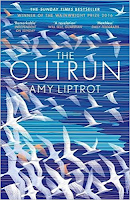
The Outrun by Amy Liptrot, reviewed by Paula Knight


12 Birds to Save your Life - Nature's Lessons in Happiness by Charlie Corbett, reviewed by Linda Sargent


Monday, 11 January 2021

Guest review by Jane Rogers: THE GREAT DERANGEMENT by Amitav Ghosh


"This is the best book I’ve found in a year of seeking out fiction and non-fiction about climate change."

Jane Rogers has written ten novels, including The Testament of Jessie Lamb, Man-Booker longlisted and winner of the Arthur C Clarke Award 2012. Other works include Mr Wroe's Virgins (which she dramatised as a BBC drama series), and Promised Lands (Writers' Guild Best Fiction Award). Jane also writes short stories, radio drama and adaptations, and has taught writing to a wide range of students.

Her new dystopia Body Tourists was published in November and is now available in paperback. For more information, see Jane's website. 

This is the best book I’ve found in a year of seeking out fiction and non-fiction about climate change. Quite apart from being beautifully written, it’s continually surprising and thought-provoking. Ghosh invokes the scientific, philosophical and spiritual traditions of the global East as well as the West, exploring ways of living in and understanding the world, which are far outside our colonising Anglo-American, Northern European, Protestant mindset. My thinking was repeatedly turned on its head.

And every idea he discusses emerges from a real-life incident. It may be an event from Ghosh’s own life, like being caught in a tornado in Delhi in 1978; or it may be historical, like the gloom of 1816, the ‘year without a summer,’ thanks to skies full of volcanic ash. The range of these illustrations reveals a staggering knowledge of history, geography and geology; this reader leaned something new on every page.

The book started life as four lectures presented at the University of Chicago, and it retains the lean essay structure, with each part pursuing a specific line of argument as to why humanity has failed to engage with the climate emergency. He calls that inability ‘the great derangement’. Why do we continue to live as if the earth’s resources are infinite? Why do we burn coal, drive petrol cars, take flights, drill for oil, heat our homes with gas and destroy trees across the world, from the Brazilian rainforest to the ancient English woodlands being felled for HS2? We know these activities will cause catastrophe for our grandchildren. What is wrong with us?

As a novelist, I was most challenged by part 1, ‘Stories’. Ghosh asks, ‘What is it about climate change that the mention of it should lead to banishment from the preserves of serious fiction? And what does this tell us about culture writ large and its patterns of evasion?’ He puts forward evidence for several explanations; I think the most radical is his suggestion that the nineteenth and twentieth century novel has closed down on communal experience and is simply interested in the narrowly ‘realistic’ day-to-day life of the individual. Since I write, and love to read, these kind of character-based novels, this felt like a serious put down. But his arguments make sense:

‘Before the birth of the modern novel, fiction delighted in the unheard-of and the unlikely. Narratives like those of The Arabian Nights, The Journey to the West, and The Decameron proceed by leaping blithely from one exceptional event to another.’  Myths, legends, epics, fables and chronicles are staples in the story-telling history of many – maybe all – human cultures. They range over vast expanses of time and space, where humans are challenged or helped by supernatural beings, intelligent animals, or the elements. Character is not central.

The modern literary novel reduces this scope to as little as one day in one place; silences the non-human; and charts ‘an individual moral adventure’. Ghosh sees nineteenth century ideas of progress, and rational control over the natural world, as feeding into this literary development. Natural disasters and sentient non-human forces have been banished to genre fiction, to Sci Fi, Fantasy and Horror.

‘At exactly the time when it has become clear that global warming is in every sense a collective predicament, humanity finds itself in the thrall of a dominant culture in which the idea of the collective has been exiled from politics, economics, and literature alike.’

I can’t help feeling he is right, though I would love to disprove him. It’s humbling to realise just how much one’s world view is determined by the time and place of one’s birth. But if he can lead readers to question themselves, then as a writer he is surely succeeding, beyond the wildest expectations of most of us. If you’ve read this book, I’d love to hear your take on it.

The Great Derangement is published by University of Chicago Press

See also: Jane's review of Home Fire by Kamila Shamsie

Her account of adapting Chinua Achebe's No Longer at Ease for BBC Radio 4

Jane's latest novel, Body Tourists, reviewed by Linda Newbery