Showing posts with label rural life. Show all posts

Monday, 29 September 2025

Bookseller feature: Richard Hayden of THE RYE BOOKSHOP chooses CRAFTLAND by James Fox


"Craft, it is implied, is for hobbyists at home; instead, this tiny and shrinking minority do work. Hard work ... "


Richard Hayden and Emma McGrath
Launched ten years ago, The Rye Bookshop is one of the smallest in Waterstones’s range of boutique unbranded shops. All the stores in this select portfolio are in small towns and are granted greater autonomy and independence. As one might expect from a rural location, Rye specialises in nature writing but also features a wide selection of local books, the very best in new fiction and non-fiction, and a lovingly curated children’s section.
 

Perhaps the first thing to strike you when you start reading James Fox’s Craftland is how few practitioners of the various skills on show actually consider themselves craftsmen or women. Craft, it is implied, is for hobbyists at home; instead, this tiny and shrinking minority do work. Hard work. 

Once, Britain was an entire land of manual workers, designers, builders, tinkerers, engineers, smiths, wrights, coopers, bodgers and Uncle Tom Cobley and all – people skilled with their hands and who profoundly understood their land and (whisper it) their craft. 

Fox sets out to show us that the country still produces the things it has always produced, just in far fewer and, regrettably, ever decreasing numbers, skills stripped away by dynamic changes in the local, national and global economies. 

As such, Craftland begins as a journey around the UK, looking for the pre- and post-industrial trades that have for varying reasons begun to fade away. It asks can they be saved? Should they be saved? The answer to both, of course, is yes, but Fox takes the questions further and looks at how it could (or, indeed, can) be done. 

During his search, Fox can often appear wide-eyed, almost naive, in his initial comprehension, but he is never mawkish nor sentimental. In fact, as he learns the details of the work and challenges, so the hardness of the lives lived by many of the practitioners is accented in his writing. These are often difficult lives. Hard but fulfilling. There are no wistful lingering looks back at a supposed long-lost comfortable bucolic existence.

 Instead, he explores the extent of the problems and then considers solutions: some theoretical, others already being put into practice. The significant issue faced by most of the British crafts featured is that as the economies around them changed so, too, did the nature of demand. For instance, Fox charts how hedges and fences replaced the dry-stone walls of farms in Northern England and Scotland simply because they were cheaper and easier to maintain. 

But, as Fox shows, many crafts can be repurposed to suit a modern market, saving the skillset from extinction – such as those dry-stone wall builders who now renovate property boundaries of private homes rather than miles of sheep farm. Or the woman who rescued river reed harvesting and turned it into an international export industry. Crucially, these efforts are not driven by charitable funding or heritage grants but by pure business sense. 

Craftland succeeds wildly in delivering upon its thematic promise. It is also a literary study in quality, written as it is in wonderfully accessible language and with a structure that explores its ideas clearly and with colour. Each chapter ends on a philosophically inclined portrait of the craft in action – renovated church bells ringing out for the first time in decades was an especially emotive sequence. 

In addition to the history and the interviews, Craftland is also full of amazing details about unique human elements of our home country, such as the fact that there are 5,000 change-ringing bell towers in England but only 300 in the rest of the world. Or that Scottish thatchers don’t use wheat straw or water reed, as their English counterparts do, but the much more recalcitrant local bracken, heather, marram grass or a whole host of other tough plants. 

Ultimately, Craftland is a history of the past but also of the present. Or, as Fox himself says: ‘The book is nostalgic... for the skills and traditions we think are gone but are actually all around us.’ There is also sadness within its pages as it charts Britain’s passage from the world’s workshop to the more service-based economy that is has become, showing the decline in manufacture, skill-based crafting, and the supply chain-led communities that once thrived here. 

While it admits that Britain is not necessarily materially poorer for that progress, it is perhaps socially and spiritually worse off. Or, at least, deeply changed in a way that has left many bereft. Craftland hopes to highlight the occasional hopeful streams of light that point to the benefits of human manufacturing: as much a history of a potential future as one of a recent past.

Craftland is published by Bodley Head.


Monday, 12 May 2025

Q&A: Adèle Geras interviews Judith Allnatt about THE POET'S WIFE


"I wondered what it must have been like for Patty to deal with John absconding from an asylum not to return home to her and their seven children but to find his ‘other wife’, Mary Joyce."

Judith Allnatt discusses her newly-reissued novel with Writers Review's Adèle Geras.

Adèle: When did you first come across the work of John Clare? His absence from what’s generally taught in schools has always rather surprised me.

Judith: I’ve always loved both nature and poetry and as a youngster I read some of John Clare’s keenly observed poems about the natural world. One particularly stuck in my mind about a hedgehog collecting crab apples by rolling on them until they stuck to its spines and could be taken back to its nest. I was charmed by the picture of a ‘hedgepig’ trundling along and looking like a head of hair in curlers!

Years later, as a writer living in Northamptonshire, Clare’s native county, I was involved in an arts project that took me into Northampton Library to research local literary figures. I started by reading the journal John Clare wrote about his eighty-mile walk home from an asylum in Essex in which he survived on a diet of ‘grass and tobacco’. Reading his letters from a later period, when he was a long-term patient at Northampton General Lunatic Asylum moved me. Through his own words you could trace his heart-breaking mental decline.

Sometimes he thought himself to be Admiral Nelson or Byron or a boxer called Jack Randall. I became interested in him not just as a marvellous poet and naturalist but as a man. When I found out that John was obsessed with his childhood sweetheart, Mary Joyce, and believed himself to be twice married, to both his real wife, Patty, and to Mary, I knew that here lay the tinder for a novel. I wondered what it must have been like for Patty to deal with John absconding from an asylum not to return home to her and their seven children but to find his ‘other wife’, Mary Joyce.

Adèle: How well do you know Clare’s part of the world? Are you a native? If not, what drew you to this landscape, or perhaps it’s only through the poems that you met it…

Judith: I’ve lived in Northamptonshire for almost forty years but at the opposite end of the county to John Clare’s native village of Helpston, so it was a joy to explore an area that was new to me. As I drove towards Helpston for the first time, I remember performing the usual visual gymnastics of the historical writer to sweep away all evidence of modernity: cars, tarmac, bungalows, pylons and railway crossings. What was left was a blonde landscape of cut hay and pale, stone walls reminding me of John Clare’s description of wandering in such a scene before harvest ‘in the mealy light of waking day’.

The village evidences the esteem in which John Clare is held. The tiny cottage that once housed his family of eleven is restored and partnered by a museum. On a Victorian monument, his poems are carved in stone and in the churchyard on his birthday a living memorial surrounds his grave: a spread of Midsummer Cushions, squares of turf studded with flowers, placed there by local school children.

Over many trips, I also visited Northborough, on the edge of the fens, where the family later moved and where the copses and gentle slopes give way to the flat horizon and huge skies that John Clare found alien and unsympathetic. He longed for his old home and this homesickness perhaps contributed to his illness. From wandering knee deep in grass to find the family’s graves to visiting the mansion, Burghley House, where Clare worked as a gardener, I loved collecting all the little details I needed to build a convincing nineteenth century world.

Adèle: I’m very curious about the novel’s publishing history. What sort of publicity etc did you get? Was the book reviewed etc etc?

Judith: The book was favourably reviewed in The Times Literary Supplement, The Daily Mail and The Times, where Kate Saunders referred to it as ‘affecting and beautifully written.’ It was Book of the Month for Choice magazine and was shortlisted for the East Midlands Book Award. I was also delighted to have comments from writers whom I admire. Clare Morrall called it ‘A fascinating, compelling book written with subtlety and a delicate touch’ and ‘a tender family portrait’ and Charles Palliser said ‘This book is superb’, which is of course just what a writer hopes to hear!

As well as several bookshop launches, the novel also had a wonderful launch at the John Clare museum. There I had the opportunity to do a reading in the cottage itself, standing in the very place where Clare would have written some of his poems on old sugar bags and any scrap of paper he could find, and where Patty would have arrived as a new bride full of hope and excitement about their marriage.

Adèle: Following on from this, can you say anything about the new cover? It has quite a different feel to it … how did you choose it? Did you choose the first one?

Judith: Originally, when Random House published the book, I had only a minor input into the cover design. Having the book republished through Writers Review Publishing offered an opportunity for autonomy in its presentation. I collaborated with a designer who freelances for the mainstream publishers to produce a cover that is more contemporary in style and that includes more elements drawn from nature, to reflect the rural world in which the Clare family lived. This was important to me as I feel that John Clare’s love of his environment and the desire to protect it, and his awareness of the natural world and the place that Man has within it, have struck a chord with us now. Connections are being made between the depredations of enclosure and modern spoliation on a grander scale and John Clare’s words have found new resonance.

The kissing figures in silhouette are intended to emphasise Patty and John’s romance but as a touch of foreshadowing a wedding ring hangs, caught on a twig, as if lost or thrown away.

Adèle: What I always want to know from writers is the nitty gritty! Where do you work? Are you a plotter? Do you write on a laptop? Do you have stationery quirks? And so on…

Judith: My methods are quite ‘old school’! I always write the first draft by hand and do the main edit when putting it on to the computer later. I use big ‘Pukka Pad’ notebooks and write on alternate lines so I have room to insert changes. I write on the right hand side of the pad and make all kinds of notes on the left hand page – spider diagrams; sometimes even drawings that help me imagine a scene or decide the characters’ positions and attitudes within it. I have a very broad plan before I start but it might be no more than knowing the beginning, a climactic scene and the ending. I always have a picture in my head of the last scene and this acts as a kind of guiding light for the novel, the point I’m aiming towards even though at the start I may have little idea how I’ll get from A to B.

While I do jot down thoughts for a book anywhere, the heavy-duty work gets done at the library where there are no distractions. I usually do a six-hour stint and feel that I need that long to immerse myself properly in the novel’s world. I think of it as letting down a bucket into a deep well to find what’s at the bottom and it takes time to let down that rope.

Adèle: You seem to know a great deal about e.g. 19th century agriculture! Also childrearing…what kind of research did you do?

Judith: I was brought up on the farm of the Agricultural College where my father taught, so the rhythm of planting and harvest and the tending of livestock went on all around me. My dad, a born countryman, would tell me about the ‘old ways’ of farming as well as about modern practices. Later, when writing the book, he directed me to the sources I needed to answer such questions as ‘what are windrows’ and ‘why was a stook left at the field entrance when harvest was gathered in?’ The experience of walking the ground where the novel was to be set, was also invaluable as it gave me ways to describe the social history that I learnt about through reading: rural poverty, the greed of the powerful, the enclosure of the countryside and the passing of a way of life.

Finding out about Patty was the major research challenge; information about her is sparse. From the handful of poems written by John to Patty and from his letters and journal writing we know that she was attractive and ‘artless’ and that the lovers had a common interest in the natural world. We know that she was nineteen when she met John, that her family was above his in the social scale as they had six acres, pigs and a cow, and that her parents had aspirations for her to marry ‘up,’ and had a local shoemaker in mind. I rooted out other sources about the Clare family: paintings, photographs and artefacts handed down through generations. Then, through reading all the biographies, I looked at the events in the Clare family’s life: births and deaths, John’s courtship, his London popularity and his fall from publishing favour, the fragmentation of his personality and his delusion about being twice married. I imagined how each might have affected Patty and how she might have reacted.

Researching the social history provided detail too about the arduous labour of a countrywoman’s everyday life. To eat, you must first dig, sow, and hoe, to bake, you must first glean, thresh and grind, to have clothes on your back; you must first sew, alter or mend. I concluded that Patty must have been a strong woman to manage all this as well as seven living children and an elderly relative and grew very fond of her as I developed her character to reflect her warmth, good sense and grit.

The Poet's Wife is published by Writers Review Publishing

The other two launch titles for Writers Review Publishing are Mary Hoffman's David: the Unauthorised Autobiography and Linda Newbery's The One True Thing.


Monday, 5 August 2024

Guest review by Penny Dolan: THE PLOT by Madeleine Bunting


"She sets this personal acre within the wider movements affecting the British countryside over the centuries, bringing in the topography, myths, history and custom, and expanding the vision out beyond the Hambleton Hills."

Penny Dolan works as a children’s storyteller and writer. Her last novel for older children, A Boy Called Mouse, was nominated for the Young Quills Historical Fiction Award, and she is currently completing a companion book. She posts on The History Girls, on An Awfully Big Blog Adventure and can be found on Twitter @PennyDolan1.

A bookish friend had praised The Plot by Guardian writer Madeleine Bunting, so when the paperback lay there, face up on the Waterstones counter, what could I do?

I was already interested in the topic: an acre of land on the edge of the Hambleton Hills in North Yorkshire, where the sculptor John Bunting lived and worked from the Fifties. His ‘plot’ was up a rough track, some distance from the cold cottage where his artist wife looked after their six young children. John had, aged sixteen, seen the view from the ridge, and in his twenties, came back to make his live his life in that spot. Once I had come across a similar breathtaking view, from the top of Sutton Bank, a winding hill with a 1:4 incline. I stared, from the car park at the top, out over the Vale of York and right across to the hazy summit of Pen y Ghent, and saw why this was called ‘God’s own county.’

Madeleine Bunting, John’s daughter, wrote her memoir as a way of coming to terms with her father. To me, this was not a book like Helen McDonald’s H is for Hawk, wrung out of deep grief. Instead, Bunting’s book felt brisker, written in anger, puzzlement and sadness, as she tries to understand her father and his love for his remote acre. Named Scotch Corner, the plot is marked on OS Navigator 100.

John Bunting’s passion, even at Ampleforth, his prestigious Catholic school, was carving in wood and stone. He visited the workshop of the Robert Thompson, the ‘Mouseman of Kilburn’ just as, later, he sought out sculptors like Henry Moore, Eric Gill and Brancusi. Returning to the seclusion of the Hambleton Hills and North Yorks Moors, John made a thin living through various commissions and part-time teaching at Ampleforth, where Anthony Gormley was among his students.

What marked Bunting out was that he was one of the young men who ‘escaped’ WWII, but not from its shadow nor its fallen heroes. Returning to Scotch Corner, he built a small ‘memorial’ chapel, as well as an everyday stone hut. Madeleine recalls his carved angel heads atop the doorway, and two crucifix and images of the Virgin and Child inside.

In particular, she describes sitting on the cold floor during mass, squashed between her siblings, because the chapel’s aisle was filled by her father’s life-size sculpture of a fallen soldier. Who was the soldier and why did this lost hero matter so much to John Bunting? And the other admired names she found in his notes? How did they and their reputations, over time, fare?

Gradually, Madeleine Bunting examines her father’s life, and the selfishness of his ’man among men’ attitude. After a day working in the hut, he spent evenings in the village pub, leaving his artist wife with six children in a cold, primitive cottage in the village. ‘It seemed that his belief in the dignity of physical labour meant that my mother’s should never end,’ adds the author. A not unfamiliar situation.

However, The Plot is far more than a single story, and stronger for it. In and among the author’s pursuit of her family story, she writes about the geography and history of that whole area, describing it as ‘a landscape known in reality and in imagination and in memory.’

She sets this personal acre within the wider movements affecting the British countryside over the centuries, bringing in topography, myths, history and custom, and expanding the vision out beyond the Hambleton Hills.

She writes about early flint-workers travelling the ridge; the people who marked the land with barrows; the foreign king who ‘wasted’ the North and made it uninhabitable for three generations; the incoming monks who gave order, wool and beautiful buildings to the area, and of the Scots drovers, bringing flocks of cattle to the markets of the south. She writes of the rise of Romanticism and the individualistic ‘view’ of the landscape; the arrival of sightseers, the railways bringing hunting parties, and the ugly sitka spruce plantations across the North Yorkshire moors. Separately, these histories might seem familiar but her overview is both thoughtful and interesting.

In her last chapters, Bunting considers the area of Hambleton in recent decades. She not only writes about the economic importance of grouse-shooting but also the tinder-box monoculture of the moors. She speaks of machines and pesticides, of the crisis in modern farming and in wider agricultural planning;. In particular, she draws attention to the nostalgia for rural life that has created holiday cottages, second homes and emptied out farms and village communities. Even, she says, her father who came here, in search of old, orderly society, might have seen the idyll disappearing as he carved.

This is, as my friend might have suggested, a very wise, worthwhile and intelligent book.

Afterword

A small but interesting point for food enthusiasts. While she was researching her book, Madeleine Bunting made friends with and relied on Fred Banks, a local farmer and self-taught historian. In the last chapters, Fred and his son Tom decide they cannot make a living from their farm and are thinking about buying a pub instead.

Now, in 2024, The Black Swan at Oldstead is a Michelin starred restaurant, and the main chef is better known as Tommy Banks, of  Roots cookbook fame.

The Plot is published by Granta.

See more of Penny's choices:

Lessons in Chemistry by Bonnie Garmus


Horse by Geraldine Brooks


The Secrets of Wishtide by Kate Saunders


The Cold Cold Ground by Adrian McKinty


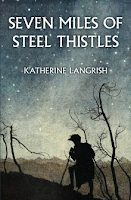
Seven Miles of Steel Thistles by Katherine Langrish


Monday, 1 April 2024

Guest review by Ann Turnbull: THE SHEPHERD'S CALENDAR by John Clare


"I love this book, which takes the reader into the heart of rural life nearly two hundred years ago."

Ann Turnbull
has been writing stories for young people of all ages since 1974. Her most recent book is In That Time of Secrets, a young adult novel about the persecution of Catholics in 1605, set in the Black Country. Find out more at www.annturnbull.com

The Shepherd's Calendar 
was first published in 1827 and has been in print ever since.

John Clare knew village life intimately from his own experience as an agricultural worker in a village near Peterborough in north Cambridgeshire. This book consists of one long poem that takes the reader through a year in the life of country people - beginning with January:

      Withering and keen the winter comes
      While comfort flyes to close shut rooms
      And sees the snow in feathers pass
      Winnowing by the window glass...


It's very easy and pleasurable to read. Here, for instance, is the shepherd with his dog:

      The shepherd too in great coat wrapt
      And straw bands round his stockings lapt
      Wi' plodding dog that sheltering steals
      To shun the wind behind his heels...


And here, the linnets that

      ... flurt their wings and wet their feathers
      To cool them in the blazing weathers
      Dashing the water o'er their heads
      Then hie them to some cooling shed,
      Where dark wood glooms about the plain
      To pick their feathers smooth again.


I love this book, which takes the reader into the heart of rural life nearly two hundred years ago.


The edition shown of The Shepherd's Calendar is published by Carcanet.

Monday, 27 February 2023

Guest review by Cindy Jefferies: UNSETTLED GROUND by Claire Fuller


"These characters are beautifully drawn by Fuller with their frailties and difficulties with the modern world laid bare."

First published in 2001 for children, Cindy Jefferies found success with her Fame School series with Usborne Books, obtaining 22 foreign rights deals. Latterly writing fiction for adults as Cynthia Jefferies, her first title The Outrageous Fortune of Abel Morgan was published in 2018, followed a year later by The Honourable Life of Thomas Chayne, set during the English Civil Wars. Both titles are now available in paperback.

Unsettled Ground took me back to my teenage years, when I was made melancholy by reading some of the Russian classics. There is something of the plight of those serfs here. But while they suffered grinding poverty with no recourse to a better life, this is a very modern, English tale of two marginalised country dwellers.

Jeanie and Julius are fifty-one year old twins, living with their mother in a cottage that hasn’t been updated, perhaps ever. They do have a solid fuel Rayburn, but no bathroom and an earth closet outside. They scrape a living from their large garden, producing fruit and vegetables for sale, as well as eggs. Julius gets occasional work, but nothing permanent, while Jeanie has a weak heart and has never been employed outside the home. When their mother dies suddenly the twins are thrust into the horror of having no money for any sort of funeral, and their precarious existence begins to implode.

This novel made me both sad and angry at the plight of these two characters, especially Jeanie, who has few resources to cope in a society where data is king and electricity for charging gadgets essential. I have known people like this and these characters are beautifully drawn by Fuller with their frailties and difficulties with the modern world laid bare.

There was a point at which I wondered if I could bear to carry on reading but I’m glad I did. There are secrets in this family to be unravelled and they are revealed with skill. Unsettled Ground settles at last into an ending I could believe in without giving me sleepless nights. The gentle, unquestioned love between sister and brother is beautifully done throughout the novel. Highly recommended.

Unsettled Ground is published by Fig Leaf

More of Cindy's choices:


Monday, 25 July 2022

Sixth anniversary special guest: MICHAEL ARDITTI chooses THE RECTOR'S DAUGHTER by F M Mayor


"F B Mayor stands as a link, both stylistic and historical, between Jane Austen and Barbara Pym."

It's our birthday - today we are six! Since July 2016 we've posted 328 articles by an impressive array of guest authors and independent booksellers, with features including round-ups, anticipated reads, virtual awards and Q&As with authors. As usual on our anniversary we feature a very special guest; this year we're delighted that novelist and dramatist Michael Arditti has kindly written this piece for us about a great favourite of his.

Michael Arditti has written twelve novels and a collection of short stories. He began his professional career writing plays for the radio and stage and has worked extensively as a literary and dramatic critic. His novels have been short- and long-listed for several major prizes. He has been a Leverhulme artist in residence at the Freud museum, a visiting professor at King’s college, London, and was awarded an Honorary D Litt from the University of Chester. His most recent novel is The Young Pretender.

F M Mayor doesn’t feature in my copy of The Cambridge Guide to Literature in English, although she surely merits a place between children’s writer William Mayne and Hardy’s The Mayor of Casterbridge. The unjustly neglected Mayor (1872 - 1932) wrote a collection of stories and three novels, of which The Rector’s Daughter is generally considered her masterpiece.

The Rector’s Daughter was first published in 1924 by Virginia Woolf’s Hogarth Press and, in an early chapter, the protagonist, Mary Jocelyn, is taken up by a London artistic coterie, which is surely based on the Bloomsbury Group. The novel was well received, and Mayor was compared to three of her literary heroines: George Eliot, Mary Gaskell and Jane Austen. All of them, incidentally, are referenced here: Mary reads to her father from Eliot’s Scenes of Clerical Life; she alludes to ‘the Cranford ladies’; more obliquely, a maid is named Mansfield.

Mayor insisted that the book wasn’t autobiographical. Although a spinster who, in later life, divided her time between her parent’s home in Kingston and her brother’s house at Clifton School in Bristol, she had a far more active and eventful youth than Mary, having been one of the first women to matriculate at Newnham College, Cambridge, and enjoyed a brief career on the stage. What she does have in common with her protagonist is the clerical background. Indeed, whereas Mary is merely the daughter of a clergyman, the octogenarian Canon Jocelyn, Mayor was the daughter of one and niece of several others, including the Cambridge professor of Moral Philosophy, John Grote.

This ecclesiastical heritage suffuses the novel and gives it its authenticity. The village of Dedmayne (the name is a clue to its character) is defined as a series of negatives. It is ‘insignificant’, ‘without a station’, ‘ugly’, ‘treeless’, ‘on the way to nowhere’ and, most damningly, ‘the social advantages of Dedmayne were on a par with the scenery.’ Mary and her father are the only gentry in the village and act as moral and social arbiters of its rigidly stratified community.

Mayor allows 35-year-old Mary even fewer physical attractions than Charlotte Bronte allowed Jane Eyre. ‘Her uninteresting hair, dragged severely back, displayed a forehead lined too early. Her complexion was a dullish hue, not much lighter than her hair. She had her father’s beautiful eyes and hid them with glasses. She was dowdily dressed.’

Although the rectory is staffed with a cook, housemaid and coachman, Mary is little more than a drudge, caring for her mentally ill sister, Ruth. When Ruth dies, Mary devotes herself to her father, who shows few signs of gratitude, let alone affection. Her life changes when Robert Herbert, the son of one of the Canon’s old friends, takes over the neighbouring parish of Lanchester. Mayor skilfully delineates Mary’s attraction to him, which she hardly dares admit to herself. After one of the most tentative love scenes in literature, Mary is convinced that an understanding exists between them. Then, on a short visit to Buxton, Herbert meets, falls in love with and becomes engaged to the brittle social butterfly, Kathy Hollings.

Mary behaves with absolute propriety, calling on the new Mrs Herbert, who patronises her. She feels utterly isolated, unable to confide in her one girlhood friend, Dora, who is visiting her sister in China, where (in a phrase that would not get past today’s sensitivity readers), ‘the natives are just like children.’ Afraid to admit that Herbert kissed her to her father, whose enjoyment of Scenes of Clerical Life is marred by knowledge of George Eliot’s adultery, Mary is left to deal with her desolation alone.

The second part of the novel shifts its focus from the rector’s daughter to the vicar’s wife. Mayor expertly depicts the wretchedness of the Herberts’ marriage, from which Kathy flees to the Riviera with her malevolent sister-in-law, Lesbia (in this case, the name is not a clue!). There, something occurs, which it would be unfair to disclose, but which effects a sea change in Kathy. These passages inspire Mayor’s finest prose and reveal her deepest sympathies, as she endorses Mary’s belief that ‘Mistakes sometimes turn out right in the end.’

Notwithstanding its excursions to London, the Riviera and Southsea, The Rector’s Daughter is steeped in a village life which was old-fashioned even at the time of writing. Virginia Woolf may have published the novel, but its subject, style and concerns could not be more remote from The Voyage Out and Night and Day, which had appeared, respectively nine and five years earlier, let alone Mrs Dalloway, which appeared the following year. Nevertheless, the book is a middlebrow classic, and F B Mayor stands as a link, both stylistic and historical, between Jane Austen and Barbara Pym.

The Rector's Daughter is published by Virago Modern Classics.

Michael Arditti's The Young Pretender is reviewed here by Adèle Geras.

Monday, 15 November 2021

Guest review by Lesli Wilson: WHAT YOU CAN SEE FROM HERE by Mariana Leky


"With its humour, its unsentimental humanity, and its intimacy, it's a pretty good place to inhabit..."

Lesli Wilson is the author of two novels for adults and two for young adults. Last Train from Kummersdorf was shortlisted for the Guardian Children's Fiction Prize and the Branford Boase Award; Saving Rafael was nominated for the Carnegie Medal and Highly Commended for the Southern Schools Book Award. Both deal with Nazi Germany. Lesli Wilson is half German, was brought up bilingual, and has spent considerable amounts of time in Germany. She is currently working on a novel for adults, set in the very early nineteenth century. 

'An okapi is completely implausible, every bit as implausible, in fact, as the sinister dreams of a woman from the Westerwald.'

The Westerwald (the name means Western Forest), lies a little way to the east of the Rhine. Its tourist site describes it as 'dreamfully unspoilt,' which is amusing, since the entire plot of this novel, set in that area, hinges on the dreams of the narrator's grandmother, Selma. If you want to know what Selma looks like, you can look up Rudi Carrell, the Dutch television host on the Internet. Selma 'resembled Rudi Carrell so perfectly that.. in our eyes, he was nothing more than a poor copy of Selma.' However, Selma has several characteristics that differentiate her from Rudi, unless Rudi also used to have dreams of an okapi that meant one person in his neighbourhood was going to die within days.

When Selma dreams of the okapi, she tells two people and swears them to secrecy; which means, inevitably, that the news runs round the neighbourhood like wildfire, creating havoc in the lives of its inhabitants. Some become deeply risk-averse, avoiding animals, even gentle old dogs, looking up to rule out falling rooftiles, branches, or heavy light fixtures, constantly checking themselves for signs of an incipient heart attack. An old farmer who feels he's lived too long lies in his bed and prepares to welcome death; in vain, as it turns out. Others vent long-kept hidden truths, which they might as well reveal before they die; 'A secret truth does not want to perish in hiding.' The survivors then, of course, have to live with the consequences of this frankness.

One of this latter category is the Optician (the otherwise excellent translator doesn’t capitalise the name, but I would have done; all nouns, of course, are capitalised in German, but I sensed what you might call a special capitalisation there. The Optician is Selma's best friend, and he has helped her bring up her granddaughter, the narrator Luise, and Luise's best friend Martin. Luise's mother and father have other preoccupations that prevent them from playing much of a role in her life. Martin's father is an alcoholic and physically abusive. The Optician has loved Selma for years, but his mind is populated by doubting voices that prevent him telling her so, and in the end, even the prospect of imminent death can silence them.

This is not a novel about how people behave in the face of death, however, or even about the emergence of long-held secrets, though that enters into the plot. It's primarily about people, how they relate to each other, how they love, or hide from love; how they hurt each other and heal.  The characters are presented with wry, ironic, sometimes dark humour. There's a reclusive woman (euphemistically named 'sad Marlies') who lives to hurt other people; her  aunt hanged herself in her kitchen  at the age of ninety two 'which Marlies could not understand. In her opinion, committing suicide at ninety-two was hardly worth the trouble.' There's Elsbeth, Luise's great aunt by marriage, small and circular, who purveys potions to the villagers: they slip into her garden 'with their coat collars turned up' and look around several times 'the way men in the county seat turn up their collars and look around when they opened the door to Gaby's Erotic boutique.' When the Optician tries to kill Martin's father by sawing through the legs of his hunting blind (a tower that hunters in Germany climb onto so they can see the game from a distance,) he repents and rushes off to repair it. But he has confided what he's done to Elsbeth, and when he arrives she's already there, trying to do the job with wire and superglue. The ensuing dialogue, which becomes three-cornered when they discover that their intended victim is actually up in the hunting blind as they work, is a triumph of comedy. But the book also contains tragedy and sadness, joy, and many different varieties of love.

It's a piece of fiction which is hard to categorise, quite different from anything else I have read recently. With its humour, its unsentimental humanity, and its intimacy, it's a pretty good place to inhabit; a book to keep on your shelves after you've finished it, and revisit again and again.

What You Can See From Here is published by Bloomsbury.

Monday, 15 March 2021

Guest review by Graeme Fife: SUNSET SONG by Lewis Grassic Gibbon


"I’ve read few novels charged with so urgent an onward pulse of gripping drama played out on a confined stage."

Graeme Fife has written many plays, stories, features and talks for radio, stage plays and articles for newspapers and magazines, and is now a regular contributor to BBC Radio 4's From Our Own Correspondent. He's the author of a string of books - children's stories, biography and works of history. Great Cycling Climbs, which brings together his books on the French Alps, is published by Thames and Hudson. He says, 'I urge everyone to buy from their independent bookshop, if they're lucky enough - as I am - to have one nearby. If not, by any means possible to counter the sprawl of the online consumer graball.'

I owe my friend David, a native Scot, many books to which I was a stranger, but none of his recommendations has pleased, enthralled, astonished me more than this remarkable novel, written by a man three years before his cruel death at the age of 35. Merely to scan the list of his work begs the question: ‘When did the man sleep?’

The novel is set in a small farming community in the Scottish Highlands in the years leading up to the First World War. To recount the obvious elements of such close-knit society – the neighbourliness, the support and help, the loves and ructions, the content and the disquiet, the petty slights incurred through envy and misunderstanding, the greater spite engendered by rumour – is no more than routine. The fluctuations of human intercourse tauten and loosen, the human spirit abides in the villagers, shoves them aside, gives way to the relentless call of working the land, managing the livestock, making do, the common matter of living in some sketchy plenty beyond mere subsistence. There is joy and sadness reflected in the tumble of seasons, foul weather, broad warmth of summer, pinch of winter, burgeoning of spring, the days carolled by familiar birdsong. And the men and women, young and old, who people the tiny parish, who vote for a new minister to mount the pulpit of the kirk on the strength of his preaching, and gather for the weddings and funerals, the pitch and fall of life all round them.

I’ve read few novels charged with so urgent an onward pulse of gripping drama played out on a confined stage. Central to the story, Chris Guthrie, from quean (girl) to wife. It’s her story above all but the existence of one touches the being of all and that is part of Gibbon’s exceptional skill as a weaver of story. The lyric quality of the writing, the rhythms and thread of the narrative, never slackening their tug and pull, are utterly beguiling. I open at random. The villagers are out in the fields harvesting the straw:

‘Sore work Chris found it to keep her stretch of each bout cleared for the reaper’s coming, the weather cool and grey though it was. But a sun was behind the greyness and sometimes when you raised your head from the sheaves you’d see a beam of light on the travel far over the parks of Upperhill or lazing across the moor or dancing a-top the Cuddiestoun stooks, a beam from the hot, grey haze of that sky that watched and waited above the sweat of the harvesting Howe.’

Three place names tossed casually into the sweep of the description like fixing points, and Chris, herself, at once a centre of attention but only one of the many at work there in the days after reaping.

There is a potent, elegiac quality in the writing itself, laced through as it is with many words of native Scottish. Scabrous opinion has it that the Scots language was invented to provide poets with a plentiful supply of off-the-peg rhymes. David has written about the Scots language which was ‘held [in check] forcibly by the English, curtailed, shamefully restricted then banned under threat of death, its richness lost over the centuries as English took its place. We fell dutifully into line like any other colony of the Empire. It rankles, still.’ Gibbon himself says that he’d hope that anyone reading the book might not feel put off by the inclusion of such vocabulary, but there is a Glossary and useful, too. The colour of the old language, still alive in its remnants, even today, underlines the sense of a way of life dwindling. The demands of the War lead to the felling of great swathes of pine forest, a detriment never fully repaired. Machines were already growling at the hooves of the working horses and the lean provision of what could be grown on small farms was increasingly challenged by the superabundance of town markets.

But above all, in Chris Guthrie, Gibbon has brought to life a woman whose feelings, thinking, passions, dismay and joy, bind this reader, at least, to wonder at the richness of fiction’s best inventions. She is not alone. She joins a varied cast of memorable characters - friends, neighbours, the likeable, the shifty, the dafties, the odd balls, the kindlier souls.

Last year, I named three books which I looked forward to reading. Had I but known, Sunset Song would have been there, at the top. I suggest, wholeheartedly, you consider adding it to your list.

------

Graeme is a regular reviewer here. Here are more of the books he has chosen:

The Shapeless Unease by Samantha Harvey

Bright Day by J B Priestley

What a Carve Up! by Jonathan Coe

A Telling of Stones by Neil Rackham

West of Sunset  by Stewart O'Nan

Uncle Silas by Sheridan Le Fanu


Monday, 30 November 2020

Guest review by Cindy Jefferies: LANNY by Max Porter


"A story that seems as if it has uncurled from some unknown place ..."

First published in 2001 for children, Cindy Jefferies found success with her Fame School series with Usborne Books, obtaining 22 foreign rights deals. Latterly writing fiction for adults as Cynthia Jefferies, her first title The Outrageous Fortune of Abel Morgan was published in November 2018. Her second title The Honourable Life of Thomas Chayne, set during the English Civil Wars, was published last year and is now in paperback.

Lanny is a young boy, a newcomer in an ancient village that has been through many changes over the centuries. It is something of a dormitory for his father, who works in finance in London.. It has the usual cross hatching of residents, with all their habits, likings and suspicions. The village is also home to Dead Papa Toothwort, the ancient something or someone that has woken from a long sleep. He inhabits what he choses, from the gnarling of an old gate to a rusty ring pull and can make mischief, cause mayhem, if he chooses.

The story is of a short period during Lanny’s life in the village. His conversations with the elderly, once famous artist known as Mad Pete are masterfully drawn in words by Porter, small perfect sketches of their burgeoning friendship. Lanny is an unusual boy, with a deep connection to some things that others don’t see as important, or even sensible. I particularly liked his message put in a plastic bag and buried with the seed potatoes, to be revealed when they are harvested. How I would love to receive such a message!

Dead Papa Toothwort likes to listen to what is being said in the village. He lurks, and the phrases he hears are scattered in italics, bending and slithering around the page, as if drifting from letterboxes, chimneys or from the bus queue. He is not entirely, or even mostly, nice, but then he has seen a lot over the centuries.

What happens is shocking, but also seems inevitable, and Dead Papa Toothwort holds a mirror up to the three people who love Lanny the most. Is he restrained in his actions by perhaps the only adult who understands at least something of him?

This is a beautiful book. I hesitate to call it a novel, although of course it is, in both senses of the word. It is a crafted thing, and also a story that seems as if it has uncurled from some unknown place. It is a small gem of 210 pages which has won a place on my shelf to be talked about, lent, and read again. In my opinion, one can’t say fairer than that. And if you get a chance to hear Max Porter read from Lanny, don’t miss it. You won’t regret it for a moment.

Lanny is published by Faber.

See also Max Porter's Grief is the Thing with Feathers, reviewed by Miriam Moss

Monday, 9 October 2017

Guest review by Andrew Fusek Peters: CORDUROY by Adrian Bell


Andrew Fusek Peters is a poet, author and conservation photographer. His poems have been recordeded for the Poetry Archive. His books include Dip, Wilderland and Upland. See more on his website. 


I am currently re-reading Corduroy after a four-year gap. This time, I am using it as my country meditation before bed – sometimes ploughing through only a few pages before my heart sinks into a peaceful ease. This edition is a Slightly Foxed re-release of a classic nature writing adventure first published in 1930. The author, Adrian Bell (father of Martin) seemed to have two yearnings when young. He wanted to be a writer and, as a Londoner, he also wanted to escape the city ‘flying from the threat of an office life’ to delve deeply into the countryside of his dreams.

As an author and nature writer who left London at eighteen and finally married a Shropshire lass, it could be said I identify slightly! John Clare and to an extent Edward Thomas immersed themselves deeply in hill, field and forest. Theirs is the poetry of the insider looking out, so at one with nature that sometimes it is hard to separate the poet from the landscape. But Adrian Bell brought something different to the table. He was keenly aware from the get-go of his outsider-ness, his difference, his outdoor city boots sniffed at by his host Mr Colville, knowing that London leather will only survive a short while through the farming calendar.

Adrian pleaded with his father that his life ‘should be something in the open air’ - be careful what you pray for. As a paying guest, he began an utterly new life on the Colville farm. Even at that first meal of boiled batter pudding and roast pheasants, when contentment strikes it is tempered by ‘seeing myself in the wide looking-glass of the sideboard’ where he was not ‘large and rosy like the rest’ but ‘pale and thin, sitting like a ghost among them’.

This could have been an inauspicious start. The middle-class Londoner is properly a fish out of water. But Adrian had three great assets on his side – a wonderful thirst to learn alongside the willingness to work to a totally different timetable from the dawdling hours in suburban drawing rooms, and lastly, an attitude of respect for the people that still come to life in these pages. He did not play the outsider as a role, it was simply that the A-Z of farming life needed careful study, to which he applied himself henceforth, and on and off for the rest of his life.

Adrian was changed utterly by his experience. When he returned to town he ‘re-entered a world of nervous significances, where the very furniture was a complex language’. To his former friends, he is an amuse-bouche - or as he put it ‘a character part.’ Yet it is his willingness to embrace difference, to play his part as visitor or urban refugee that warms the text through and through.

‘Children gathered here also, and gazed upon the wonder of the fire, awed into silence as the sparks flew high, and an occasional passer-by paused and warmed his hands, exchanging some item of local news with the blacksmith. For in winter, the forge was a meeting-place second only to the inn, I discovered.

"I suppose these have made a difference to your trade," I said as a motor went by.

"Yes, they don’t need the kind of shoes I make," he replied. "There’s no hackneys kept today, no carriage horses; that’s how we’re hit…"'

This is the role Adrian played best, moving beyond mere nostalgia to a lament of modernisation. The book is full of tales of ancient squires and the last miller who worked the windmill, greasing the gears with tallow candles. By 1920, the world of humans was already in flux. One war over, another to begin, where it was known that many soldiers took Corduroy with them to remind them of the life left behind.

And I too catch glimpses in my second life as a conservation photographer, gradually getting to know some of the farmers and walking their land – being invited in for tea and biccies while we discuss curlews and the rare sightings of the leucistic white kite. Adrian is a good role model in his affection for the land and its people. He is a chronicler of a different age now falling into second hand echoes. My wife’s grandmother, when she was alive, told me how she remembered the coming of electricity to the Forest of Dean at the same time this book was written, when there were still carriages drawn by horse.

I leave Adrian, who went on to write twenty further books on the countryside, with the last word:

‘I had this pleasure of catching in the cloistral gloom of cowshed or stable those gleam-lit attitudes of strength and patience which the old painters turned into religious masterpieces.’

Corduroy is published by Faber.


Monday, 28 August 2017

RESERVOIR 13 by Jon McGregor, reviewed by Linda Newbery


A girl is missing. This trope has become altogether too familiar in recent years (and yes, I’ve used it myself, in Quarter Past Two on a Wednesday Afternoon* - I’ll excuse myself by pointing out that I began it in 1997, rather than jumping on an already overloaded bandwagon). Jon McGregor’s novel begins with the disappearance of a thirteen-year-old girl from a Peak District village on a winter’s afternoon, but it’s not the crime novel you might expect from this opening and especially not one of those whose plot hangs on a startling twist.

The girl’s name was Rebecca, or Becky, or Bex. She was looked for, everywhere. She was staying with her family in a village holiday let, and after her disappearance the parents return, intermittently and separately, the father sometimes behaving oddly enough to be treated as a suspect. Reservoir 13 is unusual in structure and style, spanning thirteen years, a chapter for each. We follow the lives of residents of this small village, location unspecified though with enough references to the Kinder Scout trespass, the well-dressing tradition, villages drowned beneath reservoirs and a crashed Lancaster bomber for us to place it in Derbyshire near the start of the Pennine Way. It’s unsettling at first that the viewpoint never settles on one or more main characters but circles around a great many, the focus often shifting within a paragraph from one character or group to another; but you get used to this, along with the brisk progression through the years. The omniscient narrative concerns itself almost as much with the yearly cycles of badgers, foxes, buzzards and goldcrests as with the human residents: In the beech wood the foxes gave birth, earthed down in the dark and wet with pain, the blind cubs pressing against their mother for warmth. I like to think that I’m fairly knowledgeable about wildlife, but had to look up “springtails”, which make frequent appearances.

McGregor uses short, often simple sentences, and dialogue is rendered without speech marks. To give the flavour of this: Inlets are probably clogged again, he said. Everything else all right? Yes, yes. Fine. He took out a pouch of tobacco and rolled a cigarette. She looked as though she had more to say. He nodded up at a bank of clouds over the moor, thickening. Weather, he said, and walked on. Mr Jones, she called after him. Will you let me get someone in? He stopped. It’s a decent boiler, he said. I’ll sort it. A goldcrest moved through the tall firs at the far end of the playground, picking quickly at the insects feeding between the needles. From the hills behind the allotments a thick band of rain was moving in.

McGregor plays with the reader’s expectations of what's happened to the missing teenager.Various possibilities are aired by the locals: there are old mine-shafts, locked-up cottages, a closely guarded boiler-house, and of course the several reservoirs, where the title and the number 13, which corresponds to the number of chapters, seem to be leading us. When walkers stray from the paths, children explore mine tunnels and the water-levels in the reservoirs sink to drought level, we anticipate a discovery; and James Broad, one of the group of teenagers who hung around with Rebecca, knows more than he’s told the police. In another novel these would be either clues or red herrings. But in many such novels the denouement, however carefully the ground is prepared, proves disappointing – the rug-snatching moment not enough for the reader to suspend disbelief. You won’t find that here, with the focus on the ordinary lives of the villagers and the rhythms of the seasons and of community life. Though still remembered, the mystery is in the background.

A woman moves to the village to escape from her violent husband. Teenagers grow up, go to university, return. Allotment crops thrive or fail. Relationships end, new ones develop. Pantomimes are staged each winter (yes, in some ways it’s like Ambridge); the parish council meets; words were had when someone offends. Social media arrives; contacts are made on Facebook; lambs are born, ewes lost in snowdrifts; there’s minor and more serious crime; a dairy farmer is forced by supermarket milk prices to the point of giving up. Many or even most of the characters' stories are characterised by disappointment and loneliness, adaptations and compromises. As the years pass and the missing girl fades into legend, we're reminded how old she would be now and how she might look.

A Guardian feature earlier this year explains that McGregor ‘wrote the book out of sequence, getting down all the scenes about individual families, and then all the lines about blackbirds, foxes, reservoirs and so on, storing the sections in a ring binder. “Then I went back and cut it all up and rearranged it. There was a point when it was purely collage.”’ At any point, he says, he was concerned with just one line. Perhaps that explains the sense of freshness and immediacy that gives this book its distinctive quality. There's something quite mesmerising in the telling; something seductive in the rhythms that reminds me of Cormac McCarthy.

Reservoir 13 is published by 4th Estate.

*published in paperback as Missing Rose, 2016