Showing posts with label mystery. Show all posts

Monday, 11 May 2026

Special feature Q&A: Dennis Hamley talks about SPIRIT OF THE PLACE


"The cat is, in some ways, the most significant character in the book ... the cause of Fowler’s greatest sin and the subject of a failed poem. His final guise explains the whole story."

Dennis Hamley's first novel, Pageants of Despair, was published in 1974. He read English at Jesus College, Cambridge, and has a PhD from Leicester. After teaching, lecturing and acting as County English Advisor for Hertfordshire, he retired to write full-time. He has written widely for children and young adults; one of his best-known books, The War and Freddy, was shortlisted for the Smarties Prize. His recent adult novel, The Second Person from Porlock, is a fantasy riff on the chaotic life of Samuel Taylor Coleridge and was published in 2021. He lives in Oxford with his wife Kay, an artist.

Spirit of the Place is now reissued by Writers Review Publishing. First published in 1995, the novel was described by Philip Pullman as "a marvellous story, put together with great ingenuity. Dennis Hamley seems to have got right inside the eighteenth century (one of my own favourite places to visit), heroic couplets and all. It made me want to go out at once and build a Grotto in the garden."

Dennis lives in Oxford with his wife Kay, an artist. Here he answers questions from Linda Newbery.

LN: Congratulations on the reissue of this marvellous novel! I loved it on reading it soon after its first publication, by Scholastic, and am delighted to see it reissued as the fifth title from Writers Review Publishing. It struck me as very different from anything of yours I'd read before. What was the sparking point?

Dennis Hamley: I remember the first tiny inklings of the novel. We (my first wife and I) lived at the time in Hertford. Three miles away, in Amwell, on the outskirts of Ware, was John Scott’s grotto, built in the eighteenth century. Scott owned Amwell House. Once it was part of a great estate, now it is built over and the grotto exists almost by accident. Scott was a Quaker and a poet. His anti-war poem shows both qualities:

    I hate that drum’s discordant sound
    Parading round and round and round.
    To thoughtless youth it pleasure yields
    And lures from cities and from fields.


His grotto, open to the public on Saturdays in summer, is a magical place. A gatehouse, underground passages with walls lined with quartzes, glass, and shells which shine eerily in the light of your torch or your ancestors’ lanterns. You emerge into the daylight feeling that you have experienced a marvel.

Well, I did, anyway, and knew I must write a story about a grotto. And, as there seemed a connection between grottoes and poetry, I had to have a poet to go with it. Thus Nicholas Fowler was born. I saw him in eighteenth-century gentleman’s costume, a small figure, green jacket, blue waistcoat, beige breeches and hose encasing withered legs, walking across his estate, supported by a gold-topped cane.

The great poet Alexander Pope built a grotto in his garden in Twickenham and wrote a poem about it. So my Nicholas Fowler must do the same.

    What secrets are exposed by human toil?
    What great new work replaces sullen soil?
    A thing of beauty forms for all of time.
    Its epithet is clear. It is sublime.


LN: The novel uses a split structure. Can you explain about that?

DH: I think this came to mind as a necessity even as I emerged from Scott’s Grotto. Here was I, standing in the twentieth-century having just had an eighteenth-century experience. The centuries had to be merged.

Fowler is the novel’s main character. The poetry he writes is eighteenth-century in style. I am imitating the heroic couplets of Pope, Dryden and a host of lesser poets.

Spirit is a time-slip novel and present-day characters are equally significant. Chief among them is Lindsey Lovelock, a university student. Lyndsey has chosen Nicholas Fowler as the subject for the long study she must write for her degree in Philosophy and Literature.The ‘Now’ part of the novel is seen though her eyes. She comes to consciousness in hospital but with temporary amnesia, injuries she can’t explain, and with Kath Welland, a detective-sergeant to pull the extraordinary truth out of her. For Lindsey’s boyfriend Rod is in police custody, accused of breaking and entering Coswold, a mansion house once Nicholas Fowler’s home, now owned by the University and let out to a big pharma company doing secret research. Rod, a science student, longs to know what that research is: something to do with genetics. His garbled evidence suggests that he doesn't need the police, but a psychiatrist.

LN: The novel deals with big subjects. Can you explain how you made thematic use of them?

DH: Well, first of all there’s Jack, Lindsey’s microcephalic brother. He is the reason Lindsey is a home student, going to the university just up the road because she and her mother are his sole careers.

Quite apart from that, great changes are coming to our world. The implications of the human genome project, the dawn of cyberspace and AI might (or might not) seal humanity’s mastery of nature. But in the eighteenth century Man was seen, as Fowler puts it, ‘God’s viceroy on Earth’, whose purpose was to improve on nature, discover its laws, find the great principles and driving force of His power. In effect, these aims are the same.

Fowler doesn’t see himself merely as a poet. He is a scientist. He learned from Priestley, who discovered oxygen, how to build a friction machine which can trap a strange power, enough to make a needle swing seemingly of its own volition. The first hint of electricity. A vision vouchsafed to humanity by God himself? Yes, thinks Fowler. This new hubris will have grave consequences for him.

LN: Class distinctions are very important in the ‘then’ chapters.

DH: Yes. The concept of The Great Chain of Being was at the centre of the class system. As Fowler puts it:

    For in this panoramic scheme
    Each actor’s purpose long has been
    Ordained in mighty plan .
    Green frond to insect, fish to cat,
    Ascending rungs in stairways that
    Lead up to God through Man


Fowler is a gentleman. ‘I am a man of substance, a Master of Arts of the University of Cambridge, a member of the Church established and shall succeed to my father’s estate.' A very precise definition, but in the Great Chain of Being nowhere near the aristocracy. As Sir Charles Witherpole, an angry neighbour, says, ‘This is not Blenheim or Woburn. These are the modest estates of Squires, not Dukes.’ Which puts him in his place

Several rungs below on the class ladder is Mr Perry, clerk of works and a salaried man responsible to Mr Landskip Peters, an avatar of Mr Capability Brown. Perry and Fowler are at constant loggerheads.

In Coswold’s kitchen are four characters far below Fowler and even Perry. The cook, Mrs Mundy; Mr Grainger, a handyman and general factotum for the estate; Verity, a serving girl; and the boy, unnamed until the very end. And the cat.

LN: Yes, you made very clever use of that cat – an endearing and important character.

DH: The cat is, in some ways, the most significant character in the book. He appears in different guises throughout, in both ‘Then’ and ‘Now’. He is a sagacious creature with a mind of his own. He is the boy’s only friend. He is the cause of Fowler’s greatest sin and the subject of a failed poem. His final guise explains the whole story.

LN: Nicholas Fowler is very convincing as an 18th Century poet - i.e. you are! Did writing Nicholas's poems come easily to you?

DH: I’m not a poet. But I love capturing the feel of real poets. I suppose you could call it pastiche. Well, yes. But I think it’s something more. I love writing it anyway. Once, I managed about ten lines of T S Eliot’s Fifth Quartet. And once I wrote a Shakespearian play for students to act, The Tragicall Historie of Dogmaticus, Prince of Academe, his fall. I put it about that it was a lost Shakespeare play recently discovered and to my amazement some people believed me! Sadly I don’t have a copy, but I can remember whole chunks still.

LN: Can you tell us about Lindsey's brother and the treatment he receives? I was particularly interested in that, as one of my late uncles was very much involved with Conductive Education as a trustee and fundraiser. Again, you made clever thematic use of this character to link past and present.

DH: Well, Jack, Lindsey’s brother, is microcephalic. He is the reason Lindsey is a home student. In the prelims, I thank the Morrissey family, who live near Galway in Ireland. Their son was microcephalic and though it was a long time ago that we met I shall never forget him. Later on, I met a family whose child had cerebral palsy. It was then that I learnt about ‘Pathways to the Brain’, Conductive Education and the Peto Institute. This was important to the novel because it defines Lindsey’s professional purpose in life.

LN: What was it like returning to your earlier novel to revise it?

DH: It was wonderful. I had already looked at it again twelve years ago, when I brought out a hardback limited edition, 100 copies numbered and signed. It was not a very good idea because I’ve got fifty left!  When I came to look at Spirit again I realised I had a difficult task. First of all, there’s a fair bit about computers, nineties technology and speculation about future social media. So I had to bring the technology up to date. That wasn’t as hard a task as I had feared. Then I thought about the novel’s structure. It had been written in alternating chapters. I felt that this wasn’t really suitable. So I divided the book into separate parts. Part 1 –‘Then’, two chapters. Part 2, - ‘Now’, two chapters. I think it makes the story move better and connects the separate themes more clearly. The last chapter deals with Fowler and his end. But when I did the limited edition, I wrote a postscript showing what had happened to Lindsey and Rod. Not good enough I thought now, so I lengthened it and, I think, provided a real ‘sense of an ending.’ Yes, how I enjoyed writing Spirit of the Place. And now I can enjoy it again, somewhat rewritten and radically reorganized.

LN: Thank you, Dennis. I hope this revised reissue will give enjoyment to many new readers.

Spirit of the Place is published by Writers Review Publishing


and reviews by Dennis: Possession by A S Byatt


Monday, 26 January 2026

Guest review by Nicki Thornton: THE IMPOSSIBLE THING by Belinda Bauer


"The Impossible Thing is more than just a perfectly plotted thriller, it’s a masterpiece of storytelling."

Nicki Thornton
is a bestselling children’s author who has recently published her first crime novel for adults. Little Bookshop of Murders is about Keera Munroe, who tries to escape her shady past by opening a bookshop in an idyllic village. But when Keera argues with a customer who then dies in mysterious circumstances, she’s forced not only to try to find out what really happened, but to confront the fact that even the loveliest places can be hiding the darkest secrets.

Little Bookshop of Murders is inspired by Nicki's twenty years of working in and with bookshops – perfect places for solving crime!

The Impossible Thing was my favourite read of 2025. Many of my favourite writers are those who use crime fiction to comment on times past and present and Belinda Bauer is one of the best, writing with so much humanity and dealing with big and tricky subjects with a nice line in humour as well as a mystery plot.

A break-in in the present day plunges two unlikely heroes into the historical, unexpectedly murky, obsessive, and very lucrative world of oology, or egg collecting.

I was delighted to see that one of the unlikely heroes is the return of one of my favourites of her previous characters, Patrick. Belinda Bauer won the Theakston Old Peculier Crime Novel of the Year with Rubbernecker, another absolute cracker of a story and one I’m always recommending, where a young autistic man, Patrick, signs up for an anatomy class examining a corpse to determine cause of death. Smart but socially inept, Patrick suspects murder. I was thrilled to see Patrick featuring again.

Told in a dual-timeline, The Impossible Thing starts in the 1920s when egg-collecting was both legal and huge. Obsessed and fanatical rival collectors were in desperate competition to have a rare egg to show-off.

The historical timeline doesn’t focus so much on the collectors, but on a group of Yorkshire farmers discovering they have new source of wealth – in all the nests beneath their cliff-top farms. One family is desperate to be part of this new business of egg-collecting, but they have a farm atop a totally inaccessible cliff.

Tiny, brave and always hungry, Celie Sheppard risks her life going over a cliff no one else will dare. She discovers a near mythical red egg, the Impossible Thing. Celie’s bravery changes the fortune of her entire family and everyone connected to her.

A greedy collector knows a red egg is going to be laid every year, and over time will form into an incredible collection, because a nesting guillemot will return to the same cliff nest every year. Each mother lays eggs with distinctive markings so they know which egg is theirs. Of course, if they're collected, none will ever hatch. Every year each chick will be killed. I particularly love that Belinda Bauer weaves the consequences for the birds into her narrative and shows how birds are also innocent victims of greed and ego.

From the wild cliffs to stuffy gentlemen’s clubs in London to council estates, protected woodland nests and the hidden back rooms of a natural history museum, the story loops between the timelines and what happened to those rarest of rare eggs. Patrick and his friend are unwittingly drawn into the now underground, present-day world of egg collecting and all its hidden dangers.

Belinda Bauer triumphantly weaves both timelines together. Crime, mystery, family drama, romance, tragedy, characters you wish you could stay with and the consequences of wildlife trafficking, all is delivered in an enthralling way as the dots are connected as things get increasingly thrilling. I did not want the book to end.

The Impossible Thing is more than just a perfectly plotted thriller, it’s a masterpiece of storytelling. I’m really hoping it will win a lot of awards this year. I encourage everyone to seek out and read it.

The Impossible Thing is published by Bantam.

Nicki Thornton's Little Bookshop of Murders is published by Chimneys Publishing.

Monday, 8 September 2025

Guest review by Dennis Hamley: POSSESSION, a Romance, by A S Byatt


"Possession is my favourite-ever novel. I re-read it once every three years and each time I find even more in it."

Dennis Hamley's first novel, Pageants of Despair, was published in 1974. He read English at Jesus College, Cambridge, and has a PhD from Leicester. After teaching, lecturing and acting as County English Advisor for Hertfordshire, he retired to write full-time. He has written widely for children and young adults; one of his best-known books, The War and Freddy, was shortlisted for the Smarties Prize. His recent adult novel, The Second Person from Porlock, is a fantasy riff on the chaotic life of Samuel Taylor Coleridge and was published in 2021. His highly-acclaimed novel Spirit of the Place will be reissued by Writers Review Publishing later this year. He lives in Oxford with his wife Kay, an artist.

I personally owe a lot to this wonderful novel. It inspired my own Spirit of the Place, of which a reviewer said, ‘It reads like a starter pack for Possession.’ Was this a put-down or praise? I chose praise, because, though not intentionally, that’s what, in effect, it is. I remember back in 1990, when the opinions of the Booker panel were televised before the winner was announced, someone from the Cambridge English Faculty dismissed Possession because, he opined, any of his colleagues could have written the poetry Byatt writes on behalf of the novel’s two fictional poets. I remember thinking, ‘No you couldn’t, mate.’ Because this book is extraordinary, unique, a mighty tour de force.

Roland Michell is a humble research student writing a paper on the Victorian poet Randolph Henry Ash. He is subservient to the demanding Professor Blackadder of Prince Albert College, London and frightened by Professor Mortimer Cropper, an American who covets memorabilia for his definitive Randolph Ash Institute at his American university and will stop at nothing to get hold of it. He is the nearest in the novel to an evil character and brings an element of Dark Academe to the story, which also involves the razor-sharp Professor Leonora Stern, also from America, and Beatrice Nest, whose interest is mainly in Christabel La Motte’s friend Blanche Glover.

Roland makes an intriguing discovery in the London Library. In the mid-nineteenth century Crabb Robinson held breakfasts to which the great and the good in literature were invited. Roland discovers a letter from Randolph Ash, a poet who stands as a splendid avatar for Robert Browning and Tennyson, to a ‘Dear Madam,’ who he had obviously just met at one of Crabb’s breakfasts. Who is this mysterious recipient?

A fascinating correspondence develops between them. The ‘Dear Madam’ is also a poet, Christabel LaMotte, whose verse has elements of Christina Rossetti as well as Sara Coleridge in her domestic verse, Emily Dickinson with her frequent use of breathless dashes and Elizabeth Barrett Browning, whose actual elopement parallels the fictional version still to come.

The novel concerns three love affairs. One, in the nineteenth century; is between Ash and Christabel. The present-day understated, slow burning romance is between Roland and Maud Bailey, a descendant of LaMotte and head of the Women’s Studies department at the University of Lincoln. Oddly, there was no university at Lincoln when Possession was published, but there is now. A clear example of fiction turning into reality. The third is the relationship, hinted to be lesbian, between Christabel and Blanche Glover in their cottage by the Thames. Christabel writes her poems, Blanche paints her pictures. Ash walks in, Christabel leaves and Blanche drowns herself. Shades of Virginia Woolf.

For me, Byatt’s poetry is the greatest of the many triumphs of this novel. Far from being mere pastiche, it illuminates the already three-dimensional characters.

First a sample of Ash in his poem Ask to Embla, part of a narrative, but also a declaration of love.

They say that women change: ‘tis so: but you
Are ever constant in your changefulness,
Like that still thread of falling river, one
From source to last embrace in the still pool
Ever renewed and ever moving on
From first not last a myriad water-drops
And you – I love you for it – are the force
That moves and holds the form.


There is irony here, because Christabel and Ash are travelling through Yorkshire as man and wife. However, Ash is sending letters home to Ellen, his real wife, telling her all about it, including their visit to Whitby, as if he is alone. An attitude which reflects Robert Browning’s misogyny:

Man’s love is of man’s life a thing apart.
‘Tis woman’s whole existence.


Kathleen Jones called her biography of Christina Rossetti Learning Not to be First and that sums it up perfectly. For LaMotte, Christina Rossetti, Elizabeth Barrett Browning, Sara Coleridge and Emily Dickinson, poetry was a private, even domestic, art, as were Blanche Glover’s paintings. In a letter to Ash, Christabel writes, I have it in my mind to write an epic – or if not an epic… a great mythical poem – and how can a poor breathless woman with no staying power confess such an ambition to the author of the Ragnarok?

Ironically, she does just that, about Melusine, the snake goddess, a powerful narrative and a fierce competitor for Ash's Swammerdam and Mummy Possest, both of which appear in the book and are akin to Browning's dramatic monologues.

But Christabel has other preoccupations. Her short-lived affair with Ash is over, by mutual agreement, though their love stays on. This poem of longing may be meant as a consequence.

I press my palms on
Window’s white cross
Is that your dark form
Beyond the glass?

How do they come who haunt us
In gown or plumey hat
Or white marbling nakedness
Frozen --- is it –- That?

Their remembrances haunt us
A trick of a wrist
Loved then -– automatic –-
Caught at and kist

The emotion is obvious. Christabel is laying herself bare. But she is only a character in a book . The underlying voice is Byatt’s. The comparison is with Emily Dickinson, dashes and all.

Christabel, half Breton, is with her cousin in Brittany. She brings with her a consequence, unexpected but inevitable, of her affair with Ash. She is pregnant with a daughter, who will carry the family on to generations close to our own. And now the story reaches its climax, tense, fast-moving, sometimes very funny, sometimes shocking. It culminates with Cropper, Roland, Maud, Leonora and all the others involved in the struggle gathered together at night in a shrieking storm and opening up Ash’s grave – for what? Suffice it to say that the solution involves possession of a copyright and there can be only one winner. An echo of the real-life event when Dante Gabriel Rossetti opened the grave of Lizzie Siddall to recover his poems which, in a thoughtless fit of emotion, he had buried with her.

So the story is over. Roland Michell and Maud Bailey can now realise and consummate their love and Roland can take up the proper job he has been offered, albeit at a university in Amsterdam.

There is a short, bitter-sweet, ironic epilogue. Ash meets a little girl and they start talking. There is a consequence.. Ash comes off worse from it.. No more, one might say, than he deserves.

Possession is my favourite-ever novel. I re-read it once every three years and each time I find even more in it.

PS A film of Possession starring Gwyneth Paltrow and Jeremy Northam was made in 2002. To my surprise I found it on Youtube and we watched it last night, Half-expecting a travesty I was pleasantly surprised. There were no poems and the part of Roland Michell was played by an American whose name escapes me but is pretty good. Every scene meshed in with my private internal film as I read the book. It's an excellent adaptation. The bitter-sweet epilogue is beautifully handled. I was well satisfied at the end and I recommend it as a quick way to to experience the book and prepare you for the infinitely more absorbing real thing.

Possession is published by Vintage Classics.

It's been published in many other editions and with many different covers - here's a selection.


Monday, 9 June 2025

Guest review by Emma Pass: THE MIDNIGHT HOUR by Eve Chase


"Primarily a mystery, but it turned out to be so much more ..."

Emma Pass has been making up stories for as long as she can remember. She wrote her first novel – a sequel to Jurassic Park – when she was 13 in maths lessons with her notebook under her work. She used to be a library assistant but now works a full-time writer, creative writing tutor, mentor and editor for organisations such as The Literary Consultancy and Writing East Midlands. Emma is autistic, has Cerebral Palsy and lives with CFS ME. She writes historical romance for adults, sci fi for teenagers and adventure stories for children. She was shortlisted for the 2023 Romantic Novel Awards, won the 2015 Concorde Book Award and the 2014 NE Teen Award, was longlisted for the Bransford Boase Award and has twice been nominated for the Carnegie Medal. She also writes poetry and short stories, has had an article published in Mslexia Magazine, and in 2020 was commissioned to make a poetry film for the Derwent Valley Mills World Heritage Site in Derbyshire. Find out more from Emma's website.

In 1998, teenager Maggie's beautiful but fragile mother Dee Dee, a fading actress and model, walks out of the house one evening and doesn't return. Maggie, left in charge of younger brother Kit, must try to unravel what might have happened with the help of new friend Wolf, but Dee Dee seems to have vanished off the face of the earth and every which way she turns, Maggie's only met with more questions. Then something happens, and Maggie and Kit are forced to flee to Paris to take refuge with their aunt, Cora. Twenty-one years later, still living in Paris, Maggie gets a phonecall that threatens to shatter the life she's so carefully built for herself: in London, the caller tells her, the new owner of her and Kit's childhood home is excavating the basement, threatening to reveal the dark secret hidden for all these years…

Although the blurb for this novel drew me in immediately, I've never read a book by Eve Chase before, so I wasn't sure what to expect – at first glance it seemed as if The Midnight Hour was, primarily, a mystery, but it turned out to be so much more. The story has two timelines, one set in the late 1990s and one set in the present (pre-Pandemic) day, both told mainly from the viewpoint of protagonist Maggie with the occasional chapter from Kit, and switching between first and third person so it's immediately clear which one we're in. Although there is a mystery at this novel's core, it's also a richly layered coming-of-age story about family, loss and love, warmly written in a poetic voice that, with its use of metaphor and simile, stirred up vivid imagery and emotions that lingered in my mind long after I'd finished reading. The 1990s sections evoke a powerful sense of nostalgia, too, with their descriptions of London and the antique shop belonging to Wolf's uncle. I lived in the south-east of England during this decade, am roughly the same age as Maggie and visited London frequently as a teenager; the sights, sounds and smells of the city in this era are brought to life on the page so evocatively, I almost felt I was back there.

The plot itself is deftly handled. Sometimes, with mystery stories, I can see the twist coming a mile off, but The Midnight Hour kept me guessing right to the end, and in the age before mobile phones and the internet became ubiquitous, the fact that Dee Dee could simply disappear without trace feels completely believable. However, after a fairly dramatic opening chapter, the novel takes a little while to get going – not something I have an issue with, personally, as I adore immersive stories that allow you time to get to know the characters and settings, but if you're an impatient reader who likes to be thrust straight into the thick of things, this may not be for you. If you're a fan of twisty, multi-layered stories with compelling characterisation and beautiful writing, though, I'd urge you to give The Midnight Hour a go! I am now a firm fan of Eve Chase and will definitely be reading more by her.

The Midnight Hour is published by Penguin.

Monday, 10 June 2024

Guest review by Caroline Pitcher: OLD GOD'S TIME by Sebastian Barry


"For me, and hopefully for Tom Kettle, redemption and love triumph in this extraordinary story."

Photo: W W Winter
For Caroline Pitcher, writing is like living lots of lives. Mariana and the Merchild, written by Caroline and illustrated by Jackie Morris, will have a new edition published by Otter-Barry books on July 4th.

Recently Graffeg have brought out new editions of Caroline's Lord of the Forest, illustrated by Jackie Morris. and The Winter Dragon, illustrated by Sophy Williams. Now Caroline is dreaming further life stories from her favourite novel, Mine.


Sebastian Barry’s most recent novel is Old God’s Time. It has stayed with me long after reading it, and I shall read it again.

What kind of novel is it? One in which currents of love, grief and heartache, whirl in the mind of retired Irish policeman,Tom Kettle. He distances himself from his past, as if holding off a great weight.

Tom has moved to a lean-to, annexed to a Victorian castle overlooking the Irish sea, with cormorants on the flourish of black rocks. He sees few people, just a couple of eccentric neighbours, one with a gun-rest on the balcony, another an anxious young woman.

There’s a knock at the door. The knocking becomes merciless. There’s a ringing of the bell. Mormons, maybe? Tom pulls his bulky form from his sun-faded wicker chair and sees through the glass door the outlines of two men, though the daylight is `losing its grip on things anyway.’

Two polite young detectives stand there. They defer to Tom, who wonders about the state of his trousers. They say they are investigating a cold case involving two priests, one murdered, one moved on. So, is this book a who-dunnit?

With a strange surge of reluctance and even dread – deep, deep down - Tom busies himself making tea and Welsh rabbit on the damp, evil grotto of his grill. (Afterwards, Detective O’Casey spends half an hour groaning in the jacks.) The wind makes its roistering way across the waters and throws buckets, water tanks, reservoirs of salty water. The detectives stay over. When they leave early, Tom misses them like his own children, and worries, Have they an umbrella?

The past and the present moment wander in and out of each other. In the far shadows of the story hover the shameful abuse of children, including that of orphan Tom and his adored wife June. The abuse suffered by children from priests is never told salaciously. It’s all the more shocking for being so spare. I had to put the book down more than once.

The impact and trauma of the past upon Tom’s beloved family, his wife, son and daughter, has been disastrous. His story flows on, a stream of consciousness, elegiac and soulful, into a whirlpool of memories and emotions. It’s scrambled, occasionally humorous, unreliable, hallucinogenic, suicidal even. Does he face up to his distant or recent past? Is he in the late stages of dementia? Does he go somewhere beyond memory? The power of the writing made me not care to stop and decide.

For me, and hopefully for Tom Kettle, redemption and love triumph in this extraordinary story.

"…could any man have crossed the channel like he had just done….The strange privilege of that. The lovely wildness of it."

Old God's Time is published by Faber.

Monday, 20 March 2023

Guest review by Rachel Ward: THE SECOND STRANGER by Martin Griffin


"If you are looking for a page-turning thriller to get lost in, then look no further."

Rachel Ward
writes adult crime and thrillers. Her first psychological thriller, Safe With You, was published in 2022, and her second, The Girl Who Vanished, will be out in May. She also writes a cosy crime series, The Supermarket Mysteries, the first of which, The Missing Checkout Girl Mystery regularly features in the cosy crime charts. She is currently working on the fourth book in the series. Rachel lives in Bath, and posts daily photos on Twitter from her early morning walks, as well as occasional paintings. Find her on Twitter: @RachelWardbooks


The tagline ‘One Detective. One Murderer. But which is which?’ neatly sums up the book, except there is so much more going on.

The setting is a country house hotel in the Scottish Highlands with extensive grounds, which Remie Yorke is getting ready to close for the end of the season and leave for good. On her last night, Storm Ezra hits, the snow piles up and the phone lines go down. An injured man knocks at the door, claiming to be a police officer, PC Don Gaines, who was transporting a prisoner from a nearby prison when the vehicle was in an accident. Remie lets him in, but while he is doing security checks of the building, a second stranger appears. His name, apparently, is Don Gaines.

The idea of guests and staff vacating a hotel at the end of the season, ensuring that a large building is almost empty was very atmospheric and a good set up. Add in a fearsome snowstorm and a stranger turning up and I was hooked. By the time I got to the second stranger, I was agog.

I listened to the audiobook, ably narrated by Tamsin Kennard, while I was painting. It kept me thoroughly entertained for several sessions. This book has all the key elements you need including a remote location cut off from the outside world, a small cast of characters who you can’t trust further than you can throw them, a protagonist with a troubled past, and twists and turns aplenty.

If you are looking for a page-turning thriller to get lost in, then look no further. I can’t wait to see what Griffin writes next.

The Second Stranger is published by Sphere.

Monday, 24 October 2022

Guest review by Helena Pielichaty: THE GIFTS by Liz Hyder


"Something extraordinary and haunting ..."

Helena Pielichaty
is a children’s writer. She has had over thirty books published, mainly by Oxford University Press and Walker Books.

Website: www. helenapielichaty.com 

A few chapters in to Liz Hyder’s engrossing debut adult novel, a Thames boatman finds a woman’s body: ‘It is not the usual sort that Peter King drags from the murky Thames with his hook. She is older, for a start. Silver hair and pale white skin. She looks in good nick, he thinks to himself, as if she has fallen asleep underneath the waves …’

No, don’t roll your eyes. The Gifts is not another crime story of a hapless female victim and the detective sent to solve the case. This story is different, for the body is different. As Peter King discovers, this dead woman’s body has wings. Seizing the opportunity to make money, King hears that a surgeon is in attendance in his tenement. ‘Might you be interested in a curio, Sir? A body with some distortion to it, perhaps?’

Surgeon Edward Meake is most interested. The corpse is brought back to his basement to be analysed and dissected. As Meake severs the wings, his curiosity is piqued, his ambition ignited. Could this be his chance to make his name? To outshine his rival, the more flamboyant Samuel Covell? When, a little later, he takes possession of another ‘angel’, this time very much alive, his question is answered and his destiny is sealed.

Meake is one of five main protagonists in this multi-narrative, fantasy-reality tale set in 1840. The other four are women: Etta, a botanist, daughter of a deceased free-born Jamaican slave and a wealthy Shropshire landowner. Natalya, a gifted storyteller, forced to leave the serenity of her remote Scottish island to seek, she hopes, lodgings with her cousin in London. Eighteen-year-old Mary, the spirited ward of journalist Jos and the late George, reduced by circumstance to doing piecework by fixing buttons on cards. Finally, there is Annie Meake, Edward’s wife, a talented artist, desperate to conceive. Over the course of the 469-page book, Hyder skilfully nudges these characters towards each other, one powerful voice at a time, until they inevitably converge.

The Gifts is a page turner with a feminist twist. Through the four women’s experiences, we are left in no doubt about the unequal status of women in the mid-nineteenth century, a time when men felt they had ‘God-given’ rights over women and the law supported the notion. Yet it was also a time when women began to rebel against this misogyny. Although such ground has been well covered in fiction and non-fiction (the recent televising of Ann Lister’s diaries, Gentleman Jack, springs to mind as one example), by having two of her characters possess something as supernatural as wings, Hyder is able to explore these injustices in a freshly-imagined way. Wings can be ‘clipped’ and they can be used to soar – metaphors which are played well here.

It is hard to believe this is only Hyder’s second book, so seasoned a writer does she seem. Her first was the highly acclaimed Bearmouth, a dystopian YA novel which won the Branford Boase Award 2020 and the Waterstones Children’s Book of the Year for Older Readers 2020. Hyder makes the crossing from YA to adult seamlessly, bringing with her, perhaps, the caveat of making sure something happens on every page. Multi-narratives risk the reader losing track of the various strands but Hyder avoids this by keeping the chapters short and pacy. The result is something extraordinary and haunting and I applaud her for it. I can’t wait to see what she comes up with next.

The Gifts is published by Manilla Press.

Monday, 10 October 2022

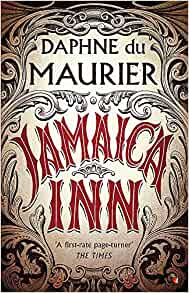
Guest review by Graeme Fife: JAMAICA INN by Daphne du Maurier


"Du Maurier weaves a careful web of intrigue, the threads of which she untangles with great dexterity."

Graeme Fife
is a regular reviewer here. He has written many plays, stories, features and talks for radio, stage plays and articles for newspapers and magazines, and is a regular contributor to BBC Radio 4's From Our Own Correspondent. He's the author of a string of books - children's stories, biography, works of history and fiction. His novel of the French Revolution, No Common Assassin, tells the story of Charlotte Corday.

‘I’m not drunk enough to tell you why I live in this God-forsaken spot, and why I’m the landlord of Jamaica Inn.’

Thus Joss to his outwardly timid niece, Mary, who, now orphaned and driven by poverty from her family farm at the death of her mother has come to stay with her mother’s sister, Patience, and her husband, a giant of a man with volatile temper to match his brutish size. Once a busy posting house on the remote market road on a bleak stretch of Bodmin Moor, the Inn now welcomes no visitors other than a local crew of boozers from time to time and is more generally shunned. Mary and Patience form a close intimacy and it’s soon clear that the aunt is sickeningly overborne by her husband’s cruel behaviour; Mary takes brief refuge from the claustrophobic atmosphere and threatening circumstances in which she now finds herself in lonely tramps across the moor. Scarce any domestic comfort, disturbing noises in the night, the raucous evenings of drink and merriment in the locked bar…it’s a grim situation and Mary stays only to support her frightened, lonely aunt. The interim nocturnal traffic of men and loaded wagons points to some nefarious activity about which Mary eventually learns and, caught in a trap of deception, unwilling to put herself or her aunt at even worse threat than already broods over them, Mary finds promise of help in an unexpected encounter, this against the backdrop of night, the solitary moors, the secret tracks, the fogs and barely suppressed violence of inebriation, the veiled menace…it all feeds into a potent sense of misery, confusion, claustrophobia, imprisonment.

Du Maurier weaves a careful web of intrigue, the threads of which she untangles with great dexterity. This is adroitly worked mystery and suspense. The evil-doing surfaces: horse theft, wrecking, smuggling (Jamaica rum, hence the name, and the rest). An apparent avenue of rescue disappoints and the dénouement works a clever, an arresting, twist.

However, in the course of building a story of sinister dealings, innocence betrayed, psychological contradiction, du Maurier also plumbs another unexpected depth: the nature of love, its conflicting power, the subversion of dream unsullied by reality. Torn in her sense of filial duties, Mary confronts another, overwhelming force: that of emotion. ‘She loved him in the weakness of her flesh.’ The Protestant overtone is clear but the raw fact does not differ for that. And this insight hits Mary even as she unearths, in her own perception, the truth of what is happening in the supposed haven to which she has fled, Jamaica Inn. She stays because she hopes to extricate her aunt to a better repose, the two of them safe in what had been the place of both sisters’ companionship and happiness, home, before life, the toils of existence snared them and death both separated them and offered reunion. Of her uncle, she says to his brother – another meeting of which I leave you to find out – ‘You’d best have a care for [him]…His mood is dangerous; whoever interferes with his plans now risks his life. I tell you this for your own safety.’ She says this in a sort of transfer because it’s more herself to whom she speaks this unseemly truth and it very nearly undoes her.

I once visited a picturesque bay on the Orkney island of Hoy, Rackwick, named for the local wreckers – active there years past as on other ironbound coasts in the British Isles principally in Cornwall and Scilly. It was sunny, peaceful, serene, that morning, the soothing wash and hiss of the tide, the yelp of the gulls, the gentle heave of the sea, a pleasant place, amiable, but what a dark story lurked in those waters. Read a version of it here in this captivating novel.

One character says to Mary who arrived as a naïve creature, now stiffened into a knowing young woman, an enterprising creature ready to grasp escape and redemption on her own initiative and courage: ‘There is a fire about you that the women of old possessed. Your companionship is not a thing to be thrown aside…Poor Mary, with your feet fast in the nineteenth century and your faun face looking up to mine, who admit myself a freak of nature and a shame upon your little world.’

The same man speaks of his rejection of Christianity, having found it to be ‘built upon hatred and jealousy, and greed – all the man-made attributes of civilisation, while the old pagan barbarism was naked and clean.’ The paradox is central to the book’s compelling force, the challenge of self-knowledge thrown full-pelt at received wisdom and supposed safety.

Jamaica Inn is published by Virago. The cover shown is of the Virago Modern Classics edition.

Read this Q & A with Graeme about his novel of the French Revolution,

Monday, 24 August 2020

SMALL PLEASURES by Clare Chambers, reviewed by Adèle Geras


"A story I haven’t been able to get out of my head since I first picked it up."


Adèle Geras has written books for readers of all ages. Coming from Michael Joseph in February next year is her novel Dangerous Women, published under her pseudonym, Hope Adams.
website: www.adelegerasbooks.com
Twitter: @adelegeras

This novel, which I read about a month ago, is going to end up near the top of my list of Books of the Year, 2020. I would love it if some prize juries put it on shortlists.

It’s Clare Chambers’ first book for a decade and I’m determined to read her entire backlist. On the strength of this novel, I regard her as one of those writers you can trust. After only a few pages you know you’re in good hands. Her prose is sharp, intelligent and witty. It’s lyrical without being sentimental, and she is able to transport a reader instantly to a specific time and a place. Her ear for dialogue is superb. She creates an entire universe: a rather narrow and parochial suburban world which is nevertheless fascinating and whose denizens are as full of emotional turmoil and tormented feelings as anyone in a novel with a flashier setting. Lovers of Barbara Pym and Dorothy Whipple will feel completely at home in this novel, and speaking as someone who was thirteen in 1957, when it’s set, I can promise you that every detail is spot on.

Jean Swinney is a reporter on the local newspaper. She lives with her mother, who is a millstone round her neck. Then a story comes to her attention. A woman is claiming that her ten-year-old daughter is the product of a Virgin Birth. As she follows the story, Jean becomes involved with the family she’s investigating. I shall say no more for fear of spoilers ... the author herself has written of how she based the Virgin Birth part of the plot on a real story in the Sunday Pictorial (see @ClareDChambers on Twitter)

A controversy-ette has sprung up on Twitter about Small Pleasures, but I’m not telling you what that’s about either. What I will say is: this novel is as carefully put together as a Swiss watch, and there’s nothing that hasn’t been thought through. This might sound enigmatic, but you’ll see what I mean when you read the book.

The tasteful picture of tangerines on the cover is not really indicative of the kind of novel it is, but I’m pretty sure that it’s there for a reason. I just hope everyone who isn’t drawn to “that sort of cover” makes their way past it to a story I haven’t been able to get out of my head since I first picked it up.

Small Pleasures is published by Weidenfeld and Nicolson.


Monday, 1 June 2020

Guest review by Rachel Ward: THE LOST MAN by Jane Harper


"A fabulously plotted and absorbing story."

Rachel Ward has written five thrillers for young adults, the first of which, Numbers, was shortlisted for the Waterstones Children's Book Prize. Her novels for adults, The Cost of Living and Dead Stock (Sandstone Press) are cosy crime stories set in and around a supermarket; Expiry Date will be published on June 18th . Rachel lives in Bath where she also paints and takes photographs. Twitter: @RachelWardbooks Facebook: Rachel Ward Art

In an isolated part of Australia, two brothers meet at the stockman’s grave, a landmark so old that no one can remember who is buried there. But today, the scant shadow it casts was the last hope for their middle brother, Cameron. The Bright family’s quiet existence is thrown into grief and anguish. Something had been troubling Cameron. Did he choose to walk to his death? Because if he didn’t, the isolation of the outback leaves few suspects…

Many of you will have read The Dry,  Jane Harper’s first crime book which deservedly won numerous awards including the British Book Awards Crime and Thriller Book of the Year 2018. If you thought that couldn’t be topped, The Lost Man gives it a run for its money.

Once again, the bleak sun-scorched outback landscape comes to the fore, providing a lethal environment for anyone caught out in it without shelter. Harper’s descriptions are vivid and compelling.

The book follows Nathan, one of the surviving brothers, who lives in an adjacent farm, as he tries to unpick the tortured family relationships on the main Bright family farm and the events which led to Cameron’s death. All the characters are well drawn and complex. Nathan himself is an outsider within his community and his family and is a fascinating focus for the book.

It is a fabulously plotted and absorbing story. There’s a real sense of menace and despair, as secrets are gradually revealed. The ending is surprising (at least to me) and satisfying.

I’m rationing Jane Harper books, because they are real treats to be relished. I’ve yet to read Force of Nature, and I’m delighted to see that a new book, The Survivors, is due in September. Highly recommended.

The Lost Man is published by Abacus.

See also: The Dry reviewed by Adele Geras

Monday, 16 March 2020

Guest review by Sally Prue: EMMA by Jane Austen


"So all in all I have decided not to go to see the new film of Emma, delightful though it may be. It would, I’m afraid, trample on my dreams."

Sally Prue is a writer for children of all ages, from picture books up to Young Adult fiction. Her novel Cold Tom won the Branford Boase Prize and the Smarties Silver Award, and Song Hunter won the Historical Society’s Young Quills Award. Her other jobs have included being a Time and Motion clerk, an accompanist, and a piano and recorder teacher. Sally is married, has two grown up daughters, and lives on the edge of a small but very beautiful wood in Hertfordshire, England. She blogs at The Word Den. She is also to be found on her website and on Twitter: @sally_prue.

I was quite looking forward to the new film of Jane Austen’s Emma (yes, there are other Emmas: Charlotte Bronte’s, for one). 

Emma is probably the finest book I’ve read. I wouldn’t quite recommend it as a comfort read, but it’s a great book for clearing the mind of the detritus of modern life.

There’s no one like Jane Austen for resetting the moral compass.

So, anyway, I was quite looking forward to the film of Emma. But then I came across an interview with Eleanor Catton, admitting that when she accepted the commission to write the screenplay she hadn’t read the book.

Now, I’ve probably read Emma a dozen times, and I’m still discovering stuff: not just the odd joke, but really important things like, for instance, the solution to the problem of Mrs Elton. Mrs Elton, for those who have not yet had the irritation of knowing her, is one of those people who Knows Best. In this, it has to be said, she rather resembles Emma herself, and the difference between the manifestations of their pride, condescension and motives is a complex and interesting one. Anyway, Mrs Elton irritates the hell out of more or less everyone, causes a lot of grief with her meddling, and then gets off scot free … or so I thought the first seven times I read the story. But Austen actually condemns Mrs Elton to a terrible (though much-deserved) fate; and the fact that this fate won’t strike her until long after the book ends just goes to illustrate what a work of consummate genius Emma is.

Still, Eleanor Catton is a much-lauded writer, and perhaps she managed to spot all the vital subtleties first time.

But then I read an interview with the costume designer, full of joy at the sumptuousness of the costumes Emma and her friends would have worn; and then there was another interview (I think with the director) explaining that nowadays Emma would be spending her life on Instagram showing off the latest fashions. Now, in the book even the most critical of Emma’s acquaintances believes her to be not personally vain, and the general community of Highbury (and Emma is a book set very firmly in its community) is nearly all of it slightly hard-up and full of cheerful stratagems for remaining respectable. Even the cake at the wedding which opens the novel is shared around the town. As for the wedding at the end of the book, that, too, is distinguished by its lack of show:

The wedding was much like other weddings, where the parties have no taste for finery or parade; and Mrs Elton … thought it all extremely shabby, and very inferior to her own. – “Very little white satin, very few lace veils; a most pitiful business! Selina would stare when she heard of it.”

So all in all I have decided not to go to see the new film of Emma, delightful though it may be. It would, I’m afraid, trample on my dreams.

And what is so completely dreamy about Emma?

For a start, it is very funny indeed.

It’s full of interesting and believable characters, with some of whom you’ll fall in love.

The plot is mind-boggling and has been called the first detective story (though it is a detective story where the identity of the detective is itself for a large part of the book a mystery).

It employs (and quite possibly invents) two revolutionary literary devices, stream-of-consciousness and free indirect style, and it has great fun with them, while never forgetting that it is bad manners to baffle or alienate the reader.

It has a really proper ending.

Oh, and it is quite possibly the finest novel ever written. The name Austen is a version of Augustine, which means great or magnificent. Fair enough, I’d say.

And the solution to the problem of Mrs Elton?

Well, it took me about seven readings to notice it, but you might get it first time.

It’s well worth the trouble.


Have you seen the new film adaptation? What did you think? Please tell us in the comments!

See also: JANE FAIRFAX by Joan Aiken

LONGBOURN by Jo Baker

Monday, 25 November 2019

Independent bookseller feature No.11: Orb's Bookshop, Aberdeen: DRIVE YOUR PLOW OVER THE BONES OF THE DEAD, by Olga Tokarczuk, translated by Antonia Lloyd-Jones


"This is the kind of book we love to stock at Orb’s – something a bit different, something you might not stumble across in every bookshop."

We (Maureen Ross and Dawn Finch) are two of the volunteers who run Orb’s Community Bookshop in Huntly, Aberdeenshire. This is a small rural town in the middle of many farming communities and we are the only bookshop for over an hour’s drive in any direction. The bookshop was threatened with closure and the local writers group, Huntly Writers, stepped in and raised the money required to keep it open. This December we’re celebrating out tenth anniversary! We do everything from going out to schools and literary events with our pop-up bookshop, to making sure our shelves contain books that you might not find in mainstream bookshops. We don’t try to compete with supermarkets or The River That Shall Not Be Named, because we can’t match the super-massive discounts they offer, and we don’t feel those prices give a fair deal to authors. We tend to stock things other bookshops don’t and we have a mix of old and new books and we have a gentle specialism in things like nature books, poetry and diverse and inclusive children’s books. We also stock books by local writers and poets, and have many books by our most famous former resident, Victorian fantasy writer George MacDonald.

A book that we’ve enjoyed very much recently is Drive Your Plow Over the Bones of the Dead by Olga Tokarczuk – published by independent publisher, Fitzcarraldo Editions. This was a book that was originally published in Polish but was translated into English in 2018 by Antonia Lloyd-Jones and in 2019 it had a wider release. It won the Nobel Prize for Literature in 2018, and has been on many other award lists since including the Booker Prize.

The plot revolves around an older woman who lives in a rural Polish village close to the Czech border. She studies astrology and translates William Blake, adores nature and wildlife, and misses her two dogs. When her neighbour shows up dead, Janina appears fascinated by the death and writes to the local police with her theory that the wild animals of the forest have killed her neighbour because he was a hunter. The chief of police does not believe her – but when he too is found dead, and then the village's fur farmer vanishes, people start to take a second look at Janina’s theories.

Orb’s team member Maureen says: “I first came across Drive Your Plow in a newspaper article about crime novels. I'm addicted to crime fiction and immediately ordered a copy. From the start this book captivated me with every word and I read every word which is unusual for me as a greedy and impatient reader. The book is much much more than a murder mystery although it is a very clever mystery tale. Janina is an acerbic and tough eccentric woman in her sixties, with a mordant sense of humour and a passionate belief in justice and freedom for all creatures not just humans. The tale is linked in with the work of the visionary poet William Blake - a direct quotation from him serves as the title of the book - and this in itself together with some intriguing information about astrological systems kept me delighted from start to finish. The geography and meaning of borders was also given a place in the building atmosphere of what it is like to experience the world from a totally different perspective. I loved this book and will re-read it again and again. I have never wanted to re-read a book before but this is finally the one. So much in it. Thank you Olga for the fabulous wit and intelligence of this story."

Orb’s team member Dawn is also a great fan of this book. She says, “Maureen recommended this one to me and I know it’s an oft repeated phrase, but I genuinely could not put it down. I’m not a crime novel reader so I wasn’t immediately convinced, but I am a sucker for a book in translation and that lured me in. Drive Your Plow feels different from the very first pages. Janina comes across as so real that you are drawn into her life and her world. This was one of those books that I found myself slowing down to read because I wanted to be part of Janina’s life for a while longer. I’ll be honest with you, I think I still miss her. I love it when a book does that to me.”

This is the kind of book we love to stock at Orb’s – something a bit different, something you might not stumble across in every bookshop. We hope that’s what our customers are looking for – the kind of personal contact and recommendation that comes from people who really do love books!

Drive your Plow over the Bones of the Dead is published by Fitzcarraldo Books


Maureen on Harry Potter night at the local library


Monday, 5 August 2019

Two eerie tales: MR GODLEY'S PHANTOM by Mal Peet and THIN AIR by Michelle Paver, reviewed by Linda Newbery


'With both these novels, you'd better have uninterrupted time ahead before you begin.'


Linda Newbery has published widely for young readers and is now completing her second novel for adults. Her latest book is The Key to Flambards, which follows K M Peyton's classic Flambards quartet but is set in the present. 

I've admired Mal Peet's work since reading Tamar, a story of the Dutch resistance combined with a present-day mystery. Published for young adults, it won the Carnegie Medal, but is of equal interest to adults (must read it again.) Life: An Exploded Diagram, a coming-of-age novel set at the time of the Cuban Missile Crisis, was equally impressive. Mal Peet reminds me of Aidan Chambers in that his novels - intelligent, inventive, provocative - blur the boundary between young adult and adult fiction. At his death he had left three unpublished novels: The Murdstone Trilogy (which isn't a trilogy and wasn't intended to be); Beck, a young adult novel still in progress which was completed by Meg Rosoff; and this - a first draft with notes to himself for its revision.

It's a novella really, though generously spaced, illustrated by Ian Beck and handsomely produced in hardback (now in paperback too, with the striking cover shown below). As Daniel Hahn says in his Afterword: "It is many kinds of book rolled into one: a story about a man recovering from trauma, a historical novel, and even a police procedural." It's also a ghost story of a sort. The phantom of the title refers - partly, at least - to Mr Godley's pride and joy, his Rolls-Royce Phantom Three Sedance de Ville, with the bonnet mascot shown on the cover. It's this car that entices Martin Heath, a distinguished young war veteran suffering from what we'd now call PTSD, to take up a post as Mr Godley's chauffeur and handyman at a remote Devon mansion, Burra Hall.  

But there are other 'ghosts', too. The frail and elderly Mr Godley himself reminds Martin, horribly, of the pitiful sights he saw on entering Belsen: 'Martin had felt neither rage nor even revulsion. rather, it was like discovering that he had contracted an incurable disease; that, having inhaled the miasma of death, he could never be well again. That his heart might eat itself.' And Mr Godley in turn is haunted by his son Julian, who was killed in action less than a month before the 1918 Armistice, and of whom Martin seems to remind him.

This might sound unbearably grim, but in Mal Peet's hands it isn't - at least, not all the time. Peet has an expertly light touch that enables him to indicate horrors without ever overdoing the pathos or telling us how to react. Martin's recovery is aided by the willingness of servant girl Annie to engage in regular and vigorous sex, and there's humorous observation: Godley's laugh is "four dry, chickeny sounds" and Martin, assessing Annie's appeal on first meeting her, notes that "it was difficult to judge the attractiveness of a woman eating cabbage." There are unexpected turns, and then more, with light relief provided in the viewpoints of Detective Inspector Sheepstone and DS Panter, called in to investigate the old man's disappearance. But towards the end, reading Mr Godley's years-old journal which is presented in a plausibly crabbed and not easily legible hand, the emotional power was such that I felt I was prying into the private anguish of a real person.

The title, subtitle, and many things in the story don't yield all their meanings at once. As with all Mal Peet's work, it's a novel that will repay re-reading.

Like him, Michelle Paver first made her name by writing for young readers; she's best known for her award-winning Chronicles of Ancient Darkness series. I was gripped by Dark Matter, with its high Arctic setting, so was eager to read Thin Air, which takes us to the Himalayas in the mid 1930s in the company of an expedition attempting to reach the summit of Kangchenjunga. They're following the path of a failed attempt made thirty years previously; five mountaineers of that party were killed, as documented in a published account by leader Sir Edmund Lyell.

From the moment when narrator Dr Stephen Pearce meets the only living survivor of that expedition, the omens are unsettling. Dogged by guilt over a broken engagement and constantly needled by taunts from his brother Kits, a more accomplished climber, Stephen soon realises that he's not the only one alert to forebodings; the 'coolies' on whom the party depend for the conveying of supplies to Base Camp and on upward have many superstitions of their own, partly to do with the demands of the mountain gods but also connected to the presence of an uneasy spirit. When these 'coolies' find an old rucksack, identified as the property of a climber from Lyell's expedition whose body was never discovered, Stephen is assailed by mounting feelings of dread. His scientific background only makes his hallucinations the more worrying: "... even if I'm wildly mistaken about everything, about what I saw on the Crag and now here at the crevasse - even if  it's all simply the result of oxygen deficiency - how does that help? The idea that altitude is giving me waking nightmares, that thin air is altering my very perceptions and deceiving my own mind into betraying me ... I find that horrifying. It's a kind of possession." And the dog Cedric who's adopted the party acts as a barometer, frequently disappearing when the atmosphere darkens.

As bickering breaks out among the group and individuals suffer from frostbite and worse, we're all too aware of the dangers that must be confronted before the summit is reached. But the real horror in the story comes from the cleverly contrived realisation of the fate suffered by the owner of the rucksack - and how the truth about the Lyell expedition has been concealed.  

Michelle Paver excels at taking us with her characters into extreme conditions. I simply couldn't put this book down; it's a ghost story for which I'll willingly suspend disbelief, full of tension and thoroughly convincing on the details of terrain, the lure and terrors of the mountains, bodily frailty and survival. With both these novels, you'd better have uninterrupted time ahead before you begin.

Mr Godley's Phantom - an infection of evil is published by David Fickling Books
Thin Air - a Ghost Story is published by Orion

(Pictured: Mal Peet, and the new paperback cover for Mr Godley's Phantom, published 1st August; Michelle Paver and her latest novel, Wakenhyrst.)