Showing posts with label poetry. Show all posts

Monday, 11 May 2026

Special feature Q&A: Dennis Hamley talks about SPIRIT OF THE PLACE


"The cat is, in some ways, the most significant character in the book ... the cause of Fowler’s greatest sin and the subject of a failed poem. His final guise explains the whole story."

Dennis Hamley's first novel, Pageants of Despair, was published in 1974. He read English at Jesus College, Cambridge, and has a PhD from Leicester. After teaching, lecturing and acting as County English Advisor for Hertfordshire, he retired to write full-time. He has written widely for children and young adults; one of his best-known books, The War and Freddy, was shortlisted for the Smarties Prize. His recent adult novel, The Second Person from Porlock, is a fantasy riff on the chaotic life of Samuel Taylor Coleridge and was published in 2021. He lives in Oxford with his wife Kay, an artist.

Spirit of the Place is now reissued by Writers Review Publishing. First published in 1995, the novel was described by Philip Pullman as "a marvellous story, put together with great ingenuity. Dennis Hamley seems to have got right inside the eighteenth century (one of my own favourite places to visit), heroic couplets and all. It made me want to go out at once and build a Grotto in the garden."

Dennis lives in Oxford with his wife Kay, an artist. Here he answers questions from Linda Newbery.

LN: Congratulations on the reissue of this marvellous novel! I loved it on reading it soon after its first publication, by Scholastic, and am delighted to see it reissued as the fifth title from Writers Review Publishing. It struck me as very different from anything of yours I'd read before. What was the sparking point?

Dennis Hamley: I remember the first tiny inklings of the novel. We (my first wife and I) lived at the time in Hertford. Three miles away, in Amwell, on the outskirts of Ware, was John Scott’s grotto, built in the eighteenth century. Scott owned Amwell House. Once it was part of a great estate, now it is built over and the grotto exists almost by accident. Scott was a Quaker and a poet. His anti-war poem shows both qualities:

    I hate that drum’s discordant sound
    Parading round and round and round.
    To thoughtless youth it pleasure yields
    And lures from cities and from fields.


His grotto, open to the public on Saturdays in summer, is a magical place. A gatehouse, underground passages with walls lined with quartzes, glass, and shells which shine eerily in the light of your torch or your ancestors’ lanterns. You emerge into the daylight feeling that you have experienced a marvel.

Well, I did, anyway, and knew I must write a story about a grotto. And, as there seemed a connection between grottoes and poetry, I had to have a poet to go with it. Thus Nicholas Fowler was born. I saw him in eighteenth-century gentleman’s costume, a small figure, green jacket, blue waistcoat, beige breeches and hose encasing withered legs, walking across his estate, supported by a gold-topped cane.

The great poet Alexander Pope built a grotto in his garden in Twickenham and wrote a poem about it. So my Nicholas Fowler must do the same.

    What secrets are exposed by human toil?
    What great new work replaces sullen soil?
    A thing of beauty forms for all of time.
    Its epithet is clear. It is sublime.


LN: The novel uses a split structure. Can you explain about that?

DH: I think this came to mind as a necessity even as I emerged from Scott’s Grotto. Here was I, standing in the twentieth-century having just had an eighteenth-century experience. The centuries had to be merged.

Fowler is the novel’s main character. The poetry he writes is eighteenth-century in style. I am imitating the heroic couplets of Pope, Dryden and a host of lesser poets.

Spirit is a time-slip novel and present-day characters are equally significant. Chief among them is Lindsey Lovelock, a university student. Lyndsey has chosen Nicholas Fowler as the subject for the long study she must write for her degree in Philosophy and Literature.The ‘Now’ part of the novel is seen though her eyes. She comes to consciousness in hospital but with temporary amnesia, injuries she can’t explain, and with Kath Welland, a detective-sergeant to pull the extraordinary truth out of her. For Lindsey’s boyfriend Rod is in police custody, accused of breaking and entering Coswold, a mansion house once Nicholas Fowler’s home, now owned by the University and let out to a big pharma company doing secret research. Rod, a science student, longs to know what that research is: something to do with genetics. His garbled evidence suggests that he doesn't need the police, but a psychiatrist.

LN: The novel deals with big subjects. Can you explain how you made thematic use of them?

DH: Well, first of all there’s Jack, Lindsey’s microcephalic brother. He is the reason Lindsey is a home student, going to the university just up the road because she and her mother are his sole careers.

Quite apart from that, great changes are coming to our world. The implications of the human genome project, the dawn of cyberspace and AI might (or might not) seal humanity’s mastery of nature. But in the eighteenth century Man was seen, as Fowler puts it, ‘God’s viceroy on Earth’, whose purpose was to improve on nature, discover its laws, find the great principles and driving force of His power. In effect, these aims are the same.

Fowler doesn’t see himself merely as a poet. He is a scientist. He learned from Priestley, who discovered oxygen, how to build a friction machine which can trap a strange power, enough to make a needle swing seemingly of its own volition. The first hint of electricity. A vision vouchsafed to humanity by God himself? Yes, thinks Fowler. This new hubris will have grave consequences for him.

LN: Class distinctions are very important in the ‘then’ chapters.

DH: Yes. The concept of The Great Chain of Being was at the centre of the class system. As Fowler puts it:

    For in this panoramic scheme
    Each actor’s purpose long has been
    Ordained in mighty plan .
    Green frond to insect, fish to cat,
    Ascending rungs in stairways that
    Lead up to God through Man


Fowler is a gentleman. ‘I am a man of substance, a Master of Arts of the University of Cambridge, a member of the Church established and shall succeed to my father’s estate.' A very precise definition, but in the Great Chain of Being nowhere near the aristocracy. As Sir Charles Witherpole, an angry neighbour, says, ‘This is not Blenheim or Woburn. These are the modest estates of Squires, not Dukes.’ Which puts him in his place

Several rungs below on the class ladder is Mr Perry, clerk of works and a salaried man responsible to Mr Landskip Peters, an avatar of Mr Capability Brown. Perry and Fowler are at constant loggerheads.

In Coswold’s kitchen are four characters far below Fowler and even Perry. The cook, Mrs Mundy; Mr Grainger, a handyman and general factotum for the estate; Verity, a serving girl; and the boy, unnamed until the very end. And the cat.

LN: Yes, you made very clever use of that cat – an endearing and important character.

DH: The cat is, in some ways, the most significant character in the book. He appears in different guises throughout, in both ‘Then’ and ‘Now’. He is a sagacious creature with a mind of his own. He is the boy’s only friend. He is the cause of Fowler’s greatest sin and the subject of a failed poem. His final guise explains the whole story.

LN: Nicholas Fowler is very convincing as an 18th Century poet - i.e. you are! Did writing Nicholas's poems come easily to you?

DH: I’m not a poet. But I love capturing the feel of real poets. I suppose you could call it pastiche. Well, yes. But I think it’s something more. I love writing it anyway. Once, I managed about ten lines of T S Eliot’s Fifth Quartet. And once I wrote a Shakespearian play for students to act, The Tragicall Historie of Dogmaticus, Prince of Academe, his fall. I put it about that it was a lost Shakespeare play recently discovered and to my amazement some people believed me! Sadly I don’t have a copy, but I can remember whole chunks still.

LN: Can you tell us about Lindsey's brother and the treatment he receives? I was particularly interested in that, as one of my late uncles was very much involved with Conductive Education as a trustee and fundraiser. Again, you made clever thematic use of this character to link past and present.

DH: Well, Jack, Lindsey’s brother, is microcephalic. He is the reason Lindsey is a home student. In the prelims, I thank the Morrissey family, who live near Galway in Ireland. Their son was microcephalic and though it was a long time ago that we met I shall never forget him. Later on, I met a family whose child had cerebral palsy. It was then that I learnt about ‘Pathways to the Brain’, Conductive Education and the Peto Institute. This was important to the novel because it defines Lindsey’s professional purpose in life.

LN: What was it like returning to your earlier novel to revise it?

DH: It was wonderful. I had already looked at it again twelve years ago, when I brought out a hardback limited edition, 100 copies numbered and signed. It was not a very good idea because I’ve got fifty left!  When I came to look at Spirit again I realised I had a difficult task. First of all, there’s a fair bit about computers, nineties technology and speculation about future social media. So I had to bring the technology up to date. That wasn’t as hard a task as I had feared. Then I thought about the novel’s structure. It had been written in alternating chapters. I felt that this wasn’t really suitable. So I divided the book into separate parts. Part 1 –‘Then’, two chapters. Part 2, - ‘Now’, two chapters. I think it makes the story move better and connects the separate themes more clearly. The last chapter deals with Fowler and his end. But when I did the limited edition, I wrote a postscript showing what had happened to Lindsey and Rod. Not good enough I thought now, so I lengthened it and, I think, provided a real ‘sense of an ending.’ Yes, how I enjoyed writing Spirit of the Place. And now I can enjoy it again, somewhat rewritten and radically reorganized.

LN: Thank you, Dennis. I hope this revised reissue will give enjoyment to many new readers.

Spirit of the Place is published by Writers Review Publishing


and reviews by Dennis: Possession by A S Byatt


Monday, 3 November 2025

Guest review by Graeme Fife: THE MIGHTY DEAD - WHY HOMER MATTERS by Adam Nicolson


"Nicolson, in this enthralling book, introduces Homer in a way entirely apt to the invention and broad sweep of the original."

Graeme Fife
is a regular reviewer here. He has written many plays, stories, features and talks for radio, stage plays and articles for newspapers and magazines, and is a regular contributor to BBC Radio 4's From Our Own Correspondent. He's the author of a string of books - children's stories, biography, works of history and fiction. His novel of the French Revolution, No Common Assassin, tells the story of Charlotte Corday. His new novel, Memory's Ransom, a compelling wartime story, is published by Conrad Press.

*

ēmos d’ērigeneia phanē rhododaktulos eōs ... When rosy-fingered dawn, child of the morning, appeared in the east…

This, one of a number of lines repeated in the epic poems of Homer, resting places for the oral composer of the stories, I had by heart even before I read the Greek. In those poems I discovered a world recognised from childhood, peopled with heroes, monsters, deadly adventures, last-gasp escape from peril, in a strange landscape replete with all those elements which fired my burgeoning imagination, the signposts of curiosity which linger still.

Nicolson, in this enthralling book, introduces Homer in a way entirely apt to the invention and broad sweep of the original. Goethe, he says, ‘thought that had Europe considered Homer and not the books of the Bible as its holy scripture, the whole of history would have been different, and better’. The ancient Greeks would have agreed for Homer formed the guiding agency of their own moral nurture. Concur or not, this book will help you decide and it’s an issue worth pondering.

Here Nicolson explores the all-important context of the composition of the poems, not written down and thereby, to a degree, fixed for centuries after their appearance as stories embellished, changed, developed, passed on, in the same way as the Gaelic bards and those of the Balkans told their own sagas as a way of charging the imagination of their audience, giving them souvenir of a way of life and action long gone, which they might emulate and by which be inspired. A modern audience will protest, perhaps that this is an androcentric world where women pay a secondary role and the charge is valid. However, Homer’s women present a side of the female spirit which, albeit not of apparent influence on the central landscape of the poems, the battlefield, save in the guise of the goddesses who intervene on human affairs and failings, their heroic exploits, their brutal death, nevertheless underpins all they do and contend for.

Penelope, Odysseus’s wife, remains in the kingdom of Ithaca in the lord’s absence, in the Trojan expedition and thus obliged to preserve the kingdom against his eventual return. Beset by a mob of brawling suitors eager to bed her and claim lordship, she outwits them by guile and, in Nicolson’s emphasis, displays what Homer calls her euēgēsia ‘good command’, nicely glossed by Nicolson as ‘the inner citadel of virtue and value’. I needn’t rehearse the story of her tapestry, woven by day, unpicked by night, her redoubtable patience in the task imposed on her. One example, only, in Homer’s exploration of the indomitable strength of the so-called weaker sex: the wiles of the sorceress Circe, mellifluous Calypso, the cave-bound monster Scylla, and Charybdis, the whirlpool into which a boat may be sucked. Sirens, uttering their seductive calls to give up, surrender, and we see, through Homer’s rich invention, the contrarieties of the sexual balance of power, between men who wield sword and spear in the forum of blood and women who control by subtler means. The female of the species more deadly than the male…? What upset that has caused in the virile heart and mind. So listen up, you men. Homer speaks.

There is much in this book to entice and inform not only in how Homer weaves his magic but in the way that fiction, stories told at bedtime to children or grown-ups later, plant the nurture of our own discovery of how life veers, its vicissitudes; the courage to outface, the spirit to persist, as Odysseus, time and again, puts his hand to the tiller and sails on after yet another confrontation with what had seemed insuperable odds. Invoking ‘the ability to regard all aspects of human life’ and from that understanding keep on, never yielding.

The very allure of Nicolson’s account of what Homer means to us, as he has meant to those generations which, in Keats’s phrase, ‘have trod’, is underlined by the fact that he has sailed treacherous waters in a small boat and knows, dry-mouthed, the conflict of tide and current, of wind and squall, the danger of the ‘unharvested sea’, that briny desert where survival rests always on a gunwale’s edge. He has sat in a grove on Ithaca at night, reading the account of the return of Odysseus to his home - the Odyssey is one of a number of nostoi, voyages home, whence our ‘nostalgia’ - and the ensuing bloodbath of vengeance on those who would have raped his queen and usurped his place as king, sat there even as the nightingale sang its tearful – oiktista - song. Read how Nicolson brings to vivid colour the evening when Keats read the vibrant translation of Chapman. ‘Here at last…was the moment, when, cresting a rise, a new and deeper, ineffably broad landscape had opened in front of him.’

Horace referred to Homer when he speaks of the difficulties of writing, the challenges sometimes beyond us to surmount in words, despite the poems which Nicolson with penetrating insight investigates and honours. Horace wrote:

et idem

indignor quandoque bonus dormitat Homerus


[Ars Poetica 358-9]

‘And yet, I mustn’t be hard on myself when even good Homer nods off’.

I’ve made furniture and was thrilled by Nicolson’s loving account of how Odysseus fashioned the raft which might carry him to safety, every peg and joint, every shaping and fitting.

The Mighty Dead is published by William Collins


Monday, 8 September 2025

Guest review by Dennis Hamley: POSSESSION, a Romance, by A S Byatt


"Possession is my favourite-ever novel. I re-read it once every three years and each time I find even more in it."

Dennis Hamley's first novel, Pageants of Despair, was published in 1974. He read English at Jesus College, Cambridge, and has a PhD from Leicester. After teaching, lecturing and acting as County English Advisor for Hertfordshire, he retired to write full-time. He has written widely for children and young adults; one of his best-known books, The War and Freddy, was shortlisted for the Smarties Prize. His recent adult novel, The Second Person from Porlock, is a fantasy riff on the chaotic life of Samuel Taylor Coleridge and was published in 2021. His highly-acclaimed novel Spirit of the Place will be reissued by Writers Review Publishing later this year. He lives in Oxford with his wife Kay, an artist.

I personally owe a lot to this wonderful novel. It inspired my own Spirit of the Place, of which a reviewer said, ‘It reads like a starter pack for Possession.’ Was this a put-down or praise? I chose praise, because, though not intentionally, that’s what, in effect, it is. I remember back in 1990, when the opinions of the Booker panel were televised before the winner was announced, someone from the Cambridge English Faculty dismissed Possession because, he opined, any of his colleagues could have written the poetry Byatt writes on behalf of the novel’s two fictional poets. I remember thinking, ‘No you couldn’t, mate.’ Because this book is extraordinary, unique, a mighty tour de force.

Roland Michell is a humble research student writing a paper on the Victorian poet Randolph Henry Ash. He is subservient to the demanding Professor Blackadder of Prince Albert College, London and frightened by Professor Mortimer Cropper, an American who covets memorabilia for his definitive Randolph Ash Institute at his American university and will stop at nothing to get hold of it. He is the nearest in the novel to an evil character and brings an element of Dark Academe to the story, which also involves the razor-sharp Professor Leonora Stern, also from America, and Beatrice Nest, whose interest is mainly in Christabel La Motte’s friend Blanche Glover.

Roland makes an intriguing discovery in the London Library. In the mid-nineteenth century Crabb Robinson held breakfasts to which the great and the good in literature were invited. Roland discovers a letter from Randolph Ash, a poet who stands as a splendid avatar for Robert Browning and Tennyson, to a ‘Dear Madam,’ who he had obviously just met at one of Crabb’s breakfasts. Who is this mysterious recipient?

A fascinating correspondence develops between them. The ‘Dear Madam’ is also a poet, Christabel LaMotte, whose verse has elements of Christina Rossetti as well as Sara Coleridge in her domestic verse, Emily Dickinson with her frequent use of breathless dashes and Elizabeth Barrett Browning, whose actual elopement parallels the fictional version still to come.

The novel concerns three love affairs. One, in the nineteenth century; is between Ash and Christabel. The present-day understated, slow burning romance is between Roland and Maud Bailey, a descendant of LaMotte and head of the Women’s Studies department at the University of Lincoln. Oddly, there was no university at Lincoln when Possession was published, but there is now. A clear example of fiction turning into reality. The third is the relationship, hinted to be lesbian, between Christabel and Blanche Glover in their cottage by the Thames. Christabel writes her poems, Blanche paints her pictures. Ash walks in, Christabel leaves and Blanche drowns herself. Shades of Virginia Woolf.

For me, Byatt’s poetry is the greatest of the many triumphs of this novel. Far from being mere pastiche, it illuminates the already three-dimensional characters.

First a sample of Ash in his poem Ask to Embla, part of a narrative, but also a declaration of love.

They say that women change: ‘tis so: but you
Are ever constant in your changefulness,
Like that still thread of falling river, one
From source to last embrace in the still pool
Ever renewed and ever moving on
From first not last a myriad water-drops
And you – I love you for it – are the force
That moves and holds the form.


There is irony here, because Christabel and Ash are travelling through Yorkshire as man and wife. However, Ash is sending letters home to Ellen, his real wife, telling her all about it, including their visit to Whitby, as if he is alone. An attitude which reflects Robert Browning’s misogyny:

Man’s love is of man’s life a thing apart.
‘Tis woman’s whole existence.


Kathleen Jones called her biography of Christina Rossetti Learning Not to be First and that sums it up perfectly. For LaMotte, Christina Rossetti, Elizabeth Barrett Browning, Sara Coleridge and Emily Dickinson, poetry was a private, even domestic, art, as were Blanche Glover’s paintings. In a letter to Ash, Christabel writes, I have it in my mind to write an epic – or if not an epic… a great mythical poem – and how can a poor breathless woman with no staying power confess such an ambition to the author of the Ragnarok?

Ironically, she does just that, about Melusine, the snake goddess, a powerful narrative and a fierce competitor for Ash's Swammerdam and Mummy Possest, both of which appear in the book and are akin to Browning's dramatic monologues.

But Christabel has other preoccupations. Her short-lived affair with Ash is over, by mutual agreement, though their love stays on. This poem of longing may be meant as a consequence.

I press my palms on
Window’s white cross
Is that your dark form
Beyond the glass?

How do they come who haunt us
In gown or plumey hat
Or white marbling nakedness
Frozen --- is it –- That?

Their remembrances haunt us
A trick of a wrist
Loved then -– automatic –-
Caught at and kist

The emotion is obvious. Christabel is laying herself bare. But she is only a character in a book . The underlying voice is Byatt’s. The comparison is with Emily Dickinson, dashes and all.

Christabel, half Breton, is with her cousin in Brittany. She brings with her a consequence, unexpected but inevitable, of her affair with Ash. She is pregnant with a daughter, who will carry the family on to generations close to our own. And now the story reaches its climax, tense, fast-moving, sometimes very funny, sometimes shocking. It culminates with Cropper, Roland, Maud, Leonora and all the others involved in the struggle gathered together at night in a shrieking storm and opening up Ash’s grave – for what? Suffice it to say that the solution involves possession of a copyright and there can be only one winner. An echo of the real-life event when Dante Gabriel Rossetti opened the grave of Lizzie Siddall to recover his poems which, in a thoughtless fit of emotion, he had buried with her.

So the story is over. Roland Michell and Maud Bailey can now realise and consummate their love and Roland can take up the proper job he has been offered, albeit at a university in Amsterdam.

There is a short, bitter-sweet, ironic epilogue. Ash meets a little girl and they start talking. There is a consequence.. Ash comes off worse from it.. No more, one might say, than he deserves.

Possession is my favourite-ever novel. I re-read it once every three years and each time I find even more in it.

PS A film of Possession starring Gwyneth Paltrow and Jeremy Northam was made in 2002. To my surprise I found it on Youtube and we watched it last night, Half-expecting a travesty I was pleasantly surprised. There were no poems and the part of Roland Michell was played by an American whose name escapes me but is pretty good. Every scene meshed in with my private internal film as I read the book. It's an excellent adaptation. The bitter-sweet epilogue is beautifully handled. I was well satisfied at the end and I recommend it as a quick way to to experience the book and prepare you for the infinitely more absorbing real thing.

Possession is published by Vintage Classics.

It's been published in many other editions and with many different covers - here's a selection.


Monday, 25 August 2025

Guest review by Linda Sargent: THE OLD WAYS - a Journey on Foot, by Robert Macfarlane


"What a complete joy it’s been, timely and so sustaining in these darkening times in our world."


Linda Sargent
is a writer who worked for twenty years as a publisher’s reader (David Fickling Books since 2002). She has published short stories and articles and her first novel, Paper Wings, appeared in 2010; she is also the author of Words and Wings, a training guide to creative reminiscence work, available as a free download from her website

Tosh's Island, a graphic novel for children and based on Linda's childhood experiences, written in collaboration with Joe Brady and illustrated by Leo Marcell, was published last October by David Fickling Books, having first appeared in serial form in The Phoenix Comic.

A book about walking might not seem like the obvious choice for me, now a full-time wheelchair user, but this is about so much more than the mere physical act itself. As well as the obvious meaning, the “old ways” explore and traverse humanity’s various journeyings and their resulting connections over the millennia; covering not just the more well-known tracks, but lesser-known ones too, over mountains and even the those more fleeting passages across the seas. These are journeys rooted both in the physical reality of walking and, perhaps more importantly, that of the imagination. Over the years I have been giving it to more agile friends, but now since moving to rural Wiltshire with our monthly trips down to the Mobile Library in the village hall car-park I decided to add it to my order reserve list. And what a complete joy it’s been, timely and so sustaining in these darkening times in our world. I messaged the author as much on Instagram, not expecting a reply, but one came in the form of a warm and thoroughly empathetic response. Since feet connecting with earth is clearly so vital for the author, he seemingly totally grasped what I was trying to say about how I nurture and ponder the memories of past walking times, as well as continue such journeying vicariously via writing such as his, in many ways even more enriching as they mostly are in settings I would never have visited and never shall. Although that isn’t true of all, since there are places featured that are familiar, including Cambridgeshire, the Downland country of the south of England, Sussex, Wiltshire and my old home in the Kentish Weald, landscapes referenced through the author’s deep admiration and connections with the work and lives of Edward Thomas and Eric Ravilious which thread through this book enriching the reader’s experience not only of the land, but also these two artists.

So many paths trodden here, from Scotland, the Camino, Tibet and more. And not all are land-bound. His descriptions of the Sea Paths show a more ethereal, yet equally powerful way marking. He tells the reader (p.88) of the many names of these paths, for example “In Old English the hwaell-weg/the whale’s way” – invisible currents bringing humanity together over thousands of years, leaving no trace on the water, but resulting in a sharing of trade, culture, stories, songs, invasion of course and the aftermath of man-made upheavals. The latter with such a profound modern resonance.

It is impossible to do this book justice. For me it worked and will continue to work in so many levels through my own imaginative, internal world. As the writer says these are (p.198) “the landscapes we bear with us in absentia, those places that live on in the memory long after they have withdrawn in actuality”.

Yes. Exactly this.

(NB: I have recently come across a newly formed organisation called Slow Ways, a community initiative mapping accessible walking and wheeling routes and encouraging more to be developed. More here.) – see slowways.org)

The Old Ways is published by Penguin.

See also Linda's review of 12 Birds to Save your Life - Nature's Lessons in Happiness by Charlie Corbett


Alison Layland reviews Sarn Helen by Tom Bullough

Monday, 1 April 2024

Guest review by Ann Turnbull: THE SHEPHERD'S CALENDAR by John Clare


"I love this book, which takes the reader into the heart of rural life nearly two hundred years ago."

Ann Turnbull
has been writing stories for young people of all ages since 1974. Her most recent book is In That Time of Secrets, a young adult novel about the persecution of Catholics in 1605, set in the Black Country. Find out more at www.annturnbull.com

The Shepherd's Calendar 
was first published in 1827 and has been in print ever since.

John Clare knew village life intimately from his own experience as an agricultural worker in a village near Peterborough in north Cambridgeshire. This book consists of one long poem that takes the reader through a year in the life of country people - beginning with January:

      Withering and keen the winter comes
      While comfort flyes to close shut rooms
      And sees the snow in feathers pass
      Winnowing by the window glass...


It's very easy and pleasurable to read. Here, for instance, is the shepherd with his dog:

      The shepherd too in great coat wrapt
      And straw bands round his stockings lapt
      Wi' plodding dog that sheltering steals
      To shun the wind behind his heels...


And here, the linnets that

      ... flurt their wings and wet their feathers
      To cool them in the blazing weathers
      Dashing the water o'er their heads
      Then hie them to some cooling shed,
      Where dark wood glooms about the plain
      To pick their feathers smooth again.


I love this book, which takes the reader into the heart of rural life nearly two hundred years ago.


The edition shown of The Shepherd's Calendar is published by Carcanet.

Monday, 25 September 2023

Guest feature by Dennis Hamley: THE SECOND PERSON FROM PORLOCK


"Each character, real or imaginary, had their own quest and I accompanied them on their journeys though the uneasy England of 1824. And I like to think I helped them find their destinations and their fulfilment."

Dennis Hamley has been writing for an unconscionably long time. His first book was published in 1962. Since then he's written more books than he can count, including The War and Freddy, Hare’s Choice, Spirit of the Place, Out of the Mouths of Babes, the six novels in the sequence of medieval mysteries The Long Journey of Joslin de Lay, Ellen’s People and Divided Loyalties. He says: "It's wonderful to see my Coleridge project in print at last, and published by Fairlight Books, based in Oxford where I live.  It came about when, after leaving hospital, I was visited by an ex-student of mine on the Oxford Creative Writing Diploma course - Louise Boland, a very good writer who had decided to set up as a small independent publisher specialising in literary fiction. That gave me the impetus to resurrect the project I'd been working on for years."

My interest in Samuel Taylor Coleridge merged into near-obsession at Cambridge, when my supervisor set our tutorial group an essay on STC’s theory of the imagination. This was in STC’s own college, Jesus. I loved this assignment, spent hours over it, found my understanding of literature changed utterly and received the supervisor’s comment ‘A noble effort’. Pleasing, but he omitted to say if it was actually any good. In 2002 a publisher, David Fickling, suggested I might write a novel about STC. So I did. It took me two years and he rejected it. And he was right. Incompetent and unreadable. So I got on with other things. But the resolve to write a proper novel about STC wouldn’t leave me. It took fifteen years for me to work out how to do it.

In 1972, a book called It’s a Don’s Life by Freddie Brittain, one-time fellow of Jesus (not to be confused with Mary Beard’s book) was published by Heinemann. Freddie mentioned a strange inscription in the first edition of Kubla Khan in the Old Library:

The writer of the above had much better have kept his sleeping thoughts to himself, for they are, if possible, worse than his waking ones.

It sounds damning. But perhaps it wasn’t. I needed someone to examine it closely. Who? A sizar, working as a library clerk, as had STC, perhaps?

My original failed novel depended on a what if? When in Sicily in 1804, Coleridge had a mysterious relationship with an opera singer, Anna-Cecilia Bertozzi. In 1808 he suddenly writes about her in his notebooks: ‘… her sincere vehemence of her attachment to me…Heaven forfend that I should call it Love.’

Back home, STC was in platonic love with Sara Hutchinson, the sister of Wordsworth’s wife, Mary. He called her ‘Asra’, to distinguish her from the other Saras, wife and daughter. And now, just in time, he sees ‘the heavenly vision’ of Asra’s face, ‘the guardian angel’ who saves him from the final temptation . I couldn’t resist thinking, ‘Yeah, right!’ What if STC had, unbeknown to him, left a son in Sicily and that son comes to England to find him?

So I had three main characters: one, STC, real; two fictional, George Scrivener, undergraduate who finds the Kubla inscription and works out its true significance, and Samuele Gambino, putative son in search of the truth. For George, an aspiring poet, the wish is that STC might be his mentor. Samuele needs to square his mother’s vision of genius with his teacher Mr Calvert’s of an opium-sodden wretch.

Perhaps the word ‘riff’ best describes what I was attempting. All facts would be accurate, but STC didn’t live by mere facts. We meet him with the line:

Samuel Taylor Coleridge had seen a ghost.

He was lodging with Dr Gilman and his wife on a sort of extended rehab. The ghost first appeares in Highgate High Street and then haunts him. Is this revenant the Second Person from Porlock? George Scrivener works out that there couldn’t even have been a first.

Mixing fictional and real characters is a risk worth taking. Samuele’s guide in his quest is Charles Lamb, who tells him who to visit and provides letters of introduction. So Samuele meetsTom Poole, STC’s friend in Nether Stowey, Wordsworth, Southey and, most important, STC’s brilliant daughter, Sara.

Once I had a structure in my mind, actually writing the book came relatively easily. Each character, real or imaginary, had their own quest and I accompanied them on their journeys though the uneasy England of 1824. And I like to think I helped them find their destinations and their fulfilment.

The Second Person from Porlock is published by Fairlight.  

‘With no discernible sleight of hand this master storyteller, with effortless assurance and prodigious skill, weaves his mighty spell and conjures before our very eyes all we will ever need to know about the most famous lines of poetry that English ever produced.’ — Robert Lipscombe, author of The Salamander Tree and The English Project


Monday, 12 December 2022

Guest review by Sophie Haydock: THE CHOSEN by Elizabeth Lowry


"A haunting and accomplished portrait of raw grief, of dissatisfied love, of regret, and the self-imposed sacrifices one makes in a bid for greatness." 

Sophie Haydock
's debut novel, The Flames, is about the four muses who posed for the artist Egon Schiele in fin-de-siècle Vienna. She is the winner of the Impress Prize for New Writers and in 2022 The Flames was longlisted for the Historical Writers' Association Debut Crown Award.

Sophie trained as a journalist at City University, London, and has worked at the Sunday Times Magazine, Tatler and BBC Three, as well as freelancing for publications including the Financial Times, Guardian Weekend magazine, Arts Council, Royal Academy and Sotheby’s.

She has interviewed leading authors, including Hilary Mantel, Maggie O’Farrell, Bernardine Evaristo, Sally Rooney and Amy Tan. Passionate about short stories, Sophie also works as a digital editor for the Sunday Times Audible Short Story Award and is associate director of the Word Factory literary organisation.

Her Instagram account @egonschieleswomen – dedicated to the women who posed for Egon Schiele – has a community of over 110,000 followers. For more information, visit: sophie-haydock.com

A marriage is a mysterious union, even to the people who are bound by it. It’s this sentiment that haunts Elizabeth Lowry’s judderingly poetic novel The Chosen, about the writer Thomas Hardy – a self-contained, single-minded man who’s lost the intimate connection to his wife, Emma, over the course of their forty-year marriage, to the extent that they pass in the house they share like ghosts, neither speaking to one another, nor touching; as cold as the grave.

It’s ironic, therefore, that when Hardy – the Victorian writer best known for Tess of the d’Urbervilles – finds the lifeless body of his wife after she dies unexpectedly in the hours after their final bitter argument, he is confronted, for the first time in decades, with a vibrant and urgent vision of a woman who he’s now unwilling to shake to the margins. Indeed, he’s unable to eat, sleep, or write. “Language has left him,” Lowry writes poignantly.

Hardy sees his wife everywhere – as a “smirk of light on the threshold”. She’s “on the cliffs, waving to him across that dark space as the spume flies up: waving or beckoning, goodbye or hello”. He cannot tear his thoughts away, even when Florence, the younger woman with whom he has been engaged in an affair, shows up to take her place by his side. Florence expects to meet a man relieved of his burden, but instead must grapple with a stranger who’s willingly withdrawing from life under the deluge of his grief. “It’s as if he’s being drawn down to the bottom of the sea. He has no choice but to sink. He wants to sink. He hasn’t been able to admit to Florence how powerful this urge is: the desire to slide from himself.”

Emma’s ghost is evoked more sharply when Hardy discovers a cache of notebooks that his downtrodden wife kept secret over their difficult marriage – detailing her resentment at her husband’s stubbornness, his selfish commitment to the imaginary characters he evokes alone in his study, his lack of intimacy, which deprived her of children: “He’s at a loss to know why Emma started keeping such a catalogue of grievances at all […] The uncertainty and unhappiness were, as he remembers things – as till now he’s always thought them – all his.”

Emma’s widow pores over her diaries with the intensity of a scholar. It’s here the poignancy of The Chosen truly deepens. We see Emma through her own eyes, her voice restored, her recollections of their shared life the central force. “I’ve offered my help,” she writes. “I think he’s accepted it – it’s hard to tell. His delicate irony is too often mistaken for tenderness.”

By doing so, the novel agitates themes of the (un)silencing of women, as well as the role of creativity and who takes ownership. Emma herself harboured a desire to write from before she married the then-unpublished author, and her efforts were ridiculed by her husband as his success grew, while her own contributions to his works wilfully dismissed and overlooked.

Hardy is suddenly faced with the most annihilating question of his life: did he know his wife at all, in any meaningful way? As a result, the writer’s inner world, his version of himself and his life’s work, his role as a husband, is detonated, blasted beyond all recognition, his own memories bleached by the accusation found in her words. He cannot believe he no longer has access to the woman who he now realises he has loved so insufficiently for most of her life.

Lowry, as author, blends the facts of the past delicately with her own fictional take on their relationship, and what may have passed between husband and wife. What’s true is that Emma wrote such diaries, the contents of which are a mystery. They were read by Hardy after her death. He was so moved and horrified by her verdict that he burned them, reducing her world to ash. We know of their existence thanks to references in letters made by his new wife.

The Chosen expertly spotlights the interplay of grief and regret, alongside renewed, almost obsessive, love. Hardy turns the problematic reality of Emma, a woman he found difficult when alive, into something concrete he can control – and sets about mourning her in an artistically selfish way, losing himself to her memory. He writes powerful love poetry in her honour, much to the chagrin of Florence, who before long becomes the second Mrs Hardy.

The poignant complexity of marriage is captured beautifully by Lowry, who towards the finale of The Chosen shares a detail that is the redemptive moment for Hardy – that Emma called for her husband from her sick bed: “She wanted you. She said it had to be you, sir.”

Emma’s final gift to her husband was to inspire the poetry that cemented his name as one of the great poets in the English language. “It’s difficult for me to grasp what it means to love you after you are dead, and what I can possibly put into words that you would want to hear.”

Lowry’s The Chosen is a haunting and accomplished portrait of raw grief, of dissatisfied love, of regret, and the self-imposed sacrifices one makes in a bid for greatness. As Hardy realises too late, he has dedicated his life to the wrong passions. “What have I ever written about, Em? he laughs. I thought I was writing about the world, but I was just writing words.”

The Chosen is published by Riverrun.

Sophie's The Flames is reviewed here by Alison MacLeod.

Monday, 11 April 2022

Independent Bookshop feature No.15. Alexis Thompson of The Woodstock Bookshop: THE GAELIC GARDEN OF THE DEAD by MacGillivray


"This will haunt you, if allowed to do so ..."

Alexis Thompson is a writer and bookseller based in Oxford. He has led poetry walks in London on the Modernists for the International Times and New River Press, curated and read in London and Edinburgh and was writer-in-residence with The Parlour Collective. He recently completed an MSt in Creative Writing at Kellogg College, Oxford and has had fiction and poetry published in MONK and the New River Press. In 2020 he was the editor of Blackwell's Poetry #1. He is currently finishing a debut novel, titled A Pit of Clay.

As of 2022 he is manager of The Woodstock Bookshop, noted for its yearly poetry festival under its previous owner Rachel Phipps. The Woodstock Poetry Festival is set to return in November 2023 for the first time since 2019.


'I open with a mouth of burning coal', writes poet MacGillivray in this astonishing third collection. Here we have the Gaelic alphabet of trees which, for those of you who don't know, assigns all the letters of the Highland alphabet to specific trees and this gives Book I of The Gaelic Garden of the Dead its unique structure.

But The Gaelic Garden of the Dead is a trilogy; Books II and III deal with a sigil sequence and sonnets to Mary Queen of Scots, consecutively (a discussion of the sonnets was featured on BBC Radio 3 The Verb: listen here) and the whole collection unfolds in your hands like an arboreal haunting; a lament to the loss of an ancient language - particularly relevant now, as Scottish Gaelic is predicted to become extinct by 2031 - and the beleaguered fate of a great queen. Although this sounds far-stretching, in MacGillivray's hands, the interwoven historical with the poetic potency of the book is both striking and what a reader might seek out as tonic from the observational, minimalism of most mainstream contemporary poetry.

'Love’s eyes are colourless:/ a motive for moving through underworlds' asserts MacGillivray, summoning Jean Cocteau, T.S. Eliot and deeply embedded folkloric Scottish roots: there are psalms for lightning; salt, snow and sleep coronachs (the third part of a funeral lament); and references to old Gaelic customs: 'Walking to the heartland of the Gaelic alphabet/ where spirit multitudes sleep rough/ among the bales of slaughtered wheat,' I drank my lover’s blood', a reference to the Gaelic tradition of drinking a little of the blood of a loved one who has been killed in battle. Here we have not only an arboreal meditation on the nature of these trees (ranging from Ailm 'A' for pine, to Quert for 'Q' which is apple - here described under the 'School of the Moon': a traditional name for the teaching of cattle rustling, done at night.)

As with her other collections, the experience is not only of potent poetics but is educative, while never feeling didactic. In reading the book, one feels enhanced as if by secret or lost knowledge into this Gaelic otherworld. Book II, A Crisis of Dream, operates as a visual gateway of pattern-poem sigils between Book I and Book III.

The reader is then confronted by In My End is My Beginning, a line better known from Eliot’s Four Quartets, having been borrowed from Mary Stuart. Book III presents a 'descent' of thirty five sonnets - one for each step Mary descended on her way to execution, which are then 'chewed up' (here a nod to the cut-up technique of William Burroughs and Brion Gysin) for the fifteen minutes Mary's mouth was said to have moved, after her decapitation. The result is deeply moving: the sonnets were composed in situ in many of the sites Mary lived in and at Fotheringhay, on the anniversary morning of her execution. Replete with rich imagery summoned from Mary's own poetry (we learn she was a part of Ronsard's poetic circle 'The Pleiades'), MacGillivray's response and elaboration to Mary’s death and writing evidently comes from a place of deep research and profound sympathy for Mary’s plight, not merely as a historical figure, but as a human being:

I dreamed of a sawdust chandelier
whose crystals were drops of driftwood dredged
from all the world’s shipwrecks: god’s figurehead,
and it swung, as I dreamt, ever closer to my fear,
softly releasing sweet incense into the clear,
black night air, as that great barge carries the dead,
but instead of my death, it passaged my dread
and the water it ploughed comprised of one tear.

This formal descent of sonnets is then wildly torn up: 'my bled out, love flushed, young, wild skeleton!' for the counterpart to The Descent; The Blade and in both sequences, Mary emerges as an impassioned poet which reflects something of her true personality.

This is an ambitious and electric collection - a far cry from the usual - and will haunt you, if allowed to do so.

For fans of Barry McSweeney, William Burroughs and Sorley Maclean.

The Gaelic Garden of the Dead is published by Bloodaxe Books.  


Monday, 21 March 2022

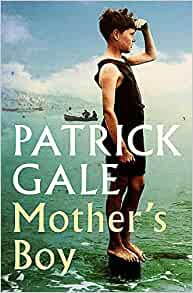
SPECIAL FEATURE: Q & A with guest Patrick Gale on his new novel MOTHER'S BOY


"This is really a novel about someone becoming a writer ... "

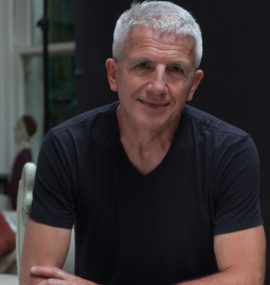
For this special feature we're honoured to welcome Patrick Gale, an author whose new books we always look forward to - and this is one we particularly admire. Thanks so much to Patrick for answering our questions.

Photograph by Jillian Edelstein
From the best-selling author of A Place Called Winter comes Mother's Boy, a superb historical novel of Cornwall, class, desire and two world wars.

Laura, an impoverished Cornish girl, meets her husband when they are both in service in Teignmouth in 1916. They have a baby, Charles, but Laura's husband returns home from the trenches a damaged man, already ill with the tuberculosis that will soon leave her a widow. In a small, class-obsessed town she raises her boy alone, working as a laundress and gradually becomes aware that he is some kind of genius.

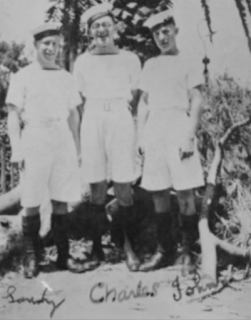
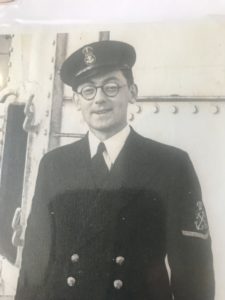
As an intensely private young man, Charles signs up for the navy with the new rank of coder. His escape from the tight, gossipy confines of Launceston to the colour and violence of war sees him blossom as he experiences not only the possibility of death, but the constant danger of a love that is as clandestine as his work.

Mother's Boy is the story of a man who is among yet apart from his fellows, in thrall to yet at a distance from his own mother; a man being shaped for a long, remarkable and revered life spent hiding in plain sight. But it is equally the story of the dauntless mother who will continue to shield him long after the dangers of war are past.

Patrick Gale answers questions from Jon Appleton, Adèle Geras, Linda Newbery and Celia Rees


Celia: What attracted you to Charles Causley as the focus for a novel?

Patrick:  He intrigued me. I loved the poems, in particular the ones which snatches of narrative which show a novelist’s gift for thumbnail characterisation or the ones which are downright spooky in what they suggest but don’t quite spell out. I wanted to piece together myself what shaped the man who wrote them. Whenever he was asked why he didn’t write his memoirs he answered that “it” was all in the poems. So in large part what this novel does is to go back to the poems in search of “it”.

Jon
: Could you have told Charles’s story without his mother Laura’s?

Patrick: I could but the danger then would have been that he’d have become even more chilly than he already is and she would have been reduced to his view of her, and early in life, at least, his view of her could be both patronising and dismissive. Also I found the challenge of telling such a private woman’s story utterly addictive, and not just because I’m a laundry obsessive…

Adèle:  Laura is an astonishing creation. Did you speak to many people who knew her?

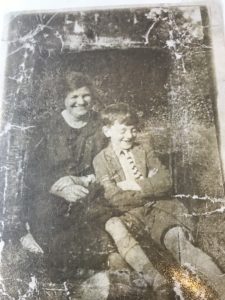
Patrick:  Only one or two, and they only knew her as children. I largely got to know her through the numerous, often rather crotchety glimpses Charles gives of her in his tiny, scribbled diaries. And I extrapolated her from his poetry. Having been raised largely by her alone he must have drawn much of his nature and voice from hers, so I trusted in that. And then read up on things like nursing TB patients, and doing laundry by hand.  

Linda:  Did you immediately decide on the structure (alternating between Laura and Charles) before you began the novel, or did that solidify through the writing?

Patrick:  I’d settled on it from the start. This was partly because I always need a few unanswered questions to energise my fiction and the more I saw of Laura, in old photographs, the more I needed to know who she was. But it was equally because the more I found out of Charles’ character – which in many ways was chillingly like that of an expert spy, different things to different people but withholding his essential self from all – the more I realised I’d need to balance his story out with one that was warmer and kinder, more approachable.

Celia:  Were there details of his life that you had to change/add/ supply? How much did you find yourself deviating from his actual life?

Patrick:  I deviate very little from the established facts. I made Laura’s employers unmarried siblings, because that appealed more than the wealthy family of drapers who she actually worked for, but the accident with the boy and the cart that opens the novel actually happened to the Teignmouth doctor Charlie worked for. Beyond the two ships he was on, and the two “ stone frigates” where he also worked, Charles’ war story is largely cloaked in official secrecy so I was able to play with the facts to ensure that he and Ginger went to Malta on the incredible operation immortalised in C S Forester’s The Ship. The trips to Liverpool Playhouse are extrapolated from theatre programmes he’d retained from that period and the affair with a fellow officer is extrapolated from a letter he kept all his life, whose wording I barely alter. Laura’s adventures are made up in their details but she did have evacuees live with her, a black GI was murdered in just the way I describe and POWs did indeed construct a playground right outside her cottage on Tredydon Road. The dogs Jack and Wang were real but the kitten at the end is a simple prefiguring of the several cats in which Charles measured out the rest of his life.

Jon:  Do you think you’ve given Charles Causley a sexuality in the book or coaxed out – or simply given voice to – what was already there?

Patrick:  I was painfully aware of the temptation simply to “gay” Charles, to claim him for my team so I resisted it at every turn by trying to remain truthful to what he confided in his secret, minutely written diaries. These give a powerful sense of a young man who doesn’t fit the accepted mould of manhood, who knows himself to be special or different and who flinches from the sexual expressions of those around him. Then I found a letter he had kept to his dying day which I believe is proof that he had some kind of affair with a fellow officer when stationed at HMS Cabbala, one of those chilling “we need to put all that behind us now” letters probably all too common between men in the 40s and 50s. I will still correct anyone who says Charles was gay, as I think that word implies an acceptance of a sexual identity and, whatever fulfilment he may have found on British Council tours later in life, there’s no evidence that Charles ever arrived at such a self-acceptance.

Jon:  From Rough Music on, the dynamics of mother-son relationships have featured prominently in your novels. There’s a very strong sense in Mother’s Boy that Charles and Laura’s relationship isn’t instead of a marriage but a sexless marriage itself. Is this something you’ve noticed in families you’ve encountered, or was it specific to the Causleys?

Patrick:  
I’ve always been interested in what happens to sexuality when it’s denied natural expression. I think what grows between the Causleys is little different to what happens not just to widows and widowers but to nuns, priests, schoolteachers or anyone put in a position where sexuality is safest left unexpressed. The cliché is that it results in something warped or bad; the truth is that it often results in creative energy. I’m sure we can all think of at least one transformative teacher we had who never married…

Adèle:  Speaking as someone who’s also written a novel about a real person, I’m curious to know if there are any lines you felt you shouldn’t cross? What effect do you think any boundaries you may have set had on the novel?

Patrick:  Scary, isn’t it? I’m still nervous that Mother’s Boy will give offence. So many men and women are powerfully protective of Charles and his memory! My main rule was that I knew I was never going to flesh out the characters of anyone with living descendants, which is why Laura’s numerous siblings barely figure. I also knew I had to honour the known facts, however inconvenient. But it was always a novel, never a biography, so I felt free to combine Charles’ real boyhood and wartime friends into totally fictitious amalgams and to ensure that his tragically doomed ship (in real life HMS Eclipse not my HMS Starburst) played a small but heroic part in the incredible operation to break the siege of Malta.  

Adèle:  You live in Cornwall and one of the striking things about the book is the way you bring places to life. Launceston, Laura’s house, ships etc. Did you walk through all the places you describe? Would you ever write about a place you’d never been to?

Patrick:  Place is crucial to the way I write. Once I’ve settled on a setting for a book I have to go there and immerse myself because I know it’ll become a character in the book. I already knew Launceston well, from my first ten years in Cornwall, when it was just up the road from my house, but to see it through Charles and Laura’s eyes I was lucky to spend a week living in their little house, Cyprus Well, taking daily walks they’d have walked, and working to imagine the bustling industrial town it once was. I’ve never had the sense to set a novel in the Caribbean or Venice or wherever. This novel involved a research weekend in Skegness and my next one will immerse me in Liverpool and Durham!

Jon:  As a British novelist who began work in the late 20th century, do you think it was inevitable that you’d write about the experience of war? (In the way you simply had to write The Facts of Life in the oppressive mid-90s.) Do you even believe in inevitabilities when it comes to writers’ trajectories or inspirations?

Patrick:  I turned sixty in January, which places me squarely in the generation that grew up with bombsites and air raid shelters still very much in evidence. Our parents’ attitudes were so shaped by the direct experience of world war that inevitably that shaped us too. But I didn’t set out to write a war novel; I set out to explore what made Charles and Laura tick, and it rapidly became clear that two world wars were going to form a big part of their story. But I think these things are often accidental in writers’ lives. An idea will just catch and refuse to be shaken off. I’ve promised that my next novel is a sequel to A Place Called Winter, and it is, but I’m realising it’s actually a novel about my mother and grandmother and their marriages.

Linda: 
 All the detail of naval training and life seems so convincing. How did you immerse yourself in that?

Patrick:  It was very hard as I was never one of nature’s war comic readers or war film watchers. But I ended up using that, realising that Charles wasn’t remotely in his comfort zone either when he shipped out on Eclipse. From his diaries I knew the books he was reading, I knew he was a swot and would have swotted up on how to be a sailor. I spent time in Gibraltar and Malta tracking where he’d have gone and what he’d have experienced. The hardest part was the coding, as that part of the war story was kept so obsessively secret for so long that physical material relating to it hard to come by, even in the Imperial War Museum archives. Happily these contain a few relevant bits of recorded testimony from old men recalling their coding training which I could combine with surviving manuals and wonderful details from Charles’ unfinished wartime novel.

Jon:  I can’t imagine a Gale novel without music being described in a visceral way – but what was it like to write about a writer?

Patrick:  I think I cheat a bit in that this is really a novel about someone becoming a writer. For much of the period described, Charles was primarily a musician, which gave me a crucial way into understanding him. He went to war a playwright and returned a poet, and I think that transformation was partly down to the interplay of his rigorous coding training with his earlier training as a pianist.

Adèle:  The book reads as though it cost you no effort at all but just poured on to the page like a spring gushing from the rock. How much rewriting/ editing do you do?

Patrick:  You’re very kind! I do an awful lot of mental churning around and notetaking and try not to start writing the actual text until I’m really clear who my characters are and what their stories are going to be. In this case I benefited from the amazing, if relatively sparse, Causley archive held at Exeter University and spent a lot of time reading through that and trying to join the gaps. The challenge then was to decide both whether there was enough “story” for Laura to balance out Charles’ adventures, and to decide where the novel should end. From there on the process has always felt to be one of painstaking accuracy rather than one of making things up. Very early on I realised that what I was doing was inspired by his poem Angel Hill and seeking to unlock whatever story lay behind its writing and that gave me a great momentum.

Linda:   Now that you’ve finished writing the novel, have the real and fictional Charles Causleys merged in your mind, or do you see them as two separate characters?

Patrick:  I fear they may have done a bit. The same happened with my great grandfather when I turned him into the hero of  A Place Called Winter. The difference here is that we have this incredible body of poetry (and some wonderfully atmospheric prose) left by Charles along with recordings of his voice and I ventriloquised that to such an extent that I’m now having to make a big effort to remind myself what I made up.

Linda:  Do you find yourself thinking differently about his poems now that you’ve been inside his head, as it were?

Patrick:  I don’t, but only because his poems were my constant guide as to who he was. I had a lot of fun not fleshing them out, exactly, but lifting names and scenes and places from them in ways I hope will reward readers who already know them well. His unfinished novel about his time on Gibraltar, his naval short stories and his numerous autobiographical prose sketches are so vivid that at times I almost felt I was taking dictation and not making things up at all.

Linda:  I am struck by the ending of Eden Rock. Do you think Causley is referring to the distance between him and his parents as one brought about by time and death? Or do you think he is regretful that he could never have (or never allowed himself to have) such a close relationship with another person?

Patrick:  Eden Rock is a masterpiece, I think, because it packs so much into so few lines. I believe it was inspired by that moment that comes to us all when our parents have died and we sense most of our life is behind us. He has a sense of his own looming death and of how seductive it is then flinches because he’s not yet ready. But buried inside there is also, I think, the strange dichotomy of the only child – at once confident that they are loved and yet forever left on the emotional sidelines by the love their parents have for one another. Several women of his generation have insisted to me that Charles longed for a family of his own. They say that, irrationally, as though such a longing would be quite alien to a man who also longed for the love of another man . I’m sure he longed for a family because it’s natural to want to belong and a family is a concrete proof of fitting in whereas, whatever his sexuality may have been, he remained always on the edge of things, on the outside looking in.

Celia: What do you think Charles Causley would have made of his fictional self?

Patrick: I think he’d have been appalled. As would Laura. They were both deeply private people who didn’t put themselves forward. I hope he could see, though, that it’s a book driven by affection and admiration and from a desire that more people should visit Launceston and seek out the amazing work he left behind him there.

Celia: How much of the novel is Charles Causley, how much Patrick Gale?

Patrick:  That’s very hard to answer, so I won’t even try!


Adèle: Will there be another book about Charles? He lived to be very old.

Patrick:  Not from me, although he cries out for a scholarly, critical biography which has yet to be written. He needs a Hermione Lee! He lived to be very old but I have a powerful sense that he was a man who created a public persona behind which he could remain intensely private and in a way my job here is done if I’ve managed to suggest what he felt that persona was necessary and what the events were that led to its construction. I’ll be very happy if it simply leads new readers to his poetry, where they can make their own minds up about who he was.

Mother's Boy is published by Tinder Press.

See also: Notes from an Exhibition reviewed by Julia Jarman


Take Nothing With You reviewed by Linda Newbery