Showing posts with label Q&A. Show all posts

Monday, 28 April 2025

Q&A: Jane Rogers interviews Linda Newbery about THE ONE TRUE THING


"Each of the three characters - plus Adam, first appearing as a young artist, who isn't a viewpoint character but is equally important - finds, or tries to find, the activity that gives purpose and meaning to life ... "

Linda answers questions from our regular contributor Jane Rogers.

When the ground shifts, where is one true thing to be found?

Jane, in her twenties, is left parentless when her father dies suddenly; a second shock follows when his Will reveals the existence of a son no-one knew of. Now Wildings, the family home, must be sold. Spanning two generations, the novel tells the story of Bridget, Jane’s mother, trapped in an unhappy marriage on which her career depends, and of stone-carver Meg, who wants only independence but is enmeshed in conflicting loyalties and desires when Adam, a young artist, enters their lives, to devastating effect.

Now far from Wildings, Meg is bound by a promise to support Jane in her loss. Having thought of herself as an observer who saw everything, she’s forced to realise how much she failed to see – and the cost to those she loves ...
 
Jane: Congratulations, Linda! Re-reading this book (Jane read an earlier draft) transported me back to the beauties of Wildings and filled me with admiration all over again, for your clever plotting and beautiful descriptions of nature. I’m interested in the way you can shift between writing for children, and adult fiction. In your best-known book for young readers, Lob, you conjure a beautifully innocent child’s view of the world, where love of nature and a powerful imagination are the key ingredients. And that book appeals to adult readers too, because we all have a nostalgia for that kind of innocence.

In complete contrast, The One True Thing is a very grown-up novel, in its exploration of a whole range of sexual relationships: Bridget and Anthony’s marriage shifts through passion and intimacy to downright hostility and back, via infidelity, to a benign accommodation with one another; we learn of Meg’s lesbian love affair with Carrie, who dumps her for a man; there are hints of incestuous attraction between two other characters. How conscious are you of your readership, as you are writing? And does a story always present itself clearly to you as either YA or adult?

Linda: The One True Thing was never going to be anything other than an adult novel, and that's true of my work in progress, too. With teenage fiction there have been times when the boundaries (if there are boundaries) have been less clear: for example with Set in Stone, which I began as a YA novel but for fairly sophisticated readers, and with the hope (which I always have) that it would be enjoyed by adults too. Sometimes I find that a story wants to go in a direction I hadn't planned at the start, and that's what happened with Set in Stone, which caused some controversy when it won the Costa Children's Prize. Some argued - and I'd agree - that it isn't a children's book. But the eligibility for that category does include age groups up to and including YA, so the same could and probably has been said of other winners more suitable for the upper end of young readers. But I won't write any more YA - my focus now is on adult fiction, alternating with stories for young children. 

Jane: The creation of Bridget’s garden is at the heart of the book. Did you have to do a lot of research, or were you already a gardening expert?

Linda: I certainly wouldn't call myself an expert, but I do know quite a lot about gardening and had a clear idea of Bridget's style and approach. I did need to research Chelsea Flower Show garden criteria for the particular year in which two of my characters make a small artisan garden. At the time I was writing the novel, I attended a talk by James Alexander Sinclair, who lives locally and is a Chelsea judge; after the event I emailed him with a few questions, which he very kindly answered, showing me where to find out more.

Jane: Where did the novel spring from? Can you talk us through the inspiration, the starting points? Or maybe I should say, the seeds?  I was fascinated by the precise descriptions of Meg’s work as a stone mason, and I note the book is dedicated to a stone-mason. Can you carve stone? Is this another of your hidden talents?

Linda: I can't exactly remember the starting point - several years ago - but I do seem to have developed a fascination with stone. That started with my late mother's photograph of a caryatid at Copped Hall in Essex, which set me off on The Shell House - Graveney Hall in my novel is based on Copped Hall, inhabited by a fictitious family, but almost destroyed by a devastating fire in 1917, just as the real mansion was. The caryatid, and the sculptor who made it, didn't feature as much as I'd expected, the novel being concerned with a First World War relationship and with a young photographer who discovers the ruins in the present day. So, fairly soon after I'd finished it, I began another novel more focused on stone-carving: Set in Stone. While doing some hands-on research for that one with a local stonemason, Bernard Johnson, I learned to appreciate the beauty of letter-carving, and wanted to have a go. My efforts are very clumsy compared to Bernard's exquisite work (which you can see on his website) but at least I had the tools in my hands and began to understand something of the materials and techniques. I wanted my present-day stone-carver in the new novel to be female, and the character of Meg grew from there, along with how she'd fit around the other characters. 

Jane: What is your writing process? In this novel, Bridget, Meg and Jane all have their own stories and points of view, which are intercut. Did you write them like this, or work on each woman’s story-line separately?

Linda: I seem to have to work like that, moving back and forth in time and/or with intercutting viewpoints - my work in progress has a similar structure, and so do several of my young adult novels (Set in Stone, Sisterland, The Shell House). I don't think I could do it by working on each character individually, because so much depends on the juxtaposition, and what I want the reader to think, wonder, predict or piece together at any one point. When finishing a section from one point of view, I need to leave off for a while, go and do something else, then return (probably next day) with my head in the viewpoint of another character. 

Jane: I hope you won’t mind me saying that I found a lot of you in this novel; yoga, gardening, Extinction Rebellion! 

Linda: Yes, at times while writing I feared that I was using up everything I knew and could write about with authority ... but luckily there are more interests left over (photography, animal activism, an artist I've been intrigued by for many years) for the novel I'm working on now. In The One True Thing, each of the three characters - plus Adam, first appearing as a young artist, who isn't a viewpoint character but is equally important - finds, or tries to find, the activity that gives purpose and meaning to life. Meg is the one who uses the phrase, but it's significant for all of them. 

Jane: I know this novel has been a long time coming to fruition (sorry about the gardening metaphors!) Both you and I, and indeed many other writers, have had trouble finding a publisher for a completed novel – can you tell us the publishing history of this book?

Linda: Sadly, it can be very difficult for an author, even a well-established one, to find a publisher if her or his sales are less than spectacular - and that category includes most of us! Having published only one adult novel before (Quarter Past Two on a Wednesday Afternoon, in paperback as Missing Rose) I'm not yet established as a writer for adults, and I've heard from you and from other acquaintances that much better-known authors than me are finding it a struggle. The One True Thing was submitted, but isn't what publishers are looking for at present, and even though most praised the writing, characters, etc., they clearly didn't think they could make money from it. Although it's tough being rejected, I never lost the sense that readers would enjoy my novel, so I refused to give up on it. 

I'm grateful to Fiona Mountain, a well-regarded and traditionally published author of historical fiction who I met through a reading group, for telling me how and why she had self-published her latest novel, Keeper of Secrets (which I recommend). When I discussed this possibility with friends Celia Rees and Cindy Jefferies, both of whom have wide experience of the publishing industry, Celia had the brilliant idea of forming an imprint, Writers Review Publishing, linked to this blog. That was a moment of epiphany! I'd felt diffident about publishing and promoting my own book as a solo effort, but being part of an author collaborative would be really rewarding - helping other writers to launch new books or reissue backlist titles that deserve to reach new readers, and all benefitting from joint publicity. It was so liberating to find that everything I needed was available: cover designers, interior layout designers, proofreaders, publicists. It had never occurred to me that I could commision my own audio book, but I've now done that through Audio Factory, choosing my preferred narrator. 

It didn't take long to assemble three of us - Judith Allnatt, Mary Hoffman and myself - to be part of the launch. Both their titles are excellent reissues: Judith's The Poet's Wife tells the story of Patty, the wife of poet John Clare, while Mary's David: the Unauthorised Autobiography imagines the life of the model for Michelangelo's iconic sculpture. Two other well-established writers, Dennis Hamley and Sheena Wilkinson, will publish with us later this year. How we progress will depend on what comes our way - though we already have plans for 2026. Watch this space!

The One True Thing is published by Writers Review Publishing. The cover design is by Owen Gent.

Jane Rogers' short story collection, Fire Ready, is published by Comma Press. Read more here.


The other two launch titles for Writers Review Publishing are Judith Allnatt's The Poet's Wife and Mary Hoffman's David: the Unauthorised Autobiography


Monday, 21 March 2022

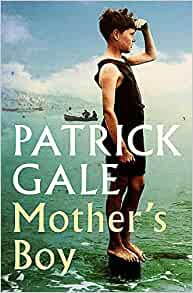
SPECIAL FEATURE: Q & A with guest Patrick Gale on his new novel MOTHER'S BOY


"This is really a novel about someone becoming a writer ... "

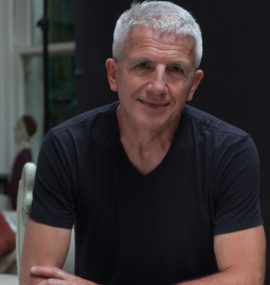
For this special feature we're honoured to welcome Patrick Gale, an author whose new books we always look forward to - and this is one we particularly admire. Thanks so much to Patrick for answering our questions.

Photograph by Jillian Edelstein
From the best-selling author of A Place Called Winter comes Mother's Boy, a superb historical novel of Cornwall, class, desire and two world wars.

Laura, an impoverished Cornish girl, meets her husband when they are both in service in Teignmouth in 1916. They have a baby, Charles, but Laura's husband returns home from the trenches a damaged man, already ill with the tuberculosis that will soon leave her a widow. In a small, class-obsessed town she raises her boy alone, working as a laundress and gradually becomes aware that he is some kind of genius.

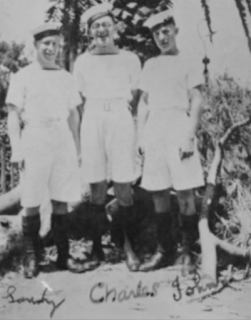
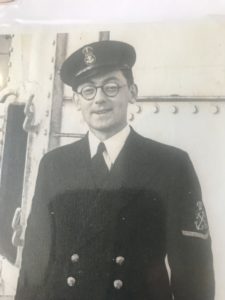
As an intensely private young man, Charles signs up for the navy with the new rank of coder. His escape from the tight, gossipy confines of Launceston to the colour and violence of war sees him blossom as he experiences not only the possibility of death, but the constant danger of a love that is as clandestine as his work.

Mother's Boy is the story of a man who is among yet apart from his fellows, in thrall to yet at a distance from his own mother; a man being shaped for a long, remarkable and revered life spent hiding in plain sight. But it is equally the story of the dauntless mother who will continue to shield him long after the dangers of war are past.

Patrick Gale answers questions from Jon Appleton, Adèle Geras, Linda Newbery and Celia Rees


Celia: What attracted you to Charles Causley as the focus for a novel?

Patrick:  He intrigued me. I loved the poems, in particular the ones which snatches of narrative which show a novelist’s gift for thumbnail characterisation or the ones which are downright spooky in what they suggest but don’t quite spell out. I wanted to piece together myself what shaped the man who wrote them. Whenever he was asked why he didn’t write his memoirs he answered that “it” was all in the poems. So in large part what this novel does is to go back to the poems in search of “it”.

Jon
: Could you have told Charles’s story without his mother Laura’s?

Patrick: I could but the danger then would have been that he’d have become even more chilly than he already is and she would have been reduced to his view of her, and early in life, at least, his view of her could be both patronising and dismissive. Also I found the challenge of telling such a private woman’s story utterly addictive, and not just because I’m a laundry obsessive…

Adèle:  Laura is an astonishing creation. Did you speak to many people who knew her?

Patrick:  Only one or two, and they only knew her as children. I largely got to know her through the numerous, often rather crotchety glimpses Charles gives of her in his tiny, scribbled diaries. And I extrapolated her from his poetry. Having been raised largely by her alone he must have drawn much of his nature and voice from hers, so I trusted in that. And then read up on things like nursing TB patients, and doing laundry by hand.  

Linda:  Did you immediately decide on the structure (alternating between Laura and Charles) before you began the novel, or did that solidify through the writing?

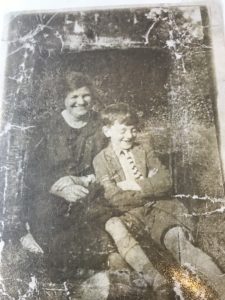
Patrick:  I’d settled on it from the start. This was partly because I always need a few unanswered questions to energise my fiction and the more I saw of Laura, in old photographs, the more I needed to know who she was. But it was equally because the more I found out of Charles’ character – which in many ways was chillingly like that of an expert spy, different things to different people but withholding his essential self from all – the more I realised I’d need to balance his story out with one that was warmer and kinder, more approachable.

Celia:  Were there details of his life that you had to change/add/ supply? How much did you find yourself deviating from his actual life?

Patrick:  I deviate very little from the established facts. I made Laura’s employers unmarried siblings, because that appealed more than the wealthy family of drapers who she actually worked for, but the accident with the boy and the cart that opens the novel actually happened to the Teignmouth doctor Charlie worked for. Beyond the two ships he was on, and the two “ stone frigates” where he also worked, Charles’ war story is largely cloaked in official secrecy so I was able to play with the facts to ensure that he and Ginger went to Malta on the incredible operation immortalised in C S Forester’s The Ship. The trips to Liverpool Playhouse are extrapolated from theatre programmes he’d retained from that period and the affair with a fellow officer is extrapolated from a letter he kept all his life, whose wording I barely alter. Laura’s adventures are made up in their details but she did have evacuees live with her, a black GI was murdered in just the way I describe and POWs did indeed construct a playground right outside her cottage on Tredydon Road. The dogs Jack and Wang were real but the kitten at the end is a simple prefiguring of the several cats in which Charles measured out the rest of his life.

Jon:  Do you think you’ve given Charles Causley a sexuality in the book or coaxed out – or simply given voice to – what was already there?

Patrick:  I was painfully aware of the temptation simply to “gay” Charles, to claim him for my team so I resisted it at every turn by trying to remain truthful to what he confided in his secret, minutely written diaries. These give a powerful sense of a young man who doesn’t fit the accepted mould of manhood, who knows himself to be special or different and who flinches from the sexual expressions of those around him. Then I found a letter he had kept to his dying day which I believe is proof that he had some kind of affair with a fellow officer when stationed at HMS Cabbala, one of those chilling “we need to put all that behind us now” letters probably all too common between men in the 40s and 50s. I will still correct anyone who says Charles was gay, as I think that word implies an acceptance of a sexual identity and, whatever fulfilment he may have found on British Council tours later in life, there’s no evidence that Charles ever arrived at such a self-acceptance.

Jon:  From Rough Music on, the dynamics of mother-son relationships have featured prominently in your novels. There’s a very strong sense in Mother’s Boy that Charles and Laura’s relationship isn’t instead of a marriage but a sexless marriage itself. Is this something you’ve noticed in families you’ve encountered, or was it specific to the Causleys?

Patrick:  
I’ve always been interested in what happens to sexuality when it’s denied natural expression. I think what grows between the Causleys is little different to what happens not just to widows and widowers but to nuns, priests, schoolteachers or anyone put in a position where sexuality is safest left unexpressed. The cliché is that it results in something warped or bad; the truth is that it often results in creative energy. I’m sure we can all think of at least one transformative teacher we had who never married…

Adèle:  Speaking as someone who’s also written a novel about a real person, I’m curious to know if there are any lines you felt you shouldn’t cross? What effect do you think any boundaries you may have set had on the novel?

Patrick:  Scary, isn’t it? I’m still nervous that Mother’s Boy will give offence. So many men and women are powerfully protective of Charles and his memory! My main rule was that I knew I was never going to flesh out the characters of anyone with living descendants, which is why Laura’s numerous siblings barely figure. I also knew I had to honour the known facts, however inconvenient. But it was always a novel, never a biography, so I felt free to combine Charles’ real boyhood and wartime friends into totally fictitious amalgams and to ensure that his tragically doomed ship (in real life HMS Eclipse not my HMS Starburst) played a small but heroic part in the incredible operation to break the siege of Malta.  

Adèle:  You live in Cornwall and one of the striking things about the book is the way you bring places to life. Launceston, Laura’s house, ships etc. Did you walk through all the places you describe? Would you ever write about a place you’d never been to?

Patrick:  Place is crucial to the way I write. Once I’ve settled on a setting for a book I have to go there and immerse myself because I know it’ll become a character in the book. I already knew Launceston well, from my first ten years in Cornwall, when it was just up the road from my house, but to see it through Charles and Laura’s eyes I was lucky to spend a week living in their little house, Cyprus Well, taking daily walks they’d have walked, and working to imagine the bustling industrial town it once was. I’ve never had the sense to set a novel in the Caribbean or Venice or wherever. This novel involved a research weekend in Skegness and my next one will immerse me in Liverpool and Durham!

Jon:  As a British novelist who began work in the late 20th century, do you think it was inevitable that you’d write about the experience of war? (In the way you simply had to write The Facts of Life in the oppressive mid-90s.) Do you even believe in inevitabilities when it comes to writers’ trajectories or inspirations?

Patrick:  I turned sixty in January, which places me squarely in the generation that grew up with bombsites and air raid shelters still very much in evidence. Our parents’ attitudes were so shaped by the direct experience of world war that inevitably that shaped us too. But I didn’t set out to write a war novel; I set out to explore what made Charles and Laura tick, and it rapidly became clear that two world wars were going to form a big part of their story. But I think these things are often accidental in writers’ lives. An idea will just catch and refuse to be shaken off. I’ve promised that my next novel is a sequel to A Place Called Winter, and it is, but I’m realising it’s actually a novel about my mother and grandmother and their marriages.

Linda: 
 All the detail of naval training and life seems so convincing. How did you immerse yourself in that?

Patrick:  It was very hard as I was never one of nature’s war comic readers or war film watchers. But I ended up using that, realising that Charles wasn’t remotely in his comfort zone either when he shipped out on Eclipse. From his diaries I knew the books he was reading, I knew he was a swot and would have swotted up on how to be a sailor. I spent time in Gibraltar and Malta tracking where he’d have gone and what he’d have experienced. The hardest part was the coding, as that part of the war story was kept so obsessively secret for so long that physical material relating to it hard to come by, even in the Imperial War Museum archives. Happily these contain a few relevant bits of recorded testimony from old men recalling their coding training which I could combine with surviving manuals and wonderful details from Charles’ unfinished wartime novel.

Jon:  I can’t imagine a Gale novel without music being described in a visceral way – but what was it like to write about a writer?

Patrick:  I think I cheat a bit in that this is really a novel about someone becoming a writer. For much of the period described, Charles was primarily a musician, which gave me a crucial way into understanding him. He went to war a playwright and returned a poet, and I think that transformation was partly down to the interplay of his rigorous coding training with his earlier training as a pianist.

Adèle:  The book reads as though it cost you no effort at all but just poured on to the page like a spring gushing from the rock. How much rewriting/ editing do you do?

Patrick:  You’re very kind! I do an awful lot of mental churning around and notetaking and try not to start writing the actual text until I’m really clear who my characters are and what their stories are going to be. In this case I benefited from the amazing, if relatively sparse, Causley archive held at Exeter University and spent a lot of time reading through that and trying to join the gaps. The challenge then was to decide both whether there was enough “story” for Laura to balance out Charles’ adventures, and to decide where the novel should end. From there on the process has always felt to be one of painstaking accuracy rather than one of making things up. Very early on I realised that what I was doing was inspired by his poem Angel Hill and seeking to unlock whatever story lay behind its writing and that gave me a great momentum.

Linda:   Now that you’ve finished writing the novel, have the real and fictional Charles Causleys merged in your mind, or do you see them as two separate characters?

Patrick:  I fear they may have done a bit. The same happened with my great grandfather when I turned him into the hero of  A Place Called Winter. The difference here is that we have this incredible body of poetry (and some wonderfully atmospheric prose) left by Charles along with recordings of his voice and I ventriloquised that to such an extent that I’m now having to make a big effort to remind myself what I made up.

Linda:  Do you find yourself thinking differently about his poems now that you’ve been inside his head, as it were?

Patrick:  I don’t, but only because his poems were my constant guide as to who he was. I had a lot of fun not fleshing them out, exactly, but lifting names and scenes and places from them in ways I hope will reward readers who already know them well. His unfinished novel about his time on Gibraltar, his naval short stories and his numerous autobiographical prose sketches are so vivid that at times I almost felt I was taking dictation and not making things up at all.

Linda:  I am struck by the ending of Eden Rock. Do you think Causley is referring to the distance between him and his parents as one brought about by time and death? Or do you think he is regretful that he could never have (or never allowed himself to have) such a close relationship with another person?

Patrick:  Eden Rock is a masterpiece, I think, because it packs so much into so few lines. I believe it was inspired by that moment that comes to us all when our parents have died and we sense most of our life is behind us. He has a sense of his own looming death and of how seductive it is then flinches because he’s not yet ready. But buried inside there is also, I think, the strange dichotomy of the only child – at once confident that they are loved and yet forever left on the emotional sidelines by the love their parents have for one another. Several women of his generation have insisted to me that Charles longed for a family of his own. They say that, irrationally, as though such a longing would be quite alien to a man who also longed for the love of another man . I’m sure he longed for a family because it’s natural to want to belong and a family is a concrete proof of fitting in whereas, whatever his sexuality may have been, he remained always on the edge of things, on the outside looking in.

Celia: What do you think Charles Causley would have made of his fictional self?

Patrick: I think he’d have been appalled. As would Laura. They were both deeply private people who didn’t put themselves forward. I hope he could see, though, that it’s a book driven by affection and admiration and from a desire that more people should visit Launceston and seek out the amazing work he left behind him there.

Celia: How much of the novel is Charles Causley, how much Patrick Gale?

Patrick:  That’s very hard to answer, so I won’t even try!


Adèle: Will there be another book about Charles? He lived to be very old.

Patrick:  Not from me, although he cries out for a scholarly, critical biography which has yet to be written. He needs a Hermione Lee! He lived to be very old but I have a powerful sense that he was a man who created a public persona behind which he could remain intensely private and in a way my job here is done if I’ve managed to suggest what he felt that persona was necessary and what the events were that led to its construction. I’ll be very happy if it simply leads new readers to his poetry, where they can make their own minds up about who he was.

Mother's Boy is published by Tinder Press.

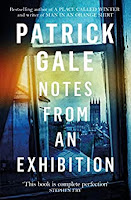
See also: Notes from an Exhibition reviewed by Julia Jarman


Take Nothing With You reviewed by Linda Newbery


Monday, 27 July 2020

FOURTH ANNIVERSARY: a special Q&A with Celia Rees about her new novel, MISS GRAHAM'S COLD WAR COOKBOOK


"There is a definite magic in that first moment when the ideas begin to swarm together ..."

Celia Rees is a leading writer for Young Adults with an international reputation. Her titles include Witch Child (shortlisted for the Guardian Children's Fiction Prize), Sorceress (shortlisted for the Whitbread - now Costa - Children's Book Award), Pirates!, Sovay and Glass Town Wars. The chance discovery of an old family cookery book has now taken her writing in a new and different direction. In 2012, she began researching and writing her first novel for adults, Miss Graham's Cold War Cookbook, out now. Here she answers questions from Adèle Geras and Linda Newbery. 
Twitter: @CeliaRees Instagram: @celiarees1

Linda: The idea of using recipes to conceal coded messages is such a clever one, used to brilliant effect throughout. How did you think of it?

Celia: I found a battered old cookery book among my mother's effects and was both intrigued and moved by the handwritten recipes that I found inside. I recognised my mother's writing, my aunt's and what I took to be my grandmother's but I'd never seen the book before. It was pre-war and must have belonged to my grandmother, then passed to my aunt and on to my mother who must have kept it when my aunt died. I'd been executor for both my aunt and my mother and had found no letters. These recipes were the only written connection between these women. There was something I wanted to write about in that but I didn't know what it could be. Years later, I was in the Imperial War Museum with my daughter. We discovered that the British Zone in Post War Germany had been a hotbed of spying. My aunt had been there. Could she have been a spy? On the surface, the idea was ridiculous. My respectable, Head Mistress maiden aunt a spy? But then again, it was perfectly possible. She had led a bit of a hidden life... If she was a spy, how would she pass on messages? I thought of the handwritten recipes passing between women. The two ideas connected and I knew I had a book.

Adèle: Apart from the personal link of the recipe book, can you identify what it was that drew you to the story of some of the things that went on both before and more especially after the War? It's not a subject I've seen written about before.

Celia: I began to research Germany in the immediate post war period and was shocked by the utter chaos: the widespread physical destruction, the lack of even the most basic foodstuffs and the millions of displaced persons there from all over Europe. The Germans call midnight on 8th May, 1945, 'Stunde Null' - Zero Hour. In and amongst all this, there were Nazi fugitives hiding in plain sight. They were being hunted but not always to be brought to justice. The Allies were looking for useful Nazis even before the war ended, not just rocket scientists like Wernher von Braun, but others, too. Anyone who might be useful because the world was turning, the Cold War starting and Germany was the country where the erstwhile Allies met. I found this intensely interesting. By one of those chance things, on a visit to the Jewish Museum in Paris, I saw a chilling group photograph of doctors and nurses lined up outside a hospital, a mental facility, part of the Euthanasia Project which was devoted to systematically killing patients deemed 'a life unworthy of life'. I knew almost nothing about this and found it deeply shocking and I thought it should be more widely known.

Linda: How did you find the confidence to write about this period and these settings, with so much complexity involving the different factions, protocols and motives? What was the most difficult thing to find out?

Celia: I did a lot of reading and didn't start writing until I felt I was in command of at least the basic facts and knew where to go if I needed to know more. The most difficult things to find out were the details of the day to day lives of the people living and working in Germany. There are plenty of books about various aspects of Post War Germany but not many which tell you how much the butter ration was or how a billet was organised. I had to go to the Imperial War Museum and read the letters and diaries of women working for the Control Commission. The food was difficult, too: finding menus, dishes, recipes. I'd set myself a bit of a challenge with that!

Adèle: This novel is what's known as multilayered. Several time frames, quite a few different narratives going on at the same time. Did this give you any particular problems? Did you go through various versions before arriving at the ideal order?

Celia: I didn't have a problem with the framing device, that was always set. If I had a problem, it wasn't so much with the order of events but the order of telling, especially the flashbacks, which couldn't be jettisoned because they carried vital backstory that the reader needed to know. The trick is to know where to put them, then weave them into the thought patterns of the close third person narration in a way that seems entirely natural and doesn't disrupt the main narrative thrust. That took a bit of working. For a while I had a reader who didn't like flashbacks and that made things difficult!

Adèle: One of the things I most love about this book (and indeed about all your writing!) is the care and love you give to things like descriptions of clothes and settings. Did you have to fight editors about keeping this detail intact? In my experience, they sometimes want to cut a lot of that.

Celia: We share that, Adèle. I love all those details. There was a brilliant exhibition at the Imperial War Museum, Fashion on the Ration and a great book to go with it by Julie Summers and that was a huge help. It's strange how things like that pop up just when you need them. I like researching clothes and makeup. It's fun and I can spent all afternoon on the internet chasing down the right hairstyle or shade and make of lipstick, but these kinds of details help to accurately evoke the period. Clothes, hairstyles, makeup, jewellery, accessories are important in other ways, too. They tell you a lot about the woman wearing them and at a time when so much was rationed, where and how she acquired them tells you what is going on at street level. I didn't have too much trouble from my editors. Luckily, they could see the value of that kind of detail.

Linda: In similar vein, I was struck by the scenes of utter devastation in the cities and suburbs - you describe them so vividly. Were these derived from photographs and first-hand accounts, and where did you find them?

Celia: My aunt had photographs of ruined cities and ships half submerged in harbours. Some she'd sent to my mother, so I remember seeing them as a child, others I found in her effects. There are plenty more on the internet. One thing people did was take photographs of the devastation. Touring the ruins was quite the thing to do. I also found eye witness accounts of Hamburg and Berlin, so I had those for reference.

Adèle: Is the Swiss hotel based on a real hotel?

Celia: Yes, it is. The Beau Rivage Palace. I haven't been there but it looks fabulous! I bought a vintage post card and trawled their website. The wonders of the internet!

Linda: You obviously visited Lübeck for research - did you visit other settings for the novel, for instance Vipiteno Sterzing?

Celia: I did visit Lübeck, also Hamburg and Berlin but I didn't get to Vipiteno Sterzing. Again, internet to the rescue: tourist information and TripAdvisor, also Google Maps and Google Earth. I did cheat a little bit and put a lake where there is no lake...

Linda: Often, when a writer is researching, something crops up that's a gift to the plot, or that's useful thematically. Did you come across any unexpected bonuses of that kind?

Celia: There is a definite magic in that first moment when the ideas begin to swarm together. After that, you are on a journey and it is remarkable how things pop up, exhibitions that are on just the right subject, a chance find in a bookshop or the person you just randomly met and who is actually from Lübeck and whose aunt and uncle still live there and would love to show you round the city. The most surprising the thing was how my aunt's seemingly unremarkable life and character lent itself so perfectly to this kind of novel, especially when I found a box of bullets hidden in her writing case. I took that as a Sign! Maybe she had been a spy after all...

Adèle: If this became a movie (which it should!) who would play Dori, Edith, Kurt and Harry? (Ps. I know who I'd like to play Elisabeth: was in The Night Manager.)

Celia: Endless hours of idle speculation... Well, and they are a bit disparate but I think Anna Maxwell Martin would make a good Edith, Rachel Weisz as Dori, Thomas Kretschmann as Kurt, Cate Blanchett as Elisabeth (although, agree Elizabeth Debicki if Cate unavailable) and Ben Whishaw as Harry - I had a photo of him pinned to my board!

Miss Graham's Cold War Cookbook is published by Harper Collins.


Photograph of Celia Rees at Compton Verney, by Linda Newbery. Compton Verney is the setting for many a conversation about books in progress, and also where Writers Review was first hatched, four years ago.