Showing posts with label family. Show all posts

Monday, 12 October 2026

Guest review by Dennis Hamley: EARTH TO EARTH by John Cornwell


"The author had to revisit it and write a new conclusion, which survived an attempt by Ted Hughes to have the book pulped ..."

Dennis Hamley
read English at Jesus College, Cambridge, and has a PhD from Leicester. After teaching, lecturing and acting as County English Advisor for Hertfordshire, he retired to write full-time. He has written widely for children and young adults; one of his best-known books, The War and Freddy, was shortlisted for the Smarties Prize. His recent adult novel, The Second Person from Porlock, is a fantasy riff on the chaotic life of Samuel Taylor Coleridge; with Writers Review Publishing he has reissued Spirit of the Place. He lives in Oxford with his wife Kay, an artist.

Earth to Earth
 is a true crime classic revisited. 

This extraordinary book was first published in 1982. It concerned an event in 1975. This event has reverberated through fifty years, causing renewed arguments and accusations, so much so that the author had to revisit it and write a new conclusion, which survived an attempt by Ted Hughes to have the book pulped.

The scene is Devon, in the strip of land which runs through the gap between Exmoor and Dartmoor. Near the village of Winkleigh is a farm, West Chapple. In 1975 it was farmed by the three Luxton siblings: Frances, born in 1908, Robert John (usually known as Robbie), born in 1911 and Alan, born in 1921.Their father, also Robert John, died in 1939 and Wilmot, his wife, in 1949.

On September 23rd, 1975, all three siblings, Robbie, Frances and Alan, were found dead. Each had been shot in the head with a shotgun. Bone, brain and blood had spread over the ground. Robbie had strange wounds on his face, Frances had a broken leg. The three doors and entrances were locked from the inside.

John Cornwell is a fellow emeritus of Jesus College, Cambridge. He is a working investigative journalist with a wide range of non-fiction books, including Coleridge, Poet and Revolutionary, which is how I encountered him when I was writing The Second Person from Porlock. His editor at Penguin Books read about the tragedy at West Chapple and asked John if he thought it was worth investigating. Well, John agreed and this extraordinary book was the result.

Though the Luxton family had farmed West Chapple for several generations, hardly any of their neighbours ever saw them. When they did, they observed strange eccentricity. Frances went to the village shop to buy a single shoelace, Robbie docked a labourer’s wages for picking one orchard apple.

Robbie did all the work on the farm, following the traditional practices of his overbearing father. New farming methods were ignored. The only labourer, Fred Lyne, was paid partly in money but mainly in produce, enough to keep him alive. He was sacked just a week before the killings. The only power on the farm was supplied by a waterwheel. West Chapple was locked into the early nineteenth century.

Robbie forbade marriage. Nobody was to leave his farm. Both Frances and Alan attempted relationships. Robbie squashed them all. They were virtual prisoners. This drove Alan mad, partly illustrated when he wandered around dressed only in a sack as a sort of loincloth.

So John started his investigation, which can be read as both a speculative crime reconstruction and a riveting novel. What had brought the three to this slaughter? Was it a suicide pact? Had one of the siblings murdered the other two and then ended their own life? The inquest came to no satisfactory conclusion.

John interviewed other branches of the Luxton family, of which there were several, and found examples of class, snobbery, envy and contempt, suggestions of madness and murder, and put them together in a first edition of Earth to Earth in 1982. But there was trouble before the publication. So many questions. Possibilities of libel, slander. A family curse? Legal opinion sought. At last the book was published and won the Crime Writers Gold Dagger award.

But still the arguments raged. The poet Ted Hughes, a near neighbour, joined in, opposing any new edition. His accusation was that the book had ruined the Satow brothers, who lived in a manor house, Westacott, and ran it as a sort of B&B. On the contrary, said the brothers. The notoriety brought by the book had increased their business hugely. Hughes suggested seeking the truth through a Ouija board, but Gabrielle, John’s Catholic wife, objected.

And so here is the new 2026 edition. Everything finally sorted? Probably not: this is a story which could still plague generations to come.

Meanwhile, here is the most compulsive, thrilling page-turner I have read for years.

Earth to Earth is published by Riverrun. 

Read a Q&A with Dennis on Spirit of the Place.


Monday, 24 August 2026

Special feature Q&A: Jane Dalton on her first novel THE SECOND LIFE OF ANTHONY B


Is someone playing a cruel trick, or is the impossible really happening?

Photograph by Sarah Widdowson
Jane Dalton
is a journalist at The Independent, where she writes about animal welfare as well as general news. She previously worked for The Sunday Times, where she was Regional Editor and an occasional book reviewer. She began her career at the Dover Express, where she launched a high-profile campaign against live exports. You can find out more from Jane's website, and read an interview about Jane’s animal activism and reporting here. 

The Second Life of Anthony B is her first novel.

What if the person you loved most sent you one final email?

Eight months after his wife Maggie dies, widower Anthony Bothwell switches on his computer and discovers an email—from her.

The message is so personal it could only have come from Maggie. And its warning is terrifying.

Is someone playing a cruel trick, or is the impossible really happening?

The emails from maggie.bothwell@theafterlife.org.uk keep coming.

As Anthony's certainty about life, death and everything in between begins to crumble, he replies. Their conversations become tender, funny and deeply moving.

But when a long-buried family secret is uncovered, grief turns to betrayal, and Anthony is forced to question everything he thought he knew about the woman he loved.

Then he meets Brooke, a fellow widow who offers him the chance to begin again.

Can Anthony uncover the truth behind the impossible emails—and find the courage to embrace a second chance?

Jane answers questions from Linda Newbery.

Linda: First, congratulations on publishing your debut novel! You’ve worked for years as a journalist for The Independent – is writing fiction something you’ve always wanted to do?

Jane: Thank you so much. Yes, I started writing my first novel when I was eight. It took me a few more decades to finish writing one, though. After a tumultuous journey to publication (more of that later) I was very lucky that my manuscript was picked up by Poolbeg Books, the Irish publisher that first discovered Maeve Binchy. Not that The Second Life of Anthony B is anything like her novels – it’s much weirder than that.

Linda: The novel is based around the striking premise that Anthony receives emails from his dead wife. Did the novel begin with this idea, or did you begin with the intention of writing a novel about bereavement before settling on this device?

Jane: It began with Maggie, an outspoken woman who’s also great fun. That blended with the idea of emails from beyond the grave, because wouldn’t everyone who’s lost someone very suddenly love to be able to have one final conversation with them? I wrote it for everyone who has ever wondered what happens to us after we die and whether any form of consciousness, such as the soul, survives. I also wrote it for anyone who’s ever wondered how their life would have been had they taken a different path; and for anyone who loves garden birds.

Linda: You’ve written a page-turning mystery which is often amusing, sometimes even farcical, and equally often moving, as we experience Anthony’s deep sense of loss alongside his questioning of how well he knew Maggie. Was this a difficult balance to achieve?

Jane: Funnily enough, it wasn’t difficult. The novel is partly about how couples communicate – or fail to, and Maggie and Anthony’s turbulent relationship allowed both the humour and the sorrow to emerge naturally. That’s how it ended up with depth and bittersweet.

Linda: Did the voice of Maggie (forthright, teasing, assertive) come to you immediately? Our sense of Maggie comes mainly through her emails.

Jane: Yes, it did. She was partly based on a former news editor I had who was a veteran tabloid journalist and who had a long-standing challenge for all reporters to find a “naughty vicar”. I exaggerated Maggie a bit to make her more outrageous – but not much more. On the surface Maggie is flamboyant and larger than life, but deep down she’s extremely vulnerable and sensitive. Anthony is quite different – much more grounded, but also sensitive. Each of them is lovable in their own way.

Linda: Anthony is a thoroughly sympathetic character, and I know that readers who’ve been bereaved, or who are close to someone who’s experienced a loss, will find much that resonates. How and why did you decide that your viewpoint character would be a man in his sixties?

Jane: I’m not entirely sure, but just before writing it I’d been reading a lot of high-quality literature that happened to have male lead characters, such as novels by Ian McEwan, David Mitchell and John Updike. I didn’t want to write another popular women’s novel with the tired trope of a young woman and her boyfriend troubles. I wanted to write something non-formulaic, unpredictable and without cliche. And I forced Anthony to question his assumptions about a lot of things, such as whether people have a soul, that life is short and that the course of life after 50 is fixed.

Linda: Anthony investigates the subject of communications from the dead as the novel progresses – was this part of your own research for the novel?

Jane: To some extent, but I wanted the focus of the narrative to be more on the effect on Anthony of receiving the emails, and how they change him as a person, from being a grumpy sceptic convinced his life is over to someone open-minded to new ideas and able to start afresh. Communicating with Maggie forces him to confront things he’s never admitted before and enables him to move on in life.

Linda: Did you have the whole plot mapped out before you began, or did the novel grow in ways that surprised you?

Jane: I didn’t map it out – I wrote it instinctively, and a great many things in it surprised me. Which is appropriate for the story, because I think the same things will surprise readers, too. I never imagined I’d write a creepy psychological suspense story or one about the afterlife or how it’s never too late for fresh starts.

Linda: I know that The Second Life of Anthony B has had a difficult path to publication – through no fault of yours! Can you tell us about that?

Jane: Getting to publication itself was a drama! My first publisher, Neem Tree Press, a lovely women-only company, was taken over by Unbound, a crowd-funding publisher, which, it transpired, was in difficulty, and the new company collapsed into administration just as my novel was due to be published. I was devastated, because I’d put everything I had into writing it.

Linda: At The Independent you specialise in covering issues of animal welfare / exploitation. Do you think this will feature in future novels? Is a second novel under way?

Jane: They say novelists should not write to champion a cause but I am thinking about it. How can I not? Much animal cruelty is so extreme that it needs tackling. In this novel, writing about the symbolism of birds and caring for them was a bonus. I have already drafted a second novel, albeit not part of my three-book contract with Poolbeg, so I have two more to go.

Linda: Thank you, Jane - I'm sure your novel will be much enjoyed by its readers!

The Second Life of Anthony B is published by Poolbeg.

Monday, 13 October 2025

ALBION by Anna Hope, reviewed by Linda Newbery


"Combines typical ingredients of the big house novel and family saga with deep questions about individual responsibility, whether wrongs of the past can be righted, how we adapt to climate change and nature loss, and what kind of future we can shape."

Linda Newbery
edits Writers Review. She is a writer, reviewer and active campaigner on animal and environmental issues. Her latest novel, published earlier this year, is The One True Thing. 
The big country house as a fictional setting has enduring appeal. Names come readily to mind: Downton Abbey, Brideshead, Manderley, Mansfield Park, Brandon Hall (see Graeme Fife's recent review of The Go-Between) and countless more, including the recent Saltburn. The house in Anna Hope's latest novel differs from these others in never being named, though it's certainly as grand as any of them - an eighteenth-century Greek Revivalist mansion standing in a thousand acres of Sussex pasture and woodland. The name we focus on isn't that of the house, but of the Albion Project - a ten-year rewilding project that certainly owes much to the influential and nearby Knepp Castle estate, obliquely referred to. As with the Knepp project, the ambition of owner Philip Ignatius Brooke and daughter Frannie is to extend beyond their own boundaries, creating a green corridor that will reach through Sussex and Kent countryside to the sea. 

Now Philip has died, and the novel's action takes place over five days in May during which the family reassembles for his funeral. Of his three children only Frannie, the eldest, still lives there, and is in the process of moving with her young daughter into the main house, while Philip's widow, Grace, will take over their cottage. Philip himself had inherited house and estate at just eighteen when both parents were killed in a car crash; he set up what became known as 'the English Woodstock', a festival known and fondly remembered as The Teddy Bears' Picnic. There he met his future wife, leading to a marriage from which she wishes she'd had the courage to escape. While she remained at home with the children,  he did escape - to New York, where he settled for years with another partner (and possibly another child?) before returning and zealously taking up the rewilding scheme.

Anna Hope loses no time in showing us the spiky relationships and resentments of the three grown-up children, Frannie, Isa and Milo. Frannie is named as heir in their father's will, to the disapproval of brother Milo; she in turn is impatient with Isa, who's barely been in contact; Milo, recovering from various kinds of addiction, plans an exclusive rural retreat in the grounds in which, bizarrely, he aims to convert the 1% who can afford it into benevolence that will benefit the whole of society. Frannie, faced with paying millions in inheritance tax, is desperate to find the money somehow, fretting as she tries to write her father's eulogy; Grace, relieved to exchange the house she hates for the cottage, has ambivalent feelings about her late husband and how she'll express them at his funeral. Isa, distancing herself from wealth and privilege, is a teacher in London, scornful of her sister's enterprise: "The shepherd's huts, the yurts, the caravan serving lattes to middle-aged white people while they sit on hay-bales and chatter about their Pilates teachers and their dogs. A theme park for solvent fifty-somethings, all of it about as wild as a fucking printed tea-towel." Meanwhile, seven-year-old Rowan is showing what her class teacher sees as a disturbing fascination with bodily decomposition after death.

Into this potent mix comes a young American PhD student, Clara, with a bombshell to drop. Most readers will see what's coming, but that doesn't lessen the impact when she chooses her moment to reveal the source of the estate's wealth. With mesmerising clarity, calmness and precision she compels the family to listen, making eloquent use of her encounter with Rowan playing with a box of shells.

What next? How will these descendants of Oliver Ignatius Brooke adjust to the knowledge of the vast injustices (more than one) that underpin their privilege?

I first came across this novel when it was dramatised as Radio 4's Book of the Week earlier this year. There, I thought the repercussions of Clara's revelation were disappointing, too glibly and swiftly dealt with, so I wanted to see how Anna Hope handles this in the novel. Even here, though, I'm not sure. There are various reconciliations: too many and still too quickly, because of the constraints of the five-day structure. Frannie is the one whose ending is left most open-ended and uncertain as she confronts difficult questions, both practical and ethical.

That reservation aside, I found Albion utterly compelling: it combines typical ingredients of the big house novel and family saga with deep questions about individual responsibility, whether - and how - wrongs of the past can be righted, how we adapt to climate change and nature loss, what kind of future we can attempt to shape and who will benefit. The pace is leisurely enough to draw us fully into the family's concerns, while never seeming slow; tensions crackle off the page while the depictions of the natural world are vivid and immediate, whether portraying the woodland in May extravagance, the brisk extermination of a pregnant mink or the dawn song of a nightingale. I hadn't read Anna Hope before, so this is a very impressive introduction.

Albion is published by Penguin.

See also Anna Hope's Expectation, reviewed by Claire Grint of Cogito Books, Hexham.

Linda Newbery's The One True Thing is published by Writers Review Publishing.

Monday, 4 August 2025

NINTH BIRTHDAY SPECIAL FEATURE: guest Michèle Roberts chooses OFFSHORE by Penelope Fitzgerald


 "Her genius is to record her characters’ flounderings with infinite compassion. Her imagination works as a kind of embrace, both tender and supremely intelligent."

Photograph: Viv Pegram
Michèle Roberts
is half-French and half-English. She has published fifteen novels, plus poetry, memoir, essays and artist's books. Her first cookery book French Cooking for One came out in 2024. She is a Fellow of the Royal Society of Literature, a Chevalier dans l'Ordre des Arts et des Lettres, and Professor Emeritus at the University of East Anglia. She lives in London.


My (highly subjective) definition of a classic novel is one that I regularly re-read. Penelope Fitzgerald’s Offshore (1979) perfectly fits that bill. I enjoy it more every time I read it, relishing its celebration of unconventional attitudes, its sharp observations of the thrills and dangers of life afloat, its wry, dry humour that makes me burst out laughing. Fitzgerald’s humour is rooted in her lack of sentimentality, her honesty about human behaviour, the messes we make, our illogical yearnings, the way we sabotage ourselves. Her genius is to record her characters’ flounderings with infinite compassion. Her imagination works as a kind of embrace, both tender and supremely intelligent.

The novel’s ending is pre-figured in its beginning. Grace, a leaky old barge with a rotting anchor, no cabin doors and unreliable plumbing, is moored at Battersea Reach on the river Thames. Other nearby boats are in similarly dodgy condition. Sooner or later, we begin to suspect, disaster will occur; possibly even drowning.

On board these rickety, rackety craft live an eccentric crew of neighbours, all lovers of the water in different ways. Chief among them, on Grace, is Nenna James, her two young daughters Martha and Tilda. Nenna is estranged from her husband, who skulks in a rented room in far off north-east London. One strand of the engaging plot concerns Nenna’s hapless attempts to stay afloat morally and financially, to keep an eye on her truant children, to deal with her need for love and sex. Fitzgerald draws splendid sketches of the earnest priest visiting from the local convent school Martha and Tilda attend, the hopeful marine artist trying to sell his boat while knowing it is riddled with leaks, the chancer-thief hiding his stash of stolen hairdryers below decks on another craft nearby, the kindly ex-naval stalwart who tries always to do the right thing: “Duty is what no-one else will do at the moment. Fortunately he did not have to define duty. War service … and his whole temperament before and since, had done that before him.” Even Nenna’s cat, Stripey, is given a portrait, a place in the story.

Fitzgerald writes well about men. In these pages they may be unheroic, self-deluding and occasionally incompetent (just like the female characters) but they are never mocked. Richard, the ex-naval officer, says to Nenna: “I can’t for the life of me see why, if you really feel something, it’s got to be talked about. In fact, I should have thought it lost something, if you follow me, if you put it into words.” Later in the chapter he does manage to pursue his conversation with Nenna, and to act on his feelings. When they return from a trip in his dinghy and tie up alongside his boat, Lord Jim, he realises “He had to do the right thing. A captain goes last onto his ship, but a man goes first into a tricky situation … Their sense of control wavered, ebbed, and changed places.”

Nenna’s younger daughter Tilda regularly swarms up the mast of the barge, the better to survey the movements of people below, the swelling tides, the shifting light. These are all lovingly, beautifully and accurately described. Tilda stands for the novelist herself, sometimes seemingly omniscient and sometimes inhabiting a close-up perspective, surveying the world she inhabits and has brought into being and valuing its goodness mingled with its flaws.

The major delight of this short, packed novel, for me, lies in its brilliant writing, which of course creates and illuminates its story and its characters. In the gap between land and river, wharf and deck, Penelope Fitzgerald entrancingly suggests that we can find and explore both freedom and belonging.

Offshore is published by Harper Collins.


Monday, 9 June 2025

Guest review by Emma Pass: THE MIDNIGHT HOUR by Eve Chase


"Primarily a mystery, but it turned out to be so much more ..."

Emma Pass has been making up stories for as long as she can remember. She wrote her first novel – a sequel to Jurassic Park – when she was 13 in maths lessons with her notebook under her work. She used to be a library assistant but now works a full-time writer, creative writing tutor, mentor and editor for organisations such as The Literary Consultancy and Writing East Midlands. Emma is autistic, has Cerebral Palsy and lives with CFS ME. She writes historical romance for adults, sci fi for teenagers and adventure stories for children. She was shortlisted for the 2023 Romantic Novel Awards, won the 2015 Concorde Book Award and the 2014 NE Teen Award, was longlisted for the Bransford Boase Award and has twice been nominated for the Carnegie Medal. She also writes poetry and short stories, has had an article published in Mslexia Magazine, and in 2020 was commissioned to make a poetry film for the Derwent Valley Mills World Heritage Site in Derbyshire. Find out more from Emma's website.

In 1998, teenager Maggie's beautiful but fragile mother Dee Dee, a fading actress and model, walks out of the house one evening and doesn't return. Maggie, left in charge of younger brother Kit, must try to unravel what might have happened with the help of new friend Wolf, but Dee Dee seems to have vanished off the face of the earth and every which way she turns, Maggie's only met with more questions. Then something happens, and Maggie and Kit are forced to flee to Paris to take refuge with their aunt, Cora. Twenty-one years later, still living in Paris, Maggie gets a phonecall that threatens to shatter the life she's so carefully built for herself: in London, the caller tells her, the new owner of her and Kit's childhood home is excavating the basement, threatening to reveal the dark secret hidden for all these years…

Although the blurb for this novel drew me in immediately, I've never read a book by Eve Chase before, so I wasn't sure what to expect – at first glance it seemed as if The Midnight Hour was, primarily, a mystery, but it turned out to be so much more. The story has two timelines, one set in the late 1990s and one set in the present (pre-Pandemic) day, both told mainly from the viewpoint of protagonist Maggie with the occasional chapter from Kit, and switching between first and third person so it's immediately clear which one we're in. Although there is a mystery at this novel's core, it's also a richly layered coming-of-age story about family, loss and love, warmly written in a poetic voice that, with its use of metaphor and simile, stirred up vivid imagery and emotions that lingered in my mind long after I'd finished reading. The 1990s sections evoke a powerful sense of nostalgia, too, with their descriptions of London and the antique shop belonging to Wolf's uncle. I lived in the south-east of England during this decade, am roughly the same age as Maggie and visited London frequently as a teenager; the sights, sounds and smells of the city in this era are brought to life on the page so evocatively, I almost felt I was back there.

The plot itself is deftly handled. Sometimes, with mystery stories, I can see the twist coming a mile off, but The Midnight Hour kept me guessing right to the end, and in the age before mobile phones and the internet became ubiquitous, the fact that Dee Dee could simply disappear without trace feels completely believable. However, after a fairly dramatic opening chapter, the novel takes a little while to get going – not something I have an issue with, personally, as I adore immersive stories that allow you time to get to know the characters and settings, but if you're an impatient reader who likes to be thrust straight into the thick of things, this may not be for you. If you're a fan of twisty, multi-layered stories with compelling characterisation and beautiful writing, though, I'd urge you to give The Midnight Hour a go! I am now a firm fan of Eve Chase and will definitely be reading more by her.

The Midnight Hour is published by Penguin.

Monday, 2 June 2025

Guest review by Laura Parker: LAND BENEATH THE WAVES by Nic Wilson


"At one level, this is the story of how the natural world entranced, comforted and sustained her as she developed her expert eye ... there is a lot to learn and enjoy in her observations, and in her intense feeling for the land."

Laura Parker is the author of no books (yet), but she is working on one about drystone walls, and has written a growing collection of articles published by Country Life magazine. Her work covers animals and the art and history of the countryside. She has also been published in Little Toller’s The Clearing, an online journal in which writers explore and celebrate the landscape we live in, as well as in Scottish Field and Scottish daily The Courier. Find out more on Laura's website.

As one might expect from a Guardian Country Diarist, nature runs through this book like the chalk bedrock that unrolls beneath Nic Wilson’s adopted home territory of Hertfordshire. Despite its bold opening statement: ‘I am not a memoirist’, what ensues, initially, are some delicate childhood recollections of birding with her father and being introduced to nature close up: moths, rosebay willowherb, birds’ nests. At one level, this is the story of how the natural world entranced, comforted and sustained her as she developed her expert eye. Trained as a teacher, Nic is a natural educator and there is a lot to learn and enjoy in her observations, and in her intense feeling for the land. There is beautiful, tangible writing: ‘Oak bark knuckles my back, its touch reassuringly solid.’

But Nic’s past – and her present – is clouded with pain, both mental and physical. Some stems from the experience of her mother, struggling with undiagnosed ME in the 1970s, a time when women’s pain and illnesses were ignored to the point of tragedy: Nic and her brother were nearly taken away. The act of writing this book reveals to her the impact of a childhood spent not wanting to worry an ill parent. Counselling helps her to unlock her writing. ‘Can open; worms everywhere’ reads her journal.

A withdrawn but clever child, silent in class, Nic begins to find comfort in reading, and self-expression in drama. At university, she locates soulmates, a partner, and a land she really loves in the north-east of England. Happiness begins to percolate through habitual anxiety and mysterious seizures. But when she and her new husband are uprooted to move to Hertfordshire, the balance again becomes precarious, and she seeks a new anchor. It is her exploration of this unpromisingly (to her) tame landscape, that for me contains the most interesting and thoughtful writing. Through observation, research, and natural curiosity she digs below Hitchin’s historic reputation as a centre for lavender and finds it was also once famous for its nightingales. She learns which Victorian collector planted the giant sequoias, and how the land was worked, and enclosed. The fossils found in the railway embankment lead her to imagine how a Conulus (extinct sea urchin) made its way under Cretaceous oceans. She introduces her small children to nature, discovering plants and insects on the way to school, and starts to grow vegetables. Alongside the quotidian, she seeks to explore what the land means to her and why. ‘And what it could, or possibly should, mean to every one of us.’

The book is laced with personal pain. After suffering post-natal depression, Nic receives a late diagnosis of coeliac disease, and outlines the inconveniences of a diet that not only restricts food choices but inhibits her social life. In flashbacks, she uncovers how her dissociative seizures could have been caused by past trauma, subconsciously triggered by extreme emotion. Gradually, and against her natural instinct, she lays herself open about how these fits make her feel as though she is trapped in an alternative reality, horribly ashamed. Then her health crisis deepens: ‘fatigue and anxiety, my old nemeses, have called on a new accomplice, pain, to complete the unholy Trinity.’

Adenomyosis, an excruciating uterine condition, is tardily diagnosed and unsuccessfully treated, echoing her mother’s story.

She turns to landscape as her salvation, sitting it out in local wooded wetlands. As she hits rock bottom, her busy writer’s mind finds parallels. ‘When you reach that lowest point, it’s worth taking a careful look at the bedrock that caused your fall.’ She identifies with mineral beneath her feet: ‘Though I’d like to be flint…I’m all chalk.’

Parts of this book are cris de cœur, painful to read. And in contemplating the state of nature, Nic Wilson inevitably deals with loss. ‘What have my children done to deserve this?’ She also – not that this is a comfort – finds parallels in the past. The famous nightingales hit a sudden decline in the 1880s. And she asks a question about our relationship with history that resonated with me most:

‘I want to ask how, without an awareness of local landscape history, without some sense of what once existed – those plants, animals, habitats we have disregarded, forgotten and destroyed – we can ever truly assess the legacy we’re leaving for future generations.’

Land Beneath the Waves is published by Summersdale. 

Laura Parker has also reviewed The Place of Tides by James Rebanks


See also Nature Cure, by Richard Mabey, reviewed by Linda Newbery

Monday, 17 March 2025

Guest review by Penny Dolan: SMALL BOMB AT DIMPERLEY by Lissa Evans


"A novel that cheers the heart. She writes with a wry sense of the comedy and tragedy of life ..."

Penny Dolan works as a children’s storyteller and writer. Her last novel for older children, A Boy Called Mouse, was nominated for the Young Quills Historical Fiction Award, and she is currently completing a companion book. She posts on The History Girls, on An Awfully Big Blog Adventure and can be found on Twitter @PennyDolan1.

Lissa Evans’ Small Bomb at Dimperley is a novel that cheers the heart. She writes with a wry sense of the comedy and tragedy of life, and with a sympathy for her characters, no matter how flawed they prove themselves to be.

I had loved her previous three novels, set between 1918 & 1945: Old Baggage, Crooked Heart and V for Victory. Written with a joyful sense of humour and an awareness of the absurd in life, it is clear that Evans is familiar with these decades. Her earlier historical novel, Their Finest Hour and a Half, is about a young female copy-writer drafted into the Ministry of Information to add a woman’s perspective, and was later made into a film.

This recent novel, Small Bomb at Dimperley, begins in 1945 and deals with a society used to war, to hardship and to bravely making the best (or the most) of it. Now that the Peace has been announced, people are faced by a different world. Do they look to the past, or the future?

The main focus, the fictional Dimperley House, is an almost symbolic place from the past: an Elizabethan manor house in the Buckinghamshire countryside. Past generations had adorned the exterior with architectural whims and stacked the inside with curiosities, including an unseen ghost in a passageway.

Dimperley withstood bombing by passing aircraft, the roughness of army requisitioning and practical neglect as a war-time mother-and-baby home. The house has survived the war, but how, under a new Labour government, will it survive the peace?

Evans fills her novel – and Dimperley - with a rich collection of characters. The imperious Dowager Lady Irene Vere-Thisset has remained in occupation, along with her brother Uncle Alaric, a reclusive archivist and Cedric, her brain-damaged middle son. Also resident is Lady Barbara, the Dowager’s bullied daughter-in-law, along with a few devoted and less devoted servants, an old horse in the stables and the Dowager’s yappy dogs. Adding to the air of irritation are Kitty and Priss, Barbara’s rebellious teenage daughters, appalled by Dimperly’s deprivations after the plenty of childhood years spent in California.

And then it happens: a telegram brings news from the Far East. Handsome Felix, the adored son and heir, was missing but is now definitely dead. Consequently, Valentine, the youngest son, who has served the war years as a lowly army Corporal, is summoned home to become, unwillingly, lord of the manor. He has to face what Felix’s death has brought: a large and long-avoided inheritance tax demand and a storm of financial troubles.

How will the awkward, injured Valentine, known at school as ‘Thicko’ Thisset, manage to deal with all the debts and responsibilities and paperwork? How can he make the money needed to deal with the crisis? Who should he marry for money – and should he? And of course, there are the complications of Felix’s personal legacy.

Dimperley is, at heart, an almost traditionally romantic novel: by chance, dull Uncle Alaric has employed a capable young woman, Mrs Zena Baxter, to assist him in writing his history of the house. For Zena, and her determined two-year-old daughter Allison, Dimperley is a magical place. Zena, who grew up in grim circumstances, is determined to help the house and grounds survive. The novel is as much Zena’s story as it is of the Vere-Thisset family; gently reminding the reader that history belongs to us all. Eventually, when all the alarms and subterfuges are over, the expected ending comes as a satisfying pleasure.
The plot within Small Bomb at Dimperley stretches way beyond the manor gates, offering the reader a wide cast of characters: moneyed middle-classes, salesmen, shopkeepers and delivery drivers; women at home and church fetes, men in pubs and clubs, all the remains of the old class-bound society all struggling to seize a place in this new era.

I felt, as the story grew, that the author was gently honouring the many ordinary people who endured the war years on the home front: those who were ordered about, sometimes with ignorance, and forced to accept all manner of official regulations without being recognised in return. Now, in 1945, as the nation’s public life moves on, their quiet sufferings are ignored and invisible.

But not here, within Lissa Evan’s lovely book. I do recommend this novel: a perfect mix of nostalgia, poignancy, written with humour and for today’s audience. Although the ‘quiet’ might depend on how easily you laugh aloud.
Here is one of the many smaller moments, as Barbara takes the injured Valentine out in the car.

The whole road surface as far as the East Lodge was in a dreadful state and Valentine jammed his good hand against the roof to keep level, as they lurched between the potholes. His sister-in-law steered with immense concentration, her knuckles white, her gaze rigid.

‘When did you learn to drive?’

‘When the chauffeur left. It was just before Dunkirk, I think, and he told everyone he was joining the marines, and then it turned out he was driving a tea van around an airbase in Cheadle.’


Additional News. Doubleday have just published Lissa Evans’ ‘Picnic on Craggy Island: The Surreal Joys of Producing Father Ted’, a slim hardback based on her diary notes and memories as a producer on that famous comedy tv series. It would be interesting to read this alongside episodes of the Father Ted  TV series still available on Youtube or other platforms. Lissa Evans’s novels for children include Wed Wabbit and Wished.

Small Bomb at Dimperley is published by Doubleday

Lissa Evans' Old Baggage is reviewed here by Pippa Goodhart

More of Penny's choices:

Lessons in Chemistry by Bonnie Garmus

The Secrets of Wishtide by Kate Saunders

Seven Miles of Steel Thistles by Katherine Langrish

Monday, 10 March 2025

Guest review by Cindy Jefferies: BUDDHA DA by Anne Donovan


"I was hooked. Before I’d read the first half a page I knew I was going to enjoy the ride."

First published in 2001 for children, Cindy Jefferies found success with her Fame School series with Usborne Books, obtaining 22 foreign rights deals. Latterly writing fiction for adults as Cynthia Jefferies, her first title The Outrageous Fortune of Abel Morgan was published in 2018, followed a year later by The Honourable Life of Thomas Chayne, set during the English Civil Wars, followed in 2019. Both titles are now available in paperback.

For some reason unclear to me I missed Anne Donovan’s first novel, Buddha Da, the first time around. It was published in 2003, but I didn’t come across it until I was recently away for a few days and found it in an Oxfam book shop.

I wonder if I did notice it when it was published but rejected it because it’s written in Glasgow vernacular? I enjoyed James Kelman’s How Late it is, How Late, but didn’t get on with Irving Welsh’s Trainspotting. Of course, reading the vernacular always demands a bit more effort from the reader. It’s difficult, now, to remember if it was the vernacular or the subject that put me off Trainspotting. Be that as it may, the premise of Buddha Da certainly appealed and I was happy to give it a go.

As a writer, where I find my reading is always of interest. Libraries and charity bookshops enable me to take a punt on half a dozen novels and to discover someone new to me that I love enough to seek out at full price in one of our wonderful independent bookshops. Anne Donovan is definitely now on my independent bookshop list.

So back to the vernacular. Some readers take exception to it. Done well, however, I rather enjoy it and in the case of Buddha Da it really lifted the novel to another level. Here’s the very beginning of the book.

“Ma Da’s a nutter. Radio rental. He’d dae anythin for a laugh so he wid; went doon the shops wi a perra knickers on his heid, tellt the wifie next door we’d won the lottery and were flittin tae Barbados, but that wis daft stuff compared tae whit he’s went and done noo.”

I was hooked. Before I’d read the first half a page I knew I was going to enjoy the ride.
Buddha Da is told by the three main characters. Anne Marie the daughter aged 12, Ma Liz, who works in the local doctor’s surgery and Da, Jimmy, a self employed painter and decorator. Their small family is like countless others, getting on well enough, working hard and enjoying a night out at the weekend. Never in a dozen lifetimes would it have occurred to Jimmy’s family or friends that he would set foot in the local Buddhist centre, but he does. It seems even less likely that he would go back time and again. He hasn’t even been to church for years. What’s going on with him?
This is a domestic novel that comes at one slantwise. There’s no wayward husband having an affair, no daughter getting into trouble; and yet, the family are thrown totally off balance. When Jimmy starts to give up some of the things that were an integral part of their lives, everything falls apart.

The story is funny, sad and sometimes thought provoking. Problems tend not to be solved, questions remain largely unanswered but I found it satisfying in an unexpected way, like much of life.

Buddha Da was Anne Donovan’s first novel, and was at the time shortlisted for the Orange Prize and the Whitbread Award. Taking note of those listings, perhaps you’ll enjoy it too.

Buddha Da is published by Canongate

More of Cindy's choices:

The Wolf Border by Sarah Hall


The Enchanted April by Elizabeth von Arnim


Unsettled Ground by Claire Fuller

Monday, 6 January 2025

Guest review by Caroline Pitcher: ABSOLUTELY & FOREVER by Rose Tremain


"How to capture and lock away this feeling? She would write it as fiction and experience it afresh. Luckily for her readers, this is what Rose Tremain has been doing ever since."

For Caroline Pitcher, writing is like living lots of lives. Mariana and the Merchild, written by Caroline and illustrated by Jackie Morris, is published by Otter-Barry books. Recently Graffeg have brought out new editions of Caroline's Lord of the Forest, illustrated by Jackie Morris and The Winter Dragon, illustrated by Sophy Williams. Now Caroline is dreaming further life stories from her favourite novel, Mine.

Fifteen-year-old Marianne falls for eighteen-year-old Simon with his dark flop of hair, with the kind of love that Simone de Beauvoir says `takes up all thoughts, all instants, it is obsessive, tyrannical.’ Certainly it dominates Marianne’s life `absolutely & forever.’

I have read many moving, lyrical and beautiful novels by Rose Tremain and loved them all, especially The Road Home, Music and Silence, Sacred Country, The Colour, and Merivel (which has possibly the filthiest scene I’ve read in any novel.) She writes about different times, settings and characters, usually at a good length. This is where Absolutely & Forever is different. It is short. On holiday, how would I cope, without one of her beautifully written worlds waiting for me for more than one day?

Well, Absolutely & Forever is a mesmerising coming-of-age story that stayed in my thoughts for the remainder of the stay, and beyond. It is set among the upper-middle classes `when England was still known as England and not as the You Kay.’ Disgrace afflicts families who fear losing their apparent status. Marianne sounds isolated, with little connection with Mummy (Lavender) or Daddy. Daddy’s face quite puce and stupid-looking from the gin and Mummy complaining that the lumpy grass hurt her ankles. Her boarding school was no retreat. Each morning a thermometer, tasting of disgusting Dettol, was shoved into your mouth by one of the three matrons. The girls sniff yesterday’s knickers before putting them on. Her friend says that parents hate their children because they know that they’re the past and we’re the future.

Marianne’s self-esteem is low, yet her narrative voice is ironic and witty. I had much sympathy for her and enjoyed the spot-on timely settings, of the King’s Road, brimful of creatures in tiny little slanty boxes for skirts and lone guys like gazelles in velvet trews and snakeskin boots. Marianne never quite fits in, despite eating a lot of spaghetti Milanese, getting fat and acne-ridden, drinking red wine and sleeping with well-known photographer Julius Templeman, who humiliates her, saying, `I never told you before, Marianne, but you are actually a lousy fuck.’

Her focussed friend Pet, too blunt and Scottish for Marianne’s parents, is at the brand-new University of Essex in a high grey tower, taking a course which is a `Study of Everything.’ I enjoyed these scenes, especially as I studied at the new University of Warwick a while later. Does this count as historical fiction?

There are excellent characters, such as freckled orange-haired Hugo Forster-Pellisier, his parents Jocelyn and Felicity, as I remembered I had to call them, in their Station Wagon. Hugo is funny and kind and Marianne likes his comforting todger, but she still dreams of Simon. She sees the future as `a life of boredom and shame.’

We read vivid accounts of Paris, a department store in Newbury, a wedding, working as an agony aunt on a magazine, horses, and the beginnings of a writer’s life. No more from me now, except to say that secrets affect the story in a big way. Perhaps nowadays these secrets would be less kept, not hidden, especially between the generations.

Let’s hope so.

Marianne does come to realise, however, that she loves the English countryside with oak trees and hedgerows and narrow English lanes threading towards hills and tumps.

Absolutely & Forever is both amusing and piercing as Marianne tries to find herself in spite of everything, with little encouragement from those around her. "Daddy’s glittery eye blinked and his head jerked upward and he said, Nobody should put their hopes in stories, Mops." It’s not all gloom. When Marianne pauses in reading her story to her mother, Mummy was staring at me. `Go on,’ she said.

Some years before this novel, Rose Tremain published a memoir Rosie – Scenes from a vanished life. It is dedicated to `Nan’ (who showed Rose her how to love) and Rose’s beloved grandchildren. Rose writes of her mother, Jane had no schooling in love…This was the tragedy of her existence. We crept away to Nan’s comforting lair.

When she is ten, Rose loses her father, her home and welcoming school to a cold boarding school in Hertfordshire. Like Marianne, she feels stifled and yet finds her way out. She longs to be destined to be something, and fortunately has a memorable moment, a summertime epiphany when she was thirteen or fourteen, a profound feeling of wonder, a fleeting sense of the marvellous, which in its intensity, was almost a visionary experience. It slips away, leaving desolation. How to capture and lock away this feeling?

She would write it as fiction and experience it afresh.

Luckily for her readers, this is what Rose Tremain has been doing ever since.

Absolutely & Forever is published by Vintage.  


Monday, 25 November 2024

Guest review by Cathy Cassidy: THE BEE STING by Paul Murray


"Raw and messy, sometimes ugly and frightening, sometimes funny, happy, heartwarming and heartbreaking."

Cathy Cassidy
is a children's author, writing mainly for the teen and pre-teen market. She has written over 30 books and been published across the world. Before this, she worked as an illustrator, an art teacher, a journalist for legendary teen mag Jackie and an agony aunt. These days, when not reading or writing, she makes bespoke keepsake ragdolls and wanders along the shoreline with her rescue lurcher in tow... Find out more from Cathy's website.


My daughter-in-law, the only person I know who reads more obsessively than I do, challenged me to write something down about every book I read in 2024. Always up for a challenge, I promised I would. I've read new and secondhand books; books from the library and from book exchanges; books given by friends, bought in supermarkets, train stations, charity shops. It's been interesting ... a patchwork of gripping or throwaway thrillers, children's books, music memoir, nature, history, biography. All of that, plus a few genuinely beautiful novels that have left an imprint on my heart.
 
The Bee Sting by Paul Murray is one of those. On the surface, it's the story of a family falling apart in small town Ireland... but it's also innovative, beautifully written and wonderfully nuanced. It hooked me in at once, then went on to push past the boundaries and break all the rules. Do not expect a linear plot, reliable viewpoint or a clearcut ending. Instead, you will get to see inside the heads and the hearts of the characters as scene after scene unfolds, as if written in invisible ink on sheets of tissue paper that pile up, overlap, build the story from many different angles.

At times this all feels like a messy, glorious tangle of threads; whenever the author pulls those threads together, they tangle all over again. Gradually, in spite of this, the story comes into focus and the threads unravel to form a perfectly woven whole. The ending infuriated and broke me ... it made me hope for one thing, then delivered the opposite ... maybe! It stopped short of spelling things out or tying up the loose ends, and I'm grateful for that, for the sliver of hope I could still hang onto.

The Bee Sting made me question what a novel actually is ... how it isn't just the story of the characters, but our own story too. I haven't felt so emotionally connected to a book for a long time. I was enchanted by a make-your-own-rules writing style that felt so authentic, so real, it made me want to throw out every single thing I've ever learned about writing and start again from scratch. The Bee Sting is raw and messy, sometimes ugly and frightening, sometimes funny, happy, heartwarming and heartbreaking. It offers moments of real awe and wonder.

A good book can make you feel that you're on the point of understanding something big, something important and life-changing ... about yourself or about humanity. The Bee Sting did that for me. We read to understand ourselves and others, to live a different life, just for a while, and this novel created a world so achingly real I know I won't ever forget it.

My daughter-in-law said I'd love this book, and as usual, she was right. After reading, I realised Paul Murray was also the author of Skippy Dies, a powerful YA I read ten or twelve years ago ... The Bee Sting is even better. I've loved this reading challenge and the booky dialogue it has opened up... on the recommendations of friends, I've discovered new authors and amazing books, and my to-read pile just keeps growing. The Bee Sting was book 107 ... but I'm not finished yet!

The Bee Sting is published by Penguin.

Monday, 27 February 2023

Guest review by Cindy Jefferies: UNSETTLED GROUND by Claire Fuller


"These characters are beautifully drawn by Fuller with their frailties and difficulties with the modern world laid bare."

First published in 2001 for children, Cindy Jefferies found success with her Fame School series with Usborne Books, obtaining 22 foreign rights deals. Latterly writing fiction for adults as Cynthia Jefferies, her first title The Outrageous Fortune of Abel Morgan was published in 2018, followed a year later by The Honourable Life of Thomas Chayne, set during the English Civil Wars. Both titles are now available in paperback.

Unsettled Ground took me back to my teenage years, when I was made melancholy by reading some of the Russian classics. There is something of the plight of those serfs here. But while they suffered grinding poverty with no recourse to a better life, this is a very modern, English tale of two marginalised country dwellers.

Jeanie and Julius are fifty-one year old twins, living with their mother in a cottage that hasn’t been updated, perhaps ever. They do have a solid fuel Rayburn, but no bathroom and an earth closet outside. They scrape a living from their large garden, producing fruit and vegetables for sale, as well as eggs. Julius gets occasional work, but nothing permanent, while Jeanie has a weak heart and has never been employed outside the home. When their mother dies suddenly the twins are thrust into the horror of having no money for any sort of funeral, and their precarious existence begins to implode.

This novel made me both sad and angry at the plight of these two characters, especially Jeanie, who has few resources to cope in a society where data is king and electricity for charging gadgets essential. I have known people like this and these characters are beautifully drawn by Fuller with their frailties and difficulties with the modern world laid bare.

There was a point at which I wondered if I could bear to carry on reading but I’m glad I did. There are secrets in this family to be unravelled and they are revealed with skill. Unsettled Ground settles at last into an ending I could believe in without giving me sleepless nights. The gentle, unquestioned love between sister and brother is beautifully done throughout the novel. Highly recommended.

Unsettled Ground is published by Fig Leaf

More of Cindy's choices:


Monday, 21 March 2022

SPECIAL FEATURE: Q & A with guest Patrick Gale on his new novel MOTHER'S BOY


"This is really a novel about someone becoming a writer ... "

For this special feature we're honoured to welcome Patrick Gale, an author whose new books we always look forward to - and this is one we particularly admire. Thanks so much to Patrick for answering our questions.

Photograph by Jillian Edelstein
From the best-selling author of A Place Called Winter comes Mother's Boy, a superb historical novel of Cornwall, class, desire and two world wars.

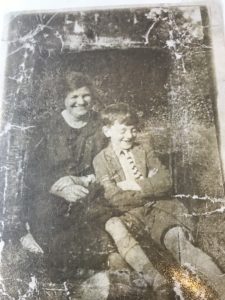
Laura, an impoverished Cornish girl, meets her husband when they are both in service in Teignmouth in 1916. They have a baby, Charles, but Laura's husband returns home from the trenches a damaged man, already ill with the tuberculosis that will soon leave her a widow. In a small, class-obsessed town she raises her boy alone, working as a laundress and gradually becomes aware that he is some kind of genius.

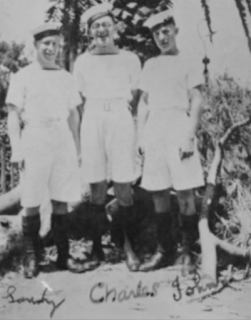
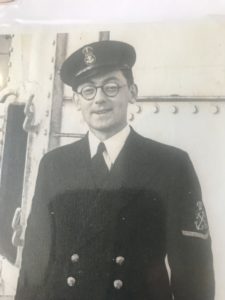
As an intensely private young man, Charles signs up for the navy with the new rank of coder. His escape from the tight, gossipy confines of Launceston to the colour and violence of war sees him blossom as he experiences not only the possibility of death, but the constant danger of a love that is as clandestine as his work.

Mother's Boy is the story of a man who is among yet apart from his fellows, in thrall to yet at a distance from his own mother; a man being shaped for a long, remarkable and revered life spent hiding in plain sight. But it is equally the story of the dauntless mother who will continue to shield him long after the dangers of war are past.

Patrick Gale answers questions from Jon Appleton, Adèle Geras, Linda Newbery and Celia Rees


Celia: What attracted you to Charles Causley as the focus for a novel?

Patrick:  He intrigued me. I loved the poems, in particular the ones which snatches of narrative which show a novelist’s gift for thumbnail characterisation or the ones which are downright spooky in what they suggest but don’t quite spell out. I wanted to piece together myself what shaped the man who wrote them. Whenever he was asked why he didn’t write his memoirs he answered that “it” was all in the poems. So in large part what this novel does is to go back to the poems in search of “it”.

Jon
: Could you have told Charles’s story without his mother Laura’s?

Patrick: I could but the danger then would have been that he’d have become even more chilly than he already is and she would have been reduced to his view of her, and early in life, at least, his view of her could be both patronising and dismissive. Also I found the challenge of telling such a private woman’s story utterly addictive, and not just because I’m a laundry obsessive…

Adèle:  Laura is an astonishing creation. Did you speak to many people who knew her?

Patrick:  Only one or two, and they only knew her as children. I largely got to know her through the numerous, often rather crotchety glimpses Charles gives of her in his tiny, scribbled diaries. And I extrapolated her from his poetry. Having been raised largely by her alone he must have drawn much of his nature and voice from hers, so I trusted in that. And then read up on things like nursing TB patients, and doing laundry by hand.  

Linda:  Did you immediately decide on the structure (alternating between Laura and Charles) before you began the novel, or did that solidify through the writing?

Patrick:  I’d settled on it from the start. This was partly because I always need a few unanswered questions to energise my fiction and the more I saw of Laura, in old photographs, the more I needed to know who she was. But it was equally because the more I found out of Charles’ character – which in many ways was chillingly like that of an expert spy, different things to different people but withholding his essential self from all – the more I realised I’d need to balance his story out with one that was warmer and kinder, more approachable.

Celia:  Were there details of his life that you had to change/add/ supply? How much did you find yourself deviating from his actual life?

Patrick:  I deviate very little from the established facts. I made Laura’s employers unmarried siblings, because that appealed more than the wealthy family of drapers who she actually worked for, but the accident with the boy and the cart that opens the novel actually happened to the Teignmouth doctor Charlie worked for. Beyond the two ships he was on, and the two “ stone frigates” where he also worked, Charles’ war story is largely cloaked in official secrecy so I was able to play with the facts to ensure that he and Ginger went to Malta on the incredible operation immortalised in C S Forester’s The Ship. The trips to Liverpool Playhouse are extrapolated from theatre programmes he’d retained from that period and the affair with a fellow officer is extrapolated from a letter he kept all his life, whose wording I barely alter. Laura’s adventures are made up in their details but she did have evacuees live with her, a black GI was murdered in just the way I describe and POWs did indeed construct a playground right outside her cottage on Tredydon Road. The dogs Jack and Wang were real but the kitten at the end is a simple prefiguring of the several cats in which Charles measured out the rest of his life.

Jon:  Do you think you’ve given Charles Causley a sexuality in the book or coaxed out – or simply given voice to – what was already there?

Patrick:  I was painfully aware of the temptation simply to “gay” Charles, to claim him for my team so I resisted it at every turn by trying to remain truthful to what he confided in his secret, minutely written diaries. These give a powerful sense of a young man who doesn’t fit the accepted mould of manhood, who knows himself to be special or different and who flinches from the sexual expressions of those around him. Then I found a letter he had kept to his dying day which I believe is proof that he had some kind of affair with a fellow officer when stationed at HMS Cabbala, one of those chilling “we need to put all that behind us now” letters probably all too common between men in the 40s and 50s. I will still correct anyone who says Charles was gay, as I think that word implies an acceptance of a sexual identity and, whatever fulfilment he may have found on British Council tours later in life, there’s no evidence that Charles ever arrived at such a self-acceptance.

Jon:  From Rough Music on, the dynamics of mother-son relationships have featured prominently in your novels. There’s a very strong sense in Mother’s Boy that Charles and Laura’s relationship isn’t instead of a marriage but a sexless marriage itself. Is this something you’ve noticed in families you’ve encountered, or was it specific to the Causleys?

Patrick:  
I’ve always been interested in what happens to sexuality when it’s denied natural expression. I think what grows between the Causleys is little different to what happens not just to widows and widowers but to nuns, priests, schoolteachers or anyone put in a position where sexuality is safest left unexpressed. The cliché is that it results in something warped or bad; the truth is that it often results in creative energy. I’m sure we can all think of at least one transformative teacher we had who never married…

Adèle:  Speaking as someone who’s also written a novel about a real person, I’m curious to know if there are any lines you felt you shouldn’t cross? What effect do you think any boundaries you may have set had on the novel?

Patrick:  Scary, isn’t it? I’m still nervous that Mother’s Boy will give offence. So many men and women are powerfully protective of Charles and his memory! My main rule was that I knew I was never going to flesh out the characters of anyone with living descendants, which is why Laura’s numerous siblings barely figure. I also knew I had to honour the known facts, however inconvenient. But it was always a novel, never a biography, so I felt free to combine Charles’ real boyhood and wartime friends into totally fictitious amalgams and to ensure that his tragically doomed ship (in real life HMS Eclipse not my HMS Starburst) played a small but heroic part in the incredible operation to break the siege of Malta.  

Adèle:  You live in Cornwall and one of the striking things about the book is the way you bring places to life. Launceston, Laura’s house, ships etc. Did you walk through all the places you describe? Would you ever write about a place you’d never been to?

Patrick:  Place is crucial to the way I write. Once I’ve settled on a setting for a book I have to go there and immerse myself because I know it’ll become a character in the book. I already knew Launceston well, from my first ten years in Cornwall, when it was just up the road from my house, but to see it through Charles and Laura’s eyes I was lucky to spend a week living in their little house, Cyprus Well, taking daily walks they’d have walked, and working to imagine the bustling industrial town it once was. I’ve never had the sense to set a novel in the Caribbean or Venice or wherever. This novel involved a research weekend in Skegness and my next one will immerse me in Liverpool and Durham!

Jon:  As a British novelist who began work in the late 20th century, do you think it was inevitable that you’d write about the experience of war? (In the way you simply had to write The Facts of Life in the oppressive mid-90s.) Do you even believe in inevitabilities when it comes to writers’ trajectories or inspirations?

Patrick:  I turned sixty in January, which places me squarely in the generation that grew up with bombsites and air raid shelters still very much in evidence. Our parents’ attitudes were so shaped by the direct experience of world war that inevitably that shaped us too. But I didn’t set out to write a war novel; I set out to explore what made Charles and Laura tick, and it rapidly became clear that two world wars were going to form a big part of their story. But I think these things are often accidental in writers’ lives. An idea will just catch and refuse to be shaken off. I’ve promised that my next novel is a sequel to A Place Called Winter, and it is, but I’m realising it’s actually a novel about my mother and grandmother and their marriages.

Linda: 
 All the detail of naval training and life seems so convincing. How did you immerse yourself in that?

Patrick:  It was very hard as I was never one of nature’s war comic readers or war film watchers. But I ended up using that, realising that Charles wasn’t remotely in his comfort zone either when he shipped out on Eclipse. From his diaries I knew the books he was reading, I knew he was a swot and would have swotted up on how to be a sailor. I spent time in Gibraltar and Malta tracking where he’d have gone and what he’d have experienced. The hardest part was the coding, as that part of the war story was kept so obsessively secret for so long that physical material relating to it hard to come by, even in the Imperial War Museum archives. Happily these contain a few relevant bits of recorded testimony from old men recalling their coding training which I could combine with surviving manuals and wonderful details from Charles’ unfinished wartime novel.

Jon:  I can’t imagine a Gale novel without music being described in a visceral way – but what was it like to write about a writer?

Patrick:  I think I cheat a bit in that this is really a novel about someone becoming a writer. For much of the period described, Charles was primarily a musician, which gave me a crucial way into understanding him. He went to war a playwright and returned a poet, and I think that transformation was partly down to the interplay of his rigorous coding training with his earlier training as a pianist.

Adèle:  The book reads as though it cost you no effort at all but just poured on to the page like a spring gushing from the rock. How much rewriting/ editing do you do?

Patrick:  You’re very kind! I do an awful lot of mental churning around and notetaking and try not to start writing the actual text until I’m really clear who my characters are and what their stories are going to be. In this case I benefited from the amazing, if relatively sparse, Causley archive held at Exeter University and spent a lot of time reading through that and trying to join the gaps. The challenge then was to decide both whether there was enough “story” for Laura to balance out Charles’ adventures, and to decide where the novel should end. From there on the process has always felt to be one of painstaking accuracy rather than one of making things up. Very early on I realised that what I was doing was inspired by his poem Angel Hill and seeking to unlock whatever story lay behind its writing and that gave me a great momentum.

Linda:   Now that you’ve finished writing the novel, have the real and fictional Charles Causleys merged in your mind, or do you see them as two separate characters?

Patrick:  I fear they may have done a bit. The same happened with my great grandfather when I turned him into the hero of  A Place Called Winter. The difference here is that we have this incredible body of poetry (and some wonderfully atmospheric prose) left by Charles along with recordings of his voice and I ventriloquised that to such an extent that I’m now having to make a big effort to remind myself what I made up.

Linda:  Do you find yourself thinking differently about his poems now that you’ve been inside his head, as it were?

Patrick:  I don’t, but only because his poems were my constant guide as to who he was. I had a lot of fun not fleshing them out, exactly, but lifting names and scenes and places from them in ways I hope will reward readers who already know them well. His unfinished novel about his time on Gibraltar, his naval short stories and his numerous autobiographical prose sketches are so vivid that at times I almost felt I was taking dictation and not making things up at all.

Linda:  I am struck by the ending of Eden Rock. Do you think Causley is referring to the distance between him and his parents as one brought about by time and death? Or do you think he is regretful that he could never have (or never allowed himself to have) such a close relationship with another person?

Patrick:  Eden Rock is a masterpiece, I think, because it packs so much into so few lines. I believe it was inspired by that moment that comes to us all when our parents have died and we sense most of our life is behind us. He has a sense of his own looming death and of how seductive it is then flinches because he’s not yet ready. But buried inside there is also, I think, the strange dichotomy of the only child – at once confident that they are loved and yet forever left on the emotional sidelines by the love their parents have for one another. Several women of his generation have insisted to me that Charles longed for a family of his own. They say that, irrationally, as though such a longing would be quite alien to a man who also longed for the love of another man . I’m sure he longed for a family because it’s natural to want to belong and a family is a concrete proof of fitting in whereas, whatever his sexuality may have been, he remained always on the edge of things, on the outside looking in.

Celia: What do you think Charles Causley would have made of his fictional self?

Patrick: I think he’d have been appalled. As would Laura. They were both deeply private people who didn’t put themselves forward. I hope he could see, though, that it’s a book driven by affection and admiration and from a desire that more people should visit Launceston and seek out the amazing work he left behind him there.

Celia: How much of the novel is Charles Causley, how much Patrick Gale?

Patrick:  That’s very hard to answer, so I won’t even try!


Adèle: Will there be another book about Charles? He lived to be very old.

Patrick:  Not from me, although he cries out for a scholarly, critical biography which has yet to be written. He needs a Hermione Lee! He lived to be very old but I have a powerful sense that he was a man who created a public persona behind which he could remain intensely private and in a way my job here is done if I’ve managed to suggest what he felt that persona was necessary and what the events were that led to its construction. I’ll be very happy if it simply leads new readers to his poetry, where they can make their own minds up about who he was.

Mother's Boy is published by Tinder Press.

See also: Notes from an Exhibition reviewed by Julia Jarman


Take Nothing With You reviewed by Linda Newbery