Showing posts with label bereavement. Show all posts

Monday, 24 August 2026

Special feature Q&A: Jane Dalton on her first novel THE SECOND LIFE OF ANTHONY B


Is someone playing a cruel trick, or is the impossible really happening?

Photograph by Sarah Widdowson
Jane Dalton
is a journalist at The Independent, where she writes about animal welfare as well as general news. She previously worked for The Sunday Times, where she was Regional Editor and an occasional book reviewer. She began her career at the Dover Express, where she launched a high-profile campaign against live exports. You can find out more from Jane's website, and read an interview about Jane’s animal activism and reporting here. 

The Second Life of Anthony B is her first novel.

What if the person you loved most sent you one final email?

Eight months after his wife Maggie dies, widower Anthony Bothwell switches on his computer and discovers an email—from her.

The message is so personal it could only have come from Maggie. And its warning is terrifying.

Is someone playing a cruel trick, or is the impossible really happening?

The emails from maggie.bothwell@theafterlife.org.uk keep coming.

As Anthony's certainty about life, death and everything in between begins to crumble, he replies. Their conversations become tender, funny and deeply moving.

But when a long-buried family secret is uncovered, grief turns to betrayal, and Anthony is forced to question everything he thought he knew about the woman he loved.

Then he meets Brooke, a fellow widow who offers him the chance to begin again.

Can Anthony uncover the truth behind the impossible emails—and find the courage to embrace a second chance?

Jane answers questions from Linda Newbery.

Linda: First, congratulations on publishing your debut novel! You’ve worked for years as a journalist for The Independent – is writing fiction something you’ve always wanted to do?

Jane: Thank you so much. Yes, I started writing my first novel when I was eight. It took me a few more decades to finish writing one, though. After a tumultuous journey to publication (more of that later) I was very lucky that my manuscript was picked up by Poolbeg Books, the Irish publisher that first discovered Maeve Binchy. Not that The Second Life of Anthony B is anything like her novels – it’s much weirder than that.

Linda: The novel is based around the striking premise that Anthony receives emails from his dead wife. Did the novel begin with this idea, or did you begin with the intention of writing a novel about bereavement before settling on this device?

Jane: It began with Maggie, an outspoken woman who’s also great fun. That blended with the idea of emails from beyond the grave, because wouldn’t everyone who’s lost someone very suddenly love to be able to have one final conversation with them? I wrote it for everyone who has ever wondered what happens to us after we die and whether any form of consciousness, such as the soul, survives. I also wrote it for anyone who’s ever wondered how their life would have been had they taken a different path; and for anyone who loves garden birds.

Linda: You’ve written a page-turning mystery which is often amusing, sometimes even farcical, and equally often moving, as we experience Anthony’s deep sense of loss alongside his questioning of how well he knew Maggie. Was this a difficult balance to achieve?

Jane: Funnily enough, it wasn’t difficult. The novel is partly about how couples communicate – or fail to, and Maggie and Anthony’s turbulent relationship allowed both the humour and the sorrow to emerge naturally. That’s how it ended up with depth and bittersweet.

Linda: Did the voice of Maggie (forthright, teasing, assertive) come to you immediately? Our sense of Maggie comes mainly through her emails.

Jane: Yes, it did. She was partly based on a former news editor I had who was a veteran tabloid journalist and who had a long-standing challenge for all reporters to find a “naughty vicar”. I exaggerated Maggie a bit to make her more outrageous – but not much more. On the surface Maggie is flamboyant and larger than life, but deep down she’s extremely vulnerable and sensitive. Anthony is quite different – much more grounded, but also sensitive. Each of them is lovable in their own way.

Linda: Anthony is a thoroughly sympathetic character, and I know that readers who’ve been bereaved, or who are close to someone who’s experienced a loss, will find much that resonates. How and why did you decide that your viewpoint character would be a man in his sixties?

Jane: I’m not entirely sure, but just before writing it I’d been reading a lot of high-quality literature that happened to have male lead characters, such as novels by Ian McEwan, David Mitchell and John Updike. I didn’t want to write another popular women’s novel with the tired trope of a young woman and her boyfriend troubles. I wanted to write something non-formulaic, unpredictable and without cliche. And I forced Anthony to question his assumptions about a lot of things, such as whether people have a soul, that life is short and that the course of life after 50 is fixed.

Linda: Anthony investigates the subject of communications from the dead as the novel progresses – was this part of your own research for the novel?

Jane: To some extent, but I wanted the focus of the narrative to be more on the effect on Anthony of receiving the emails, and how they change him as a person, from being a grumpy sceptic convinced his life is over to someone open-minded to new ideas and able to start afresh. Communicating with Maggie forces him to confront things he’s never admitted before and enables him to move on in life.

Linda: Did you have the whole plot mapped out before you began, or did the novel grow in ways that surprised you?

Jane: I didn’t map it out – I wrote it instinctively, and a great many things in it surprised me. Which is appropriate for the story, because I think the same things will surprise readers, too. I never imagined I’d write a creepy psychological suspense story or one about the afterlife or how it’s never too late for fresh starts.

Linda: I know that The Second Life of Anthony B has had a difficult path to publication – through no fault of yours! Can you tell us about that?

Jane: Getting to publication itself was a drama! My first publisher, Neem Tree Press, a lovely women-only company, was taken over by Unbound, a crowd-funding publisher, which, it transpired, was in difficulty, and the new company collapsed into administration just as my novel was due to be published. I was devastated, because I’d put everything I had into writing it.

Linda: At The Independent you specialise in covering issues of animal welfare / exploitation. Do you think this will feature in future novels? Is a second novel under way?

Jane: They say novelists should not write to champion a cause but I am thinking about it. How can I not? Much animal cruelty is so extreme that it needs tackling. In this novel, writing about the symbolism of birds and caring for them was a bonus. I have already drafted a second novel, albeit not part of my three-book contract with Poolbeg, so I have two more to go.

Linda: Thank you, Jane - I'm sure your novel will be much enjoyed by its readers!

The Second Life of Anthony B is published by Poolbeg.

Monday, 17 November 2025

SPECIAL FEATURE: Q&A with Sheena Wilkinson about her new novel MISS McVEY TAKES CHARGE


"I’m always keen to be historically accurate but of course Felicity, and to a lesser extent April, represent the more forward-thinking people of their time ..."

Miss McVey Takes Charge: Yorkshire,1936. April McVey is in charge of True Minds Marriage Bureau, trying to find happy futures for the lovelorn of Easterbridge, while the menace of fascism marches through the country.

After two years of matchmaking, she thinks she has seen it all. But when an old friend arrives from Ireland, with a broken heart that’s well beyond April’s experience, and then a young nun asks her to find a match for her lonely brother, the consequences are shattering.

And as political turmoil reaches their own community, will April have the courage to take charge and do the right thing?

Sheena answers questions from Linda Newbery.

Linda: First, congratulations! It's lovely to see this in print, with such an enticing cover. It'll be a treat for readers of Mrs Hart's Marriage Bureau, while for those who haven't yet read that, it'll surely send them to it. Did you already have a sequel in mind while you were finishing the first book?

Sheena: Yes and no! I wrote Mrs Hart’s Marriage Bureau as a standalone, but the acquiring editor at HarperCollins Ireland was very enthusiastic about its obvious series potential. Which got me thinking… So in my final edit I did drop in a few details I could pick up on for the sequel.

As it turned out, as is the way in publishing, that editor moved on and HarperCollins didn’t offer for the sequel next book because of what they termed ‘disappointing sales’ of Mrs Hart. But by then, encouraged by hundreds of reader reviews which asked for another story, I had written it! I couldn’t bear those readers not to get their sequel, and by then I had put a year’s hard work into it.

I had considered self-publishing but to be honest I was stalling, overwhelmed by what seemed the scariness of it, when Writers Review Publishing invited me on board. I was so thrilled! I was lucky enough to work with Michelle Griffin, the freelance editor who’d worked on Mrs Hart and so knew – and loved – the world, and with Niall McCormack, the illustrator who had designed four of my previous covers. He has a gorgeous style and a real understanding of the aesthetics of the period, and I adore what he’s done.

Linda: I like the way you show April and Felicity adjusting to their lives together - managing domestic and practical details as well as, in April's case, questioning Felicity's commitment. Did you find it tricky to strike the right balance between acceptance of same-sex relationships and giving a realistic impression of attitudes at that time?

Sheena: It was something to think very carefully about, but this is my seventh historical novel, albeit only my second for adults, so treading that line has become very natural. I’m always keen to be historically accurate but of course Felicity, and to a lesser extent April, represent the more forward-thinking people of their time. Because I have a range of characters it was easy enough to show a convincing spread of attitudes, not only about sexuality but about, for example, greyhound racing, which was a hugely-popular sport at the time, with some characters enjoying it without questioning the ethics, and others voicing the opinion that it’s cruel, which is more in keeping with modern sensibilities (and, I know, yours).

Linda: It's just as much Evelyn's story as April's, and this enables you to set some of the scenes in Lisnacashan, the town in northern Ireland where April grew up. When talking about the first book, you said that you'd chosen to set it in Yorkshire, rather than Ireland, to avoid some of the religious divisions that would hamper things in the marriage bureau, but did you immediately see a way to use those here?

Sheena: It's funny, but I never really thought about that until this question! The answer is that when you set anything in Northern Ireland, especially in the past, you simply can’t get away from engaging with religion. It’s just there in the ether and so it found its way into the book. It’s ironic, perhaps, that Protestant Irish Evelyn falls in love with a Catholic Englishman … I come from a mixed background myself which I think informs my outlook on life and my work and helps me to see things in a balanced way.

Linda: You've described the first book as 'feelgood feminism' which is just as apt here - romantic elements and will-they-won't-they combined with awareness of the growing threat of Fascism, which comes close to home in the form of meetings in Easterbridge, a march in nearby Leeds and violence towards some of your characters. There are phrases here that are all too relevant to the worrying surge of the far right in today's public life and politics, and in fact the current situation has worsened during the time you were writing and editing the book. Did you adapt what you were writing in the light of that?

Sheena: The book was a long time in the making, and it rested for a full year before the final edit in the spring of 2025. Even in that year, as you say, things grew much worse for women and other marginalised groups and we’ve seen a surge in far-right attitudes across the world. When Martha comments on the ‘nastiness’ in the atmosphere, I felt very sad that she could be commenting on Britain and other countries today. The best historical fiction should show us ourselves as well as our ancestors: I wish that Miss McVey Takes Charge wasn’t quite so relevant to today’s struggles, but I was grateful for the chance to explore the tension between the political and the personal, and the frustration of feeling up against what feels like an overwhelming tide of bigotry and hatred, in the relatively cosy world of Easterbridge.

Everyone knows about the Battle of Cable Street, which is mentioned at the end of the novel, but the Battle of Holbeck Moor in Leeds on 27th September 1936 is less famous. There was no way Felicity wouldn’t have attended that anti-fascist rally, so I always knew it would form an important part of the narrative. I’ve often written about real-life events but this is the first time I’ve put my fictional characters right in the thick of the action.

Linda: The story ends at a time when the threat of war in Europe is looming. Do you have any plans to continue the story of April and Felicity farther into the 30s or even into the war years?

Sheena: At present I don’t have any such plans. I’ve a novel nearly ready for submission which is set among the staff of a Belfast girls’ school in the 1920s, and my work in progress is a dual timeline set between 2024 and World War 2. So there are no immediate plans to go back to Easterbridge. Having said that, I love April and her friends and if I felt that there was a new story to tell – and, crucially, readers wanting it —I’d love to go back and tell it. And yes, Easterbridge at war would be the ideal focus. I can imagine the Colonel opening up his home to evacuees and the Mill running first aid classes.

As for the structure, I will always highlight the female perspective, but I like giving the men their say too. I love the challenge of writing from a male point of view, and both Fabian (in Mrs Hart’s Marriage Bureau) and Charlie (in Miss McVey Takes Charge) are the closest I have come to writing romantic heroes. I have to admit I fell in love with Charlie a bit so I hope readers do too!

Linda: The novel is cleverly plotted and moves on at quite a pace. Are you a detailed planner - did you plot each episode before you started writing? Were there any that grew out of the telling, and surprised you? Did any of the characters develop in ways you hadn't quite planned?

Sheena: I do plan, yes, and because of having three viewpoint characters I have to think about who’s best placed to carry the narrative at any given point. But that generally happens as the story unfolds rather than in advance. I always have a big notebook full of notes and planning but I don’t over-plan and I love to be surprised.

The first scene came to me in Shropshire in autumn 2023. I was walking in the woods and playing out the conversation between April and Margaret, who enlists the bureau’s help to find a wife for her brother, Charlie. I saw her as a handsome, but very plainly-dressed young girl, and then I thought, Good lord, she wants to be a nun! And that ushered in Charlie’s background and his faith – I hadn’t actually sat down and planned that, which seems odd now as it’s absolutely fundamental to the conflicts of the story. I love being open to that kind of thing; it makes the writing much more exciting.

Linda: Besides reading, are there other things you do to immerse yourself thoroughly in the social life of the 1930s - fashion, food, manners, idioms, etc?

Sheena: Oh yes! I have always been a geek about history and especially the kind that’s not too long ago. I read a lot of 1930s fiction, from Noel Streatfeild to Dorothy Whipple, and l love reading about the minutiae of daily life. I can get lost for hours on websites full of 1930s dress patterns and the like, and I love nothing better than a day at a museum, especially the kind with reconstructed houses, etc.

I was always very close to my granny, who was born in 1908 and lived until she was 96, and I loved hearing her stories about ‘the olden days’. She would have been a contemporary of the main characters and I’ve given April, Felicity and Evelyn some of her frocks, based on old photos of Gran and Aunt Annie and their chums on church outings and the like. Of course the snaps are all in black and white so I’ve had to guess at the colours. Isn’t that an ideal metaphor for what historical novelists try to do?

Linda: It absolutely is! Thanks, Sheena - I hope Miss McVey will continue to win the hearts of readers.

Miss McVey Takes Charge is published by Writers Review Publishing.

See also: Q&A with Sheena about Mrs Hart's Marriage Bureau


Also from Writers Review Publishing:

The Poet's Wife by Judith Allnatt

Monday, 13 October 2025

ALBION by Anna Hope, reviewed by Linda Newbery


"Combines typical ingredients of the big house novel and family saga with deep questions about individual responsibility, whether wrongs of the past can be righted, how we adapt to climate change and nature loss, and what kind of future we can shape."

Linda Newbery
edits Writers Review. She is a writer, reviewer and active campaigner on animal and environmental issues. Her latest novel, published earlier this year, is The One True Thing. 
The big country house as a fictional setting has enduring appeal. Names come readily to mind: Downton Abbey, Brideshead, Manderley, Mansfield Park, Brandon Hall (see Graeme Fife's recent review of The Go-Between) and countless more, including the recent Saltburn. The house in Anna Hope's latest novel differs from these others in never being named, though it's certainly as grand as any of them - an eighteenth-century Greek Revivalist mansion standing in a thousand acres of Sussex pasture and woodland. The name we focus on isn't that of the house, but of the Albion Project - a ten-year rewilding project that certainly owes much to the influential and nearby Knepp Castle estate, obliquely referred to. As with the Knepp project, the ambition of owner Philip Ignatius Brooke and daughter Frannie is to extend beyond their own boundaries, creating a green corridor that will reach through Sussex and Kent countryside to the sea. 

Now Philip has died, and the novel's action takes place over five days in May during which the family reassembles for his funeral. Of his three children only Frannie, the eldest, still lives there, and is in the process of moving with her young daughter into the main house, while Philip's widow, Grace, will take over their cottage. Philip himself had inherited house and estate at just eighteen when both parents were killed in a car crash; he set up what became known as 'the English Woodstock', a festival known and fondly remembered as The Teddy Bears' Picnic. There he met his future wife, leading to a marriage from which she wishes she'd had the courage to escape. While she remained at home with the children,  he did escape - to New York, where he settled for years with another partner (and possibly another child?) before returning and zealously taking up the rewilding scheme.

Anna Hope loses no time in showing us the spiky relationships and resentments of the three grown-up children, Frannie, Isa and Milo. Frannie is named as heir in their father's will, to the disapproval of brother Milo; she in turn is impatient with Isa, who's barely been in contact; Milo, recovering from various kinds of addiction, plans an exclusive rural retreat in the grounds in which, bizarrely, he aims to convert the 1% who can afford it into benevolence that will benefit the whole of society. Frannie, faced with paying millions in inheritance tax, is desperate to find the money somehow, fretting as she tries to write her father's eulogy; Grace, relieved to exchange the house she hates for the cottage, has ambivalent feelings about her late husband and how she'll express them at his funeral. Isa, distancing herself from wealth and privilege, is a teacher in London, scornful of her sister's enterprise: "The shepherd's huts, the yurts, the caravan serving lattes to middle-aged white people while they sit on hay-bales and chatter about their Pilates teachers and their dogs. A theme park for solvent fifty-somethings, all of it about as wild as a fucking printed tea-towel." Meanwhile, seven-year-old Rowan is showing what her class teacher sees as a disturbing fascination with bodily decomposition after death.

Into this potent mix comes a young American PhD student, Clara, with a bombshell to drop. Most readers will see what's coming, but that doesn't lessen the impact when she chooses her moment to reveal the source of the estate's wealth. With mesmerising clarity, calmness and precision she compels the family to listen, making eloquent use of her encounter with Rowan playing with a box of shells.

What next? How will these descendants of Oliver Ignatius Brooke adjust to the knowledge of the vast injustices (more than one) that underpin their privilege?

I first came across this novel when it was dramatised as Radio 4's Book of the Week earlier this year. There, I thought the repercussions of Clara's revelation were disappointing, too glibly and swiftly dealt with, so I wanted to see how Anna Hope handles this in the novel. Even here, though, I'm not sure. There are various reconciliations: too many and still too quickly, because of the constraints of the five-day structure. Frannie is the one whose ending is left most open-ended and uncertain as she confronts difficult questions, both practical and ethical.

That reservation aside, I found Albion utterly compelling: it combines typical ingredients of the big house novel and family saga with deep questions about individual responsibility, whether - and how - wrongs of the past can be righted, how we adapt to climate change and nature loss, what kind of future we can attempt to shape and who will benefit. The pace is leisurely enough to draw us fully into the family's concerns, while never seeming slow; tensions crackle off the page while the depictions of the natural world are vivid and immediate, whether portraying the woodland in May extravagance, the brisk extermination of a pregnant mink or the dawn song of a nightingale. I hadn't read Anna Hope before, so this is a very impressive introduction.

Albion is published by Penguin.

See also Anna Hope's Expectation, reviewed by Claire Grint of Cogito Books, Hexham.

Linda Newbery's The One True Thing is published by Writers Review Publishing.

Monday, 18 November 2024

Guest review by Linda Sargent: ALL THE BEAUTY IN THE WORLD by Patrick Bringley


"A truly life-affirming book full of riches to be savoured ... I loved it."

Linda Sargent
is a writer who worked as a publisher’s reader for David Fickling Books for twenty years. She has published short stories and articles and her first novel, Paper Wings, appeared in 2010; she is also the author of Words and Wings, a training guide to creative reminiscence work, available as a free download from her website. Over the past few years, she has been working along with Joe Brady and Leo Marcell, on the graphic novel Tosh's Island, published in October.

In Elizabeth Jennings’ poem, Into the Hour, she writes, “Grief’s surgery is over”, going on to use what may seem a surprising phrase of reaching “the time when grief begins to flower” and how through this process “Grief finds its good way home”. This book on dealing with profound loss, epitomises so many aspects of the poem. When Patrick’s brother, Tom, at twenty-six and just two years older than him, dies it is (unsurprisingly) a shattering blow. In the immediate aftermath, visiting an art gallery with his mother, the author, young and making his way upwards already on the ladder of the New Yorker magazine, experiences a sudden, profound echo of the atmosphere spent during his time by his brother’s hospital bed, “one of speechless mystery, beauty and pain” (p.31). And there he makes a decision to retreat into a calmer and, as it transpires, more healing and sustaining space for himself.

He leaves the New Yorker and gets a job as a Museum Guard at the Metropolitan Museum of Art in New York. Here, over ten years, he meditates on the many works of art held there, from the huge collection of ancient and classical works, paintings, sculptures and treasures from across the world, to more modern pieces, including quilts and furniture. And he takes us, the readers into this world along with him, giving us a chance to explore the pieces in a deeper and more meaningful way. It’s an open way too, he doesn’t preach, he shares. As well as his exploration and linking of art, life and the patterns of grief, the author also forms bonds and friendships in the community of other guards at the Met, a diverse and fascinating group. During this period, Patrick marries and now has two children and these biographical moments are expertly and lightly threaded through. Mostly, it focuses on the importance of having time to reflect, really reflect, on the way art and beauty can provide support during periods of struggle and grief. He manages to bring home the way even the greatest of art can function on this inclusively human level, at one point observing that in the end “all art is local”. He also talks about the “simplicity of stillness” amongst all this art, but adds: “…it is also about the head-down work of living and struggling and growing and creating”. Indeed. A truly life-affirming book full of riches to be savoured and I loved it.

There are illustrations in every chapter by Maya McMahon referencing some of the pieces he mentions. And at the end there is a comprehensive list and links to all the works of art mentioned.

All the Beauty in the World is published by Vintage.

Linda's graphic novel Tosh's Island, with Joe Brady and Leon Marcell, is published by David Fickling Books.


More of Linda's choices:


The Orchardist by Amanda Coplin


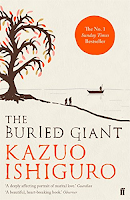
The Buried Giant by Kazuo Ishiguro


Monday, 16 September 2024

Guest review by Nick Manns: H IS FOR HAWK by Helen Macdonald


"The notion of ‘looking’ is a key term in this book, and a suitable one for someone on a quest."

Nick Manns
taught English in comprehensive schools in south London and the Midlands for 20 years. He is the author of four novels for young adults, including Control Shift and Dead Negative, and is a founder and director of Dyslexia Lifeline, a company based at De Montfort University, Leicester.

'Grief has no distance,’ wrote Joan Didion in The Year of Magical Thinking. ‘It comes in waves, paroxysms, sudden apprehensions that weaken the knees and blind the eyes and obliterate the dailiness of life.’ The ‘dailiness of life’ is that touching trust in stability; of everything in its place and all being right with the world.

With Didion that confidence crashed when her husband dropped dead one evening from a heart attack and she spent months trying to navigate a changed reality. With Helen Macdonald, her old world finished with a phone call: when her mother told her that her father, apparently recovering from a trivial injury to his arm, had suddenly died. His heart had stopped.

Whereas Didion struggled to believe John Gregory Dunne was really dead (she needed to be alone,' she wrote, ‘so that he could come back’), Macdonald describes her grief in Biblical terms: ‘the rain fell and the waters rose and I struggled to keep my head above them’. Worse still, this was a world that was indifferent to her suffering: ‘planes still landed, cars still drove, people still shopped’ and ‘nothing made any sense at all.’ She finds herself in Auden land, where the misery of the bereaved cannot be assuaged: clocks can’t be stopped; catastrophes are always someone else’s problem. Icarus drops into the water and no-one notices.

The likeness to Didion isn’t limited to a shared experience. As the American author believed (at some level) that her husband was still around (heading towards the front door), so Macdonald holds a similar fantasy about her father, except that she wasn’t hanging around for the doorbell to chime or for the phone to ring.

Although most readers (who aren’t writing book reviews) will probably pass by incidental details, a pleasure of this book is in the hints and clues that Macdonald builds into the narrative. Early on, whilst walking the blasted heath of the Brecklands – the broken lands – of Norfolk, in search of goshawks, she comments: ‘The goshawk is the birdwatcher’s dark grail.’ They’re rare and hard to see. And she adds, ‘Looking for goshawks is like looking for grace: it comes, but not often.’

Of course, the notion of the ‘grail’ is often the focus in stories of chivalry – of a search for something precious in the Christian tradition. The journey to attain the grail (or achieve some worthwhile end) may be uncertain and perilous. In Macdonald’s case, like Sir Gawain, she must find her own way and use her own resources. The ‘broken lands’ of East Anglia are as good a place to start as any.

Throughout – and running as a parallel narrative – she shares with us the tale of another traveller, who went before, and we realise that finding the grail or receiving grace isn’t a given. Although there are no maps to this terra incognita and no guarantees, in good medieval tradition, she takes guidance from those who had asked the important questions and knew the likely trail. For Freud and Klein, the grail for each of us is authenticity and this is earned through self-knowledge.

In the early days, after the fateful call from her mother, Macdonald had groped her way out of ‘madness’ by connecting with the certainties of her childhood. She says: ‘When you are broken, you run. But you don’t always run away. Sometimes, helplessly, you run towards’. She recalls that years before, when working in a falconry centre, an injured goshawk had been brought in for assessment. The bird was not seriously harmed and they took her outside and then, like a magic trick (or something out of Philip Pullman), ‘She opened her wings and in a second was gone. She disappeared over a hedge slant-wise into nothing. It was as if she’d found a rent in the damp Gloucestershire air and slipped through it.’

Years later, following her father’s death, and after a series of dreams about hawks, she drove to Scotland, to meet an Irishman, who would hand over a young female goshawk. Although she had been advised against this project (‘Hiding to nothing,’ comments her friend), she was by this time an experienced falconer and disregarded the note of caution. And yet. The travelling box is opened and the bird ‘came out like a Victorian melodrama: a sort of madwoman in the attack.’

Her training of the incongruously named ‘Mabel’ dominates the rest of the book. We’re educated in the process of feeding the young bird and how Macdonald painstakingly built trust. This is a creature that is given ‘roughly torn day-old chicks’ and bits of rabbit. She’s also a creature straight from the menagerie of Ted Hughes: ‘I see it all; I own all this world and more.’

The notion of ‘looking’ is a key term in this book, and a suitable one for someone on a quest. As a child Macdonald describes herself as a ‘watcher’ who would climb the hill behind her home, crawl under a rhododendron bush and ‘look down on the world below.’ This habit of quiet observation is reinforced by her companionship with her father, who worked as a press photographer and transmitted the need for patience.

At one point Macdonald recounts a dream in which she looks down on a Second World War bombsite and sees a boy amidst the rubble. He turns and she sees it is a figure of her father as a child, who points to an approaching aircraft. She later reflects: ‘I’ve come to realise that we were watching the same things: or at least the things that history conspires to make the same. Since the dawn of military aviation, birds of prey had been thought of as warplanes made flesh…Hawks fly and hunt and kill: aircraft do the same.’ She concludes: ‘I must have inherited being a birdwatcher from Dad.’

There’s also something of the photographer in the exactness of her metaphors: long-tailed tits in a willow were like ‘animated cotton buds’; the feathers down the front of the young goshawk are the colour of ‘sunned newsprint.’ She describes fieldfares as ‘netting the sky …like a 16th century sleeve sewn with pearls.’

To understand Mabel, to train her so that they can become a hunting partnership, she reads widely and returns to the work of T. H. White. She had read The Goshawk as a child, and as then, so now, she is disturbed by the cruelty meted out by White in his attempt to make his wild bird biddable. This cruelty contrasts with her own sensitivity and kindness to the young bird in her care.

For Macdonald, ‘running towards’ the source of her feelings, enabled her to get in touch with important elements of her childhood: she was able to make sense of her life by inspecting her past. White’s past included neglect at home and physical abuse at boarding school: a history in which the school sanctioned the punishment of younger children by older pupils. As a gay adult he tried to ‘pass’ as a straight man (with upper class pretensions.) His repeated attempts to form relationships with women were predictable failures. Macdonald sees his efforts to train ‘Gos’ as an (unconscious) desire to tame the ‘wild’ parts of himself. She writes: ‘White found himself in a strange, locked battle with a bird that was all the things he longed for but had always fought against.’

Whereas White’s training methods would today elicit a call to the RSPCA, Macdonald is able to empathise with Mabel: she’s a ‘baby’ who could be ‘happy’ or ‘contented’. She doesn’t have to control this creature but to collaborate with it: she isn’t conflicted in her role. White was both stern schoolmaster and wild child: both roles which would be depicted in his children’s novel of Arthurian adventure, The Sword in the Stone.

White never resolved the different parts of himself: the relationship with Gos (spoiler alert) ends tragically: the hawk escaped. Macdonald notes that he remained alone all his life. At the end of her book, Macdonald can symbolically ‘let go’ of Mabel (the hawk spends several months in an aviary so that she can moult) and Macdonald emerges from crushing grief: she ‘lets go’ of her father.

This ending takes us back to the start of the book: she notes that Melanie Klein had commented that children deal with states of mind akin to mourning and that adults return to this emotional world whenever grief is experienced. Macdonald tells us that as a child she comforted herself that White’s Gos wasn’t really dead, he was ‘out there’ in the woods and she had wanted to go and ‘bring him back’. As an adult, she had wanted to ‘slip through that rent in the air’ and fly her hawk to find her lost father.

In the early days of training Mabel, Macdonald had riffed on lines by John Keats: ‘My arm aches and a damp tiredness grips my heart’. The poet had been meditating on the beguiling charms of a nearby nightingale, a ‘deceiving elf’, who might help him escape ‘the weariness, the fever and the fret’ of life. At the very end of her book, Macdonald fully returns to the human world: she recognises that goshawks are ‘things of death and blood and gore’. The world we inhabit is shared – but separate. She concludes, ‘Hands are for other human hands to hold. They should not be reserved exclusively as perches for hawks.’

H is for Hawk is published by Vintage.

See Nick's previous reviews:

The Antidote: Happiness for People who can't stand Positive Thinking by Oliver Burkmann


The Darker the Night, the Brighter the Stars by Paul Broks


Monday, 4 March 2024

Guest review by Cindy Jefferies: WHEN THE DUST SETTLES by Lucy Easthope


"For the lay reader this is an extraordinary book. For a writer it is gold."

First published in 2001 for children, Cindy Jefferies found success with her Fame School series at Usborne Books, obtaining 22 foreign rights deals. More recently she has written fiction for adults as Cynthia Jefferies. Her first title under that name, The Outrageous Fortune of Abel Morgan, was published in 2018, followed a year later by The Honourable Life of Thomas Chayne. Both titles are set during the English Civil Wars.

I don’t usually review non-fiction. Not because I don’t read it. I read a lot for research but perhaps that’s it. I tend to review the novels I read for relaxation, while non fiction, however interesting, for some reason gets lumped with work, which is very unfair. This book, by Lucy Easthope, has propelled me out of my curmudgeonly attitude and made me determined to review more of the excellent non-fiction out there. In addition, this book would be a brilliant resource for many novelists. How could I not review it?

I came across Lucy Easthope’s name when I saw she had been booked to appear at our local Stroud book festival in November 2022. The strapline on the book is “Stories of love, loss and hope from an expert in disaster.” That intrigued me, and I booked tickets. It was electrifying! Lucy is a very engaging person. Cheerful, and yes…funny; a great speaker and absolutely devoted to her career in disaster management. But there’s much more to her than that, and she also seemed comfortable in referring occasionally to the ups and downs in her personal life. I learnt a lot that evening and my partner queued afterwards to buy a book and get it signed. I asked if I could borrow it some time but for that most prosaic of reasons, forgetfulness, it just didn’t happen. A year drifted by, then one day I happened to notice the book on his table.

“Oh! I meant to read that,” I said. “I’m going away on a writer’s retreat soon. Do you mind if I borrow it now?” And so I did.

Lucy Easthope has an engaging style and I was instantly hooked. She was telling me so much that I didn’t know. What a disaster expert is, for starters. And, chillingly, what the dust in the title can refer to. So much important work is done, even months and years after a disaster, analysing the dust created in a disaster such as the twin towers in the USA. Loved ones left behind want and need a body to say farewell to, but of course this is often impossible. DNA testing of such dust and fragments can result in tiny particles being found and identified long after the initial trauma has passed. Families are left with the horrific prospect of receiving minute amounts of matter several times, sometimes years apart. Then they have to decide whether to have yet another funeral to honour the person they loved and lost. One thing Easthope feels very strongly is that the people left behind have to be considered much more. What is vital to her is to help a person and a community to begin to recover, or at least start to move forwards.

In the hours and days after a disaster, whether a plane crash, a tsunami, a terrorist attack or a fire, multiple agencies swing into action. Police, ambulance workers, firemen, and all the science that goes with police work in a crime scene. We are all used to seeing these people on our TV screens and I had known that these things are rehearsed from time to time. Now I was reading an expert’s account of how what happens afterwards can make or break the recovery of those left behind. A blood-smeared cinema ticket could mean the world to someone who has almost nothing else to remember their loved one by. Such things, rather than being maudlin, can comfort, in the knowledge that the person was doing what they loved just before they died.

The blurb on the flyleaf of the this book tells us just how experienced Lucy Easthope is. She is the UK’s leading authority on recovering from disaster. From the 2004 Tsunami, 9/11, the 7/ 7 bombings, the Salisbury poisonings, Grenfell and the Covid 19 pandemic; she is the one who has answered the call, packed her bag and gone to support everyone involved. She holds authorities and government to account. She lets us see into the briefing rooms, how politics can get in the way and how simple thoughtlessness, or lack of understanding can make it so much harder for those left behind to begin to turn towards recovery. I am writing this during the Covid 19 enquiry. I have no doubt that Lucy Easthope will figure somewhere, unknown to most of us but vital to the process. For this was the overdue disaster, the one we really should have been ready for and weren’t.

For the lay reader this is an extraordinary book. For a writer it is gold. Between the pages we have an insight into exactly what goes on during, after and long after a disaster has happened. Any thriller writer who has a disaster in their plot would be well advised to read it.

I couldn’t take it in one breathless sitting. Occasionally it almost became tedious in the awful inevitability of what happens over and over again, although every disaster is also unique. But I was drawn back to it after a short break and never felt like abandoning her story. I simply had to read it to the end, and then sit and ponder.

Her matter of fact style helps to stop what she says ever being sensational or overwhelmingly ghastly. But we are dealing here with torn bodies and traumatised people. The people who pick up the pieces are so often heroic and almost broken by what they do. That Lucy Easthope is still standing is a testament to her desire as a young child, growing up near Hillsborough, to help, and she does this in spite of her own issues. We can thank her for thinking about us so carefully, and seeing through experience what works best to help us recover. We can all hope that a disaster never engulfs us, but if it does, she will be there somewhere: in the notes the recovery workers study, in the plans she has drawn up and usually in person, whether in a pop-up mortuary or a warm and welcoming place for families to gather. She strives to make sure the materials are there to ensure the proper collection and labelling of the remains of lives, so that eventually, those left behind can grieve and begin their own recovery. Little do we know how much we need her - so thank you, Lucy Easthope.

When the Dust Settles is published by Hodder.

Monday, 8 January 2024

SPECIAL FEATURE: Q & A with Julia Jarman about her novel THE WIDOWS' WINE CLUB


"It’s hard to define ‘voice’ but you can’t get going without it, and when I found my writing-for-adults voice it was a joy, like talking to a friend."

Julia Jarman, a regular contributor to Writers Review, has been writing children’s books for forty years, and still is. Cheeky Chick is her latest picture book. Recently, though, she turned her hand to ‘golden years’ women’s fiction and The Widows' Wine Club was the happy result. 

Linda: The starting premise of your novel is a brilliant one, with instant appeal. Were you always aware of how the novel would end for each of the three characters?

Julia: You told me it was a brilliant premise, Linda, when I first mooted the idea. I wasn’t so sure. I had a title in mind, I think, Widows In Love, and saw it as a rom-com. Three widowed women looking for love. It was as vague as that. I didn’t have specific outcomes in mind. I wrote the first draft to find out. You and other friends had begun writing for adults, after several years of successfully writing for children. I wondered ‘Can I?’ – as I like a new challenge - and you said firmly, ‘Yes you can!’

Linda: Did you find it equally easy to engage with each of the three main viewpoint characters? I know that the novel has been several years in the making – how have they developed during this time?

Julia: It has been a very long time in the making! I got the idea soon after my husband died in 2009 and thought of it as ‘Peter’s last gift to me’ but also felt guilty for exploiting the situation. It felt like an invasion of privacy, his privacy, our privacy, and that feeling may have held me up. But Peter had always encouraged my writing and said ‘use anything you like’ when I’d expressed similar reservations in the past. Sweary Viv was the first character who arrived in my head, probably because she is most like me, but I’ve also got a prim and proper side – believe it or not! – and was downright Puritanical in my youth, so I easily identified with Janet and knew where she was coming from. Zelda turned up, and aware of the ‘appropriation’ issue, because she’s mixed race and I am not, I hesitated, but she soon felt very real and insisted on staying and I loved her, so I thoroughly researched to find out as much as I could about her circumstances and carried on writing. All three developed over time. I discovered them as they discovered themselves, becoming more complex, acquiring ‘layers’ as I wrote and re-wrote, drawing on memory, research and imagination.

Linda: I especially like the Pitmen Painters scene. Is this an exhibition that has particular resonance for you?

Julia: Yes! Like Viv, the first I heard of it was when I went to see Lee Hall’s play, Pitmen Painters. It said, it enacted, what I believed, that human beings are makers, that we are more alive, more ourselves, more human when we create. That is what one of the characters says in the play. When he is working down the pit for the bosses he is not truly alive, not truly himself, but when he draws or paints, when he is depicting his reality, expressing his truth, he is. When I eventually stepped into the gallery to see the exhibition I felt I’d entered a holy place, embodying that truth.

I should also say that my father was a coal miner, briefly, three days and that was enough for him. He was put down the pit when he was fourteen and felt that a life in the mines would kill him, spiritually if not physically, though he wouldn’t have put it like that. He thought that no one should have to do that, and I felt that I was connecting with him.

Adèle: Tell us a little about the journey the manuscript took on the way to becoming the book it is today.

Julia: It had a lot of rejections, mostly nice rejections, but nonetheless disheartening. It first went out with the title A Second Summer, to fourteen mainstream publishers of women’s fiction, at the beginning of 2021. Some didn’t respond. Most did, complimenting me on ’wonderfully drawn characters’ ‘the balance of humour and depth’, ‘captivating style’ etc, but then came the ‘but not for me’ for a variety of reasons. Caroline, my agent concluded that it didn’t have the ‘SOH, the stand-out hook’ essential for commercial fiction and there was no point in sending it out again till it did. I was a bit nonplussed as I thought the SOH was the basic premise. Three women hit hard by grief, are looking for love. Will they find it? But I licked my wounds, re-read and re-wrote it, bearing in mind the feedback I’d had from editors and lay-readers. Several said they were confused by the to and fro-ing between the three characters, so I tried to put that right. I also strengthened a thread with an unpleasant minor character, making her more unpleasant, adding plot twists. I sent it out to more readers, including Georgia Bowers, librarian i/c of women’s fiction at Bedford libraries (and a writer herself), asking her to be ruthless in her criticism. Would she buy it for the library? She got back saying yes she would, but not with that title. She suggested The Widows’ Wine Club which I now think is its SOH.

In June 2022 my agent sent The Widows’ Wine Club out to nine smaller publishers of commercial fiction, and I got eight more rejections. Then came an expression of interest from Boldwood Books, a brand new publisher, only three years old. Editor Sarah Ritherdon had ‘thoroughly enjoyed’ my novel but had lots of doubts. It was hard to launch debut authors, she said. My 35 years as a children’s author counted for nothing. She asked my agent, ‘Had Julia got famous friends who would plug her book? Could Julia write more books? Quickly!’ Boldwood didn’t take one-offs. They only did multiple-book deals and their marketing plan required second and third books only months after the first. Gulp. The Widows’ Wine Club had taken me at least ten years. Could I write the next in ten months? Yes, said my friends – and I have!

Adèle: How many drafts did you go through? (I think the answer might be inspiring to other writers.)

Julia: Umpteen. I lost count. Ten at least, and I do a lot of re-writing as I write.

Adèle: Is any character in the novel based on a real person? I’m assuming all three widows have bits of you in their DNA!

Julia: Assumption correct about use of my own DNA! I’ve said quite a lot about this to Linda. As to the ‘real person’ question, I’m going to hide behind the standard disclaimer ‘any resemblance to actual persons, living or dead, is purely coincidental’. I’ll risk saying that some of the characters are composites of people I’ve met, but sorry - that’s as far as I’m going!

Celia: This is your first novel for adults – when and why did you decide to write for an adult audience? How difficult did you find it to make the move from a writing career that was well established to this very different and challenging market?

Julia: I think the story dictates the audience, so when I have a story in my head I ask myself, consciously or unconsciously, is this a picture book for under-5s, a chapter book for 8-12 or a book for teens? This story was clearly for adults. The difficulty was finding the time to write it as I was very committed to the world of children’s literature and that for me included a lot of school visits. I was finding it hard to find uninterrupted time to write longer fiction for children, and was veering more and more towards picture books, which I love writing, when Covid changed all our lives. Suddenly I had time on my hands and a story in my head, partly written, for adults. I fished out my widows.

Writing for adults is, I think, easier than writing for children, which is why so many writers going the other way, or having a ‘go’ for their first book, come a cropper. They think – heaven knows why – that it must be easier. It isn’t. When you are writing for children you have to be aware that you’re writing for an intelligent audience, probably more intelligent than you the writer, but your readers haven’t had as much experience as you. They don’t know lots of stuff that you know, so you have to impart information and explain concepts in a non-patronising way that respects their intelligence. By comparison when you write for adults, you can assume their experience is much the same as yours. It’s therefore easier to find your ‘voice’ as a writer for adults. It’s hard to define ‘voice’ but you can’t get going without it, and when I found my writing-for-adults voice it was a joy, like talking to a friend.

Celia: The Widows' Wine Club is bittersweet in the truest sense. How hard was it to find the right balance between humour and pathos?

Julia: I didn’t think about this. I just told it how it was, being as true as I could to my experience and that of other widows I’d spoken to. I am I think, unconsciously funny. I come across as funny even when I’m crying inside . I’m not sure why this is, but looking back I think I’ve always made people laugh. A testimonial I like said, ‘People laugh a lot in Julia’s company and if they don’t, she does. She is serious but splendidly without solemnity.’ If that was the verdict on my books I would be happy.

Celia: Your widows are an attractive and likeable group who will appeal to many readers. I understand that you're working on a sequel. Will there be more after that?

Julia: I’ve just delivered the sequel which has a new main character, Libby Allgood. I’m hoping that readers will love Libby as much as they love Viv, Janet and Zelda, and not be disappointed by this change of focus. Reviews have made it clear that readers want the sequel to tell them more about the three Muscateers, and it will, a bit. But they will have to wait for the third book to learn a lot more about all four when I take them on another adventure.

The Widows' Wine Club is published by Boldwood. Widows on the Wine Path will be published on 3rd April.


Monday, 2 May 2022

Guest review by Linda Sargent: 12 BIRDS TO SAVE YOUR LIFE - NATURE'S LESSONS IN HAPPINESS by Charlie Corbett


"Rediscovering his connection to the natural world through reacquainting himself with birds, their habitats and song."

Linda Sargent is a writer who works as a publisher’s reader (David Fickling Books since 2002). She has published short stories and articles and her first novel, Paper Wings, appeared in 2010; she is also the author of Words and Wings, a training guide to creative reminiscence work, available as a free download from her website. She is currently working, along with Joe Brady and Leo Marcell, on Tosh's Island, a middle grade graphic novel based on her childhood.

The line, “Grief finds its good way home” from Elizabeth Jennings' poem Into the Hour, is especially apt for this book, I think. The cliché of coming to terms with loss has always felt inadequate and often inappropriate to me, but “finding its good way home”, yes, that’s more like it. And this diary/essay form account that Charlie Corbett uses to chart the ten years following the death of his mother does feel so much like this kind of journey and one that most people are likely to recognise. Charlie’s mother was in her mid sixties when she was diagnosed with a brain tumour, which the author says at first, although a shock to the family, they all imagined it would be dealt with, sorted out and their mother would continue to be their centre, as he describes, “the glue that held our family together”. That this would no longer be the case seemed unimaginable and when she died there was inevitable fracture and despair, one which sent the author into dark times and which he admits never fully disappear. For him this “way home” involved rediscovering his connection to the natural world through reacquainting himself with birds, their habitats and song.

Although he chooses twelve birds to focus on, during the chapters he also includes many others, presenting a full picture of his relationship with nature as a whole and a reminder of things that he knew were important to him, but that he’d forgotten or neglected to remember over time. As well as the perhaps more obvious candidates like the skylark, the robin and the wren, there are other less predictable birds such as the magpie and the seemingly ordinary house sparrow (sadly like so many not so ordinary and common these days). And although every chapter begins with one bird, it soon broadens out into reflection and reminiscence, as he recalls earlier associations and memories of family life and the way in which he, his father and his siblings have to begin to live with their new reality. At the end of every chapter he gives a brief and nicely personal factual guide to his chosen bird and finally he includes what he calls a Gazetteer – A year in the life of birds, detailing what to look and listen for where and when. It is, as he says, a very personal account and is not meant to instruct, but rather to invite the reader to join him on his journey and in doing so to maybe find it easier to approach loss and grief in their life and find solace in the natural world which is fundamental to us all.

12 Birds to Save your Life is published by Penguin.

More reviews by Linda Sargent:

The Orchardist by Amanda Coplin   

The Buried Giant  by Kazuo Ishiguro 


Linda wheeling away into Blenheim Park


Monday, 18 May 2020

Guest review by Ann Pilling: DRIVING SOUTH TO INVERNESS: POSTSCRIPT TO AN ACTIVE LIFE, by Phoebe Caldwell


"A brave, funny and inspired book."

Ann Pilling has written or edited over 40 books for children and has published three collections of poetry. A fourth, Jigsaw, is coming from Shoestring this October. She is married with two sons, six grandchildren, two cats and half a dog. She lives in the Yorkshire Dales which she calls 'the country of my heart', a phrase first used by D H Lawrence whose prose and poetry she greatly admires.

Not long ago Phoebe Caldwell, for 45 years a highly distinguished practitioner who worked, nationwide and abroad, with people on the Autistic Spectrum, decided reluctantly that she could no longer live independently. Now into her eighties she put her Yorkshire home up for sale and downsized to a small flat in a ‘retirement complex’ in nearby Settle. She can still be alone but help is at hand, should she fall, should the plumbing fail, or should the underfloor heating begin to roast the undersides of her feet. Such catastrophes, and the snail’s paced attempts of the ‘management’ to sort them out , are told with a wry mixture of frustration, humour, and sheer disbelief.

Phoebe dislikes the word ‘downsizing’, a euphemism for shrinkage and prefers ‘editing’ where the emphasis is on selection, rather than contraction. Her problem was to condense a library, a museum and an art gallery into two small rooms. When I first visited Phoebe she showed me round. I was moved by their beauty and enchanted by their diversity and their occasional eccentricity. Everything chosen was of significance to her. I recalled William Morris's  ‘Have nothing in your house that you do not know to be useful or believe to be beautiful.’

This book is the product of a richly furnished mind. It ranges widely, from the author’s knowledge of botany, zoology, chemistry to the workings of the brain. She writes with insight and passion about paintings and ceramics, about music, about poetry. Her descriptions of nature are those of a poet, her observations of the majestic limestone landscape which she inhabits are both precise and powerful. She writes of ‘drumlins, like green bubble wrap’, of how ‘Pen-y-Ghent, Ingleborough and Whernside rise from their limestone plateau like yolks sitting on the white of poached eggs.’

Phoebe married early and had five children with her biophysicist husband Peter. She describes his ‘most astonishing eyes, sea green with a pale circle round the edge, like that slither of light trapped under the crest of a breaking wave’. He died young. Half mad with grief she took scissors, sat on their Emperor size mattress and tried to cut it in half. Unsurprisingly her small curved nail scissors were inadequate. Phoebe sold the rambling ruin they had lived in, and moved to a small cottage and went back to work. She has been working ever since.

What do the old do all day, she asks, apart from continually looking for their glasses? Line-dancing, quizzes, craft-work, all feel to her ‘like colouring books for children, to keep them quiet on a car journey’. But she is realistic. ‘The struggle to keep the mind going is balanced precariously against inertia and the temptation to retire to bed and read thrillers.’ What she longs for is ‘humour, conversation, empathy, and psychological awareness’.

Phoebe has a religious faith. Life keeps posing unanswered questions. To someone whose working life has been given addressing the physical disorientation and emotional isolation experienced by people on the autistic spectrum, there must be so many. She writes of meditation, of the experience of being in ‘Presence’. There may be other kinds of mindfulness, she says, ‘but I don’t care, since it works for me and empowers my life and helps me to help others.’

This is a brave, funny and inspired book. Read it.

Driving South to Inverness is published by Pavilion Books.


Monday, 11 May 2020

Guest review by Judith Allnatt: TRIO by Sue Gee


"A beautiful novel about loss, the process of grieving and coming alive again to beauty, friendship and love."

Judith Allnatt writes short stories and novels for adults. Her novels have been variously shortlisted for the Portico Prize for Literature, the East Midlands Book Award and featured as a Radio 5 Live Book of the Month. Short stories have appeared in the Bridport Prize Anthology and the Commonwealth Short Story Awards, and have been broadcast on BBC Radio 4 and the World Service.

Judith’s latest novel, The Silk Factory, is an eerie story of love and memory drawing on both the Luddite weavers’ rebellions in the nineteenth century and a modern day haunting. She
 has lectured widely on Creative Writing for over two decades and is a Royal Literary Fund Fellow. She lives with her family in Northamptonshire and is working on her fifth novel. For more information and blog posts see Judith’s website. 
Twitter: @judithallnatt

Trio  
is a beautiful novel about loss, the process of grieving and coming alive again to beauty, friendship and love. The main character, Steven Coulter, is not part of the eponymous musical trio but a teacher who tragically loses his young wife and is paralysed by grief. A year later when a colleague, Frank Embleton, invites him to a concert given by his sister and two friends, the music moves him. He begins to open to new possibilities for involvement in the world beyond his daily classes and his lonely house on the Northumberland moors and to the chance of new relationships.

Music is a healing power throughout, allowing feelings to form and be acknowledged. It releases the expression of feelings that are beyond words, as when a fellow teacher, morose Mr Dunn, veteran of the Somme, weeps to hear a young chorister sing Once in Royal David’s City.

Many of the pleasures of Sue Gee’s novels are here. Remote moorlands, Bamburgh Castle, Lindisfarne and the country house, with its pele tower and haha, where the trio practises, are lyrically described. Her subtle observation of human behaviour and her nuanced dialogue provide tantalising glimpses of her characters’ secret desires.

Set in 1937, the novel balances themes of stability and fragility. The English country house seems timeless with its ancient cedar still with its childhood swing. Its grandfather clock acts as a symbol of continuity with its rising moon and reliable quarter hour peal. Yet beneath this is the continuous sense that all can be turned in a moment: through the ravages of TB, the sense of war stalking ever closer; through loves revealed and rejection turning worlds upside down.

In a bold move, the story transitions from 1937 to the present day in the last section, and follows the next generation of Steven’s family. Although this might seem disconcerting and a challenge for the reader to engage with a new character, I quickly became fond of Geoff and interested in his nostalgic journey to his past. At first I thought the main purpose of the section was to show the reader what had become of the original characters through and after the war. I soon came to realise that something much more subtle was also going on. Gee shows us the past inextricably bound up in the present; the strength of attachment to childhood places, memories triggered by chance encounters, the need, near the end of life, to make a pilgrimage to one’s roots and to honour one’s ancestors.

This is a gentle, thoughtful and elegiac novel where appreciating the texture of the writing is as enjoyable as working out the characters’ secrets. It has the rare depth of insight one has come to expect from Sue Gee’s novels and I found myself pondering on loss, love and time, long after the last poignant scene. 

Trio is published by Salt.