Showing posts with label Linda Sargent. Show all posts

Monday, 29 December 2025

BOOKS OF THE YEAR Part 3: chosen by our contributors


Here's the final part of our roundup and our chance to thank our reviewers for their generous contributions throughout the year. We couldn't do this without you! Thanks too to all our followers. We hope everyone's found something here - or maybe several titles - to add to your reading pile for 2026.

John Newman
chooses something old and something new: My reconnection with the work of Rosemary Sutcliff continued this year and I was really thrilled to find a second hand hardback edition of Knight’s Fee complete with Charles Keeping illustrations. I f could not recall reading of how Randal, an abandoned kennel boy overcomes adversity to become a knight. Sutcliff brilliantly uses his rise to explore how the Saxon and Norman population find a common enemy in the French and those attempting to usurp the throne at the end of the eleventh century.

Sometimes picking up a proof copy can lead to a major reading experience. Such is the case with Solvej Balle’s On the Calculation of Volume. The story of how an antiquarian book dealer awakes continuously on the 18th November and how she attempts to adapt is told a day at a time. I'm now up to Volume 3 of a planned septology and I can’t stop recommending them.

John Newman is an independent booksellers at Newham Books. 

Penny Dolan chooses A Voice in the Night by Simon Mason, the fourth in his excellent ‘DI Wilkins’ crime series: Two murders, set in a rather unlovely Oxford: the stabbing of a security guard and a mysterious death-by-drowning of a retired academic.

DCS Wainwright, the ruthless new Superintendent at Thames Valley Police, wants both murders solved. She also wants one of two officers out of the service. Will it be handsome, black, college-educated DI Raymond Wilkins? Or his ‘past partner’: trailer-trash, trackie-bottomed, single-parent DI Ryan Wilkins, who must have ‘no responsibility’, yet somehow fixes on essential facts?

Though each Wilkins goes their own way in sorting out the mystery, they also face painful responsibilities in their own lives. A Voice in the Night, with its compelling heart, makes my Book of the Year 2025, though I must add that the three earlier DI Wilkins novels are worth reading first.

Mary Hoffman
: My fiction-reading has involved a lot of re-reads. I discovered Elly Griffiths’ wonderful Ruth Galloway series of detective novels in June and have read all fifteen and am now re-reading them. The first is The Crossing Places and I heartily recommend them. The heroine is middle-aged, not slim and fashionable, but is a forensic archaeologist. Yet Ruth Galloway is not short of male admirers.

I’ve also been re-reading my way through my extensive Anne Tyler collection and am six books in so far. I got the latest Jackson Brodie novel by Kate Atkinson at Christmas last year – Murder at the Sign of the Rook (Doubleday), so of course I then had to re-read all the others. And I belong to a book group which also sometimes supplies titles I know already, including my own choice, The Leopard (Collins and Harvill Press) by Giuseppe Tommasi di Lampedusa, partly inspired by the recent Netflix series, which played fast and loose with the plot but was beautifully cast and filmed. It was first published in Italy in 1958 and the English translation two years later, both after the author’s death. I must have first read it in sixth form; anyway, I seem always to have known it and it remains one of my favourite books. 

Other favourite re-reads of the years have been Hilary Mantel’s The Mirror and the Light, which I enjoyed much more second time round and Irène Nemirovsky’s Suite Française, which ditto. Our last book club title of the Year is Pip Williams’ The Dictionary of Lost Words and it is a corker.  It may be hard to write a page-turner about a (fictional) girl helping to compile the OED, but Williams has done it. Happy reading!

Mark Davies has also chosen The Dictionary of Lost Words: Set largely in Oxford, the novel is structured to track the creation of the Oxford English Dictionary in the late nineteenth and early twentieth centuries through the life of the first-person character, Esme. As the daughter of one of the editors, Esme's awareness of the significance of words begins as a small child. As a adult, she is employed at the Dictionary, and determines to try to include 'lost' words of a more feminine derivation, having realised that the Dictionary was a male-dominated domain: the editors and compilers were men, the majority of cited sources were written by men, and most of the researchers were men. By retrieving otherwise ignored or mislaid words, and by talking to working class women, Esme collects the basis of her own small alternative 'Lost Words' dictionary. This feminist theme is interwoven with the simultaneous activities of the suffragette movement and the nursing of soldiers injured in the First World War, making the book both engaging, thought-provoking, and educational.

Mark Davies is an Oxford local historian, public speaker and guide. His latest publications are A Jericho Scrapbook: Inside an Oxford Community Saved from Destruction and Jericho - a Celebration.

Jane Dalton: My pick is The Glass Hotel by Emily St John Mandel. Ostensibly a warning of the devastation wreaked by ponzi schemes, this strange and haunting novel carries an undercurrent of a world in which women pay the price for men’s crimes and selfishness.

Chief among them is Vincent, who at school was straight-As pupil but whose talents go unrecognised. Without a career, she becomes a fake trophy wife to the "super-rich" Jonathan Alkaitis, while her half-brother Paul plagiarises her video work. He squanders his college education funded by his mother, whereas Vincent is haunted by the loss of her own beloved mother.

The many different shifts in time, perspective and tenses - present and past, including Paul justifying his actions to a therapist in later years - make for a read that’s as unsettling as offensive messages written on a hotel window - a key plot point.At the end, I had to return to the start to better relish the nuances and detail of the rich narrative in context.

Jane Dalton is a journalist for the Independent. Her first novel is currently out on submission to publishers. 

Leslie Wilson's choice is When I Was, by Miranda Miller. What struck me about this novel was the vulnerability of people trying to be adults, and somehow never managing it; the deeply insecure parents are imprisoned by their class and difficult background, trying to negotiate the world without enough tools to do so, at least not enough to fool other adults that they know what they're doing, and aren't we all like that at times? The four children are also struggling through their lives, particularly the youngest, an observant, sometimes truculent little girl who loves her parents in spite of their failings. The family relationships ring absolutely true.

There are passages of wonderful comedy, particularly the abortive excursion to Brighton in a hire car, which turns out a disaster, particularly for the car. There's  also deep and devastating sadness. Engaging, perceptive and compassionate, this is a novel that’s hard to put down.

Leslie Wilson’s latest novel is The War’s Not Over Yet.

Jane Rogers
chooses Juice by Tim Winton: I love Winton’s work but I’d read enough utterly depressing cli-fi dystopias to feel reluctant about starting this. Juice is set in a lawless, scorched, barren Australia 200 years in the future – how could it not be grim? But Winton is a compelling writer. His narrator spins his tale to save his own life, at the hands of a lone killer who holds him, and the child he is trying to protect, captive. There are layers and layers of suspense, not just about the narrator but about his mother, wife, and child, and about the violent climate justice organisation both he and his captor have worked for (the chief targets are heirs to Big Oil). Winton is brilliant at raising complex moral issues; blame, revenge, honesty, and love. The astonishing humanity of the story makes it much much more than the recital of bleakness I was fearing. And his introduction of honourable AI in the final third of the novel raises questions which continue to haunt me.

Jane Rogers' latest publication is a short story collection, Fire-Ready.

Becky Jones:
 The book I loved most this year was The Wedding People by Alison Espach. It was the first book for a long time that hooked me on the very first page. Phoebe, a divorced academic, arrives at the Cornwall Inn to find she is the only guest who is not there for the elaborate week-long wedding of Lila and Gary. When the bride realises, she is furious – this depressed stranger could ruin her meticulously planned celebrations. As things pan out, however, Phoebe becomes important to her in ways neither of them could have imagined.

What I loved about this book was the writing – sometimes I find myself aware of the craft of writing which can sometimes detract from the enjoyment as a reader. But with this book, I could admire the writing whilst laughing and crying and being fully absorbed in the story. The premise was perfect – a week-long wedding in a hotel. It was a stage set for drama, full of surprises with wonderful, fully formed characters and sparkling, funny dialogue. But what I loved most was the way themes of loneliness, depression, grief and being different were treated with such humour. An uplifting read.

Becky Jones' first novel, Searching for Amy, was published this year.

David Breakell
has chosen The Master and Margarita by Mikhail Bulgakov, translated by Hugh Aplin: Written in the era of Stalin's show trials, this political satire cum fantasy horror was finally published only when the author - and Stalin himself - were both long dead. In a surreal Moscow where most of the humane, moral characters are to be found in a mental institution, Bulgakov skewers Soviet society with prose which is, at turns, darkly comic and terrifying. For me, its most compelling aspect is the 'novel within a novel': the eponymous Master is struggling to complete his manuscript, a historical novel which reimagines a single day - the day of Christ's crucifixion - from the point of view of Pontius Pilate. In the hours after Christ's death, Pilate tries, unsuccessfully, to alleviate his sense of guilt. Sprinkled through the text of the main narrative, these chapters provide a brilliant counterpoint to its satirical message. But also perhaps hope for the Master and Margarita.

David Breakell's first novel is The Alchemist of Genoa - read a Q&A with David next Monday.

The choice of Alison Layland is Audrey Magee's The Colony: There’s something about islands, and I realised recently that I've visited quite a few in my reading this year, all of them as exciting and intriguing an experience as a real-life trip across the sea currents.

In The Colony, the inhabitants of a small island off the coast of Ireland are visited by an English artist and a French linguist, who battle one another for the soul of the island’s people and their language, to the bewilderment of the islanders themselves. In a microcosm of colonialism, their desires and actions have profound consequences. This is a beautifully written, engaging read with brilliant characterisation and dialogue, and so much between the lines.

Other excellent island-based novels I’ve read this year are: Little Great Island by Kate Woodworth; Wild Dark Shore by Charlotte McConaghy; Muckle Flugga  by Michael Pedersen; Island by Jane Rogers. Maybe I’ve been drawn to island-set novels recently as my novel, After the Clearances, is largely set on the fictional island of Ynys Hudol, inspired by Bardsey off the north-west coast of Wales.

Alison Layland's latest publication is After the Clearances.

Nick Manns
recommends Forbidden Notebook by Alba de Céspedes: In Rome, one Sunday in November 1950, Valeria Cossati walks into a tobacconist’s and asks the shopkeeper for cigarettes and a child’s exercise book. The shopkeeper says it’s forbidden to sell non-tobacco products on a Sunday. With sudden urgency (‘I need it’), Cossati persuades him to break the law, and with the notebook hidden beneath her coat, walks into the street, past a watching policeman.

‘I need it’ marks the point when de Céspedes’ character steps beyond the role of compliant housewife and selfless mother and speaks for herself. The ‘forbidden notebook’ – her diary of domestic events – becomes a document of resistance: reports from a strange country.

Written five years after the fall of Italian fascism; 18 months after the publication of The Second Sex, Valeria Cossati walks towards our own time. She says, ‘This is what I saw; this is what I worked out.’

Nick Manns has written four novels for young adults and is the founder-director of Dyslexia Lifeline.  

Paul Dowswell couldn't decide on just one, so chose three! Firstly, A Village in the Third Reich. Julia Boyd, who also wrote the fascinating Travellers in the Third Reich about tourism in Hitler’s Germany, excels in this captivating account of the Nazi-era lives of the people of Oberstdorf in the Bavarian Alps. Not a good bedtime read for anyone worried about the state of the world; It gave me nightmares.

Secondly, Long Island by Colm Toibin. I loved Brooklyn, both film and book, so was keen to catch up with Eilis Lacey, Tony Fiorello and Jim Farrell. We’re now in the 1970s and all is not well. Toibin writes so well about the longings and disappointments of his characters and leaves us on a cliff edge. I eagerly await the third instalment.

Lastly, Abbey Road. David Hepworth is a music journalist with a keen eye for the sort of ‘fancy that’ information my fellow music trainspotters love. He's also a successful publisher with a keen understanding of the £££ that oils the wheels of art. This book is a highly readable history of the famous London studio and, simultaneously, the history of recorded sound.

Paul Dowswell's latest title is Aliens: the Chequered History of Britain's Wartime Refugees

From our own Adèle Geras: Andrew Michael Hurley’s Saltwash is a book that lingers in your mind long after you finish reading it. It’s not as frightening as some of his others (try Starveacre for the most terrifying last paragraph I’ve read in years) but it does have what Hurley has always excelled at: an atmosphere that settles around you as you read like drizzle in an out of season seaside town. This is exactly what Saltwash is. I’m very partial to such settings. A man goes to meet a friend in the oddest seaside hotel you’ve ever visited. The friend isn’t there at first but turns up later. There’s a big party on that night, as it happens, and many strange guests are ready to attend. I shan’t say another word! Merry Christmas to all WR readers.

Adele Geras' latest novel, under the pseudonym Hope Adams, is Dangerous Women.

Linda Sargent'
s choice is What you are looking for is in the Library by Michiko Aoyama, translated by Alison Watts: a Japanese bestseller and it’s easy to see why. The story unfolds as we follow the interlinking lives of five characters from a range of ages and backgrounds, but all are at some kind of turning point in their life. They arrive at a community centre/library and are directed to the librarian Sayuri Komachi, who has an uncanny, almost magical, gift for deep empathy and she directs them to seemingly unlikely books that turn out to be exactly what they need. All the while she makes tiny felt gifts and all five of the characters in this story are given one, which is also significant in their progress too. I especially liked Masao’s crab which ends up on his daughter’s bag and is a pathway to their greater connection too. It is a book about community, connection, listening and kindness. Perfect for these somewhat overwhelming times in the world and emphasising the necessary treasure provided by libraries and librarians. I loved it.

Linda Sargent's most recent publication is Tosh's Island.

Jon Appleton
chooses The Light of Day by Christopher Stephens and Louise Radnofsky, a compelling addition to the canon of queer British history.

Roger Butler was the first British man to publicly admit his homosexuality, lighting a touchpaper at a time (1960) when society condemned ‘inversion’, before sexual acts between consenting men were legalised. Christopher Stephens was a young Oxford student who became the older man’s friend and was gifted, upon Roger’s death, an episodic letter which revealed not only the unrequited longing Roger had for him (about which he knew) but the man’s extraordinary life as a private citizen turned activist during the early years of gay liberation. Extracts are interspersed with Christopher’s reflections on the friendship, on his own story, on the tricky matter of offering the right levels of affection and admiration to those we revere – not just in their lifetime but after they’ve died. It’s a compelling mix and part of the reason it’s my book of the year is that just a few streets away from where Christopher visited Roger in East Oxford, I made visits to my own friend and hero, writer Jan Mark, and since her death I have grappled with many of the questions Christopher confronts.

Jon Appleton is editor of the gab, which celebrates 20th century children’s literature: lettersfromrobin.com/the-gab

And finally ... a great note to finish on, with good advice for all of us! Venkatesh Swamy recommends Slow Down and Be Here Now, by Laura Brand, illustrated by Freya Hartas. These are times where the normal is rush, rush, rush. One keeps lurching from crisis to crisis and leaps from opportunity to perceived opportunity. For many, life has become one merry-go-round with no stop button. There have been days when I feel that I have been shot out of a cannon. Here’s a book for those moments. 

Slow Down and Be Here Now is a book that immediately needs to be introduced into children’s lives (maybe adults too). As are other titles in the Slow Down series. Written by Laura Brand and illustrated by Freya Hartas, it starts off with a simple tip - Be Here Now! 

Each of the short 46 chapters is fascinating and some of my favourites are: Watch a Duck Coat its Feathers, See a Grasshopper Jump, Watch a Family of Hermit Crabs Move House. And if I get the time, I will do just that. 

The book’s premise? When it is almost impossible to find joy, feel peace or follow curiosity, there are ways you can look after yourself, calm your body and mind, and being immersed in nature is just one of them. All you need do to see them is slow down.

Venkatesh Swami is the proprietor, with Swati Roy, of Eureka! Bookstore in New Delhi.

We'll be back to normal next week. Follow us for a great reading recommendation every Monday!

Monday, 25 August 2025

Guest review by Linda Sargent: THE OLD WAYS - a Journey on Foot, by Robert Macfarlane


"What a complete joy it’s been, timely and so sustaining in these darkening times in our world."


Linda Sargent
is a writer who worked for twenty years as a publisher’s reader (David Fickling Books since 2002). She has published short stories and articles and her first novel, Paper Wings, appeared in 2010; she is also the author of Words and Wings, a training guide to creative reminiscence work, available as a free download from her website

Tosh's Island, a graphic novel for children and based on Linda's childhood experiences, written in collaboration with Joe Brady and illustrated by Leo Marcell, was published last October by David Fickling Books, having first appeared in serial form in The Phoenix Comic.

A book about walking might not seem like the obvious choice for me, now a full-time wheelchair user, but this is about so much more than the mere physical act itself. As well as the obvious meaning, the “old ways” explore and traverse humanity’s various journeyings and their resulting connections over the millennia; covering not just the more well-known tracks, but lesser-known ones too, over mountains and even the those more fleeting passages across the seas. These are journeys rooted both in the physical reality of walking and, perhaps more importantly, that of the imagination. Over the years I have been giving it to more agile friends, but now since moving to rural Wiltshire with our monthly trips down to the Mobile Library in the village hall car-park I decided to add it to my order reserve list. And what a complete joy it’s been, timely and so sustaining in these darkening times in our world. I messaged the author as much on Instagram, not expecting a reply, but one came in the form of a warm and thoroughly empathetic response. Since feet connecting with earth is clearly so vital for the author, he seemingly totally grasped what I was trying to say about how I nurture and ponder the memories of past walking times, as well as continue such journeying vicariously via writing such as his, in many ways even more enriching as they mostly are in settings I would never have visited and never shall. Although that isn’t true of all, since there are places featured that are familiar, including Cambridgeshire, the Downland country of the south of England, Sussex, Wiltshire and my old home in the Kentish Weald, landscapes referenced through the author’s deep admiration and connections with the work and lives of Edward Thomas and Eric Ravilious which thread through this book enriching the reader’s experience not only of the land, but also these two artists.

So many paths trodden here, from Scotland, the Camino, Tibet and more. And not all are land-bound. His descriptions of the Sea Paths show a more ethereal, yet equally powerful way marking. He tells the reader (p.88) of the many names of these paths, for example “In Old English the hwaell-weg/the whale’s way” – invisible currents bringing humanity together over thousands of years, leaving no trace on the water, but resulting in a sharing of trade, culture, stories, songs, invasion of course and the aftermath of man-made upheavals. The latter with such a profound modern resonance.

It is impossible to do this book justice. For me it worked and will continue to work in so many levels through my own imaginative, internal world. As the writer says these are (p.198) “the landscapes we bear with us in absentia, those places that live on in the memory long after they have withdrawn in actuality”.

Yes. Exactly this.

(NB: I have recently come across a newly formed organisation called Slow Ways, a community initiative mapping accessible walking and wheeling routes and encouraging more to be developed. More here.) – see slowways.org)

The Old Ways is published by Penguin.

See also Linda's review of 12 Birds to Save your Life - Nature's Lessons in Happiness by Charlie Corbett


Alison Layland reviews Sarn Helen by Tom Bullough

Monday, 18 November 2024

Guest review by Linda Sargent: ALL THE BEAUTY IN THE WORLD by Patrick Bringley


"A truly life-affirming book full of riches to be savoured ... I loved it."

Linda Sargent
is a writer who worked as a publisher’s reader for David Fickling Books for twenty years. She has published short stories and articles and her first novel, Paper Wings, appeared in 2010; she is also the author of Words and Wings, a training guide to creative reminiscence work, available as a free download from her website. Over the past few years, she has been working along with Joe Brady and Leo Marcell, on the graphic novel Tosh's Island, published in October.

In Elizabeth Jennings’ poem, Into the Hour, she writes, “Grief’s surgery is over”, going on to use what may seem a surprising phrase of reaching “the time when grief begins to flower” and how through this process “Grief finds its good way home”. This book on dealing with profound loss, epitomises so many aspects of the poem. When Patrick’s brother, Tom, at twenty-six and just two years older than him, dies it is (unsurprisingly) a shattering blow. In the immediate aftermath, visiting an art gallery with his mother, the author, young and making his way upwards already on the ladder of the New Yorker magazine, experiences a sudden, profound echo of the atmosphere spent during his time by his brother’s hospital bed, “one of speechless mystery, beauty and pain” (p.31). And there he makes a decision to retreat into a calmer and, as it transpires, more healing and sustaining space for himself.

He leaves the New Yorker and gets a job as a Museum Guard at the Metropolitan Museum of Art in New York. Here, over ten years, he meditates on the many works of art held there, from the huge collection of ancient and classical works, paintings, sculptures and treasures from across the world, to more modern pieces, including quilts and furniture. And he takes us, the readers into this world along with him, giving us a chance to explore the pieces in a deeper and more meaningful way. It’s an open way too, he doesn’t preach, he shares. As well as his exploration and linking of art, life and the patterns of grief, the author also forms bonds and friendships in the community of other guards at the Met, a diverse and fascinating group. During this period, Patrick marries and now has two children and these biographical moments are expertly and lightly threaded through. Mostly, it focuses on the importance of having time to reflect, really reflect, on the way art and beauty can provide support during periods of struggle and grief. He manages to bring home the way even the greatest of art can function on this inclusively human level, at one point observing that in the end “all art is local”. He also talks about the “simplicity of stillness” amongst all this art, but adds: “…it is also about the head-down work of living and struggling and growing and creating”. Indeed. A truly life-affirming book full of riches to be savoured and I loved it.

There are illustrations in every chapter by Maya McMahon referencing some of the pieces he mentions. And at the end there is a comprehensive list and links to all the works of art mentioned.

All the Beauty in the World is published by Vintage.

Linda's graphic novel Tosh's Island, with Joe Brady and Leon Marcell, is published by David Fickling Books.


More of Linda's choices:


The Orchardist by Amanda Coplin


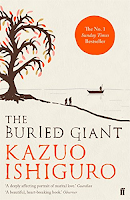
The Buried Giant by Kazuo Ishiguro


Monday, 26 December 2022

Virtual Costa Book Awards Part 2: Celia Rees and guests


The second part of our Virtual Award nominations by guests past, present and future. Part  3 next week!

HELENA PIELICHATY nominates Lessons in Chemistry by Bonnie Garmus for the Virtual Costa First Novel Prize:

It was Penny Dolan’s enthusiastic review on this blog that alerted me to this sublime novel, which I have no hesitation in nominating as my book of the year, not only in the debut category but as overall winner, too. Lessons in Chemistry captivated me from start to finish. In Elizabeth Zott, the book’s main character, Garmus has created a heroine, not only for the 1960s, when the book is set, but for today. Zott is every bright woman who has been told to ‘know her place’, who has had her ideas ignored or stolen by male colleagues, and has had to forge on through adversity. Garmus takes the reader on a roller-coaster ride of emotions with verve, wit and warmth. It is everything fiction should be and I applaud her for it. Read it. Read it now.

PHILIP WOMACK nominates The Young Accomplice by Benjamin Wood for the Virtual Costa Novel Prize:

Benjamin Wood's latest novel, The Young Accomplice, is a mature, reflective and immersive piece of work. Set on a farm in Surrey run by an architect with utopian ideals, the book details how the arrival of two young offenders disrupt the status quo. Exquisitely written, it marks Wood out as one of our best young writers.

CINDY JEFFERIES nominates Treacle Walker by Alan Garner for the Virtual Costa Novel Prize:

Living where I do, how could I not select Treacle Walker as the best novel in 2022? The rag and bone man no longer plies his trade here, but the scrap metal man does, his call echoing around the hilly streets as he passes. And this Christmas month a local college offered 'meditation, ritual and an appreciation of Garner's books, to find the crossing place that brings us home.'

Treacle Walker is both difficult and simple, profound and teasing. It has comics and donkey stones, magic and misunderstanding. Is it the only novel ever shortlisted for the Booker prize to be also suitable for children? (excepting the odd word certain adults might not approve of) Will my seven year old granddaughter understand it? Do I? We will travel its pages together, helping each other along the way.

I didn't go to the college's session, but the end of Treacle Walker feels very much like coming home. You don't need a scrap metal merchant's cry echoing in your ears to enjoy this book; you just need to feel the past, the present and the future in your heart.

LINDA SARGENT nominates Light Rains Sometimes Fall: A British Year Through Japan’s 72 Seasons by Lev Parikian for the Virtual Costa Biography Award (which may be stretching the category somewhat, but these are our awards and we'll distribute them as we wish!)

As a friend once wisely observed, “sometimes we forget what we’re good at”, a kind of disconnection perhaps. It could be said that in 2020 the world was given a chance to reconnect with the minutiae of our natural world. And this beautifully poetic and humorously written book is one reminder of how we might pick up those threads. Here the author follows the ancient Japanese model of the seasons, seventy-two in all. Imitating the Japanese approach with chapter headings ranging from Woodpeckers Start Drumming, Flying Ants Fill the Sky, to Leaves Lie Thick on the Grass, he covers just a few days at a time, detailing his daily walks in the local cemetery, common or his own garden, finding joy in the small things and gently guiding the reader to follow, wherever they live, during the same period. A gem of a book.

It would be nice to hear an owl.

I do not hear an owl.

But the air is damp and soft, and not as cold as I imagined, and I head back home considerably calmed by the experience.

BERLIE DOHERTY nominates The Boy Lost in the Maze by Joseph Coelho for the Virtual Costa Poetry Prize:

The Boy Lost in the Maze
is a novel told in poems. It's not a verse novel. Each episode is a new complete poem, distinct in form and content. There are two narrators, Theo and`Theseus, both sixteen: one a boy from today, one the mythical future Greek king. Theo is estranged from his father and desperate to find him. He is fascinated by the story of Theseus, and his search for his own father. Both boys have been lied to about their past and are determined to unravel the lies and find the truth. Theo's journey echoes emotionally and physically, the 'labours' of Theseus. The adventures of the two youths are graphically told in a sequence of fine poems that are sometimes free-form, sometimes rap, sometimes highly structured.

This powerful, painful, and exciting poetry novel is illustrated by Kate Milner. Her artwork is dramatic and balletic, a fitting complement to an exceptional book for older teenagers and adult readers.

LINDA NEWBERY nominates The Flames by Sophie Haydock for the Virtual Costa First Novel Prize:

Who could resist a novel set in Vienna, exploring the viewpoints of four women who modelled for that most provocative of artists, Egon Schiele? Certainly not me. Sophie Haydock's assured first novel conveys the atmosphere of bohemian Vienna in the years leading up to the First World War in her depiction of the troubled relationships and rivalries, of Schiele's driving ambition and the place he established for himself alongside his better-known mentor, Gustav Klimt; and, of course, the women themselves and their often unconventional lives. You'll certainly want to see more of Schiele's work after reading this, and his depictions of these four women: see Sophie Haydock's egonschieleswomen on Instagram for images and background.

PIPPA GOODHART nominates Three Little Monkeys Ride Again, by Quentin Blake with illustrations by Emma Chichester Clark, for the Virtual Costa Children's Book Prize:

This is such a joy of book! We’ve met the three exuberantly naughty little monkeys before, and it’s very clear that Blake and Chichester Clark love playing with them and their host Hilda, and that eternally deliciously enjoyable quality of naughtiness in others. This time, extravagantly hatted Hilda Snibbs takes those three little monkeys to visit her old mother at her ‘calm and peaceful’ house. But whenever boredom hits, the spectacular, yet relatable, monkey naughtiness ensues. What chaos! What protestations that Hilda will never take on holiday again! But then all comes good. ‘Thank goodness I brought you on holiday.’ But we’re left with one last dollop of gorgeously illustrated ducks in the sink, frogs in the rice pudding, pond weed everywhere, naughtiness to show that nothing so very much has changed!
 
CELIA REES nominates Bad Actors by Mick Herron for the Virtual Costa Novel Prize:

My choice is Mick Herron's Bad Actors precisely because as a genre novel, 8th in a series and a recently aired big budget TV production it would NEVER have been nominated for the actual late lamented Costas. It is, however, MY Best Novel of 2022.

Adele Geras and I are both massive Mick Herron fans and look forward to each new Slough House book. We are never disappointed. Mick Herron is one of the few writers who can make me laugh out loud and he is the only writer I know who even attempts to examine the current British political scene, faithfully chronicling our times from terrorist attacks through Brexit to the pandemic with all the accompanying betrayals, back stabbings, political missteps, coverups, bare faced lying, Whitehall shenanigans, astounding inefficiency and corruption. I hesitated to use the word 'satire' when applied to his books because, given what has happened in the months since Bad Actors was published, even Mick Herron couldn't make it up. He is the Jonathan Swift de nos jours and I can't wait to read the book he must be working on now...

I urge anyone who hasn't already, to read the Slough House books from the beginning. You have a treat in store.

 Click here for Part 1 ...


Monday, 2 May 2022

Guest review by Linda Sargent: 12 BIRDS TO SAVE YOUR LIFE - NATURE'S LESSONS IN HAPPINESS by Charlie Corbett


"Rediscovering his connection to the natural world through reacquainting himself with birds, their habitats and song."

Linda Sargent is a writer who works as a publisher’s reader (David Fickling Books since 2002). She has published short stories and articles and her first novel, Paper Wings, appeared in 2010; she is also the author of Words and Wings, a training guide to creative reminiscence work, available as a free download from her website. She is currently working, along with Joe Brady and Leo Marcell, on Tosh's Island, a middle grade graphic novel based on her childhood.

The line, “Grief finds its good way home” from Elizabeth Jennings' poem Into the Hour, is especially apt for this book, I think. The cliché of coming to terms with loss has always felt inadequate and often inappropriate to me, but “finding its good way home”, yes, that’s more like it. And this diary/essay form account that Charlie Corbett uses to chart the ten years following the death of his mother does feel so much like this kind of journey and one that most people are likely to recognise. Charlie’s mother was in her mid sixties when she was diagnosed with a brain tumour, which the author says at first, although a shock to the family, they all imagined it would be dealt with, sorted out and their mother would continue to be their centre, as he describes, “the glue that held our family together”. That this would no longer be the case seemed unimaginable and when she died there was inevitable fracture and despair, one which sent the author into dark times and which he admits never fully disappear. For him this “way home” involved rediscovering his connection to the natural world through reacquainting himself with birds, their habitats and song.

Although he chooses twelve birds to focus on, during the chapters he also includes many others, presenting a full picture of his relationship with nature as a whole and a reminder of things that he knew were important to him, but that he’d forgotten or neglected to remember over time. As well as the perhaps more obvious candidates like the skylark, the robin and the wren, there are other less predictable birds such as the magpie and the seemingly ordinary house sparrow (sadly like so many not so ordinary and common these days). And although every chapter begins with one bird, it soon broadens out into reflection and reminiscence, as he recalls earlier associations and memories of family life and the way in which he, his father and his siblings have to begin to live with their new reality. At the end of every chapter he gives a brief and nicely personal factual guide to his chosen bird and finally he includes what he calls a Gazetteer – A year in the life of birds, detailing what to look and listen for where and when. It is, as he says, a very personal account and is not meant to instruct, but rather to invite the reader to join him on his journey and in doing so to maybe find it easier to approach loss and grief in their life and find solace in the natural world which is fundamental to us all.

12 Birds to Save your Life is published by Penguin.

More reviews by Linda Sargent:

The Orchardist by Amanda Coplin   

The Buried Giant  by Kazuo Ishiguro 


Linda wheeling away into Blenheim Park


Monday, 20 December 2021

Awards Season! Part 1.


Something different for our end-of-year round-ups -we've invited our reviewers to give a virtual award to a book of their choice. Whether it's a book that's surprised them, a book they didn't expect to enjoy, a book that made them laugh or cry - here's what they've chosen in the first of three posts. Come back next week for more.

As always, we're immensely grateful to our contributors for giving their time, energy and insights to Writers Review. It wouldn't happen without them!

Tamsin Rosewell of Kenilworth Books: The Sheepish Bookseller Award for the Book I Didn't Think I'd Like But I Totally Adored, And Now Can't Stop Talking About It.


And I'd like to award it to Cecily by Annie Garthwaite.

When I read the first reviews, they compared it to Hilary Mantel. Like many booksellers I greeted this with an eye roll and a sinking feeling. I was expecting something perhaps over-indulgent; an.. er.. insufficiently edited draught-excluder of a book. But I should have ignored that reviewer, Mantel isn't a patch on Annie Garthwaite. I loved every word of Cecily, and thought it was one of the most astonishing books I've read in a decade. I was rooting for Cecily (and marvelling at Annie's ability as a writer) every moment. Far from being indulgent, it was beautifully, intelligently written - and the reader never forgotten. Annie Garthwaite's knowledge of history is deep, and her passion for her characters is infectious. She wears her love for Cecily like a crown of flowers. Off that throne Hilary!

Jonty Driver: I have two profound reasons to regard Arthur Koestler's novel Darkness at Noon as important in my life. I read it when I was 17 and still at school in South Africa, by then profoundly bored by much of the teaching provided. I had never been a racist but was beginning to be politically aware. so, when I went to the University of Cape Town the next year, because of the novel I was intellectually armed against attempts to divert me from my instinctive liberalism to hard-line Marxism (the South African Communist Party, though it was totally illegal and underground, Stalinist in demeanour, still worked hard to recruit students). Secondly, when I was detained by the security police, five years later, in solitary confinement under the "Ninety Day Detention" regulations, knowing what happened to Rubashov (the central character in Darkness at Noon) in solitary helped me cope better than I might otherwise have done. In particular, the "knocking code", described in that novel, enabled a friend detained in the same police station to give me the name of the person who had told the police I was involved in the African Resistance Movement, the ostensible reason for my detention; I wasn't in the ARM and actually thought it mistaken in its actions, although some of my closest friends were involved. In fact, the real reason for my detention was the work I had done as President of the non-racial and anti-apartheid National Union of South African Students.

Rachel Ward's Award for the Book I Wish I'd Written goes to We Begin at the End  by Chris Whitaker. I took a while to get into this book but then I was hooked. It’s a masterpiece in characterisation and plotting, and also how to break a reader’s heart into a million tiny pieces. I wish I’d written it, but - that being impossible - it has spurred me on to be a better writer.

Pippa Goodhart
: I present the Goodhart Award for the most good-hearted book of 2021 to …drum-roll... A Town Called Solace by Mary Lawson.

This gloriously quiet, beautiful, elegant story takes three deeply troubled and alone characters in a small town in Canada, marooned in winter coldness, and brings warmth. The seven year old child, the middle aged man, the old woman, are all trapped by mistakes made by themselves and others. But this kind book lets them come unexpectedly to each other’s aid, enabling them each to move on. Truly a story that does good to the heart and soul of the reader! Happy Christmas!


Linda Sargent
 awards Sargent's Sash to Old Age: A Journey into Simplicity by Helen M. Luke.

I was recently recalled this collection of essays when I recommended it to a younger friend who remarked that they were finding the ageing process trickier than they had anticipated. I first read it over twenty years ago when it was recommended to me by an older friend. I was middle aged then and found it inspiring and optimistic; a book about growth and creativity and, not, as some might imagine, decay and involuntarily loss. I returned to it often. In five chapters this wise Jungian writer insightfully references The Odyssey, King Lear, The Tempest and Little Gidding, with a final chapter on Suffering, revealing how ageing can, if we allow it, be an act of letting go of the familiar and of gaining through this process; learning that there are new things to explore and new levels of understanding to aspire to both in ourselves and in others.

Julia Jarman's Best Book You May Never Have Heard of Prize:  I first read this novel in hardback, called Miss Graham’s Cold War Cookbook. I loved it from intriguing first page to satisfying last, mostly because I loved the heroic, cookery-teacher turned spy, Miss Graham herself, and her fellow spies, brave women all, and the thrilling plot. It took me to painful places – the worst of Nazi evils – but these characters, based on real-life people who fought for justice lifted my spirits, and not just mine. There are 630 positive reviews on Amazon. My book group loved it, but why they asked, was this brilliant author not on the airwaves talking about this book like the famous author with a spy story out that month. Why weren’t there adverts all over the place as there were for the famous author? Because publishers don’t advertise your books till they don’t need advertising, I explained, but they didn’t get it. Nor do I.

Berlie Doherty: I award the Berlie Bouquet to Katherine Towers for her poetry pamphlet The Violin Forest, (2019 Happenstance Press).

The twenty short poems of The Violin Forest sing with lyrical imagery and musical grace. Her collection introduced me to W.S Graham – after reading his Imagine a Forest I returned to her poem Good Words Take from a river any thought of endlessness/or death to find it’s only water in its way.

I listened to Sibelius before re-reading Silence of Jarvenpaa, and wondered about his wife and daughters in the house where more than enough time did he spend looking up at the sky. To La Gaviota by Rodriguez …’the tenor’s airy triplets/ made me picture ghosts. To Schumann’s beautiful Gesaenge der Fruehe … you’ll hear dawn break/like the bones in a hand.

The poems are not all esoteric. One of the most accessible, Sparrows, contains my favourite image our old wisteria is a billowing palace/ of many green and lilac rooms..

The Book That Confirms Something Important Prize is awarded by Cynthia Jefferies to Alive Alive Oh! And Other Things That Matter by Diana Athill

 Diana Athill wrote more than one book about getting, or being, old. The other I love is Somewhere Towards the End, which turned out not to have been so very near the end because after winning the Costa for it she went on for another 11 years, publishing four more before she died in 2019 at the age of 101.

 These books are straight and honest, often amusing and also gracefully profound, These are not books of advice, but they are books of truth, and about how she lived her life. Somehow, in reading her I realise how many thoughts and feelings I share with her. Perhaps it is something to do with getting old that makes memories that float out of the past (to use her phrase) so very pleasurable to recall. 

I defy you not to be amused, moved and instructed, simply by reading the introduction. Yes, I recognise her thoughts about men, and think of Venice, and now remember, because she says it so certainly, and I hope you will remember it too, that looking at things is never time wasted. 

More virtual awards will be announced next Monday!