Showing posts with label memoir. Show all posts

Monday, 6 April 2026

Guest review by Nick Hodges: MEMOIRS OF A FELLWANDERER by Alfred Wainwright


"... an easy ability and simplicity of style; his delightful pen and ink illustrations of mountain and moorland ..."

Photograph with king parrot by Judith Ramage

Nick Hodges
 is an Englishman living in Australia. He is a teacher and freelance journalist concentrating on Travel and Nature. His work has been published in Britain's Sunday Times, The Times Educational Supplement and the Tourist Board magazine, In Britain. Down Under, his work has appeared in leading newspapers, The Sydney Morning Herald, The Age and The Sun Herald. He has recently completed 20 years of writing a monthly Nature Notes article for a Sydney newspaper. He has designed and taught adult courses on The Birds of Sydney.


Wainwright: to those in the know the name is synonymous with fell (or mountain) walking and his guides to Lakeland, the Coast to Coast Path and the Pennine Way are legendary.

AW - as he is often known - died in 1991 shortly before his Memoirs of a Fellwanderer was published.

Like me, his walking guide books are getting on in years. But whenever I visit the north of England and if the weather half co-operates, the need to climb to high places grips me and so off I go with the appropriate Wainwright volume in my hand.
 

It's AW's way with words; an easy ability and simplicity of style; his delightful pen and ink illustrations of mountain and moorland; Cold Pike and High Pike; Dove Crag and Loft Crag.

Wainwright grew up in Blackburn, Lancashire, where he worked in local government before moving both job and home to the Lake District with which he'd fallen in love at first sight.

Subsequently he came to know the paths and the fells like nobody else. In his Memoirs he explains how he took to drawing, writing and publishing his works and the many years of constructing what must be his greatest achievement: the seven volumes of the Pictorial Guide to the Lakeland Fells.


And Wainwright himself? His Memoirs indicate a man of both patience and impatience. Perhaps a grumpy old man? 'I suffer fools badly', he writes. When his first wife left he says, 'I never saw her again. I was not greatly concerned'. However, Betty, his second wife of 21 happy years, who writes the foreword to the Memoirs, sings his praises: he was 'a sensitive man hiding himself behind a gruff exterior'. Certainly he could be self-deprecating: 'I received an award from the Queen: she didn't know the reason for it either'.

AW disliked people walking in groups for the noise and the damage they caused to the trails. Coming across a single file of ramblers on a narrow mountain path he would acknowledge the first and then, as he passed the others one at a time, would studiously ignore them.

When recognised on the fells he would often deny his identity. Groups always received a 'no'. Single walkers had a better chance - especially if young and female.

Walking alone was his way; nearly always the only way. He distinguishes between loneliness and aloneness. The fells were all he needed: his 'silent friends'.

It's all in the Memoirs.

Also, how he hated gadgets and all things mechanical. He distrusted cameras even though he used one.

Among Wainwright's other interests were cats and Coronation Street and, perhaps most importantly, the charity, Animal Rescue. As for books: 'maps have always been my favourite literature'. Between completing one of his seven pictorial guides and starting the next, he writes, 'I paused only to refill my pipe'. All of his spare time and energy were needed for the research and compilation of these pocket-sized volumes.

He never missed a day's work and was never ill. His excellent health he believes was as a result of not having owned a vehicle, preferring to walk whenever possible; yet he smoked 'like a chimney'.

Nearing the end of his Memoirs AW lets off steam about the state of things. He cannot understand those who suffer from depression, bemoans the fact that the Lake District is crowded with caravans - and visitors of the 'wrong' kind; has a good old rant suggesting what we might today call right wing views. And his preferred punishment for football hooligans? I'm not writing it here: suffice to say it makes the blood run perilously close to cold.

But then he relents with a complete turnabout extolling the virtues and beauty of the world: 'this book is not a personal lament but a thanksgiving'.

Most walking guides praise that which they promote and gloss over the hard bits. Not Wainwright. He prefers Lakeland walking to the Pennine Way where, 'the cold so shrivelled some of the body organs necessary for a full and enjoyable life that I feared they were perished for ever'.

But I digress. That's from another book by Wainwright. The quotation is here simply because I like it.

Right now I feel that need: it's time to wax my boots, take a guide book and head for the hills. I'll go alone of course - but I know AW will be with me.

Memoirs of a Fellwanderer is published by Frances Lincoln.


See also Nick's review of This Birding Life by Stephen Moss


WR note: As well as his treasured books and his influence on countless fellwalkers, Alfred Wainwright's great legacy to the book world is the Wainwright Prizes, now the world's foremost award for nature and conservation writing. Established in 2013 as a single award, it's now expanded to include various categories, including children's books and illustration. We've featured several shortlisted and winning books on the blog and will soon post a review of the 2025 Wainwright Prize Book of the Year, Raising Hare by Chloe Dalton.

Monday, 5 August 2024

Guest review by Penny Dolan: THE PLOT by Madeleine Bunting


"She sets this personal acre within the wider movements affecting the British countryside over the centuries, bringing in the topography, myths, history and custom, and expanding the vision out beyond the Hambleton Hills."

Penny Dolan works as a children’s storyteller and writer. Her last novel for older children, A Boy Called Mouse, was nominated for the Young Quills Historical Fiction Award, and she is currently completing a companion book. She posts on The History Girls, on An Awfully Big Blog Adventure and can be found on Twitter @PennyDolan1.

A bookish friend had praised The Plot by Guardian writer Madeleine Bunting, so when the paperback lay there, face up on the Waterstones counter, what could I do?

I was already interested in the topic: an acre of land on the edge of the Hambleton Hills in North Yorkshire, where the sculptor John Bunting lived and worked from the Fifties. His ‘plot’ was up a rough track, some distance from the cold cottage where his artist wife looked after their six young children. John had, aged sixteen, seen the view from the ridge, and in his twenties, came back to make his live his life in that spot. Once I had come across a similar breathtaking view, from the top of Sutton Bank, a winding hill with a 1:4 incline. I stared, from the car park at the top, out over the Vale of York and right across to the hazy summit of Pen y Ghent, and saw why this was called ‘God’s own county.’

Madeleine Bunting, John’s daughter, wrote her memoir as a way of coming to terms with her father. To me, this was not a book like Helen McDonald’s H is for Hawk, wrung out of deep grief. Instead, Bunting’s book felt brisker, written in anger, puzzlement and sadness, as she tries to understand her father and his love for his remote acre. Named Scotch Corner, the plot is marked on OS Navigator 100.

John Bunting’s passion, even at Ampleforth, his prestigious Catholic school, was carving in wood and stone. He visited the workshop of the Robert Thompson, the ‘Mouseman of Kilburn’ just as, later, he sought out sculptors like Henry Moore, Eric Gill and Brancusi. Returning to the seclusion of the Hambleton Hills and North Yorks Moors, John made a thin living through various commissions and part-time teaching at Ampleforth, where Anthony Gormley was among his students.

What marked Bunting out was that he was one of the young men who ‘escaped’ WWII, but not from its shadow nor its fallen heroes. Returning to Scotch Corner, he built a small ‘memorial’ chapel, as well as an everyday stone hut. Madeleine recalls his carved angel heads atop the doorway, and two crucifix and images of the Virgin and Child inside.

In particular, she describes sitting on the cold floor during mass, squashed between her siblings, because the chapel’s aisle was filled by her father’s life-size sculpture of a fallen soldier. Who was the soldier and why did this lost hero matter so much to John Bunting? And the other admired names she found in his notes? How did they and their reputations, over time, fare?

Gradually, Madeleine Bunting examines her father’s life, and the selfishness of his ’man among men’ attitude. After a day working in the hut, he spent evenings in the village pub, leaving his artist wife with six children in a cold, primitive cottage in the village. ‘It seemed that his belief in the dignity of physical labour meant that my mother’s should never end,’ adds the author. A not unfamiliar situation.

However, The Plot is far more than a single story, and stronger for it. In and among the author’s pursuit of her family story, she writes about the geography and history of that whole area, describing it as ‘a landscape known in reality and in imagination and in memory.’

She sets this personal acre within the wider movements affecting the British countryside over the centuries, bringing in topography, myths, history and custom, and expanding the vision out beyond the Hambleton Hills.

She writes about early flint-workers travelling the ridge; the people who marked the land with barrows; the foreign king who ‘wasted’ the North and made it uninhabitable for three generations; the incoming monks who gave order, wool and beautiful buildings to the area, and of the Scots drovers, bringing flocks of cattle to the markets of the south. She writes of the rise of Romanticism and the individualistic ‘view’ of the landscape; the arrival of sightseers, the railways bringing hunting parties, and the ugly sitka spruce plantations across the North Yorkshire moors. Separately, these histories might seem familiar but her overview is both thoughtful and interesting.

In her last chapters, Bunting considers the area of Hambleton in recent decades. She not only writes about the economic importance of grouse-shooting but also the tinder-box monoculture of the moors. She speaks of machines and pesticides, of the crisis in modern farming and in wider agricultural planning;. In particular, she draws attention to the nostalgia for rural life that has created holiday cottages, second homes and emptied out farms and village communities. Even, she says, her father who came here, in search of old, orderly society, might have seen the idyll disappearing as he carved.

This is, as my friend might have suggested, a very wise, worthwhile and intelligent book.

Afterword

A small but interesting point for food enthusiasts. While she was researching her book, Madeleine Bunting made friends with and relied on Fred Banks, a local farmer and self-taught historian. In the last chapters, Fred and his son Tom decide they cannot make a living from their farm and are thinking about buying a pub instead.

Now, in 2024, The Black Swan at Oldstead is a Michelin starred restaurant, and the main chef is better known as Tommy Banks, of  Roots cookbook fame.

The Plot is published by Granta.

See more of Penny's choices:

Lessons in Chemistry by Bonnie Garmus


Horse by Geraldine Brooks


The Secrets of Wishtide by Kate Saunders


The Cold Cold Ground by Adrian McKinty


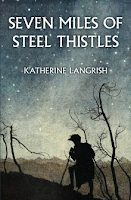
Seven Miles of Steel Thistles by Katherine Langrish


Monday, 24 June 2024

SPECIAL FEATURE: Q & A with Susan Elkin on her reading retrospective, ALL BOOKED UP


"I have done a huge amount of journalism and, contrary to what the cynical public thinks, that means that I'm used to researching and then writing the truth."


Susan Elkin taught English in secondary schools for 36 years, latterly developing a parallel career as a writer. Since 1990 she has written over 5000 articles for newspapers and magazines, English text books, how-to books for teachers, a book about careers in theatre and latterly three volumes of memoir: Please Miss We’re Boys (2019), The Alzheimer’s Diaries (2022) and All Booked Up (2024); she has her own weekly blog, Susan's Bookshelves, where she reviews music and drama as well as books. She lives in South London.

Writers Review: You've written widely about inspiring a love of reading in children. What are the best ways to encourage a love of reading? What is the situation now in schools and how would you like to see it change?

Susan Elkin: Enthusiasm is key. It's vital to communicate a love of books. So share books, talk about books and - vitally - whether you're a teacher or a parent, for goodness sake let children see you reading for pleasure. If you don't, they get the message that reading is a childish thing which you stop doing when you're grown up. I have never forgiven Tony Blair, early in his premiership, for visiting a primary school and, when the children asked him what his favourite book was telling them that he was too busy to read.

In schools. teachers are very good at teaching phonics and so on as they are now required to do. Decoding the squiggles. though, is the easy bit. It's developing and encouraging reading after that which is the challenge and it's where many schools fall down, not least because there are so many banal, dull hoops the curriculum requires them to jump through in terms of, for example, very formulaic comprehension exercises. I think every class at every level should have a block of independent reading time every day - in silence, read anything you like and the teacher reads too. We used to call this USSR (Uninterrupted, sustained silent reading) or ERIC (Everyone reads in class) and I think it should be a key part of the curriculum ... but I'm not holding my breath.

WR: What are your thoughts on the prevalence of celebrities now writing children’s books?

Susan: Well, I suppose it depends who they are and how good they are. David Walliams is, in my view, outstanding. His books are very funny and he has developed a real love of reading in many children - just as Roald Dahl and JK Rowling did. Richard Coles's crime novels are quite fun and well enough written. And of course there are others.

On the other hand an awful lot of it is the literary equivalent of junk food and often turned out by ghost writers with publishers simply grabbing names that will sell books. And often, I suspect, this is instead of excellent writers whose names are not (yet) well known. On the day I'm writing this, it has just been announced that Jeremy Vine has secured a two book deal. Well, he's not a bad radio presenter but that doesn't mean he can write decent fiction. But I'll reserve judgement until I've seen what he (or his ghost writer) produces.

WR: You've had wide experience of reviewing books for young people, eg. for The School Librarian. Were you ever tempted to write children’s fiction yourself?

Susan:  No. I have no talent for fiction although I'm very much a fiction junkie and read vast quantities of it . It's a strange thing. I have done a huge amount of journalism and, contrary to what the cynical public thinks, that means that I'm used to researching and then writing the truth. I'm so conditioned to this that I find it impossible to make things up! It's probably why I can do memoir, though, because I'm describing what actually happened - at least as I remember or percieve it.

WR: I'm impressed by the range of your publications, the hard work that went into establishing yourself and how well it paid off in terms of opportunities coming your way. How would you advise other writers to get into freelance journalism?

Susan: Probably through a good degree in whatever interests you (English, history, politics, maths etc) and then looking for some kind of work experience placement. Very few successful journalists did “media studies” or anything similar so don’t bother with that. Write as much as you can wherever you are – community newsletters, student magazines and so on so that you build experience and a portfolio. My own experience is not typical – I gradually moved into journalism from teaching from about 1990 at a time when all the broadsheet newspapers had a whole page devoted to education every week. I started by sending on-spec opinion pieces to editors. Sadly, that would never work now.

WR: Writing The Alzheimer's Diaries must have felt very different from your other writing. Did you begin writing it for yourself rather than for publication?

Susan:  Not really, although – with hindsight – it probably helped me to deal with, and process, a pretty grim situation. I am programmed to write about almost everything which happens to me so when my husband, Nick, was first diagnosed it seemed the obvious thing to do – once he’d given me his approval, of course. At first I thought I’d do it as a newspaper column but none of my contacts wanted it. I did eventually get a version of the opening blog into Daily Telegraph, though. I wrote it as a weekly blog as we went along over the 28 months between Nick’s diagnosis and death in 2019. By then it was a pretty substantial block of work – and writer that I am – I couldn’t bear the idea of not taking it further. The book came out in 2022. It’s not gloomy – just truthful and, many people have told me, often funny. I regard it as a sort of memorial to Nick and I think he’d be pretty pleased with it.

WR: You’ve written a lot about music and drama and the lack of opportunities for young people. What would you like a new Minister for Culture to do?

Susan:  Fund music education for every child so that there is an entitlement to learn a musical instrument or sing in a choir. At the same time wouldn’t it be great if they learned to read music at the same time as they learned to read words? Of course they aren’t all going to take to it but I’d like every single child to have the chance. Drama is easier because it’s cheaper – train teachers both in initial training and CPD to build drama and drama games into their teaching. And what about grants for school productions to encourage schools to stage them? Perhaps, more radically, the minister could liaise with the new Secretary of State for Education and look for ways of changing the culture in schools so that head teachers are less focused on “results” and better able to see how holistic education benefits every child and raises standards. Abolishing SATS (standard attainment tests) would be a good start.

WR: What will you write next?

Susan: Well in addition to all the routine work – reviewing shows and concerts, writing arts features for magazines and my weekly Susan’s Bookshelves blog - I’ve just started work on a new book. Memoir style again, this time it’s about writing. I’ve met some extraordinary people and been in some pretty unlikely situations during the last 30 years (visiting a primary school in Orkney, interviewing June Whitfield, writing about hedge trimming, attending vespers at Ampleforth, crying with a mother in a children’s hospice and an awful lot more) and I think there’s a story to tell. At present I’m going though old diaries and files and making a lot of preparatory notes.

WR: Thanks, Susan - hope you enjoy this preparatory stage and we'll look forward to seeing what it leads to!

All Booked Up is published by The Book Guild.

See also Susan's review of Kazuo Ishiguro's Never Let Me Go.


Monday, 9 January 2023

Guest review by Penny Dolan: LONG LIVE GREAT BARDFIELD! by Tirzah Garwood


"Tirzah’s unique voice is a large part of the Long Live attraction: she writes in a clear-eyed and personal style, without any idea of intended publication or any need to impress." 


Penny Dolan
works as a children’s storyteller and writer. Her last novel for older children, A Boy Called Mouse, was nominated for the Young Quills Historical Fiction Award, and she is currently completing a companion book. She posts on The History Girls, on An Awfully Big Blog Adventure and can be found on Twitter @PennyDolan1.


My choice for Writer’s Review could be called “My Life as the Artist’s Wife” although the author, writing about her experiences during the first half of the 20th Century, would feel far too independent and unsentimental to employ that description herself.

Long Live Great Bardfield! is the autobiography of Tirzah Garwood, the wife of Eric Ravilious (1903 -1942). He is known for his English landscape paintings, which have an airy, dream-like and solitary quality, and for his work as an official War Artist.

I am very fond of his paintings, which is why, in 2015, I visited the Dulwich Gallery’s stunning Ravilious exhibition, where I came across the name Tirzah Garwood. There, among his paintings, and their rare vestigial human figures, were a few small, well-designed woodcuts that definitely rejoiced in people. I saw a collection of small social scenes and domestic interiors, each one sharpened by a strong sense of movement, humour and fun and the name beside them was Tirzah Garwood. I wanted to find out more about him and about her, these contrasting artists.

In 2018, Persephone Press, who specialise in books by early twentieth century women writers, published Tirzah’s memoir as Book No. 119. The manuscript had been prepared after Tirzah’s death in 1951 by her daughter, Anne Ullmann, with the addition of extracts from the letters of family and friends. The title, Long Live Great Bardfield! was Tirzah’s own comment on her life and experiences. 

Long Live arrived soon after the Dulwich exhibition, war anniversaries and a touch of nostalgia had revived interest in Eric Ravilious and in the other young people from the Royal College of Art’s Illustration and Design course. From what I have read, there was an element of class about this particular course at the Royal College of Art. These students were not “fine artists”, expected to teach more art themselves and/or have an income of their own. These students were trained to be useful to publishers, printers, manufacturers and business. They were artists of the then-modern century, whose skills would re-invigorate British design, making their mark, as Ravilious did, in the world of decorative ceramics, printing and book design.

After being praised for her drawings at school, Tirzah studied at Eastbourne College of Art. She specialised in woodcuts, illustrations, pattern designs and marbling techniques although gradually, as her memoir shows, her own work gave way to all that was involved in running a home. She was very much involved in Eric’s work and career, recognising the “stunners” that would sell well at exhibitions, recording, packing and posting his work to the London galleries and often influencing his work. One of his most popular images, Train Landscape, was created by Tirzah making a careful collage of two of his paintings.

Tirzah’s unique voice is a large part of the Long Live attraction: she writes in a clear-eyed and personal style, without any idea of intended publication or any need to impress. She started writing her memoir “for her descendants” in 1942, while convalescing after an operation for breast cancer, giving her own account of their slightly unconventional life together.

The memoir moves, in a kindly, almost gossipy style, from mundane circumstances through to painful incidents and partings. For the reader, the experience is rather like listening to an indiscreet and friendly aunt who is never afraid to mention an intriguing or medical matter or to describe another’s appearances in too-observant detail, even though, at times, you may have heard part of this story before.

In her telling, Tirzah makes it clear how differently she and Eric were brought up. Her father was a Colonel in the Royal Engineers; she describes a comfortably respectable middle-class family, living in various homes in Sussex, surrounded by relatives, siblings, pets and plenty of space. Her education came through relatives, personal tutors, private day schools and at a boarding school. By contrast, Ravilious, who taught part-time at Eastbourne College of Art, was “not quite a gentleman” socially. His father was a failed antique shop-owner turned chapel preacher and Eric had attended what was then called the Municipal School. School. Tirzah, in her memoir, is very aware of class differences and snobbish attitudes, including her own responses. Although honest, they are not always comfortable reading. 

Although, after marrying in 1930, Eric and Tirzah enjoyed life as part of the London art scene, with Eric working on paintings for commissions and exhibitions, he was restless, wanting new landscapes to paint. In 1932, along with fellow artists Edward and Charlotte Bawden, they moved to Brick House in Great Bardfield, a village in Essex not far from Saffron Walden, and became part of the artistic community that developed in that area.

In Long Live, Tirzah is telling her grandchildren about the joys, interests and enthusiasms of that part of her life. While Eric and Edward explore the countryside and coast, collecting ideas and inspiration for their work, Tirzah and Charlotte are designing and producing marbled paper and managing their homes. If your interest is in history or in the role of women, Long Live is a brisk reminder of the rural conditions of the nineteen-twenties and thirties. Tirzah, who had grown up with servants, describes a time when, outside towns and cities, buckets of water were still hauled from wells, coal and logs were needed for fires, and how unendingly hard all the care, cooking, laundry and domestic work could be, whether in peace or during war-time.

Tirzah does not hide the fact that, although she and Eric remained fond and supportive of each other, their personal lives were complicated by other relationships. Eric often returned to London or to the Sussex downlands, staying at Furlongs, an isolated farmhouse rented by a friend. Although Tirzah did visit him there, describing it as a happy place, and appearing in his painting of tea on the lawn, her own life is mostly back in Essex.


She recognises that Eric’s priority would always be his art, and is unsentimental about his achievements and failings, and her own. Yet in her memoir, she makes it plain that:

“If we believed that people should be free to love whom they liked, it wasn’t because we were ceasing to be good ourselves but because we realised the truth of the fact that you cannot stop people loving each other.”

Eric and Tirzah still spend time together. She finds happiness in motherhood, describing, in somewhat stark detail, the arrival of their sons James and John, and their move to another home in Castle Hedingham. Eventually, the threat from Germany becomes war. Eric signs up as an official War Artist and is posted to different naval sites and airfields around the country In 1942, as their daughter Anne is born, Eric leaves for Iceland, eager to paint the North Atlantic convoys and the frozen landscape.

Tirzah’s memoir pauses somewhat after her apparent recovery and changes in style, before being completed through her own and others words. Tirzah married Henry Swanzy, a BBC producer, in 1946, took up oil painting and illustration again, and lived a cheerful and contented life until her death in 1951, at the age of 42.

Re-reading Tirzah Garwood’s writing for this review, I found her words and her positive spirit a great antidote to pessimism, while her tales of domestic life in rural Essex have reminded me that a little less heat in my home is not absolute hardship, and that circumstances are worse, elsewhere, for others.

Best of all is Tirzah’s inspiring attitude, and her admirable wish to find the best in everything.

“I want to write my life while I am still happy. If I read an autobiography, I don’t like to think of the author as a poor old doddering person with one foot in the grave. Two months ago I nearly died myself. I’m sorry to have to mention such an unpleasant subject but I must be truthful . . . The convalescence following it I very much enjoyed and it has made it possible for me to write this account of my life which otherwise I should never have had time to do . . . I am so happy sitting here that I find it very difficult to write at all. The smell of the May wafting over the orchard wall from the outside lane is so strong and lovely that I feel it should be doing me good in some way!”

* * * * *


ADDITIONAL RAVILIOUS NEWS:

Foxtrot Films' 2021 film, Eric Ravilious - Drawn to War, written and directed by Margy Kinmonth, was nominated in the documentary category of the Big Screen Awards in November 2022, and was awarded Best Documentary at La Femme International Film Festival in Los Angeles. The film will be shown in selected Picture House Cinemas around the UK over the New Year period and is also available in DVD format.


Monday, 28 November 2022

Guest review by Graeme Fife: THE SCENT OF DRIED ROSES by Tim Lott


 "I have, so to speak, just been turned inside out by a book."

Graeme Fife is a regular reviewer here. He has written many plays, stories, features and talks for radio, stage plays and articles for newspapers and magazines, and is a regular contributor to BBC Radio 4's From Our Own Correspondent. He's the author of a string of books - children's stories, biography, works of history and fiction. His novel of the French Revolution, No Common Assassin, tells the story of Charlotte Corday.

I have, so to speak, just been turned inside out by a book. We all know the injunctions: the Delphic Oracle – know thyself, echoed by Polonius; Socrates – the unexamined life is not worth living – Sophocles – what is neglected runs away from us. However paled into cliché the familiar axiom may become, its truth still holds. Tim Lott’s The Scent of Dried Roses – an intriguing title whose disclosure I leave to him – offers a salutary lesson in the essential value of self-scrutiny. His writing is merciless in its pursuit of detail and causation. He lets nothing slip. Not only does he bring to light with merciless resolve the various conflicting influences, bodily and mental, that test us, the vicissitudes which unsettle and undermine us. He also, as if inadvertently, uncovers how the patterns and habits of life in this country altered so radically after the Second World War. It’s an important element in understanding who we are, where we are now. Post-war austerity, the emergence of a different class, the rise of an entirely new human species, hitherto unclassified and uncatalogued, the teenager, with all the accretions of teenage culture and shifted values, disturbing the accepted continuum, life as she has always been lived. No longer. The resultant rage in the enquiry: ‘What is going on? What has happened to us?’ Empire, colonies, British hegemony, all gone or given away, the very fabric of life in this throne of kings, this sceptr’d isle shredded. A queen, even? Queenies still did the knees-up in Bethnal Green but Southall, where Lott grew up, saw a new influx, from abroad, a place we’d rarely had to go because we were already here. No longer. Changes altered the scenery, just as the knowns of childhood distintegrate in adulthood.

With the shifts in life and its acquisitions – all, to those of us growing up through the grey into technicolour, as medical science confronted a new phenomenon, depression – everything changed. How? We’d always had nutters and loony bins but now? Unhappy and a bit worse? Here’s a pill.

Well, Lott’s story is more complex than that, of course but it’s a story that need to be told and Lott tells it marvellously well, with one proviso: in a striking image he exposes the perils of belief, often desperate, in fixity. The painting which seems so ordered, locked in a frame, a moment fastened for all time, the permanence of our viewing, is never more than a construct, a seemingly motionless truth pinned down like a dead butterfly in the flux of reality.

Lott explores that flux, the watching eye unblinking, the listening ear pricked and the colour of the detail he registers is staggering in its range. I admit that the immediate resonances prejudice me a little – the fact (eg) that we both learnt Marian Richardson handwriting at primary school, a dullness soon ditched. Ditched, the very word is like a bell … you know the rest. We look and often do not see, listen but don’t hear, forgetting that both might lead to a sort of conclusion. It may be a paradox that one conclusion is the need to discard the quest for certainty, fixity, the definite, like an anchor. A useful, I’d say essential, paradox. And Lott calls it ‘the awesome responsibility that accepting uncertainty and insignificance entails’. [p 267]

Above all, this troublesome truth is what emerges most forcefully and altogether welcome, from this very often painful, always exhilarating, if difficult, memoir which, presented as personal, reaches out to a wider humanity in a way that only unflinchingly honest introspection can. Honesty can be overused in critique, a slick judgement of writing about self when that writing purports to be record, the untailored result of what is there, palpably there: us, our very self. Does that make fiction dishonest, then? Of course not. In books is found knowledge, even if, as the preacher warns, knowledge leads to sorrow. The vale of tears? Hmm. I once undertook a job of interpreting for a French street theatre group, because the organiser told me that, at the end of the show, ‘grown men cry’. And so they should.

You know what purgative means. Lott has, in this restlessly managed careful exposé, made forensic pathology of the heart and mind a kindly operation. Forensic is the adjective for forum where, in ancient Rome the law courts were sited. I use forensic because in writing of the hurts and desires, the tribulation of heart and soul, a certain legalistic dispassion does not go amiss. Reporting on the fevered heat takes a cool head. There is that here.

The Scent of Dried Roses is published by Penguin Modern Classics.

Monday, 3 October 2022

Guest review by Fran Hill: AND AWAY ... BOB MORTIMER, THE AUTOBIOGRAPHY


"He self-effacingly champions the underdog, perhaps because he himself has always felt a little underdoggy, if I’m reading him correctly."

Fran Hill is a humour writer and retired English teacher from Leamington Spa. Her funny teacher-memoir Miss, What Does Incomprehensible Mean? was published by SPCK Publishing in 2020. Her first full-length novel Cuckoo in the Nest is about sibling rivalry in a foster care situation and will be released by Legend Press in March 2023.

I could start this review with ‘You know, Bob Mortimer of Big Night Out and Shooting Stars with Vic Reeves in the 1990s.’ You know.

But that would be disingenuous. Mortimer wasn’t on my radar until his coy but hilarious monologues on the BBC’s Would I Lie to You and appearances on Gone Fishing with Paul Whitehouse. When the autobiography came out in 2021, I impulse-clicked on ‘Order Now’ before I could check my bank balance.

I’ve caught up on those earlier shows now, thanks to Youtube. Some elements are so surreal, I’m left bewildered, but Shooting Stars grew on me. What improvisational genius!

If you saw the first episode of Gone Fishing in 2018, you’ll recall that it starts with Mortimer and Whitehouse bonding over potentially fatal heart conditions and consequent re-evaluations of life’s meaning.

And Away begins similarly in October 2015 when Bob is 56, his life ‘trundling along like a podgy golden retriever being dragged along the pavement by an indifferent owner’. He’s about to embark on a UK tour with comedy partner Reeves to celebrate 30 years in the business. But sudden chest pains propel him to a cardiologist. Tests show that up to 98 per cent of Mortimer’s arteries are blocked. Without urgent surgery, he is in immediate danger. The tour is on hold.

After that first dramatic chapter, the second flashes back to Mortimer’s Middlesborough childhood, and Part 1 of the autobiography is structured like this: a chapter about his slow recuperation from heart surgery, interspersed with coming-of-age stories, including the death of his father in a car crash when Bob is 8, the development of Bob’s shy personality after this, and his early law career. The book is pacy: Mortimer is handy with cliff hangers.

Part 2 recounts his accidental arrival into comedy. A friend invites the lonely, recently love-spurned Mortimer to a comedy night at the Goldsmiths Tavern in New Cross, London, where he encounters Vic Reeves Big Night Out. He says, ‘I felt like I had seen the past, the present and the future of comedy.’ Weeks later, Reeves invites Mortimer onto the stage to play a bit part and the seeds of their farcical double act are sown.

In Part 3, Mortimer tells us about Shooting Stars, the surrealist and bizarre game show that found fame in the early 1990s, with 72 episodes over 8 series and with celebrity guests, some clearly less comfortable with the nonsense than others. Regulars included Ulrika Johnson, Matt Lucas, and Mark Lamarr.

Mortimer also describes his failures. For example, an attempt at proper, scripted TV acting teaches him that his talent is in improvisation: ‘It seems that maybe the one context where I can actually act is where there isn’t any script – just good, old-fashioned storytelling.’

The final sections include detail about Gone Fishing and necessary lifestyle changes since his heart surgery. He also honours key players in his life: his wife Lisa, mum Eunice, and his comedy partner, Vic Reeves. His portrayal of his mother throughout is affectionate and funny: he includes a list of things she taught him, including ‘How to tell if a melon is ripe’ and ‘A blanket beneath you is worth two above’.

He adds similar tips of his own, including 'Keep the filters clean in all your appliances’ and ‘Tired of pie, tired of life.’

Mortimer’s essential kindness and gentleness thread through the book. His degree was in Welfare Law and he self-effacingly champions the underdog, perhaps because he himself has always felt a little underdoggy, if I’m reading him correctly.

Mortimer plays with our minds a little. Watch out for the Would I Lie to You chapters in which he mirrors the show’s format by relating a series of incidents, one of which is complete fantasy. It’s fun guessing.

Similarly, a final final chapter, placed after the chapter entitled The End, is about his favourite music including an obsession with Joni Mitchell.

Right. That’s the review done. Back to Youtube.

And Away is published by Gallery UK.

Cuckoo in the Nest will be published by Legend Press.

Monday, 8 November 2021

Guest review by Tina Jackson: FEATHERHOOD by Charlie Gilmour


"A beautiful book about the nature of what is wild, and what can and cannot be tamed; about nature and nurture and how the two can co-exist."


Tina Jackson is a writer and journalist, and the author of the novel The Beloved Children (Fahrenheit Press), a short fiction collection Stories from the Chicken Foot House (Markosia) and a book of non-fiction about working class women and the struggle for the vote in her hometown, Leeds. See more on Tina's website.

In tales of enchantment, the arrival of a talking animal always has a particular significance, taking the person who encounters it – invariably someone in need of its counsel – over the boundary of what is usual and into the realms of the extraordinary. And while Charlie Gilmour’s Featherhood is not fiction, folk, or fairy tale, and Benzene - the magpie whose presence in his life provoked this telling - only ever speaks in crow, it tells a real-life transformation tale that casts an extraordinary spell.

Featherhood weaves life writing and nature writing to tell the story of how a gentle and troubled person was helped to make sense of his relationship with his absent father, and to prepare for becoming a father to his own child, by the presence in his life of a baby magpie. As Benzene, who Gilmour initially expects will not survive, thrives, she becomes fiercely attached to Gilmour and his partner Yana, and they to her. Nothing, in the wake of this profound inter-species connection, will ever be the same, and the wild bird is an agent of healing and chaos in equal measure.

Writing in luminous, clear prose, Charlie conjures a cast of human and avian characters no less fantastical or compelling for being real, and relates how he is taught by the magpie that he can also look after a human child and be a good and loving parent.

His biological father Heathcote Williams is the trickster in the tale: a slippery figure whose identities switched seamlessly between poet, magician, anarchist, absentee father and a person whose entire existence reads as a play of smoke and mirrors and leaves a trail of hurt, pain and abandoned relationships, such as the one with his son, in his wake. The twin threads of the story are the unfolding tale of Gilmour’s relationship with Benzene and his attempts to unravel the mystery of why his complex, charismatic father was unable to have anything but a fragmented relationship with his son. The book is shot through with down to earth humour, too, with the antics of the bird an obvious highlight and the succinct dismissal of Heathcote Williams’ mercurial behaviour by Gilmour’s staunch, loving, stepfather. ‘What a wanker,’ he sums him up, with this reader cheering him from a ringside seat.

This is a beautiful book about the nature of what is wild, and what can and cannot be tamed; about nature and nurture and how the two can co-exist; about what can and cannot be known; about families and how the past does not have to repeat into the present, and about the transformative power not just of love, but of care. It’s a story about being open to possibility and accepting responsibility – for the fierce demands of a bird that stashes meat in Gilmour’s hair and for the human baby who arrives after Gilmour has learned that he isn’t fated to repeat the example of his own father. It’s a story about understanding something that is other, whether that’s a creature of another species or a human being who behaves in ways that are less comprehensible than those of a wild creature. It’s a story of reconciliation with the past and accepting the numinous encounters that lead to becoming. Above all, Featherhood is an exceptional, beautiful and wonderfully told story about how to create a stable nest, and feather it with love, compassion and understanding. It may not be fiction, but it really is a magical tale.

Featherhood is published by Weidenfeld and Nicholson.

Tina Jackson's The Beloved Children is reviewed here by Yvonne Coppard.


Monday, 1 November 2021

Guest review by Cindy Jefferies: HOPE NOT FEAR by Hassan Akkad


"A story that needed to be told."

First published in 2001 for children, Cindy Jefferies found success with her Fame School series with Usborne Books, obtaining 22 foreign rights deals. Latterly writing fiction for adults as Cynthia Jefferies, her first title The Outrageous Fortune of Abel Morgan was published in 2018, followed a year later by The Honourable Life of Thomas Chayne, set during the English Civil Wars, followed in 2019. Both titles are now available in paperback.

In 2012, Hassan Akkad was a refugee from Syria, where he had been imprisoned and tortured for protesting against the regime. His story, including the perilous journey across Europe in 2015, as borders began to close, was told in the BBC series Exodus, our journey to Europe, some of which he filmed himself. The programmes won a BAFTA for Best Factual Series in 2017, by which time he had settled in London, spending a while with a family who hosted refugees through the charity Refugees At Home.

Hassan had been an English teacher in Damascus, and a keen photographer too. His excellent English meant that he was able to travel around the country, speaking about his experiences. Now he has put all this down, and more, in this challenging and moving book. It is a story that needed to be told.

It begins, not with his journey, but with him volunteering at Whipps Cross hospital during the pandemic. Not only did he work at great risk, alongside others cleaning the Covid ward before much PPE was available, he also campaigned for the removal of the £400 surcharge levied on immigrant cleaners and porters to use the NHS themselves. Who knew that such a levy had been put on so many front line workers in the NHS, an impossible cost for many to afford? Hassan raised the issue, fought to get heard, and won a repeal of it, an extraordinary success, cancelling a horrible injustice loaded on those who do so much to help us when we are in need.

Hassan Akkad is a young man who is not always very comfortable with praise. Survivor guilt is a painful thing to suffer from. He has more than physical scars to show for his experiences before he escaped. But he doesn’t lack courage, and it seems likely that he will continue to object to injustice wherever he feels he can help. With his large number of followers on social media he has a voice that tends to be heard, and he interviews well on TV and radio. His experiences have given him great empathy, and a desire to be helpful. Syria’s loss is very much our gain.

This is a poignant, at times harrowing, but always moving and uplifting memoir. The Guardian called Hassan "a vision of a kinder, more inclusive future". The paper suggested that this book should sit alongside When Breath Becomes Air by Paul Kalanithi and The Language of Kindness by Christie Watson as an account of meeting a seemingly impossible situation with immense courage and grace. I would concur with that. And Hassan is building his career in other directions too. New on Netflix is a documentary film he has co-directed, Convergence: Courage in a Crisis. Judging by the trailer it’s well up to his usual standard, as is this excellent book.

Hope Not Fear  is published by Bluebird, an imprint of Pan Macmillan.


Monday, 7 June 2021

Guest review by Graeme Fife: HOUSE OF GLASS - the Story and Secrets of a Twentieth-Century Jewish Family, by Hadley Freeman


"Staying alive is the great challenge but a challenge with untold emotional consequences, nor does it always end well ..."

Graeme Fife has written many plays, stories, features and talks for radio, stage plays and articles for newspapers and magazines, and is now a regular contributor to BBC Radio 4's From Our Own Correspondent. He's the author of a string of books - children's stories, biography and works of history. Great Cycling Climbs, which brings together his books on the French Alps, is published by Thames and Hudson. 

He says, 'I urge everyone to buy from their independent bookshop, if they're lucky enough - as I am - to have one nearby. If not, by any means possible to counter the sprawl of the online consumer graball.'

When Hadley Freeman visited the apartment in Miami where her paternal grandmother, Sara, had died twelve years before, she was 28. Knowing that Sara had had a lifelong interest in fashion, Freeman, a staff fashion writer at the Guardian, thought there might be material for an article.

Then, at the back of one closet, under the gowns, a red shoebox. Another pair of ‘slightly battered kitten-heels sandals’? No. It was stuffed with photographs – family members known to her, others unknown – letters, memorabilia of her grandmother and three brothers…a scrappy piece of paper on which a pencil drawing, signed Avec amitié, Picasso…

Suddenly an article about fashion was blown away. Now she confronted a much bigger story: Jewish refugee from a Polish shtetl, fleeing hunt-and-kill-the-Jew pogroms after the First World War, settled in Paris, older brother a couturier, further exile in USA and marriage to a man she didn’t love, clinging to the sophistication of Paris, memory of an elegant woman who had seemed rather adrift…

Thus began some fifteen years of research for a memoir in which she had no confidence that it would be published, even read. She constantly asked herself: ‘Why should anyone be interested in my grandmother’s story when there are so many other stories out there?’

By her own admission, so much of the background she had to explore as the context for her grandmother’s story was unfamiliar. She, a Jew born in Manhattan, even had to Google Kristallnacht, one of the most notorious events in Nazi persecution of her people. I say her people because it very soon became apparent that a memoir centred on the life and experience of her grandmother, thence her parents, three brothers, cousins, also in Paris, must draw in an account of what happened to other Jews living in Nazi-occupied Europe. Suddenly, the wider remit seemed unutterably daunting. How to garner all this? Her answer to anyone seeking advice in such a predicament – from her own methods, at first stumbling, gradually more assured – is: ‘seek help’. Professional friends assisted and encouraged, put her in touch with others who filled in gaps and indicated other avenues to pursue.

Having been very self-conscious about her lack of expertise, Freeman has shown herself to be an investigator of rare tenacity, acute instinct, intelligence and insight. She remains dismissive of this, but needlessly, for she has written a book meticulously researched and wonderfully light in touch. The closely observed detail never swamps the story.

For a long time she struggled with structure – so many elements to draw together, how to marshall them? Overcoming that difficulty, hard as it proved, results in a format which seems obvious, natural: four people, four temperaments, four pivotal events or circumstances affecting their fate. Moreover, from the individual narratives radiates the compelling, wider story of countless others caught up in the same horrors and moral perplexes.

At a time when denunciation, immanent danger, treachery are commonplace, misleading someone need not always be malicious; it may be the only means of by-passing naivety, ensuring safety. So, in one instance, here. It comes down to survival. Staying alive is the great challenge but a challenge with untold emotional consequences, nor does it always end well. Sara was unhappy, in a sorrow perpetuated by a deeper grief; nevertheless, her survival meant that Freeman herself could be born. Such realisation – of the sacrifices which lead to new life and vigour – doesn’t come without a toll and Freeman describes addressing certain chapters of the story as very painful, like ‘pushing at the bruise’. (The great French journalist, Albert Londres, described the journalist’s role as ‘sticking the pen nib in the wound’.)

This book is a triumph of balanced narrative, of emotional honesty, of integrity. When certain journalists and some in high office flex to their own vanity and lie and misconstruct for their own devious purposes, Freeman is honourable. She eschewed one story at request and gave members of her family power of deletion. Her father did delete…two identical adverbs.

Reconstructing a story to which you were neither eye nor ear witness risks charges of fabrication – of what was said, done, thought. Unless a writer evaluates what witnesses say impartially, sympathetically, perspective is limited. A memoir’s validity ultimately rests on the openness and self-effacement of the memoirist and this memoir rings true. I also applaud the plain-spoken, unsentimental, brisk prose style. It’s a wonderfully readable book, the characters are well-drawn, real, vital. The background sweep of historical context has a diaphanous clarity. This is a book for our time and for a whole people.

House of Glass is published by Fourth Estate

Graeme is a regular reviewer here. See more of his choices:


The Shapeless Unease by Samantha Harvey

West of Sunset by Stewart O'Nan

Bright Day by J B Priestley

What a Carve Up! by Jonathan Coe

Sunset Song by Lewis Grassic Gibbon


Monday, 1 March 2021

Guest review by Paul May: PREFERRED LIES by Andrew Greig


"I’ve lost count of how many times I’ve had to replace it. I give it to people because it is life-enhancing, funny, entertaining, honest, sometimes sad and always very Scottish."


Paul May
is a children’s author, musician and former Primary School teacher. These days he writes mainly for his own pleasure. He was about to embark on a bicycling research trip to Northern Italy when the pandemic struck. While waiting for normal life to resume he has been cultivating his allotment. See more on his website. 


Let me just say that I am not a golfer. The closest I’ve come is a few rounds of putting with the children at the seaside. But I promise you, this book is about a great deal more than hitting a ball around a golf course (though it is very much about that, too). Its author calls it “an odd book about being alive, Scotland, transience, fathers and sons, mediated through the practice of golf.”

Andrew Greig is a Scottish poet and novelist who has also written two books about Himalayan mountaineering expeditions and another book, At the Loch of the Green Corrie, which is about his relationship with the poet, Norman MacCaig, about fishing, about friendship . . . it could be described as a companion piece to this book about golf, and is just as hard to pin down.

What Andrew Greig doesn’t tell you about Preferred Lies is that it is beautifully written and often very moving. After a near-death experience which leaves him lying in a hospital bed ‘drifting in some kind of ante-chamber that I thought of as blue shadowlands’, he slowly emerges from the terrifying uncertainty that follows a brain injury, and it’s golf that offers him a way forward. “But through those long ward nights on the edge of panic, when I could no longer hold Lesley’s face in my mind’s eye, it was to picturing Anstruther golf course that I turned.” Lesley is Greig’s wife.

Preferred Lies, it should be noted, is a book about Scottish golf; not about the kind of golf Donald Trump plays, and assuredly not about the kind of golf courses Trump owns. You can read about them in another great read — Commander-in-Cheat by Rick Reilly – hundred-foot-high waterfalls, anyone? Three of them on one course?

This book opens on the tiny island of North Ronaldsay, outermost of the Orkney islands:

“Pop. C62, plus 3,500 rare-breed North Ronaldsay sheep . . . The ‘clubhouse’ is a battered shed perched on breeze blocks. It is slightly skewed, and faded and tattered as everything is here by wind, salt and light. There is no starter, no tee-off booking, no queue at the first tee. In fact, there is no identifiable tee. There are also no golfers.”

As Greig plays a series of golf courses, sometimes alone, sometimes in the company of old friends, sometimes with people he meets along the way, he is also constantly in the company of ghosts. They are with him from the moment he finds himself close to death, floating in those ‘blue shadowlands’ where his father talks to him about playing golf and his friends share stories and laughter. “It didn’t strike me as odd they were all dead.”

And so the book becomes a kind of memoir, too, and Greig’s father is perhaps the most vivid character in it. Not that you won’t meet plenty of other great characters here, some alive, some dead. Greig reflects on his life and on his future, as befits a man who is himself a kind of revenant. He also manages to slip in a considerable amount of information about the history of golf in Scotland.

He is often funny. He speculates at one point that Yeats may have been a golfer: “For surely only a man who has watched a smartly struck long put run across the green, swerve then clatter into the hole, could write: ‘So great a sweetness flows/ I shake from head to foot.’”

I’ve given copies of Preferred Lies to friends several times, partly in order to see the looks on their faces when I recommend them a book about golf. It’s the kind of book you might pick up in a holiday cottage or second-hand bookshop, wonder what it’s about, and find yourself still sitting there, reading, a couple of hours later. I’ve lost count of how many times I’ve had to replace it. I give it to people because it is life-enhancing, funny, entertaining, honest, sometimes sad and always very Scottish.

Walking back across North Ronaldsay after his round of golf Andrew Greig has the idea for his new project: “It may not be a good career move – I really should write another novel – but from the outset it’s not a career but a life I’ve been after . . . Golf isn’t life. It’s just a small, radiant corner of it, like a chip of mirror glass, the kind where if you bring it close enough and examine carefully from a number of angles, you can see the whole of your eye, and a surprising amount of the world around you.”

Preferred Lies is published by Weidenfeld and Nicolson.  


Monday, 8 February 2021

Guest review by C J Driver: ITALIAN LIFE by Tim Parks


"I wondered, as I read on, often amused by the wit and sometimes horrified by the satire, just how Italian readers would react. Accurate depiction? Wild exaggeration?"

Jonty Driver
has kept himself busy in lockdown working with a local firm, Artwrite of Rye, to produce four booklets of his poems, some illustrated by himself, and a card, The Slave-Bell at Doornhoek, a poem and a painting. The booklets are: Image & Image, some old photographs & a dozen unrhymed sonnets; The Journey Back; The Chinese Poems, 1979-2020; and A Winter’s Day at Westonbirt & other poems. All are available from Artwrite. See more on Jonty's website.


Because I had enjoyed Tim Parks’s Italian Neighbours (1992) and An Italian Education (1996), when I saw Italian Life advertised I wanted to read that too. I am under a marital embargo to buy no more books unless I get rid of a similar number to the Amnesty bookshop, so I had to read it on my wife’s Kindle. I found the book so entertaining, sometimes savagely satirical, often wise, I read it in only a couple of days; but of course now I can’t rely on my usual habit of paging back to find names and stunning quotations. I’ve never been able to rely too much on memory and have needed slips of paper posted at the relevant pages. There is I know some way of highlighting passages when one reads a Kindle, but every time I have tried that I’ve lost my place.

Italian Life is, I think, best described as a novel, and one might narrow that definition down to a “campus novel”, though I suspect it could well come into that increasingly common category, a memoir purporting to be a novel. Tim Parks obviously knows about Italian universities, as he taught at one in Milan from 1993-2019. One of the two central characters is called James, a middle-aged English expatriate teaching in a northern Italian university; the other is Valeria, a post-graduate working on a doctoral thesis. Around them are family and friends, and above them some monsters, especially the Vice Chancellor of the university, Rector Ottone, and his sycophantic side-kick, Professoressa Modesto.

The book is about much more than campus politics: the discussions of Italian clannishness, which might be called just as easily tribalism, the contrast of north and south, the cross-referencing to classics of Italian literature, the details of Italian food and drink, the details of family loyalties and obligations, all more than justify the title: this is genuinely Italian LIFE, not just Italian higher education. I wondered, as I read on, often amused by the wit and sometimes horrified by the satire, just how Italian readers would react. Accurate depiction? Wild exaggeration?

What I hadn’t realised, until I did a bit more research on Tim Parks’ literary career, was just how much he had written other than the three books mentioned here. My next step is going to be to read more by him. I don’t think I’ll bother with the books about football; I’ve always preferred the eccentric bounce of the rugby ball to the predictable flight of the soccer ball - but the book about Italian railways looks interesting, and then there are novels galore. The question is: can I somehow get around the wife’s embargo without giving away too many of the books I want to keep?

Italian Life is published by Harvill Secker.