Showing posts with label independent booksellers. Show all posts

Monday, 30 March 2026

Bookseller feature: Sam Barnes of Books & Ink, Winchcombe

"What really makes bookselling not a job but a vocation and a calling, is the joy of witnessing those moments of serendipitous discovery when customers fall in love with books right before your eyes ..."

Sam Barnes opened Books & Ink Bookshop in 2005 in Banbury, Oxfordshire, and has since re-located the shop to Winchcombe in the Gloucestershire Cotswolds. She was our very first independent bookseller guest during her Banbury days, contributing a review back in 2018; now we're pleased to welcome her back to tell us what makes her Winchcombe shop so special.

The older one becomes, the quicker time passes. I’m sure there’s a good literary quote about this but I don’t have one coming to mind. It seems unbelievable that it’s already more than six years since I moved the bookshop from Banbury to Winchcombe. With an energy I didn’t know I had, and with my incredibly supportive family mucking in with all the least glamorous jobs, together we renovated a run-down but majestic 18th -century building – former restaurant, with dilapidated bed-sit type rooms above – into the beautiful bookshop space I have now, with the added bonus of a two bed book and nature-themed short term holiday let above, our much-loved Book Nook (ideal for writing retreats, wink wink). We have finally found our forever home. 

Winchcombe is the reason why we moved the bookshop. It’s an unspoilt small town in the northwest of the Cotswolds. It’s charming; full of character and history, yet undiscovered enough to have a friendly, active local community, which is what we fell in love with. For visitors there’s a wealth of delights on the doorstep – all within a few miles you can find majestic Sudeley Castle, burial place of Henry VIII’s last wife, Hailes Abbey, Belas Knapp neolithic burial mound, the Gloucestershire and Warwickshire Steam Railway, with a train stop at Winchcombe one mile from the town centre, Cleeve Hill which is the second highest hill of the Cotswolds, outstanding for walks and views, our historic St. Peter’s Church, complete with super grotesques, one of which is known as the “Mad Hatter”. If all that isn’t enough, Winchcombe is lauded as “The Walking Capital of the Cotswolds” due to the array of foothpaths crossing the town and the beautiful countryside around. 

Today I sit in this inviting, tranquil space – with ancient beams and honey-coloured flagstone floor which has seen foot traffic for more than 250 years and numerous trades come and go from this building. It’s a Farmers Market Saturday (which I try to open for but I can’t always make it in on Saturdays) so there’s hustle and bustle outside. I get a few passing friendly waves from locals who haven’t time to call in today and then the doorbell jingles and my first visitors of the day arrive. They are on holiday and immediately exclaim about how beautiful the shop is and how it’s bigger on the inside. Aside: I hear this comment so often maybe I should re-name the shop Tardis Books! 

Thus starts a sunny Cotswolds shop day with the perfect mix of local customers and tourists from around the globe – my favourite kind of day. I especially enjoy occasionally trying out a word or two of German which I have been trying to learn now for a few years. My least favourite bookshop days are rainy days. In Banbury I enjoyed a bookshop rainy day as I didn’t have display tables and the shop was much bigger. Nowadays I have books out on display and they’re a prime target to be dripped on (!!) so I spend rainy days in a state of anxious high alert as books and water are not a happy mix. 

The bookshop has gone through many changes over its 20 years, starting out as second hand books and new stationery (hence the name) and has now settled into a focus on antiquarian and illustrated books, themed vintage books from Penguin and Puffin paperbacks, to old Everyman editions, Ladybird and Observer’s books, collectable children’s books from times gone by – which I love hearing people reminisce about as they wander – plus other themed displays as they come my way. I also keep a large selection of more modern second hand paperback literature, crime fiction and children’s novels, a well-stocked local history section, plus a small array of hand-picked new books. 

Vintage children's books

We have an extra space which we have been slowly renovating for the past few years and this will be opened later this year as a dedicated room for history, military history and related subjects like politics. I’m excited to get this space open soon as I have some outstanding stock sitting in storage, waiting to come and fill the shelves. When you have your own bookshop it can be enormous fun to let your personality spill out onto the shop floor from time to time!! ... Since re-locating, the bookshop has evolved into stocking Willie’s Cacao dark chocolate. Willie is in the process of moving his artisan chocolate factory to nearby Herefordshire so there will be a local connection but his dark chocolates also happen to be my favourite vegan-friendly range and I like having a supply close at hand! 

Vintage teddy bears have also descended on the shop and have been a huge hit with customers of all ages. I adore seeking them out, giving them a “Teddy Bear Spa Day” and then finding them new forever homes. Prints, original art, wood engravings, antique etchings, maps and other printed ephemera have also found a space in the shop and I’m currently thrilled to have a number of original paintings made for Ladybird Books by the artist Roger Hall. Outreach events, like book fairs, have had to take a step back while we navigate our way around personal challenges that came our way with the outbreak of the Covid pandemic; so too my website stock. But we are instead thoroughly enjoying running our Book Nook apartment and meeting all our lovely bookish guests from all walks of life. 

Vintage Ladybirds

We don’t yet live in Winchcombe but when we move to the town I’m looking forward to being able to offer longer opening hours, including evening openings, so more book lovers can discover the shop. Writing this piece has been an interesting reflection for me on 20 years as a bookseller and all that that encompasses – curator, book guardian, researcher, matchmaker, reviewer, rescuer, re-homer, marketer, accountant, building renovator, designer, and hostess – but above all, what has really makes bookselling be not a job but a vocation and a calling, is the joy of witnessing those moments of serendipitous discovery when customers fall in love with books right before your eyes. This is what I hope to be doing for at least another 20 years to come.


For our first independent bookseller feature in April 2018, when Sam was in her Banbury shop, she recommended In This Grave Hour by Jacqueline Winspear

Monday, 23 February 2026

Bookshop Feature: PANDA'S BOOKS AND RECORDS in Levenshulme, South Manchester, by Paul Magrs


"Let’s do it. Shall we do it? Shall we save the bookshop on our high street?"

Paul Magrs is a novelist. His partner Jeremy Hoad is a Community activist, DJ, and Organiser of Levenshulme Pride. They'll celebrate their thirtieth anniversary as a couple in summer 2026. Together they opened Panda's Books and Records in November 2025.

It was something we always thought we’d like to do, at some point in our lives.

When the chance came along – Halloween 2025 – to take possession of our own bookshop it was like: if not now, when are we actually going to do it? We’re both in our late fifties. Our crazy freelance lives give us the time to do something as mad as this. Let’s do it. Shall we do it?

Shall we save the bookshop on our high street?

Jeremy and I have lived in Levenshulme, South Manchester, for twenty-one years. It’s a right mix-up of cultures and always has been. It’s wonderful here: lots goes on and there’s always a drama. Sometimes it feels like the whole world in microcosm: Middlemarch, plonked on the A6 between Manchester and Stockport. And the bookshop is right in the middle of that thoroughfare.

Ian and Suzy started up the shop six years ago as Bopcap Books, building a loyal clientele and a sense of pride in all of us, that our run-down bit of town had its own bookshop. Used and new, with lovely art prints and classic novels, wonderful picture books and funny greetings cards. When they found that for a variety of reasons they had to give up the lease to concentrate on their newer shop – the Quiet Cat, in Macclesfield – we saw their bittersweet message on the local Facebook group. ‘Does anyone want to buy a bookshop?’ How they’d had a lovely time being our bookshop but now they had to go. Was anyone in a position to take it over?

We took maybe half a morning, right at the end of October, to decide that it was exactly what we wanted to do. Jeremy and I jumped in with both feet.

I turned 56 mid-November and the very next day I began a new career.

‘Panda’s Books and Records’ opened on November the thirteenth.

 
Now I sit at my front desk, feet chilly on the concrete floor, with the doors of the old police station in which we’re based open to the street. Our shop is part of a complex of antique outlets at the southern end of Stockport Road. We have disco and New Wave music playing all day long. People dance in our shop! They actually dance and bop about, singing, as they browse! They just do it without even realising it. Early on in the lead-up to last Christmas I realised how much I disliked the hushed calm of many bookshops – with their mimsy plinky-plonk music playing – and their library-like atmosphere, or that horrible feeling of being a bit like school. I prefer a bit of noise in a bookshop. Besides the music there’s a great deal of chatter and laughter here. Old friends coming in, local faces, brand new customers. Everyone gets introduced and there’s a lot of kerfuffle almost every day. People telling us how glad they are that the bookshop is still here. We saved the bookshop!

A toddler starts jumping up and down with excitement because she realises that there are Pandas in every spare corner of the two rooms of our shop. Not just the giant one sitting on a wooden chair when you first come in, or the ‘real’ original Panda sitting sentinel on the windowsill. There are plush Pandas perched everywhere, more and more as you look. The toddler can’t keep herself from dancing with glee.

We sell vinyl albums as well, and this is something else that makes it less stuffy than other bookshops, perhaps. There’s a lot of talk about bands and LPs. Young guys buying albums that came out before they were born. Lots of nostalgia: people collecting up treasures they once had, then lost and wish for again. The importance of physical media is something that’s come to the fore in these uncertain times, as if we can only ever be really sure of the records we play for ourselves; the books we hold in our hands.


 One regular customer who we inherited from Bopcap books – a lady who is 99 and bright as a button – sits by my desk and calls out topics she’d like to read about this month: Postage stamps! India! Famous quotations! Then she tells me about her Aunt Linda reading ‘The Little Sea Maid’ aloud ninety-odd years ago and how the sound of that voice has never left her. And just yesterday there was the eight year old boy who came in with his family but looked at the children’s books option-blinded, and couldn’t find anything he might want to read. Then I said, ‘Have you heard of the Hardy Boys? I read them all at your age. They’re exciting and what’s brilliant is, you can read them in any order you like.’ I set out a whole load of the 1970s Armada paperbacks – the ones with wonderfully painted covers. He chose the spookiest one, with an old dark castle on the cover.

I sit in our shop beside the Christmas tree we got from a local give-away group – its lights twinkle long past Christmas and its branches are now almost completely crowded with scarlet gift tags, on which we’ve asked people to write down their favourite book recommendations. Jeremy is on his feet all day while I serve customers and try to get back to my current read. He’s a dervish of bookcase reorganisation: everything has moved and changed its place in the past two months. Sometimes more than two or three times. He’s always looking for the perfect placement for each genre so that, as people walk around the shop, it tells its own story in exactly the right way. Each genre has been broken down into sub-groups and each shelf is labelled. People like our labels – Science Fiction and Fantasy became ‘Monsters and Planets’, History is now ‘Queens and Tyrants.’ I think we’ve taken the feel of the previous bookshop and evolved it gently to suit our own tastes in music and books and art: more nostalgia, more pulp, more kitsch and fantasy.


Every day we get people coming in with bags of books for sale or donation. Sometimes wonderful dragon hoards of gold. At times quite startling things that we might or might not take. Every day I bring in boxes of my own books from our over-stuffed house. It is as if I always knew this time would come. I have no one to actually pass my creaking, towering stacks onto and yet it seems as if I was always planning one day to put all this surplus stuff into a bookshop.

It’s a treasure trove, an exhibition, a museum, a superstore, a starship fuelled by writing and pictures and printed pages: capable of taking you anywhere in the galaxy. And I get to sit at the helm of this ship for four days of the week.

And I’ve remembered something I kind of forgot when I stayed at home, being a freelance writer every day. I really like being in the middle of the community, talking with people about life and books in the afternoon. It reminds me of my first job, at UEA, when I was first teaching Creative Writing there, in the late 90s. I used to sit in my office, drinking coffee and talking as if books and essays and stories were the most important things in the world. So it’s good to be somewhere that reminds you that they are.

There’s something very civilising in these tricky times, about being in a place devoted to passing on messages down the ages. That’s all books and pictures and stories really are: messages that say, ‘Hey, hello, how are you all doing in your own era? We’ve been having a right old time of it here. You won’t believe what’s going on here, back in time. It’s all kicking off! Listen to this…!’

It's being at the heart of an endless conversation. A convergence of so many dimensions. And that’s where I want to sit for slightly more than half of every week.


Monday, 1 September 2025

BOOKSHOP FEATURE: Inside an Indian Indie Bookstore, by Venkatesh Swamy


"Just like its customers, a bookstore has its own personality and temperament ..."

Eureka! bookstore in New Delhi, the first specialist, independent, children's bookstore in India, was set up in April 2003 by Venkatesh Swamy and Swati Roy, two passionate book-lovers who felt that they should do something to get children and books together under one roof.

Eureka! believes in selecting and promoting good books for children. As an extension, Venky and Swati also co-founded and set up India's first children's literature festival Bookaroo that has travelled to 17 cities with 49 editions - they will celebrate their 50th festival in Shillong later this month. Here Venky writes about their experiences.

If one were asked to define a brick-and-mortar independent bookstore’s day in one word, that word would be unpredictable. But it is the unpredictability that is exciting in a world that is increasingly click-and-go. Our world’s adage is festina lente, a slowness that is at once charming and frustrating.

Twenty two years ago, when Swati and I set up Eureka!, the concept of a neighbourhood bookstore was unheard of in Delhi. Even rarer was one that sold only children’s books. As we muddled through, we read more books than we sold (later, we would sell more books than we read before the cycle started all over again), made friends, started in-store events and book clubs and also managed to launch Bookaroo, India’s first children’s literature festival (incidentally, it won the Festival of the Year prize at the London Book Fair’s International Excellence Awards in 2017).

It has been eventful and memorable. From relocating three times, to watching the rise of online selling, to closing down during Covid then opening up again, to influencers, we have seen it all. We have witnessed change - in readers’ tastes in books as well as an explosion of genres, authors, illustrators and design. A children’s book market that was dependent on imported books now has compelling writing in Indian languages and in English by Indian authors, Indian publishers exploring unexplored genres and stunning picture books. The shelves are full of interesting books. What is more interesting, however, is what happens inside the bookstore.

Sometimes, nothing happens. The doors open at 11 am and often the only people in the store are the staff till about 2pm, when you spot a customer - approaching very slowly – either alone or with a child. Instinctively, you want to drag her in by the arm but you don’t. The in-house joke is to observe a minute’s silence as the doors open and they walk in.

Then there are moments when the store is packed and you wonder why the customers cannot space out their visits. For many of our visitors, being at Eureka! is not just about buying a book and rushing away. We chat, we exchange news, we receive gifts, share heartbreaks and fears, discover common friends from the past and answer questions ranging from the future of reading, to 'how to get my child interested in books’, to why we don’t have an in-store coffee counter.

There is one question that makes us nervous and excited. Young man or young lady marches in confidently and asks: 'Remember me?'  Both of us know that they are from our past and have come back to visit the store after all those years. The saving grace is that Swati hardly ever forgets faces and names. So we sail through it and the walk down memory lane gives us a high that lasts for days. Another one that makes us smile wryly to ourselves is: 'You are still working here?' And there is the usual question that starts with, “You know, on Amazon …”

Being a children’s bookstore does not mean we haven’t thought about the parents who bring them in. The store has a couple of shelves dedicated just for them while their children browse away. The children are lovely as they haven’t developed ‘traits’ - yet. But the grown-ups are different.

There is the delightful customer and the irascible customer, there is the chatty customer and the Instagram-driven one, there is the ‘secret scanner’ (scans ISBNs to compare prices on online portals), the active discount-seeker and the customer who believes that he ought to endorse the store – and does it. Then there is the overachiever parent who wants their child to read a couple of levels ‘higher’ than his age.

A recent phenomenon that has us worried is the way children are being egged on to become published writers far too soon. It is not that they lack the talent, but we strongly believe that childhood should be a time for reading, not looking for publishers.

Just like its customers, a bookstore has its own personality and temperament. Eureka’s tends towards agreeable-ness while its temperament is more on the phlegmatic side. It may all sound unbusinesslike, but as bookstore people we wouldn’t want to do anything else. Business can continue to be unpredictable but, like the cobbler, we will stick to our last.


Swati Roy has been awarded the 2025 Snehlata Prize for Promoting a Lifelong Love for Reading in Children


Photographs: a visiting customer reads to her child; Petr Horacek, visiting writer and illustrator; storyteller Vatsala Zutshi; dog Nanu who visits every day; Venky and Swati

Monday, 3 April 2023

Guest review by Yvonne Coppard: FOUND IN A BOOKSHOP by Stephanie Butland


"A diverse collection of characters ... running the gamut of emotions and experiences as each faces up to the epic challenges of a stricken world."

Yvonne Coppard is a Writing Fellow of the Royal Literary Fund and writer of fiction for children and adults. See more on her website.

When Covid lockdown is imposed, the owner of the Lost for Words bookshop in York faces up to the possibility that she and her staff may lose their livelihoods. Then an old customer asks for help in locating a book, which sparks the idea for remote selling with a twist. As well as ordering specific books, customers can call or email to ask staff to browse and select books for them. Connections are made between a community of people from different walks of life who take comfort and inspiration from books. This is the basic conceit that allows Butland to introduce a diverse collection of characters, weaving their back stories together and running the gamut of emotions and experiences as each character faces up to the epic challenges of a stricken world. There are some heartrending moments but the book is, at heart, a joyous story.

For many of us, those long years of pandemic became a dark tunnel of loss and grief, lit by occasional beacons of hope as ordinary people stepped up to do extraordinary things for strangers they would never meet. The characters in Found in a Bookshop draw the reader into many of the experiences we recognise, in our own lives or the lives of those around us. New relationships begin, old ones strengthen or crumble. There is violence, and loss, and misunderstanding. But there is also humour, heroism and, above all, good old-fashioned kindness.

This is the only book I have read where Lockdown is part of the story. I found any creative attempt to analyse or absorb the events going on around me impossible. Found in a Bookshop is a book I will keep, as a story-snapshot album and aide-memoire of extraordinary times I hope never to see again.

Found in a Bookshop is published by Headline.

Monday, 14 November 2022

Independent Bookseller Feature No.16: Juliette Bottomley of MR B'S EMPORIUM OF READING DELIGHTS, Bath, with a selection of personal favourites


"On a mission to create a haven for booklovers - a place buzzing with book chat and recommendations."

Juliette Bottomley is the co-owner of Mr B’s Emporium of Reading Delights, a multi-award-winning independent bookshop in the heart of beautiful Bath.

“Since we opened our doors in 2006, we have been on a mission to create a haven for booklovers - a place buzzing with book chat and recommendations. With our famous Reading Spa bibliotherapy sessions, Recommendation Station and bespoke Reading Subscriptions service, we have become renowned for finding the right books for the right customers. Each year we hand-select around 100 titles which we personally review to create a beautiful Christmas Catalogue, each one illustrated by a different book illustrator (this year it is the brilliant Nadia Shireen).

I have picked out some personal favourites from this selection across various genres which will hopefully help to inspire those on the hunt for Christmas presents. Happy reading!”

Here's the link to our Christmas Catalogue, and we've also included the link for each book featured below.


The Pachinko Parlour by Elisa Shua Dushapin

Cultures and languages intermingle with class in this sparse novella set in Tokyo. Claire speaks broken English with her grandparents – refugees of the Korean war – having been raised in French-speaking Switzerland, and her Japanese is rusty at best. Lost in translation with her own family, Claire will need their help to recognise the cure for her feeling of rootlessness. One of this year’s most elegant explorations of what really forges our culture identity.

Damnation Spring by Ash Davidson

Rich Gundersen was born with logging in his blood. When he puts his family’s savings on the line to buy a plot of ancient redwoods, his belief in a dying industry is put to the ultimate test, and a dark secret is revealed. Based on true events that devastated a Californian community in the 1970s, Damnation Spring tells the story of ecological disaster and its insidious echoes across the generations.

The Treekeepers by Kieran Larwood

Liska is a shapeshifter in the magical city of Arborven, a place built around a gigantic tree that gives extraordinary power to its inhabitants. But with great power comes hierarchy and corruption. When the tree comes under threat, Liska must try to unite the city and do everything possible to protect her home. A beautifully written and compelling tale of nature and power from a Mr B’s favourite.

The Treekeepers - Mr B's Emporium (mrbsemporium.com)

The Beastly Bunch
by Leisa Stewart-Sharpe & Pippa Curnick

Flo the Flamingo is going to throw the most amazing, cultured pool party the neighbourhood has seen. She certainly won’t be inviting her stinky, bitey neighbours, the Beastly Bunch. But when Flo’s party is a flop and all her guests desert her, it turns out the beasts next door might have just the kind of energy the party needs. A fun, riotous picture book that celebrates friendship, acceptance ….and parties.

The Beastly Bunch - Mr B's Emporium (mrbsemporium.com)


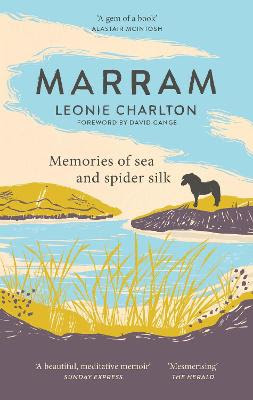
Marram
by Leonie Charlton

Facing a crippling grief, Leonie Charlton recommits to her life by trekking the Outer Hebrides with her best friend and two ponies. But her plans fall off course as she is forced to acknowledge that this is not something she can easily run away from. Ingratiating herself in the Hebridean landscape might just be her saviour. A heart-breaking, life-affirming and wonderful memoir, perfect for fans of The Salt Path and The Outrun.

Marram - Mr B's Emporium (mrbsemporium.com)


Diary of an Invasion
by Andrey Kurkov

Though best known for his satirical novels, since the annexation of Crimea in 2014, Andrey Kurkov has been documenting the human face of Ukraine’s increasingly volatile socio-political climate. Written from the war-torn Kyiv countryside, Diary of an Invasion contemplates Pushkin, hipster bookshops, and Putin’s dreams of a new USSR in spare, captivating prose. This is an urgent and essential book penned from the front lines of these unprecedented times.

Diary of an Invasion - Mr B's Emporium (mrbsemporium.com)

The Nutmeg’s Curse
by Amitav Ghosh

An accessible and wide-ranging work of environmental philosophy, The Nutmeg’s Curse charts the links between thought and policy from the colonisation of the Banda Islands in the 17th Century to our current climate, political and social crises. Ghosh has an unmatched ability to present an argument that exists at the convergence of various disciplines: combining history, geopolitics, economics, and indigenous storytelling, Ghosh reveals the trajectory we’re travelling along, and presents solutions for correcting our course.

The Nutmeg's Curse - Mr B's Emporium (mrbsemporium.com)


Grimwood by Nadia Shireen

Prepare to laugh your head off…before it gets bitten off! Ted and Nancy are two young foxes who have moved to the strange woodland of Grimwood, a place filled with some very unique animals. Treebonking squirrels, an over-dramatic duck, a murderous eagle, a DEFINITELY NOT CUTE rabbit with anger issues, and many more make up this wild and wonderful place. But Ted and Nancy’s happy new life is about to come under threat when the dastardly mayor of neighbouring Twinklenuts reveals his plans for the forest. Cute, hilarious and full of mischief, the Grimwood series is guaranteed to leave the whole family in fits of laughter.

Grimwood: Let the Fur Fly! - Mr B's Emporium (mrbsemporium.com)

The Trio by Johanna Hedman

Thora, August and Hugo are students from different worlds, whose lives will become magnetically entangled over two euphoric Stockholm summers. When many years have passed and estranged Hugo is visited by August and Thora’s daughter, difficult questions reopen old wounds, and past and present become blurred. The Trio is an intimate portrayal of friendship, jealousy and regret, a perfect read for fans of Deborah Levy and Andre Aciman.

The Trio - Mr B's Emporium (mrbsemporium.com)


Vine Street by Dominic Nolan

London, 1935. Sergeant Geats knows Soho like the back of his hand. He knows the jazz clubs, the wise guys, the prostitutes and pimps. And he ain’t afraid to crack a few skulls to keep them all in line. When a working girl is found strangled, nobody seems to care, but Geats knows better. An epic, savagely brilliant crime novel with a stunning sense of place, perfect for fans of Michael Connelly and James Ellroy.

Vine Street - Mr B's Emporium (mrbsemporium.com)


Unwell Women
by Elinor Cleghorn

For centuries, medicine has been the realm of men; funded by, researched for, and catered to. This timely book unpacks the myriad ways that women have been demonised and their bodies traumatised, and the incredible ways in which they have fought back. Cleghorn makes a compelling case for demanding change in a realm which has led to countless misdiagnoses, habitual blame and a criminal lack of funding for research into women’s health.


The Haunting Season
by various authors

A warm blanket, candlelight and a cup of something hot are required for reading this dark and ghostly collection of winter tales. Let the gothic masters sweep you through the Yorkshire Moors, tantalise you with the mysteries of a glittering London market, and ensnare you in the legacies of an ancient family mansion. With stories from Kiran Millwood Hargrave, Jess Kidd, Andrew Michael Hurley and many others, you’ll know you are in good hands.


Monday, 11 April 2022

Independent Bookshop feature No.15. Alexis Thompson of The Woodstock Bookshop: THE GAELIC GARDEN OF THE DEAD by MacGillivray


"This will haunt you, if allowed to do so ..."

Alexis Thompson is a writer and bookseller based in Oxford. He has led poetry walks in London on the Modernists for the International Times and New River Press, curated and read in London and Edinburgh and was writer-in-residence with The Parlour Collective. He recently completed an MSt in Creative Writing at Kellogg College, Oxford and has had fiction and poetry published in MONK and the New River Press. In 2020 he was the editor of Blackwell's Poetry #1. He is currently finishing a debut novel, titled A Pit of Clay.

As of 2022 he is manager of The Woodstock Bookshop, noted for its yearly poetry festival under its previous owner Rachel Phipps. The Woodstock Poetry Festival is set to return in November 2023 for the first time since 2019.


'I open with a mouth of burning coal', writes poet MacGillivray in this astonishing third collection. Here we have the Gaelic alphabet of trees which, for those of you who don't know, assigns all the letters of the Highland alphabet to specific trees and this gives Book I of The Gaelic Garden of the Dead its unique structure.

But The Gaelic Garden of the Dead is a trilogy; Books II and III deal with a sigil sequence and sonnets to Mary Queen of Scots, consecutively (a discussion of the sonnets was featured on BBC Radio 3 The Verb: listen here) and the whole collection unfolds in your hands like an arboreal haunting; a lament to the loss of an ancient language - particularly relevant now, as Scottish Gaelic is predicted to become extinct by 2031 - and the beleaguered fate of a great queen. Although this sounds far-stretching, in MacGillivray's hands, the interwoven historical with the poetic potency of the book is both striking and what a reader might seek out as tonic from the observational, minimalism of most mainstream contemporary poetry.

'Love’s eyes are colourless:/ a motive for moving through underworlds' asserts MacGillivray, summoning Jean Cocteau, T.S. Eliot and deeply embedded folkloric Scottish roots: there are psalms for lightning; salt, snow and sleep coronachs (the third part of a funeral lament); and references to old Gaelic customs: 'Walking to the heartland of the Gaelic alphabet/ where spirit multitudes sleep rough/ among the bales of slaughtered wheat,' I drank my lover’s blood', a reference to the Gaelic tradition of drinking a little of the blood of a loved one who has been killed in battle. Here we have not only an arboreal meditation on the nature of these trees (ranging from Ailm 'A' for pine, to Quert for 'Q' which is apple - here described under the 'School of the Moon': a traditional name for the teaching of cattle rustling, done at night.)

As with her other collections, the experience is not only of potent poetics but is educative, while never feeling didactic. In reading the book, one feels enhanced as if by secret or lost knowledge into this Gaelic otherworld. Book II, A Crisis of Dream, operates as a visual gateway of pattern-poem sigils between Book I and Book III.

The reader is then confronted by In My End is My Beginning, a line better known from Eliot’s Four Quartets, having been borrowed from Mary Stuart. Book III presents a 'descent' of thirty five sonnets - one for each step Mary descended on her way to execution, which are then 'chewed up' (here a nod to the cut-up technique of William Burroughs and Brion Gysin) for the fifteen minutes Mary's mouth was said to have moved, after her decapitation. The result is deeply moving: the sonnets were composed in situ in many of the sites Mary lived in and at Fotheringhay, on the anniversary morning of her execution. Replete with rich imagery summoned from Mary's own poetry (we learn she was a part of Ronsard's poetic circle 'The Pleiades'), MacGillivray's response and elaboration to Mary’s death and writing evidently comes from a place of deep research and profound sympathy for Mary’s plight, not merely as a historical figure, but as a human being:

I dreamed of a sawdust chandelier
whose crystals were drops of driftwood dredged
from all the world’s shipwrecks: god’s figurehead,
and it swung, as I dreamt, ever closer to my fear,
softly releasing sweet incense into the clear,
black night air, as that great barge carries the dead,
but instead of my death, it passaged my dread
and the water it ploughed comprised of one tear.

This formal descent of sonnets is then wildly torn up: 'my bled out, love flushed, young, wild skeleton!' for the counterpart to The Descent; The Blade and in both sequences, Mary emerges as an impassioned poet which reflects something of her true personality.

This is an ambitious and electric collection - a far cry from the usual - and will haunt you, if allowed to do so.

For fans of Barry McSweeney, William Burroughs and Sorley Maclean.

The Gaelic Garden of the Dead is published by Bloodaxe Books.  


Monday, 13 December 2021

Independent Bookseller Feature no 14: Claire Grint of COGITO BOOKS, Hexham, chooses EXPECTATION by Anna Hope


"Beautifully realised characters, elegant, emotionally direct prose and clever fluid structure." 

"Cogito Books has been in my family since we first opened our doors in 2001. I became much more involved with the shop after graduating, so it was a natural transition for me to take over the business when my Dad retired. With a small but dedicated team of three experienced booksellers, we put the customer at the centre of everything we do – and we love nothing better than sharing recommendations and talking about books.

A family business from the outset, Cogito Books was established by my Dad back in 2001. I joined him in 2005, then  took over when he retired in July 2012. I love books and people, so running a bookshop has always been a perfect combination for me. The relationships we build with customers are absolutely central to what we do – and nothing beats the feeling of helping someone to find the perfect book and hearing that they enjoyed it.

What makes our bookshop unique? The relationships we build with customers are absolutely central to what we do – from discovering their reading tastes to knowing the details of their lives. We’re lucky to be at the centre of a thriving community, running three monthly book groups in addition to author events and weekly storytelling sessions for children. Customers often comment on the sheer range and breadth of books we stock; being independent, we’re lucky to be able to get behind books we love and to provide a curated, personalised experience." Claire Grint


See more on our website.

This novel is utterly luminous; the lives of friends Cate, Hannah and Lissa leaping straight out from the page and resonating in the very deepest sense, as we’re invited to recognise and celebrate the experiences which mould us as human beings. The novel pivots around the year 2010, where we find Cate struggling to cope with new motherhood and her in-laws, Hannah undergoing gruelling IVF treatment and Lissa beginning to think that she’s running out of time to achieve success as an actress. The past is then woven into the present, with subsequent sections diving back through the years to reveal more about the roots of the women’s friendship; the experiences which created it and those which are beginning to fracture it on both subtle and dramatic lines. 

The issues in the novel are ones we can all recognise; examining friendship, feminism and family in our complicated century. The beautifully realised characters, elegant, emotionally direct prose and clever fluid structure create a portrait of lives both full and vivid yet tinged with the melancholy of regret. The novel tells of chances not taken, of mistakes made; of the gap between expectation and our often painful, compromised yet ultimately precious reality.

Expectation is published by Transworld.

Personal book recommendation

Team 20th birthday celebration: Claire Grint, Hilary McCallum and Jenny Tattersall


Monday, 31 May 2021

Independent Bookseller feature no. 13: John Newman of The Newham Bookshop, IN MEMORY OF MEMORY by Maria Stepanova, translated by Sasha Dugdale


"Part travelogue and part philosophical, social and historical enquiry, written with intelligence. wit and great perceptiveness."

John with colleague Vivian Archer
The Newham Bookshop was established in 1979 by local parents as part an educational charity, as a non-stigmatising gateway to literacy and numeracy support for adults and a source of income for the various projects. We have always been underpinned by values that are inclusive and which celebrate diversity. THE focus is on multiculturalism - valuing everyone and learning from each other in a vibrantly diverse part of East London. We are community-focused, supporting local and London-wide events, conferences and festivals.

I've personally been involved with the shop since the mid 80’s, first as an employee in 1989, then children’s buyer. Vivian Archer, manager since 1987, encouraged me to return to bookselling when John and Jean, stalwarts of the children’s shop, retired. I have never regretted the move for one moment and despite the almost ceaseless changes within the industry I never ever wake up reluctant to go to work! 

We've been supported by many authors over the years, with regular events and signings. One of our earliest and most important supporters was the late writer and compiler of oral histories Gilda O’Neill, who was always generous with her time and never missed an opportunity to point people in our direction. Benjamin Zephaniah and Michael Rosen have also been hugely supportive, giving us the confidence to develop the events which are now integral to our business. More recently we've enjoyed working with a host of locally-based authors, including Courttia Newland, Onjali Q. Rauf, Salena Godden, Irenosen Okoji, Vaseem Khan and Luan Goldie. It's a must for bookshops to cultivate relationships with authors and illustrators and develop ways of working together.

During these periods of enforced isolation over the last fourteen months I have found myself slowing down and as I have adapted to having less choice about how I spend both my working and social life. It has also occurred to me that I have rediscovered a sense of freedom to do two things I have not immersed myself in as thoroughly since childhood, namely being outside in nature and being inside with a book. I have had so much time to walk, read and reflect on both of these activities without distraction for long periods and it has been both a solace and a boon in these sad and difficult times. Suddenly books that I might have put aside to read later were being read and digested.

Into this unexpected space I received a proof copy of this particular book and I knew I wanted to revisit it when I was kindly asked to submit a review as I had found it both stimulating and engaging for a number of reasons. As a lover of books, it is difficult not to be drawn to Fitzcarraldo Editions, an imprint that takes its name from the typeset it uses and which houses pages between blue or white covers which just to hold is an aesthetically pleasing experience.

I studied history as an undergraduate in the late 1970’s and within this I had also taken a course on the Emancipation of the Jews in Europe taught by the late Chimen Abramsky. At the same time, I knew little about the day to day lives of Russian Jewry in the late Tsarist and Soviet periods. Stepanova’s family lived through and ultimately her branch of her family survived these times although others were victims of Pogroms and the Holocaust itself. How they did so is revealed through shared memories, correspondence and other artefacts.

The book began in the author's mind when aged ten but the major impetus came when the author engaged with the contents of her late Grandmother's Moscow apartment which provided links to a journey across time and place to locate members of her family and the worlds they inhabited. What follows is part travelogue and part philosophical, social and historical enquiry written with intelligence, wit and great perceptiveness.

Stepanova, in partnership with her English translator, has created a wide ranging, beautifully written exploration of a family history which links to major events and social history in Russia and parts of Europe where her ancestors and their descendants studied and made lives for themselves over the course of the Twentieth Century. There are enlightening sections on the large numbers of Russian women, including her own great grandmother, who studied medicine in Paris before the First World War as well as a son’s moving letters to his mother from the Siege of Leningrad. Stepanova seems to question how does one put these lives into the context of their times and how do we know whether in relation to Post Memory if “things were better back then”

W.G Sebald is something of a torchbearer as Stepanova introduces links to other personages and their artistic legacy which often coincide with my own interests and preoccupations as does the writing of Sebald himself. These memorably emerge as essays within the book taking in themes which include the self-portraits of Rembrandt and photographer Francesca Woodman and the art of Joseph Cornell. Perhaps most movingly, Stepanova revisits Charlotte Saloman’s haunting “Life? Or Theatre” a work that I first encountered when I saw some of the original paintings in Amsterdam in 1988. The essays had me turning to my bookshelves and Googling images of the works under discussion

Anecdotes are many and I have no space to share them here but they seem to reveal as much about the human condition as anything else and highlight the impact of family secrets and links to personal histories we can perhaps all identify with. What survives does not always link us reliably or definitively to the past as Stepanova herself discovers. “Here is time passing, the human is washed away but objects keep their outline” Maybe it is the tangible things that matter most. I certainly think so as although I have my memories and photos aplenty I am best able conjure up one of my own grandmothers each time I use her bone-handled tomato knife.

In Memory of Memory is published by Fitzcarraldo Editions 2021

Read more independent bookseller features:

Books and Ink, Banbury (now Winchcombe)


Monday, 5 April 2021

Independent Bookseller feature No.12: Madelaine Smith of P&G Wells, Winchester. HER STORY NOT HIS STORY


"None of these books is a history book. Facts, as Kate Grenville admits, have been ‘slithery’ in the hands of the authors who have used what is known to tell a story set in a moment in time."

P&G Wells on College Street in ​Winchester, is possibly the oldest bookshop in the country having traded on the same spot, though under different names, since at least 1729. Tucked away in the streets to the south of Winchester Cathedral the shop offers an eclectic selection of local interest, adult fiction / non-fiction, children’s, teen and YA books as well as stationery and cards.

New Manager Steve Scholey took over in March 2020 and promptly had to close the shop due to Lockdown restrictions. The team have used the time well working on refurbishing and rearranging the shop at the same time as supplying books via click and collect. Steve has regularly been out on his bike to deliver to our customers. 

Madelaine Smith first started selling books at the age of eight when she set up a secondhand bookstall
outside the family home in Sydney. One way or another she has been a bookseller ever since.

I read quite widely and don’t consider myself a fan of any particular genre. I do have a few favourite authors who I return to again and again but also love discovering new writers. Looking back over the books I have read over recent months I was surprised to see just how many books I had read by women authors, and more particularly that I had read quite a number of historical fiction titles which had as their central character a woman or several women. What they had in common was the fact that greater or lesser known incidents from history were being retold from the point of view of a woman. Her story not his story.

I’ve known the story of Shakespeare’s son Hamnet since I was a child (I don’t quite know how... I come from a theatrical family... I had a soft toy cat called Hamnet!) and although Maggie O’Farrell’s wonderful Hamnet is nominally about the child it is really the story of the mother, Anne Hathaway, known throughout this book as Agnes.

Told mostly as the story of one summer’s day in 1596, the day on which Hamnet’s twin Judith falls ill with the plague, the story slips back and forth into the lives of Agnes and Will; how they came to be together, how their marriage, brought about by Agnes’s pregnancy, was an escape for both of them. Central to the novel though is the loss of their child, the deep unfathomable grief that this brings and the different ways Agnes and Will live with their grief.

A pregnancy also sets the lives of the characters in Kate Grenville’s A Room Made of Leaves on their future path. Curiosity leads 21 year old Elizabeth Veale to give up what she had been warned all her life to protect. John MacArthur, her flattering seducer marries her but soon it is clear that it is an unsuitable attachment. John’s ambition takes them to the new colony of New South Wales where he hopes to make his fortune.

Based on the real life story of John MacArthur who every Australian schoolchild learns was the ‘father of wool’, pioneer in the great staple product of Merino wool, A Room Made of Leaves puts Elizabeth, and her life at Elizabeth Farm* at the centre of the story where previously it was really only John who was given credit. I have read two of Grenville’s previous explorations of early Australian life The Secret River and The Lieutenant which were both very male-character-centred. There were so few women in the very early days of the Australian colony but they too have a story to tell. One thing I felt was missing was any real sense of how very difficult life must have been in the late eighteenth century New South Wales especially for a woman brought up in comfort. The heat, the dust, the fear for your children, the overwhelming difficulties of this new life didn’t really come across.

The voyage to Australia in Dangerous Women by Hope Adams gives a better indication of what the life of convict women being transported to the Van Diemen’s Land penal colony was really like in 1841; cramped, overcrowded, unclean, unhealthy. Based on a real journey this book really gave me a sense of the fact that so many women were transported for very petty crimes. Acting out of hunger or desperation they ended up being sent to the far side of the world with no possibility of ever returning ‘home’. My own great, great, great, great grandmother was condemned to death for stealing a hat. The sentence was commuted and she was transported to Tasmania in the very early days of this penal colony. Her small daughter joined her on the voyage but died on the way and was buried at sea.

Miss Austen
by Gill Hornby shines a light on a woman whose life was much more comfortable though still for the most part ruled by financial insecurity. Cassandra Austen lived for nearly another 30 years after her sister Jane died and was in many ways the guardian of Jane’s reputation. Miss Austen set in 1840 focuses on an elderly Cassandra and her desire to find some letters that Jane wrote many years earlier. Cassandra is known to have destroyed a number of Jane’s letters and of course we will never know what was in those letters or why Cassandra felt the need to destroy them. This reimagining weaves facts and fiction together exploring the story of Cassandra towards the end of her life and revealing details of the Austen sisters’ lives and romantic disappointments, and above all their love for each other.

None of these books is a history book. Facts, as Kate Grenville admits, have been ‘slithery’ in the hands of the authors who have used what is known to tell a story set in a moment in time. The fact that all the stories do have some basis in the truth, are based on real people in real places is a perfect start for anyone interested to find out more about their life and times.

*Elizabeth Farmhouse was the very first ‘Historic House’ I visited when my 3rd form history class went on a school excursion. I remember very little about the house other than the fact that we had to remove our shoes when we walked inside as the floorboards were so old.

Hamnet is published by Tinder Press.

A Room Made of Leaves is published by Canongate.

Dangerous Women is published by Michael Joseph.

Miss Austen is published by Century.