Showing posts with label Val McDermid. Show all posts

Monday, 19 December 2022

Virtual Costa Book Awards Part 1: Adèle Geras and guests


It's my great pleasure to introduce Writers Review's Virtual Costa Book Awards. We were very sad indeed to hear that the real life Costa Book Awards are no more, so we decided to set up our very own Virtual Awards. Over the next three weeks, we're putting up recommendations for the awards from some friends of Writers Review. You'll find my choice at the end of this selection from some wonderful writers. I hope they lead you to read lots of books you will enjoy.

Merry Christmas from us all!  Adèle Geras

KATIE FFORDE nominates Jane Bailey's Sorrow isn't Good Enough for the Virtual Best Novel Prize:

Jane Bailey's writing is clear and easy to read and we instantly connect to the heroine, Stephanie, both in the present day and in the past. Few people write from a child's point of view as well as Jane and the little girl she describes, desperate for love, aware of life's unfairness but accepting it nonetheless, is entirely convincing.

With her we travel back to the Sixties, a simpler, crueller time for children. No wonder there is a darker side to this coming of age story. We learn about the tragedy on the first page: the notorious murder of Stephanie's best friend. But friendship is complicated; not what it seems from a distance.

This is not always a comfortable novel but one I couldn't turn away from. Jane Bailey is a writer who should be known to more people. She is so good.

VAL McDERMID nominates Ali Smith's Companion Piece for the Virtual Costa Novel Prize:

This novel is the coda to Smith's Four Seasons quartet. She carries the reader along in a broad and diverse narrative sweep and produces a vivid portrait of contemporary life. She writes beautifully but although she shines a light on the worst things we do to each other, her work is imbued with hope. Somehow, while firmly rooted in the real world, she can be surreal and dreamlike at times.

Companion Piece is intelligent, compassionate and often very funny. I found it exhilarating. With her books, when I reach the end I always want to go back to the beginning and do it all again. But with Companion Piece, I felt compelled to go back to Autumn, the beginning of the Seasons quartet and read all five again. And I'm glad I did.

WENDY COPE nominates My Phantoms by Geraldine Riley for the Virtual Costa Novel Prize:

I've just finished this. It is a brilliantly readable study of the relationship between a daughter and her sad, inadequate and often infuriating mother. Much of the time the daughter distances herself and is sometimes unkind. When she agrees to see her mother and to help her when she's ill, her attempts at forming a relationship more satisfying to both of them meet with little success. Their encounters are often funny as well as painful. The book is only 199 pages long and it left me wanting more.

SOPHIE HANNAH nominates Ignore it all and hope it goes away by Nic Aubury for the Virtual Costa Poetry Prize:

Ignore it all and hope it goes away
 should win every poetry prize going. It is wise, witty, moving, memorable, and displays prosodic dexterity that one very rarely sees these days. It also has the most wonderful illustrations by genius cartoonist Moose Allain.


MICHAEL ARDITTI nominates Donal Ryan's The Queen of Dirt Island  for the Virtual Costa Novel Prize:

I have been particularly taken with Irish fiction this year, including Audrey Magee's The Colony and Emma Donahue's Haven, but the pick of the crop for me is Donal Ryan''s The Queen of Dirt Island. It tells of three (ultimately four) generations of women in rural Tipperary, whose menfolk are either dead, weak, absent or treacherous. In a series of short, almost self-contained chapters, Ryan tells of family love and loyalty, which endures hardship, prejudice, illegitimacy and suicide. Opening in the 1980s, both republicanism and a repressive clergy inevitably feature, but the focus is on the domestic, and often fractious but always nurturing home that the women share. Ryan's writing is by turns sharp, funny, lyrical and tinges with a winning melancholy, and when, in a metafictional twist, we learn that it's also the writing of Saoirse, the novel's central character, we can only cheer at her triumph over the odds.

AMANDA CRAIG nominates Sally Gardner's The Weather Woman for the Virtual Costa Novel Prize.

The Weather Woman 
reads like Georgette Heyer crossed with Angela Carter, being historical, magical, gorgeously written and pulsing with romantic energy. Its heroine Neva is born with an extraordinary gift: she can predict the weather at any given date. In Regency England, when society is obsessed by gambling, this is a gift that can make or break immense fortunes, so her clockmaker father conceals her in an automaton.

However, Neva is also thirsty for an education, something forbidden to women. She dresses as a man, and soon falls in love with Henri, a charismatic young French count who shares her poverty and her undeclared passion. From its opening at a Frost Fair to its climactic struggle against villainy, it is packed with drama, but it also contains a beautiful description of what making love as equals should be like.

JUDITH LENNOX nominates This is not a Pity Memoir by Abi Morgan for the Virtual Costa Biography Prize:

Screenwriter Abi Morgan comes home from buying sushi to find her partner Jacob unconscious on the bathroom floor. His seizure marks the onset of a devastating illness. He is put into an induced coma from which he emerges months later, fragile and unravelled, unable to recognise Abi, convinced she’s an imposter.

The everyday continues – taxes must be paid, scripts completed, sometimes at midnight - though life is now irrevocably divided into BC (before collapse) and AD (after disaster). Morgan’s memoir has the urgency of a thriller and is written with honesty and humour, brilliantly describing her fluctuating emotions and the exhaustion of hope and despair. Though the story is tragic, it’s never depressing, as Morgan learns to live for ‘daily glimmers of happiness,’ and they emerge into a strange new world, traumatised and altered but held together by love.

ADELE GERAS nominates The Whalebone Theatre by Joanna Quinn for the Virtual Costa First Novel Prize:

The Whalebone Theatre is a most accomplished debut. It's a family story starting before the Second World War and covering many events familiar from other novels. What marks this book out is the characters of the siblings at the heart of the action, brought together to deal with everything the world can throw at them. The eponymous Theatre   (the remains of a carcass washed up on the Devon coast) becomes the heart of the several interlocking stories.  I love "let's do the show right here" novels and this is a hugely enjoyable example of the genre.


Click here for Part 2 ...

Monday, 3 January 2022

Awards Season! Part 3


Here's the third and final part of our virtual awards. Our contributors give a prize of their own choice and their own naming.  As usual, too, at this time of year, we give our grateful thanks to all the contributors who generously give their time, insights and enthusiasm to the blog. We couldn't keep going without you!

Paul Dowswell's prize for Book by an author I’ve just discovered goes to 
The Girl with the Louding Voice by Abi Daré.

I’m not an adventurous reader. My most recent good reads were Geoff Dyer’s Another Great Day at Sea, and David Mitchell’s The Thousand Autumns of Jacob de Zoet – both magnificently written and both entirely mainstream. But a good friend, who reads widely, recommended Daré’s book, and I bought it on a whim.

Narrator Adunni is a 14-year-old Nigerian girl, married off by her father to Morufu, an old man who, she tells us, looks like a goat. Adunni’s education comes to an abrupt end. She, wanting to become a teacher, is devastated. The book has the makings of a grim misery memoir but it is actually engaging, heartening and funny.

Daré brilliantly captures Adunni’s idiosyncratic Nigerian English, and I read on, transfixed as she pits her wit, intelligence and cunning against the terrible hand she has been given. Best of all, Daré conjures a world I’ve never imagined before – something all the best fiction should do.

Graeme Fife
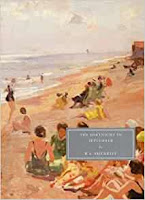
: No prizes, but R C Sherriff's The Fortnight in September, an unexpected marvel, took me aback. Recommended by a dear friend and by an author whose output is dominated by that silly First World War play, it's beautifully observed, understated in its telling, acutely detailed and, albeit the story is, on the face of it, barely dramatic, it tells volumes about human relationships, how they are shaped, interact, develop, reveal themselves in strength and weakness. It's the work of an author who reflects deeply and strips away all flashiness of expression in an admirable quest for directness and truth. (Full review coming next week ... )

There are other books which have charmed and beguiled me this year. The novels of  J B Priestley richly deserved revisiting. Hadley Freeman's House of Glass is utterly bewitching and beautifully crafted. The story it tells not only compelling but necessary. Emily Wilson's translation of Homer's Odyssey is a tour de force.

Val McDermid: 
The McDermid Medallion for the book that made me cry more than once goes to Sarah Hall's Burntcoat. It’s an extraordinary narrative about love and art in a time of pandemic. It’s not our particular plague but it deals with the wrenching pain of loss, the divisive othering, the despair and the moments of hope we’ve all lived with these past months. But it’s also astonishingly uplifting, joyous even, not least because Sarah Hall writes of the physicality of love as well as its emotional impact. Her prose is engrossing -- dynamic, rich and authentically emotional. I read Burntcoat over two days, and I resented setting it aside to deal with the obligations of my own life. It moved me to tears and at the end, I felt as drained as if it had been a tale of grief and glories told by my best friend.

Ignaty Dyakov-Richmond
's award for A book I will keep on my desk and recommend to my clients over the next few years goes to How To Live by Professor Robert Thomas

At a time when we seemingly depend on pills and vaccines as never before, Professor Robert Thomas, a practising consultant oncologist and professor at the University of Cambridge, refreshingly reassures us that there is plenty we can do ourselves to sustain our health and wellbeing. With over 497 cited sources, it is still a very straightforward read and due to its structure can be used as a reference book too.

So many thoughts in the book resonate with me and provide answers to the current challenges we face: from lowered energy to the pressure on the NHS to the ever-increasing taxes we pay for healthcare, and to climate change. In the words of Professor Thomas, “The more I delve into the research from around the world, the more convinced I am of the influence of lifestyle over the genes we are born with."

Diamond Dystopian Award
, awarded by Jane Rogers for the best dystopian book of the year, goes to The Animals in That Country by Laura Jean Mckay (Scribe)

It’s already won a bunch of other prizes, including the Arthur C Clarke award, although I wouldn’t call it Sci Fi. Set in a very real Australia, it features a pandemic which causes humans to understand animal communication, a dignified dingo named Sue, and a foul-mouthed, alcoholic granny with no inhibitions. What the animals say is totally unexpected and often devastating – many humans are simply driven mad. But granny Jean and dingo Sue set off on the mother of all road trips to rescue Jean’s grand-daughter, and I defy anyone to put this book down unfinished. The tears in my eyes at the end were both of laughter and sorrow. The most original book I’ve read for years.

Linda Newbery
presents the Newbery Notable Award for Seasonal Uplift to The Midnight Library by Matt Haig. We've all wondered about the alternative lives we could have led - if only we had done something differently, or better. What if we had the chance to sample them, and live in them? It's an intriguing premise that's cleverly handled, as suicidal Nora finds herself in a library stacked with books that are portals to the infinite lives she might have lived. With a nod to It's a Wonderful Life in its focus on how small things in our lives can affect others, this is an ideal read for the turn of the year when we're all likely to be reflecting on what has, hasn't, and could have happened, and what lies in store. (See Julia Jarman's review.)

Sally Prue: The Glacier Award for the Slowest Book is presented to Nathaniel Hawthorne for 
The House of the Seven Gables.

Slowness in a book is not generally celebrated, but The House of the Seven Gables is a book so glacial, so majestically constipated, as to be mesmerising.

It begins as it means to go on, with a long (well, it seems long) description of the generations who lived in the house of seven gables (seven? Surely several of those must be otiose?) before the action (sorry, wrong word) begins.

I read this book years ago, and was very soon hypnotised by it. This means, sadly, that my memories are rather vague. There’s a death-dealing curse, and much gradual decay, and, best of all, surely the longest, slowest, and most incremental death-scene in the history of literature.

The House of the Seven Gables is gloriously ponderous, quite magnificently leaden.

And a simply extraordinary read.

Thanks to all those who've been so generous with their virtual awards! Normal service resumes next week - follow us for a great reading recommendation every Monday.

Monday, 26 July 2021

Fifth Anniversary special guest: VAL McDERMID and A DARK MATTER by Doug Johnstone


"The set-up sounded like a delicious prospect ... And so it proved. It had me at the first line."

Val McDermid
has sold over 17 million books to date across the globe and has been translated into more than 40 languages. She is perhaps best known for her Wire in the Blood series, featuring clinical psychologist Dr Tony Hill and DCI Carol Jordan, which was adapted for television starring Robson Green and Hermione Norris. Her most recent TV series Traces aired in a BBC1 primetime slot in January of this year, and a second series is currently in production, as is ITV’s adaptation of Karen Pirie, based on Val’s cold case detective of the same name.

1979, the beginning of a new series for Val, featuring journalist Allie Burns, is published on 19th August. She has also published Resistance, a graphic novelisation of her critically acclaimed radio drama, illustrated by Kathryn Briggs, this May.

Val was chair of the Wellcome Book Prize in 2017 and has served as a judge for both the Women’s Prize for Fiction and the 2018 Man Booker Prize. She is the recipient of six honorary doctorates and is an Honorary Fellow of St Hilda’s College, Oxford. She is Visiting Professor in the Centre of Irish and Scottish Studies at the University of Otago in New Zealand. She is an experienced broadcaster and much sought-after columnist and commentator across print media.

Val is also lead vocalist with The Fun Lovin' Crime Writers, possibly the only band made up of crime writers ever to play at Glastonbury!   

McDermid fans - what's your favourite title? Tell us in the comments!

When I first heard about Doug Johnstone’s proposed trilogy of novels about three generations of women running a funeral home and a private eye agency, I couldn’t wait to read it. I’ve long been an admirer of his spare and insightful prose, and the set-up sounded like a delicious prospect.

And so it proved. It had me at the first line: ‘Her Dad took much longer to burn than she expected.’ Not, it turns out, the aftermath of a murder, but the garden funeral pyre of undertaker Jim Skelf.

A Dark Matter has its origins in the six months Johnstone spend as writer in residence in a funeral home in Edinburgh, where this book is set. He spoke to as wide a range of employees and employers as possible, and that gives the book its authenticity and authority. There’s nothing gruesome or voyeuristic here; but we never doubt that he knows what he’s talking about. It’s dark, it’s funny, it’s emotionally intelligent and it’s a page-turner too.

The triple-stranded plot revolves around the three women of the Skelf family. (‘Skelf’ is a Scots word that means either a thin splinter of wood or a troublesome person.) Dorothy, the matriarch, is a transplant from California who married Jim, the owner of the long-established family business. A healthy 70-year-old, she deals with her grief and stress behind her attic drum kit or on her yoga mat.

For her daughter Jenny, Jim’s death feels very close to the final straw. She’s lost her job as a journalist and her marriage imploded afer she discovered husband Craig was cheating on her. She can’t afford the rent so she has no choice but to move back home and take over her dad’s role in the business, nursing her bitterness to keep it warm.

The youngest Skelf woman is Hannah, 20 years old, studying quantum physics at Edinburgh University, in a lesbian relationship with Indy who works in the funeral home. Bright and sparky, her light has been dimmed by her grandfather’s death.

Of course, in fiction, a death in the family always opens the door on secrets and lies. Jim’s ashes are barely cold when Dorothy is stricken by the discovery that her late husband had been making secret payments to another woman for years. It’s hard to resist the conclusion that her happy marriage was nothing more than an edifice, but she’s determined to get to the truth.

Jenny meanwhile has taken on what appears at first to be a straightforward PI case of establishing adultery, an investigation that has painful undertones every step of the way.

And Hannah’s grief is made all the sharper when her best friend disappears. As she tries to unravel what happened to Mel, she finds a shocking trail of dark revelations.

The three narrative strands are expertly woven, building tension that never lets up on a journey of discovery that’s as much about three women learning about themselves and each other. The dynamic between the three generations is all too credible and never sentimental. Few male authors write women really well, but Doug Johnstone has created three very different but credible female characters who all resonated with me in their very different ways.

The final plum in the pudding for me is the setting. This is not the Edinburgh the tourist sees – it’s a living variegated city and Doug Johnstone opens doors and windows on a capital we don’t always see. He’s a writer whose books always have a strong sense of place, but never more than in this trilogy. The good news is that the second book in the series, The Big Chill, is already out, and the third, The Great Silence, will be published in August 2021.

A Dark Matter is published by Orenda Books.


Monday, 17 April 2017

OUT OF BOUNDS by Val McDermid, reviewed by Celia Rees


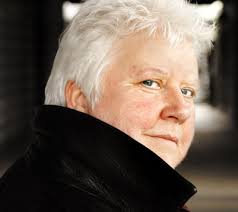
Val McDermid
I've been a huge Val McDermid fan since her Women's Press, Lindsay Gordon days. She was one of a number of women writers in the '80s who were taking crime genre in a new direction, putting women at the centre of the action, not as victims but as detectives, or in Lindsay Gordon's case,  journalists. These women were resourceful, clever and fearless. Their personal lives were often complex, even chaotic. That didn't interfere with the dramatic tension of the novels but it allowed these writers to explore gender issues, the position of women in society. The crimes they investigated were often crimes committed against women: domestic violence, rape, sexual assault and murder but having women in the position of investigator brought a different kind of attention to crimes against women, brought them into sharper focus, looked at male motivation and drew attention to how shockingly common these crimes are.  I found writers like Val inspirational. I was a teacher at the time with ambitions to write. I'd  always read crime fiction and these writers were a revelation. I remember thinking, why not YA? (or Teenage Fiction as it was known in those days). This was what I wanted to write and I didn't see why I shouldn't fuse the two. My first novels were YA thrillers with girls driving the plot. 

Out of Bounds is Val McDermid's 30th novel. Her heroine is Detective Chief Inspector Karen Pirie,  a cold case investigator with a penchant for artisanal gins and the kind of intelligent, independent frame of mind that inevitably causes clashes with her superiors. The unsolved cases that she investigates, suddenly sparked into life by new discoveries, might have been committed decades ago. The investigations are difficult, complex, often baffling, but Pirie is dogged in her pursuit of the perpetrator, or perpetrators, driven by the desire to bring justice for the victim, no matter how long ago the crime was committed. 

Her new novel sees DCI Karen Pirie suffering from a personal tragedy, the loss of her partner that occurred in a previous novel. She is in a difficult, dark place, unable to sleep, she roams the city. McDermid's novels have a very fine sense of place based in the writer's intimate knowledge. She knows her places and she knows her people. Her ear is pitch perfect. Her characters, major and minor are deftly drawn and vivid. 

Out of Bounds begins with a group of boys stealing a Range Rover. The teenage joy riders end up three dead, one in a coma. A routine DNA test brings Pirie into the equation.  The DNA sample seems to be the solution to a 20 year old murder case. On the surface, it seems open and shut but nothing is straightforward in a McDermid novel. Pirie and her assistant are led into an increasingly puzzling and complex maze of familial connections, none of which make surface sense. 

Meanwhile, a conversation over a gin or two with an old colleague alerts her to a mystery death which is likely to be dismissed a little too quickly as suicide.  A cold case aspect allows her to take an interest and she is drawn into an increasingly dangerous political intrigue involving powerful forces determined to keep hidden what really lay behind a terrorist bombing two decades ago which had been blamed on the IRA. 

Both cases twist and turn around each other in an increasingly complex way but Pirie pursues both with characteristic determination to bring justice to those who have been denied it. She allows nothing and no-one to stand in her way and this brings her into conflict, not only with her superiors but with others who will stop at nothing to keep the truth hidden. 

The cold case adds real complexity to the plotting and the need for forensic and painstaking detective work. It also opens up the possiblity of real threat from those who have hidden the truth for decades and want it to stay hidden. Pirie is equal to both, as is her creator. The plotting is faultless, the tension meticulously calibrated to wind to the maximum as the novel progresses. There are no gaps, unlikely leaps or plot holes here, no questionable motivation. Nothing stretches the bounds of belief. Everything makes sense - you just don't know how until the end. With Out of Bounds,  the reader is in a very safe pair of hands.