Showing posts with label Books of the Year. Show all posts

Monday, 19 December 2022

Virtual Costa Book Awards Part 1: Adèle Geras and guests


It's my great pleasure to introduce Writers Review's Virtual Costa Book Awards. We were very sad indeed to hear that the real life Costa Book Awards are no more, so we decided to set up our very own Virtual Awards. Over the next three weeks, we're putting up recommendations for the awards from some friends of Writers Review. You'll find my choice at the end of this selection from some wonderful writers. I hope they lead you to read lots of books you will enjoy.

Merry Christmas from us all!  Adèle Geras

KATIE FFORDE nominates Jane Bailey's Sorrow isn't Good Enough for the Virtual Best Novel Prize:

Jane Bailey's writing is clear and easy to read and we instantly connect to the heroine, Stephanie, both in the present day and in the past. Few people write from a child's point of view as well as Jane and the little girl she describes, desperate for love, aware of life's unfairness but accepting it nonetheless, is entirely convincing.

With her we travel back to the Sixties, a simpler, crueller time for children. No wonder there is a darker side to this coming of age story. We learn about the tragedy on the first page: the notorious murder of Stephanie's best friend. But friendship is complicated; not what it seems from a distance.

This is not always a comfortable novel but one I couldn't turn away from. Jane Bailey is a writer who should be known to more people. She is so good.

VAL McDERMID nominates Ali Smith's Companion Piece for the Virtual Costa Novel Prize:

This novel is the coda to Smith's Four Seasons quartet. She carries the reader along in a broad and diverse narrative sweep and produces a vivid portrait of contemporary life. She writes beautifully but although she shines a light on the worst things we do to each other, her work is imbued with hope. Somehow, while firmly rooted in the real world, she can be surreal and dreamlike at times.

Companion Piece is intelligent, compassionate and often very funny. I found it exhilarating. With her books, when I reach the end I always want to go back to the beginning and do it all again. But with Companion Piece, I felt compelled to go back to Autumn, the beginning of the Seasons quartet and read all five again. And I'm glad I did.

WENDY COPE nominates My Phantoms by Geraldine Riley for the Virtual Costa Novel Prize:

I've just finished this. It is a brilliantly readable study of the relationship between a daughter and her sad, inadequate and often infuriating mother. Much of the time the daughter distances herself and is sometimes unkind. When she agrees to see her mother and to help her when she's ill, her attempts at forming a relationship more satisfying to both of them meet with little success. Their encounters are often funny as well as painful. The book is only 199 pages long and it left me wanting more.

SOPHIE HANNAH nominates Ignore it all and hope it goes away by Nic Aubury for the Virtual Costa Poetry Prize:

Ignore it all and hope it goes away
 should win every poetry prize going. It is wise, witty, moving, memorable, and displays prosodic dexterity that one very rarely sees these days. It also has the most wonderful illustrations by genius cartoonist Moose Allain.


MICHAEL ARDITTI nominates Donal Ryan's The Queen of Dirt Island  for the Virtual Costa Novel Prize:

I have been particularly taken with Irish fiction this year, including Audrey Magee's The Colony and Emma Donahue's Haven, but the pick of the crop for me is Donal Ryan''s The Queen of Dirt Island. It tells of three (ultimately four) generations of women in rural Tipperary, whose menfolk are either dead, weak, absent or treacherous. In a series of short, almost self-contained chapters, Ryan tells of family love and loyalty, which endures hardship, prejudice, illegitimacy and suicide. Opening in the 1980s, both republicanism and a repressive clergy inevitably feature, but the focus is on the domestic, and often fractious but always nurturing home that the women share. Ryan's writing is by turns sharp, funny, lyrical and tinges with a winning melancholy, and when, in a metafictional twist, we learn that it's also the writing of Saoirse, the novel's central character, we can only cheer at her triumph over the odds.

AMANDA CRAIG nominates Sally Gardner's The Weather Woman for the Virtual Costa Novel Prize.

The Weather Woman 
reads like Georgette Heyer crossed with Angela Carter, being historical, magical, gorgeously written and pulsing with romantic energy. Its heroine Neva is born with an extraordinary gift: she can predict the weather at any given date. In Regency England, when society is obsessed by gambling, this is a gift that can make or break immense fortunes, so her clockmaker father conceals her in an automaton.

However, Neva is also thirsty for an education, something forbidden to women. She dresses as a man, and soon falls in love with Henri, a charismatic young French count who shares her poverty and her undeclared passion. From its opening at a Frost Fair to its climactic struggle against villainy, it is packed with drama, but it also contains a beautiful description of what making love as equals should be like.

JUDITH LENNOX nominates This is not a Pity Memoir by Abi Morgan for the Virtual Costa Biography Prize:

Screenwriter Abi Morgan comes home from buying sushi to find her partner Jacob unconscious on the bathroom floor. His seizure marks the onset of a devastating illness. He is put into an induced coma from which he emerges months later, fragile and unravelled, unable to recognise Abi, convinced she’s an imposter.

The everyday continues – taxes must be paid, scripts completed, sometimes at midnight - though life is now irrevocably divided into BC (before collapse) and AD (after disaster). Morgan’s memoir has the urgency of a thriller and is written with honesty and humour, brilliantly describing her fluctuating emotions and the exhaustion of hope and despair. Though the story is tragic, it’s never depressing, as Morgan learns to live for ‘daily glimmers of happiness,’ and they emerge into a strange new world, traumatised and altered but held together by love.

ADELE GERAS nominates The Whalebone Theatre by Joanna Quinn for the Virtual Costa First Novel Prize:

The Whalebone Theatre is a most accomplished debut. It's a family story starting before the Second World War and covering many events familiar from other novels. What marks this book out is the characters of the siblings at the heart of the action, brought together to deal with everything the world can throw at them. The eponymous Theatre   (the remains of a carcass washed up on the Devon coast) becomes the heart of the several interlocking stories.  I love "let's do the show right here" novels and this is a hugely enjoyable example of the genre.


Click here for Part 2 ...

Monday, 25 December 2017

CHRISTMAS ROUND-UP Part 2: Books of the Year chosen by our contributors and ourselves


Happy Christmas! Here are plenty of recommendations to see you into the New Year, and another chance to thank our excellent contributors for making this blog so full and varied. Do tell us in the comments what you've most enjoyed this year.

BERLIE DOHERTY: 

I'd like to recommend Riverkeep by Martin Stewart. It's innovative,
evocative and thrilling, full of strange, interesting ideas and characters, a coming-of-age quest fantasy novel that kept me reading all night long.


Another recommendation would be To The Bright Edge of the World  by Eowin Ivey, also a river quest. The title has a double meaning - the story is set in Alaska, and is about exploration and photography, as well as about human endurance and love. Written in several voices as logs, letters and diary entries, it is completely involving.

CATHERINE JOHNSON:
Why I'm No Longer Talking to White People About Race, by Reni Eddo-Lodge. Thank God for young people! For many of us, light skinned enough to pass, and/or brought up in a time when we had to be grateful for everything and not shout too loud and also remember to work three times as hard as anyone else (you're not white, you're a woman x2) Eddo-Lodge's book is a breath of fresh air. Read it and understand better how structural racism impacts on all of us.

The Girls by Emma Cline is a not entirely perfect first novel, but a great read which I loved for that absolutely pitch-perfect portrayal of what being 14 feels like. On the edge of a world you don't understand but want to rush headlong into, without understanding anything. That intensity of feeling and that impatience to be someone else. It's so worth your time.


ANTHONY McGOWAN:

Keeping On Keeping On, the latest volume of Alan Bennett’s diaries and other prose. I find Bennett endlessly funny and moving. The book is enormous, but I read it in a couple of days, constantly struck by the perfection of the writing. In some ways The Art of Failing is my attempt to ‘do’ Alan Bennett.

Richard Beard’s The Day That Went Missing, tells an impossibly sad, indeed tragic, story of family loss, in prose of restrained elegance.

It took me almost a year to finish Peter Frankopan’s magisterial The Silk Roads, but now my head is crammed with unforgettable facts, and I’ll never again think of Western Europe as being the centre of the world. To read the book is to look East, with wonder and admiration.

MIRIAM MOSS:

My Name is Leon by Kit de Waal. Shortlisted for the Costa First Novel prize, this is a powerful, authentic story about a boy desperate to reunite his broken family.


Cove by Cynan Jones (Catapult) is a minimalist story (just 100 pages) of an injured man adrift at sea. Lyrical, visceral and intense.

YVONNE COPPARD:

City of the Mind by Penelope Lively. Architect Matthew Holland is involved in the major reconstruction of the London Docklands. The blend of past and present his work evokes is reflected in his own emotional landscape as he journeys away from loss and loneliness towards a more hopeful future.I read this again for the umpteenth time this year and am still enchanted by the poetic quality of Penelope Lively’s writing and the seamless, circular nature of nature of Time that it evokes.


SUE PURKISS:

On holiday in Norfolk earlier this year I fell in love with the coastline and seascape, and came across a series of books that captures all that and also introduces you to a lovely band of friends. They’re by Elly Griffiths: the first is called At the Crossing Places and they are sort-of detective stories - but the people and place are far more important than the crimes. Wonderful.

MICHELLE LOVRIC:

Amanda Craig’s brilliant The Lie of the Land and Max Porter’s dazzling Grief Is the Thing with Feathers; then there's Lincoln in the Bardo, which I’ve just finished, but I fear that to define this novel for others might well be to corrupt the unusual experience of reading it.


The same goes for The Underground Railway (Colson Whitehead) one of my most admired books of this year and Sandra Newman’s The Country of Ice Cream Star, one of my most admired books of any year.

JANE HARRIS: 

The Bone Readers by Jacob Ross is a piece of crime fiction set on the Caribbean island of Camaho - a fictionalised version of Grenada. A beautifully-written, suspenseful tale.


The Wife, by Meg Wolitzer, is a clever and witty novel about a woman who helps her writer husband build a successful career, while neglecting her own ambitions.

CINDY JEFFERIES:

The Tenderness of Wolves by Stef Penney. Wow! What a great winter novel! Frozen lakes, all kinds of snow, and a beautifully told story from several points of view. Moving, tense and with some very diverse characters drawn along the same, masterfully created plot. No wonder if was the 2006 Costa book of the year. Best read curled up in front of a warm fire with the wind howling outside and a glass of something delicious to hand.


GRAEME FIFE:
Masters of Atlantis by Charles Portis is a delicious satire of surpassing invention, dotty literalism, dry comedy. Portis has the understated shifts of a cunning artist of deft insult. The effect of his comedy is like a slap on the pate with a fish slice, a gliding insertion of the narrow blade, a raised eyebrow before the incredulous sigh.


In her startling book Riot Days, Maria Alyokhina, of Pussy Riot, writes of her brutal time in prison: ‘I would like to live my life in such a way that whatever I leave behind has something to do with freedom and truth and not with the emptiness that these words become as I speak them.’ Reading such a testament of courage and self-knowledge, of withering examination of the cruder instincts of humanity, oppressed by cold, hunger, a brutal regime, absurd regulation, makes me feel inadequate.

CELIA REES:
The Lost Words… I’m simply lost for words, superlatives, anyway. Outstanding book of this year, or any year. Beautiful and profound - everyone should experience it.


My other book would be The Brontë Cabinet: Three Lives in Nine Objects by Deborah Lutz, which is a must for all fans of the Yorkshire siblings. From Emily’s writing desk to Branwell’s walking stick, Deborah Lutz manages to bring fresh, new perspectives to the much trammelled world of the Brontës by viewing their lives through their possessions.

LINDA NEWBERY:

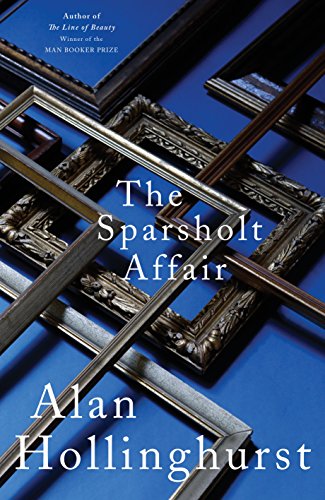
Like Alan Hollinghurst's previous novel, The Stranger's Child, The Sparsholt Affair spans  several generations, from Oxford in the Blitz, through the London art world in the seventies and eighties, to the present. It teases us with the affair of the title, which occurs off-page and is never fully explained, though significant to several of the characters. There's an elegant sense of place, period detail and the nuances of behaviour, as you'd expect from Booker-winner Hollinghurst, and a pervading sense of the difficulty of knowing other people.

I also loved Dan Pearson's Natural Selection, (reviewed here on publication in May) - a bringing together of pieces he wrote for the Observer as its weekly garden columnist. Pearson is both an influential garden designer and an accomplished writer, sensitive to place, season, weather and shifts of light. Since hearing him speak at the Oxford Festival this spring I've been enjoying the Saturday treat of his weekly blog, Dig Delve.

ADĒLE GERAS:

Two books I'd like to find under the Christmas tree are -

Life in the Garden by Penelope Lively. Although I'm not a gardener, I love visiting gardens and also reading and writing about them. I've been a fan of Penelope Lively's work for both adults and children since the seventies, so this is a perfect book: a beautiful, velvet-to-the-touch hardback full of Lively's characteristic good sense and imagination.
Devil's Day by Andrew Michael Hurley. I loved Hurley's first novel, The Loney, and I think that this is even better. I've named this genre SOGGY RURAL NOIR and this is a prime example. No other book has made me more grateful for my suburban comforts! It has a touch of spookiness about it and is wonderfully involving throughout. 

Monday, 18 December 2017

CHRISTMAS ROUND-UP Part 1: contributors' books of the year


What have our guest reviewers most enjoyed this year? Here's the first of two round-up features. Unlike those you see in the broadsheets, ours include books published at any time, not just this year - so selections, over the two posts, range from Marcus Aurelius to Pussy Riot. Big thanks to our impressive line-up of guests (and we have plenty more to come) - WRITERS REVIEW couldn't happen without them. Come back next week for more recommendations!

KEREN DAVID:

Reading NW by Zadie Smith was like a masterclass in how to write voice. Four narrators tell an overlapping story of life and death in London, each one utterly distinct and completely convincing, brilliantly understood and observed. If I could write a book a tenth as good as this, I'd be satisfied forever.


Troublemakers by Catherine Barter was my favourite YA book of the year. Like NW it's an account of contemporary London life that feels authentic and real, there's a cast of diverse likeable characters and questions of ethics and family to engage head and heart. I read it once, and then went back to the beginning and read it all over again.

PAUL DOWSWELL: 

Svetlana Alexievich’s The Unwomanly Face of War (Penguin Classics) A harrowing but deeply moving tribute to the Russian women who fought in The Great Patriotic War. ‘Mama waited at the station for several days to see us transported,’ says Tatyana. ‘She saw us going to the train, gave me a pie and a dozen eggs, and fainted…’


Hayley Long’s The Nearest Faraway Place (Hot Key) Despite all the ‘celebrity’ novelist nonsense currently afflicting children’s publishing, it’s heartening to see a YA novel as heartfelt and beautifully written as this still being launched into the world.

BALI RAI:


Zana Fraillon's The Bone Sparrow: timely, powerful and heartbreaking, this story cuts deep. And in Subhi, the author has created an unforgettable narrator whose voice we must hear. An outstanding story that is rightly acclaimed.


Kit de Waal's My Name Is Leon  is moving, unflinchingly authentic and brilliant. It gives voice to the unheard British underclass, in a poignant story that lays bare the social inequalities of the 1980s. A superb debut novel.

SOPHIE MASSON:

I've chosen two fantastic crime metafictions: Anthony Horowitz's The Word is Murder is crime fiction with a difference, this bold and brilliant tour de force by a master storyteller takes big risks with literary conventions and reader expectations, and pulls it off triumphantly.


My second choice is Sulari Gentill's Crossing the Lines. Known for her popular Rowland Sinclair series of detective mysteries set in 1930's Sydney, Australian author Sulari Gentill has broken new ground with this novel, a haunting exploration, through the lens of a crime story, of creative process.

PAUL MAGRS:


Pierre Gripari's anarchic and strange fairy tales included The Witch in the Broom Cupboard published by Pushkin Press. The children who lived in his street in Paris' Latin Quarter and hung around the same coffee bar helped him compile this book in the 1960s and it's only recently been translated. 

Also, the autobiographical essays by Bob Smith, Treehab, published by the University of Wisconsin Press, are harrowing and beautiful and hilarious. He talks about life with illness, having children, loving the natural world, and having hot dates in cold Alaska.


My novel of the year must be Rachel Joyce's life-affirming The Music Shop. It's got a lovely ensemble cast and goes in just the directions it bloody-mindedly wants to. Every book of hers I love - each one even more than the last.

ANN TURNBULL:

The Meditations of Marcus Aurelius. I was given this as a beautiful little hardback (only 6” x 4” - Collector’s Library 2011, translated by A. S. L. Farquharson) last Christmas. I’ve been reading it in snippets ever since and have just finished. It’s extraordinary how fresh and modern the thoughts of this Roman emperor are today. Marcus Aurelius urges kindness and attention to duty. He puts you in your place in time and the cosmos, reflects on how brief all human life is and how pointless it is to worry about death, wealth or reputation, since the span of all our lives is infinitesimal.


The Kevin and Sadie stories, by Joan Lingard, were first published in the 1970s by Puffin. Across the Barricades and The Twelfth Day of July can be obtained second-hand or as e-books, and now Kevin and Sadie: the Story Continues is available (in print; no e-book). I came across the second book in this series of five and was instantly gripped by its story of life in Belfast during the Troubles. Then I got the first book on Kindle. Finally I tracked down a bind-up of the last three, and gobbled up the rest of the saga, which is about Kevin and Sadie’s time in England, where they get married, have a baby and struggle to keep a home. Wonderful, lovable, engaging characters from a first-rate storyteller. For readers of 11 or over.

CAROLINE PITCHER: 

The last poem in the late Helen Dunmore's Inside the Wave has the startling, moving image of Death as the mother welcoming her dying child. The collection is of spare, lyrical, eloquent poems set in the borderline between the living and the dead, for:

Who would have thought that pain
And weakness had such gifts
Hidden in their rough hearts?


I've found the smack-in-the-face titles of `psychological best-sellers' easy to confuse and the novels often disappointing, but was gripped by Sabine Durrant's Lie With Me. Creepy, deceitful Paul won me over and his ghastly `friends', the manipulative teenagers and the particular kind of Greek holiday resort were utterly convincing.

LINDA SARGENT:
Daemon Voices by Philip Pullman. A collection of thirty plus essays on storytelling, utterly compelling and should be essential reading for every aspiring artist. In the author’s words, “if something doesn’t help, it’ll hinder”: this helps – and inspires.


Wolf Hollow by Lauren Wolk. Set in 1940s rural America, this is a story of the far-reaching damage wrought by war and its effects across the generations, with a wonderfully drawn young main protagonist. Full of compassion and completely gripping: I didn’t want it to end! I also highly recommend her second book, Beyond the Bright Sea.

JON APPLETON:
So many authors are reinventing themselves under new guises. I’d hate for people to forget that William Brodrick is the author of a handful of brilliant P.D.Jamesian/Ellis Petersish novels about Brother Anselm (see The Discourtesy of Death), but I was delighted to meet his new incarnation as John Fairfax, who is writing about William Benson, an ex-con turned lawyer. Summary Justice (Abacus) is a brilliant, memorable crime novel - can’t wait for next year’s instalment.


A lot of people wouldn’t lament a lack of comedies about middle-aged male writers, but I’d be very sad to be without Less  by Andrew Sean Greer (Little Brown US). Approaching fifty, Arthur Less travels the world to avoid, mostly, himself. There are some wonderful comments on being mid-list in publishing and possibly in life, in this very human, humane novel. I hope it’s published in the UK very soon.

NICOLA MORGAN:

My top reads this year have been Human Acts by Han Kang (brutal student uprising of 1980 in South Korea), A God in Ruins by Kate Atkinson (humans wrecked by a combination of WW2 and being human - full review coming early next year), Days Without End by Sebastian Barry (more brutality - sorry - this time in the massacres of native Americans after the US Civil War) and Small Great Things by Jodi Picoult (who pulled off the incredible feat of making me feel brief sympathy for a deeply repellent white supremacist). Great plots, big emotions - just what I need.


JOCELYN FERGUSON:

I absolutely loved The Goldfinch by Donna Tartt. I always look forward to new work by her. She never disappoints!


PATRICIA ELLIOTT:

Philip Pullman's Daemon Voices is an inspiring and engaging collection of his talks and articles dating from 1998 to the present day that all writers should read and, indeed, anyone interested in story and storytelling. It includes essays on the origin and creation of Pullman's own novels and much about the craft of writing itself.


Natasha Pulley's The Watchmaker of Filigree Street, about the extraordinary, intertwined relationships in the Victorian era between a quiet telegrapher in the Home Office, a brilliant and mysterious Japanese clockwork maker and a young female physicist, with its mixture of history and fantasy and its deeper themes about human destination, is different and on the whole delightful. It could do with cutting and its charm almost tips over into whimsy at times, but I love its exuberant and inventive writing.

LESLIE WILSON:

The Cutting Season, by Attica Locke, is an exciting, thought-provoking thriller; the black heroine/investigator works at a historic plantation house in Louisiana. The plot revolves as much round Caren's feelings about working at this place where her ancestors were slaves as about the issue of who's the murderer, though you do find that out, and the ending is perfect.


Little Dorrit, by Charles Dickens. What is disturbing about this book is how relevant it is to nowadays; financial instability, the gulf between rich and poor, and a corrupt government, embodied in the Circumlocution Office, which exists to shore up the status quo of privilege. Dickens may have been terrible at writing about women, but he's an amazing, surreal storyteller.

What have you most enjoyed this year? What would you like to recommend? Please leave your comments below.