Showing posts with label Amanda Craig. Show all posts

Monday, 16 December 2024

ADVENT BOOKS week 2 - revisiting some of our favourites from the last 8 years


Which have you read? Tell us in the comments!

Advent Books Week 2 brings more of our favourite books and reviews. Several of our regular contributors appear here - huge thanks to them and to everyone who sends us their recommendations. There are certainly some great reads here - which have you read, and what's your view? Tell us in the comments!


Reviewed by Rachel Morris: "Beautifully written, moves at pace, surges with a bitter poignancy and is laced with a very particular kind of magical realism. It is also strangely defiant and often very funny ... Gardam’s dialogue is to die for – supple, expressive, often startling. She can turn the direction of a story on a sixpence. (Oh, you think quite suddenly, so that’s where this is going.) She has a transfiguring talent, can flood a scene with an ecstatic strangeness, can turn the ordinary world momentarily into something glorious."


Reviewed by Judith Allnatt: "One of Tremain’s great strengths is that she looks unflinchingly at human darkness whilst still maintaining a feeling of authorial empathy and understanding. As did Trespass, The Road Home and The Gustav Sonata, this novel moved me to tears – it is heartrending, compassionate and brilliant."


Reviewed by Jon Appleton: "You could say the book is about Danny Conroy, a man who knowingly allows himself to become the ‘project’ of two strong-willed, passionate women – first of all Maeve and later his wife Celeste. Who, if anyone, is at fault in such a scenario when things don’t work out? (That’s not much of a spoiler, I promise you) ... It’s perhaps her best book but quite likely only till the next one. She’s that kind of writer." (Tom Lake has followed ... also reviewed by Jon.)


Reviewed by Katherine Langrish: "As I reached the end I realised that the writer with whose work I’m most drawn to compare The Golden Rule is Daphne du Maurier. She too told strong stories with strong characters in strong, often Cornish settings: her books live and are loved. Du Maurier has sometimes been belittled as a Gothic novelist, though why ‘Gothic’ should be regarded as in any way derogatory I do not know: frankly what was good enough for Charlotte and Emily Bronte ought to be good enough for anyone. Richly textured, modern, contemporary, literary, The Golden Rule  treads confidently in their footsteps."


Reviewed by Cindy Jefferies: "So who is the master here? Both men inhabit these pages. Characters, whether real or imagined must dance to the writer’s tune. James was a man of the mind, and Tóibín inhabits that mind to stunning effect. No one can truly know what thoughts inhabit the corners of another’s brain, but Tóibín is impressive at conjuring what might have been there."


Reviewed by Penny Dolan: "I read with a growing sense of solutions slowly arriving and wrongs steadily being gloriously righted. All in all, Lessons in Chemistry was a delight and one that made me feel better and stronger for having read it and met such a heroine, which is surely a good thing in a story, especially these days."


Reviewed by Anne Cassidy: "Maggie O’Farrell weaves such a wonderful story from these scant facts that I ended up feeling that I definitely knew more about Shakespeare than I had at the beginning. I wanted his life to have been like this. But while O’Farrell’s plot is convincing it’s the language she uses that sets her work above the ordinary. Of the tutor’s lesson and his two unwilling students she says, “They look towards him, plants turning to the sun. He smiles at their soft, unformed faces, pale as unrisen dough in the light from the window.” A wonderful book which I have thought about over and over since reading it."

Monday, 19 December 2022

Virtual Costa Book Awards Part 1: Adèle Geras and guests


It's my great pleasure to introduce Writers Review's Virtual Costa Book Awards. We were very sad indeed to hear that the real life Costa Book Awards are no more, so we decided to set up our very own Virtual Awards. Over the next three weeks, we're putting up recommendations for the awards from some friends of Writers Review. You'll find my choice at the end of this selection from some wonderful writers. I hope they lead you to read lots of books you will enjoy.

Merry Christmas from us all!  Adèle Geras

KATIE FFORDE nominates Jane Bailey's Sorrow isn't Good Enough for the Virtual Best Novel Prize:

Jane Bailey's writing is clear and easy to read and we instantly connect to the heroine, Stephanie, both in the present day and in the past. Few people write from a child's point of view as well as Jane and the little girl she describes, desperate for love, aware of life's unfairness but accepting it nonetheless, is entirely convincing.

With her we travel back to the Sixties, a simpler, crueller time for children. No wonder there is a darker side to this coming of age story. We learn about the tragedy on the first page: the notorious murder of Stephanie's best friend. But friendship is complicated; not what it seems from a distance.

This is not always a comfortable novel but one I couldn't turn away from. Jane Bailey is a writer who should be known to more people. She is so good.

VAL McDERMID nominates Ali Smith's Companion Piece for the Virtual Costa Novel Prize:

This novel is the coda to Smith's Four Seasons quartet. She carries the reader along in a broad and diverse narrative sweep and produces a vivid portrait of contemporary life. She writes beautifully but although she shines a light on the worst things we do to each other, her work is imbued with hope. Somehow, while firmly rooted in the real world, she can be surreal and dreamlike at times.

Companion Piece is intelligent, compassionate and often very funny. I found it exhilarating. With her books, when I reach the end I always want to go back to the beginning and do it all again. But with Companion Piece, I felt compelled to go back to Autumn, the beginning of the Seasons quartet and read all five again. And I'm glad I did.

WENDY COPE nominates My Phantoms by Geraldine Riley for the Virtual Costa Novel Prize:

I've just finished this. It is a brilliantly readable study of the relationship between a daughter and her sad, inadequate and often infuriating mother. Much of the time the daughter distances herself and is sometimes unkind. When she agrees to see her mother and to help her when she's ill, her attempts at forming a relationship more satisfying to both of them meet with little success. Their encounters are often funny as well as painful. The book is only 199 pages long and it left me wanting more.

SOPHIE HANNAH nominates Ignore it all and hope it goes away by Nic Aubury for the Virtual Costa Poetry Prize:

Ignore it all and hope it goes away
 should win every poetry prize going. It is wise, witty, moving, memorable, and displays prosodic dexterity that one very rarely sees these days. It also has the most wonderful illustrations by genius cartoonist Moose Allain.


MICHAEL ARDITTI nominates Donal Ryan's The Queen of Dirt Island  for the Virtual Costa Novel Prize:

I have been particularly taken with Irish fiction this year, including Audrey Magee's The Colony and Emma Donahue's Haven, but the pick of the crop for me is Donal Ryan''s The Queen of Dirt Island. It tells of three (ultimately four) generations of women in rural Tipperary, whose menfolk are either dead, weak, absent or treacherous. In a series of short, almost self-contained chapters, Ryan tells of family love and loyalty, which endures hardship, prejudice, illegitimacy and suicide. Opening in the 1980s, both republicanism and a repressive clergy inevitably feature, but the focus is on the domestic, and often fractious but always nurturing home that the women share. Ryan's writing is by turns sharp, funny, lyrical and tinges with a winning melancholy, and when, in a metafictional twist, we learn that it's also the writing of Saoirse, the novel's central character, we can only cheer at her triumph over the odds.

AMANDA CRAIG nominates Sally Gardner's The Weather Woman for the Virtual Costa Novel Prize.

The Weather Woman 
reads like Georgette Heyer crossed with Angela Carter, being historical, magical, gorgeously written and pulsing with romantic energy. Its heroine Neva is born with an extraordinary gift: she can predict the weather at any given date. In Regency England, when society is obsessed by gambling, this is a gift that can make or break immense fortunes, so her clockmaker father conceals her in an automaton.

However, Neva is also thirsty for an education, something forbidden to women. She dresses as a man, and soon falls in love with Henri, a charismatic young French count who shares her poverty and her undeclared passion. From its opening at a Frost Fair to its climactic struggle against villainy, it is packed with drama, but it also contains a beautiful description of what making love as equals should be like.

JUDITH LENNOX nominates This is not a Pity Memoir by Abi Morgan for the Virtual Costa Biography Prize:

Screenwriter Abi Morgan comes home from buying sushi to find her partner Jacob unconscious on the bathroom floor. His seizure marks the onset of a devastating illness. He is put into an induced coma from which he emerges months later, fragile and unravelled, unable to recognise Abi, convinced she’s an imposter.

The everyday continues – taxes must be paid, scripts completed, sometimes at midnight - though life is now irrevocably divided into BC (before collapse) and AD (after disaster). Morgan’s memoir has the urgency of a thriller and is written with honesty and humour, brilliantly describing her fluctuating emotions and the exhaustion of hope and despair. Though the story is tragic, it’s never depressing, as Morgan learns to live for ‘daily glimmers of happiness,’ and they emerge into a strange new world, traumatised and altered but held together by love.

ADELE GERAS nominates The Whalebone Theatre by Joanna Quinn for the Virtual Costa First Novel Prize:

The Whalebone Theatre is a most accomplished debut. It's a family story starting before the Second World War and covering many events familiar from other novels. What marks this book out is the characters of the siblings at the heart of the action, brought together to deal with everything the world can throw at them. The eponymous Theatre   (the remains of a carcass washed up on the Devon coast) becomes the heart of the several interlocking stories.  I love "let's do the show right here" novels and this is a hugely enjoyable example of the genre.


Click here for Part 2 ...

Monday, 27 December 2021

Awards Season! Part 2


Here's the second batch of virtual awards, made by our contributors to a book of their choice. Thanks to all our reviewers for giving us such great recommendations! Come back next week for the final part.


Yvonne Coppard: The Evie Award for best unreliable narrator 
goes to Notes on a Scandal  by Zoe Heller.  Barbara is a frumpish, unpopular history teacher whom nobody warms to. Sheba, the new new pottery teacher, is the opposite: a charismatic free spirit who seems to have it all. When Sheba starts a sexual relationship with a pupil, Barbara becomes her confidante.

The depth of Barbara’s sexual repression, jealousy and malice, hidden from the world and from herself, is revealed only to the reader in this gripping, masterly novel. Shortlisted for the Booker, it’s up there with Lolita and The Great Gatsby.


Amanda Craig
awards the Craig Cup for Most Underrated Children's Book to: Philip Womack's Wildlord. It's one of a clutch of recent new YA titles about the intersection between the mortal world and supernatural beings that readers will recognise as the fiercer kind of fairy.

In the English and Celtic tradition, proper fairies aren't twee and pretty, but unpredictable, frightening, mischievous and even dangerous manifestations of nature; and these stories often also address mankind's selfish destructiveness of the natural world, and the possible revenge of it upon us.

This is Womack's eighth novel, and one with a propulsive plot, a sympathetically vulnerable hero and an evocative style. Most of all, it has a moral centre about the importance of love and trust. This story, with its universal appeal ,deserves a wider audience.

Anne Cassidy: A Book I read Again and Again -
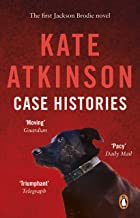
awarded to Kate Atkinson for Case Histories.  I read a lot of crime. Every couple of years I feel the need to revisit this almost perfect book. It's a crime novel that foregrounds the stories of the families of victims. This wasn’t a whodunnit but more an examination of the devastation caused by murder and loss. The examination of family life before and after the crimes is knife edge and utterly believable. The focus is on three unsolved murders and then we meet Jackson Brodie, the ex-cop, the damaged hero, who seems to blunder his way through the terrain to find the killers, to bring peace to the loved ones. There are bits of this book that I unashamedly cry at every time. A terrific crime story. Can’t wait until I read it next time!

The Celia Rees Award for Most Influential Children's Fantasy Novel goes to: The Box of Delights.

John Masefield's novel, published in 1935, is exactly that - a box of delights. It contains themes, characters and motifs that occur again and again in British children's fantasy fiction: shapeshifting, time travelling, a young protagonist on the cusp of adolescence singled out as having special powers, a wise old magician, a magical object that must be guarded at all cost, an epic battle between the forces of light and the forces of darkness, an evil, cunning and ruthless enemy and his equally unpleasant female companion, a midwinter setting with extreme weather, the timely intervention of mythical figures from British folklore - it's all there!

Katie Fforde
gives The Fforde Award for the book she didn't expect to fall in love with to The Dictionary of Lost Words, by Pip Williams. Quirky, imaginative and beautifully written, this is for people who love words, who are feminists in the very best sense. It’s about a little girl who is the daughter of a man among a team of many who are writing the dictionary. She discovers that some words are considered to be no longer useful. They are often words to do with women. We follow her life and the life of the dictionary and others involved in its creation. Highly recommended.

Adèle Geras' prize is the Snowglobe Award for the Best Short Book which Creates an Entire World, and the first winner is Claire Keegan's Small Things Like These.

A few days ago, I found a book which is as close to perfection as any I've read all year. It's tiny: a mere 75 pages and I read it in two sittings. I could have read it in one, but needed to think about it. It's the most extraordinarily beautifully- written tale, which encompasses huge themes and enormous emotions and manages to take you to the heart of a family in a specific place and time. Bill Furlong is a coal merchant in a small Irish town. He and his wife have six daughters. It's Christmas Eve, and the day before that. By the end, we are part of this town. I felt as if I'd been handed the most beautiful snowglobe, even though this place has darkness deep within it. A worthy winner of my award.

Sue Purkiss
awards the Purkiss Prize for a book (actually a whole series) that brings comfort - to the Inspector Gamache series by Louise Penny. 

Life’s a bit on the tough side at the moment, isn’t it? Of course, there are lots of good things too – but sometimes they threaten to be overwhelmed by the bad stuff.

The Inspector Gamache series offers a retreat from all this. Three Pines, where the books are mostly set, is a tiny village in the forest in Quebec. It’s not on any map, it doesn’t show up on a satnav: it’s a refuge. It’s peopled by eccentrics: Ruth, the mad old poet, Gabri and Olivier, who run the bistro and the B&B, Clara the artist – and eventually, Inspector Gamache himself, who is strong, clever, kind and incorruptible.

The characters are complex and satisfying, the stories are gripping – and the food! Ah, if only I had time to tell you about the food… Plus, there are seventeen books in the series.

John Newman of Newham Bookshop awards Newman’s Page Turner of the Year or A Reason to Remain to Sarah Winman.

Everybody loves a feel-good book and this year we really needed stories which celebrate friendship and the ties that bind. Sarah Winman gave us a real gift in the shape of  Still Life and I want to both celebrate it and of course unconditionally recommend it to you all. Spanning several decades of the last century we encounter lives interlinked by war, tragedy and change. Its roots are in London's East End but the core and real heart of it is very much centred in Italy and most especially the city of Florence which the author clearly loves. The big themes of the novel are addressed with a light touch via suitably diverse characters you quickly care about and leave behind with reluctance. This was my page turner of the year and one I felt privileged and confident to place in the hands of other like-minded souls.

Monday, 21 December 2020

Reading ahead - New Year anticipation, part 1


Here's part one of our yearly thank you to all those guests whose contributions keep us going! In this first part of three, some of our reviewers tell us what they're looking forward to reading in 2021 - whether it's a new publication, a return to an old favourite, or an author newly-discovered. What's on your reading pile or wishlist for the year to come?

Graeme Fife:
In these darkening, dark, days of 2020, this stuttering conclusion to such a strange year, yet inspirited by the promise of a vaccine and by a zephyr of hope from across the Atlantic – a woman soon to be a heartbeat away from the American presidency, (wishing no harm to Biden) – I will be reading a new study of All the Sonnets of Shakespeare, arranged in their probable chronological order of writing, by Paul Edmondson and Stanley Wells. The approach promises new insight. Having come late to Jonathan Coe’s novels, there remains only one of his titles to read, Mr Wilder and Me, his latest novel based on the work of the great film director, Billy Wilder, revisiting Coe’s fascination with cinema, the tropes of movie comedy and the refractions of the celluloid world. And JB Priestley, The Good Companions, the big novel which launched him. Hurray.
 
Also I aim to watch again the utterly superb Babylon Berlin. Don’t miss it.

Jonty Driver: I look forward to Jonathan Smith's latest book, Being Betjeman(n), recently published by Galileo. Described as "part biography, part fiction and part self discovery", it includes enough of Betjeman's poems for one to want to add "part anthology". I've resisted the temptation to begin it at once, because I have at least five other books piled up next to my reading-armchair, all interesting, all not finished yet; but dipping into Jonathan Smith's new book I am once again impressed by his style, which is I guess so like the voice he used when he was a schoolmaster at Tonbridge: clever, funny, casual, sharp-witted. On the back cover are three recommendations: from Sir Anthony Seldon, no longer a Master or Vice Chancellor but a full-time writer; Dan Stevens, the actor, and Christopher Reid, poet and publisher. What fun to have those three ex-pupils as enthusiastic readers.

Amanda Craig: 
I am particularly looking forward to Francis Spufford's new novel Light Perpetual, to be published in February. It imagines that five children whose lives are destroyed in 1944 by a bomb continue to live in an infinitesimal alternative fraction of time - an intriguing idea, and one that, as a devotee of CS Lewis, I am hoping he will develop with the imaginative zeal he showed in his classic book The Child That Books Built.

I'm also looking forward to Liz Kessler's YA novel, When the World Was Ours, coming in January, about three children in Nazi Europe, inspired by her father's escape. She's a terrific writer who keeps pushing her imagination and her readers' sympathies to engage with difficult, dark yet uplifting subjects. I can't wait to see what she's done with this material.

I'm also planning to tackle Saidiya Hartman's Wayward Lives Beautiful Experiments, about the first generation of black women in America after emancipation who refused to accept their degrading conditions and who became pioneers in pursuit of liberty. I was sold it by a passionate recommendation at Daunt's and it looks both intriguing and original.

Jean Ure: With the very recent death of my beloved husband I find that it is books which are my greatest solace and means of at least temporary escapism.   But they have to be a certain type of book.   Nothing to do with the here and now, which I feel would be too close to home for comfort.   Likewise nothing too distant – which immediately excludes an old friend such as Mary Renault – nor anything futuristic.  Nor anything too familiar – which excludes some of my all-time favourites such as Olivia Manning's two brilliant trilogies.    In the past I have often fallen back on Trollope, but for the moment he has lost his appeal.    Not quite sure why.    Maybe because for the most part he concentrates all his efforts on his characters, with not enough distractions to buoy me up in my present state.

By chance I have come upon an author I am scarcely acquainted with: Barry Unsworth.   I did read him once, long ago, but obviously at that time he made little impression.   Now he has come to my aid most wonderfully.   Tough, powerful, sufficiently removed from the present day - in-depth characters, much food for thought, plenty of distractions.

I started with Sacred Hunger, have now moved on to the sequel, and heaven be praised there are several more waiting for me.   Which doesn’t stop me from panicking in advance: where do I go next?    Any recommendations most gratefully received.

Cindy Jefferies: Among the teetering heaps of new fiction gasping for my attention next year, a more modest pile awaits me in 2021. These are some of the treats I have promised myself in between reading some more modern yarns. The Master, by Colm Toibin, his novel about Henry James. Roberto Calasso’s re-exploration of Greek mythology in The Marriage of Cadmus and Harmony. Finally, some of my grandfather’s bound copies of The Strand Magazine and the English Illustrated. These hold some of the writing thought best in1895, Mr A Conan Doyle amongst them. From fiction to cartoons, politics to the recollections of Sir John Everett Millais. They give a snapshot of English society during that year. Stories for children sit uneasily between notes from the Speaker’s Chair and an alarming drawing of a man being attacked by a pike. Cricket, railways, Balfour’s thoughts. Family entertainment in front of the fire on a Sunday afternoon over a hundred years ago.

Linda Newbery:
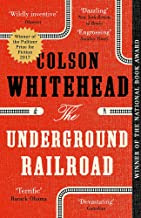
Bernardine Evaristo's Booker-winning Girl, Woman, Other is near the top of my pile, plus a shortlisted title The Underground Railroad, by Colson Whitehead,  and the latest winner Shuggie Bain. And I've got two climate change-related titles lined up: Jenny Offil's Weather, and The Good Ancestor by Roman Krznaric. So many wonderful things have been said about Piranesi that it sounds like a must-read - and I loved Maggie O' Farrell's Hamnet so much when I listened to it on Audible that I must read it in book form, too. Finally, the death of John Le Carre has made me realise how few of his novels I've read, so The Spy who came in from the Cold is next on my pile.

Gwen Grant: 
Poetry of the Committed Individual. Amongst the poets in Jon Silkin’s wonderful 1973 Stand anthology is the Israeli poet, Natan Zach, who died last month. His tiny poem ‘How is it that one star,’ about a star daring to shine on its own, is so beautiful that, unprepared for the savagery ribboned into his poem, ‘Against Parting,’ I found myself staring blindly at the page. Zach’s tailor once parted from his wife – Auschwitz, and from his three sisters – Buchenwald. Parted for ever.

Michèle Roberts is a writer who takes you into the very heart of her characters and their stories. So I am immensely looking forward to reading Negative Capability, an account of how she copes with the rejection of her latest novel.

More George! published by The Hallamshire Press in 1994 is the story of George Cunningham growing up in Sheffield. George is a fabulous amateur illustrator. His beguiling pictures and vivid accounts of his life are enchanting. ‘Get a Good Rise – Join the R.A.F. Pay 3/- to 18/- a day.’ Such a lovely book. 

Ann Turnbull: 
I'm planning to re-read some older books that have been sitting on my shelves for years and that I remember almost nothing about: 

Moon Tiger by Penelope Lively; 
Heat and Dust by Ruth Prawer Jhabvala; 
Half of a Yellow Sun by Chimamanda Ngozi Adichie; 
The Bridge of San Luis Rey by Thornton Wilder
and The Daughter of Time by Josephine Tey.

Lesli Wilson
: In the New Year, I'm hoping to read the Booker shortlisted Burnt Sugar, by Avni Doshi, as it sounds interesting and deals with a difficult mother-daughter relationship; I had one of those myself.. I also want to read The Black Jacobins, by CLR James, which is about Toussaint L'Ouverture and the rebellion of enslaved people in San Domingo. I have on my shelves Red Clocks, by Leni Zumas, which my sister-in-law recommended to me, and I intend to read that after Christmas. A long way into the New Year, I am very much looking forward to reading Katherine Langrish's From Spare Oom to War Drobe; Travels in Narnia with my nine year-old self. I also intend to read the latest book in the uncomfortably exciting Babylon Berlin series by Volker Kutscher, Marlow. As yet, it's not available in English, but I shall read it in German.


Monday, 10 August 2020

Guest review by Katherine Langrish: THE GOLDEN RULE by Amanda Craig


"The novel is about relationships destructive and supportive, and learning to see people for what they truly are..."

Photograph by Jo Cotterill

Katherine Langrish is the author of a number of historical fantasies including the trilogy West of the Moon, anDark Angels (Harper Collins). Her most recent book is Seven Miles of Steel Thistles (The Greystones Press), a collection of essays on folklore and fairy tales based on her award-winning blog of the same name.

In the middle of a bitter divorce triggered by her husband’s affair, struggling to support herself and her five year-old daughter while working as a cleaner, Hannah is forced to spend money she hasn’t got on a railfare to Cornwall to visit her dying mother. Hot and thirsty in the standing-room-only carriage, her luck seems to change when rich, elegant Jinni invites her into the air-conditioned first class and offers her chilled water, chilled white wine – and confidences. Strangers on a train, the women have more in common than appearances suggest: they both feel like killing their husbands. When Jinni suggests that if they swap victims they could get away with it, Hannah agrees. But nothing is quite what it seems. Meshed in a web only partly of her own making, Hannah soon doesn’t know which way to turn.

This was a novel I really couldn’t put down, and not only for the strong story-telling. Amanda Craig has a cool eye for social nuances: the comfort mixed with prickling disquiet of fitting back into family and community you’ve tried to leave behind, the hurtful, casual ignorance of rich folk about what it’s like to be poor, the vitriolic exchanges of marriages gone sour. There’s also a wonderful sense of place and identity: the Cornish countryside and people in all their contradictory moods.

Above all the novel is about relationships destructive and supportive, and learning to see people for what they truly are. Since not being fooled by appearances is a fairy tale theme, it gave me great pleasure to discover the briar-rose tendrils of more than one fairy tale twining through the narrative, and references to children’s literature too. The classic book Green Smoke has captured the imagination of Hannah’s little daughter Maisie: all about a friendly Cornish dragon, who lives in a cave. But of course caves and dragons can be dangerous…

As I reached the end I realised that the writer with whose work I’m most drawn to compare The Golden Rule is Daphne du Maurier. She too told strong stories with strong characters in strong, often Cornish settings: her books live and are loved. Du Maurier has sometimes been belittled as a Gothic novelist, though why ‘Gothic’ should be regarded as in any way derogatory I do not know: frankly what was good enough for Charlotte and Emily Bronte ought to be good enough for anyone. Richly textured, modern, contemporary, literary, The Golden Rule  treads confidently in their footsteps.

The Golden Rule is published by Little, Brown.

See also: The Lie of the Land by Amanda Craig, reviewed by Adele Geras


Monday, 20 July 2020

FOURTH ANNIVERSARY round-up: our Books of the Year (so far), by Adèle Geras, Celia Rees and Linda Newbery


Now we are four! That's four years' worth of great reviews and recommendations, all by authors or independent booksellers. Huge thanks to all those who contribute - we couldn't do it without you. Here Adele Geras, Celia Rees and Linda Newbery choose their favourite reads of the year so far (not necessarily newly-published).  

*


All three of us could have chosen The Mirror and the Light, but Adèle bagged it first ...
Adèle: The timing of this novel's publication was fortunate. It came out in March, just before lockdown and it's been keeping thousands of readers happy for a very long time. I thought I was going to race through it, because I'd loved both Wolf Hall and Bring Up the Bodies but it took me weeks because I was so bound up in following the pandemic as it unrolled that I only read it at night, in short sessions. Everything you've read about it is true: it's a wonderfully exciting story written in the most dazzling prose by a writer at the height of her powers. The word that kept coming into my mind was 'richness.'  There's an abundance of everything and I do think it ought to have been shorter, but overall it's a marvel. I compare it to Christmas pudding, which is one of my favourite desserts. I adore it, especially with brandy butter, but can only ever eat one helping at a time. It's very rich, just like this book.

*


Linda: The Garden of Vegan, by top garden designer Cleve West, could have been written specially for me. Increasingly, alongside his high-profile design career, Cleve puts his energies into campaigning for animals. His book covers so much of importance: green gardening, animal welfare, sustainability, veganism, simple appreciation of wildlife and our environment. I hope it'll find its way into the RHS shops and be recommended in gardening magazines.


Diary of a Young Naturalist  by Dara McAnulty is another delight. Dara is an autistic teenager from Northern Ireland whose blogging about wildlife and the threats it faces has attracted support from Chris Packham and Robert Macfarlane. He records his fifteenth year in close and eloquent observations of the natural world in which he finds both intense joy and escape from his social difficulties, which include being badly bullied at school. A wildlife presenter and campaigner for the future? “This churning in me, it’s got to go somewhere."

*


Adèle:  Magpie Lane has been one of the Books of the Lockdown and I take some of the credit for its success because I've been Tweeting about it like mad, and retweeting every word of praise of it I find. I raced through it, (yes...it's a frying onions book...one you hold in one hand as you cook!) and have subsequently read Lucy Atkins' previous novel, The Night Visitor, which is also very good indeed. I was attracted to Magpie Lane because it's set in Oxford in the house of a Master of a College and it involves elements of the Gothic and a narrator who may or may not be unreliable but is certainly spellbinding. It's also a love story and a mystery. I adored it and can't wait to read Atkins' next novel.

*

Celia: I have to confess to not having read much during lockdown. A lot of my reading was taken up by The Mirror and The Light which Adèle snaffled. Pre-Covid, most of my reading time was spent gobbling up Mick Herron's Slough House Series. Mick Herron makes John Le Carré's spies and spymasters look like James Bond and Q.  The novels have their own argot with Suits and Stoats, Dogs and Achievers and the eponymous Slow Horses who are are stabled at Slough House in a grimy, grungy area of London far from their Secret Services' HQ in Regent's Park. They are a bunch of cock up merchants and misfits with drug, alcohol and anger issues, working under the jaundiced eye of Jackson Lamb who supervises them toiling over a never ending stream of totally pointless tasks that have been set in the hope that they will give up, resign and therefore not qualify for redundancy. They are there because they do not follow orders and in each book it is this that saves the day. 

Through the series, Mick Herron explores and uncovers the devious, back stabbing duplicity, chicanery, cover-ups and mendacious ruthlessness of modern British political life. From a boy hunted because of something he should not have seen involving a  Royal, to Brexit and the underhand doings of a ruthless senior politician who hides his true nature behind blustering, boyish bonhomie, this is the nearest thing we have to a satire of our times. The books are constantly unsettling: achingly funny scenes become shockingly violent and visa versa. There are many reversals of fortune for the Slow Horses and Mick Herron is as casually violent with his characters as they are as spies. There is also a reverse morality. Jackson Lamb who appears to have no moral sense is true to his Joes - his agents. Those above them are exposed as having no moral compass at all. I must confess to feeling rather bereft when I finished Joe Country, which I thought was the last in the series but a quick look on Amazon shows me he's published another one, Slough House. I missed that in all this Covid business  - I'm off to order it now.

*


Linda: The Golden Rule, Amanda Craig's new novel, kept me hooked with its twistiness, its likeable, brave central character, Hannah, and its mainly Cornish setting. Gothic overtones of Jane Eyre and Beauty and the Beast combine with a plot that owes something to Patricia Highsmith's Strangers on a Train. As always, Amanda Craig is sharp on details of rural poverty and class inequality. Equally gripping was Celia Rees' impressive first adult novel, Miss Graham's Cold War Cookbook - more next week, in a special Q&A with Celia to mark publication.

*


Adèle:  This is not the done thing at all: reviewing a book by a friend of yours, but I've done it for years and I will defend my right to put before readers books that I enjoy, whether I happen to know the writer or not. Mostly, the same few books get into everyone's hands so when I can recommend a book I know many, many people will love, I do so whether I know the writer or not. The Secrets Between Us, by Judith Lennox, shares with Judith's other novels a wonderful sense of time and place and a story about relationships which all of us can understand and appreciate. She's also very good at houses and clothes and details of every kind, which I really appreciate. In this book, a woman discovers after his death that her husband had a second, entirely other family....I'm not saying any more than that, for fear of spoilers. It's set in and around the Second World War and that adds to the drama. There's love and anguish and disappointment and triumph. I think it's terrific.

*


Linda: The Leopard, by Giuseppe Tomasi di Lampedusa, had been on my wish list for ages, since I kept seeing it recommended on various people's life lists. Lockdown was the perfect time to read it - or rather listen to the audio version, read by David Horovitch (translated by Archibald.Colquhoun). Set in 1860s Sicily, it's the story of Sicilian prince Don Fabrizio, in his mid-40s and presiding over his family and wealthy estate. The rise of Garibaldi and the move towards unification threaten the luxurious way of life he's loth to change, yet he sees potential to adapt in his young soldier nephew, Tancredi. In some ways Don Fabrizio isn't an admirable character, but his reflections, self-justifications and thoughts of the future, together with sumptuous descriptions of palaces, social gatherings and the sweltering summer landscape, make for a compelling read.

Finally, Hamnet by Maggie O'Farrell. Until I started it I'd have thought that Hilary Mantel had the Women's Prize in the bag for The Mirror and the Light, but this must surely be an equally serious contender (and I should add that there are three shortlisted titles I haven't yet read). It's a sensuous, intense imagining of the life of Shakespeare's wife, Agnes - relating her first meeting with the man only ever referred to as 'the tutor', 'the son', 'the husband', and the death of their son, Hamnet, at the age of eleven. Rich with detail of domestic life and with searing insight into love, death and grief, this is a joy from the start to its perfectly-pitched ending.

What are your best reads of the year so far? Please tell us in the comments!

The Mirror and the Light by Hilary Mantel, reviewed by Celia Rees

Hamnet by Maggie O'Farrell, reviewed by Anne Cassidy