Showing posts with label Anne Cassidy. Show all posts

Monday, 27 December 2021

Awards Season! Part 2


Here's the second batch of virtual awards, made by our contributors to a book of their choice. Thanks to all our reviewers for giving us such great recommendations! Come back next week for the final part.


Yvonne Coppard: The Evie Award for best unreliable narrator 
goes to Notes on a Scandal  by Zoe Heller.  Barbara is a frumpish, unpopular history teacher whom nobody warms to. Sheba, the new new pottery teacher, is the opposite: a charismatic free spirit who seems to have it all. When Sheba starts a sexual relationship with a pupil, Barbara becomes her confidante.

The depth of Barbara’s sexual repression, jealousy and malice, hidden from the world and from herself, is revealed only to the reader in this gripping, masterly novel. Shortlisted for the Booker, it’s up there with Lolita and The Great Gatsby.


Amanda Craig
awards the Craig Cup for Most Underrated Children's Book to: Philip Womack's Wildlord. It's one of a clutch of recent new YA titles about the intersection between the mortal world and supernatural beings that readers will recognise as the fiercer kind of fairy.

In the English and Celtic tradition, proper fairies aren't twee and pretty, but unpredictable, frightening, mischievous and even dangerous manifestations of nature; and these stories often also address mankind's selfish destructiveness of the natural world, and the possible revenge of it upon us.

This is Womack's eighth novel, and one with a propulsive plot, a sympathetically vulnerable hero and an evocative style. Most of all, it has a moral centre about the importance of love and trust. This story, with its universal appeal ,deserves a wider audience.
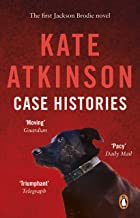
Anne Cassidy: A Book I read Again and Again -
awarded to Kate Atkinson for Case Histories.  I read a lot of crime. Every couple of years I feel the need to revisit this almost perfect book. It's a crime novel that foregrounds the stories of the families of victims. This wasn’t a whodunnit but more an examination of the devastation caused by murder and loss. The examination of family life before and after the crimes is knife edge and utterly believable. The focus is on three unsolved murders and then we meet Jackson Brodie, the ex-cop, the damaged hero, who seems to blunder his way through the terrain to find the killers, to bring peace to the loved ones. There are bits of this book that I unashamedly cry at every time. A terrific crime story. Can’t wait until I read it next time!

The Celia Rees Award for Most Influential Children's Fantasy Novel goes to: The Box of Delights.

John Masefield's novel, published in 1935, is exactly that - a box of delights. It contains themes, characters and motifs that occur again and again in British children's fantasy fiction: shapeshifting, time travelling, a young protagonist on the cusp of adolescence singled out as having special powers, a wise old magician, a magical object that must be guarded at all cost, an epic battle between the forces of light and the forces of darkness, an evil, cunning and ruthless enemy and his equally unpleasant female companion, a midwinter setting with extreme weather, the timely intervention of mythical figures from British folklore - it's all there!

Katie Fforde
gives The Fforde Award for the book she didn't expect to fall in love with to The Dictionary of Lost Words, by Pip Williams. Quirky, imaginative and beautifully written, this is for people who love words, who are feminists in the very best sense. It’s about a little girl who is the daughter of a man among a team of many who are writing the dictionary. She discovers that some words are considered to be no longer useful. They are often words to do with women. We follow her life and the life of the dictionary and others involved in its creation. Highly recommended.

Adèle Geras' prize is the Snowglobe Award for the Best Short Book which Creates an Entire World, and the first winner is Claire Keegan's Small Things Like These.

A few days ago, I found a book which is as close to perfection as any I've read all year. It's tiny: a mere 75 pages and I read it in two sittings. I could have read it in one, but needed to think about it. It's the most extraordinarily beautifully- written tale, which encompasses huge themes and enormous emotions and manages to take you to the heart of a family in a specific place and time. Bill Furlong is a coal merchant in a small Irish town. He and his wife have six daughters. It's Christmas Eve, and the day before that. By the end, we are part of this town. I felt as if I'd been handed the most beautiful snowglobe, even though this place has darkness deep within it. A worthy winner of my award.

Sue Purkiss
awards the Purkiss Prize for a book (actually a whole series) that brings comfort - to the Inspector Gamache series by Louise Penny. 

Life’s a bit on the tough side at the moment, isn’t it? Of course, there are lots of good things too – but sometimes they threaten to be overwhelmed by the bad stuff.

The Inspector Gamache series offers a retreat from all this. Three Pines, where the books are mostly set, is a tiny village in the forest in Quebec. It’s not on any map, it doesn’t show up on a satnav: it’s a refuge. It’s peopled by eccentrics: Ruth, the mad old poet, Gabri and Olivier, who run the bistro and the B&B, Clara the artist – and eventually, Inspector Gamache himself, who is strong, clever, kind and incorruptible.

The characters are complex and satisfying, the stories are gripping – and the food! Ah, if only I had time to tell you about the food… Plus, there are seventeen books in the series.

John Newman of Newham Bookshop awards Newman’s Page Turner of the Year or A Reason to Remain to Sarah Winman.

Everybody loves a feel-good book and this year we really needed stories which celebrate friendship and the ties that bind. Sarah Winman gave us a real gift in the shape of  Still Life and I want to both celebrate it and of course unconditionally recommend it to you all. Spanning several decades of the last century we encounter lives interlinked by war, tragedy and change. Its roots are in London's East End but the core and real heart of it is very much centred in Italy and most especially the city of Florence which the author clearly loves. The big themes of the novel are addressed with a light touch via suitably diverse characters you quickly care about and leave behind with reluctance. This was my page turner of the year and one I felt privileged and confident to place in the hands of other like-minded souls.

Monday, 16 November 2020

Guest review by Anne Cassidy: MONOGAMY by Sue Miller


" ... raises the issue of how we perceive the past. Does a recently-discovered fact about a partner of many years throw a shadow over the entire relationship?"

Anne Cassidy
writes crime fiction for teenagers. She has published over forty novels for young adults. She writes dark crime fiction and is best known for Looking for JJ which was shortlisted for the Carnegie medal. Moth Girls was published by Hot Key in 2016 and concerns the disappearance of two twelve year old girls. Her latest novel No Virgin describes the aftermath of a rape.


Monogamy appears, at first, to be a story about an older couple who have been together for a long time and are about to experience the heartache of infidelity. The story is told from two points of view; the wife, Annie and her husband, Graham. Both have been married before and have come together as experienced rather than damaged people. They seem like opposites; she is small and reserved, he is big and enjoys being the centre of attention. Their marriage has been long and even though they are very different, they have found happiness with each other. Graham, though, has recently strayed and is regretful. An unexpected and devastating event takes place which changes everything.

It’s a story that raises the issue of how we perceive the past. Does a recently-discovered fact about a partner of many years throw a shadow over the entire relationship? Annie struggles to accept what she has found out.

Sue Miller writes about relationships beautifully. Her characters have different, sometimes contradictory sides; Graham is attracted to a newly divorced woman but his love for Annie still consumes him. He acts on this attraction and hates himself for it. Annie is faithful finding what she needs in the marriage but her professional life has been unfulfilling.

Perception of the past is nicely highlighted when Annie meets a man she once had a romantic dalliance with thirty years before. She remembers the brief encounter intensely. He mistakes her for a different woman, though. This misremembered tryst symbolises the problems with perception of the past. Annie has to decide whether she can live with her new knowledge and forgive her husband of so many years.

I love Sue Miller’s books because they are full of flawed people who should make the right choices but don’t always. It’s not an uplifting book but it’s satisfying because it seems so truthful. 

Monogamy is published by Bloomsbury.    

See also Anne Cassidy's review of Elizabeth is Missing, by Emma Healey


Monogamy is published by Bloomsbury.

Monday, 4 May 2020

Guest review by Anne Cassidy: HAMNET by Maggie O'Farrell


"While O’Farrell’s plot is convincing it’s the language she uses that sets her work above the ordinary."


Anne Cassidy writes crime fiction for teenagers. She has published over forty novels for young adults. She writes dark crime fiction and is best known for Looking for JJ which was shortlisted for the Carnegie medal. Moth Girls was published by Hot Key in 2016 and concerns the disappearance of two twelve year old girls. Her latest novel No Virgin  describes the aftermath of a rape.

As a reader, you wait a number of years for a great literary historical novel and then two come along at the same time. Hamnet  is the fictional story of what might have happened to Shakespeare’s son Hamnet who died in the summer of 1596. It is also the story of a young man living in a household ruled by an unpredictable and violent patriarch. This young man, the ‘Latin Tutor’, is attracted by a free-spirited older woman; someone who is more comfortable with nature than societal demands. It’s a love story of a couple who struggle to find their places in their respective families and with each other. They appear to do this through their children and this story focuses on the loss of the twin boy, Hamnet.

Little is known about Shakespeare’s life and circumstances. Maggie O’Farrell uses this dearth of information to her advantage. She breathes life into characters we’ve only ever heard of in passing. Agnes, the woman, finds love in the tutor and is able to force her family’s hand so that the marriage will happen. The tutor and Agnes live with his family and Agnes embeds herself in family life occasioning embarrassment and admiration in equal measure. Agnes is a life force and a fiercely independent character. The Tutor is a square peg in a round hole. He is oppressed by his father’s regime and expectations and we are shown the subtle ways in which he finds himself setting off for London. The couple live apart and yet find passion, togetherness and an accommodation in their separate lives until their son, Hamnet, dies from the plague.

Maggie O’Farrell weaves such a wonderful story from these scant facts that I ended up feeling that I definitely knew more about Shakespeare than I had at the beginning. I wanted his life to have been like this. But while O’Farrell’s plot is convincing it’s the language she uses that sets her work above the ordinary. Of the tutor’s lesson and his two unwilling students she says, “They look towards him, plants turning to the sun. He smiles at their soft, unformed faces, pale as unrisen dough in the light from the window.” A wonderful book which I have thought about over and over since reading it.

Hamnet is published by Tinder Press.

See also: Graeme Fife admires Maggie O'Farrell's novels

Monday, 14 May 2018

Guest review by Anne Cassidy: IDAHO by Emily Ruskovich


Anne Cassidy writes crime fiction for teenagers. She has published over forty novels for young adults. She writes dark crime fiction and is best known for Looking for JJ which was shortlisted for the Carnegie medal. Moth Girls was published by Hot Key in 2016 and concerns the disappearance of two twelve year old girls. Her new novel No Virgin describes the aftermath of a rape.

Idaho is a startling first novel which centres on a family tragedy. In it we are told the story of Wade and Jenny and their daughters June and May. The tragedy is the explosion at the heart of the story and the writer circles around it for the rest of the book. We begin to understand the events through the eyes of a number of characters mainly those of Ann, the second wife of Wade.

Ann has a pressing interest in the events of that day and it is her discoveries and interpretations that lead to the reader’s understanding of what happened and crucially why. And yet it is only a subjective solution for this is no classic crime novel. It is a story of a family in crisis, of a man who has a chance to live again, of a woman trying to understand the actions that brought it all about.

Mostly though this is the story of family life. Wade and Jenny, a young couple expecting a baby, have to live out a winter marooned in the snowy mountain. Two young sisters June and May play together until June is too old to play with dolls and May’s grief for the loss of her playmate is beautifully and painfully realised. Wade has early stage dementia just as his father had; though the loss of memory brings a kind of relief as he no longer knows what happened to his family.

The tragedy touches many people’s lives; William and Beth who comfort the husband afterwards; Tom Clark, who paints images of the missing daughter as she gets older year by year; Eliot, the boy who lost his leg falling through a dock. We also touch on the guilt of the perpetrator, the self-flagellation of a person who cannot accept any forgiveness.

The writing is assured and poetic and the characters are presented with a tender touch. There is no one in this book that the writer does not care about.

Idaho is published by Vintage.


Monday, 13 February 2017

Guest review by Anne Cassidy - ELIZABETH IS MISSING by Emma Healey


"Powerful and poignant."

Anne Cassidy writes crime fiction for teenagers. She has published over forty novels for young adults. She writes dark crime fiction and is best known for Looking for JJ which was shortlisted for the Carnegie medal. Moth Girls was published by Hot Key in 2016 and concerns the disappearance of two twelve year old girls. Her new novel No Virign describes the aftermath of a rape.

Elizabeth is Missing centres on Maud an elderly lady who has dementia. Written in the first person it is Maud who tells the story of the present and her concern for her friend, Elizabeth, who is missing. Elizabeth is not at her house and Maud struggles to solve the mystery of what has happened to her. The character of Maud is completely convincing. Her struggle with dementia is outlined in every scene. She lives her life through making notes about things and then is confused when she reads those jumbled notes. Through her eyes we see her frustration at not being taken seriously by her carer and her daughter who both seem bewildered at her inability to do things right; her insistence at boiling an egg until the pot is burned; her trips to buy cans of peaches even though she has a cupboard full of them. The reader is bewildered too. Why can’t she just follow instructions; how is it that she can’t find a name for those things you drink out of. Anyone with any experience of dementia in their family will recognise these stages.

It’s a powerful and poignant representation of an illness. Maud’s grief at not knowing what has happened to her friend turns her into an amateur and confused detective, looking through windows, placing adverts in the local paper, facing the wrath of Elizabeth’s son.

Amid Maud’s confusion about the present are her crystal clear memories of the past, when she was a teenager and her married sister, Sukey, went missing. These passages of the book are triggered by events in the present and a story emerges of post war life, a family still on rations, the older daughter married to a spiv and idolised by her younger sister. Then Sukey disappears and is never found. Maud, the teenager, goes through the grief of someone missing and the desperation to know what happened to them.

This is a novel about two missing women, Elizabeth and Sukey. There is also a third though; Maud’s illness is slowly erasing her personality so that she will be the missing person in her family.assidy