Showing posts with label Yvonne Coppard. Show all posts

Monday, 15 December 2025

BOOKS OF THE YEAR Part 1 - chosen by our contributors


This is the first of three round-ups by our reviewers. Each has chosen their own best read of the year (or one of them) which did not necessarily have to be published during 2025. It's also our chance to thank our wonderful contributors for supporting us throughout the year - we couldn't possibly do this without you. Thank you all!

Susan Elkin
chooses Orbital by Samantha Harvey: Nothing I’ve read this year quite surpasses this 2023 novel. The setting is the International Space Station which orbits Earth sixteen times a day. That means a continuously unfolding display of Earthly sunrises and sunsets, 250 miles below. Two Russians, one American, one Brit, one Japanese and one Italian maintain the vehicle internally and externally, servicing lab mice and plants, obeying a strict exercise routine to prevent muscle loss. Each is instructed by ground crew and there’s email contact with home. “Swimming” round the capsule, they hook themselves into hanging sleeping bags at night like bats.

Meanwhile the profound beauty and wonder rotates beneath them. Orbital is a heartfelt hymn of praise to the glory and wonder of our richly coloured planet and a timely reminder that national boundaries and all the hostility they cause are irrelevant. Succinct, poetic, philosophical and breath-taking, Orbital is a veritable Everest (visible from the ISS, apparently) of imaginative writing.

Susan Elkin's latest publication is a short story collection, Unheard Voices: Tales from the Margins of Literature

Lizzie Enfield chooses Purge by Sofi Oksanen: As a travel writer and novelist, I always seek out fiction set in the places I visit. Novels reveal the emotional texture of a landscape and the hidden histories of those who live there in a way guidebooks cannot. When I travelled to Estonia for the first time this year, Sofi Oksanen’s Purge offered a powerful introduction to a country with a scarred yet optimistic spirit. The novel intertwines the lives of two women - Aliide, an elderly survivor of Soviet oppression, and Zara, a young victim of modern trafficking - whose fates converge amid a legacy of fear, shame and endurance. Oksanen’s taut, lyrical prose captures both the brutality of history and the fragile strength of those who endure it. Reading Purge while exploring Tallinn and its countryside lent every ruined farmhouse and quiet forest a deeper resonance. It’s a haunting, unforgettable story of survival, memory and the resilience of the human spirit - both painful and positive. 

Lizzie Enfield is the author of Living With It. She has also written these BBC articles about Estonia.

Sheena Wilkinson's choice is By Any Other Name, by Jodi Picoult: We’ve all heard the theories that William Shakespeare may not have written all the plays attributed to him. I never wanted to believe this: the myth of the Bard’s humble beginnings and preternatural understanding of human experience at its deepest and widest was so romantic. But I have been entirely convinced by the thesis underpinning Jodi Picoult’s novel By Any Other Name. Building on compelling evidence that some of the plays could have been written by Emilia Bassano, an educated Italian Jew who, at thirteen, was given to the Lord Chamberlain as his mistress, Picoult fictionalises Emilia’s eventful life, setting it in counterpoint to that of a modern-day woman playwright: times have changed, but women still struggle to have their voices heard as loudly as men’s.

Bold, readable, wearing its considerable research lightly, By Any Other Name turned what I thought I knew on its head.

Sheena Wilkinson's latest publication is Miss McVey Takes Charge.  

From Lesley Glaister: I adore eccentric characters and the eponymous narrator of Cassandra at the Wedding by Dorothy Baker, is exactly that. Monstrously selfish, devasted by her twin sister’s chance of happiness in marriage, which she tries to sabotage, she’s melodramatic, pedantic, impatient, witty, really a terrible person, and one of the most engaging and enraging narrators I’ve read for a long time. This claustrophobic novel is darkly funny and shocking in parts. I loved it! Much gentler is an audiobook that kept me spellbound: The Covenant of Water by Abraham Verghese. This family saga set in Sri Lanka, spans the first 77 years of the twentieth century. I found it deeply moving, almost unbearably sad, and with an intriguing theme of medical discovery. A quick round-up of other favourite reads this year: The Land in Winter by Andrew Miller; Our Evenings by Alan Hollinghurst, Liars and Saints by Maile Meloy and Clever Girl by Tessa Hadley.

Lesley Glaister's latest publication is A Particular Man.

Cindy Jefferies' choice is The Whalebone Theatre by Joanna Quinn: This novel embraced me, as if I were another child living in that gently crumbling house. I eavesdropped on the adults, listened to stories and was part of the close knit group of children, whose lives were a mystery to their parents. There is a melancholy in being ignored one moment and admonished the next. But childhood is not where this novel ends. Once the dead whale is found, its bones eventually turned into an outdoor theatre, Cristabel, who found it, also finds purpose for herself and the others.

Time moves on while plays are written, costumes made and props obtained. Adults attend, years pass and war comes.

I wouldn’t have missed reading this book for anything. If the hallmark of a good book is that the characters live on after the last page is turned…then this is certainly it!

Cindy Jefferies' latest publication is The Honourable Life of Thomas Cheyne.   

Laura Parker
chooses Clear by Carys Davies: If you can read a book in one evening, it’s either very short, or very good. Clear is both. It feels timeless, even though it is set in a specific era and in a very particular place. Its historic backdrop is the Scottish Clearances and the formation of the Free Church of Scotland, but, much more urgently, it is about two men on an island: Ivar, who lives in isolation, and John, who is sent to evict him. From the moment Ivar finds John unconscious on the beach, the story moves at a fine pace, yet still manages to be a slow drama of two people getting to know each other and revealing our basic human needs: survival, trust, and love. It deals with several moral dilemmas, and right up to the end, it is impossible to predict what is going to happen. Profound, and deeply satisfying.

Laura Parker's current project has the working title Drystone Country.

Sue Purkiss recommends The Covenant of Water by Abraham Verghese: a richly textured family saga set in what is now Kerala. It begins with a young girl who is sent to marry a much older man, a widower. Surprisingly, the two gradually come to love each other, and they are at the heart of their small village, Parambil, as it grows and thrives.

Meanwhile, a parallel story tells of a talented young Scottish surgeon, who comes to India to work. His promising career is blighted by a tragic accident. It’s not evident for some time how these stories will link, but eventually they do.

It’s a long book, full of drama and with its fair share of tragedy. And yet it’s also full of warmth and humour – and hope. I found it to be a riveting read – the sort of book you really don’t want to end.

Sue Purkiss runs two blogs: A Fool on a Hill, her book reviews, and Let's Write! with ideas for creative writing.

Catherine Butler
chooses 100 Tales from the Tokyo Ghost Café by Julian Sedgwick and Chie Kutsuwada: In 2021, Julian Sedgwick and Chie Kutsuwada published Tsunami Girl, a novel about a quarter-Japanese English girl, Yuki surviving the 2011 Tohoku earthquake and tsunami and coming to terms with its aftermath. Tsunami Girl, which was shortlisted for the Carnegie Medal, was formally audacious, switching between a conventional novel (written by Sedgwick) and a manga (authored by Kutsuwada). Its hybrid telling, reflecting Yuki’s own cultural hybridity, worked unexpectedly well.

Two years later, the same pair produced 100 Tales from the Tokyo Ghost Café. This book plays even more radically with form. Sedgwick and Kutsuwada are not only authors but characters in the story, shepherding a stray child (who may or may not be a ghost) from a yokai-haunted café in Tokyo to his home in Aomori Prefecture, and encountering many creatures and stories (some traditional, some brand new) in the process – including a brief encounter with Yuki from Tsunami Girl. If you enjoy Lafcadio Hearn’s tales of Japan’s spirit world, or a cleverly told story of any sort, I highly recommend this one.

Catherine Butler is Professor of English Literature at Cardiff University. Her latest publication is British Children's Literature in Japanese Culture.

Chosen by Yvonne Coppard: Kent Haruf's The Tie that Binds. Haruf never sets out to shock or mystify: his writing is so beautiful there is no need for tricks of the trade. Instead, the reader is folded into his story-telling arms and gently immersed in the sleepy rural town of Holt, Colorado, where the intertwining tale of ordinary folk in extraordinary situations gradually unfolds. It is April, 1977. Edith Goodnough, 80 years old, lies in a hospital bed under police guard. She has lived an apparently drab, quiet life on a farm on the outskirts of town. But Edith is about to face trial on a charge of murder. Her life, and her family’s, will be laid bare.

If you like this, move on to Haruf’s trilogy: Plainsong, Eventide and Benediction. They are all perfect reads to turn to after a run of spooks, spies, thrillers and impenetrable award winners.

Yvonne Coppard has retired from a Royal Literary Fund Fellowship and is now working towards becoming a Lady who Lunches.

Chosen by Miriam Halahmy: The Painter's Daughters by Emily Howe. A 2025 debut novel about the daughters of the 18th century painter, Thomas Gainsborough, this book won the Mslexia prize for unpublished novels. It is always difficult to bring alive great art in fiction. Not every author can achieve it. But Emily Howe has given us a deep and satisfying window into this great artist, as well detailed descriptions of everyday life at the time. It’s a smorgasbord of colour, smell, light, people and landscape.

But this is not the main focus of the story. Peggy, Gainsborough's youngest daughter, lives in fear that sister Molly’s mental health affliction with be discovered. It blights their lives from childhood. When the family moves to Bath and the girls enter society, things get worse. This is a family coping in silence with a stricken child, while the artist struggles to keep his patrons on side. A story of family life in all its complexities, deep sisterly love and severe illness without medical support. I thoroughly recommend it.

Miriam Halahmy's latest title is Pomegranates for Peace, published in November.

And finally for this first batch, Celia Rees picks Vianne, by Joanne Harris, the prequel to Chocolat. Vianne is a young woman, barely out of her teens. She is pregnant and alone, after recently losing her mother. She finds herself in Marseille, a city she doesn’t know. She is broke and finds work in a bistrot, even though she can’t cook. The people she meets and recipes they share teach her more than cookery. Vianne learns to love food and through the Provençal dishes she prepares in the bistrot and the chocolates she learns to make, she discovers how to love people because food is made to share. Food is on nearly every page and is described so vividly one longs to share it, whether the salty pungency of pissaladière, or the delicacy of a rose fondant. There is also a sprinkle of magic, as there is in Chocolat, as tantalising and mysterious as my favourite ingredient: xocolatl spice.

Celia Rees's latest novel is Miss Graham's War, first published as Miss Graham's Cold War Cookbook.

What's your Book of the Year? Please tell us in the comments, and come back next week for more great recommendations in Part Two!

Monday, 9 December 2024

ADVENT BOOKS Week 1: revisiting some of our favourites from the last 8 years


 Thank you, as ever, to our many contributors - we couldn't possibly do this without you!

During the lead-up to Christmas, we're posting Advent Books - revisiting some of our favourite reviews and books from more than eight years of Writers Review. These can be found daily on Instagram @WritersReview, FacebookTwitter @WritersReview1 and we're now on Bluesky too: @writersreview.bsky.social.

Hope you'll enjoy them and find some great new reads or old favourites to enjoy. Here are the choices from the first week. Thank you, as ever, to our many contributors - we couldn't possibly do this without you!


Reviewed by Linda Newbery: - our very first post! "Chevalier's ability to present historical events as if they're unfolding in front of us gives startling impact to the characters' bafflement at the 'monster' fossils Mary finds, seen through the lens of nineteenth-century religious belief..."


Reviewed by Adele Geras: "Although at first sight it’s a very simple story, its construction is enormously intricate and the words are put together with such finesse that you don’t realise what skill has gone into the plotting and how brilliantly each revelation is brought to your attention."


Celia answers questions from Adele and Linda:  "There is a definite magic in that first moment when the ideas begin to swarm together ..."


Reviewed by Nick Manns: "An exhilarating book ... open-minded, big-hearted and generous ... Paul Broks has a light touch and is able to guide us through a complex world."


Reviewed by Marcus Berkmann:   "In my opinion, one of the greatest post-war novels of them all, far ahead of anything else that Kazuo has written and liable (if it so moves you) to stay in your head for months if not years after you have finished it."


Reviewed by Yvonne Coppard: "From the tiny amount of information recorded about Lucrezia (Borgia), O’Farrell creates a novel full of tension and suspense."


Reviewed by Graeme Fife: "Du Maurier weaves a careful web of intrigue, the threads of which she untangles with great dexterity. This is adroitly worked mystery and suspense."

Monday, 10 July 2023

Guest review by Yvonne Coppard: THE MARRIAGE PORTRAIT by Maggie O'Farrell (Audiobook narrated by Genevieve Gaunt)


"Beautiful, lyrical writing in places, and always an absorbing story."

Yvonne Coppard
is a Writing Fellow of the Royal Literary Fund and writer of fiction for children and adults. See more on her website.


In 1560, fifteen-year-old Lucrezia di Cosimo Medici was married to Alfonso d’Este, the hereditary Prince of Ferrara. The marriage contract, a political alliance, had been signed two years earlier but Alfonso agreed to wait until Lucrezia reached puberty before consummating the marriage. It was a short and seemingly unhappy union. Within a year, Lucrezia was dead and there were rumours that her husband had arranged for her to be poisoned. Don’t be put off by knowing her fate before you start listening; even if you prefer stories with a happy ending, this one will be worth the journey.

From the tiny amount of information recorded about Lucrezia, O’Farrell creates a novel full of tension and suspense. She takes Lucrezia from a loved and protected child to a hopeful, then anxious, then terrified bride. Lucrezia tells her own story, in the present tense, and there is a lot of back and forth between the present moment and her life in Florence. For the audio listener, this means you need to pay proper attention to the date and location given at the start of each track.

Genevieve Gaunt gives a convincing evocation of a child bride who is forced to grow up too fast and use all her wit to survive. Some readers of the book have told me they found the pace too slow, with too much real-time detail of Lucrezia’s thoughts and memories. For me, this was an important part of the novel’s success. Maybe hearing a convincing voice, rather than reading the text, is what makes the difference. The listener is inside Lucrezia’s mind as she struggles to make sense of her situation, and then to cope with the growing awareness that her life is in danger and there is no one who can protect her. It’s beautiful, lyrical writing in places, and it’s always an absorbing story.

No spoilers, but a tip for the listener: finish the book before you listen to (or read about) O’Farrell’s explanation of how she approached the historical facts. Resist the urge to know ‘the truth’. Trust me, ignorance will make the story, and its ending, so much more satisfying.

The Marriage Portrait is published by Tinder Press.

See also: Maggie O'Farrell's Hamnet reviewed by Anne Cassidy


and a general appreciation of Maggie O'Farrell's writing, including After You'd Gone, by Graeme Fife.

Monday, 3 April 2023

Guest review by Yvonne Coppard: FOUND IN A BOOKSHOP by Stephanie Butland


"A diverse collection of characters ... running the gamut of emotions and experiences as each faces up to the epic challenges of a stricken world."

Yvonne Coppard is a Writing Fellow of the Royal Literary Fund and writer of fiction for children and adults. See more on her website.

When Covid lockdown is imposed, the owner of the Lost for Words bookshop in York faces up to the possibility that she and her staff may lose their livelihoods. Then an old customer asks for help in locating a book, which sparks the idea for remote selling with a twist. As well as ordering specific books, customers can call or email to ask staff to browse and select books for them. Connections are made between a community of people from different walks of life who take comfort and inspiration from books. This is the basic conceit that allows Butland to introduce a diverse collection of characters, weaving their back stories together and running the gamut of emotions and experiences as each character faces up to the epic challenges of a stricken world. There are some heartrending moments but the book is, at heart, a joyous story.

For many of us, those long years of pandemic became a dark tunnel of loss and grief, lit by occasional beacons of hope as ordinary people stepped up to do extraordinary things for strangers they would never meet. The characters in Found in a Bookshop draw the reader into many of the experiences we recognise, in our own lives or the lives of those around us. New relationships begin, old ones strengthen or crumble. There is violence, and loss, and misunderstanding. But there is also humour, heroism and, above all, good old-fashioned kindness.

This is the only book I have read where Lockdown is part of the story. I found any creative attempt to analyse or absorb the events going on around me impossible. Found in a Bookshop is a book I will keep, as a story-snapshot album and aide-memoire of extraordinary times I hope never to see again.

Found in a Bookshop is published by Headline.

Monday, 2 January 2023

Virtual Costa Book Awards Part 3: Linda Newbery and guests


Here's the final batch of virtual awards. We're luckier than the real Costas - we can award as many as we like! For this final post, alongside some of our regular or previous guests we welcome two new ones: Louise Ellis-Barrett, editor of Armadillo, the online children's book magazine and blog, and author and screenwriter Frank Cottrell-Boyce. Thank you to all our guests for their choices, and congratulations to all our virtual winners.

JOHN NEWMAN of Newham Books awards the Virtual Costa Novel Prize to Seven Steeples by Sara Baume.


Sarah Baume’s latest work, shortlisted for the Goldsmiths Prize, traces seven years in the lives of Bell and Sigh as they inhabit a rented cottage in rural Ireland along with their two dogs. What they do in their cottage is never explained; instead the minutia of their lives is explored with real warmth and a level of detail never applied to their actual relationship. We learn about the contents of each room and how their routines shape them. We discover ways the cottage and its environs are changed by the weather and the seasons. This is a greater focus then how they adapt and relate to each over time. Even so, you feel they want to be together and there is something deeply reassuring about this. And all the time you wonder if they will ever climb an overshadowing mountain to view those Seven Steeples. This is a small book with big themes and not a word is wasted.

PENNY DOLAN's choice is a second Virtual Costa Novel Prize vote for Bonnie Garmus for Lessons in Chemistry (also chosen by Helena Pielichaty in Part 2):

Set in 1960’s America, the novel is about a brilliant young chemist, Elizabeth Zott, whose life’s purpose is scientific study, no matter what. And there is an awful lot of what in Zott’s life: an unschooled childhood; loneliness and loss, single motherhood, type-casting and brutal misogyny from the academic establishment.

Yet Lessons in Chemistry is a delight. As light and swift to read as a fairy tale, the sometimes painful plot turns with wit and humour until the clues and relationships click into place or as deserved. This is a book about determination, hope and the fight for equality, with a fictional heroine I could not help cheering for, despite the fact she would not care whether I did or not. Besides, how often does good fortune spring from one daughter stealing another’s perfectly packed lunchbox? Thank you, Bonnie Garmus, for a bright book in a dark time.

JON APPLETON awards the Virtual Costa First Novel Prize to Taymour Soomro for Other Names for Love:

A dazzling coming-of-age novel in which Fahad is flung from his comfortable, knowable London life into unfamiliar, primitive-seeming Pakistan at the demands of his formidable father who wants to mould his son in his own uncompromising image. Both father and son are grappling with their identities: Fahad is gay but is forced to be restrained and secretive while his outgoing, fearless father is facing the erosion of his authority and influence in his local community. The novel is about love and taboo and family ties, all sparely evoked with a strangely haunting immediacy. Perhaps most impressive of all is the way the story leaps across time and space to begin again, years later, losing none of the novel's cohesion.

LINDA NEWBERY awards the Virtual Costa Novel Prize to Patrick Gale for Mother's Boy:

Mother's Boy
is a thoroughly engrossing, moving and informative novel based on the life of the reclusive Cornish poet, Charles Causley - taking in his wartime experiences as a coder and his first forays into writing drama. The viewpoint alternates between Causley and his devoted mother, Laura, who has her own story. With a sure eye for detail Patrick Gale conjures social and domestic life and draws inferences from Causley's poetry and correspondence to portray his secretive inner life and sexuality. As I'd felt sure that Mother's Boy would feature strongly in the real Costas this year had they happened, it has to be my choice for the novel award.

JANE ROGERS awards the Virtual Costa Biography Prize to Osman Yousefzada for The Go-Between:

This memoir tells the magical tale of a Pashtun boy born into a poor immigrant community in Birmingham, who has become a world-celebrated artist and designer. His mother is a skilled seamstress but it is Osman, as a young boy, who chooses the fabric and delivers the garments. The loving descriptions of his mother’s fabrics reveals a fascination and talent which has since shaped his life, as a fashion designer for the likes of Beyonce and Lady Gaga. Both parents are illiterate, deeply devout Muslims. At puberty Osman, like other Pashtun boys, is banished to his father’s side, the world of men. He fares better than his sisters, though; they are removed from education around the age of 11, and from then onwards kept hidden from the sight of any men. Yousefzada finds himself torn between his people’s culture and the white culture he has to absorb at school, where racism and ignorance are meted out by pupils and teachers alike.

What is most compelling about this wonderful book is its child’s eye view of the complications and contradictions which surround him. He never judges, he simply tries to understand.

YVONNE COPPARD gives the Virtual Costa Biography Prize to Stanley Tucci for Taste - My Life in Food:

If you love Italian food, you will surely love this. Have a napkin handy just in case you start drooling. Stanley Tucci’s obsession with food borders on the disturbing in places - is he really joking when he insists that cutting spaghetti with a knife is an unforgiveable, if not capital, offence?

Tucci writes with warmth, wit and occasional flashes of insight about the life passion for good food that was instilled by his Italian American family. Humour, like the food, infuses everything, even the brief poignant passages touching on matters such the untimely death of his first wife.

Best of all, there are recipes scattered throughout the book. I will not be trying timpano anytime soon; Tucci’s savagely funny description of Christmases ruined by this monstrous culinary beast is persuasive. Thankfully, though, most of the recipes seem to infuse the very pages with aromas and tastes that will draw you into the kitchen to have a go.

LOUISE ELLIS-BARRETT awards the Virtual Costa Children's Book Prize to Belladonna by Adalyn Grace:

It was not a difficult choice to nominate the deliciously, captivatingly dark Belladonna as my book of the year. It is a richly imagined web of intrigue, a rich gothic romance, dark and spectacular. Jinxed as a baby to see all those around her fall and die, it is perhaps a wonder that Signa comes of age and reaches the time at which she will inherit her family wealth. Signa is a mystery; her life is full of mystery, one that only deepens as the story unfolds. Never far from her side Death makes a fascinating and dangerous shadow and primary character in the story causing us, as readers, to question our own preconceived ideas. I was quickly addicted to the writing, the characters and this story which promises and delivers so much. A sequel is promised in 2023, I for one cannot wait!  

FRANK COTTRELL-BOYCE awards the Virtual Costa Children's Book Prize to Lissa Evans for Wished:

It was unusually difficult to choose a winner as it’s been a year of terrific books by the likes of Maisie Chan, Phil Earle and SF Said but I’m going to go for Wished by Lissa Evans. Because - like Groundhog Day or The Phoenix and the Carpet - it takes a really simple, funny conceit and works it until every possible laugh, tear and scrap of wisdom has been wrung from it. Ed and Roo are sent to stay with an elderly neighbour - Miss Filey - while their house is being done up.
 
There they discover that Miss Filey’s birthday candles really do grant wishes. But only for as long as the candle is burning. LIssa Evan’s background is comedy and this is a VERY funny book. It contains the funniest cut from one scene to another I’ve ever come across. But it’s also full of heart and wisdom. When the children finally come to realise that Miss Filey has unfulfilled wishes of her own, I defy you not to shed a tear.

PATRICK GALE awards the Virtual Costa Novel Prize to Jessica Andrews for Milk Teeth:

My nomination is a fantastically original novel that was oddly overlooked given how well her debut, Saltwater, was received: Jessica Andrews' Milk Teeth.


What would you have chosen, in any of the five categories? (Novel, First Novel, Biography, Poetry, Children's). Please tell us in the comments!


Monday, 18 July 2022

Guest review by Yvonne Coppard: THE ELEGANCE OF THE HEDGEHOG by Muriel Barbery, translated from the French by Alison Anderson


"There is joy, there is humour, there is sorrow: here is Life, writ large in all its complexity."

Yvonne Coppard
is a Writing Fellow of the Royal Literary Fund and writer of fiction for children and adults. See more on her website.


Sometimes, there is a fine line to be drawn between the craft of beautiful writing and the pompous display of a writer’s skill. The Elegance of the Hedgehog invites you to choose which side of the fence you favour. Its publication provoked heated discussion. It seems to be a love-it-or-hate-it read. Certainly, it’s a book that demands proper attention, not one you want to pack for a lazy beach read. The joy of this book is the portrayal of the eccentric and entertaining characters; also in its cultural and philosophical references and entertaining observations of people and society. This novel made me stop reading and think for a while. If you want a thrilling, can’t-put-down book, look away now. This one take time and effort.

Renée Michel is the concierge for the eight fashionable apartments at No 7, Rue de Grenelle in Paris. To the residents she is the drab stereotype of an uneducated, middle aged woman with little self-awareness and few aspirations. She wears dreary clothes, eats cheap food and watches daytime TV. She is reliable, good at her job, but she lives a small life. Renée fosters this perception because it’s good for business, but she is hiding in plain sight. She is an autodidact, an acute observer, well versed in art, philosophy, music, literature and gourmet dining.

In one of the upper floor apartments, twelve-year old Paloma Josse lives a privileged life with her parents and sister. But she too, is playing a stereotype while hiding her real self. Like Renée, Paloma is much more intelligent and observant than she seems. Her outlook on life is both precocious and pretentious. She hates the world she has been born into and has decided to end her life on her thirteenth birthday by burning the apartment down, unless she is presented with a compelling reason not to. Meanwhile, Paloma has her suspicions about Madame Michel not being quite what she seems.

When a new tenant, the fabulously wealthy and cultured Ozu Kakuro, moves into the building an unlikely but deep bond develops between the three characters. Comfortable with each other, they reveal something of their true selves and undergo a degree of personal transformation.

There is joy, there is humour, there is sorrow: here is Life, writ large in all its complexity. The Elegance of the Hedgehog is worth the time and effort – and a shout out to Alison Anderson for a superb translation, too.

The Elegance of the Hedgehog is published by Gallic Books.

Yvonne is a regular reviewer here. For more of her choices, see:

The Beekeeper of Aleppo by Christy Lefteri

Flaneuse by Lauren Elkin

Plainsong by Kent Haruf

The Outrageous Fortune of Abel Morgan by Cynthia Jefferies

Adventures in Human Being by Gavin Francis

American Dirt by Jeanine Cummins


Monday, 27 December 2021

Awards Season! Part 2


Here's the second batch of virtual awards, made by our contributors to a book of their choice. Thanks to all our reviewers for giving us such great recommendations! Come back next week for the final part.


Yvonne Coppard: The Evie Award for best unreliable narrator 
goes to Notes on a Scandal  by Zoe Heller.  Barbara is a frumpish, unpopular history teacher whom nobody warms to. Sheba, the new new pottery teacher, is the opposite: a charismatic free spirit who seems to have it all. When Sheba starts a sexual relationship with a pupil, Barbara becomes her confidante.

The depth of Barbara’s sexual repression, jealousy and malice, hidden from the world and from herself, is revealed only to the reader in this gripping, masterly novel. Shortlisted for the Booker, it’s up there with Lolita and The Great Gatsby.


Amanda Craig
awards the Craig Cup for Most Underrated Children's Book to: Philip Womack's Wildlord. It's one of a clutch of recent new YA titles about the intersection between the mortal world and supernatural beings that readers will recognise as the fiercer kind of fairy.

In the English and Celtic tradition, proper fairies aren't twee and pretty, but unpredictable, frightening, mischievous and even dangerous manifestations of nature; and these stories often also address mankind's selfish destructiveness of the natural world, and the possible revenge of it upon us.

This is Womack's eighth novel, and one with a propulsive plot, a sympathetically vulnerable hero and an evocative style. Most of all, it has a moral centre about the importance of love and trust. This story, with its universal appeal ,deserves a wider audience.

Anne Cassidy: A Book I read Again and Again -
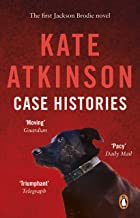
awarded to Kate Atkinson for Case Histories.  I read a lot of crime. Every couple of years I feel the need to revisit this almost perfect book. It's a crime novel that foregrounds the stories of the families of victims. This wasn’t a whodunnit but more an examination of the devastation caused by murder and loss. The examination of family life before and after the crimes is knife edge and utterly believable. The focus is on three unsolved murders and then we meet Jackson Brodie, the ex-cop, the damaged hero, who seems to blunder his way through the terrain to find the killers, to bring peace to the loved ones. There are bits of this book that I unashamedly cry at every time. A terrific crime story. Can’t wait until I read it next time!

The Celia Rees Award for Most Influential Children's Fantasy Novel goes to: The Box of Delights.

John Masefield's novel, published in 1935, is exactly that - a box of delights. It contains themes, characters and motifs that occur again and again in British children's fantasy fiction: shapeshifting, time travelling, a young protagonist on the cusp of adolescence singled out as having special powers, a wise old magician, a magical object that must be guarded at all cost, an epic battle between the forces of light and the forces of darkness, an evil, cunning and ruthless enemy and his equally unpleasant female companion, a midwinter setting with extreme weather, the timely intervention of mythical figures from British folklore - it's all there!

Katie Fforde
gives The Fforde Award for the book she didn't expect to fall in love with to The Dictionary of Lost Words, by Pip Williams. Quirky, imaginative and beautifully written, this is for people who love words, who are feminists in the very best sense. It’s about a little girl who is the daughter of a man among a team of many who are writing the dictionary. She discovers that some words are considered to be no longer useful. They are often words to do with women. We follow her life and the life of the dictionary and others involved in its creation. Highly recommended.

Adèle Geras' prize is the Snowglobe Award for the Best Short Book which Creates an Entire World, and the first winner is Claire Keegan's Small Things Like These.

A few days ago, I found a book which is as close to perfection as any I've read all year. It's tiny: a mere 75 pages and I read it in two sittings. I could have read it in one, but needed to think about it. It's the most extraordinarily beautifully- written tale, which encompasses huge themes and enormous emotions and manages to take you to the heart of a family in a specific place and time. Bill Furlong is a coal merchant in a small Irish town. He and his wife have six daughters. It's Christmas Eve, and the day before that. By the end, we are part of this town. I felt as if I'd been handed the most beautiful snowglobe, even though this place has darkness deep within it. A worthy winner of my award.

Sue Purkiss
awards the Purkiss Prize for a book (actually a whole series) that brings comfort - to the Inspector Gamache series by Louise Penny. 

Life’s a bit on the tough side at the moment, isn’t it? Of course, there are lots of good things too – but sometimes they threaten to be overwhelmed by the bad stuff.

The Inspector Gamache series offers a retreat from all this. Three Pines, where the books are mostly set, is a tiny village in the forest in Quebec. It’s not on any map, it doesn’t show up on a satnav: it’s a refuge. It’s peopled by eccentrics: Ruth, the mad old poet, Gabri and Olivier, who run the bistro and the B&B, Clara the artist – and eventually, Inspector Gamache himself, who is strong, clever, kind and incorruptible.

The characters are complex and satisfying, the stories are gripping – and the food! Ah, if only I had time to tell you about the food… Plus, there are seventeen books in the series.

John Newman of Newham Bookshop awards Newman’s Page Turner of the Year or A Reason to Remain to Sarah Winman.

Everybody loves a feel-good book and this year we really needed stories which celebrate friendship and the ties that bind. Sarah Winman gave us a real gift in the shape of  Still Life and I want to both celebrate it and of course unconditionally recommend it to you all. Spanning several decades of the last century we encounter lives interlinked by war, tragedy and change. Its roots are in London's East End but the core and real heart of it is very much centred in Italy and most especially the city of Florence which the author clearly loves. The big themes of the novel are addressed with a light touch via suitably diverse characters you quickly care about and leave behind with reluctance. This was my page turner of the year and one I felt privileged and confident to place in the hands of other like-minded souls.