Showing posts with label Patricia Elliott. Show all posts

Monday, 4 January 2021

Reading ahead - New Year anticipation, part 3


Here's the third and final part of our Reading Ahead feature, and again we take the chance to thank all our contributors for supplying us with great reviews and recommendations all year round. This last part includes a number of titles due for publication this year, so - whatever tier we're in - none of us will be short of tempting books to read. Several of the titles mentioned here will feature on the blog in the coming months. 

Happy New Year reading!

Paul Dowswell: I’ve enjoyed retreating into music non-fiction during the pandemic. It’s a perfect comfort read for an anxious time. Rock writer and music magazine creator, David Hepworth, has been churning out a book a year since 2016’s 1971 – Never a Dull Moment. It’s a particular pleasure to read his work because his brilliant but defunct monthly music magazine The Word is greatly missed. From its marvellous title and fabulous cover shot of the Rolling Stones dressed in drag onwards, Overpaid, Oversexed and Over There - How a Few Brits with Bad Teeth Rocked America promises a fascinating journey through an era (1960s to 80s) when British bands dominated American popular music. His previous books have shown that Hepworth excels in the quirky anecdote, and being a publishing entrepreneur as well as a music fan, he is always able to present a perceptive insight into the business side of ‘show business’. I’m snapping this up as soon as it comes out in paperback.

Pippa Goodhart:
I bought a book for my daughter Mary that I’m longing to read myself. It’s The Other Bennet Sister by Janice Hadlow. Hadlow has taken middle Bennet daughter, Mary, from Jane Austen’s Pride And Prejudice, and imagined what happened to her after Austen’s novel finishes. Mary is the plain and serious sister amongst lively beauties, and she fails to find a man to marry within P&P, but this novel promises to see her ‘grow into herself’, and, yes, find love. Perfect, I hope, for some escapism during cold Brexit January.

​Talking of ‘hope’, a treat I’m very much looking forward to in March is Hope Adams (a.k.a. Adèle Geras)’s novel set in 1841 on a ship bound for Australia with 180 women convicts on board. I know that the seed of this story was planted by a quilt in the V&A Quilt Exhibition from a few years ago that I saw. I love real history woven into rich story! Reading Dangerous Women, I look forward to jumping aboard that convict ship!

Michelle Lovric
: I read up to my thighs during lockdown 1: when I put them in a pile, that’s where the books reached. I wasn’t surprised to hear Bloomsbury are doing well: my literature consumption definitely increased with Covid. Books on my looking-forward-to list: Susanna Clarke’s Piranesi, Dangerous Women by Hope Adams, a.k.a Adèle Geras of this parish; Casanoviana, including an account of 2019’s symposium – in a real room, with touchable international scholars – on the World’s Most Misunderstood Venetian. I discovered Donal Ryan’s The Spinning Heart recently, so now the rest of his oeuvre’s beside the bed. What else to do when you run out of Niall Williams and Sebastian Barry? (Hint, gentlemen!) For three wonderful years, I attended a poetry masterclass with Robert Vas Dias. Just arrived: his The Poetics of Still Life. For my own work, lately much taken up with puffins and millinery, I’m about to start Denise Dreher’s From the Neck Up.

Jane Rogers:
 This year I have been on the lookout for fiction about the Climate Emergency. Because it’s such a vital and overwhelming topic, I’m curious to see how other writers are dealing with it. And I should admit I’m hoping to write a climate novel myself.

In the interests of this research I’ve read Chris Beckett’s America City (recommended) and Jenny Offill’s Weather (well written, but doesn’t live up to the hype). I was delighted to hear a recent Open Book on Radio 4 devote a full programme to climate change fiction, or Cli-fi, as they are now calling it. It has become a sub-genre all of its own! Apparently there is lots in the pipe-line; I want to start with Carys Bray’s new novel, When the Lights Go Out, which is set in the near future, with floods outdoors and a collapsing marriage indoors. Carys writes beautifully - I loved her short story collection Sweet Home. And Diana McCaulay’s Daylight, Come, set in a fictional island closely resembling Jamaica, where she lives, in a future where the days are so hot everyone has to sleep in the day and work at night, sounds fascinating.

Adèle Geras
There’s much to look forward to in 2021, and these are the books I’m longing to read. First is Marika Cobbold’s On Hampstead Heath. I’m a big fan of this writer, and this will be published in April by Arcadia Books. It’s set in one of my favourite parts of London and concerns a journalist who invents a story, for the best possible reasons. Enticing.

Then there’s Caroline Lea’s The Metal Heart, which has a very striking cover. It’s a wartime love story set in a camp for Italian prisoners of war in Scotland. I suspect I will need tissues. Coming in April from Michael Joseph.

My last choice is Atomic Love, by US author Jennie Fields. (Michael Joseph) This is about a woman scientist working on the Manhattan project. I’ve read the first couple of pages and am drawn in already....

It’s going to be another good year for fiction.

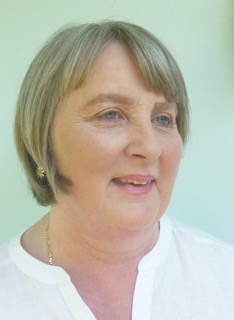
Patricia Elliott
: I'm intrigued to read Stuart Turton's new second novel, The Devil and the Dark Water, set on board a cursed ship sailing to Amsterdam in the seventeenth century, a dangerous voyage even without the murder and mayhem I'm promised. His first, The Seven Deaths of Evelyn Hardcastle, was an artful, twisty riff on a detective story, with a fiendishly complicated plot: a game he played with the reader. Turton is not a beautiful stylist but his writing is energetic and vivid, with startling similes. Also recently published, I think I shall enjoy Edward Parnell's Ghostland, in which the author goes on a cathartic journey after family tragedy, revisiting books and places in Britain's most haunted countryside. To reread? Among other books and inspired by the magnificent television adaptation of Philip Pullman's His Dark Materials, now finishing its second series, The Subtle Knife, my favourite of the trilogy, last read 25 years ago. Jon Appleton: Echoes of adored, established writers have lured me to some recent independent publishing.

Jon Appleton: 
Echoes of adored, established writers have lured me to some recent independent publishing.

The Continuity Girl by Patrick Kincaid (Unbound) promises ‘A lost movie. An elusive monster. One last chance…’ It’s billed as a novel for fans of Jonathan Coe (whose work I adore). There’s a fanatical fan and an old film retrieved and the stage is set for a glorious homage and reckoning with the world today. I can’t wait!

 Penelope Lively’s clashes of the mores of past and present (Treasures of Time, Judgement Day) remain reading highlights. (They’re funny, too.) I predict Simon Edge’s historical fiction will be equally beguiling. Anyone for Edmund (Lightning Books) pokes fun at Westminster culture and celebrates the cult of a medieval saint. I’ve also ordered his A Right Royal Face-off, which contrasts Gainsborough’s high art with celebrity TV.

Another indie publisher whose work impresses me is Louise Walters Books. I love novellas and The Sweep of the Bay by Cath Barton evokes the brilliant film 45 Years. Louise has just released Helen Kitson’s Old Bones ­– I can’t resist a quarry-found corpse and the repressed secrets of spinsters. Could we have another Ruth Rendell in the making?

Sue Purkiss:
In the last few years, like many of us, I’ve become more and more concerned about our environment and what we’re doing to it. So in the New Year I shall look forward to reading more books about nature. One will be The Running Hare, by John Lewis-Stempel, which has been strongly recommended to me by my brother-in-law, who has a smallholding in Ireland. I’ve also heard good things about James Rebanks’ new book, English Pastoral: and I have my eye on Surfacing, by Kathleen Jamie, who writes about wild places with a poet’s perception, though this, like an earlier book, Sightlines, is prose. (Of the most elegant, spare and focused kind.)

I still have some excellent birthday books to look forward to as well – The Lying Life of Adults, by Elena Ferrante, and The Diary of a Young Naturalist, by Dara McAnulty.


Dara McAnulty's Diary of a Young Naturalist is reviewed here by Gill Lewis.


Susanna Clarke's Piranesi is reviewed here by Adèle Geras.


We will feature a Question and Answer with Hope Adams (Adèle Geras) to mark the publication of Dangerous Women.


Monday, 31 December 2018

READING AHEAD Part 2: what's in our sights?


More of our contributors - including some new faces to the blog - give us their reading choices. What was on their Christmas list? What have they been hoarding for a special treat? Old favourites, new publications, authors recently discovered ... 

As ever, a big thank you to our guests, thanks to whose generosity we post a new review every Monday. We hope you'll find something here to add to your own to-be-read pile.


Savita Kalhan: I am eagerly awaiting Crossfire by Malorie Blackman, the fifth book in the iconic Noughts and Crosses series, which is to be published next summer. The original series for children was inspired by political events and racial discrimination. Crossfire is no different. Brexit, Trump and the rise of the far right, have inspired Crossfire, and will no doubt spark discussions amongst teenagers and adults alike.

Can We All Be Feminists is a collection of essays by seventeen writers from diverse backgrounds. Listening to some of the essayists at a Waterstones’ event, and reading Eishar Kaur’s essay on the way home on the train highlights how slow change continues to be – she is writing as a third generation British Asian woman and I am second generation – and also how ‘feminism’ can mean radically different things according to your background, ethnicity and colour.


Hilary McKay: Helen Macdonald's H is for Hawk was my car book. I have car books, I’ve had them for years. Comes from the days of waiting with hot water bottles in the dark outside music lessons, party venues, gyms, schools, all those places that I don’t wait outside of anymore because the children are grown up(ish). So I’ve brought it into the warm, thing of beauty that it is, with that cover. That hawk. Now I’m two chapters in, and it’s as I guessed and as I’ve heard, long distance poetry. I have no fear of finishing it because I know already I’ll just turn to the beginning and start again.


Jon Appleton: A few years ago Paul Burston made the seamless transition from writing hilarious comedies to dark, searching crime fiction. I enjoyed The Black Path hugely so am looking forward to Paul’s creative exploration of the dark side of social media in The Closer I Get (Orenda Books, May). Paul is massively savvy about the online world so I’m sure his take will be insightful and persuasive and his story compelling.

I love it when Jill Dawson takes characters from real life and immerses them in turbulent semi-fictional scenarios - her next book, The Language of Birds (Sceptre, April) plunges us into the 1970s and the infamous disappearance of Lord Lucan. Can’t wait! In the meantime why not read The Crime Writer, her most recent novel which is about Patricia Highsmith? Chilling.


Leslie Wilson: I'm looking forward to reading The Pursuit of Power, Europe 1815-1914, by Richard J Evans. Evans is an author who I greatly esteem, because he has written about Nazi Germany in a dispassionate, enlightening and scholarly way. This book, however, deals with the period between Waterloo and the outbreak of World War 1, the era that my English and Silesian-German grandparents were born into (the latter part, anyway). There was so much going on during that period; the revolutions of 1848, the growth of cultural and political nationalism, colonialism, technological change, but also feminism and trade unionism. Can't wait.


Nick Manns: I caught Paul Broks on Radio 4 last Spring. From this fleeting hearing I gathered that he was a respected neuropsychologist, talking about the importance of magical thinking. The Darker the Night, the Brighter the Stars defies categorisation (so is every bookseller’s nightmare). Depending on where you jump in – and Broks is happy for readers to work through in any order – it’s autobiography, speculative philosophy, neuroscience, grief memoir and ghost story. It's also unsettling: “There is no clear dividing line in the brain between inner imaginings and perceptions of the real, solid ‘world out there’. Reality and fantasy are built into the same neural circuits." I’m about to reread it, letting into the house the quotidian, the strange, the dead.


Gwen Grant: A Place in the Woods, by Helen Hoover, is one of my most treasured books. Chicagoans Helen and her husband, Adrian, move to the vast forests on the edge of Minnesota’s northern wilderness. Helen’s deep love and respect for the forest and its wild inhabitants shines through as she shares the beauty and
danger of this world..

Environmentalists, they face many challenges. A violent storm almost destroys their cabin. Hunters appear. Their money runs out. Only when Helen starts to sell her detailed and lovely stories about the woods, illustrated with Ade’s beautiful pen and ink drawings, does the threat to their new life begin to lessen.


Chris Priestley: Having had the privilege of illustrating Jason Reynolds’ Long Way Down and hearing him speak at the Edinburgh Book Festival in August, I intend to work my way through his other books. I’m going to start with When I Was the Greatest. 

I am a big fan of the short story form as a writer and reader, but for some reason I’ve never got round to reading any Flannery O’Connor. I’m about to put that right with A Good Man Is Hard to Find. I also have Alice Munro’s Moons of Jupiter to look forward to.


Mary Hoffman: The book I am most looking forward to is Hilary Mantel’s The Mirror and the Light, whenever it comes out. I adored the first two, which I have read twice - and seen the stage plays and TV adaptation twice too. Meanwhile I am on the London Library's waiting list for Diarmaid MacCullough’s Thomas Cromwell: a Life, and I do have the 642 pages of Giles Tremlett’s Isabella of Castile: Europe’s first Great Queen, waiting by my bedside, for when I’ve finished Charles Ross’s Edward lV. Almost all my non-fiction reading is history these days. On the fiction front, I shall wait till Kate Atkinson’s Transcription comes out in paperback in March, since I don’t buy fiction in hardback (I make an exception for Hilary Mantel). Anne Tyler’s Clock Dance isn’t available till July next year but Madeleine Miller’s Circe is on my Christmas list. 


Paul Dowswell: Francis Spufford’s Golden Hill is now on my ‘read again pile’, and I’m happy to recommend it to anyone looking for a riveting read. Spufford’s tale, of a young man recently arrived in colonial New York with an exceedingly large cheque, is a glorious cinematic, smell-o-vision adventure. I can’t remember the last time I read a book I could see so clearly in my mind’s eye. Benedict Cumberbatch, Tom Wilkinson and Oona Chaplin strutted the stage and read the pages for me. Spufford teaches creative writing at Goldsmiths. If he teaches half as well as he writes they are very lucky to have him.


Patricia Elliott: Rosie, the wonderful writer Rose Tremain's memories of growing up in sooty post-war London, with school holidays spent at the country paradise of Linkenholt, her grandparents' home, is both delightful and disturbing. Her father deserts the family when Rose is ten. Her bleak childhood, dominated by her cold, unkind mother, is alleviated only by her loving nanny, and by teachers who encourage her creativity when she is banished to boarding school so her mother can marry a new man. Only after being 'finished' in France, does she finally rebel and escape to Oxford. Some of the most interesting parts refer to incidents that have inspired her novels.


Cynthia Jefferies: Having recently discovered the British Library Crime Classics, what better title to choose for Christmas reading than J.Jefferson Farjeon’s Mystery in White, his Christmas Crime story? First published in 1937 it has an evocative cover complete with deep snow, stars twinkling and a steam train stuck in a snow drift. Four murders in a dozen hours! I reckon I’ve earned my bit of turkey. So says the police inspector, belatedly arriving at the scene. Eleanor Farjeon’s brother was prolific so I will be looking out for more. I love crime within this period a lot, almost enough to try it myself!


Sheena Wilkinson: Christmas is a time for old friends. This year Linda Newbery’s The Key to Flambards sent me back to K.M. Peyton’s originals. My own work in progress is set in 1921, so revisiting the post-war atmosphere of Flambards Divided is fascinating– though my book is set in Belfast which had its mind on things other than horses and racing cars. I’ve recently loved Kate Atkinson’s Transcription, and I hear there’s a new Jackson Brodie on the horizon next year. So that has settled my Christmas reading – a leisurely reread of the first four Jackson Brodie books to get me in the mood.


Linda Newbery:  I keep seeing clips and mentions of Chimamanda Ngozi Adichie (not least interviewing Michelle Obama at the Festival Hall!) and am impressed by everything she says.  Americanah, a story of two returned Nigerian exiles, former lovers, sounds enticing - and I've just seen that Barack Obama has chosen it as one of his books of the year, too. Having been gripped by Michelle Paver's chilling Dark Matter, I've now got Thin Air, a ghost story set in the Himalayas in the 1930s. And I have high expectations of The Binding, a first adult novel by Bridget Collins, known for her bold and accomplished teenage fiction. We'll hear more about this for sure, and just look at that sumptuous cover!


Finally here is Bridget herself, who'll be a January guest:

Bridget Collins: I’m really looking forward to re-reading Naomi Novik’s Spinning Silver. It’s a
Photo: Symon Hamer
brilliant, immersive reworking of the Rumpelstiltskin story, with wonderfully rich world-building and great characters. The images that stay with me are so beautiful (think silver, ice, dissolving mirrors, silk) that I can’t wait to rediscover them. The first time I read it I just devoured it – but then, because it was so in demand, I had to give it straight back to the library! So I’m going to buy it and go more slowly this time, relishing every word.