Showing posts with label Michelle Lovric. Show all posts

Monday, 4 January 2021

Reading ahead - New Year anticipation, part 3


Here's the third and final part of our Reading Ahead feature, and again we take the chance to thank all our contributors for supplying us with great reviews and recommendations all year round. This last part includes a number of titles due for publication this year, so - whatever tier we're in - none of us will be short of tempting books to read. Several of the titles mentioned here will feature on the blog in the coming months. 

Happy New Year reading!

Paul Dowswell: I’ve enjoyed retreating into music non-fiction during the pandemic. It’s a perfect comfort read for an anxious time. Rock writer and music magazine creator, David Hepworth, has been churning out a book a year since 2016’s 1971 – Never a Dull Moment. It’s a particular pleasure to read his work because his brilliant but defunct monthly music magazine The Word is greatly missed. From its marvellous title and fabulous cover shot of the Rolling Stones dressed in drag onwards, Overpaid, Oversexed and Over There - How a Few Brits with Bad Teeth Rocked America promises a fascinating journey through an era (1960s to 80s) when British bands dominated American popular music. His previous books have shown that Hepworth excels in the quirky anecdote, and being a publishing entrepreneur as well as a music fan, he is always able to present a perceptive insight into the business side of ‘show business’. I’m snapping this up as soon as it comes out in paperback.

Pippa Goodhart:
I bought a book for my daughter Mary that I’m longing to read myself. It’s The Other Bennet Sister by Janice Hadlow. Hadlow has taken middle Bennet daughter, Mary, from Jane Austen’s Pride And Prejudice, and imagined what happened to her after Austen’s novel finishes. Mary is the plain and serious sister amongst lively beauties, and she fails to find a man to marry within P&P, but this novel promises to see her ‘grow into herself’, and, yes, find love. Perfect, I hope, for some escapism during cold Brexit January.

​Talking of ‘hope’, a treat I’m very much looking forward to in March is Hope Adams (a.k.a. Adèle Geras)’s novel set in 1841 on a ship bound for Australia with 180 women convicts on board. I know that the seed of this story was planted by a quilt in the V&A Quilt Exhibition from a few years ago that I saw. I love real history woven into rich story! Reading Dangerous Women, I look forward to jumping aboard that convict ship!

Michelle Lovric
: I read up to my thighs during lockdown 1: when I put them in a pile, that’s where the books reached. I wasn’t surprised to hear Bloomsbury are doing well: my literature consumption definitely increased with Covid. Books on my looking-forward-to list: Susanna Clarke’s Piranesi, Dangerous Women by Hope Adams, a.k.a Adèle Geras of this parish; Casanoviana, including an account of 2019’s symposium – in a real room, with touchable international scholars – on the World’s Most Misunderstood Venetian. I discovered Donal Ryan’s The Spinning Heart recently, so now the rest of his oeuvre’s beside the bed. What else to do when you run out of Niall Williams and Sebastian Barry? (Hint, gentlemen!) For three wonderful years, I attended a poetry masterclass with Robert Vas Dias. Just arrived: his The Poetics of Still Life. For my own work, lately much taken up with puffins and millinery, I’m about to start Denise Dreher’s From the Neck Up.

Jane Rogers:
 This year I have been on the lookout for fiction about the Climate Emergency. Because it’s such a vital and overwhelming topic, I’m curious to see how other writers are dealing with it. And I should admit I’m hoping to write a climate novel myself.

In the interests of this research I’ve read Chris Beckett’s America City (recommended) and Jenny Offill’s Weather (well written, but doesn’t live up to the hype). I was delighted to hear a recent Open Book on Radio 4 devote a full programme to climate change fiction, or Cli-fi, as they are now calling it. It has become a sub-genre all of its own! Apparently there is lots in the pipe-line; I want to start with Carys Bray’s new novel, When the Lights Go Out, which is set in the near future, with floods outdoors and a collapsing marriage indoors. Carys writes beautifully - I loved her short story collection Sweet Home. And Diana McCaulay’s Daylight, Come, set in a fictional island closely resembling Jamaica, where she lives, in a future where the days are so hot everyone has to sleep in the day and work at night, sounds fascinating.

Adèle Geras
There’s much to look forward to in 2021, and these are the books I’m longing to read. First is Marika Cobbold’s On Hampstead Heath. I’m a big fan of this writer, and this will be published in April by Arcadia Books. It’s set in one of my favourite parts of London and concerns a journalist who invents a story, for the best possible reasons. Enticing.

Then there’s Caroline Lea’s The Metal Heart, which has a very striking cover. It’s a wartime love story set in a camp for Italian prisoners of war in Scotland. I suspect I will need tissues. Coming in April from Michael Joseph.

My last choice is Atomic Love, by US author Jennie Fields. (Michael Joseph) This is about a woman scientist working on the Manhattan project. I’ve read the first couple of pages and am drawn in already....

It’s going to be another good year for fiction.

Patricia Elliott
: I'm intrigued to read Stuart Turton's new second novel, The Devil and the Dark Water, set on board a cursed ship sailing to Amsterdam in the seventeenth century, a dangerous voyage even without the murder and mayhem I'm promised. His first, The Seven Deaths of Evelyn Hardcastle, was an artful, twisty riff on a detective story, with a fiendishly complicated plot: a game he played with the reader. Turton is not a beautiful stylist but his writing is energetic and vivid, with startling similes. Also recently published, I think I shall enjoy Edward Parnell's Ghostland, in which the author goes on a cathartic journey after family tragedy, revisiting books and places in Britain's most haunted countryside. To reread? Among other books and inspired by the magnificent television adaptation of Philip Pullman's His Dark Materials, now finishing its second series, The Subtle Knife, my favourite of the trilogy, last read 25 years ago. Jon Appleton: Echoes of adored, established writers have lured me to some recent independent publishing.

Jon Appleton: 
Echoes of adored, established writers have lured me to some recent independent publishing.

The Continuity Girl by Patrick Kincaid (Unbound) promises ‘A lost movie. An elusive monster. One last chance…’ It’s billed as a novel for fans of Jonathan Coe (whose work I adore). There’s a fanatical fan and an old film retrieved and the stage is set for a glorious homage and reckoning with the world today. I can’t wait!

 Penelope Lively’s clashes of the mores of past and present (Treasures of Time, Judgement Day) remain reading highlights. (They’re funny, too.) I predict Simon Edge’s historical fiction will be equally beguiling. Anyone for Edmund (Lightning Books) pokes fun at Westminster culture and celebrates the cult of a medieval saint. I’ve also ordered his A Right Royal Face-off, which contrasts Gainsborough’s high art with celebrity TV.

Another indie publisher whose work impresses me is Louise Walters Books. I love novellas and The Sweep of the Bay by Cath Barton evokes the brilliant film 45 Years. Louise has just released Helen Kitson’s Old Bones ­– I can’t resist a quarry-found corpse and the repressed secrets of spinsters. Could we have another Ruth Rendell in the making?

Sue Purkiss:
In the last few years, like many of us, I’ve become more and more concerned about our environment and what we’re doing to it. So in the New Year I shall look forward to reading more books about nature. One will be The Running Hare, by John Lewis-Stempel, which has been strongly recommended to me by my brother-in-law, who has a smallholding in Ireland. I’ve also heard good things about James Rebanks’ new book, English Pastoral: and I have my eye on Surfacing, by Kathleen Jamie, who writes about wild places with a poet’s perception, though this, like an earlier book, Sightlines, is prose. (Of the most elegant, spare and focused kind.)

I still have some excellent birthday books to look forward to as well – The Lying Life of Adults, by Elena Ferrante, and The Diary of a Young Naturalist, by Dara McAnulty.


Dara McAnulty's Diary of a Young Naturalist is reviewed here by Gill Lewis.


Susanna Clarke's Piranesi is reviewed here by Adèle Geras.


We will feature a Question and Answer with Hope Adams (Adèle Geras) to mark the publication of Dangerous Women.


Monday, 25 December 2017

CHRISTMAS ROUND-UP Part 2: Books of the Year chosen by our contributors and ourselves


Happy Christmas! Here are plenty of recommendations to see you into the New Year, and another chance to thank our excellent contributors for making this blog so full and varied. Do tell us in the comments what you've most enjoyed this year.

BERLIE DOHERTY: 

I'd like to recommend Riverkeep by Martin Stewart. It's innovative,
evocative and thrilling, full of strange, interesting ideas and characters, a coming-of-age quest fantasy novel that kept me reading all night long.


Another recommendation would be To The Bright Edge of the World  by Eowin Ivey, also a river quest. The title has a double meaning - the story is set in Alaska, and is about exploration and photography, as well as about human endurance and love. Written in several voices as logs, letters and diary entries, it is completely involving.

CATHERINE JOHNSON:
Why I'm No Longer Talking to White People About Race, by Reni Eddo-Lodge. Thank God for young people! For many of us, light skinned enough to pass, and/or brought up in a time when we had to be grateful for everything and not shout too loud and also remember to work three times as hard as anyone else (you're not white, you're a woman x2) Eddo-Lodge's book is a breath of fresh air. Read it and understand better how structural racism impacts on all of us.

The Girls by Emma Cline is a not entirely perfect first novel, but a great read which I loved for that absolutely pitch-perfect portrayal of what being 14 feels like. On the edge of a world you don't understand but want to rush headlong into, without understanding anything. That intensity of feeling and that impatience to be someone else. It's so worth your time.


ANTHONY McGOWAN:

Keeping On Keeping On, the latest volume of Alan Bennett’s diaries and other prose. I find Bennett endlessly funny and moving. The book is enormous, but I read it in a couple of days, constantly struck by the perfection of the writing. In some ways The Art of Failing is my attempt to ‘do’ Alan Bennett.

Richard Beard’s The Day That Went Missing, tells an impossibly sad, indeed tragic, story of family loss, in prose of restrained elegance.

It took me almost a year to finish Peter Frankopan’s magisterial The Silk Roads, but now my head is crammed with unforgettable facts, and I’ll never again think of Western Europe as being the centre of the world. To read the book is to look East, with wonder and admiration.

MIRIAM MOSS:

My Name is Leon by Kit de Waal. Shortlisted for the Costa First Novel prize, this is a powerful, authentic story about a boy desperate to reunite his broken family.


Cove by Cynan Jones (Catapult) is a minimalist story (just 100 pages) of an injured man adrift at sea. Lyrical, visceral and intense.

YVONNE COPPARD:

City of the Mind by Penelope Lively. Architect Matthew Holland is involved in the major reconstruction of the London Docklands. The blend of past and present his work evokes is reflected in his own emotional landscape as he journeys away from loss and loneliness towards a more hopeful future.I read this again for the umpteenth time this year and am still enchanted by the poetic quality of Penelope Lively’s writing and the seamless, circular nature of nature of Time that it evokes.


SUE PURKISS:

On holiday in Norfolk earlier this year I fell in love with the coastline and seascape, and came across a series of books that captures all that and also introduces you to a lovely band of friends. They’re by Elly Griffiths: the first is called At the Crossing Places and they are sort-of detective stories - but the people and place are far more important than the crimes. Wonderful.

MICHELLE LOVRIC:

Amanda Craig’s brilliant The Lie of the Land and Max Porter’s dazzling Grief Is the Thing with Feathers; then there's Lincoln in the Bardo, which I’ve just finished, but I fear that to define this novel for others might well be to corrupt the unusual experience of reading it.


The same goes for The Underground Railway (Colson Whitehead) one of my most admired books of this year and Sandra Newman’s The Country of Ice Cream Star, one of my most admired books of any year.

JANE HARRIS: 

The Bone Readers by Jacob Ross is a piece of crime fiction set on the Caribbean island of Camaho - a fictionalised version of Grenada. A beautifully-written, suspenseful tale.


The Wife, by Meg Wolitzer, is a clever and witty novel about a woman who helps her writer husband build a successful career, while neglecting her own ambitions.

CINDY JEFFERIES:

The Tenderness of Wolves by Stef Penney. Wow! What a great winter novel! Frozen lakes, all kinds of snow, and a beautifully told story from several points of view. Moving, tense and with some very diverse characters drawn along the same, masterfully created plot. No wonder if was the 2006 Costa book of the year. Best read curled up in front of a warm fire with the wind howling outside and a glass of something delicious to hand.


GRAEME FIFE:
Masters of Atlantis by Charles Portis is a delicious satire of surpassing invention, dotty literalism, dry comedy. Portis has the understated shifts of a cunning artist of deft insult. The effect of his comedy is like a slap on the pate with a fish slice, a gliding insertion of the narrow blade, a raised eyebrow before the incredulous sigh.


In her startling book Riot Days, Maria Alyokhina, of Pussy Riot, writes of her brutal time in prison: ‘I would like to live my life in such a way that whatever I leave behind has something to do with freedom and truth and not with the emptiness that these words become as I speak them.’ Reading such a testament of courage and self-knowledge, of withering examination of the cruder instincts of humanity, oppressed by cold, hunger, a brutal regime, absurd regulation, makes me feel inadequate.

CELIA REES:
The Lost Words… I’m simply lost for words, superlatives, anyway. Outstanding book of this year, or any year. Beautiful and profound - everyone should experience it.


My other book would be The Brontë Cabinet: Three Lives in Nine Objects by Deborah Lutz, which is a must for all fans of the Yorkshire siblings. From Emily’s writing desk to Branwell’s walking stick, Deborah Lutz manages to bring fresh, new perspectives to the much trammelled world of the Brontës by viewing their lives through their possessions.

LINDA NEWBERY:

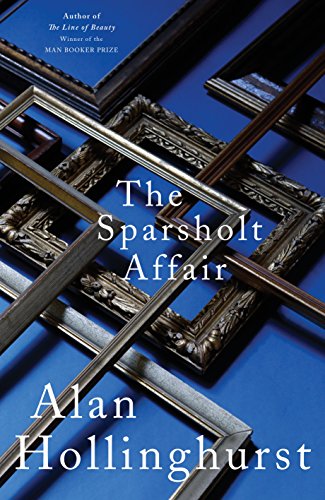
Like Alan Hollinghurst's previous novel, The Stranger's Child, The Sparsholt Affair spans  several generations, from Oxford in the Blitz, through the London art world in the seventies and eighties, to the present. It teases us with the affair of the title, which occurs off-page and is never fully explained, though significant to several of the characters. There's an elegant sense of place, period detail and the nuances of behaviour, as you'd expect from Booker-winner Hollinghurst, and a pervading sense of the difficulty of knowing other people.

I also loved Dan Pearson's Natural Selection, (reviewed here on publication in May) - a bringing together of pieces he wrote for the Observer as its weekly garden columnist. Pearson is both an influential garden designer and an accomplished writer, sensitive to place, season, weather and shifts of light. Since hearing him speak at the Oxford Festival this spring I've been enjoying the Saturday treat of his weekly blog, Dig Delve.

ADĒLE GERAS:

Two books I'd like to find under the Christmas tree are -

Life in the Garden by Penelope Lively. Although I'm not a gardener, I love visiting gardens and also reading and writing about them. I've been a fan of Penelope Lively's work for both adults and children since the seventies, so this is a perfect book: a beautiful, velvet-to-the-touch hardback full of Lively's characteristic good sense and imagination.
Devil's Day by Andrew Michael Hurley. I loved Hurley's first novel, The Loney, and I think that this is even better. I've named this genre SOGGY RURAL NOIR and this is a prime example. No other book has made me more grateful for my suburban comforts! It has a touch of spookiness about it and is wonderfully involving throughout.