Showing posts with label Anthony McGowan. Show all posts

Monday, 25 December 2017

CHRISTMAS ROUND-UP Part 2: Books of the Year chosen by our contributors and ourselves


Happy Christmas! Here are plenty of recommendations to see you into the New Year, and another chance to thank our excellent contributors for making this blog so full and varied. Do tell us in the comments what you've most enjoyed this year.

BERLIE DOHERTY: 

I'd like to recommend Riverkeep by Martin Stewart. It's innovative,
evocative and thrilling, full of strange, interesting ideas and characters, a coming-of-age quest fantasy novel that kept me reading all night long.


Another recommendation would be To The Bright Edge of the World  by Eowin Ivey, also a river quest. The title has a double meaning - the story is set in Alaska, and is about exploration and photography, as well as about human endurance and love. Written in several voices as logs, letters and diary entries, it is completely involving.

CATHERINE JOHNSON:
Why I'm No Longer Talking to White People About Race, by Reni Eddo-Lodge. Thank God for young people! For many of us, light skinned enough to pass, and/or brought up in a time when we had to be grateful for everything and not shout too loud and also remember to work three times as hard as anyone else (you're not white, you're a woman x2) Eddo-Lodge's book is a breath of fresh air. Read it and understand better how structural racism impacts on all of us.

The Girls by Emma Cline is a not entirely perfect first novel, but a great read which I loved for that absolutely pitch-perfect portrayal of what being 14 feels like. On the edge of a world you don't understand but want to rush headlong into, without understanding anything. That intensity of feeling and that impatience to be someone else. It's so worth your time.


ANTHONY McGOWAN:

Keeping On Keeping On, the latest volume of Alan Bennett’s diaries and other prose. I find Bennett endlessly funny and moving. The book is enormous, but I read it in a couple of days, constantly struck by the perfection of the writing. In some ways The Art of Failing is my attempt to ‘do’ Alan Bennett.

Richard Beard’s The Day That Went Missing, tells an impossibly sad, indeed tragic, story of family loss, in prose of restrained elegance.

It took me almost a year to finish Peter Frankopan’s magisterial The Silk Roads, but now my head is crammed with unforgettable facts, and I’ll never again think of Western Europe as being the centre of the world. To read the book is to look East, with wonder and admiration.

MIRIAM MOSS:

My Name is Leon by Kit de Waal. Shortlisted for the Costa First Novel prize, this is a powerful, authentic story about a boy desperate to reunite his broken family.


Cove by Cynan Jones (Catapult) is a minimalist story (just 100 pages) of an injured man adrift at sea. Lyrical, visceral and intense.

YVONNE COPPARD:

City of the Mind by Penelope Lively. Architect Matthew Holland is involved in the major reconstruction of the London Docklands. The blend of past and present his work evokes is reflected in his own emotional landscape as he journeys away from loss and loneliness towards a more hopeful future.I read this again for the umpteenth time this year and am still enchanted by the poetic quality of Penelope Lively’s writing and the seamless, circular nature of nature of Time that it evokes.


SUE PURKISS:

On holiday in Norfolk earlier this year I fell in love with the coastline and seascape, and came across a series of books that captures all that and also introduces you to a lovely band of friends. They’re by Elly Griffiths: the first is called At the Crossing Places and they are sort-of detective stories - but the people and place are far more important than the crimes. Wonderful.

MICHELLE LOVRIC:

Amanda Craig’s brilliant The Lie of the Land and Max Porter’s dazzling Grief Is the Thing with Feathers; then there's Lincoln in the Bardo, which I’ve just finished, but I fear that to define this novel for others might well be to corrupt the unusual experience of reading it.


The same goes for The Underground Railway (Colson Whitehead) one of my most admired books of this year and Sandra Newman’s The Country of Ice Cream Star, one of my most admired books of any year.

JANE HARRIS: 

The Bone Readers by Jacob Ross is a piece of crime fiction set on the Caribbean island of Camaho - a fictionalised version of Grenada. A beautifully-written, suspenseful tale.


The Wife, by Meg Wolitzer, is a clever and witty novel about a woman who helps her writer husband build a successful career, while neglecting her own ambitions.

CINDY JEFFERIES:

The Tenderness of Wolves by Stef Penney. Wow! What a great winter novel! Frozen lakes, all kinds of snow, and a beautifully told story from several points of view. Moving, tense and with some very diverse characters drawn along the same, masterfully created plot. No wonder if was the 2006 Costa book of the year. Best read curled up in front of a warm fire with the wind howling outside and a glass of something delicious to hand.


GRAEME FIFE:
Masters of Atlantis by Charles Portis is a delicious satire of surpassing invention, dotty literalism, dry comedy. Portis has the understated shifts of a cunning artist of deft insult. The effect of his comedy is like a slap on the pate with a fish slice, a gliding insertion of the narrow blade, a raised eyebrow before the incredulous sigh.


In her startling book Riot Days, Maria Alyokhina, of Pussy Riot, writes of her brutal time in prison: ‘I would like to live my life in such a way that whatever I leave behind has something to do with freedom and truth and not with the emptiness that these words become as I speak them.’ Reading such a testament of courage and self-knowledge, of withering examination of the cruder instincts of humanity, oppressed by cold, hunger, a brutal regime, absurd regulation, makes me feel inadequate.

CELIA REES:
The Lost Words… I’m simply lost for words, superlatives, anyway. Outstanding book of this year, or any year. Beautiful and profound - everyone should experience it.


My other book would be The Brontë Cabinet: Three Lives in Nine Objects by Deborah Lutz, which is a must for all fans of the Yorkshire siblings. From Emily’s writing desk to Branwell’s walking stick, Deborah Lutz manages to bring fresh, new perspectives to the much trammelled world of the Brontës by viewing their lives through their possessions.

LINDA NEWBERY:

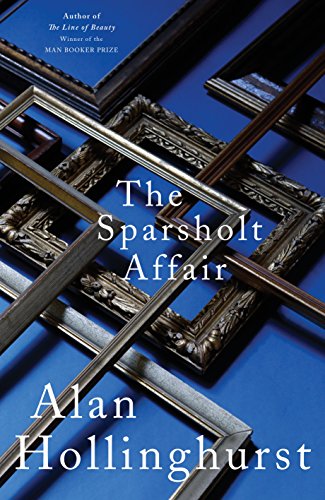
Like Alan Hollinghurst's previous novel, The Stranger's Child, The Sparsholt Affair spans  several generations, from Oxford in the Blitz, through the London art world in the seventies and eighties, to the present. It teases us with the affair of the title, which occurs off-page and is never fully explained, though significant to several of the characters. There's an elegant sense of place, period detail and the nuances of behaviour, as you'd expect from Booker-winner Hollinghurst, and a pervading sense of the difficulty of knowing other people.
I also loved Dan Pearson's Natural Selection, (reviewed here on publication in May) - a bringing together of pieces he wrote for the Observer as its weekly garden columnist. Pearson is both an influential garden designer and an accomplished writer, sensitive to place, season, weather and shifts of light. Since hearing him speak at the Oxford Festival this spring I've been enjoying the Saturday treat of his weekly blog, Dig Delve.

ADĒLE GERAS:

Two books I'd like to find under the Christmas tree are -

Life in the Garden by Penelope Lively. Although I'm not a gardener, I love visiting gardens and also reading and writing about them. I've been a fan of Penelope Lively's work for both adults and children since the seventies, so this is a perfect book: a beautiful, velvet-to-the-touch hardback full of Lively's characteristic good sense and imagination.
Devil's Day by Andrew Michael Hurley. I loved Hurley's first novel, The Loney, and I think that this is even better. I've named this genre SOGGY RURAL NOIR and this is a prime example. No other book has made me more grateful for my suburban comforts! It has a touch of spookiness about it and is wonderfully involving throughout. 

Monday, 13 November 2017

Guest Anthony McGowan on writing THE ART OF FAILING: Notes from the Underdog


Anthony McGowan was born in Manchester, brought up in Leeds, and lives in London. He is the author of two adult thrillers, and seven award-winning young adult novels: Hellbent, Henry Tumour, The Knife That Killed Me, The Fall, Brock, Hello Darkness, Pike and, most recently, Rook. His books for younger children include The Bare Bum Gang series, Einstein’s Underpants, Leopard Adventure, and The Donut Diaries of Dermot Milligan. His humorous memoir, The Art of Failing, was published by Oneworld in September 2017. Everybody Hurts, a YA novel written with Joanna Nadin, also came out in 2017, and has, along with Rook, been nominated for the Carnegie Medal.

My latest book, The Art of Failing, is an odd fish. Or perhaps more a Chimera, that mythical monstrosity made up of more or less random parts collected from other animals. Part memoir, part journal, part essay collection, with a few scraps of light verse (could anything be more out of fashion?), with meditations, ruminations, complaints, jokes, puzzled reflections, whimsical digressions, it seems rambling, but there is a narrative of sorts concealed in there for those who have the patience to look.

It’s not quite right to say that The Art of Failing is my Facebook book, ie my old Facebook posts, tarted up, and offered to the world as an original work of art. Not quite correct, but not absolutely false, either. I signed up for Facebook towards the end of 2007. I can’t recall why – just a whim, I guess, blown along by the fact it was free. For a couple of years, I didn’t do much with it. The same with Twitter. I was on social media in the most nominal and passive way. I was there because people told me I should be.

And then I got stuck in Washington during the 2010 ash cloud. I recorded the experience on Facebook, accentuating various indignities – getting caught by room service washing my underpants in the hotel sink, that sort of thing. I discovered that I’d invented a persona – me and yet not me. Incompetent in the small things of life, ponderous, accident prone, neurotic, a little obsessive. Funny, too, I hoped. I found it was a voice that was very easy to write in. Perhaps because it was both me and not me – close enough for the act of writing to be organic, rather than fake, but far enough away for me to be able to go into areas I’d have turned away from if the ‘I’ had been more straightforwardly me.

I found that people enjoyed these posts, and so I continued with this ‘character’ after I returned. Facebook is, of course, collaborative and responsive – this was like having a live audience, and I soon found what sort of stories worked – in the sense of garnering ‘likes’ (my humiliations, occasional moments of poetic revelation, more stuff about my trouser-based catastrophes) and what didn’t (anything about cricket, my bitter attacks on more successful writers, my exultant crowing over small scale victories).

But there were other things going on as well – other, I mean, than my attempt to amuse the passing Facebook trade. One of my main goals was to show that ‘ordinary’, everyday life was full of drama and strangeness, that a fascination could be found in the junk and dreck that lies around us, that ordinary people – the characters I encountered every day on the streets of West Hampstead – were worthy of a kind of anthropological study. Just as van Leeuwenhoek made us see fleas and pinheads and water droplets in a new way, discovering in them the bizarrely beautiful, I thought I could turn my gaze on the mundane and make it … well, less mundane.

Almost from the start I thought that there might be something here I could turn into a book. Or at least that the Facebook posts themselves were a sort of literary or artistic production. Not simply a record of my life, but a thing that might have a wider interest or significance. My goal came to subtly change. Could I say something important about life in the 21st Century? Could I give the reader the sense of what it feels like to be me – both a particular human being living in a humdrum London suburb, and a universal type?

So I took my Facebook posts (more than half a million words), printed them out as a massive Word document, and had a look to see what was there. Much of it was dross. Perhaps a third was of only passing interest. But the rest had … something. My wife – always my staunchest critic, the Penicillin to the rampant bacillus of my ego was, despite her best efforts, impressed. I suppose it may have helped that she’s a major character – the dreaded Mrs McG of the text. Mrs McG is terrible, but beautiful. And who wouldn’t settle for that?

But the text still needed a lot of work. I slashed it further, and I wrote and rewrote, expanding it as much as I cut. Finally, it was ready, I thought, for my agent.

She hated it.

She said it would ruin my career, and damage hers. She suggested that the whole of publishing and possibly Western Civilization was in jeopardy, should it see the light of day.

This was a blow. She was, without doubt, one of the finest and most powerful agents in the children’s book world, but beyond that, I loved her, and she’d been great for me over the years. But I’d gone this far, and there was no turning back. My friend Charlie Campbell took me on, helped to further refine the text, and finally hand-sold it, talking the ears off anyone who’d meet him. It was a brilliant piece of agenting – he sold the unsellable. He was greatly aided by a very kind quote from Nick Hornby – someone I knew only through Facebook. Without his sweet words, it might never have got the few minutes' attention every book needs, if it’s to squirm its way out of the slushpile.

In the end the book went to Oneworld – a wonderful indie, riding high on the back of consecutive Booker wins. My editor at Oneworld, Sam Carter, was fantastically committed to the project, and gave the manuscript the best editing I’ve ever had.

And now it’s out, a thing in the world. It means more to me than any book since my first, back in the early noughties. It’s always impossible to know, as a writer, what people really think of your books. People are kind. They don’t want to hurt your feelings. They might want you to review their book generously next year. But I’ve genuinely felt that those few people who have read it have derived amusement from it. Maybe more.

Several people have pointed out the paradoxical fate that awaits the book. If it’s successful, then it refutes the theme. If it fails, it triumphantly confirms its own prophecy. Really, I can’t lose. Or win.

The Art of Failing is published by Oneworld.