Showing posts with label Katherine Langrish. Show all posts

Monday, 24 May 2021

Guest review by Lesli Wilson: FROM SPARE OOM TO WAR DROBE by Katherine Langrish


"Imagine revisiting a magical place you loved as a child, a place that engrossed you so much that you had to revisit it again and again..."

Lesli Wilson is the author of two novels for adults and two for young adults. Last Train from Kummersdorf was shortlisted for the Guardian Children's Fiction Prize and the Branford Boase Award; Saving Rafael was nominated for the Carnegie Medal and Highly Commended for the Southern Schools Book Award. Both deal with Nazi Germany. Lesli Wilson is half German, was brought up bilingual, and has spent considerable amounts of time in Germany. She is currently working on a novel for adults, set in the very early nineteenth century.

It is a very risky business to write about such a much-loved children's book series (to say nothing of films, but I like the books way better) as C.S. Lewis's Narnia books. I used to think I was the only child who ever walked hopefully into wardrobes (I chose my grandmother's rather small one, which did, however, have a moth-bally fur coat in it). Of course I wasn't alone. Katherine Langrish was one, for a start. I should think many thousands of kids did. Langrish also wrote her own Narnia stories, based on the stories that Jewel the Unicorn tells Eustace and Jill in the dying days of that world. She was trying to create more magic, but discovered that the hard work of writing made that difficult. This is a different way in, and whether she recreated the magic for herself, she certainly succeeds for the reader of her book.

Imagine revisiting a magical place you loved as a child, a place that engrossed you so much that you had to revisit it again and again, and even when you went back as an adult the enchantment still gripped you, almost in spite of yourself. Now imagine that you go there with a guide, a guide who has always found it as exciting and enchanting as you did, who is able, not just to walk you back along those old paths of thrilled delight and sadness, mountains, forests, seascapes, but who has extra information you didn't have when you went there - but whose information increases your understanding without threatening to spoil the magic; explains without explaining away.That's how I felt when I was reading From Spare Oom to War Drobe.

Langrish shows us the roots of many of the stories' motifs. The green serpent-witch who abducts Prince Rilian is rooted in the Lindwurm dragons of Norse (and Germanic, incidentally) legend and North of England folk songs, but also in the 'Dame of the fine green kirtle' in a Scottish fairy tale. Aslan's How, in Prince Caspian, so much resembles a Neolithic passage-grave in Ireland, that Langrish reckons Lewis must have known of it, if he didn't visit it (Lewis being a Northern Irishman, born in Belfast). Langrish is well-versed in a wide range of folk tale, this being the theme of her Seven Miles of Steel Thistles blog, and the author of a previous book about myth and legend. In addition, she supplies the answer to something that has puzzled me for about 60 years: why it is important, in writing King Peter's challenge to King Miraz (Prince Caspian) to put an h in abhominable (ab homin in Latin, inhuman) Though maybe, I think, it is all too human to murder for a crown.

None of this destroys the wonder of the books. That it doesn't is partly due to Lewis's artistry; he used these themes and images and set them to work in his own story, in his own way. But what we learn from Spare Oom to War Drobe is how no story, of any kind, exists in a vaccuum. All of us who write are swimming in the sea of motif and poetry that has been washing around in the human psyche since language began and the first stories were told; before that, probably, for in the basement of the psyche, as in Jung's dream of descending there, which is recounted in the introduction to this book, there are images and moving objects that stem from pre-verbal times. I am not strictly speaking a Jungian, but I'm quite sure there is such a thing as the collective unconscious.

Langrish even refers to The Waste Land, in terms of the rich infiltration of other writings into Narnia. I would reference the Four Quartets myself, because that poem enchanted me from a very young age, when my parents got the record of Eliot reading it. But there's nothing self-consciously post-modern about Narnia.

We are also reminded of the genuine sadness that infuses the books, particularly when Digory, in The Magician's Nephew, asks Aslan for 'something that will cure Mother', and Aslan's answer is 'Grief is great.' Lewis lost his mother as a boy; when I read The Magician's Nephew, it wasn't very long after I had been taken to say goodbye to my mother in hospital, lying on the pillow, weak and white-faced, like the mother in that book. Luckily, my mother, like Mrs Kirke, did not die after all, but the resonance went to my heart; there are terrible things that adults, with the best will in the world, cannot protect children from. Children need books that boldly acknowledge the pain of that.

Of course the books have aspects that are repellent to modern readers. Langrish doesn't feel that the book is misogynistic, as some have claimed, pointing out that the initiative is often taken by female characters, in particular Lucy, but also the resourceful and skilful Jill. The portrayal of the Calormenes, however, is loathsome, and Langrish as an adult is repelled by it. As for the demonisation of progressive schools, pacifism, vegetarianism, and the glorification of corporal punishment as a means of developing character – well, it was a different age.

But I so agree with Langrish about the dreadful ending of The Last Battle. I read that book with a sense of mounting outrage – though now, reading her account of it, I can see the link between the confusion of truth and falsehood there and what we see going on in our own times. Like her, I hated the idea of a Narnia that was expanding, and the constant travel to a bigger Narnia – what was the point if you couldn't linger? And though I know more about neo-Platonism now than I did, I still think it has been far better described by Plato himself and theologians like the Quaker Isaac Penington. But I also disliked the way in which Aslan morphed into the He who was ubiquitous in church services. Langrish was a child brought up in conventional Christianity, but for her also Narnia was never an allegory of the Gospels. What she does point out is the disturbing parallel between the use of lies to gain power in that final book and the issues that trouble us nowadays.

I referred to the Four Quartets earlier; in its last stanzas Eliot writes that the end of all our exploring should be to arrive where we started and know that place for the first time. Reading this book took me back to the children in the apple tree, to the child I once was, (lying on my stomach and eating apples,like Polly in the attic, in The Magician's Nephew) and yes, it has helped me to understand so much more about that place than I did when I first went there.

 From Spare Oom to War Drobe: Travels in Narnia with my nine year-old self is published by Darton, Longman and Todd.

Katherine Langrish's Seven Miles of Steel Thistles is reviewed on this blog by Penny Dolan.


Monday, 10 August 2020

Guest review by Katherine Langrish: THE GOLDEN RULE by Amanda Craig


"The novel is about relationships destructive and supportive, and learning to see people for what they truly are..."

Photograph by Jo Cotterill

Katherine Langrish is the author of a number of historical fantasies including the trilogy West of the Moon, and Dark Angels (Harper Collins). Her most recent book is Seven Miles of Steel Thistles (The Greystones Press), a collection of essays on folklore and fairy tales based on her award-winning blog of the same name.

In the middle of a bitter divorce triggered by her husband’s affair, struggling to support herself and her five year-old daughter while working as a cleaner, Hannah is forced to spend money she hasn’t got on a railfare to Cornwall to visit her dying mother. Hot and thirsty in the standing-room-only carriage, her luck seems to change when rich, elegant Jinni invites her into the air-conditioned first class and offers her chilled water, chilled white wine – and confidences. Strangers on a train, the women have more in common than appearances suggest: they both feel like killing their husbands. When Jinni suggests that if they swap victims they could get away with it, Hannah agrees. But nothing is quite what it seems. Meshed in a web only partly of her own making, Hannah soon doesn’t know which way to turn.

This was a novel I really couldn’t put down, and not only for the strong story-telling. Amanda Craig has a cool eye for social nuances: the comfort mixed with prickling disquiet of fitting back into family and community you’ve tried to leave behind, the hurtful, casual ignorance of rich folk about what it’s like to be poor, the vitriolic exchanges of marriages gone sour. There’s also a wonderful sense of place and identity: the Cornish countryside and people in all their contradictory moods.

Above all the novel is about relationships destructive and supportive, and learning to see people for what they truly are. Since not being fooled by appearances is a fairy tale theme, it gave me great pleasure to discover the briar-rose tendrils of more than one fairy tale twining through the narrative, and references to children’s literature too. The classic book Green Smoke has captured the imagination of Hannah’s little daughter Maisie: all about a friendly Cornish dragon, who lives in a cave. But of course caves and dragons can be dangerous…

As I reached the end I realised that the writer with whose work I’m most drawn to compare The Golden Rule is Daphne du Maurier. She too told strong stories with strong characters in strong, often Cornish settings: her books live and are loved. Du Maurier has sometimes been belittled as a Gothic novelist, though why ‘Gothic’ should be regarded as in any way derogatory I do not know: frankly what was good enough for Charlotte and Emily Bronte ought to be good enough for anyone. Richly textured, modern, contemporary, literary, The Golden Rule  treads confidently in their footsteps.

The Golden Rule is published by Little, Brown.

See also: The Lie of the Land by Amanda Craig, reviewed by Adele Geras


Monday, 24 December 2018

READING AHEAD part 1: what's in our sights?


What's on our reading piles? New publications, old favourites to return to, neglected classics, authors we've sampled and intend to read more fully? Here are the choices by ourselves and guests - including some new faces. A big thank you, as ever, to our many contributors - this wouldn't happen without them. We hope you'll find something to entice you here - and don't miss part 2 on New Year's Eve! 


Stephanie Butland: I was lucky enough to read an early copy of The Confessions Of Frannie Langton, by Sara Collins, which comes out in April 2019, and it was one of the highlights of my reading year. A dark and beautifully written tale of murder, slavery, sugar and opium, it’s also a historical novel that feels painfully relevant to our times. I felt as though I held my breath through most of it. Gloriously good.


Philip Womack:   I'm most looking forward to continuing my way through Anthony Powell's A Dance to the Music of Time - I've reached volume 5, and have been savouring it, coming to love its slow, perceptive movements. Ben Schott's P G Wodehouse homage, Jeeves and the King of Clubs, looks like it will prove a treat over Christmas. On the children’s side, I’m excited about Alison Moore’s Sunny and the Ghosts, about a boy whose parents buy an antiques shop full of spectral presences. And, as ever, like a warm bath I’m returning to my eternal dip in Samuel Pepys’s diaries, which I’ve been reading, on and off, for almost 15 years.


Linda Sargent: Dreams of the Good Life by Richard Mabey has been on my to-be-read pile for some time and it’s not through any lack of enthusiasm that it’s still there, quite the contrary. I’m an admirer of both Mabey’s writings and also the subject of this book, Flora Thompson. I first read her Lark Rise to Candleford in the early seventies while studying Economic History at the University of Sussex and was immediately captivated. Despite being set in the nineteenth century, the rural Oxfordshire life she describes and the stories she tells, strongly resonated with my own background as the child of a farm worker in mid twentieth century Kent, as did her ambition to be a writer (although in my case that is still a work in progress...). It’s a book I’m savouring, for me part of the pleasure of this pile.


Adele Geras: I’m going to start 2019 by reading The Wych Elm, the latest novel by Tana French. I’ve loved many of her previous Dublin-set thrillers, especially Faithful Place and Broken Harbour but have deliberately avoided finding out about this one, which is meant to be somewhat different. I’ll begin as soon as I’ve finished Lethal White by Robert Galbraith (J K Rowling) which is my Big Christmas Treat Read!


Yvonne Coppard: For 2019, I’m returning to If on a Winter's Night a Traveller by Italo Calvino, first read some years ago. It defies categorisation: a combination of narrative sequence and a journey into the reader’s own consciousness, intellect and experience. This time I will read more slowly, and uninterrupted; maybe I’ll finally understand what’s going on.

As a fan of Khaled Hosseini, I’m also keen to read his beautiful but devastating Sea Prayer, inspired by the death of a three-year-old Syrian refugee, Alan Kurdi.


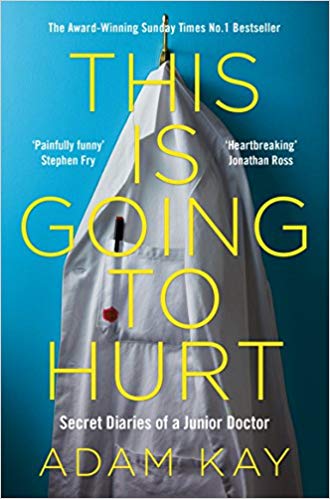
Graeme Fife: I’ve come to many authors late but, stoutly rejecting any sense of embarrassment about it, I rejoice, rather, in the discovery. James Baldwin’s Go Tell it on the Mountain, the autobiographical novel about his coming to maturity in Harlem, grappling with a difficult relationship with his preacher father, introduced me to new riches in American fiction. Adam Kay’s This is Going to Hurt…? Essential reading, I’d say. Scalpel in one hand, tickle stick in the other and huge compassion and humanity between. I’d not be without Seamus Heaney’s 100 Poems, a posthumous collection made by his family. Ah, but doesn’t his fine-tuned observation and framing speak for us all in our searching and contradictions.


Celia Rees: I very much admired Kate Atkinson’s Life After Life and A God in Ruins and I’ve been saving Transcription as a special treat for the New Year. Female spies, Second World War and the post war period, all subjects and themes close to my heart. I’ve already reserved it for a post on Writers Review. Pebbles on the Beach, by Clarence Ellis, was first published in 1954 and is now reissued with an introduction from Robert Macfarlane. I’ve collected pebbles since I was a small child, so pounced on it when I saw it in the wonderful South Kensington Books. I’m really looking forward to reading it and applying my new knowledge on beach and shore side. Another on my list of New Year Intended Reading is Deborah Robertson’s Declutter - the get real guide to creating calm from chaos. That could present something of a challenge…


Sue Purkiss: I'm looking forward to reading Elly Griffiths' new book, Stranger Diaries. I'm a big fan of her Ruth Galloway series, and this has had great reviews, so I'm sure it's a treat in store.

And I intend to revisit an author I haven't read for many, many years - A J Cronin. He wrote hard-hitting books which often dealt with poverty and inequality in the 1930s, and I'd be interested to see if I still find them as impressive as I did when I first came across them.


Sally Prue: My reading is haphazard and serendipitous, and the classics I haven't yet read are the ones I've been putting-off for half a century, so in some ways it's easier to say what I won't be reading (Proust and Anthony Powell are strong contenders, here). But Zola's Germinal was amazing, so perhaps some more of Les Rougon-Macquart if I happen to come across anything; and of course there's nothing quite as comforting as nestling down with a good old Trollope.


Caroline Pitcher: My mind keeps returning to a novel I read earlier this year, Sugar Money by Jane Harris. Based on a true story, it is told in lilting, rhythmic Creole by young Lucien from Martinique in 1765. He hero-worships his elder brother Emile and insists on joining him on a mission to smuggle back slaves from English owners on Grenada and return them to French friars. The vicious rivalry between slave-owning nations had not really occurred to me before reading this novel. Jane Harris has written a rollicking adventure with a touching sibling relationship, told in Lucian’s charming voice. All this serves to highlight the grisly cruelty and violence of the slave trade.

All my life, over and over again, the same scene, repeating in my mind.


Katherine Langrish: Among the books I'm looking forward to (re-)reading this Christmas is Ursula LeGuin's novel The Lathe of Heaven which I loved as a teenager. It doesn't seem to get the same attention as The Dispossessed and The Left Hand of Darkness (all such wonderful titles) but is just as brilliant. Quiet George Orr is too terrified to sleep because he believes his dreams change reality. When his initially sceptical shrink discovers this is true and starts manipulating George's powers for the good of humankind, things get really serious. Original, poignant, often funny, the book is a magnificent exploration of unintended consequences and the dangers of uncontrolled power.


K M Lockwood: I admit I do judge a book by its cover. When I saw Lucy Rose’s artwork for The Familiars written by Stacey Halls, I knew I coveted it. I pleaded and received a review copy. A glance reveals a noose, a fox, parchment and plumes. Inside, you find women, witchcraft and Pendle Hill. My sort of book - due out in February.

Help the Witch is a short story collection from Tom Cox published by Unbound and illustrated by Joe Mclaren. It too looks dark and imbued with foklore – but far more modern. Interesting to compare and contrast.


Paul Magrs: There are two reading projects that I must return to when 2019 begins. I am reading Blockbusters – one for each year since my birth. I began with Mario Puzo’s The Godfather from 1969 and I’ve been having an amazing, eye-opening time. I’ve been through Love Story and Jaws and I’m as far as 1977. Judith Guest’s Ordinary People is next.

My other project is tackling the Beach House Books – i.e. the accumulation of heaps of novels everywhere in our house, overspilling into the Beach House. I’m putting myself on a book-buying ban once again, and I’m hiding from the world all January.


Anne Fine: I suddenly realised that neither of my daughters was living in this country while Posy Simmonds was doing her cartoons for the Guardian. Everyone’s coming for Christmas, so I’ve bought both daughters her superb collection, Literary Life Revisited. Posy is unbelievably clever. She’s put her finger on every aspect of the writing trade. You recognise everyone in every frame, and all of the situations and dilemmas.

And the greatest joy is that these books are so (comparatively) heavy that, though both my daughters will devour them during the holiday, at least one is likely to abandon her copy before the flight home. So that’ll be me in the New Year, steeped in delicious, genius Posy. I can’t WAIT.


Monday, 30 April 2018

A POCKETFUL OF CROWS by Joanne M Harris


"Ultimately, it's a tale of survival and of female strength and resilience..."

Linda Newbery has written widely for young readers and is now working on her second novel for adults. See more on her website.
Before getting far into this beguiling novella, I found myself thinking of folk ballads such as Tam Lin and The Demon Lover and hearing the voices of Maddy Prior, Martin Carthy and Sandy Denny. On finishing, I looked up The Child Ballads, 295, which inspired it (I am as brown as brown can be / And my eyes as black as sloe; I am as brisk as brisk can be / An wild as forest doe) and found that both Maddy Prior (with Steeleye Span) and Martin Carthy have indeed made recordings; I've added the link to the Steeleye Span version at the end of this piece, and you can listen to Martin Carthy on Spotify.

The story is steeped in folklore, from references to Jack-in-the-Green, the May Queen and the Winter King to the passing of the months marked by their moons: Hunter's Moon, Blood Moon and others, each carrying its own superstitions. We're in territory familiar from folk ballads - love, death, betrayal and revenge, and bewitchment by a creature not human but faery. Here our perspective is that of the enchanter, who to regain her true self must in turn free herself from bewitchment. 

"I have no name," this bonny brown girl tells us. "The travelling folk have neither name nor master. A named thing is a tamed thing." But when given a name by her human lover, she loses her power of shape-shifting, of taking on animal forms - hare, vixen, frog or nightingale, as she chooses. After the young aristocrat William names her Malmuira, meaning Dark Lady of the Mountains, she thinks: "I wear (my name) like a golden crown. I wear it like a collar ... I am a wild bird in a snare;" and is restlessly limited to her own self. 

There are inherent dangers in romances between mortals and faerie folk, as Katherine Langrish describes in an eloquent and wide-ranging piece in Seven Miles of Steel Thistles*. "Whether mortals woo, ravish or capture supernatural women, whether mortals themselves are carried off or seduced, marrying a fairy bride nearly always leads to grief at best, to death at worst." Our bonny brown girl is both enchanted and enchantress, destined to fall in love with William, and he with her, from the moment she picks up the adderstone, a love-charm left by a village girl at the hawthorn tree that stands within a stone circle.

Inevitably, their love is short-lived: "My love he was so high and proud / His fortune too so high / He for another pretty maid / Me left and passed me by."  Our bonny brown girl, though, isn't going to retreat to her woodland cave to pine and die: in the form of a wolf she has ripped out the throats of sheep, so we know she can be ruthless. Now she plans revenge, with the help of hawthorn - an ageless female figure who gives her a seemingly impossible spell (bringing to mind another folk ballad, Scarborough Fair) by which she can free herself of her bond to William, and punish him. William has tangled with the traveller folk at high risk to himself.

Ultimately, it's a tale of survival and of female strength and resilience. Who is that village girl? Who is hawthorn? And who is the white-headed crow, our bonny brown girl's companion and messenger as she goes into exile, accused of witchcraft? It all comes together both surprisingly and satisfyingly. 

Many readers will know Joanne Harris from her very popular Chocolat, Gentlemen and Players and others. As Joanne M Harris she writes stories inspired by mythology, and here she has found a sure-footed style which is lyrical without being indulgent. "I have no need of silks and furs. I have no need of servants. I have the silk of the dragonfly's wing, the snowy coat of the winter hare. I have the gold of the morning sun, the colours of the Northlights." Fine pencil drawings by Bonnie Helen Hawkins show animals and vegetation in realistic detail - I was particularly impressed by the wolves, and by William on his rearing horse - while for characters she doesn't go for Burne-Jones-like ethereality but for expressive, vivacious faces which could be those of modern teenagers. Gollancz have made this beautiful little book a pleasure to handle.

A Pocketful of Crows is published by Gollancz.


Katherine Langrish's Seven Miles of Steel Thistles is published by Greystones Press, reviewed for Writers Review by Penny Dolan here.

Monday, 6 March 2017

Guest review by Katherine Langrish: THE THREE ROYAL MONKEYS by Walter de la Mare


"A rich, exotic beauty tinged with pathos and melancholy, relieved by sure touches of comedy."

As far as I'm aware this is Walter de la Mare’s only novel-length book for children. It was first published in 1910 as ‘The Three Mullar-Mulgars’, a title so unhelpfully baffling even by early 20th century standards that by the time I read it in the 1960s it had been rechristened. Even as ‘The Three Royal Monkeys’ I think it’s not particularly well known. Which is a great pity.  As a child I was entranced by it, and I still am.

To explain the impression it made on me, here’s a bit of personal history. I began seriously to write stories when I was ten. I’d just finished all the Seven Chronicles of Narnia and CS Lewis was dead, so I knew there wouldn't be an eighth.  (‘The Last Battle’ was such a betrayal. The end of Narnia?  Nooooooo!  And I wasn’t fooled by all that ‘heaven is Narnia, but better’ stuff, either. There was no better place than Narnia.)

Aged ten therefore, my first 'book' was called ‘Tales of Narnia’: fan-fic before the term was invented.  My second, a full-length effort, was an historical novel which owed at least something to those of Mary Renault whose ‘The Bull From the Sea’ I had discovered in Ross-on-Wye public library. Then, aged 13 or so, I wrote another ‘book’ of short stories which I called ‘Mixed Magic’ (truly mixed: some not bad, some terrible) mainly derived from two more beloved writers, Edith Nesbit and Elizabeth Goudge. When I was 15 or 16 my fourth handwritten manuscript was heavily influenced by early Alan Garner (children encounter mysterious stranger in dripping English woods, pursued by minions of the triple Moon Goddess: standing stones and indifferent golden-faced elves figured largely). But my fifth effort, written in my late teens and early twenties, by which time I was beginning to find my own voice, owed a great deal to the enchantment I found in ‘The Three Royal Monkeys’.  I called my story 'The Magic Forest' and went on to write a sixth full-length ms (also unpublished) before eventually getting myself into print with ‘Troll Fell’.  And I enjoyed every minute of all of it.

The quality in ‘The Three Royal Monkeys’ which I endeavoured to reproduce in my fifth opus was a rich, exotic beauty tinged with pathos and melancholy, relieved by sure touches of comedy.  De la Mare tells the story of three monkey brothers who, upon their mother’s death, discover they are heirs to a great kingdom. This is how it begins.

On the borders of the Forest of Munza-Mulgar lived once an old grey Fruit Monkey of the name of Mutta-Matutta.  She had three sons, the eldest Thumma, the next Thimbulla, and the youngest, who was a Nizza-neela, Ummanodda.  And they called each other for short, Thumb, Thimble and Nod.  The rickety, tumble-down old wooden hut in which they lived had been built 319 Munza years before by a traveller, a Portugall or Portingal, lost in the forest 22,997 leagues from home.

The comic exactitude of this, and the strange names, entranced me. After the ‘Portingal’ dies, a monkey comes to live in the hut. He finds:

... all manner of strange and precious stuff half buried – pots for Subbub; pestles and basins for Manaka-cake, etc; three bags of great beads, clear, blue and emerald; a rusty musket; nine ephelantoes’ tusks; a bag of Margarita stones; and many other thing, besides cloth and spider-silk and dried-up fruits and fishes.  He made his dwelling there and died there.  This Mulgar, Zebbah, was Mutta-Matutta’s great-great-great grandfather.  Dead and gone were all.

But one day a royal traveller arrives, Seelem: ‘own brother to Assasimmon, Prince of the Valley of Tishnar’, accompanied by his servant.  Seelem becomes Mutta-Matutta’s husband. After thirteen years of marriage he leaves her to return to his heritage in the beautiful valleys of Tishnar. Seven years later on her deathbed, she urges her sons to follow their father.

“His country lies beyond and beyond,” she said, “forest and river, forest, swamp and river, the mountains of Arrakkaboa – leagues, leagues away.”  And as she paused, a feeble wind sighed through the open window, stirring the dangling bones of the Portingal, so that with their faint clicking, they too, seemed to echo, “leagues, leagues away.”

The rest of the book follows the brothers’ difficult and magical journey. Nod, the youngest, is ‘a Nizza-Neela, and has magic in him’: he is the possessor of the marvellous Wonder-Stone, which if rubbed when they are in great danger will bring the aid of Tishnar to them.

And who is Tishnar?  There are many mysteries in this book and she is one of them, with a whole chapter at the end dedicated to her.  She is ‘the Beautiful One of the Mountains’; ‘wind and stars, the sea and the endless unknown’.  She it is who instils in the heart a sense of longing; she brings peace and dreams and maybe, in her shadow form, death.

At any rate, the brothers’ journey is precipitated when Nod accidentally sets fire to the hut. In the fairytale tradition of the foolish yet wise younger brother, he makes many mistakes, but he is also the one who saves his brothers from the predicaments in which they find themselves as they trek through the deep moonlit snow of the winter forest – escaping the flesh-eating Minnimuls, tricking the terrifying hunting-cat Immanâla, riding striped Zevveras – the ‘Little Horses of Tishnar’ – finding friends and losing one another, quarrelling and making up.

It’s a deeply serious quest, an epic journey with no hint of tongue in cheek despite the fact that the protagonists are monkeys.  Delicately, de la Mare explores the transience of beauty, the poignancy of loss, the immanence of death: and his characters blaze all the more brightly in their course across this impermanent world. There’s a lovely chapter in which Nod meets and loses his heart to a beautiful Water Midden (water maiden) to whom he entrusts his Wonder-Stone.  Here is the song he overhears her singing ‘in the dark green dusk’ beside a waterfall:

Bubble, Bubble,
Swim to see
Oh, how beautiful
I be,

Fishes, fishes,
Finned and fine,
What’s your gold
Compared with mine?

Why, then, has
Wise Tishnar made
One so lovely,
One so sad?

Lone am I,
And can but make
A little song,
For singing’s sake.

If you haven’t read this book before and you’re looking for something at least as good as ‘The Hobbit’, this is for you.