Showing posts with label Jonty Driver. Show all posts

Monday, 20 December 2021

Awards Season! Part 1.


Something different for our end-of-year round-ups -we've invited our reviewers to give a virtual award to a book of their choice. Whether it's a book that's surprised them, a book they didn't expect to enjoy, a book that made them laugh or cry - here's what they've chosen in the first of three posts. Come back next week for more.

As always, we're immensely grateful to our contributors for giving their time, energy and insights to Writers Review. It wouldn't happen without them!

Tamsin Rosewell of Kenilworth Books: The Sheepish Bookseller Award for the Book I Didn't Think I'd Like But I Totally Adored, And Now Can't Stop Talking About It.


And I'd like to award it to Cecily by Annie Garthwaite.

When I read the first reviews, they compared it to Hilary Mantel. Like many booksellers I greeted this with an eye roll and a sinking feeling. I was expecting something perhaps over-indulgent; an.. er.. insufficiently edited draught-excluder of a book. But I should have ignored that reviewer, Mantel isn't a patch on Annie Garthwaite. I loved every word of Cecily, and thought it was one of the most astonishing books I've read in a decade. I was rooting for Cecily (and marvelling at Annie's ability as a writer) every moment. Far from being indulgent, it was beautifully, intelligently written - and the reader never forgotten. Annie Garthwaite's knowledge of history is deep, and her passion for her characters is infectious. She wears her love for Cecily like a crown of flowers. Off that throne Hilary!

Jonty Driver: I have two profound reasons to regard Arthur Koestler's novel Darkness at Noon as important in my life. I read it when I was 17 and still at school in South Africa, by then profoundly bored by much of the teaching provided. I had never been a racist but was beginning to be politically aware. so, when I went to the University of Cape Town the next year, because of the novel I was intellectually armed against attempts to divert me from my instinctive liberalism to hard-line Marxism (the South African Communist Party, though it was totally illegal and underground, Stalinist in demeanour, still worked hard to recruit students). Secondly, when I was detained by the security police, five years later, in solitary confinement under the "Ninety Day Detention" regulations, knowing what happened to Rubashov (the central character in Darkness at Noon) in solitary helped me cope better than I might otherwise have done. In particular, the "knocking code", described in that novel, enabled a friend detained in the same police station to give me the name of the person who had told the police I was involved in the African Resistance Movement, the ostensible reason for my detention; I wasn't in the ARM and actually thought it mistaken in its actions, although some of my closest friends were involved. In fact, the real reason for my detention was the work I had done as President of the non-racial and anti-apartheid National Union of South African Students.

Rachel Ward's Award for the Book I Wish I'd Written goes to We Begin at the End  by Chris Whitaker. I took a while to get into this book but then I was hooked. It’s a masterpiece in characterisation and plotting, and also how to break a reader’s heart into a million tiny pieces. I wish I’d written it, but - that being impossible - it has spurred me on to be a better writer.

Pippa Goodhart
: I present the Goodhart Award for the most good-hearted book of 2021 to …drum-roll... A Town Called Solace by Mary Lawson.

This gloriously quiet, beautiful, elegant story takes three deeply troubled and alone characters in a small town in Canada, marooned in winter coldness, and brings warmth. The seven year old child, the middle aged man, the old woman, are all trapped by mistakes made by themselves and others. But this kind book lets them come unexpectedly to each other’s aid, enabling them each to move on. Truly a story that does good to the heart and soul of the reader! Happy Christmas!


Linda Sargent
 awards Sargent's Sash to Old Age: A Journey into Simplicity by Helen M. Luke.

I was recently recalled this collection of essays when I recommended it to a younger friend who remarked that they were finding the ageing process trickier than they had anticipated. I first read it over twenty years ago when it was recommended to me by an older friend. I was middle aged then and found it inspiring and optimistic; a book about growth and creativity and, not, as some might imagine, decay and involuntarily loss. I returned to it often. In five chapters this wise Jungian writer insightfully references The Odyssey, King Lear, The Tempest and Little Gidding, with a final chapter on Suffering, revealing how ageing can, if we allow it, be an act of letting go of the familiar and of gaining through this process; learning that there are new things to explore and new levels of understanding to aspire to both in ourselves and in others.

Julia Jarman's Best Book You May Never Have Heard of Prize:  I first read this novel in hardback, called Miss Graham’s Cold War Cookbook. I loved it from intriguing first page to satisfying last, mostly because I loved the heroic, cookery-teacher turned spy, Miss Graham herself, and her fellow spies, brave women all, and the thrilling plot. It took me to painful places – the worst of Nazi evils – but these characters, based on real-life people who fought for justice lifted my spirits, and not just mine. There are 630 positive reviews on Amazon. My book group loved it, but why they asked, was this brilliant author not on the airwaves talking about this book like the famous author with a spy story out that month. Why weren’t there adverts all over the place as there were for the famous author? Because publishers don’t advertise your books till they don’t need advertising, I explained, but they didn’t get it. Nor do I.

Berlie Doherty: I award the Berlie Bouquet to Katherine Towers for her poetry pamphlet The Violin Forest, (2019 Happenstance Press).

The twenty short poems of The Violin Forest sing with lyrical imagery and musical grace. Her collection introduced me to W.S Graham – after reading his Imagine a Forest I returned to her poem Good Words Take from a river any thought of endlessness/or death to find it’s only water in its way.

I listened to Sibelius before re-reading Silence of Jarvenpaa, and wondered about his wife and daughters in the house where more than enough time did he spend looking up at the sky. To La Gaviota by Rodriguez …’the tenor’s airy triplets/ made me picture ghosts. To Schumann’s beautiful Gesaenge der Fruehe … you’ll hear dawn break/like the bones in a hand.

The poems are not all esoteric. One of the most accessible, Sparrows, contains my favourite image our old wisteria is a billowing palace/ of many green and lilac rooms..

The Book That Confirms Something Important Prize is awarded by Cynthia Jefferies to Alive Alive Oh! And Other Things That Matter by Diana Athill

 Diana Athill wrote more than one book about getting, or being, old. The other I love is Somewhere Towards the End, which turned out not to have been so very near the end because after winning the Costa for it she went on for another 11 years, publishing four more before she died in 2019 at the age of 101.

 These books are straight and honest, often amusing and also gracefully profound, These are not books of advice, but they are books of truth, and about how she lived her life. Somehow, in reading her I realise how many thoughts and feelings I share with her. Perhaps it is something to do with getting old that makes memories that float out of the past (to use her phrase) so very pleasurable to recall. 

I defy you not to be amused, moved and instructed, simply by reading the introduction. Yes, I recognise her thoughts about men, and think of Venice, and now remember, because she says it so certainly, and I hope you will remember it too, that looking at things is never time wasted. 

More virtual awards will be announced next Monday!


Monday, 9 August 2021

Guest review by Jonty Driver: THE CRAFT OF POETRY, a Primer in Verse, by Lucy Newlyn


 "This isn’t a primer ‘about’ verse, but in verse..."

C J Driver is always called Jonty. Later this year the Uhlanga Press will publish Still Further, New Poems 2000-2020.

The Yale University Press has recently published Lucy Newlyn’s The Craft of Poetry: A Primer in Verse. There are other primers: I can see some of them on the shelf immediately in front of me: Unlocked, Reading & Writing Prompts for Practising Poets, by Sue Butler & Helena Nelson (Happenstance Press, 2020); Metre, Rhythm and Verse Form, by Philip Hobsbaum (Routledge, 1996); Rhyme’s Reason, A Guide to English Verse, by John Hollander (Yale NB, 2001); and A Measure of English Poetry, by Anne Ridler (The Perpetua Press, 1991).

Then there are the close relations of primers, such as I Wanted to Write a Poem by William Carlos Williams (Cape, 1967); How to Read and Why, by Harold Bloom (Fourth Estate, 2000); Poetry Notebook 2006-2014, by Clive James (Picador, 2014); A Poetry Chronicle by Ian Hamilton (Faber, 1973); The Poet Who Forgot, by Catherine Cole (UWA Press, 2008) – and I’d better stop there, or the editor will get out a blue pen ... In my view, it’s a brilliant reading list, but Lucy Newlyn’s book bids fair to take a proud place in that little collection.

Ms Newlyn’s book is unusual in two ways. Firstly, it asserts that “to read and write poetry well, you must undergo a practical training in the delights and rigours of poetic craft.” “Practical?” “Rigorous?” “Training?” Let me spell it out, writing poems is not just about having strong feelings that you let overflow into words, vaguely divided into lines to show it isn’t prose (which it clearly isn’t because it doesn’t have to have as a clear meaning as prose presumably must). Almost anything will pass as a poem these days; but not if poets and their teachers were to pay attention to Lucy Newlyn. Indeed, one is never too experienced to learn.

Secondly, this isn’t a primer ‘about’ verse, but in verse. John Hollander used his own poems as illustrations, but most of his primer is in prose. Lucy Newlyn uses her “own verse (freshly written for the purpose) to introduce and exemplify key poetic figures, techniques, forms and concepts.” The setting of the poems is a small village in North Yorkshire where she spent much of her childhood; as a result, each poem stands on its own, in a sense despite its instructive title. For instance, this is a stanza from Lyric: 

Far from the village on the high bleak fell
among all lonely things you walk alone
seeking deliverance in sky and stone
where wind keens low and all the earth is still.

But the village, the beck which runs through it and the Yorkshire moors unify the poems, when the examples in a book of this kind could so easily be disparate. Lucy Newlyn’s fluency is astonishing: it’s not a slim volume – 186 pages and close on 150 individual poems divided into five parts: Foundations, Figures, Techniques, Forms and Concepts. If there are any omissions of form or technique, figure or concept, I haven’t spotted them.
 
A particular favourite of mine is one called simply Line. In part this is because it is dedicated to a friend, Ken Gross, Professor of Literature in the University of Rochester in the USA, but more because in it, Lucy tackles what seems to me a crucial element in poetry that is more and more ignored these days. When I go to poetry readings and can get hold of a text beforehand, I make a habit of marking (with a pencil if it is a book) where the poet/reader makes the break of breath which should signify the line change (there are of course caesuras too). It astonishes me how often the lines as the poet/reader speaks them have no relation to what is on the page. I know then that they have failed to understand the simplest and most basic aspect of poems: why they are divided into lines at all. So, it isn’t uncommon these days to find the article ‘the’ ending one line and its noun beginning the next. As Lucy Newlyn says: “Be alert to the line’s length; / to the turn as it ends before the sentence / and to the points where, artificially contained, / it meets a sudden stop.”

Or, as Yeats put it a good many years ago:

Irish poets, learn your trade,
Sing whatever is well made,
Scorn the sort now growing up,
All out of shape from toe to top...

The Craft of Poetry is published by Yale University Press.

More posts by Jonty Driver:


Italian Life by Tim Parks 


Monday, 8 February 2021

Guest review by C J Driver: ITALIAN LIFE by Tim Parks


"I wondered, as I read on, often amused by the wit and sometimes horrified by the satire, just how Italian readers would react. Accurate depiction? Wild exaggeration?"

Jonty Driver
has kept himself busy in lockdown working with a local firm, Artwrite of Rye, to produce four booklets of his poems, some illustrated by himself, and a card, The Slave-Bell at Doornhoek, a poem and a painting. The booklets are: Image & Image, some old photographs & a dozen unrhymed sonnets; The Journey Back; The Chinese Poems, 1979-2020; and A Winter’s Day at Westonbirt & other poems. All are available from Artwrite. See more on Jonty's website.


Because I had enjoyed Tim Parks’s Italian Neighbours (1992) and An Italian Education (1996), when I saw Italian Life advertised I wanted to read that too. I am under a marital embargo to buy no more books unless I get rid of a similar number to the Amnesty bookshop, so I had to read it on my wife’s Kindle. I found the book so entertaining, sometimes savagely satirical, often wise, I read it in only a couple of days; but of course now I can’t rely on my usual habit of paging back to find names and stunning quotations. I’ve never been able to rely too much on memory and have needed slips of paper posted at the relevant pages. There is I know some way of highlighting passages when one reads a Kindle, but every time I have tried that I’ve lost my place.

Italian Life is, I think, best described as a novel, and one might narrow that definition down to a “campus novel”, though I suspect it could well come into that increasingly common category, a memoir purporting to be a novel. Tim Parks obviously knows about Italian universities, as he taught at one in Milan from 1993-2019. One of the two central characters is called James, a middle-aged English expatriate teaching in a northern Italian university; the other is Valeria, a post-graduate working on a doctoral thesis. Around them are family and friends, and above them some monsters, especially the Vice Chancellor of the university, Rector Ottone, and his sycophantic side-kick, Professoressa Modesto.

The book is about much more than campus politics: the discussions of Italian clannishness, which might be called just as easily tribalism, the contrast of north and south, the cross-referencing to classics of Italian literature, the details of Italian food and drink, the details of family loyalties and obligations, all more than justify the title: this is genuinely Italian LIFE, not just Italian higher education. I wondered, as I read on, often amused by the wit and sometimes horrified by the satire, just how Italian readers would react. Accurate depiction? Wild exaggeration?

What I hadn’t realised, until I did a bit more research on Tim Parks’ literary career, was just how much he had written other than the three books mentioned here. My next step is going to be to read more by him. I don’t think I’ll bother with the books about football; I’ve always preferred the eccentric bounce of the rugby ball to the predictable flight of the soccer ball - but the book about Italian railways looks interesting, and then there are novels galore. The question is: can I somehow get around the wife’s embargo without giving away too many of the books I want to keep?

Italian Life is published by Harvill Secker.


Monday, 21 December 2020

Reading ahead - New Year anticipation, part 1


Here's part one of our yearly thank you to all those guests whose contributions keep us going! In this first part of three, some of our reviewers tell us what they're looking forward to reading in 2021 - whether it's a new publication, a return to an old favourite, or an author newly-discovered. What's on your reading pile or wishlist for the year to come?

Graeme Fife:
In these darkening, dark, days of 2020, this stuttering conclusion to such a strange year, yet inspirited by the promise of a vaccine and by a zephyr of hope from across the Atlantic – a woman soon to be a heartbeat away from the American presidency, (wishing no harm to Biden) – I will be reading a new study of All the Sonnets of Shakespeare, arranged in their probable chronological order of writing, by Paul Edmondson and Stanley Wells. The approach promises new insight. Having come late to Jonathan Coe’s novels, there remains only one of his titles to read, Mr Wilder and Me, his latest novel based on the work of the great film director, Billy Wilder, revisiting Coe’s fascination with cinema, the tropes of movie comedy and the refractions of the celluloid world. And JB Priestley, The Good Companions, the big novel which launched him. Hurray.
 
Also I aim to watch again the utterly superb Babylon Berlin. Don’t miss it.

Jonty Driver: I look forward to Jonathan Smith's latest book, Being Betjeman(n), recently published by Galileo. Described as "part biography, part fiction and part self discovery", it includes enough of Betjeman's poems for one to want to add "part anthology". I've resisted the temptation to begin it at once, because I have at least five other books piled up next to my reading-armchair, all interesting, all not finished yet; but dipping into Jonathan Smith's new book I am once again impressed by his style, which is I guess so like the voice he used when he was a schoolmaster at Tonbridge: clever, funny, casual, sharp-witted. On the back cover are three recommendations: from Sir Anthony Seldon, no longer a Master or Vice Chancellor but a full-time writer; Dan Stevens, the actor, and Christopher Reid, poet and publisher. What fun to have those three ex-pupils as enthusiastic readers.

Amanda Craig: 
I am particularly looking forward to Francis Spufford's new novel Light Perpetual, to be published in February. It imagines that five children whose lives are destroyed in 1944 by a bomb continue to live in an infinitesimal alternative fraction of time - an intriguing idea, and one that, as a devotee of CS Lewis, I am hoping he will develop with the imaginative zeal he showed in his classic book The Child That Books Built.

I'm also looking forward to Liz Kessler's YA novel, When the World Was Ours, coming in January, about three children in Nazi Europe, inspired by her father's escape. She's a terrific writer who keeps pushing her imagination and her readers' sympathies to engage with difficult, dark yet uplifting subjects. I can't wait to see what she's done with this material.

I'm also planning to tackle Saidiya Hartman's Wayward Lives Beautiful Experiments, about the first generation of black women in America after emancipation who refused to accept their degrading conditions and who became pioneers in pursuit of liberty. I was sold it by a passionate recommendation at Daunt's and it looks both intriguing and original.

Jean Ure: With the very recent death of my beloved husband I find that it is books which are my greatest solace and means of at least temporary escapism.   But they have to be a certain type of book.   Nothing to do with the here and now, which I feel would be too close to home for comfort.   Likewise nothing too distant – which immediately excludes an old friend such as Mary Renault – nor anything futuristic.  Nor anything too familiar – which excludes some of my all-time favourites such as Olivia Manning's two brilliant trilogies.    In the past I have often fallen back on Trollope, but for the moment he has lost his appeal.    Not quite sure why.    Maybe because for the most part he concentrates all his efforts on his characters, with not enough distractions to buoy me up in my present state.

By chance I have come upon an author I am scarcely acquainted with: Barry Unsworth.   I did read him once, long ago, but obviously at that time he made little impression.   Now he has come to my aid most wonderfully.   Tough, powerful, sufficiently removed from the present day - in-depth characters, much food for thought, plenty of distractions.

I started with Sacred Hunger, have now moved on to the sequel, and heaven be praised there are several more waiting for me.   Which doesn’t stop me from panicking in advance: where do I go next?    Any recommendations most gratefully received.

Cindy Jefferies: Among the teetering heaps of new fiction gasping for my attention next year, a more modest pile awaits me in 2021. These are some of the treats I have promised myself in between reading some more modern yarns. The Master, by Colm Toibin, his novel about Henry James. Roberto Calasso’s re-exploration of Greek mythology in The Marriage of Cadmus and Harmony. Finally, some of my grandfather’s bound copies of The Strand Magazine and the English Illustrated. These hold some of the writing thought best in1895, Mr A Conan Doyle amongst them. From fiction to cartoons, politics to the recollections of Sir John Everett Millais. They give a snapshot of English society during that year. Stories for children sit uneasily between notes from the Speaker’s Chair and an alarming drawing of a man being attacked by a pike. Cricket, railways, Balfour’s thoughts. Family entertainment in front of the fire on a Sunday afternoon over a hundred years ago.

Linda Newbery:
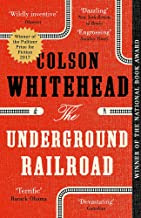
Bernardine Evaristo's Booker-winning Girl, Woman, Other is near the top of my pile, plus a shortlisted title The Underground Railroad, by Colson Whitehead,  and the latest winner Shuggie Bain. And I've got two climate change-related titles lined up: Jenny Offil's Weather, and The Good Ancestor by Roman Krznaric. So many wonderful things have been said about Piranesi that it sounds like a must-read - and I loved Maggie O' Farrell's Hamnet so much when I listened to it on Audible that I must read it in book form, too. Finally, the death of John Le Carre has made me realise how few of his novels I've read, so The Spy who came in from the Cold is next on my pile.

Gwen Grant: 
Poetry of the Committed Individual. Amongst the poets in Jon Silkin’s wonderful 1973 Stand anthology is the Israeli poet, Natan Zach, who died last month. His tiny poem ‘How is it that one star,’ about a star daring to shine on its own, is so beautiful that, unprepared for the savagery ribboned into his poem, ‘Against Parting,’ I found myself staring blindly at the page. Zach’s tailor once parted from his wife – Auschwitz, and from his three sisters – Buchenwald. Parted for ever.

Michèle Roberts is a writer who takes you into the very heart of her characters and their stories. So I am immensely looking forward to reading Negative Capability, an account of how she copes with the rejection of her latest novel.

More George! published by The Hallamshire Press in 1994 is the story of George Cunningham growing up in Sheffield. George is a fabulous amateur illustrator. His beguiling pictures and vivid accounts of his life are enchanting. ‘Get a Good Rise – Join the R.A.F. Pay 3/- to 18/- a day.’ Such a lovely book. 

Ann Turnbull: 
I'm planning to re-read some older books that have been sitting on my shelves for years and that I remember almost nothing about: 

Moon Tiger by Penelope Lively; 
Heat and Dust by Ruth Prawer Jhabvala; 
Half of a Yellow Sun by Chimamanda Ngozi Adichie; 
The Bridge of San Luis Rey by Thornton Wilder
and The Daughter of Time by Josephine Tey.

Lesli Wilson
: In the New Year, I'm hoping to read the Booker shortlisted Burnt Sugar, by Avni Doshi, as it sounds interesting and deals with a difficult mother-daughter relationship; I had one of those myself.. I also want to read The Black Jacobins, by CLR James, which is about Toussaint L'Ouverture and the rebellion of enslaved people in San Domingo. I have on my shelves Red Clocks, by Leni Zumas, which my sister-in-law recommended to me, and I intend to read that after Christmas. A long way into the New Year, I am very much looking forward to reading Katherine Langrish's From Spare Oom to War Drobe; Travels in Narnia with my nine year-old self. I also intend to read the latest book in the uncomfortably exciting Babylon Berlin series by Volker Kutscher, Marlow. As yet, it's not available in English, but I shall read it in German.