Showing posts with label Lesli Wilson. Show all posts

Monday, 15 November 2021

Guest review by Lesli Wilson: WHAT YOU CAN SEE FROM HERE by Mariana Leky


"With its humour, its unsentimental humanity, and its intimacy, it's a pretty good place to inhabit..."

Lesli Wilson is the author of two novels for adults and two for young adults. Last Train from Kummersdorf was shortlisted for the Guardian Children's Fiction Prize and the Branford Boase Award; Saving Rafael was nominated for the Carnegie Medal and Highly Commended for the Southern Schools Book Award. Both deal with Nazi Germany. Lesli Wilson is half German, was brought up bilingual, and has spent considerable amounts of time in Germany. She is currently working on a novel for adults, set in the very early nineteenth century. 

'An okapi is completely implausible, every bit as implausible, in fact, as the sinister dreams of a woman from the Westerwald.'

The Westerwald (the name means Western Forest), lies a little way to the east of the Rhine. Its tourist site describes it as 'dreamfully unspoilt,' which is amusing, since the entire plot of this novel, set in that area, hinges on the dreams of the narrator's grandmother, Selma. If you want to know what Selma looks like, you can look up Rudi Carrell, the Dutch television host on the Internet. Selma 'resembled Rudi Carrell so perfectly that.. in our eyes, he was nothing more than a poor copy of Selma.' However, Selma has several characteristics that differentiate her from Rudi, unless Rudi also used to have dreams of an okapi that meant one person in his neighbourhood was going to die within days.

When Selma dreams of the okapi, she tells two people and swears them to secrecy; which means, inevitably, that the news runs round the neighbourhood like wildfire, creating havoc in the lives of its inhabitants. Some become deeply risk-averse, avoiding animals, even gentle old dogs, looking up to rule out falling rooftiles, branches, or heavy light fixtures, constantly checking themselves for signs of an incipient heart attack. An old farmer who feels he's lived too long lies in his bed and prepares to welcome death; in vain, as it turns out. Others vent long-kept hidden truths, which they might as well reveal before they die; 'A secret truth does not want to perish in hiding.' The survivors then, of course, have to live with the consequences of this frankness.

One of this latter category is the Optician (the otherwise excellent translator doesn’t capitalise the name, but I would have done; all nouns, of course, are capitalised in German, but I sensed what you might call a special capitalisation there. The Optician is Selma's best friend, and he has helped her bring up her granddaughter, the narrator Luise, and Luise's best friend Martin. Luise's mother and father have other preoccupations that prevent them from playing much of a role in her life. Martin's father is an alcoholic and physically abusive. The Optician has loved Selma for years, but his mind is populated by doubting voices that prevent him telling her so, and in the end, even the prospect of imminent death can silence them.

This is not a novel about how people behave in the face of death, however, or even about the emergence of long-held secrets, though that enters into the plot. It's primarily about people, how they relate to each other, how they love, or hide from love; how they hurt each other and heal.  The characters are presented with wry, ironic, sometimes dark humour. There's a reclusive woman (euphemistically named 'sad Marlies') who lives to hurt other people; her  aunt hanged herself in her kitchen  at the age of ninety two 'which Marlies could not understand. In her opinion, committing suicide at ninety-two was hardly worth the trouble.' There's Elsbeth, Luise's great aunt by marriage, small and circular, who purveys potions to the villagers: they slip into her garden 'with their coat collars turned up' and look around several times 'the way men in the county seat turn up their collars and look around when they opened the door to Gaby's Erotic boutique.' When the Optician tries to kill Martin's father by sawing through the legs of his hunting blind (a tower that hunters in Germany climb onto so they can see the game from a distance,) he repents and rushes off to repair it. But he has confided what he's done to Elsbeth, and when he arrives she's already there, trying to do the job with wire and superglue. The ensuing dialogue, which becomes three-cornered when they discover that their intended victim is actually up in the hunting blind as they work, is a triumph of comedy. But the book also contains tragedy and sadness, joy, and many different varieties of love.

It's a piece of fiction which is hard to categorise, quite different from anything else I have read recently. With its humour, its unsentimental humanity, and its intimacy, it's a pretty good place to inhabit; a book to keep on your shelves after you've finished it, and revisit again and again.

What You Can See From Here is published by Bloomsbury.

Monday, 24 May 2021

Guest review by Lesli Wilson: FROM SPARE OOM TO WAR DROBE by Katherine Langrish


"Imagine revisiting a magical place you loved as a child, a place that engrossed you so much that you had to revisit it again and again..."

Lesli Wilson is the author of two novels for adults and two for young adults. Last Train from Kummersdorf was shortlisted for the Guardian Children's Fiction Prize and the Branford Boase Award; Saving Rafael was nominated for the Carnegie Medal and Highly Commended for the Southern Schools Book Award. Both deal with Nazi Germany. Lesli Wilson is half German, was brought up bilingual, and has spent considerable amounts of time in Germany. She is currently working on a novel for adults, set in the very early nineteenth century.

It is a very risky business to write about such a much-loved children's book series (to say nothing of films, but I like the books way better) as C.S. Lewis's Narnia books. I used to think I was the only child who ever walked hopefully into wardrobes (I chose my grandmother's rather small one, which did, however, have a moth-bally fur coat in it). Of course I wasn't alone. Katherine Langrish was one, for a start. I should think many thousands of kids did. Langrish also wrote her own Narnia stories, based on the stories that Jewel the Unicorn tells Eustace and Jill in the dying days of that world. She was trying to create more magic, but discovered that the hard work of writing made that difficult. This is a different way in, and whether she recreated the magic for herself, she certainly succeeds for the reader of her book.

Imagine revisiting a magical place you loved as a child, a place that engrossed you so much that you had to revisit it again and again, and even when you went back as an adult the enchantment still gripped you, almost in spite of yourself. Now imagine that you go there with a guide, a guide who has always found it as exciting and enchanting as you did, who is able, not just to walk you back along those old paths of thrilled delight and sadness, mountains, forests, seascapes, but who has extra information you didn't have when you went there - but whose information increases your understanding without threatening to spoil the magic; explains without explaining away.That's how I felt when I was reading From Spare Oom to War Drobe.

Langrish shows us the roots of many of the stories' motifs. The green serpent-witch who abducts Prince Rilian is rooted in the Lindwurm dragons of Norse (and Germanic, incidentally) legend and North of England folk songs, but also in the 'Dame of the fine green kirtle' in a Scottish fairy tale. Aslan's How, in Prince Caspian, so much resembles a Neolithic passage-grave in Ireland, that Langrish reckons Lewis must have known of it, if he didn't visit it (Lewis being a Northern Irishman, born in Belfast). Langrish is well-versed in a wide range of folk tale, this being the theme of her Seven Miles of Steel Thistles blog, and the author of a previous book about myth and legend. In addition, she supplies the answer to something that has puzzled me for about 60 years: why it is important, in writing King Peter's challenge to King Miraz (Prince Caspian) to put an h in abhominable (ab homin in Latin, inhuman) Though maybe, I think, it is all too human to murder for a crown.

None of this destroys the wonder of the books. That it doesn't is partly due to Lewis's artistry; he used these themes and images and set them to work in his own story, in his own way. But what we learn from Spare Oom to War Drobe is how no story, of any kind, exists in a vaccuum. All of us who write are swimming in the sea of motif and poetry that has been washing around in the human psyche since language began and the first stories were told; before that, probably, for in the basement of the psyche, as in Jung's dream of descending there, which is recounted in the introduction to this book, there are images and moving objects that stem from pre-verbal times. I am not strictly speaking a Jungian, but I'm quite sure there is such a thing as the collective unconscious.

Langrish even refers to The Waste Land, in terms of the rich infiltration of other writings into Narnia. I would reference the Four Quartets myself, because that poem enchanted me from a very young age, when my parents got the record of Eliot reading it. But there's nothing self-consciously post-modern about Narnia.

We are also reminded of the genuine sadness that infuses the books, particularly when Digory, in The Magician's Nephew, asks Aslan for 'something that will cure Mother', and Aslan's answer is 'Grief is great.' Lewis lost his mother as a boy; when I read The Magician's Nephew, it wasn't very long after I had been taken to say goodbye to my mother in hospital, lying on the pillow, weak and white-faced, like the mother in that book. Luckily, my mother, like Mrs Kirke, did not die after all, but the resonance went to my heart; there are terrible things that adults, with the best will in the world, cannot protect children from. Children need books that boldly acknowledge the pain of that.

Of course the books have aspects that are repellent to modern readers. Langrish doesn't feel that the book is misogynistic, as some have claimed, pointing out that the initiative is often taken by female characters, in particular Lucy, but also the resourceful and skilful Jill. The portrayal of the Calormenes, however, is loathsome, and Langrish as an adult is repelled by it. As for the demonisation of progressive schools, pacifism, vegetarianism, and the glorification of corporal punishment as a means of developing character – well, it was a different age.

But I so agree with Langrish about the dreadful ending of The Last Battle. I read that book with a sense of mounting outrage – though now, reading her account of it, I can see the link between the confusion of truth and falsehood there and what we see going on in our own times. Like her, I hated the idea of a Narnia that was expanding, and the constant travel to a bigger Narnia – what was the point if you couldn't linger? And though I know more about neo-Platonism now than I did, I still think it has been far better described by Plato himself and theologians like the Quaker Isaac Penington. But I also disliked the way in which Aslan morphed into the He who was ubiquitous in church services. Langrish was a child brought up in conventional Christianity, but for her also Narnia was never an allegory of the Gospels. What she does point out is the disturbing parallel between the use of lies to gain power in that final book and the issues that trouble us nowadays.

I referred to the Four Quartets earlier; in its last stanzas Eliot writes that the end of all our exploring should be to arrive where we started and know that place for the first time. Reading this book took me back to the children in the apple tree, to the child I once was, (lying on my stomach and eating apples,like Polly in the attic, in The Magician's Nephew) and yes, it has helped me to understand so much more about that place than I did when I first went there.

 From Spare Oom to War Drobe: Travels in Narnia with my nine year-old self is published by Darton, Longman and Todd.

Katherine Langrish's Seven Miles of Steel Thistles is reviewed on this blog by Penny Dolan.


Monday, 21 December 2020

Reading ahead - New Year anticipation, part 1


Here's part one of our yearly thank you to all those guests whose contributions keep us going! In this first part of three, some of our reviewers tell us what they're looking forward to reading in 2021 - whether it's a new publication, a return to an old favourite, or an author newly-discovered. What's on your reading pile or wishlist for the year to come?

Graeme Fife:
In these darkening, dark, days of 2020, this stuttering conclusion to such a strange year, yet inspirited by the promise of a vaccine and by a zephyr of hope from across the Atlantic – a woman soon to be a heartbeat away from the American presidency, (wishing no harm to Biden) – I will be reading a new study of All the Sonnets of Shakespeare, arranged in their probable chronological order of writing, by Paul Edmondson and Stanley Wells. The approach promises new insight. Having come late to Jonathan Coe’s novels, there remains only one of his titles to read, Mr Wilder and Me, his latest novel based on the work of the great film director, Billy Wilder, revisiting Coe’s fascination with cinema, the tropes of movie comedy and the refractions of the celluloid world. And JB Priestley, The Good Companions, the big novel which launched him. Hurray.
 
Also I aim to watch again the utterly superb Babylon Berlin. Don’t miss it.

Jonty Driver: I look forward to Jonathan Smith's latest book, Being Betjeman(n), recently published by Galileo. Described as "part biography, part fiction and part self discovery", it includes enough of Betjeman's poems for one to want to add "part anthology". I've resisted the temptation to begin it at once, because I have at least five other books piled up next to my reading-armchair, all interesting, all not finished yet; but dipping into Jonathan Smith's new book I am once again impressed by his style, which is I guess so like the voice he used when he was a schoolmaster at Tonbridge: clever, funny, casual, sharp-witted. On the back cover are three recommendations: from Sir Anthony Seldon, no longer a Master or Vice Chancellor but a full-time writer; Dan Stevens, the actor, and Christopher Reid, poet and publisher. What fun to have those three ex-pupils as enthusiastic readers.

Amanda Craig: 
I am particularly looking forward to Francis Spufford's new novel Light Perpetual, to be published in February. It imagines that five children whose lives are destroyed in 1944 by a bomb continue to live in an infinitesimal alternative fraction of time - an intriguing idea, and one that, as a devotee of CS Lewis, I am hoping he will develop with the imaginative zeal he showed in his classic book The Child That Books Built.

I'm also looking forward to Liz Kessler's YA novel, When the World Was Ours, coming in January, about three children in Nazi Europe, inspired by her father's escape. She's a terrific writer who keeps pushing her imagination and her readers' sympathies to engage with difficult, dark yet uplifting subjects. I can't wait to see what she's done with this material.

I'm also planning to tackle Saidiya Hartman's Wayward Lives Beautiful Experiments, about the first generation of black women in America after emancipation who refused to accept their degrading conditions and who became pioneers in pursuit of liberty. I was sold it by a passionate recommendation at Daunt's and it looks both intriguing and original.

Jean Ure: With the very recent death of my beloved husband I find that it is books which are my greatest solace and means of at least temporary escapism.   But they have to be a certain type of book.   Nothing to do with the here and now, which I feel would be too close to home for comfort.   Likewise nothing too distant – which immediately excludes an old friend such as Mary Renault – nor anything futuristic.  Nor anything too familiar – which excludes some of my all-time favourites such as Olivia Manning's two brilliant trilogies.    In the past I have often fallen back on Trollope, but for the moment he has lost his appeal.    Not quite sure why.    Maybe because for the most part he concentrates all his efforts on his characters, with not enough distractions to buoy me up in my present state.

By chance I have come upon an author I am scarcely acquainted with: Barry Unsworth.   I did read him once, long ago, but obviously at that time he made little impression.   Now he has come to my aid most wonderfully.   Tough, powerful, sufficiently removed from the present day - in-depth characters, much food for thought, plenty of distractions.

I started with Sacred Hunger, have now moved on to the sequel, and heaven be praised there are several more waiting for me.   Which doesn’t stop me from panicking in advance: where do I go next?    Any recommendations most gratefully received.

Cindy Jefferies: Among the teetering heaps of new fiction gasping for my attention next year, a more modest pile awaits me in 2021. These are some of the treats I have promised myself in between reading some more modern yarns. The Master, by Colm Toibin, his novel about Henry James. Roberto Calasso’s re-exploration of Greek mythology in The Marriage of Cadmus and Harmony. Finally, some of my grandfather’s bound copies of The Strand Magazine and the English Illustrated. These hold some of the writing thought best in1895, Mr A Conan Doyle amongst them. From fiction to cartoons, politics to the recollections of Sir John Everett Millais. They give a snapshot of English society during that year. Stories for children sit uneasily between notes from the Speaker’s Chair and an alarming drawing of a man being attacked by a pike. Cricket, railways, Balfour’s thoughts. Family entertainment in front of the fire on a Sunday afternoon over a hundred years ago.

Linda Newbery:
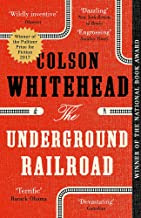
Bernardine Evaristo's Booker-winning Girl, Woman, Other is near the top of my pile, plus a shortlisted title The Underground Railroad, by Colson Whitehead,  and the latest winner Shuggie Bain. And I've got two climate change-related titles lined up: Jenny Offil's Weather, and The Good Ancestor by Roman Krznaric. So many wonderful things have been said about Piranesi that it sounds like a must-read - and I loved Maggie O' Farrell's Hamnet so much when I listened to it on Audible that I must read it in book form, too. Finally, the death of John Le Carre has made me realise how few of his novels I've read, so The Spy who came in from the Cold is next on my pile.

Gwen Grant: 
Poetry of the Committed Individual. Amongst the poets in Jon Silkin’s wonderful 1973 Stand anthology is the Israeli poet, Natan Zach, who died last month. His tiny poem ‘How is it that one star,’ about a star daring to shine on its own, is so beautiful that, unprepared for the savagery ribboned into his poem, ‘Against Parting,’ I found myself staring blindly at the page. Zach’s tailor once parted from his wife – Auschwitz, and from his three sisters – Buchenwald. Parted for ever.

Michèle Roberts is a writer who takes you into the very heart of her characters and their stories. So I am immensely looking forward to reading Negative Capability, an account of how she copes with the rejection of her latest novel.

More George! published by The Hallamshire Press in 1994 is the story of George Cunningham growing up in Sheffield. George is a fabulous amateur illustrator. His beguiling pictures and vivid accounts of his life are enchanting. ‘Get a Good Rise – Join the R.A.F. Pay 3/- to 18/- a day.’ Such a lovely book. 

Ann Turnbull: 
I'm planning to re-read some older books that have been sitting on my shelves for years and that I remember almost nothing about: 

Moon Tiger by Penelope Lively; 
Heat and Dust by Ruth Prawer Jhabvala; 
Half of a Yellow Sun by Chimamanda Ngozi Adichie; 
The Bridge of San Luis Rey by Thornton Wilder
and The Daughter of Time by Josephine Tey.

Lesli Wilson
: In the New Year, I'm hoping to read the Booker shortlisted Burnt Sugar, by Avni Doshi, as it sounds interesting and deals with a difficult mother-daughter relationship; I had one of those myself.. I also want to read The Black Jacobins, by CLR James, which is about Toussaint L'Ouverture and the rebellion of enslaved people in San Domingo. I have on my shelves Red Clocks, by Leni Zumas, which my sister-in-law recommended to me, and I intend to read that after Christmas. A long way into the New Year, I am very much looking forward to reading Katherine Langrish's From Spare Oom to War Drobe; Travels in Narnia with my nine year-old self. I also intend to read the latest book in the uncomfortably exciting Babylon Berlin series by Volker Kutscher, Marlow. As yet, it's not available in English, but I shall read it in German.