Showing posts with label Julia Jarman. Show all posts

Monday, 22 December 2025

BOOKS OF THE YEAR part 2 - chosen by our contributors


Here's our second batch of lovely recommendations. Thank you to our reviewers, all authors and booksellers, for your support - we couldn't do this without you - and also to all our followers. Come back next week for the final selection of great suggestions to kick off your reading for 2026!

Jaffé and Neale Bookshop: Patrick Neale's
Book of the Year is The Winter Warriors by Olivier Norek: A literary gem describing Russia's invasion of Finland in 1939. It's a thriller about the world's greatest sniper, capturing a forgotten piece of history that resonates strongly today. Rachel White's choice is Ian McEwan's What we can Know: McEwan is back on form with this time-spanning quest that expertly threads a literary mystery of a lost poem through a post-catastrophe future. Can hope be rescued from looming gloom? It's his best work since Atonement and Enduring Love. 

Jaffé and Neale is an independent bookshop in Chipping Norton, Oxfordshire.

Lissa Evans:
 I loved Ghosts of the Farm, by Nicola Chester.  This is a non-fiction book, but it has as much heart and plot as any good novel, interweaving the fascinating diaries of a simply splendid woman farmer in World War 2, with the author’s own passionate relationship with the land, as she attempts to advocate for a nature-depleted countryside.  Within it, there’s a marvellous account of Chester’s teenage years when she worked in stables at the weekends and early mornings, her reward being the opportunity to learn to ride;  I was always envious of those tough, responsible little girls that I glimpsed on the rare occasions I bumped into that world, but I'm not aware that they’ve ever been written about in non-fiction before.  It’s all part of the rich and riveting texture of a book that I’m already looking forward to reading again. 

Lissa Evans' latest novel is Small Bomb at Dimperley, reviewed on the blog by Penny Dolan.

Judith Allnatt
recommends The Book of Fire by Christi Lefteri. In Greece, a family is left physically and emotionally scarred by a fire that destroys their home and a vast tract of beautiful forest. They are Irini, a bazouka player, Tasso, an artist, and Chara, a sweet child. The story switches between the present with the family struggling to recover and the past – their terrifying jump from a cliff into the sea to escape and the fire’s aftermath.

Alongside the family’s journey from despair to hope there are questions to answer about who is responsible for the disaster. Is it Mr Monk, the man who illegally started to clear land for his hotel development, the emergency services that were slow to respond, the government, or is climate change and therefore all of us? To what extent are each to blame?

This is a moving book and, as with Lefteri’s other novels The Beekeeper of Aleppo and Songbirds, it brought me near to tears. The author has a clear-sighted view of human destructiveness but also has great compassion.

Judith Allnatt's latest publication is The Poet's Wife

Mary Hoffman: My Book of the Year is Helen Castor’s magnificent The Eagle and the Hart, an imaginative historical comparison of the two first cousins Richard II and Henry IV. Richard, with his effeminacy, love of luxury, preference for male “favourites” and refusal to name an heir, was unsuited to kingship in every way but he was the legitimate next in line to the throne, the remaining son of Edward (later known as the Black Prince). His grandfather, Edward III, and his older brother, another Edward, predeceased him, so Richard became king at the age of ten. 

Henry, on the other hand, had every quality needed in a king. He was intelligent, brave, a champion jouster, happily wedded to his childhood sweetheart and the father of four lusty sons and two daughters before tragedy struck and his wife Mary died in her last childbed. But Henry was not the heir. The two men were born within months of each other, married close together and lost their wives only weeks apart. 

Henry’s father was the great magnate John of Gaunt, the richest man in England after the king, Edward III’s third son. They were both mistrusted and overlooked by King Richard. Things came to a head when Richard sent Henry, who had not been tried or convicted for any crime, into exile in France. Gaunt died months later and Richard stole Henry’s great inheritance – all titles and lands. It was a disaster waiting to happen.

Historical storytelling at its best.

Mary Hoffman's latest publication is David: the Unauthorised Autobiography.

From Cathy Cassidy: This is Happiness by Niall Williams had me hooked from the first sentence. Fiction disguised as memoir, it's light on plot but brimful of heart, humanity, grief and love, a kind of time machine taking you back to 1950s rural Ireland. Both place and character are drawn perfectly, and the prose is clean, clever and beautiful in its simplicity. The novel charts the unlikely friendship between seventeen year old Noe, fresh from the seminary, and sixty-something Christy, who has been tasked with siting the poles that will connect the village of Faha to the National Grid. The novel unfolds slowly, but along with the details of village life come shards of pure beauty and insights into love, life and loss. I've read a LOT of books this year, but none have moved me as much as this one. I absolutely loved it.

Cathy Cassidy is the author of  the Chocolate Box Girls series and other children’s books.

Pippa Goodhart chooses The Ministry of Time by Kaliane Bradley: this novel is a breath of fresh air. Far from perfect, but full of energy, ideas and beautiful writing, it’s rich and original, and I’ll certainly read it again.

Kaliane Bradley is a Penguin book editor who found herself shut-in alone and bored during Covid lockdowns. She watched a television programme about the HMS Erebus polar expedition, and semi fell in love with naval officer Graham Gore (look online for his photo!) who died, but it isn’t known quite how. She found other enthusiasts online, and began writing a bit of time travel fantasy for their entertainment. To her surprise, that then grew into this, her first novel, The Ministry of Time.

It's written in the first person by disaffected female civil servant, brought into The Ministry of Time to become a ‘handler’ for an ‘expat’ brought from the past to be studied. Thus, gorgeous but of his time Graham Gore comes to live in her flat, bemused by washing machines, Spotify, doing your own cooking, feminism, computers, but gallantly trying to assimilate. Also brought from the past at moments when they died alone, and therefore history won’t be disturbed by their removal from it, come characters from 1645, 1665, 1793, and 1916, from whores to soldiers. Friendships and tensions arise, sometimes very funny, often poignant.

What to do with this situation she has created? The story becomes a tangle of sci-fi, rom-com, study of race and empire, and it doesn’t all convincingly resolve. But, no matter. The ride has been thought-provoking and fun!

Pippa Goodhart's latest publication is You Choose Bedtime, illustrated by Nick Sharratt.

Linda Newbery chooses Etta Lemon - the Woman who Saved the Birds by Tessa Boase, and will post a full review soon. Its wide sweep covers not only Etta Lemon's outrage at the mass killing of birds - almost driving some species to extinction - to provide feathers for fashionable hats, but also the suffragettes/suffragists, whose campaign began shortly after Etta Lemon's and who were of course far more prominent. There's much about social history, conditions of workers and the rise of feminism alongside the origins of the RSPB - now one of the UK's largest conservation organisations. Yet until now, and the publication of this book, Etta Lemon and her colleagues were barely acknowledged. There's much to learn and enjoy in this fascinating account.

Linda Newbery's latest publication is The One True Thing.

Sarah LeFanu 
chooses Binocular Vision: New and Selected Stories by Edith Pearlman: My friend Hannah sent me this wonderful short story collection for my birthday in the summer. I had never heard of Edith Pearlman, although she has been writing short stories for 40 years and has won numerous awards in the USA. She’s nowhere near as famous as the writers to whom she is most often compared, Alice Munro and John Updike. Each of Pearlman’s sentences provides pleasure. She has a broader scope than Munro, and is more subtle and compassionate than Updike. The stories range widely in place (New England, old Russia, Central America, the remote mountains of Hungary), in character and voice, and in subject-matter. They are utterly serious, shot through with humour, and quietly surprising. Now I am slowly re-reading them, savouring their rich complexity. When I looked her up, I found she had died in early 2023. I shall track down her earlier collections.

Sarah LeFanu's latest publication is Talking to the Dead: Travels of a Biographer

Nick Hodges
: My book of the year? Sean Dooley's The Big Twitch: One Man, One Continent, A Race Against Time - a True Story about Birdwatching, wherein the writer spends his inheritance attempting to see and tick off 700 species of Australian birds. Dooley gives himself a year and when the book starts - dead on midnight - so does he: positioned with spotlight in a dark forest. A nocturnal sooty owl is the first target. And it's raining.

He could of course be partying; celebrating the arrival of the new year; doing what ordinary people do. But no: he's a twitcher. And so we follow Dooley's adventures as he travels and ticks his way through the country: its swamps and sewage works (yes, you read that right); its heat and dust. Seasickness plays its part as well as flat tyres in the desert. A book written by a man aware of his own eccentricities. And no girlfriend. 

Nick Hodges is a wildlife journalist living in Sydney.

Sam Barnes
of Books & Ink Bookshop recommends Craftland by James Fox: This is the most beautifully written book documenting the lives and careers of master craftspeople whose trades are critically endangered. James Fox demonstrates a vast breadth of research and a true, authentic passion for his subject, giving voice to craft trades spanning the length and breadth of the British Isles, incorporating not just rural crafts but those found in our towns and cities too. The author explores trades from the Scottish Islands in the north down to the Scilly Isles in the south. From watchmakers, coopers and bell founders, to bodgers, rush cutters and letter cutters. This isn’t a travelogue, though the author visits all these places and people; it is a love letter to crafts and trades, a living history and a reminder to us all to look around at all the crafted objects we use every day and consider their story. Britain is a nature of crafters and hopefully this book will also inspire a new generation to take up some of these threatened trades. A delight to read but also a delight to listen to as James Fox narrates his own audiobook, interjecting his passion for the trades he talks about into his audio delivery (available on Librofm and presumably on other audio platforms too).

Books & Ink is in Winchcombe, Gloucestershire. Proprietor Sam Barnes, back in the days when her shop was in Banbury, was our very first independent bookshop contributor.

Graeme Fife
chooses Facing Down the Furies by Edith Hall. I’ve known five men who committed suicide, two of them close to me, and nurse my own feelings as to their loss. In this remarkable book, Hall, with great candour, insight and courage explores her own emotional reaction to the suicide of past members of her family and the ‘miasma of corruption’ as she puts it, which clung to the survivors and lingers, yet, near irresistibly, in her. Into this investigation of her own emotional responses she weaves the result of deep study of many Greek tragedies which delve undaunted into the unkindly matter of self-destruction.

The Greek idea of three Furies, known, euphemistically, as Eumenides ‘kindly ones’ (an interesting paradox in itself) underpins this vital study of a dark corner of the human psyche. Greek myth emerged from an extraordinarily acute sensibility which, in its turn gave birth to the tragedies of Aeschylus, Euripides and Sophocles, the work that forms the very foundation of our own drama. Full review coming in 2026.

Graeme Fife's latest novel is Memory's Ransom.

From Caroline Pitcher: As Christmas hurtles near, I’m re-reading eight of Claire Keegan’s short stories in the collection Walk the Blue Fields.

The title story begins: the women came with flowers, each one a different shade of red. Later, the priest stares at the line of her scalp where the shining red hair is parted.

At the wedding feast there is humour, and threat. After the best man urinates, he turns before his cock is put away. It is a huge cock and he has difficulty getting it back into the rented trousers.

Walk the Blue Fields is the bittersweet story of a man whose love got away. The spare writing is full of sadness, yet after the visit to the mysterious Chinaman, the priest thinks after all that, The spring has come, dry and promising.

In Claire Keegan’s writing, there is so much more than meets the eye. Ireland struggles with its dark past. (Here I want to mention So Late in the Day, a shattering novella about Cathal’s inherited misogyny, which destroys his own happiness.

Hilary Mantel said that Keegan writes with a certain stony-eyed realism about human experience. Yes. And she doesn’t write enough stories for me.

Caroline Pitcher's latest book is Mariana and the Merchild, illustrated by Jackie Morris.

And finally: Julia Jarman's choice is The Glory Cloak by Patricia O’Brien. The glory cloak of the title fixes this novel in my memory, sparking others of people, places and actions, some of which I’d rather forget. The novel is an alternative biography of Louisa M Alcott, written from the point of view of a fictitious character, Susan Gray, who gets closer to her than even her sisters did, joining her in the Union Hospital in Washington DC where, during the American Civil War, Louisa nursed soldiers and fell in love. It’s a story of passionate love and passionate self-denial – and it rings true, because of the writer’s skill and meticulous historical research.

The glory cloak itself was real. Luxurious, made of red and green silk, it was confined to the dressing-up box in the Quakerish Alcott household. But Louisa’s mother once placed it round her shoulders to inspire her ‘to do great things’.

Julia Jarman's latest novel is Widows Waive the Rules.

What are your own best reads of the year? Please tell us in the comments, and do come back next week for our final selection.

Monday, 3 March 2025

Guest review: Julia Jarman rediscovers Thomas Hardy, in FAR FROM THE MADDING CROWD


"Looking back, I see that Thomas Hardy has been giving me life lessons and writing lessons for many years ... "

Julia Jarman, a regular contributor to Writers Review, has been writing children’s books for forty years, and still is. Recently, though, she turned her hand to ‘golden years’ women’s fiction and The Widows' Wine Club was the happy result, followed by Widows on the Wine Path and Windows Waive the Rules; she is currently at work on the fourth title.


My off-on relationship with Thomas Hardy has lasted a long time. I was underwhelmed by Under the Greenwood Tree when I read it at school, and by The Trumpet Major, though I liked that, or rather the eponymous hero, a bit more. Miss Lemmon was keen on Hardy, and even keener on Jane Austen, but I didn’t like Jane either. My early-teenage self scorned Pride and Prejudice as trivial and much preferred an author called Frank G Slaughter who wrote hospital romances, with handsome surgeons wielding knives, and from whom I learned about full frontal lobotomies. (Which led to my appreciation of the joke, if joke it is, that I would rather have a full bottle in front of me than a full frontal lobotomy. Thank you, Frank.)

I came to adore Tess of the d’Urbervilles and Jude the Obscure. They both appealed to my more mature teenage self who was outraged by injustice and loved a good cry. This lasted into my twenties and Tess and Jude are still on my bookshelf – or so I thought till I checked. They weren’t, but Under the Greenwood Tree, The Trumpet Major – filched from school! - The Woodlanders and Far From the Madding Crowd were. I began to question my memory and when I thumbed the pages of The Trumpet Major and saw that the name of the hero was John Loveday I started to think that Thomas Hardy had had a bigger influence on me than I have given him credit for, and that I liked him a lot more than I remembered. I have used the name Loveday for one of my own male heroes!

I do know I’ve changed a lot over the years. Somewhere along the line I joined the mass of humanity who cannot bear too much reality, and prefer to laugh rather than cry. I do not need to be reminded of all the injustice in the world, is my excuse. I want to escape from it in the pages of a book. Call me shallow if you like, but though I prefer realism to fantasy, I like a bit of uplift with it, and Hardy doesn’t deliver.

Was I unduly influenced by the critic, F R Leavis, popular in my youth, who declared Hardy second-rate? He didn’t include him in the select group of writers he thought to be in ‘the great tradition’ of the British novel, thinking the hand of Fate too heavy in his melodramatic plots. I share the view that the more satisfying novels have plot arising from character, and I remembered the hand of destiny being much too evident in Hardy. Maybe that’s why I felt justified not-reading him and we lost touch.

Till recently.

Fortunately my friend, Celia Rees, re-introduced us, and reminded me, even before the Loveday discovery, that he has never been as far away as I thought. It came about when Celia read my work in progress, The Widows’ Wine and Book Club, fourth in my Widows series, and, referring to a certain incident, she said, ‘That’s straight out of Thomas Hardy, Far From the Madding Crowd to be precise.’

OMG! I had to re-read it on Kindle – I was away from home - to see if I had committed a dastardly act of plagiarism or a commendable act of post-modern intertextuality. Re-read it, note, though at that moment I couldn’t remember ever reading it. In my own defence my first read was over fifty years ago. When I got home I found my copy, a 1968 Pan edition with a photo of Julie Christie as Bathsheba Everdene, on the cover. Inside, on the first page, was Gabriel Oak with whom I instantly fell in love, or re-fell, like the twenty-something me who first read it, and I kept reading. It was nothing like I remembered – or didn’t remember – but I must have absorbed it and I hope learned a thing or two.

What a story!

Hardy plunges straight in. No long preamble. We meet the hero and then the heroine – he’s watching her sitting on top of an overloaded cart - and the story starts to unfold. He writes vividly. He shows us that in small country places, far from the madding crowds, passions fly high in ‘ordinary’ people, that ordinary people are extraordinary. The descriptions of the Dorset countryside are done with more economy than I misremembered, enhancing the story not overwhelming it. I saw no sign of the heavy hand of Fate. Everything arises from character in this novel, and he creates brilliant characters. Bathsheba is a wonderfully realistic heroine, passionate, impulsive, vain, competent, and in a crucial incident, that incident, she is careless of another person’s feelings and so heedless of the consequences, that I expected tragedy, which there is for some. Gabriel Oak is a convincing thoroughly decent man, a thoroughly human man with faults and virtues, who rises to heroism. Farmer Boldwood is another thoroughly decent man, tragically lacking in insight, and Sergeant Troy is an all too believable s***, an attractive s*** to some, but not me.

Sorry, but spoiler alert. Stop reading now if you don’t want to know. I’ll write it tiny to help you, but it isn’t a tragedy, there’s a happy ending, a happy ending from Hardy. I loved it and highly recommend! Looking back, I see that Thomas Hardy has been giving me life lessons and writing lessons for many years. So kiss me, Hardy! Thank you!

Far from the Madding Crowd is published by Vintage Classics.

Monday, 8 January 2024

SPECIAL FEATURE: Q & A with Julia Jarman about her novel THE WIDOWS' WINE CLUB


"It’s hard to define ‘voice’ but you can’t get going without it, and when I found my writing-for-adults voice it was a joy, like talking to a friend."

Julia Jarman, a regular contributor to Writers Review, has been writing children’s books for forty years, and still is. Cheeky Chick is her latest picture book. Recently, though, she turned her hand to ‘golden years’ women’s fiction and The Widows' Wine Club was the happy result. 

Linda: The starting premise of your novel is a brilliant one, with instant appeal. Were you always aware of how the novel would end for each of the three characters?

Julia: You told me it was a brilliant premise, Linda, when I first mooted the idea. I wasn’t so sure. I had a title in mind, I think, Widows In Love, and saw it as a rom-com. Three widowed women looking for love. It was as vague as that. I didn’t have specific outcomes in mind. I wrote the first draft to find out. You and other friends had begun writing for adults, after several years of successfully writing for children. I wondered ‘Can I?’ – as I like a new challenge - and you said firmly, ‘Yes you can!’

Linda: Did you find it equally easy to engage with each of the three main viewpoint characters? I know that the novel has been several years in the making – how have they developed during this time?

Julia: It has been a very long time in the making! I got the idea soon after my husband died in 2009 and thought of it as ‘Peter’s last gift to me’ but also felt guilty for exploiting the situation. It felt like an invasion of privacy, his privacy, our privacy, and that feeling may have held me up. But Peter had always encouraged my writing and said ‘use anything you like’ when I’d expressed similar reservations in the past. Sweary Viv was the first character who arrived in my head, probably because she is most like me, but I’ve also got a prim and proper side – believe it or not! – and was downright Puritanical in my youth, so I easily identified with Janet and knew where she was coming from. Zelda turned up, and aware of the ‘appropriation’ issue, because she’s mixed race and I am not, I hesitated, but she soon felt very real and insisted on staying and I loved her, so I thoroughly researched to find out as much as I could about her circumstances and carried on writing. All three developed over time. I discovered them as they discovered themselves, becoming more complex, acquiring ‘layers’ as I wrote and re-wrote, drawing on memory, research and imagination.

Linda: I especially like the Pitmen Painters scene. Is this an exhibition that has particular resonance for you?

Julia: Yes! Like Viv, the first I heard of it was when I went to see Lee Hall’s play, Pitmen Painters. It said, it enacted, what I believed, that human beings are makers, that we are more alive, more ourselves, more human when we create. That is what one of the characters says in the play. When he is working down the pit for the bosses he is not truly alive, not truly himself, but when he draws or paints, when he is depicting his reality, expressing his truth, he is. When I eventually stepped into the gallery to see the exhibition I felt I’d entered a holy place, embodying that truth.

I should also say that my father was a coal miner, briefly, three days and that was enough for him. He was put down the pit when he was fourteen and felt that a life in the mines would kill him, spiritually if not physically, though he wouldn’t have put it like that. He thought that no one should have to do that, and I felt that I was connecting with him.

Adèle: Tell us a little about the journey the manuscript took on the way to becoming the book it is today.

Julia: It had a lot of rejections, mostly nice rejections, but nonetheless disheartening. It first went out with the title A Second Summer, to fourteen mainstream publishers of women’s fiction, at the beginning of 2021. Some didn’t respond. Most did, complimenting me on ’wonderfully drawn characters’ ‘the balance of humour and depth’, ‘captivating style’ etc, but then came the ‘but not for me’ for a variety of reasons. Caroline, my agent concluded that it didn’t have the ‘SOH, the stand-out hook’ essential for commercial fiction and there was no point in sending it out again till it did. I was a bit nonplussed as I thought the SOH was the basic premise. Three women hit hard by grief, are looking for love. Will they find it? But I licked my wounds, re-read and re-wrote it, bearing in mind the feedback I’d had from editors and lay-readers. Several said they were confused by the to and fro-ing between the three characters, so I tried to put that right. I also strengthened a thread with an unpleasant minor character, making her more unpleasant, adding plot twists. I sent it out to more readers, including Georgia Bowers, librarian i/c of women’s fiction at Bedford libraries (and a writer herself), asking her to be ruthless in her criticism. Would she buy it for the library? She got back saying yes she would, but not with that title. She suggested The Widows’ Wine Club which I now think is its SOH.

In June 2022 my agent sent The Widows’ Wine Club out to nine smaller publishers of commercial fiction, and I got eight more rejections. Then came an expression of interest from Boldwood Books, a brand new publisher, only three years old. Editor Sarah Ritherdon had ‘thoroughly enjoyed’ my novel but had lots of doubts. It was hard to launch debut authors, she said. My 35 years as a children’s author counted for nothing. She asked my agent, ‘Had Julia got famous friends who would plug her book? Could Julia write more books? Quickly!’ Boldwood didn’t take one-offs. They only did multiple-book deals and their marketing plan required second and third books only months after the first. Gulp. The Widows’ Wine Club had taken me at least ten years. Could I write the next in ten months? Yes, said my friends – and I have!

Adèle: How many drafts did you go through? (I think the answer might be inspiring to other writers.)

Julia: Umpteen. I lost count. Ten at least, and I do a lot of re-writing as I write.

Adèle: Is any character in the novel based on a real person? I’m assuming all three widows have bits of you in their DNA!

Julia: Assumption correct about use of my own DNA! I’ve said quite a lot about this to Linda. As to the ‘real person’ question, I’m going to hide behind the standard disclaimer ‘any resemblance to actual persons, living or dead, is purely coincidental’. I’ll risk saying that some of the characters are composites of people I’ve met, but sorry - that’s as far as I’m going!

Celia: This is your first novel for adults – when and why did you decide to write for an adult audience? How difficult did you find it to make the move from a writing career that was well established to this very different and challenging market?

Julia: I think the story dictates the audience, so when I have a story in my head I ask myself, consciously or unconsciously, is this a picture book for under-5s, a chapter book for 8-12 or a book for teens? This story was clearly for adults. The difficulty was finding the time to write it as I was very committed to the world of children’s literature and that for me included a lot of school visits. I was finding it hard to find uninterrupted time to write longer fiction for children, and was veering more and more towards picture books, which I love writing, when Covid changed all our lives. Suddenly I had time on my hands and a story in my head, partly written, for adults. I fished out my widows.

Writing for adults is, I think, easier than writing for children, which is why so many writers going the other way, or having a ‘go’ for their first book, come a cropper. They think – heaven knows why – that it must be easier. It isn’t. When you are writing for children you have to be aware that you’re writing for an intelligent audience, probably more intelligent than you the writer, but your readers haven’t had as much experience as you. They don’t know lots of stuff that you know, so you have to impart information and explain concepts in a non-patronising way that respects their intelligence. By comparison when you write for adults, you can assume their experience is much the same as yours. It’s therefore easier to find your ‘voice’ as a writer for adults. It’s hard to define ‘voice’ but you can’t get going without it, and when I found my writing-for-adults voice it was a joy, like talking to a friend.

Celia: The Widows' Wine Club is bittersweet in the truest sense. How hard was it to find the right balance between humour and pathos?

Julia: I didn’t think about this. I just told it how it was, being as true as I could to my experience and that of other widows I’d spoken to. I am I think, unconsciously funny. I come across as funny even when I’m crying inside . I’m not sure why this is, but looking back I think I’ve always made people laugh. A testimonial I like said, ‘People laugh a lot in Julia’s company and if they don’t, she does. She is serious but splendidly without solemnity.’ If that was the verdict on my books I would be happy.

Celia: Your widows are an attractive and likeable group who will appeal to many readers. I understand that you're working on a sequel. Will there be more after that?

Julia: I’ve just delivered the sequel which has a new main character, Libby Allgood. I’m hoping that readers will love Libby as much as they love Viv, Janet and Zelda, and not be disappointed by this change of focus. Reviews have made it clear that readers want the sequel to tell them more about the three Muscateers, and it will, a bit. But they will have to wait for the third book to learn a lot more about all four when I take them on another adventure.

The Widows' Wine Club is published by Boldwood. Widows on the Wine Path will be published on 3rd April.


Monday, 20 December 2021

Awards Season! Part 1.


Something different for our end-of-year round-ups -we've invited our reviewers to give a virtual award to a book of their choice. Whether it's a book that's surprised them, a book they didn't expect to enjoy, a book that made them laugh or cry - here's what they've chosen in the first of three posts. Come back next week for more.

As always, we're immensely grateful to our contributors for giving their time, energy and insights to Writers Review. It wouldn't happen without them!

Tamsin Rosewell of Kenilworth Books: The Sheepish Bookseller Award for the Book I Didn't Think I'd Like But I Totally Adored, And Now Can't Stop Talking About It.


And I'd like to award it to Cecily by Annie Garthwaite.

When I read the first reviews, they compared it to Hilary Mantel. Like many booksellers I greeted this with an eye roll and a sinking feeling. I was expecting something perhaps over-indulgent; an.. er.. insufficiently edited draught-excluder of a book. But I should have ignored that reviewer, Mantel isn't a patch on Annie Garthwaite. I loved every word of Cecily, and thought it was one of the most astonishing books I've read in a decade. I was rooting for Cecily (and marvelling at Annie's ability as a writer) every moment. Far from being indulgent, it was beautifully, intelligently written - and the reader never forgotten. Annie Garthwaite's knowledge of history is deep, and her passion for her characters is infectious. She wears her love for Cecily like a crown of flowers. Off that throne Hilary!

Jonty Driver: I have two profound reasons to regard Arthur Koestler's novel Darkness at Noon as important in my life. I read it when I was 17 and still at school in South Africa, by then profoundly bored by much of the teaching provided. I had never been a racist but was beginning to be politically aware. so, when I went to the University of Cape Town the next year, because of the novel I was intellectually armed against attempts to divert me from my instinctive liberalism to hard-line Marxism (the South African Communist Party, though it was totally illegal and underground, Stalinist in demeanour, still worked hard to recruit students). Secondly, when I was detained by the security police, five years later, in solitary confinement under the "Ninety Day Detention" regulations, knowing what happened to Rubashov (the central character in Darkness at Noon) in solitary helped me cope better than I might otherwise have done. In particular, the "knocking code", described in that novel, enabled a friend detained in the same police station to give me the name of the person who had told the police I was involved in the African Resistance Movement, the ostensible reason for my detention; I wasn't in the ARM and actually thought it mistaken in its actions, although some of my closest friends were involved. In fact, the real reason for my detention was the work I had done as President of the non-racial and anti-apartheid National Union of South African Students.

Rachel Ward's Award for the Book I Wish I'd Written goes to We Begin at the End  by Chris Whitaker. I took a while to get into this book but then I was hooked. It’s a masterpiece in characterisation and plotting, and also how to break a reader’s heart into a million tiny pieces. I wish I’d written it, but - that being impossible - it has spurred me on to be a better writer.

Pippa Goodhart
: I present the Goodhart Award for the most good-hearted book of 2021 to …drum-roll... A Town Called Solace by Mary Lawson.

This gloriously quiet, beautiful, elegant story takes three deeply troubled and alone characters in a small town in Canada, marooned in winter coldness, and brings warmth. The seven year old child, the middle aged man, the old woman, are all trapped by mistakes made by themselves and others. But this kind book lets them come unexpectedly to each other’s aid, enabling them each to move on. Truly a story that does good to the heart and soul of the reader! Happy Christmas!


Linda Sargent
 awards Sargent's Sash to Old Age: A Journey into Simplicity by Helen M. Luke.

I was recently recalled this collection of essays when I recommended it to a younger friend who remarked that they were finding the ageing process trickier than they had anticipated. I first read it over twenty years ago when it was recommended to me by an older friend. I was middle aged then and found it inspiring and optimistic; a book about growth and creativity and, not, as some might imagine, decay and involuntarily loss. I returned to it often. In five chapters this wise Jungian writer insightfully references The Odyssey, King Lear, The Tempest and Little Gidding, with a final chapter on Suffering, revealing how ageing can, if we allow it, be an act of letting go of the familiar and of gaining through this process; learning that there are new things to explore and new levels of understanding to aspire to both in ourselves and in others.

Julia Jarman's Best Book You May Never Have Heard of Prize:  I first read this novel in hardback, called Miss Graham’s Cold War Cookbook. I loved it from intriguing first page to satisfying last, mostly because I loved the heroic, cookery-teacher turned spy, Miss Graham herself, and her fellow spies, brave women all, and the thrilling plot. It took me to painful places – the worst of Nazi evils – but these characters, based on real-life people who fought for justice lifted my spirits, and not just mine. There are 630 positive reviews on Amazon. My book group loved it, but why they asked, was this brilliant author not on the airwaves talking about this book like the famous author with a spy story out that month. Why weren’t there adverts all over the place as there were for the famous author? Because publishers don’t advertise your books till they don’t need advertising, I explained, but they didn’t get it. Nor do I.

Berlie Doherty: I award the Berlie Bouquet to Katherine Towers for her poetry pamphlet The Violin Forest, (2019 Happenstance Press).

The twenty short poems of The Violin Forest sing with lyrical imagery and musical grace. Her collection introduced me to W.S Graham – after reading his Imagine a Forest I returned to her poem Good Words Take from a river any thought of endlessness/or death to find it’s only water in its way.

I listened to Sibelius before re-reading Silence of Jarvenpaa, and wondered about his wife and daughters in the house where more than enough time did he spend looking up at the sky. To La Gaviota by Rodriguez …’the tenor’s airy triplets/ made me picture ghosts. To Schumann’s beautiful Gesaenge der Fruehe … you’ll hear dawn break/like the bones in a hand.

The poems are not all esoteric. One of the most accessible, Sparrows, contains my favourite image our old wisteria is a billowing palace/ of many green and lilac rooms..

The Book That Confirms Something Important Prize is awarded by Cynthia Jefferies to Alive Alive Oh! And Other Things That Matter by Diana Athill

 Diana Athill wrote more than one book about getting, or being, old. The other I love is Somewhere Towards the End, which turned out not to have been so very near the end because after winning the Costa for it she went on for another 11 years, publishing four more before she died in 2019 at the age of 101.

 These books are straight and honest, often amusing and also gracefully profound, These are not books of advice, but they are books of truth, and about how she lived her life. Somehow, in reading her I realise how many thoughts and feelings I share with her. Perhaps it is something to do with getting old that makes memories that float out of the past (to use her phrase) so very pleasurable to recall. 

I defy you not to be amused, moved and instructed, simply by reading the introduction. Yes, I recognise her thoughts about men, and think of Venice, and now remember, because she says it so certainly, and I hope you will remember it too, that looking at things is never time wasted. 

More virtual awards will be announced next Monday!


Monday, 18 October 2021

Guest review by Julia Jarman: THE MIDNIGHT LIBRARY by Matt Haig


"I won’t do spoilers, just say I’m really glad I read this book, which is entertaining and wise."

Photograph by Linda Newbery
Julia Jarman has written books for children of all ages. Her work includes The Time Travelling Cat series for readers of eight to twelve or thereabouts and the acclaimed picture book, Big Red Bath. She is currently trying her hand at writing for adults ‘to see if I can’.

Matt Haig has been sitting on my bookshelf for years – unread. How daft was I! Though highly recommended by a respected friend, The Humans did not appeal. Foolishly I let the blurb put me off, with a single word: aliens. The hint of sci-fi aroused my prejudices – I prefer realism or so I thought- and the book stayed closed. Then my reading-group chose The Midnight Library and I felt bound to give it a go despite the blurb which made it clear that suicidal Nora is ‘transported’ – yes, that sort of transported – at the stroke of midnight, to a fantasy library where she can choose an alternative life as easily as choosing a book. Her choice is limited to her own life. She can re-write it by going back in time to choices she made and choosing differently. Nora is attracted to this idea and so was I; it’s a fascinating theme.

Who hasn’t wasted time what-iffing? What if I’d married so-and-so? What if I’d gone to that job interview? What if I’d caught that train? Penelope Lively uses her ‘what ifs’ to good effect in Making It Up, a novel published in 2005. She uses her writing skills and imagination to create lives she might have lived in what she calls a confabulation or ‘anti-memoir’. True and not-true it reads like a novel-cum-biography. I enjoyed it very much. But would I enjoy The Midnight Library where the imaginative leaps are more daring?

Fortunately, the book begins realistically enough, with Nora nineteen years earlier, a worried teenager, in the school library during a wet break, talking to the comfortable, knowledgeable librarian Mrs Elm, who tells her prosaically enough that she has her whole life before her and could do anything she wanted. I liked and believed in both characters – even the excessively talented Nora - which was a good start. Mrs Elm turns up again later in the midnight library, which arises out of the mist, and that’s good news too, aiding credibility. Now Nora is thirty-five and she has already written her suicide note. She feels a complete failure and worse, she has no hope for a better future. She feels she will go on failing and is full of shame and regret for the opportunities she has not taken and the people she feels she has let down: her father for not becoming a champion swimmer; her brother and friend Ravi for leaving the pop group they’d formed; her lover Dan for jilting him two days before the wedding. The list goes on: Nora had more talents than most of us and a lot of people investing in her – and living through her.

But now Nora has a chance to explore those ‘might have been’ lives, and if she wants, choose one of them in preference to hers. Nora takes the chance and makes some remarkable discoveries. I won’t do spoilers, just say I’m really glad I read this book, which is entertaining and wise. I’ve now read The Humans which I also thoroughly enjoyed. Bring on the aliens!

The Midnight Library is published by Canongate.

More reviews by Julia Jarman:

Notes from an Exhibition by Patrick Gale

Olive Kitteridge by Elizabeth Strout

Hotel du Lac by Anita Brookner

Monday, 28 December 2020

Reading ahead - New Year anticipation, part 2


Here's part two of what's ahead for some of our guest reviewers - whether it's a new publication, a return to an old favourite, or an author newly-discovered. What's on your reading pile or wishlist for the year to come? And it's our second chance to thank our wonderful contributors - this weekly blog wouldn't happen without them!

Daniel Hahn: 
2021 is the year that brings us a new David Grossman novel, which is always something to be grateful for. More than I Love My Life, translated by Jessica Cohen, comes out in August. I know very little about it, except that it’s by David Grossman and therefore will be clever and beautiful and generous and humane and surprising, which I reckon is a pretty good start. In the chidlren's/YA world, The Smell of Other People's Houses was one of my books of the year in 2016, and I couldn't be more excited that the next Bonnie-Sue Hitchcock book is on its way at last - Everyone Dies Famous in a Small Town comes from Faber in April. We’ve also got Hilary McKay’s follow-up to The Skylarks’ War to look forward to – anybody who read that first book will share my excitement; we only have to wait till May to meet the next generation, in The Swallows’ Flight. But before any of these comes Sasha Dugdale’s translation of In Memory of Memory by Maria Stepanova, due in February, a big and deliciously unusual-sounding multi-genre “exploration of cultural and personal memory”. Can’t wait. (Oh, and I’ve just started reading a proof of Chris Power’s debut novel A Lonely Man – coming in April – and I can already tell I’m going to love that, too.)

Rosemary Hayes: 
The reading pile never diminishes but Claire Tomlin’s biography of Charles Dickens and Hilary Mantel’s The Mirror and the Light have both languished on it for too long and I really will read them next year. The captivating Where the Crawdads Sing by Delia Owens has alerted me to the books she co-authored with Mark Owens about their time in Africa, Cry of the Kalahari and The Eye of the Elephant. I’ve not read any of John Lanchester’s books, so am looking forward to reading The Wall. A recent discovery is Lisa Jewell and I’m racing through several of her titles. Helen Dunmore’s A Spell of Winter is on my list as is Kate Grenville’s latest, A Room Made of Leaves. Extinctions by Australian author Josephine Wilson is another and, also with Australian connections, there’s the intriguing sounding Dangerous Women by Hope Adams, aka Adele Geras. Can’t wait for that one!

Sophia Bennett: 
One of the family’s favourite all-time books is The Martian by Andy Weir. His new book, Project Hail Mary, is also set in space, and I expect to be on the edge of my seat. I’ve recently discovered Louise Penny’s Three Pines series, set in a small village in Canada. If you love contemporary, classic crime fiction, I recommend her. I’m also looking forward to Andrew Marr’s look at twentieth century Elizabethans, which has resonances with my own series about Queen Elizabeth II (as a detective). And I have my eye on The Rose Code by Kate Quinn, is about three women who meet at Bletchley Park. Finally, I’m looking forward very much to Dangerous Women, by a certain Hope Adams. I’m a sucker for anything to do with needlework, history and women in the judicial system. A book that combines all three will be a perfect read.

Savita Kalhan: 
Kololo Hill  by Neema Shah, to be published by Picador, February 2021, promises to be a compelling debut. It is set in the tumultuous time of Idi Amin’s eviction of Asians from Uganda in 1972. I know that Asians were given ninety days to leave the country with only what they could carry, leaving behind their homes, their businesses and belongings, and their money. But I have not read any stories set at that time. In Kololo Hill there are secrets, disappearances, turmoil, violence and fear before Asha and Pran, newly married, and Pran’s mother Jaya, manage to escape into an unknown future.

I read Djinn Patrol on the Purple Line by Deepa Anapara when it came out in 2020, but already I know I must reread it in 2021. The story is told through the eyes of nine year old Jai, who, with his two best friends, investigates the disappearance of another friend from the slum they live in. It is a vivid and darkly realistic story, leavened by the humour, the naivety and optimism of the child detectives, and that makes this a very poignant read.

Linda Sargent: 
As usual the older I grow the greater the number of books I want to read grows too. So far, I have only one on my reading ahead list, but Christmas is coming and I live in hope. During this past year, as for many, poetry has become even more crucial in my life and from what I’ve heard and seen of Margaret Atwood’s latest collection, Dearly, it is high on my list. She manages that rare combination of wisdom, lyricism and simplicity – and, what’s more, reads her own work as if she’s addressing me personally and not some sacred congregation. Hamnet by Maggie O’ Farrell: how I’ve resisted buying this I don’t know and why it hasn’t been on more prize lists, well, I don’t know that either! Helen MacDonald’s Vesper Flights: I heard a couple of episodes on Radio 4 and knew it was one for the list. And, finally, Michael Rosen’s Book of Play is, I’m happy to report, sitting next to me on the to-read pile.

Ignaty Dyakov: 
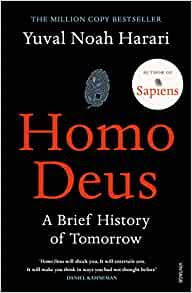
Two books I can’t wait to receive for Christmas and New Year are Homo Deus by Yuval Noah Harari and The Midnight Library by Matt Haig. I have discovered both authors only this November, having read Homo Sapiens, The Humans and How to Stop Time alongside each other. 

Despite obviously having been written independently of each other, together they have created a wonderful narrative about humankind, our past, and our impact on the Planet and fellow planetary residents, humanoid and otherwise.

Somehow, I feel that Homo Deus and The Midnight Library ought to be read side by side too and I treasure those – as yet only imaginary – moments of morning non-fiction reading and dark evening reads of a novel with modern jazz playing in the background.

Yvonne Coppard: 
In 2021 I will tackle the toppling stack of panic-bought titles from the first Lockdown, when I feared I might run out of good books. Lined up for the New Year are: Tidelands, Philippa Gregory, set in the English civil war. I know I’ll love it because, well, it’s Philippa Gregory, innit?

The Woman in Cabin 10, by Ruth Ware. ‘A passenger is missing. But was she ever on board at all?’ is a great tag. The author is new to me, but a Sunday Times bestseller seems a safe bet.

The Ode Less Travelled, by Stephen Fry, is one of my Lockdown projects. It’s a masterclass in poetry, complete with practical exercises. I made a start and promptly mislaid the book. It’s turned up now, and I’m looking forward to indulging a neglected love of poetry.

Gill Lewis: I’m really looking forward to Fifty Words for Snow by Nancy Campbell. Snow represents so much for many people across the world, and there is a palpable ecological grief at the loss of it in some regions due to climate change. And second in my TBR pile is What is Life? by Paul Nurse, where I hope to find some answers to this huge question.

Celia Rees: 
I’m looking forward to reading Mick Herron’s Slough House, due to be published February, 2021. I love spy novels and I love Mick Herron’s writing. I eagerly devoured books I - 6 and am eagerly anticipating the seventh in the Slough House series. I’m also thinking of re-reading the Master, John Le Carré.

I also like the Australian novelist Jane Harper, and notice that her next book, The Survivors, is to be published in February, 2021. I very much enjoyed The Dry and The Lost Man, so I’m looking forward to this one. 

The TV series of His Dark Materials has made me want to re-read the Philip Pullman novels, particularly The Subtle Knife and The Amber Spyglass. I fear I read them too quickly the first time round! 

Julia Jarman:
 I will read everything Patrick Gale has written, and am currently enthralled by A Perfectly Good Man.


Monday, 7 December 2020

Guest review by Julia Jarman: NOTES FROM AN EXHIBITION by Patrick Gale


"Patrick Gale, a writer new to me, beguiles."

Photograph by Linda Newbery
Julia Jarman
has written books for children of all ages. Her work includes The Time Travelling Cat series for readers of eight to twelve or thereabouts and the acclaimed picture book, Big Red Bath. She is currently trying her hand at writing for adults ‘to see if I can’.


The pram in the hall is Death to Art, to paraphrase Cyril Connolly. Not for Rachel Kelly it wasn’t! She had four children but they didn’t stop her painting. Nothing stopped Rachel doing what she had to do or wanted to do, not babies, not prams, not manic depression, as it was called in the second half of the twentieth century when most of this novel takes place. Rachel was bipolar but she made this work to her advantage, the highs inspiring work of astonishing intensity, the lows landing her in hospital, but that didn’t stop her for long. She thought the lows, made worse by postnatal depression made the subsequent highs worthwhile. Hence, possibly, the four children.

Rachel was lucky enough to have help, lots of help, from devoted and dutiful husband, Antony; from supportive doctor Jack, also a painter so he understood better than most; and from those four children, all devoted in their own way till, perhaps, they could stand it no longer. I say ’perhaps’ because, though we hear from each grown-up child in turn, we hear only parts of their stories.

There’s Garfield the oldest, not Antony’s son, a lawyer turned violin maker. Rachel was pregnant when Antony rescued her, after a suicide attempt, and took her to his grandfather’s house in Penzance, abandoning his own academic career at Oxford. Next came Hedley, whose devotion lasted longest, possibly because he separated himself a bit, rejecting the Quakerism of the rest of the family, but also because he understood Rachel, being an artist himself. Jack called him ‘the family glue’. Then there’s Morwenna, the only daughter, the one we know least about because she got the hell out of it. Lastly, there’s Petroc the youngest who dies first, but not on his seventh birthday as I feared when I first saw him on the beach, enjoying his special day with Rachel, both of them absorbed by the art they were creating, both heedless of danger. I wanted to yell at her, ‘Look out! Be a grown up!’

It’s a novel about family relationships but it’s Rachel we hear about most. She is central in the book as she was in life. Everyone else circles round her trying not to hinder if not actually help. I’m fascinated and appalled when I read about children who protect their parents from the harsh realities of life, especially abused children. Are Garfield, Hedley, Morwenna and Petroc , neglected by their mother but cared for by their father, abused? Discuss. All the big questions are raised in this novel: nature v nurture, religious belief as practised by The Society of Friends, creativity, morality. I could go on.

I need to say it’s deep and very entertaining. Firstly because all the characters are so real. I identified with all of them and cared what happened and carried on caring when I stopped reading. Secondly, and this follows from the first, a lot happens. It’s gripping. I wanted to know not only what happened next to each character, but also what happened before. And finding out, especially about Rachel, after her death – the exhibition of the title is a retrospective – is fascinating. No spoilers but there were shocks.

Patrick Gale, a writer new to me, beguiles. Rachel the creative artist, her paintings, and the notes about the paintings, referred to in the title, are as real, or more real, than Barbara Hepworth and other artists of the Cornish School who also appear in the novel. Confession: I googled Rachel Kelly to check, but no, she didn’t really exist, but now she does, the product of a brilliant creative imagination. I salute.

Were any children harmed in the writing of this novel? I hope not.

Notes from an Exhibition  is published by Tinder Press

See also: Take Nothing With You reviewed by Linda Newbery

Monday, 8 June 2020

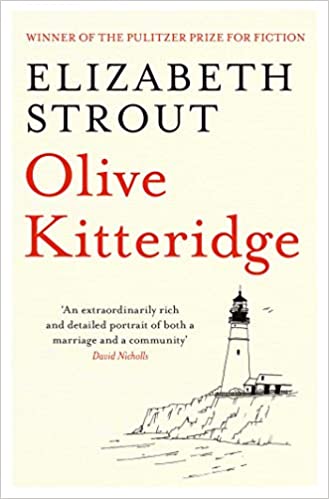
Guest review by Julia Jarman: OLIVE KITTERIDGE by Elizabeth Strout


"Isn’t that why reading is fascinating – it reveals what we don’t and can’t know about each other in real life?"

Photograph by Linda Newbery
Julia Jarman has written books for children of all ages. Her work includes The Time Travelling Cat series for readers of eight to twelve or thereabouts and the acclaimed picture book, Big Red Bath. She is currently trying her hand at writing for adults ‘to see if I can’.

Olive Kitteridge, a retired maths teacher, lives in Crosby, a seaside town in Maine, USA, which is the constant in these short stories. Sometimes central, sometimes peripheral, Olive moves in and out of them as she does in the community, influencing and influenced by the other inhabitants, though I need to qualify what I mean by ‘influenced by’. Olive is cranky and contradictory and always, always herself, so it would be more accurate to say she’s ‘affected by’ other inhabitants rather than influenced. She reacts to other people, but she is also proactive, a law unto herself, often barging in where others would fear to tread, sometimes saving a situation, as in Incoming Tide where her intervention stops a man, a former pupil, from committing suicide; sometimes making it worse, as in A Little Burst when she overhears the bride, her new daughter-in-law, criticising the dress she’s wearing and worse, mortifyingly, her mothering. What has her son said about her? What criticism has he made? Olives suffers and takes revenge. Overweight, under-charmed, amazingly intuitive, she arouses strong feelings in the people she comes across – and in readers. Our book group divided into those who thought it the best book they’d read in ages, because the characters were so real, and those who couldn’t finish it for the same reason. ‘I know there are people like that in real life,’ said one, ‘but I don’t want to read about them.’

I crave books which show me how things are. I loved the late Margaret Forster for giving me those sort of books. I don’t want dystopias – hate them. I don’t want make-believe – can rarely engage with other writers’ fantasies though I create my own, but I do want books which throw light on how we are. To be honest, I might avoid Olive in real life, unless perhaps by lucky chance I’d discovered her hidden depths, but I find reading about her fascinating and keep returning to these stories, always finding something I’d missed. And isn’t that why reading is fascinating – it reveals what we don’t and can’t know about each other in real life? Books are better than real life. I remember a character in Absolute Beginners by Colin MacInnes saying books were great because they ‘sliced the top off people’s heads’ so you could see inside. Exactly.

Part of the fascination of Olive is to do with the fact that she can’t pretend. She can’t tell the social lies most of us tell to keep things running smoothly. So she’s rude and inhospitable when her nice-to-everyone husband invites a young couple to dinner – after she has said she doesn’t want him to, because after a hard day’s work, she doesn’t want to cook fancy food and be sociable; and also maybe, because she’s intuited that her husband is a little enamoured by the young wife, his employee, not that he realises this. He’s so nice he doesn’t know himself, well not the not-so-nice bits. Is that why we admirers admire Olive? Because she does know herself, or is willing to find out, because she dares where we daren’t?

Olive is complex and complicated and it is of course the writing which conveys this with amazing economy. Each short story is like a mini-novel and added together they are like a maxi-novel in the way they reveal human nature in all its variety. I love The Piano Player, a story in which Olive has only a walk-on role. Focused on one night in the life of Angela O’Meara who plays the piano in the cocktail lounge of a local eating place, it spans generations of several lives, shows how others see her and why they see her as they do, and reveals her as loving and loveable, in marked contrast to some of the major players in her life. Be warned, there is cruelty. I love . . . but I love all these stories, none more though than A Little Burst where Olive is central. Wounded by that daughter-in-law, Olive aches to make her understand. ‘She would like to say, Listen, Dr Sue, deep down there is a thing inside me and sometimes it swells up like the head of a squid and shoots blackness through me.’ She is picturing the depression and the grief – after her own father committed suicide - that stopped her being the sort of mother she wanted to be, but also possibly the dark side of her character, of all our characters. Am I fanciful in seeing the squid as serpent? It’s the author’s ability to make us see, the external and the internal, that makes these stories so intense and vivid. They are I think modern morality tales, showing us good and bad characters, not simplistically, not in black and white, but in shades of grey, the tone, dark or light, depending where they come on a scale of cruelty to kindness.

And Olive is kind, mostly.

Olive Kitteridge is published by Scrivener / Simon & Schuster

See also: Elizabeth and Amy by Elizabeth Strout, reviewed by Jane Bailey