Showing posts with label mental health. Show all posts

Monday, 28 April 2025

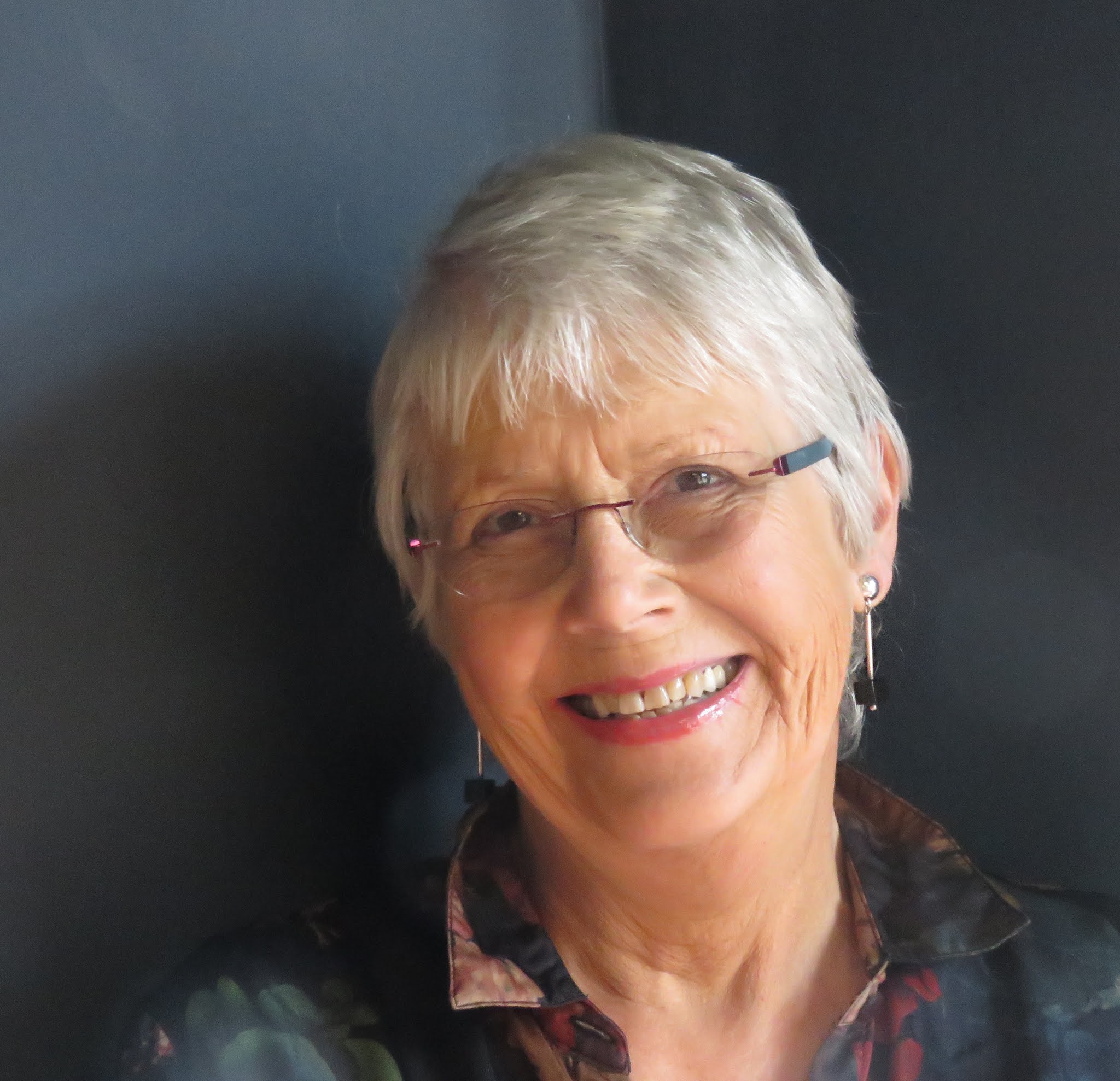
Q&A: Jane Rogers interviews Linda Newbery about THE ONE TRUE THING


"Each of the three characters - plus Adam, first appearing as a young artist, who isn't a viewpoint character but is equally important - finds, or tries to find, the activity that gives purpose and meaning to life ... "

Linda answers questions from our regular contributor Jane Rogers.

When the ground shifts, where is one true thing to be found?

Jane, in her twenties, is left parentless when her father dies suddenly; a second shock follows when his Will reveals the existence of a son no-one knew of. Now Wildings, the family home, must be sold. Spanning two generations, the novel tells the story of Bridget, Jane’s mother, trapped in an unhappy marriage on which her career depends, and of stone-carver Meg, who wants only independence but is enmeshed in conflicting loyalties and desires when Adam, a young artist, enters their lives, to devastating effect.

Now far from Wildings, Meg is bound by a promise to support Jane in her loss. Having thought of herself as an observer who saw everything, she’s forced to realise how much she failed to see – and the cost to those she loves ...
 
Jane: Congratulations, Linda! Re-reading this book (Jane read an earlier draft) transported me back to the beauties of Wildings and filled me with admiration all over again, for your clever plotting and beautiful descriptions of nature. I’m interested in the way you can shift between writing for children, and adult fiction. In your best-known book for young readers, Lob, you conjure a beautifully innocent child’s view of the world, where love of nature and a powerful imagination are the key ingredients. And that book appeals to adult readers too, because we all have a nostalgia for that kind of innocence.

In complete contrast, The One True Thing is a very grown-up novel, in its exploration of a whole range of sexual relationships: Bridget and Anthony’s marriage shifts through passion and intimacy to downright hostility and back, via infidelity, to a benign accommodation with one another; we learn of Meg’s lesbian love affair with Carrie, who dumps her for a man; there are hints of incestuous attraction between two other characters. How conscious are you of your readership, as you are writing? And does a story always present itself clearly to you as either YA or adult?

Linda: The One True Thing was never going to be anything other than an adult novel, and that's true of my work in progress, too. With teenage fiction there have been times when the boundaries (if there are boundaries) have been less clear: for example with Set in Stone, which I began as a YA novel but for fairly sophisticated readers, and with the hope (which I always have) that it would be enjoyed by adults too. Sometimes I find that a story wants to go in a direction I hadn't planned at the start, and that's what happened with Set in Stone, which caused some controversy when it won the Costa Children's Prize. Some argued - and I'd agree - that it isn't a children's book. But the eligibility for that category does include age groups up to and including YA, so the same could and probably has been said of other winners more suitable for the upper end of young readers. But I won't write any more YA - my focus now is on adult fiction, alternating with stories for young children. 

Jane: The creation of Bridget’s garden is at the heart of the book. Did you have to do a lot of research, or were you already a gardening expert?

Linda: I certainly wouldn't call myself an expert, but I do know quite a lot about gardening and had a clear idea of Bridget's style and approach. I did need to research Chelsea Flower Show garden criteria for the particular year in which two of my characters make a small artisan garden. At the time I was writing the novel, I attended a talk by James Alexander Sinclair, who lives locally and is a Chelsea judge; after the event I emailed him with a few questions, which he very kindly answered, showing me where to find out more.

Jane: Where did the novel spring from? Can you talk us through the inspiration, the starting points? Or maybe I should say, the seeds?  I was fascinated by the precise descriptions of Meg’s work as a stone mason, and I note the book is dedicated to a stone-mason. Can you carve stone? Is this another of your hidden talents?

Linda: I can't exactly remember the starting point - several years ago - but I do seem to have developed a fascination with stone. That started with my late mother's photograph of a caryatid at Copped Hall in Essex, which set me off on The Shell House - Graveney Hall in my novel is based on Copped Hall, inhabited by a fictitious family, but almost destroyed by a devastating fire in 1917, just as the real mansion was. The caryatid, and the sculptor who made it, didn't feature as much as I'd expected, the novel being concerned with a First World War relationship and with a young photographer who discovers the ruins in the present day. So, fairly soon after I'd finished it, I began another novel more focused on stone-carving: Set in Stone. While doing some hands-on research for that one with a local stonemason, Bernard Johnson, I learned to appreciate the beauty of letter-carving, and wanted to have a go. My efforts are very clumsy compared to Bernard's exquisite work (which you can see on his website) but at least I had the tools in my hands and began to understand something of the materials and techniques. I wanted my present-day stone-carver in the new novel to be female, and the character of Meg grew from there, along with how she'd fit around the other characters. 

Jane: What is your writing process? In this novel, Bridget, Meg and Jane all have their own stories and points of view, which are intercut. Did you write them like this, or work on each woman’s story-line separately?

Linda: I seem to have to work like that, moving back and forth in time and/or with intercutting viewpoints - my work in progress has a similar structure, and so do several of my young adult novels (Set in Stone, Sisterland, The Shell House). I don't think I could do it by working on each character individually, because so much depends on the juxtaposition, and what I want the reader to think, wonder, predict or piece together at any one point. When finishing a section from one point of view, I need to leave off for a while, go and do something else, then return (probably next day) with my head in the viewpoint of another character. 

Jane: I hope you won’t mind me saying that I found a lot of you in this novel; yoga, gardening, Extinction Rebellion! 

Linda: Yes, at times while writing I feared that I was using up everything I knew and could write about with authority ... but luckily there are more interests left over (photography, animal activism, an artist I've been intrigued by for many years) for the novel I'm working on now. In The One True Thing, each of the three characters - plus Adam, first appearing as a young artist, who isn't a viewpoint character but is equally important - finds, or tries to find, the activity that gives purpose and meaning to life. Meg is the one who uses the phrase, but it's significant for all of them. 

Jane: I know this novel has been a long time coming to fruition (sorry about the gardening metaphors!) Both you and I, and indeed many other writers, have had trouble finding a publisher for a completed novel – can you tell us the publishing history of this book?

Linda: Sadly, it can be very difficult for an author, even a well-established one, to find a publisher if her or his sales are less than spectacular - and that category includes most of us! Having published only one adult novel before (Quarter Past Two on a Wednesday Afternoon, in paperback as Missing Rose) I'm not yet established as a writer for adults, and I've heard from you and from other acquaintances that much better-known authors than me are finding it a struggle. The One True Thing was submitted, but isn't what publishers are looking for at present, and even though most praised the writing, characters, etc., they clearly didn't think they could make money from it. Although it's tough being rejected, I never lost the sense that readers would enjoy my novel, so I refused to give up on it. 

I'm grateful to Fiona Mountain, a well-regarded and traditionally published author of historical fiction who I met through a reading group, for telling me how and why she had self-published her latest novel, Keeper of Secrets (which I recommend). When I discussed this possibility with friends Celia Rees and Cindy Jefferies, both of whom have wide experience of the publishing industry, Celia had the brilliant idea of forming an imprint, Writers Review Publishing, linked to this blog. That was a moment of epiphany! I'd felt diffident about publishing and promoting my own book as a solo effort, but being part of an author collaborative would be really rewarding - helping other writers to launch new books or reissue backlist titles that deserve to reach new readers, and all benefitting from joint publicity. It was so liberating to find that everything I needed was available: cover designers, interior layout designers, proofreaders, publicists. It had never occurred to me that I could commision my own audio book, but I've now done that through Audio Factory, choosing my preferred narrator. 

It didn't take long to assemble three of us - Judith Allnatt, Mary Hoffman and myself - to be part of the launch. Both their titles are excellent reissues: Judith's The Poet's Wife tells the story of Patty, the wife of poet John Clare, while Mary's David: the Unauthorised Autobiography imagines the life of the model for Michelangelo's iconic sculpture. Two other well-established writers, Dennis Hamley and Sheena Wilkinson, will publish with us later this year. How we progress will depend on what comes our way - though we already have plans for 2026. Watch this space!

The One True Thing is published by Writers Review Publishing. The cover design is by Owen Gent.

Jane Rogers' short story collection, Fire Ready, is published by Comma Press. Read more here.


The other two launch titles for Writers Review Publishing are Judith Allnatt's The Poet's Wife and Mary Hoffman's David: the Unauthorised Autobiography


Monday, 2 May 2022

Guest review by Linda Sargent: 12 BIRDS TO SAVE YOUR LIFE - NATURE'S LESSONS IN HAPPINESS by Charlie Corbett


"Rediscovering his connection to the natural world through reacquainting himself with birds, their habitats and song."

Linda Sargent is a writer who works as a publisher’s reader (David Fickling Books since 2002). She has published short stories and articles and her first novel, Paper Wings, appeared in 2010; she is also the author of Words and Wings, a training guide to creative reminiscence work, available as a free download from her website. She is currently working, along with Joe Brady and Leo Marcell, on Tosh's Island, a middle grade graphic novel based on her childhood.

The line, “Grief finds its good way home” from Elizabeth Jennings' poem Into the Hour, is especially apt for this book, I think. The cliché of coming to terms with loss has always felt inadequate and often inappropriate to me, but “finding its good way home”, yes, that’s more like it. And this diary/essay form account that Charlie Corbett uses to chart the ten years following the death of his mother does feel so much like this kind of journey and one that most people are likely to recognise. Charlie’s mother was in her mid sixties when she was diagnosed with a brain tumour, which the author says at first, although a shock to the family, they all imagined it would be dealt with, sorted out and their mother would continue to be their centre, as he describes, “the glue that held our family together”. That this would no longer be the case seemed unimaginable and when she died there was inevitable fracture and despair, one which sent the author into dark times and which he admits never fully disappear. For him this “way home” involved rediscovering his connection to the natural world through reacquainting himself with birds, their habitats and song.

Although he chooses twelve birds to focus on, during the chapters he also includes many others, presenting a full picture of his relationship with nature as a whole and a reminder of things that he knew were important to him, but that he’d forgotten or neglected to remember over time. As well as the perhaps more obvious candidates like the skylark, the robin and the wren, there are other less predictable birds such as the magpie and the seemingly ordinary house sparrow (sadly like so many not so ordinary and common these days). And although every chapter begins with one bird, it soon broadens out into reflection and reminiscence, as he recalls earlier associations and memories of family life and the way in which he, his father and his siblings have to begin to live with their new reality. At the end of every chapter he gives a brief and nicely personal factual guide to his chosen bird and finally he includes what he calls a Gazetteer – A year in the life of birds, detailing what to look and listen for where and when. It is, as he says, a very personal account and is not meant to instruct, but rather to invite the reader to join him on his journey and in doing so to maybe find it easier to approach loss and grief in their life and find solace in the natural world which is fundamental to us all.

12 Birds to Save your Life is published by Penguin.

More reviews by Linda Sargent:

The Orchardist by Amanda Coplin   

The Buried Giant  by Kazuo Ishiguro 


Linda wheeling away into Blenheim Park


Monday, 7 December 2020

Guest review by Julia Jarman: NOTES FROM AN EXHIBITION by Patrick Gale


"Patrick Gale, a writer new to me, beguiles."

Photograph by Linda Newbery
Julia Jarman
has written books for children of all ages. Her work includes The Time Travelling Cat series for readers of eight to twelve or thereabouts and the acclaimed picture book, Big Red Bath. She is currently trying her hand at writing for adults ‘to see if I can’.


The pram in the hall is Death to Art, to paraphrase Cyril Connolly. Not for Rachel Kelly it wasn’t! She had four children but they didn’t stop her painting. Nothing stopped Rachel doing what she had to do or wanted to do, not babies, not prams, not manic depression, as it was called in the second half of the twentieth century when most of this novel takes place. Rachel was bipolar but she made this work to her advantage, the highs inspiring work of astonishing intensity, the lows landing her in hospital, but that didn’t stop her for long. She thought the lows, made worse by postnatal depression made the subsequent highs worthwhile. Hence, possibly, the four children.

Rachel was lucky enough to have help, lots of help, from devoted and dutiful husband, Antony; from supportive doctor Jack, also a painter so he understood better than most; and from those four children, all devoted in their own way till, perhaps, they could stand it no longer. I say ’perhaps’ because, though we hear from each grown-up child in turn, we hear only parts of their stories.

There’s Garfield the oldest, not Antony’s son, a lawyer turned violin maker. Rachel was pregnant when Antony rescued her, after a suicide attempt, and took her to his grandfather’s house in Penzance, abandoning his own academic career at Oxford. Next came Hedley, whose devotion lasted longest, possibly because he separated himself a bit, rejecting the Quakerism of the rest of the family, but also because he understood Rachel, being an artist himself. Jack called him ‘the family glue’. Then there’s Morwenna, the only daughter, the one we know least about because she got the hell out of it. Lastly, there’s Petroc the youngest who dies first, but not on his seventh birthday as I feared when I first saw him on the beach, enjoying his special day with Rachel, both of them absorbed by the art they were creating, both heedless of danger. I wanted to yell at her, ‘Look out! Be a grown up!’

It’s a novel about family relationships but it’s Rachel we hear about most. She is central in the book as she was in life. Everyone else circles round her trying not to hinder if not actually help. I’m fascinated and appalled when I read about children who protect their parents from the harsh realities of life, especially abused children. Are Garfield, Hedley, Morwenna and Petroc , neglected by their mother but cared for by their father, abused? Discuss. All the big questions are raised in this novel: nature v nurture, religious belief as practised by The Society of Friends, creativity, morality. I could go on.

I need to say it’s deep and very entertaining. Firstly because all the characters are so real. I identified with all of them and cared what happened and carried on caring when I stopped reading. Secondly, and this follows from the first, a lot happens. It’s gripping. I wanted to know not only what happened next to each character, but also what happened before. And finding out, especially about Rachel, after her death – the exhibition of the title is a retrospective – is fascinating. No spoilers but there were shocks.

Patrick Gale, a writer new to me, beguiles. Rachel the creative artist, her paintings, and the notes about the paintings, referred to in the title, are as real, or more real, than Barbara Hepworth and other artists of the Cornish School who also appear in the novel. Confession: I googled Rachel Kelly to check, but no, she didn’t really exist, but now she does, the product of a brilliant creative imagination. I salute.

Were any children harmed in the writing of this novel? I hope not.

Notes from an Exhibition  is published by Tinder Press

See also: Take Nothing With You reviewed by Linda Newbery

Monday, 14 September 2020

Guest review by Graeme Fife: THE SHAPELESS UNEASE by Samantha Harvey


"No wonder sleep deprivation is used as torture ..."


Graeme Fife has written many plays, stories, features and talks for radio, stage plays and articles for newspapers and magazines, and is now a regular contributor to BBC Radio 4's From Our Own Correspondent. He's the author of a string of books - children's stories, biography and works of history. Great Cycling Climbs, which brings together his books on the French Alps, is published by Thames and Hudson. He says, 'I urge everyone to buy from their independent bookshop, if they're lucky enough - as I am - to have one nearby. If not, by any means possible to counter the sprawl of the online consumer graball.'

Who contemplates with anything but unease the torment of sleeplessness? No wonder sleep deprivation is used as torture. And how to combat it? By going to the doctor?

"I need some sleeping pills, I say. She stares at me as if my tears have appalled her, or somehow confused her. Please, I say. Instantly I regret this because now the power is with her; now my night’s sleep is a favour she can grant. And yet it is. And if it would help to fall at her feet and supplicate myself, I would.

She gets her pills."

From nearly a year of nights longing for sleep, contriving to fall asleep, anything for what Sidney called ‘the certain knot of peace…the prisoner’s release’, comes this gem of a book. A soporific, a dose of Lethe, a wild distraction? No. In the waking hours, the dreamless, nocturnal vacancies when the mind races, loosed upon the increasingly extravagant stratagems for an hour or two of oblivion, Harvey’s deliberations explore the mystery of writing itself. I mean, how many jigsaws can you do without beginning to see the entire world, all patterns of existence, as a fretwork scattering of fragments, a shape-shifting puzzle? Put one puzzle together and another follows. There ain’t no solutions, here, no completion.

Out of her meditation on insomnia - and when insomnia takes over, what else do you do but try to work out what the hell is going on with you? – she ponders time’s fluidity, the static nature of now, the constant shifting of now. She reflects on perception, the way our focus changes in different circumstances, on mortality itself, this wondrous gift we have which can deliver such incomprehension and grief, such accumulations of distress. In our waking hours, welcome or oppressive, Harvey leads us on a quest, the tracking of sensation …

One effect of such inward scrutiny, the remorseless thinking, thinking, thinking about yourself which hours spent in your own wakeful company forces upon you, is the realisation that it becomes ‘indulgent, self-centred and a little mad’. Well, and so it does, but is this not the bold intelligence facing up to the fact that this is what’s involved in knowing yourself, the examined life? And from that exploration comes, for us who pretend to writing, the work.

Harvey ponders writing itself, the process, the mechanics, the effects. She speaks of the cacophony of her (our?) mind, the clashing din of ideas, mostly specious and useless ideas, sometimes a good idea, and how we are assailed by a Babel of voices, counter and kindly, out of which a lone echo of something worth listening to. This is to formalise what is always and ever very informal. ‘How do you get your ideas?’ ‘Not a clue. We’re all in the dark, most of the time.’ Immediately the image springs back at us: in the dark…compelled to watch the slow creeping of the clock’s hands, desperate to give the racing mind rest. As she speaks of those oppressive, slow-moving, sleepless hours, the pattern of the way her mind drifts suggests that similar pattern of formulating sense in words. Writing has saved her life, she says, the next best thing to sleep, sometimes even better. Why? Because she is sane when she writes, it’s the continuum of the dependable.

"Nothing else matters when I write, even if what I write turns out to be bad. I proceed from some open and elusive subconscious formlessness roughly called ‘me’, definable only by being nothing and nowhere, just the silence in which shapes move. Then words. Words harnessing things…the comfort of organisation, of shepherding chaos … "

One aspect of this arresting book which I find most attractive is the dispersal of thoughts, the digressive nature of Harvey’s writing, her curiosity, her penetrating insights, her willingness to follow the unpromising lead just to see where it goes. I wrote in appreciation of this exquisitely written book and wondered, given the attendant torture of insomnia, she might have mixed feelings about it, what it had cost her to write it. She replied (perhaps predictably): ‘My feelings about it aren't mixed, it was a life support and consolation, and I'll always be glad of it.’ Hurray.

I cannot resist quoting one splendid blast of invective:

"Why is Brexit called Brexit, when it isn’t Britain leaving the EU, it’s the UK? Why isn’t it called Ukexit? Never trust something that’s inaccurately labelled. Even the name of this con is a con. Even the name is a shitshow, an almighty, extravagant, eternal show of shit." 

The Shapeless Unease is published by Jonathan Cape

See also Graeme Fife's review of A Telling of Stones, by Neil Rackham, and his many other reviews here by entering his name in the Search box.


Sunday, 19 April 2020

Lockdown Sunday extra: NATURE CURE by Richard Mabey


"In these days of coronavirus lockdown and climate emergency, the finding of solace in the natural world is ever more significant."


Linda Newbery edits Writers Review. She has published widely for young readers and is currently working on a new adult novel.

A version of this review first appeared on Normblog in 2006 as part of a Writer's Choice feature hosted by the late Professor Norman Geras.

A chance hearing of Radio 4’s Book of the Week first alerted me to this wise and compelling account of Mabey’s decline into depression, and re-emergence. This was in 2005, but in these days of coronavirus lockdown and climate emergency, the finding of solace in the natural world is ever more significant for those of us lucky enough to have gardens, parks or countryside at hand.

Mabey’s book strikes many chords with me, from page 2 where he describes the finding of a grounded swift. I had the same rare experience when one of my cats somehow caught one and brought it indoors through the cat-flap. Handling the bewildered but unharmed bird, I saw the perfection of its aeronautical design – strong, swept-back wings, wide gape, tough eyelids with bristly lashes. Like Mabey, I realised that the only way to return it to the air was to launch it like a paper aeroplane, and watched in amazed delight as it skimmed the grass before soaring high to rejoin the flock. (NOTE: since writing this piece I have learned that this isn't advisable as it could risk injuring the bird. Better to see if there's a wild bird sanctuary near you that can examine and release the swift.)

Swifts, epitomising English summer with their screaming flight, hold a special significance for Mabey, echoing Ted Hughes for whom their return each May proved that “the globe’s still working”. So it was a sure sign of the depression he’d sunk into that he lay in bed too lethargic to turn his head while the swifts whizzed and shrieked outside his window. Many writers will recognise the odd, bereft feeling of completing a book. For Mabey the work had been a massive one, Flora Britannica*, and the sense of loss was compounded by the death of his mother from Parkinson’s disease, through which he and his sister had shared the nursing.

His home for most of his life had been in his parents’ house in the Chilterns. There, he owned a piece of woodland, from which he banned the local hunt (hurrah!) while encouraging neighbours to wander and collect wood. Debilitated and purposeless in his illness, he was encouraged by friends – and a new lover - to resume his absorption in the natural world and in writing, the twin passions which had always sustained him. Acknowledging that he’d never really “fledged”, and that the process of maturation demanded a move, he decamped with three cats to the Norfolk Breckland, as lodgers in an isolated seventeenth-century farmhouse. Here, through a solitary but cathartic winter, he finds new bearings and rediscovers his connection with the land. He examines maps, he ponders over interesting names, he reflects on the shaping of the landscape by human intervention and the enclosure of the commons, he becomes fascinated by “westing” – what seems an instinctive alignment of buildings and field boundaries towards the setting sun.

This isn’t only the story, though, of Mabey’s illness and recovery. There are frequent digressions – into the effects of the Enclosures Act on Norfolk life and landscape, glaciation and land-forms, language and folklore, flora and fauna. The Northamptonshire poet John Clare, like the swifts, is present throughout. Mabey feels a strong affinity with Clare, “ecological minstrel”, not only because of Clare’s mental illness and shared habitats, including the same Northampton hospital, but for Clare’s deep empathy with wild creatures and his skill in capturing their “jizz” (the concise term used by birdwatchers).

He found little solace in mainstream environmentalism, seeing it as merely utilitarian, "based on enlightened self-interest: we want a healthy, unpolluted, species-rich ecosystem because our material future depends on it,” while we assume “the right, or the duty, to determine every other species’ share, too.” (Has he seen a change, I wonder, since publication of this book in 2005? Extinction Rebellion, Friends of the Earth and Greenpeace value the planet and its ecosystems for themselves, not solely for the benefits they bring to us. According to the organisation EcocideLaw, drawing on the work of the late Polly Higgins, "Ecocide is a crime against the Earth itself, not just against humans.")

Mabey sees our connection to the natural world as essential to our spiritual and physical well-being. In the worst slumps of depression, he had become, like the grounded swift, “the incomprehensible creature adrift in some insubstantial medium, out of kilter with the rest of creation. It didn’t occur to me at the time, but maybe that is the way our whole species is moving.” To read Nature Cure, at least, is to slow that progress. As well as the honesty of Mabey’s self-revelation and the range of his knowledge, it’s the quality of his prose – the Ruskin-like attentiveness to shifts of light, patterns of growth, and behaviour of even the most common bird - that makes this book so memorable.

Nature Cure is published by Vintage.

* Flora Britannica is another of my treasures, joined now by Birds Britannica (by Mark Crocker and Richard Mabey) which similarly combines natural history, folklore and anecdote.

See also The Salt Path by Raynor Winn, reviewed by Sue Purkiss

The Outrun by Amy Liptrott, reviewed by Paula Knight

Walden by Henry David Thoreau, reviewed by Linda Newbery

Sightlines by Kathleen Jamie, reviewed by Sue Purkiss

Corduroy by Adrian Bell, reviewed by Andrew Fusek Peters

Wilding by Isabella Tree, reviewed by Linda Newbery

Natural Selection: a Year in the Garden by Dan Pearson, reviewed by Linda Newbery

Monday, 13 August 2018

Guest review by Judith Allnatt: THE LOST GARDEN by Helen Humphreys


"Love and loss are explored with insight and sensitivity in this beautifully written novel."

Judith Allnatt writes short stories and novels for adults. Her novels have been variously shortlisted for the Portico Prize for Literature, the East Midlands Book Award and featured as a Radio 5 Live Book of the Month. Short stories have appeared in the Bridport Prize Anthology and the Commonwealth Short Story Awards, and have been broadcast on BBC Radio 4 and the World Service.

Judith’s latest novel, The Silk Factory, is an eerie story of love and memory drawing on both the Luddite weavers’ rebellions in the nineteenth century and a modern day haunting. She has lectured widely on Creative Writing for over two decades and is a Royal Literary Fund Fellow. She lives with her family in Northamptonshire and is working on her fifth novel. For more information and blog posts see Judith’s website.Twitter: @judithallnatt

The Lost Garden may, at first glance, seem to be about small things but don’t be misled. Love and loss are explored with insight and sensitivity in this beautifully written novel.

In 1941, Gwen Davis, bereaved and lonely, leaves London and the Blitz for Devon, to supervise a team of Land Girls in turning the gardens of the estate of Mosel over to food production. For the last few years, Gwen, who remembers having been touched only three times in her life and who is plain, pernickety and reclusive, has been hiding away in a research role at the Royal Horticultural Society. Her erudite knowledge of parsnip canker is, unsurprisingly, of no use at all in managing a group of lively girls who are already mixing happily with the Canadian soldiers billeted at the main house.

Here she meets first Raley, an officer who is tensely waiting to be posted with his men and then Jane, the unofficial leader of the girls, whose fiancé is missing in action and whose mental state is dangerously fragile. All of the main characters are suffering losses and are trying to find a way to live in the face of war’s ‘brutal change’ and struggling to reconcile themselves to its ‘useless random death’. Raley drinks. Jane, anorexic and diagnosed as ‘in distress’, decides to ‘tend the animals’. Gwen, who sometimes lies under her heavy volumes of ‘The Genus Rosa’ and imagines the weight of a man, waits for love.

There are mysteries. What caused the smell of fire in Gwen’s room? Who or what is the white ghost that the girls say they’ve seen at twilight? What is the meaning of the lost garden that Gwen finds, with its words inscribed on stones? There is also humour. The novel is narrated in the first person and Gwen is given a dry, quirky wit. About the removal of signposts throughout rural England and children schooled to refuse to give directions, she marvels: ‘No one seemed to have considered that a spy might come equipped with a map.’ Whimsically, she names the girls in her care after types of potato: ‘Golden Wonder’, ‘British Queen’ and, more generically, ‘The Lumper’; ‘Vittelette Noir’, who moves jobs from farm labourer to cook is immediately rechristened ‘Victualette Noir’.

The contrast between Gwen’s yearning but timid approach to love and life and Jane’s fierceness is touchingly rendered and is used to make each woman’s dilemma more poignant. Jane says of her missing fiancé, ‘I cannot falter or he won’t come back’ and in her fragile state she is given to insomnia, night rides across the fields and impulsively giving away her possessions, even her clothes. Cautious Gwen, observing from the sidelines thinks ‘There is no protection in the world for someone who loves like that’.

It was no surprise after having read this gem of a novel to learn that Helen Humphreys is also a poet. I’ve noticed before the close observation, striking images and nuanced language used by other poets-turned- fiction-writers: Owen Shears, Michael Ondaatje and Margaret Atwood for instance. Yes, this novel has engaging characters, a plot with unexpected twists and an interesting setting, but it is the writing itself, the texture if you like, rather than the pattern of the cloth, that I most enjoyed and so greatly admire.

The Lost Garden is published by Bloomsbury.

Monday, 26 February 2018

Guest review by Nicola Davies: GROWING PAINS: MAKING SENSE OF CHILDHOOD: A PSYCHIATRIST'S STORY, by Dr Mike Shooter


"For me, and I think for others who write for children, perhaps the greatest inspiration in Growing Pains is in the power and value of story itself."


Nicola Davies is the author of more than 50 books for children, fiction, non fiction and poetry. Her work has been published in more than 10 different languages and has won major awards in the UK, US, France, Italy and Germany. Nicola trained as a zoologist and her work focuses on nature and human relationships with the natural world. She has been a senior lecturer in Creative Writing, and now regularly runs workshops for children and adults to help them find their voices as writers and advocates for nature. She was the first recipient of the SLA’s award for Outstanding Contribution to Children’s Non Fiction in 2017 and in 2018 has four picture books longlisted for the Kate Greenaway Award.

Mike Shooter has been helping children and young people through every kind of crisis, from the ordinary wear and tear of family life, to some of the most horrific experiences that human beings can endure, for all of the four decades of his professional life.But this book, drawn directly from his difficult and demanding clinical practice, is not the voice of the arrogant practitioner handing down pills and judgment from a place of safety: Mike Shooter has battled against depression, and knows about mental health problems from the bottom up. This personal experience, plus a healthy scepticism about received wisdom, has informed his work and made him into an extraordinary listener. Listening to what children say about their lives has been the heart and soul of his work. The stories that he has heard and the insights he’s gained, are retold in Growing Pains with a clarity and honesty that is moving and powerful. It is also at times disturbing - not always because of the nature and magnitude of the mental health problems, but because of their mismanagement through poor practice in the NHS and society as a whole. Dr Shooter isn’t a sensationalist, but he doesn't mince words about the fact that the UK has one of the poorest records of child and adolescent mental health in the developed world: a culture increasing focussed on a narrow vision of success and a health service run by and for bean counters.

These are, of course, not all stories with happy endings, but they are inspiring at many levels. First there’s the ability of humans to heal, not just themselves but their relationships: adolescents apparently hell bent of a path of self destruction find better ways to express anger and frustration; parents and children living like enemies in a war zone build bonds of love and support. Then there’s the way that children can make brave and powerful decisions about their lives, their bodies and even their own deaths, when adults include them in all conversations, even the most difficult.

For me, and I think for others who write for children, perhaps the greatest inspiration in Growing Pains is in the power and value of story itself. Symbols and metaphors help children and young people to understand their own lives: the disturbed adolescent finds the root of his unhappiness when the broken heart of a Russian doll reminds him of his dead twin; the little boy who acknowledges the loss of his father and the fact that life goes on through the way the snowflakes settle in snow globe. Growing Pains has re-inspired me to go on trying to write stories that reflect children’s real experience in all its difficulty and to find the comfort and magic that can lie in the heart of the most traumatic situations

Growing Pains is published by Hodder and Stoughton.

Monday, 25 July 2016

FINGERS IN THE SPARKLE JAR by Chris Packham, reviewed by Linda Newbery


'Chris Packham clearly loves words, so much that they seem for him to fill a "sparkle jar" as enticing as the delights of the natural world.'

This memoir, something of a departure for naturalist and Springwatch presenter Chris Packham, has many literary resonances. As an account of a young boy finding purpose and passion through his love for wildlife, it recalls A Kestrel for a Knave and My Family and Other Animals; the love and loss of a wild creature echoes Gavin Maxwell’s Ring of Bright Water, which gave Packham a love of otters. The journey through depression, and emergence from it, is reminiscent of Richard Mabey's Nature Cure and Helen Macdonald's H is for Hawk, while the experience of mental illness and acceptance of therapy echoes Matt Haig's Reasons to Stay Alive. It's a brave and important book, at a time when it's recognised that mental health issues, particularly for men, must not be hidden or 'toughed out'. Packham has of course published numerous books and articles on wildlife, but nothing as personally revealing as this.

The structure, a series of episodes, is an unusual one. In early chapters, Packham refers to himself as 'the boy' or 'Christopher', seen by a range of characters including an ice-cream van driver, a cinema usherette and, most touchingly, a hermit-like war veteran. Other sections are narrated in first-person - either as himself, or in short italicised sections, from the viewpoint of a therapist treating the adult Packham after he had twice come close to committing suicide. In these latter sections we learn that he came to regard himself as an outsider - clever, obsessive, but unable to relate to others. Although the term Aspergers isn't used, it is hinted at in his assessment of himself.

Chris Packham clearly loves words, so much that they seem for him to fill a "sparkle jar" as enticing as the delights of the natural world. He sprinkles them with a liberal hand, piling up adjectives in almost every sentence. At first I was exasperated by the over-writing, but gradually, as my eyes adjusted to the surface dazzle, it became part of the book's charm. The breathless rush conveys complete absorption in the behaviour of bird, mammal or invertebrate and the settings in which they are observed. Often the choice of phrase is strikingly apt, as when mosquito larvae "ziggle down in droves" or an old man peers into the "squinty dim"; glimpsing a sparrowhawk, there’s “a fleeting sense that some pulse of life had singed the air”. More than once, the rhythms and emphasis reminded me of Under Milk Wood, or of Seamus Heaney's Death of a Naturalist. And this description of a falcon in flight surely pays homage to Gerard Manley Hopkins' The Windhover:

"Unfalling, the bird stands chopping air, fluttering and then rolling down smooth, slipping and then sliding away to ring a curve across the storm until it pitches at the apex and begins to dance with the wind, its plumes constantly shaken, folding and flicking to steer it still and ... balance broken it tumbles and steadies with a twist of grey - cloud-licked and clean, now measuring the weight of the sky again ..."

The sparkle jar of the title is used as a metaphor for the beauty of the natural world and its frailty in the hands of careless others. A jar filled with minnows, sparking and glinting with rainbow colours, is grabbed by older boys and smashed. “A little bang of luminous blue, a pulse of silver and a flopping thwack marked the end of my pocket universe.”

The book's episodic structure, moving back and forth in time, is held together by several sections called The Bird. Here Packham relates his taking of a kestrel chick from a nest, rearing and training it. “I squashed the blob of meat on my thumb and went down on one trembling knee to ask the biggest question of my life. He was a jewel, radiant in the rich dawn light, his head bobbing. He was the centre point about which I danced, his tail fanning. He was all my absolute everything, his freedom terrifying.” His identification with the kestrel is so complete that in some passages he becomes the bird, sharing the exhilaration of its flight. The illness and eventual death of this beautiful bird left the fourteen-year-old Packham utterly bereft. Years later, he tells his therapist, “I think too many things broke in that moment, things that couldn’t ever be mended.”

Bullied at school and accepting his outsider role, Packham later found in punk rock an outlet for suppressed anger. The joys and trials of childhood and adolescence are sharply recalled, rich in details that evoke 1970s suburban domestic life: Kia-Ora and jamboree bags, Captain Scarlet and the Mysterons, Brooke Bond picture cards, Airfix models and the How and Why Wonder Book of Dinosaurs, the Clash and the Sex Pistols and new stacked-heel shoes from Tru-Form.

I suspect that Chris Packham, having so obviously relished the exhilaration of the "sparkle jar" of words, will want to continue writing in this lushly descriptive vein.