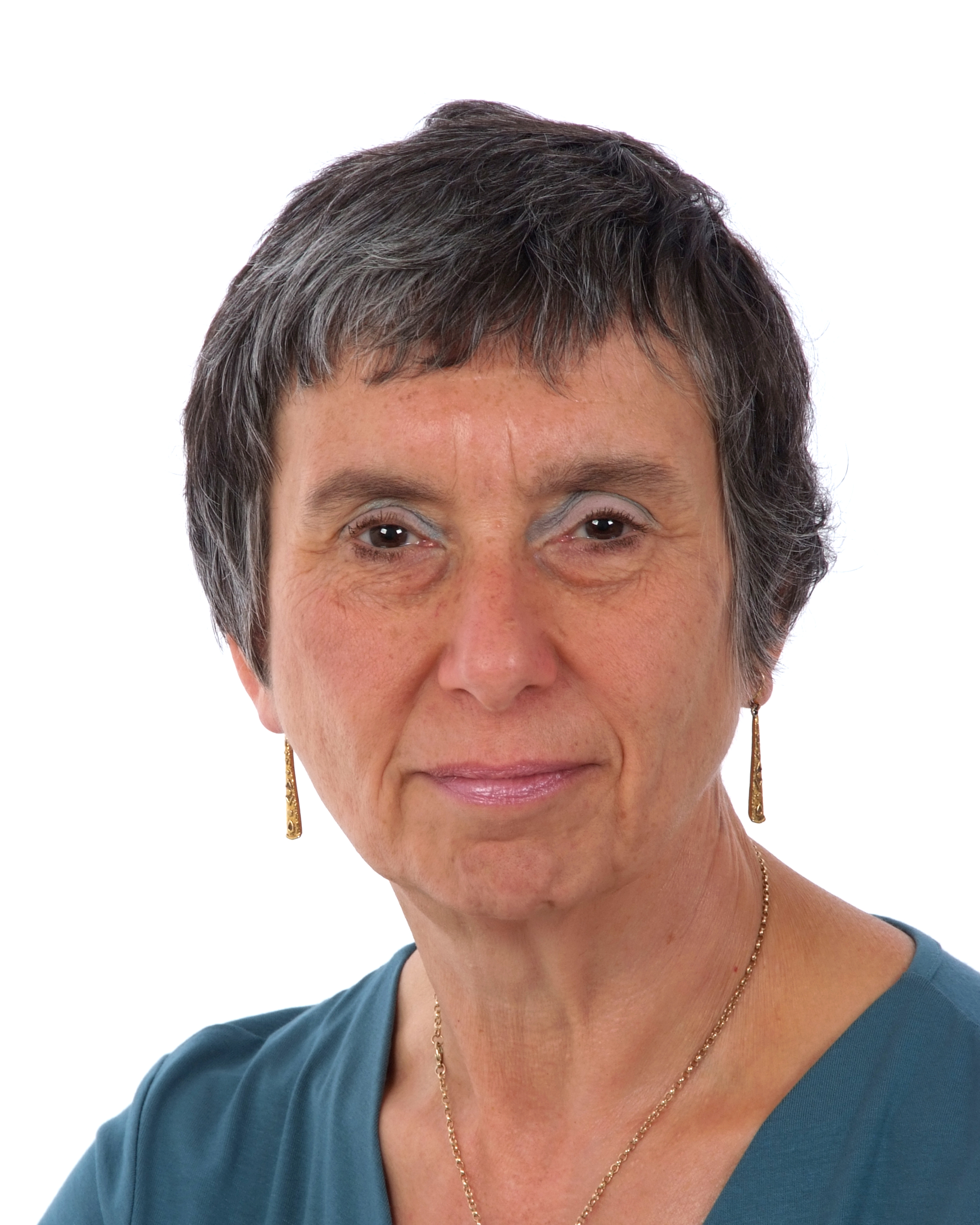
Showing posts with label Susan Elkin. Show all posts

Monday, 15 December 2025

BOOKS OF THE YEAR Part 1 - chosen by our contributors


This is the first of three round-ups by our reviewers. Each has chosen their own best read of the year (or one of them) which did not necessarily have to be published during 2025. It's also our chance to thank our wonderful contributors for supporting us throughout the year - we couldn't possibly do this without you. Thank you all!

Susan Elkin
chooses Orbital by Samantha Harvey: Nothing I’ve read this year quite surpasses this 2023 novel. The setting is the International Space Station which orbits Earth sixteen times a day. That means a continuously unfolding display of Earthly sunrises and sunsets, 250 miles below. Two Russians, one American, one Brit, one Japanese and one Italian maintain the vehicle internally and externally, servicing lab mice and plants, obeying a strict exercise routine to prevent muscle loss. Each is instructed by ground crew and there’s email contact with home. “Swimming” round the capsule, they hook themselves into hanging sleeping bags at night like bats.

Meanwhile the profound beauty and wonder rotates beneath them. Orbital is a heartfelt hymn of praise to the glory and wonder of our richly coloured planet and a timely reminder that national boundaries and all the hostility they cause are irrelevant. Succinct, poetic, philosophical and breath-taking, Orbital is a veritable Everest (visible from the ISS, apparently) of imaginative writing.

Susan Elkin's latest publication is a short story collection, Unheard Voices: Tales from the Margins of Literature

Lizzie Enfield chooses Purge by Sofi Oksanen: As a travel writer and novelist, I always seek out fiction set in the places I visit. Novels reveal the emotional texture of a landscape and the hidden histories of those who live there in a way guidebooks cannot. When I travelled to Estonia for the first time this year, Sofi Oksanen’s Purge offered a powerful introduction to a country with a scarred yet optimistic spirit. The novel intertwines the lives of two women - Aliide, an elderly survivor of Soviet oppression, and Zara, a young victim of modern trafficking - whose fates converge amid a legacy of fear, shame and endurance. Oksanen’s taut, lyrical prose captures both the brutality of history and the fragile strength of those who endure it. Reading Purge while exploring Tallinn and its countryside lent every ruined farmhouse and quiet forest a deeper resonance. It’s a haunting, unforgettable story of survival, memory and the resilience of the human spirit - both painful and positive. 

Lizzie Enfield is the author of Living With It. She has also written these BBC articles about Estonia.

Sheena Wilkinson's choice is By Any Other Name, by Jodi Picoult: We’ve all heard the theories that William Shakespeare may not have written all the plays attributed to him. I never wanted to believe this: the myth of the Bard’s humble beginnings and preternatural understanding of human experience at its deepest and widest was so romantic. But I have been entirely convinced by the thesis underpinning Jodi Picoult’s novel By Any Other Name. Building on compelling evidence that some of the plays could have been written by Emilia Bassano, an educated Italian Jew who, at thirteen, was given to the Lord Chamberlain as his mistress, Picoult fictionalises Emilia’s eventful life, setting it in counterpoint to that of a modern-day woman playwright: times have changed, but women still struggle to have their voices heard as loudly as men’s.

Bold, readable, wearing its considerable research lightly, By Any Other Name turned what I thought I knew on its head.

Sheena Wilkinson's latest publication is Miss McVey Takes Charge.  

From Lesley Glaister: I adore eccentric characters and the eponymous narrator of Cassandra at the Wedding by Dorothy Baker, is exactly that. Monstrously selfish, devasted by her twin sister’s chance of happiness in marriage, which she tries to sabotage, she’s melodramatic, pedantic, impatient, witty, really a terrible person, and one of the most engaging and enraging narrators I’ve read for a long time. This claustrophobic novel is darkly funny and shocking in parts. I loved it! Much gentler is an audiobook that kept me spellbound: The Covenant of Water by Abraham Verghese. This family saga set in Sri Lanka, spans the first 77 years of the twentieth century. I found it deeply moving, almost unbearably sad, and with an intriguing theme of medical discovery. A quick round-up of other favourite reads this year: The Land in Winter by Andrew Miller; Our Evenings by Alan Hollinghurst, Liars and Saints by Maile Meloy and Clever Girl by Tessa Hadley.

Lesley Glaister's latest publication is A Particular Man.

Cindy Jefferies' choice is The Whalebone Theatre by Joanna Quinn: This novel embraced me, as if I were another child living in that gently crumbling house. I eavesdropped on the adults, listened to stories and was part of the close knit group of children, whose lives were a mystery to their parents. There is a melancholy in being ignored one moment and admonished the next. But childhood is not where this novel ends. Once the dead whale is found, its bones eventually turned into an outdoor theatre, Cristabel, who found it, also finds purpose for herself and the others.

Time moves on while plays are written, costumes made and props obtained. Adults attend, years pass and war comes.

I wouldn’t have missed reading this book for anything. If the hallmark of a good book is that the characters live on after the last page is turned…then this is certainly it!

Cindy Jefferies' latest publication is The Honourable Life of Thomas Cheyne.   

Laura Parker
chooses Clear by Carys Davies: If you can read a book in one evening, it’s either very short, or very good. Clear is both. It feels timeless, even though it is set in a specific era and in a very particular place. Its historic backdrop is the Scottish Clearances and the formation of the Free Church of Scotland, but, much more urgently, it is about two men on an island: Ivar, who lives in isolation, and John, who is sent to evict him. From the moment Ivar finds John unconscious on the beach, the story moves at a fine pace, yet still manages to be a slow drama of two people getting to know each other and revealing our basic human needs: survival, trust, and love. It deals with several moral dilemmas, and right up to the end, it is impossible to predict what is going to happen. Profound, and deeply satisfying.

Laura Parker's current project has the working title Drystone Country.

Sue Purkiss recommends The Covenant of Water by Abraham Verghese: a richly textured family saga set in what is now Kerala. It begins with a young girl who is sent to marry a much older man, a widower. Surprisingly, the two gradually come to love each other, and they are at the heart of their small village, Parambil, as it grows and thrives.

Meanwhile, a parallel story tells of a talented young Scottish surgeon, who comes to India to work. His promising career is blighted by a tragic accident. It’s not evident for some time how these stories will link, but eventually they do.

It’s a long book, full of drama and with its fair share of tragedy. And yet it’s also full of warmth and humour – and hope. I found it to be a riveting read – the sort of book you really don’t want to end.

Sue Purkiss runs two blogs: A Fool on a Hill, her book reviews, and Let's Write! with ideas for creative writing.

Catherine Butler
chooses 100 Tales from the Tokyo Ghost Café by Julian Sedgwick and Chie Kutsuwada: In 2021, Julian Sedgwick and Chie Kutsuwada published Tsunami Girl, a novel about a quarter-Japanese English girl, Yuki surviving the 2011 Tohoku earthquake and tsunami and coming to terms with its aftermath. Tsunami Girl, which was shortlisted for the Carnegie Medal, was formally audacious, switching between a conventional novel (written by Sedgwick) and a manga (authored by Kutsuwada). Its hybrid telling, reflecting Yuki’s own cultural hybridity, worked unexpectedly well.

Two years later, the same pair produced 100 Tales from the Tokyo Ghost Café. This book plays even more radically with form. Sedgwick and Kutsuwada are not only authors but characters in the story, shepherding a stray child (who may or may not be a ghost) from a yokai-haunted café in Tokyo to his home in Aomori Prefecture, and encountering many creatures and stories (some traditional, some brand new) in the process – including a brief encounter with Yuki from Tsunami Girl. If you enjoy Lafcadio Hearn’s tales of Japan’s spirit world, or a cleverly told story of any sort, I highly recommend this one.

Catherine Butler is Professor of English Literature at Cardiff University. Her latest publication is British Children's Literature in Japanese Culture.

Chosen by Yvonne Coppard: Kent Haruf's The Tie that Binds. Haruf never sets out to shock or mystify: his writing is so beautiful there is no need for tricks of the trade. Instead, the reader is folded into his story-telling arms and gently immersed in the sleepy rural town of Holt, Colorado, where the intertwining tale of ordinary folk in extraordinary situations gradually unfolds. It is April, 1977. Edith Goodnough, 80 years old, lies in a hospital bed under police guard. She has lived an apparently drab, quiet life on a farm on the outskirts of town. But Edith is about to face trial on a charge of murder. Her life, and her family’s, will be laid bare.

If you like this, move on to Haruf’s trilogy: Plainsong, Eventide and Benediction. They are all perfect reads to turn to after a run of spooks, spies, thrillers and impenetrable award winners.

Yvonne Coppard has retired from a Royal Literary Fund Fellowship and is now working towards becoming a Lady who Lunches.

Chosen by Miriam Halahmy: The Painter's Daughters by Emily Howe. A 2025 debut novel about the daughters of the 18th century painter, Thomas Gainsborough, this book won the Mslexia prize for unpublished novels. It is always difficult to bring alive great art in fiction. Not every author can achieve it. But Emily Howe has given us a deep and satisfying window into this great artist, as well detailed descriptions of everyday life at the time. It’s a smorgasbord of colour, smell, light, people and landscape.

But this is not the main focus of the story. Peggy, Gainsborough's youngest daughter, lives in fear that sister Molly’s mental health affliction with be discovered. It blights their lives from childhood. When the family moves to Bath and the girls enter society, things get worse. This is a family coping in silence with a stricken child, while the artist struggles to keep his patrons on side. A story of family life in all its complexities, deep sisterly love and severe illness without medical support. I thoroughly recommend it.

Miriam Halahmy's latest title is Pomegranates for Peace, published in November.

And finally for this first batch, Celia Rees picks Vianne, by Joanne Harris, the prequel to Chocolat. Vianne is a young woman, barely out of her teens. She is pregnant and alone, after recently losing her mother. She finds herself in Marseille, a city she doesn’t know. She is broke and finds work in a bistrot, even though she can’t cook. The people she meets and recipes they share teach her more than cookery. Vianne learns to love food and through the Provençal dishes she prepares in the bistrot and the chocolates she learns to make, she discovers how to love people because food is made to share. Food is on nearly every page and is described so vividly one longs to share it, whether the salty pungency of pissaladière, or the delicacy of a rose fondant. There is also a sprinkle of magic, as there is in Chocolat, as tantalising and mysterious as my favourite ingredient: xocolatl spice.

Celia Rees's latest novel is Miss Graham's War, first published as Miss Graham's Cold War Cookbook.

What's your Book of the Year? Please tell us in the comments, and come back next week for more great recommendations in Part Two!

Monday, 24 June 2024

SPECIAL FEATURE: Q & A with Susan Elkin on her reading retrospective, ALL BOOKED UP


"I have done a huge amount of journalism and, contrary to what the cynical public thinks, that means that I'm used to researching and then writing the truth."


Susan Elkin taught English in secondary schools for 36 years, latterly developing a parallel career as a writer. Since 1990 she has written over 5000 articles for newspapers and magazines, English text books, how-to books for teachers, a book about careers in theatre and latterly three volumes of memoir: Please Miss We’re Boys (2019), The Alzheimer’s Diaries (2022) and All Booked Up (2024); she has her own weekly blog, Susan's Bookshelves, where she reviews music and drama as well as books. She lives in South London.

Writers Review: You've written widely about inspiring a love of reading in children. What are the best ways to encourage a love of reading? What is the situation now in schools and how would you like to see it change?

Susan Elkin: Enthusiasm is key. It's vital to communicate a love of books. So share books, talk about books and - vitally - whether you're a teacher or a parent, for goodness sake let children see you reading for pleasure. If you don't, they get the message that reading is a childish thing which you stop doing when you're grown up. I have never forgiven Tony Blair, early in his premiership, for visiting a primary school and, when the children asked him what his favourite book was telling them that he was too busy to read.

In schools. teachers are very good at teaching phonics and so on as they are now required to do. Decoding the squiggles. though, is the easy bit. It's developing and encouraging reading after that which is the challenge and it's where many schools fall down, not least because there are so many banal, dull hoops the curriculum requires them to jump through in terms of, for example, very formulaic comprehension exercises. I think every class at every level should have a block of independent reading time every day - in silence, read anything you like and the teacher reads too. We used to call this USSR (Uninterrupted, sustained silent reading) or ERIC (Everyone reads in class) and I think it should be a key part of the curriculum ... but I'm not holding my breath.

WR: What are your thoughts on the prevalence of celebrities now writing children’s books?

Susan: Well, I suppose it depends who they are and how good they are. David Walliams is, in my view, outstanding. His books are very funny and he has developed a real love of reading in many children - just as Roald Dahl and JK Rowling did. Richard Coles's crime novels are quite fun and well enough written. And of course there are others.

On the other hand an awful lot of it is the literary equivalent of junk food and often turned out by ghost writers with publishers simply grabbing names that will sell books. And often, I suspect, this is instead of excellent writers whose names are not (yet) well known. On the day I'm writing this, it has just been announced that Jeremy Vine has secured a two book deal. Well, he's not a bad radio presenter but that doesn't mean he can write decent fiction. But I'll reserve judgement until I've seen what he (or his ghost writer) produces.

WR: You've had wide experience of reviewing books for young people, eg. for The School Librarian. Were you ever tempted to write children’s fiction yourself?

Susan:  No. I have no talent for fiction although I'm very much a fiction junkie and read vast quantities of it . It's a strange thing. I have done a huge amount of journalism and, contrary to what the cynical public thinks, that means that I'm used to researching and then writing the truth. I'm so conditioned to this that I find it impossible to make things up! It's probably why I can do memoir, though, because I'm describing what actually happened - at least as I remember or percieve it.

WR: I'm impressed by the range of your publications, the hard work that went into establishing yourself and how well it paid off in terms of opportunities coming your way. How would you advise other writers to get into freelance journalism?

Susan: Probably through a good degree in whatever interests you (English, history, politics, maths etc) and then looking for some kind of work experience placement. Very few successful journalists did “media studies” or anything similar so don’t bother with that. Write as much as you can wherever you are – community newsletters, student magazines and so on so that you build experience and a portfolio. My own experience is not typical – I gradually moved into journalism from teaching from about 1990 at a time when all the broadsheet newspapers had a whole page devoted to education every week. I started by sending on-spec opinion pieces to editors. Sadly, that would never work now.

WR: Writing The Alzheimer's Diaries must have felt very different from your other writing. Did you begin writing it for yourself rather than for publication?

Susan:  Not really, although – with hindsight – it probably helped me to deal with, and process, a pretty grim situation. I am programmed to write about almost everything which happens to me so when my husband, Nick, was first diagnosed it seemed the obvious thing to do – once he’d given me his approval, of course. At first I thought I’d do it as a newspaper column but none of my contacts wanted it. I did eventually get a version of the opening blog into Daily Telegraph, though. I wrote it as a weekly blog as we went along over the 28 months between Nick’s diagnosis and death in 2019. By then it was a pretty substantial block of work – and writer that I am – I couldn’t bear the idea of not taking it further. The book came out in 2022. It’s not gloomy – just truthful and, many people have told me, often funny. I regard it as a sort of memorial to Nick and I think he’d be pretty pleased with it.

WR: You’ve written a lot about music and drama and the lack of opportunities for young people. What would you like a new Minister for Culture to do?

Susan:  Fund music education for every child so that there is an entitlement to learn a musical instrument or sing in a choir. At the same time wouldn’t it be great if they learned to read music at the same time as they learned to read words? Of course they aren’t all going to take to it but I’d like every single child to have the chance. Drama is easier because it’s cheaper – train teachers both in initial training and CPD to build drama and drama games into their teaching. And what about grants for school productions to encourage schools to stage them? Perhaps, more radically, the minister could liaise with the new Secretary of State for Education and look for ways of changing the culture in schools so that head teachers are less focused on “results” and better able to see how holistic education benefits every child and raises standards. Abolishing SATS (standard attainment tests) would be a good start.

WR: What will you write next?

Susan: Well in addition to all the routine work – reviewing shows and concerts, writing arts features for magazines and my weekly Susan’s Bookshelves blog - I’ve just started work on a new book. Memoir style again, this time it’s about writing. I’ve met some extraordinary people and been in some pretty unlikely situations during the last 30 years (visiting a primary school in Orkney, interviewing June Whitfield, writing about hedge trimming, attending vespers at Ampleforth, crying with a mother in a children’s hospice and an awful lot more) and I think there’s a story to tell. At present I’m going though old diaries and files and making a lot of preparatory notes.

WR: Thanks, Susan - hope you enjoy this preparatory stage and we'll look forward to seeing what it leads to!

All Booked Up is published by The Book Guild.

See also Susan's review of Kazuo Ishiguro's Never Let Me Go.


Monday, 15 April 2024

Guest review by Susan Elkin: NEVER LET ME GO by Kazuo Ishiguro


" ... Of course, she (Kathy) is terrified but Ishiguro’s drawing of her character is a masterclass in understatement, repression and denial."

Susan Elkin
taught English in secondary schools for 36 years, latterly developing a parallel career as a writer. Since 1990 she has written over 5000 articles for newspapers and magazines, English text books, how-to books for teachers, a book about careers in theatre and latterly three volumes of memoir: Please Miss We’re Boys (2019), The Alzheimer’s Diaries (2022) and All Booked Up (2024). She lives in South London.


I read Never Let Me Go casually when it was published in 2005. Then it got taken up by several examination boards as a GCSE set text and I was commissioned by Hodder to write a study guilde – which meant a lot of very careful analytical thinking. I’ve written five of these on different titles and it’s certainly an effective way of honing very attentive reading skills – like teaching without the students.

Never Let Me Go presents a world, more or less like our own, except that there is a parallel breeding programme of clones whose organs are gradually harvested when they reach maturity. There’s a complex, albeit patchy, system for making it as humane as it can be which often, rereading again now after 11 years, reminds me of animal welfare concerns in real life: hideous things go on but meat eaters simply don’t want to think about that. In the same way, people on the periphery of Never Let Me Go need kidneys, livers and hearts for transplant but choose not to think too hard about the source.

The novel is narrated by Kathy H and although her attention to detail is punctilious, she is the most unreliable of narrators. She is coming to the end of an unusually long eleven year stint as a “carer” and looking back at Hailsham, the beloved institution, now closed, where she and her friends Ruth and Tommy were brought up. Soon she will have to start her “donations” – chilling choice of euphemism. There is nothing voluntary about this. She faces a series of four organ-harvesting operations which will end in death. Of course, she’s terrified but Ishiguro’s drawing of her character is a masterclass in understatement, repression and denial.

We never meet the organ beneficiaries or see the surgery in action. The author isn’t interested in that sort of detail. He doesn’t dwell on science and specifics either. We simply see Ruth and Tommy and others in “recovery” (another sinister euphemism) centres where there is always an officially appointed carer. Instead the novel focuses on relationships and personalities and, crucially, explores whether or not you are fully human if you are cloned and unable to reproduce. Do you have a soul because if you don’t then does that make you expendable? There’s a lot of emphasis on creative art at the enlightened Hailsham to prove that you do – but what’s the point if you’re only being bred to die?

Well, there have been other novels about organ harvesting: Spares by Michael Marshall Smith (1996), Under the Skin by Michael Faber (2000) and, in a sense, My Sister’s Keeper by Jodi Picoult, (2004) for example. So why did Ishiguro choose to visit this topic? My contention is that organ removal isn’t the main thrust of the novel. The donation programme is merely the setting.

Never Let Me Go is actually a compelling, but searingly bleak, novel about the death which awaits us all: a parable about mortality. As children “we’re told but not told” as Miss Lucy says in the novel. We know about death – vaguely. Then, as we grow up, most of us choose not to think about it much. And we bolster our denial with euphemisms.

All religions offer some sort of explanation of death in order to enable their believers to face the future without fear or despair. Unbelievers have to face knowing that their lives will “complete” (yet another Never Let Me Go euphemism) possibly after being “all hooked up” and with “drugs, pain and exhaustion”. In the novel the rumours about the possibility of deferral represent a religion of hope – which is eventually dispelled by Miss Emily. “Your life must now run the course which has been set for it” she tells Kathy and Tommy. And that, of course, is true for all of us.

Never Let Me Go, pubished by Faber, was adapted as a film in 2010 with Carey Mulligan as Kathy. Inevitably it lost most of the subtlety of this fine novel.


Susan Elkin’s Study and Revise for GCSE: Never Let Me Go by Kazuo Ishiguro was published by Hodder Education in 2016.