Showing posts with label Sue Purkiss. Show all posts

Monday, 3 August 2026

Special feature: Q&A with Sue Purkiss about her first novel for adults, AN ORDINARY WAR


"I realised in the end that the Dad I knew wasn’t the young man who’d been through the war. Harry isn’t Dad, though they shared some of the same experiences ... "

 Sue Purkiss has enjoyed parallel careers in teaching and writing. Starting as an English teacher in secondary schools, she went on to work with children who were out of school for medical reasons, and with young offenders. She also spent five years working as a Royal Literary Fund Fellow at Bristol and Exeter Universities, and has taught creative writing in the community for more than twelve years.

Her books until now have been for children. They include historical fiction (Jack Fortune, Warrior King and Emily’s Surprising Voyage, which was long-listed for the Carnegie), and a contemporary novel, The Willow Man, as well as several retellings and a life of Shakespeare. An Ordinary War is her first novel for adults. 

Sue lives in Somerset, whose magical landscapes provide the settings and inspiration for several of her stories. 

Sue answers questions from Linda Newbery.

-        Linda: First, congratulations on publishing your first novel for adults, and we’re delighted that its home is with Writers Review Publishing! An Ordinary War is partly based on your father’s experiences as a prisoner-of-war. Did he talk about this, or was he – like Harry – silent on the subject?

Sue: Thank you, and I’m very happy to be part of Writers’ Review Publishing!

Dad only started to talk about his experiences late in life – and then, it was mostly about the funny bits (many of which have made their way into the book).  There were some things that he remembered with fondness: he enjoyed working in forestry, and he often spoke with relish of the pea and ham soup which was made by the farmer’s wife on one of the work camps he was on. He only rarely referred to the darker bits: I do remember him saying once that no-one knows what they’re capable of until they’ve been really hungry. (When he came home in 1945, he weighed, I think, about six and a half stone.) He also talked about how he was captured on the way to Dunkirk.

-        Linda: Did he keep a journal, as Harry does in the story, and if so when did you first become aware of it?

Sue: He did keep a journal, but sadly, it didn’t make it home with him. On that long march across the north of Germany in the bitterly cold winter of 1945 – which is described in the book – he sold it to a Russian, who wanted the paper for cigarettes. The Russian gave him a loaf of bread for it. Such a shame! I do have some documents, but they are mostly letters written to him by his mother and sisters before they knew he had been captured – the army returned the letters to the family, which is why I have them. One, from his mother, is particularly poignant: she’s obviously very anxious because she hasn’t heard from him, and begs him to find a minute to drop her a line.

-        Linda Which parts of the story are based directly on what happened to him?

Sue: Harry and Dad both come from a working-class background in Ilkeston, Derbyshire, and they share the same family – a mother and five sisters: Dad’s father died when he was fourteen. The route of his journey into and out of captivity is the same. Art, Harry’s friend, is very loosely based on Shep, whom he met when they were both POWs, and with whom he stayed in touch for the rest of his life. I met Shep: a lovely, gentle person. Zofi and most of the other POWs are completely made up: Eamon has some of the characteristics of someone I met once or twice at university and for some reason always remembered – but he was one of those characters who really took on a life of his own. I’m very fond of Eamon, rascal as he is! RSM Lord was a real person, and was at the camp at Fallingbostel: I remember Dad talking about him.

-        Linda: What kind of research did you do for the story? I know that you’ve visited several of the places, which must have been very moving.

Sue: After Dad died, in 2004, I decided to try and find out more about his wartime experiences. I knew that there were very large gaps in my knowledge of what had happened to him. I started off with the Imperial War Museum, and they were very helpful. They recommended some books – one by someone who must also have been taken prisoner at or on the way to Dunkirk, and was in the same prison camps in Poland as he was. That was very useful – I’ve credited it and the other main ones I used at the end of the book.

They also told me that returning prisoners of war were supposed to fill in a form outlining their experiences, and that all of these are kept at the National Archives in Kew. So that was my next trip.

And it was unexpectedly moving. When I put in my request, the archivist warned me that though everyone was supposed to fill in one of these forms, not everyone did: it was possible that Dad’s form wouldn’t be there. Knowing Dad’s approach to form-filling (one, unfortunately, which he passed on to me), I resigned myself to the likelihood that he would somehow have managed to avoid it, and I leafed through the thick file without any real expectation of finding his form.

But it was there. And what I hadn’t anticipated was that it would have been in his own, very distinctive handwriting: he enjoyed writing letters, and I’d had so many of them over the years that his writing was instantly recognisable. As I looked at it, I had, as they say, a moment.

This form told me exactly which camps he had been in – all of them in Poland except for the last one. It told me of his escape attempts and punishments: there was a question as to whether he’d been badly treated, but he brusquely shrugged this one off, and I could tell that by this stage he was getting impatient and wanted to be off.

Some time after this I visited the site of one of the camps, Torun, in Poland, known during the war as Thorn. In this I was extremely fortunate to have the help of my son’s Polish partner, Joanna – I couldn’t have done it without her.

-        Linda:What were you reading before or during the writing?

Sue: I read all the books I could find about how prisoners of war were treated by the Germans – there’s a list in the book. They were amazing books – so carefully researched, but so readable. There’s also an online BBC archive called The People’s War, which gathered together people’s experiences of the war, and is still available. That was both useful and fascinating.

-        Linda: Which were the hardest parts to write?

Sue: It wasn’t hard to write, though I kept changing my mind as to how to begin and end it.

What was hard was that I’d wanted in the beginning to get across Dad’s character, and the way he viewed his experiences. He didn’t feel any animosity towards the Germans – he always said there were good and bad people, same as you’d find anywhere. But he did draw a sharp distinction between the Gestapo and the Wehrmacht.

But I realised in the end that the Dad I knew wasn’t the young man who’d been through the war. Harry isn’t Dad, though they shared some of the same experiences.

-        Linda: Is this something you’ve felt compelled to write for some time?

Sue: Yes, I did feel compelled to write it. It seemed to me that the only stories I’d read about the experience of being a POW in Germany/Poland were set in officers’ camps and they were different in several significant ways: in particular, officers weren’t obliged to go out on work camps – so presumably they had more time to concoct ingenious escape plans. And I always felt a bit short-changed, on occasions when the rescue from Dunkirk was – absolutely rightly – celebrated: but with only a rare mention of the 30,000 or so who were not rescued, and who therefore spent five years of their young lives in captivity. I wanted to redress that a little bit.

-        Linda: You’ve written mainly for children till now, although I know you’ve had some success with short stories for adults, in competitions. Do you think you’ll continue writing for adults?

Sue: Yes, I think so. But who knows? Sometimes an idea beckons, and you follow…

-        Linda:What are you working on now?

Sue: I’m working on short stories – many of them arising from the lives of artists, or from their paintings.

Linda: Thank you - and I know An Ordinary War will be enjoyed by its readers!

An Ordinary War is the sixth title from Writers Review Publishing.

The other titles are:

The Poet's Wife by Judith Allnatt

Spirit of the Place by Dennis Hamley

David: the Unauthorised Autobiography by Mary Hoffman 

The One True Thing by Linda Newbery

Miss McVey Takes Charge by Sheena Wilkinson


Monday, 15 June 2026

Guest review by Sue Purkiss: RAISING HARE, by Chloe Dalton


"The writing shines with a crisp clarity ..."

Sue Purkiss
has enjoyed parallel careers in teaching and writing. Starting as an English teacher in secondary schools, she went on to work with children who were out of school for medical reasons, and with young offenders. She also spent five years working as a Royal Literary Fund Fellow at Bristol and Exeter Universities, and has taught creative writing in the community for more than twelve years.

Her books until now have been for children. They include historical fiction (Jack Fortune, Warrior King and Emily’s Surprising Voyage, which was long-listed for the Carnegie), and a contemporary novel, The Willow Man, as well as several retellings and a life of Shakespeare. This year will see the publication of her first adult novel, An Ordinary War, by Writers Review Publishing.

She lives in Somerset, whose magical landscapes provide the settings and inspiration for several of her stories. 

I'm not sure if there is such a thing as typical nature writer - but if there is, Chloe Dalton is definitely not it. Up until the 2020 pandemic, hers was an emphatically urban lifestyle. For over ten years she worked in the UK Parliament and the Foreign and Commonwealth Office - notably with William Hague - and her day job is still in this field. And I think that's important, because it explains a lot about the way she writes and the way she approaches and observes nature.

The story begins with an evocation of a bitterly cold day in the January of 2020. The writing shines with a crisp clarity which is the hallmark of Chloe's prose: "The trees were frosted white with windblown snowflakes, while icy cobwebs hung in the hedgerows like frozen cat's cradles. A lone kestrel brooded on the garden fence, spectral in the dim light." During the weeks that followed, a hare gives birth. And later, after the beginning of the pandemic, when Chloe has retreated to her house in the countryside, she hears a dog barking. This is unusual. She goes out to investigate - and comes across a tiny leveret lying on the grassy strip that runs down the middle of the track which she is following. She hesitates. Although in her current life she has nothing to do with animals, as a child she was used to her mother rescuing and caring for all kinds of creatures, and her sister has a small farm - so she knows enough to understand that she may do the leveret more harm by handling it than by leaving it alone. So she leaves it and goes home. After a few hours, she returns, hoping it will have found its way back into the undergrowth and been reunited with its mother.

But it's still there. And she sees that if she leaves it, there can be little hope for it. If its mother has not already found it, it's unlikely now that she will. It couldn't be more vulnerable: before long it will inevitably be predated. So she takes it home.

But now, what is she to do with it? The friend who is staying with her gently points out that this will surely end in tears: what will happen when Chloe goes back to London?

But Chloe doesn't take her friend's advice. Perhaps it's a reaction to the way the pandemic is robbing everyone of agency in their own lives - anyway, she decides that this small life is one she will try to save.

And she does. But she does it in her own way, which is firmly grounded in the understanding that this is a wild creature, and while she will do her best to enable it to live, she has no intention of trying to make it into a pet. She never names it, she doesn't put it in a cage, even for its own safety: it is wild and it will remain so - it will be free, even if this means it will put itself in danger.

But something extraordinary happens. The hare chooses to stay with her. Not all of the time; sometimes it disappears for weeks on end. But it clearly sees her home as a place of safety. When, eventually, she decided to write about the experience, the hare is often lying beside her, completely at ease in her company. And the experience changes her. She becomes so much more aware of nature, and how everything locks together: instead of seeing a green field, she notices all the different varieties of plants at her feet. When the local farmer harvests potatoes wth a machine, she sees the resulting carnage - dead wildlife, including many hares - and has a visceral sense of their fear and panic as the machine approaches. But she also sees that farmers are leaving wider margins for wildlife, and how these are resulting in a greater diversity of species - this book isn't about despair, it's about finding hope, and reconnecting with the natural world - which is not just an empty phrase, but which is in the end essential if we, and the planet, are to survive.

At the beginning, I suggested that Chloe Dalton is not a typical nature writer (if there is such a thing). Many books about nature foreground the writer's internal life. Many writers explain - often very movingly - how connecting with nature has helped to heal their inner turmoil, the damage which life has inflicted on them. That's not the aim of this book. Chloe does refer to her urban life, to her day job - and she does say how her experience with the hare has modified her attitude to that life. But she doesn't reject that side of her life - and her purpose doesn't seem to be predominantly to explore her own motivation: it's to observe, and understand, the nature of this creature. She fully understands that it's not her pet - it's its own creature, it's 'other', it's wild, and all the more to be respected and admired because of that.

She writes absolutely beautifully. Her prose is clear, precise, luminous. I came across an interesting quote from her in an interview about a piece of advice about writing that her father once gave her. It is, I think, excellent advice about writing in general, and it's advice that she has certainly followed.

'My first real job was as a researcher to a Member of Parliament. In my first week, my father came across me sitting at home, early in the morning, worrying over the text of something I’d drafted. When I asked for help, he pulled up a chair next to me, took my pencil, and after a few moments, drew a steady line through every superfluous word on the page. He told me that in Parliament I would write for people who didn’t have much time to read, and that I should learn to convey my point as briefly as possible. I’ve come across various iterations of that advice in the years since. ‘Know how complicated it is and then state it simply’, Hemingway wrote. But my father taught this to me first, and I’ve never forgotten it.'

I want to end this as Chloe Dalton ends her very beautiful book. She is contemplating the fact that one day the hare will not return, and she says:

'I tell myself not to count the years ahead in which she might never again come, but rather cherish the days she has given me of her own free will, when she lowered her species' instinctive guard against humans, and shared the beauty and mystery of her presence in silent and graceful companionship. I will remember her leaving, but will know that before she did, she always, first, looked back.'

Raising Hare is published by Canongate.

Sue's first novel for adults, An Ordinary War, will be published by Writers Review Publishing in July. 


More of Sue's choices:


Monday, 27 April 2026

WRITERS REVIEW PUBLISHING marks its first birthday


Great reissues and new fiction - more on the way this year!

Our new venture, an author publishing collaborative, launched last April with titles by Judith Allnatt, Mary Hoffman and Linda Newbery. Since then we've announced the publication of Sheena Wilkinson's Miss McVey Takes Charge and most recently Dennis Hamley's intriguing Spirit of the Place. 

We're very proud of our small but excellent list, which will soon see the addition of a sixth title: Sue Purkiss's first novel for adults, An Ordinary War, based on her father's experiences as prisoner of war in Poland. Christina Hardyment plans to join us with her next Alyce Chaucer mystery novel, and Linda Newbery's The Hide will appear in October. 

Coming soon on the blog - a piece by Dennis on the inspirations behind Spirit of the Place.

Find out more about our authors and their books on our website. 

See also:


Monday, 15 December 2025

BOOKS OF THE YEAR Part 1 - chosen by our contributors


This is the first of three round-ups by our reviewers. Each has chosen their own best read of the year (or one of them) which did not necessarily have to be published during 2025. It's also our chance to thank our wonderful contributors for supporting us throughout the year - we couldn't possibly do this without you. Thank you all!

Susan Elkin
chooses Orbital by Samantha Harvey: Nothing I’ve read this year quite surpasses this 2023 novel. The setting is the International Space Station which orbits Earth sixteen times a day. That means a continuously unfolding display of Earthly sunrises and sunsets, 250 miles below. Two Russians, one American, one Brit, one Japanese and one Italian maintain the vehicle internally and externally, servicing lab mice and plants, obeying a strict exercise routine to prevent muscle loss. Each is instructed by ground crew and there’s email contact with home. “Swimming” round the capsule, they hook themselves into hanging sleeping bags at night like bats.

Meanwhile the profound beauty and wonder rotates beneath them. Orbital is a heartfelt hymn of praise to the glory and wonder of our richly coloured planet and a timely reminder that national boundaries and all the hostility they cause are irrelevant. Succinct, poetic, philosophical and breath-taking, Orbital is a veritable Everest (visible from the ISS, apparently) of imaginative writing.

Susan Elkin's latest publication is a short story collection, Unheard Voices: Tales from the Margins of Literature

Lizzie Enfield chooses Purge by Sofi Oksanen: As a travel writer and novelist, I always seek out fiction set in the places I visit. Novels reveal the emotional texture of a landscape and the hidden histories of those who live there in a way guidebooks cannot. When I travelled to Estonia for the first time this year, Sofi Oksanen’s Purge offered a powerful introduction to a country with a scarred yet optimistic spirit. The novel intertwines the lives of two women - Aliide, an elderly survivor of Soviet oppression, and Zara, a young victim of modern trafficking - whose fates converge amid a legacy of fear, shame and endurance. Oksanen’s taut, lyrical prose captures both the brutality of history and the fragile strength of those who endure it. Reading Purge while exploring Tallinn and its countryside lent every ruined farmhouse and quiet forest a deeper resonance. It’s a haunting, unforgettable story of survival, memory and the resilience of the human spirit - both painful and positive. 

Lizzie Enfield is the author of Living With It. She has also written these BBC articles about Estonia.

Sheena Wilkinson's choice is By Any Other Name, by Jodi Picoult: We’ve all heard the theories that William Shakespeare may not have written all the plays attributed to him. I never wanted to believe this: the myth of the Bard’s humble beginnings and preternatural understanding of human experience at its deepest and widest was so romantic. But I have been entirely convinced by the thesis underpinning Jodi Picoult’s novel By Any Other Name. Building on compelling evidence that some of the plays could have been written by Emilia Bassano, an educated Italian Jew who, at thirteen, was given to the Lord Chamberlain as his mistress, Picoult fictionalises Emilia’s eventful life, setting it in counterpoint to that of a modern-day woman playwright: times have changed, but women still struggle to have their voices heard as loudly as men’s.

Bold, readable, wearing its considerable research lightly, By Any Other Name turned what I thought I knew on its head.

Sheena Wilkinson's latest publication is Miss McVey Takes Charge.  

From Lesley Glaister: I adore eccentric characters and the eponymous narrator of Cassandra at the Wedding by Dorothy Baker, is exactly that. Monstrously selfish, devasted by her twin sister’s chance of happiness in marriage, which she tries to sabotage, she’s melodramatic, pedantic, impatient, witty, really a terrible person, and one of the most engaging and enraging narrators I’ve read for a long time. This claustrophobic novel is darkly funny and shocking in parts. I loved it! Much gentler is an audiobook that kept me spellbound: The Covenant of Water by Abraham Verghese. This family saga set in Sri Lanka, spans the first 77 years of the twentieth century. I found it deeply moving, almost unbearably sad, and with an intriguing theme of medical discovery. A quick round-up of other favourite reads this year: The Land in Winter by Andrew Miller; Our Evenings by Alan Hollinghurst, Liars and Saints by Maile Meloy and Clever Girl by Tessa Hadley.

Lesley Glaister's latest publication is A Particular Man.

Cindy Jefferies' choice is The Whalebone Theatre by Joanna Quinn: This novel embraced me, as if I were another child living in that gently crumbling house. I eavesdropped on the adults, listened to stories and was part of the close knit group of children, whose lives were a mystery to their parents. There is a melancholy in being ignored one moment and admonished the next. But childhood is not where this novel ends. Once the dead whale is found, its bones eventually turned into an outdoor theatre, Cristabel, who found it, also finds purpose for herself and the others.

Time moves on while plays are written, costumes made and props obtained. Adults attend, years pass and war comes.

I wouldn’t have missed reading this book for anything. If the hallmark of a good book is that the characters live on after the last page is turned…then this is certainly it!

Cindy Jefferies' latest publication is The Honourable Life of Thomas Cheyne.   

Laura Parker
chooses Clear by Carys Davies: If you can read a book in one evening, it’s either very short, or very good. Clear is both. It feels timeless, even though it is set in a specific era and in a very particular place. Its historic backdrop is the Scottish Clearances and the formation of the Free Church of Scotland, but, much more urgently, it is about two men on an island: Ivar, who lives in isolation, and John, who is sent to evict him. From the moment Ivar finds John unconscious on the beach, the story moves at a fine pace, yet still manages to be a slow drama of two people getting to know each other and revealing our basic human needs: survival, trust, and love. It deals with several moral dilemmas, and right up to the end, it is impossible to predict what is going to happen. Profound, and deeply satisfying.

Laura Parker's current project has the working title Drystone Country.

Sue Purkiss recommends The Covenant of Water by Abraham Verghese: a richly textured family saga set in what is now Kerala. It begins with a young girl who is sent to marry a much older man, a widower. Surprisingly, the two gradually come to love each other, and they are at the heart of their small village, Parambil, as it grows and thrives.

Meanwhile, a parallel story tells of a talented young Scottish surgeon, who comes to India to work. His promising career is blighted by a tragic accident. It’s not evident for some time how these stories will link, but eventually they do.

It’s a long book, full of drama and with its fair share of tragedy. And yet it’s also full of warmth and humour – and hope. I found it to be a riveting read – the sort of book you really don’t want to end.

Sue Purkiss runs two blogs: A Fool on a Hill, her book reviews, and Let's Write! with ideas for creative writing.

Catherine Butler
chooses 100 Tales from the Tokyo Ghost Café by Julian Sedgwick and Chie Kutsuwada: In 2021, Julian Sedgwick and Chie Kutsuwada published Tsunami Girl, a novel about a quarter-Japanese English girl, Yuki surviving the 2011 Tohoku earthquake and tsunami and coming to terms with its aftermath. Tsunami Girl, which was shortlisted for the Carnegie Medal, was formally audacious, switching between a conventional novel (written by Sedgwick) and a manga (authored by Kutsuwada). Its hybrid telling, reflecting Yuki’s own cultural hybridity, worked unexpectedly well.

Two years later, the same pair produced 100 Tales from the Tokyo Ghost Café. This book plays even more radically with form. Sedgwick and Kutsuwada are not only authors but characters in the story, shepherding a stray child (who may or may not be a ghost) from a yokai-haunted café in Tokyo to his home in Aomori Prefecture, and encountering many creatures and stories (some traditional, some brand new) in the process – including a brief encounter with Yuki from Tsunami Girl. If you enjoy Lafcadio Hearn’s tales of Japan’s spirit world, or a cleverly told story of any sort, I highly recommend this one.

Catherine Butler is Professor of English Literature at Cardiff University. Her latest publication is British Children's Literature in Japanese Culture.

Chosen by Yvonne Coppard: Kent Haruf's The Tie that Binds. Haruf never sets out to shock or mystify: his writing is so beautiful there is no need for tricks of the trade. Instead, the reader is folded into his story-telling arms and gently immersed in the sleepy rural town of Holt, Colorado, where the intertwining tale of ordinary folk in extraordinary situations gradually unfolds. It is April, 1977. Edith Goodnough, 80 years old, lies in a hospital bed under police guard. She has lived an apparently drab, quiet life on a farm on the outskirts of town. But Edith is about to face trial on a charge of murder. Her life, and her family’s, will be laid bare.

If you like this, move on to Haruf’s trilogy: Plainsong, Eventide and Benediction. They are all perfect reads to turn to after a run of spooks, spies, thrillers and impenetrable award winners.

Yvonne Coppard has retired from a Royal Literary Fund Fellowship and is now working towards becoming a Lady who Lunches.

Chosen by Miriam Halahmy: The Painter's Daughters by Emily Howe. A 2025 debut novel about the daughters of the 18th century painter, Thomas Gainsborough, this book won the Mslexia prize for unpublished novels. It is always difficult to bring alive great art in fiction. Not every author can achieve it. But Emily Howe has given us a deep and satisfying window into this great artist, as well detailed descriptions of everyday life at the time. It’s a smorgasbord of colour, smell, light, people and landscape.

But this is not the main focus of the story. Peggy, Gainsborough's youngest daughter, lives in fear that sister Molly’s mental health affliction with be discovered. It blights their lives from childhood. When the family moves to Bath and the girls enter society, things get worse. This is a family coping in silence with a stricken child, while the artist struggles to keep his patrons on side. A story of family life in all its complexities, deep sisterly love and severe illness without medical support. I thoroughly recommend it.

Miriam Halahmy's latest title is Pomegranates for Peace, published in November.

And finally for this first batch, Celia Rees picks Vianne, by Joanne Harris, the prequel to Chocolat. Vianne is a young woman, barely out of her teens. She is pregnant and alone, after recently losing her mother. She finds herself in Marseille, a city she doesn’t know. She is broke and finds work in a bistrot, even though she can’t cook. The people she meets and recipes they share teach her more than cookery. Vianne learns to love food and through the Provençal dishes she prepares in the bistrot and the chocolates she learns to make, she discovers how to love people because food is made to share. Food is on nearly every page and is described so vividly one longs to share it, whether the salty pungency of pissaladière, or the delicacy of a rose fondant. There is also a sprinkle of magic, as there is in Chocolat, as tantalising and mysterious as my favourite ingredient: xocolatl spice.

Celia Rees's latest novel is Miss Graham's War, first published as Miss Graham's Cold War Cookbook.

What's your Book of the Year? Please tell us in the comments, and come back next week for more great recommendations in Part Two!

Monday, 28 February 2022

Guest review by Sue Purkiss: THE WOMEN OF TROY by Pat Barker


"Pat Barker doesn’t let the reader off the hook, doesn’t put a gloss on things. This is what war does, she tells us. This is how it is."

Sue Purkiss writes for children and young people. She has been a Royal Literary Fellow at Exeter and Bristol Universities, and has also taught English and worked with young offenders. Her latest novel for children, Jack Fortune and the Search for the Hidden Valley, is an adventure story set in the Himalayas at the end of the 18th century, featuring plant hunters, a sacred mountain – and its mysterious guardian! For more information, see Sue's website. She also has her own literary review blog, A Fool on a Hill, and is a contributor to The History Girls.

One of the joys of Christmas is that, in my family, we’re very big on giving books for presents. One year this all went horribly wrong, when nearly every book one of us had loving selected had also been lovingly selected by someone else, so at least half of them had to be exchanged – but this year all was well, and this book was part of my haul.

It follows on from Pat Barker’s first book about the Trojan War, The Silence of the Girls, which I had not read before reading this one, though I have now. It’s perfectly possible to read the second one without having read its predecessor – partly, I suppose, because the legend on which both books are based is very familiar: but also because Briseis, the narrator, naturally refers to the past as she takes up her story.

I write books for children, and I think, if I was setting out to write one about the Trojan War and its aftermath, I would seek out a child character – who would need to have some agency: to be a hero in some measure – to make things better. But this retelling concerns war in all its horror and savagery: it’s a bleak tale with few shafts of light. There are certainly heroes, but they all have the capacity for horrifying violence and unthinking cruelty. And, incidentally, the only children in this narrative are girls – because when the Greeks finally conquered the Trojans by means of Odysseus’ wooden horse, they slaughtered the boys. They even, Briseis tells us, killed pregnant women in case the children in their wombs were boys.

Briseis had been a queen, captured when her city was laid waste by the Greeks almost as a sideshow to the main war against the Trojans. When we read retellings of the Greek legends, what we remember and enjoy are the exploits of the famous heroes. Pat Barker, through Briseis, lays bare the brutal treatment of the vanquished by the victors. The Trojan men are almost all slaughtered, while the women are raped and led into slavery. Briseis is relatively fortunate: as a high status captive, she is made available to be a trophy for one of the ‘heroes’. She is chosen by Achilles. In some books, this could have been the prelude to a romance, but there is no romance here. She is a commodity, no more. She only finally receives any consideration when she becomes pregnant with Achilles’ child, and is given in marriage to one of his friends: Achilles knows he is going to die, and knows also that his slave girl could easily be given after his death as a plaything for the ordinary soldiers. Because she bears his son, he doesn’t want that to happen – but only because of that, not because of any tender feelings towards Briseis herself.

The story takes place in the Greek camp on the shores of Troy. The Greeks want to go home, but the winds are against them, and they cannot leave. There is no beauty in this place: it’s windswept and desolate. “On the shoreline, there were stinking heaps of bladderwrack studded with dead creatures, thousands of them…The sea was murdering its children.”

There is another dead creature on this beach. It is the body of Priam, the King of Troy and one of the few characters in this story who retains nobility – until, that is, he is dishonoured by his killer, Pyrrhus, the son of Achilles, who drags Priam’s body behind his chariot every day round the walls of Troy, and refuses to allow it to be cremated. One of the Trojan women is determined to put a stop to this, and buries the body, to the fury of Pyrrhus. In a bewildered way he observes that there are only two Trojans in the camp, a priest called Calchas and one of Hector’s brothers, and that neither of these would have defied him in this way, so who can have defied him so flagrantly? He is quite oblivious to the women: they are slaves, and they are women – they simply don’t count. They are invisible to him.

But Briseis renders herself visible to us, because she tells us her story, and those of the other women in the camp: Helen, Cassandra, Andromache – but also the women of lower status, who nevertheless have their own stories, their own individual tragedies. She is courageous and she is kind: I look forward to reading the next book, which I suspect will bring her happiness in some degree.

It’s a wonderful book but a bleak read, harsh in many ways. The language reflects this. Pat Barker doesn’t let the reader off the hook, doesn’t put a gloss on things. This is what war does, she tells us. This is how it is.

How it still is, in many parts of the world.

The Women of Troy is published by Hamish Hamilton

See also: Circe by Madeline Miller, reviewed by Judith Lennox


Monday, 27 December 2021

Awards Season! Part 2


Here's the second batch of virtual awards, made by our contributors to a book of their choice. Thanks to all our reviewers for giving us such great recommendations! Come back next week for the final part.


Yvonne Coppard: The Evie Award for best unreliable narrator 
goes to Notes on a Scandal  by Zoe Heller.  Barbara is a frumpish, unpopular history teacher whom nobody warms to. Sheba, the new new pottery teacher, is the opposite: a charismatic free spirit who seems to have it all. When Sheba starts a sexual relationship with a pupil, Barbara becomes her confidante.

The depth of Barbara’s sexual repression, jealousy and malice, hidden from the world and from herself, is revealed only to the reader in this gripping, masterly novel. Shortlisted for the Booker, it’s up there with Lolita and The Great Gatsby.


Amanda Craig
awards the Craig Cup for Most Underrated Children's Book to: Philip Womack's Wildlord. It's one of a clutch of recent new YA titles about the intersection between the mortal world and supernatural beings that readers will recognise as the fiercer kind of fairy.

In the English and Celtic tradition, proper fairies aren't twee and pretty, but unpredictable, frightening, mischievous and even dangerous manifestations of nature; and these stories often also address mankind's selfish destructiveness of the natural world, and the possible revenge of it upon us.

This is Womack's eighth novel, and one with a propulsive plot, a sympathetically vulnerable hero and an evocative style. Most of all, it has a moral centre about the importance of love and trust. This story, with its universal appeal ,deserves a wider audience.

Anne Cassidy: A Book I read Again and Again -
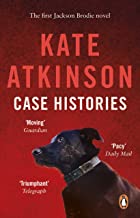
awarded to Kate Atkinson for Case Histories.  I read a lot of crime. Every couple of years I feel the need to revisit this almost perfect book. It's a crime novel that foregrounds the stories of the families of victims. This wasn’t a whodunnit but more an examination of the devastation caused by murder and loss. The examination of family life before and after the crimes is knife edge and utterly believable. The focus is on three unsolved murders and then we meet Jackson Brodie, the ex-cop, the damaged hero, who seems to blunder his way through the terrain to find the killers, to bring peace to the loved ones. There are bits of this book that I unashamedly cry at every time. A terrific crime story. Can’t wait until I read it next time!

The Celia Rees Award for Most Influential Children's Fantasy Novel goes to: The Box of Delights.

John Masefield's novel, published in 1935, is exactly that - a box of delights. It contains themes, characters and motifs that occur again and again in British children's fantasy fiction: shapeshifting, time travelling, a young protagonist on the cusp of adolescence singled out as having special powers, a wise old magician, a magical object that must be guarded at all cost, an epic battle between the forces of light and the forces of darkness, an evil, cunning and ruthless enemy and his equally unpleasant female companion, a midwinter setting with extreme weather, the timely intervention of mythical figures from British folklore - it's all there!

Katie Fforde
gives The Fforde Award for the book she didn't expect to fall in love with to The Dictionary of Lost Words, by Pip Williams. Quirky, imaginative and beautifully written, this is for people who love words, who are feminists in the very best sense. It’s about a little girl who is the daughter of a man among a team of many who are writing the dictionary. She discovers that some words are considered to be no longer useful. They are often words to do with women. We follow her life and the life of the dictionary and others involved in its creation. Highly recommended.

Adèle Geras' prize is the Snowglobe Award for the Best Short Book which Creates an Entire World, and the first winner is Claire Keegan's Small Things Like These.

A few days ago, I found a book which is as close to perfection as any I've read all year. It's tiny: a mere 75 pages and I read it in two sittings. I could have read it in one, but needed to think about it. It's the most extraordinarily beautifully- written tale, which encompasses huge themes and enormous emotions and manages to take you to the heart of a family in a specific place and time. Bill Furlong is a coal merchant in a small Irish town. He and his wife have six daughters. It's Christmas Eve, and the day before that. By the end, we are part of this town. I felt as if I'd been handed the most beautiful snowglobe, even though this place has darkness deep within it. A worthy winner of my award.

Sue Purkiss
awards the Purkiss Prize for a book (actually a whole series) that brings comfort - to the Inspector Gamache series by Louise Penny. 

Life’s a bit on the tough side at the moment, isn’t it? Of course, there are lots of good things too – but sometimes they threaten to be overwhelmed by the bad stuff.

The Inspector Gamache series offers a retreat from all this. Three Pines, where the books are mostly set, is a tiny village in the forest in Quebec. It’s not on any map, it doesn’t show up on a satnav: it’s a refuge. It’s peopled by eccentrics: Ruth, the mad old poet, Gabri and Olivier, who run the bistro and the B&B, Clara the artist – and eventually, Inspector Gamache himself, who is strong, clever, kind and incorruptible.

The characters are complex and satisfying, the stories are gripping – and the food! Ah, if only I had time to tell you about the food… Plus, there are seventeen books in the series.

John Newman of Newham Bookshop awards Newman’s Page Turner of the Year or A Reason to Remain to Sarah Winman.

Everybody loves a feel-good book and this year we really needed stories which celebrate friendship and the ties that bind. Sarah Winman gave us a real gift in the shape of  Still Life and I want to both celebrate it and of course unconditionally recommend it to you all. Spanning several decades of the last century we encounter lives interlinked by war, tragedy and change. Its roots are in London's East End but the core and real heart of it is very much centred in Italy and most especially the city of Florence which the author clearly loves. The big themes of the novel are addressed with a light touch via suitably diverse characters you quickly care about and leave behind with reluctance. This was my page turner of the year and one I felt privileged and confident to place in the hands of other like-minded souls.

Monday, 1 February 2021

Guest review by Sue Purkiss: THE WILD SILENCE by Raynor Winn


"Often, a sequel is a rather paler version of the book it follows. That is not the case here ..." 

Sue Purkiss
writes for children and young people. She has been a Royal Literary Fellow at Exeter and Bristol Universities, and has also taught English and worked with young offenders. Her latest novel for children, Jack Fortune and the Search for the Hidden Valley, is an adventure story set in the Himalayas at the end of the 18th century, featuring plant hunters, a sacred mountain – and its mysterious guardian! For more information, see Sue's website. She also has her own literary review blog, A Fool on a Hill (where this review first appeared), and is a contributor to The History Girls.

This book is a sequel to The Salt Path (which I reviewed in 2018 - the link is below). That was the story of how Raynor Winn and her husband Moth, in their fifties, lost everything after a dispute with someone who had been a lifelong friend over investments: they had to walk out of their beloved Welsh farmhouse with virtually nothing. On top of that, Moth was diagnosed with a cruel terminal disease, corticobasal degeneration, or CBD; he had about two years, they were told.

There are many things that emerge from The Salt Path and its successor, The Wild Silence. But one of the main elements is the rock-solid relationship between Raynor and Moth. So when they found themselves in this terrible situation, the one thing Raynor was not going to do was to simply accept the diagnosis and the doctor's advice - which was to avoid all strain and rest as much as possible.

Another element - which is explored even more thoroughly in this second book - is Raynor's profound connection with the land, with nature. Brought up on a farm, shy with other people, nature is her solace and her inspiration. So perhaps it wasn't surprising that she should turn to nature for relief. She suggested that, against all the dictates of caution and common sense, they should take to the wild and walk the South-West Coastal Path - despite the fact that Moth could hardly walk and would have trouble carrying a pack. (In any case, they had so little money to buy food or any other necessities that their packs must have been relatively - but only relatively - light.)

And it worked. They had an extraordinary journey, which resulted not in a miracle cure, but certainly in an improvement in Moth's condition. And at the end of it, a stranger offered them a refuge - a flat in Polruan, where they could live while Moth did a degree in sustainable agriculture, which he hoped would then bring him emploment.

This is where the second book picks up the story.

Often, a sequel is a rather paler version of the book it follows. That is not the case here. It seems to me that Raynor has gained confidence in her writing - not surprisingly, considering the huge success of The Salt Path. She writes absolutely beautifully in this book, and very effectively investigates subtle and complex ideas and emotions - as well, of course, as providing rich and evocative descriptions of nature.

The structure of the book is complex. She is exploring different aspects and periods of her life simultaneously; in the first section she is taking care of her mother, who has been taken to hospital following a stroke. Alongside this we find that she and Moth are still, three years later, in Polruan, and that Moth, despite increasing weakness, is nearing completion of his degree - whereas Raynor has become increasingly reclusive and anxious about meeting people. She has to make a terrible decision about her mother's care, and, staying in her mother's cottage, memories come back to her of her childhood. We begin to see that her current state is rooted in the past, and we find out how she met Moth, and how their relationship developed.

Later, she describes how the writing of The Salt Path  came about. In the beginning, she knows nothing about publishing and has no expectations of success - she is writing about their extraordinary journey in order to capture it for Moth, who, to her dismay, is losing his memories of it. But of course it does become a success, and this leads to a new phase of their lives, when a wealthy businessman asks the two of them to take care of a farm he has bought, which is exhausted from intensive farming and almost devoid of wildlife. He wants them to bring it back to life, to re-nature it. At first, they are doubtful: the house is a damp and crumbling wreck, the farm will take a lot of work to enable the land to recover. But, never able to resist a challenge, they take it on.

In the last section of the book, they decide to undertake another ambitious walk: Moth is getting weaker, and they are convinced that what he needs, as before, is to literally and metaphorically stretch himself.

So they go to Iceland, with their friends Dave and Julie, whom they met on their first walk. They only have two weeks, which unfortunately fall at the end of the Icelandic summer and at the beginning of its fierce winter. Crazy? Well, perhaps - but when did that ever stop them?

Here is an example of Raynor's writing. She is describing the process of writing, of reliving, the coastal walk.

I stood in the dim evening light, faced the wall and spread my arms wide and the rain came stinging on gale-force winds, pounding my face, battering the rucksack. Winds roaring through granite-block cliffs, hurling crows through wild grey skies.

Here's another:

The soft rain became vertical rods of connection between land and sky, drops bouncing from the river with the force of a pebble, leaving ripples expanding and reflecting.

Enjoy.

The Wild Silence is published by Michael Joseph.

Read Sue Purkiss' review of The Salt Path


Monday, 4 January 2021

Reading ahead - New Year anticipation, part 3


Here's the third and final part of our Reading Ahead feature, and again we take the chance to thank all our contributors for supplying us with great reviews and recommendations all year round. This last part includes a number of titles due for publication this year, so - whatever tier we're in - none of us will be short of tempting books to read. Several of the titles mentioned here will feature on the blog in the coming months. 

Happy New Year reading!

Paul Dowswell: I’ve enjoyed retreating into music non-fiction during the pandemic. It’s a perfect comfort read for an anxious time. Rock writer and music magazine creator, David Hepworth, has been churning out a book a year since 2016’s 1971 – Never a Dull Moment. It’s a particular pleasure to read his work because his brilliant but defunct monthly music magazine The Word is greatly missed. From its marvellous title and fabulous cover shot of the Rolling Stones dressed in drag onwards, Overpaid, Oversexed and Over There - How a Few Brits with Bad Teeth Rocked America promises a fascinating journey through an era (1960s to 80s) when British bands dominated American popular music. His previous books have shown that Hepworth excels in the quirky anecdote, and being a publishing entrepreneur as well as a music fan, he is always able to present a perceptive insight into the business side of ‘show business’. I’m snapping this up as soon as it comes out in paperback.

Pippa Goodhart:
I bought a book for my daughter Mary that I’m longing to read myself. It’s The Other Bennet Sister by Janice Hadlow. Hadlow has taken middle Bennet daughter, Mary, from Jane Austen’s Pride And Prejudice, and imagined what happened to her after Austen’s novel finishes. Mary is the plain and serious sister amongst lively beauties, and she fails to find a man to marry within P&P, but this novel promises to see her ‘grow into herself’, and, yes, find love. Perfect, I hope, for some escapism during cold Brexit January.

​Talking of ‘hope’, a treat I’m very much looking forward to in March is Hope Adams (a.k.a. Adèle Geras)’s novel set in 1841 on a ship bound for Australia with 180 women convicts on board. I know that the seed of this story was planted by a quilt in the V&A Quilt Exhibition from a few years ago that I saw. I love real history woven into rich story! Reading Dangerous Women, I look forward to jumping aboard that convict ship!

Michelle Lovric
: I read up to my thighs during lockdown 1: when I put them in a pile, that’s where the books reached. I wasn’t surprised to hear Bloomsbury are doing well: my literature consumption definitely increased with Covid. Books on my looking-forward-to list: Susanna Clarke’s Piranesi, Dangerous Women by Hope Adams, a.k.a Adèle Geras of this parish; Casanoviana, including an account of 2019’s symposium – in a real room, with touchable international scholars – on the World’s Most Misunderstood Venetian. I discovered Donal Ryan’s The Spinning Heart recently, so now the rest of his oeuvre’s beside the bed. What else to do when you run out of Niall Williams and Sebastian Barry? (Hint, gentlemen!) For three wonderful years, I attended a poetry masterclass with Robert Vas Dias. Just arrived: his The Poetics of Still Life. For my own work, lately much taken up with puffins and millinery, I’m about to start Denise Dreher’s From the Neck Up.

Jane Rogers:
 This year I have been on the lookout for fiction about the Climate Emergency. Because it’s such a vital and overwhelming topic, I’m curious to see how other writers are dealing with it. And I should admit I’m hoping to write a climate novel myself.

In the interests of this research I’ve read Chris Beckett’s America City (recommended) and Jenny Offill’s Weather (well written, but doesn’t live up to the hype). I was delighted to hear a recent Open Book on Radio 4 devote a full programme to climate change fiction, or Cli-fi, as they are now calling it. It has become a sub-genre all of its own! Apparently there is lots in the pipe-line; I want to start with Carys Bray’s new novel, When the Lights Go Out, which is set in the near future, with floods outdoors and a collapsing marriage indoors. Carys writes beautifully - I loved her short story collection Sweet Home. And Diana McCaulay’s Daylight, Come, set in a fictional island closely resembling Jamaica, where she lives, in a future where the days are so hot everyone has to sleep in the day and work at night, sounds fascinating.

Adèle Geras
There’s much to look forward to in 2021, and these are the books I’m longing to read. First is Marika Cobbold’s On Hampstead Heath. I’m a big fan of this writer, and this will be published in April by Arcadia Books. It’s set in one of my favourite parts of London and concerns a journalist who invents a story, for the best possible reasons. Enticing.

Then there’s Caroline Lea’s The Metal Heart, which has a very striking cover. It’s a wartime love story set in a camp for Italian prisoners of war in Scotland. I suspect I will need tissues. Coming in April from Michael Joseph.

My last choice is Atomic Love, by US author Jennie Fields. (Michael Joseph) This is about a woman scientist working on the Manhattan project. I’ve read the first couple of pages and am drawn in already....

It’s going to be another good year for fiction.

Patricia Elliott
: I'm intrigued to read Stuart Turton's new second novel, The Devil and the Dark Water, set on board a cursed ship sailing to Amsterdam in the seventeenth century, a dangerous voyage even without the murder and mayhem I'm promised. His first, The Seven Deaths of Evelyn Hardcastle, was an artful, twisty riff on a detective story, with a fiendishly complicated plot: a game he played with the reader. Turton is not a beautiful stylist but his writing is energetic and vivid, with startling similes. Also recently published, I think I shall enjoy Edward Parnell's Ghostland, in which the author goes on a cathartic journey after family tragedy, revisiting books and places in Britain's most haunted countryside. To reread? Among other books and inspired by the magnificent television adaptation of Philip Pullman's His Dark Materials, now finishing its second series, The Subtle Knife, my favourite of the trilogy, last read 25 years ago. Jon Appleton: Echoes of adored, established writers have lured me to some recent independent publishing.

Jon Appleton: 
Echoes of adored, established writers have lured me to some recent independent publishing.

The Continuity Girl by Patrick Kincaid (Unbound) promises ‘A lost movie. An elusive monster. One last chance…’ It’s billed as a novel for fans of Jonathan Coe (whose work I adore). There’s a fanatical fan and an old film retrieved and the stage is set for a glorious homage and reckoning with the world today. I can’t wait!

 Penelope Lively’s clashes of the mores of past and present (Treasures of Time, Judgement Day) remain reading highlights. (They’re funny, too.) I predict Simon Edge’s historical fiction will be equally beguiling. Anyone for Edmund (Lightning Books) pokes fun at Westminster culture and celebrates the cult of a medieval saint. I’ve also ordered his A Right Royal Face-off, which contrasts Gainsborough’s high art with celebrity TV.

Another indie publisher whose work impresses me is Louise Walters Books. I love novellas and The Sweep of the Bay by Cath Barton evokes the brilliant film 45 Years. Louise has just released Helen Kitson’s Old Bones ­– I can’t resist a quarry-found corpse and the repressed secrets of spinsters. Could we have another Ruth Rendell in the making?

Sue Purkiss:
In the last few years, like many of us, I’ve become more and more concerned about our environment and what we’re doing to it. So in the New Year I shall look forward to reading more books about nature. One will be The Running Hare, by John Lewis-Stempel, which has been strongly recommended to me by my brother-in-law, who has a smallholding in Ireland. I’ve also heard good things about James Rebanks’ new book, English Pastoral: and I have my eye on Surfacing, by Kathleen Jamie, who writes about wild places with a poet’s perception, though this, like an earlier book, Sightlines, is prose. (Of the most elegant, spare and focused kind.)

I still have some excellent birthday books to look forward to as well – The Lying Life of Adults, by Elena Ferrante, and The Diary of a Young Naturalist, by Dara McAnulty.


Dara McAnulty's Diary of a Young Naturalist is reviewed here by Gill Lewis.


Susanna Clarke's Piranesi is reviewed here by Adèle Geras.


We will feature a Question and Answer with Hope Adams (Adèle Geras) to mark the publication of Dangerous Women.