Showing posts with label future. Show all posts

Monday, 9 March 2026

Special feature: GREEN RISING and the Climate Fiction Writers League, by Wren James


"Writing is activism. Over a decade as a published author, I’ve come to learn this. It’s subtle, and slow working, but incredibly effective."

Wren James is the award-winning British author of many young adult novels. Their books include Last Seen Online, Green Rising and The Quiet at the End of the World (previously published as Lauren James). The Loneliest Girl in the Universe is in development as a feature film with RK Films.They have won the Sustainable Story Award and been shortlisted for the YA Book Prize, Carnegie Medal and STEAM Book Award. Their upcoming title is The Victors (May 2026), a graphic novel illustrated by Beth Fuller.

A story consultant on Netflix’s Heartstopper (Seasons 2 & 3) and a RLF Royal Fellow, Wren is also the founder of the Climate Fiction Writers League, creator of The Climate-Conscious Writers Handbook, and editor of Future Hopes: Hopeful stories in a time of climate change. 

Wren is on the Society of Authors’ Sustainability Steering Committee and works as a consultant on climate storytelling for museums, production companies, major brands and publishers, with a focus on optimism and hope. They run a Queer Writers group in Coventry. Follow them on Instagram at @wrenjameswriter or find out more at their website. 

Writing is activism. Over a decade as a published author, I’ve come to learn this. It’s subtle, and slow working, but incredibly effective. My book about climate magicians, Green Rising, was recently used to kickstart a discussion of climate-friendly investments in a book club for fossil fuel bankers and their families.

In Green Rising, teenagers can grow plants from their skin. They use their powers to rewild the planet and stand up to the profit-hungry corporations driving carbon emissions.

The fun adventure story hit home for the investment bankers in a way that a newspaper article wouldn’t. When we read about fictional characters and experience their emotional highs and lows for ourselves, it unlocks a higher level of empathy and compassion. Even after the book is long finished, these characters stick in our minds. We are able to imagine their feelings in a way that we can’t relate to a faceless population on the news.

For climate activism, this is incredibly important. So many of the effects of climate change feel so distant, both in time and location. It’s hard to connect that to our daily lives. Fiction can help inspire people to act – whether that’s talking to their employer about their pensions scheme’s investments in fossil fuels, or changing to an eco-friendly energy tariff.

More importantly, fiction can help us to feel hope. 62% of people say they hear much more about the negative impacts of climate change than they do about progress towards reducing climate change, resulting in a perceived Solutions Gap. If you feel like the world is doomed, and there’s nothing we can do to stop it, then there’s no reason to take any action.

I expected the process of writing Green Rising to be depressing and mentally exhausting. But, in fact, immersing myself in the climate debate helped me to stop feeling anxious and helpless about our future. I could see all the things that needed to be done to fix the future.

As writers, we can engineer a future world long before it exists in real life. In the forties, creators were envisioning men on the moon long before space travel existed. That cultural drive led to so much energy being invested in the Apollo missions and our successful journey into space. Without those early science fiction stories creating a cultural desire to walk on the moon, we wouldn’t have been driven to make it happen so soon.

In the 1900s, stories about a future where women had the vote encouraged support for the suffragist movement. In fact, a group was founded in the UK in 1908 called the Women Writers Suffrage League, whose mission was to encourage writers to mention the fight for the vote in their writing. As their prospectus stated, “a body of writers working for a common cause cannot fail to influence public opinion.”

Climate writers today do the same thing for our future. By creating stories about worlds filled with climate solutions, we are changing our collective picture of the future.

The Suffrage League inspired me to set up my own group, the Climate Fiction Writers League. Our guiding principle is to spread awareness of the importance of mentioning climate change in fiction of all types, from poetry to Eastenders. In my work in the writers' room for Netflix’s Heartstopper, I was able to showcase how this can be done naturally. The character Elle tours an art college when she’s applying for sixth form. An art exhibition at the college is based around climate change, meaning several scenes take place surrounded by artistic representations of the climate crisis.

The Climate Fiction Writers League now has over 300 traditionally published authors as members, who have all written climate fiction. Through the group, we partner with climate organisations and consult with museums and production companies.

It’s especially important for children to see hopeful visions of the future world they are going to grow up in. A few years ago, I pitched to my publisher a ‘positive’ climate anthology for children. The authors were given a list of solutions believed to combat climate change most effectively, and encouraged to create stories set in the future.

I told them to use their anger and frustration to drive their writing, but not to write an angry book. Their settings aren’t always positive utopias, but they don’t represent a hopeless dystopia. We want children to read stories that convey the seriousness of the situation without making it seem futile. They need to see that climate change is solvable.

I was also very careful about where we laid the blame for the climate crisis. I didn’t want to leave our readers feeling guilty about their carbon footprints. We want to inspire people, not panic them. No one will engage with climate activism if they’re just going to be made to feel guilty about not recycling!

I wanted to encourage the writers try to show the industry, economics and political factors which are to blame. To call out the companies who have been specifically working to slow climate activism, like fossil fuels companies who spread climate science misinformation in the nineties.

Adding in these elements meant I could add teaching questions and resources that would make the stories useful in a classroom setting, leading to discussions of wider issues around the climate crisis.

Ultimately, climate change is a political topic – it has to be. It’s unavoidable. The end of world is profitable. My characters are angry they’re being told to reduce their climate footprint, that they’re being made to feel guilty about their personal pollution when industry is responsible for the vast majority of emissions.

I wanted to create a book for young people who are anti-capitalist and pro-revolution, who are changing the world at an incredible pace against the enormous weight of the existing establishment.

The best climate fiction captures the feeling of being part of an ongoing green revolution. It acknowledges that we are living in a time of unprecedented existential fear. And then shows people how to turn that fear into hope and action.

This piece was commissioned by the innaugural Norwich Book Festival 2024.

Find out more about Green Rising, which is published by Walker.

For more about The Climate Conscious Writers Handbook, see Wren's website.

Monday, 14 July 2025

Q&A: Alison Layland talks to Linda Newbery about her new novel AFTER THE CLEARANCES


"It's not only a Welsh community, but also a large-scale environmental stewardship project that is threatened with destruction, uniting two of the key themes of the novel."

After the Clearances: They were eager to remind themselves, and teach the children, that nothing should be taken for granted; things didn’t just happen at the flick of a switch

In a fractured world, the past is never truly buried and the future depends on what we choose to remember.

On a remote island ravaged by storms, a community of exiles known as the Seeders fight to preserve a fragile, self-sufficient way of life. When Sandy arrives from the mainland bearing secrets, young Seeder Glesni is forced to confront long-hidden truths about her people.

Far away in the wild hills, Bela lives by her own rules. Fierce, unyielding and shaped by the land itself, her voice carries the weight of loss in a world scarred by collapse. But when she encounters Winter, a fugitive from a shadowy government programme, their unlikely bond forges a path that leads back to the Seeders and a reckoning with the myths that bind them all.

Rooted in Welsh history and rich with the rhythms of its language and landscape, After the Clearances is an evocative, hope-filled story of resilience, resistance and what it means to belong in the ruins of what came before.

Alison Layland answers questions from Linda Newbery.

Linda: First, congratulations on writing such a compelling follow-up to Riverflow. As you know, I admired and enjoyed that (a link to my review is below) and now find myself equally impressed by this new novel, which moves forward to 2056.

Alison: Thank you for the invitation; it’s lovely to chat with you here on Writers Review. I'm delighted you enjoyed both novels.

Linda: Although After the Clearances includes some of your earlier characters, it can also be read as a compelling stand-alone. It's difficult to say more without spoilers, but were you already thinking of this new setting and time period while working on Riverflow, or did the idea come to you later?

Alison: Although I knew the connections when I began writing After the Clearances, it wasn’t something I’d had in mind from the start. I was reluctant to let go of the Riverflow world, and since both novels are set against a background of concern for the environment, and the issues surrounding protest, it made sense to look at how my characters would be faring some 35 years on – the world has already changed considerably since 2019, with the effects of climate change becoming ever more apparent, and the UK laws on protest becoming increasingly draconian, so I wanted to imagine how things would be in the 2050s, when the Paris Agreement targets are supposed to have been met, but look unlikely to be achieved.

Linda: Clearances has a particular resonance in Scottish history and is equally dramatic here. Was After the Clearances always going to be your title?

Alison: It wasn’t; in fact, this is the first time I’ve been asked to change a title – no small feat, since I find titles difficult! My working title throughout the process of writing, which had become entrenched in my mind, was Tidings (reflecting both the ‘tide’ and ‘news’ meanings of the English word, as well as the Welsh word taid, grandpa, since Glesni’s grandfather is a significant figure). However, my publisher, Honno, had recently published a novel called Tiding, so we agreed to change it. The ‘Clearances’ in the novel refer to a government scheme of deliberate rural depopulation to new towns, with the aim of greater control and simpler distribution of scarce resources. This policy was officially dubbed the Resettlement, but popularly known as the Clearances (or Digartrefu in Welsh, with the added meaning of ‘making homeless’), with all the historical associations. There is a similar colonial feel to the hints in the novel at typical English attitudes to the Welsh language and culture.

Linda: I liked the framing of the story with the viewpoint of teenage Glesni, who was born on the island, Ynys Hudol, and has never known any other life. We meet the various other 'Seeders' as established members of the community (apart from Sandy, the new arrival), gradually learning about their occupations and experiences before coming to the island - Cai, for instance, had been a policeman who became disillusioned with increasingly draconian measures towards protestors. I found this effective - too much of this from the beginning would have taken our attention away from the island set-up. You obviously thought in great detail about Seeder philosophy and ground rules - there are sections of their manifesto, or creed, in the book. Was this your starting point, or did you elaborate as you got into the story?

Alison: My story always featured the Seeders as an idealistic community, living apart from the world but trying to establish a blueprint for a new way of life, kinder to both the environment and people. At first, I introduced various aspects of the community’s rules, customs and values, largely from Glesni’s point of view, within the main narrative, but at a later stage decided I could say more, while interfering less with the story, by incorporating extracts from Seeds of Change, the founders’ record of their experience and a blueprint for the community. I found it surprisingly easy, presumably since the community’s ethos was already embedded in my mind, and founder Edith Turner’s voice flowed readily (the pamphlet is credited to both founders, but for some reason I think of it as her voice). The hard part was slotting the extracts in, at the beginning of the relevant parts of the novel and at key points in the narrative, while taking care to edit out the previous references as appropriate, to avoid repetition.

Linda: Bela's sections are different in tone and style from the rest - first-person and very direct, a stream of consciousness. Living in the woods, in solitude until the fugitive Winter comes into her life, she is alone with her thoughts and impressions. Did you decide on this approach immediately, or was it something that grew from the writing?

Alison: Bela was there as a character from the start, as was her voice and attitudes. However, as I tend to make things up as I go along (I’m very much a ‘pantser’ rather than a ‘plotter’, to use the common writers’ terms), I only worked out where her story fits in as the novel developed.

Linda: It does take the reader a while to realise how Bela's sections connect with those about the islanders - it's a puzzle that slowly comes together, with hints along the way. Did this require careful tracking as you wrote - i.e. what you want the reader to guess at any point, and how soon the links and connections should be revealed?

Alison: It definitely required careful attention, but more at the redrafting and editing stages – which is how I tend to work. In the finished novel, some aspects are maybe revealed sooner than I intended, though it has varied from reader to reader. As I got feedback from early readers, it became clear that there were certain connections that some people were missing altogether, which made me realise I was perhaps being a little too subtle! I won’t talk about specific examples because of spoilers, but I hope I’ve managed to retain a certain amount of mystery without being downright confusing!

I did apply careful tracking throughout, as I always do when writing. I have a detailed timeline, both of characters’ backgrounds and events referred to – in the characters’ past but our future. I also have a detailed outline of each chapter with key points, both to ensure balance between chapters from different characters’ points of view, and also so I can detect and correct continuity issues if, or when, I move things around.

Linda: The main part of the story is set in 2056 but we're referred back to a dramatic incident in the 2030s in which some of the island community may have been involved. That the UK (not Welsh) government plans to take over lovingly restored land for a dam and reservoir to provide water supplies - for England! - was particularly poignant. Were you thinking of real-life settings where this sort of thing has happened?

Alison: Yes; the fictional Irlas Dam incident is based in part on the Llyn Celyn dam and reservoir. In the late 1950s/early 1960s, the Tryweryn river valley was dammed and the Welsh village of Capel Celyn drowned, to form what is now known as Llyn Celyn reservoir, which to this day provides water for the city of Liverpool. Despite extensive protests, both by the villagers themselves and much further afield, the project went ahead, drowning a traditional Welsh-speaking rural community. It was an significant event in the burgeoning Welsh language movement, which ultimately led to the language being given its due status in Wales, and to the fight for devolution. The beautiful and apparently peaceful waters of Lake Vyrnwy and the Elan valley reservoirs conceal similar tragedies, but it was Tryweryn captured the public imagination. This was partly due to its immortalisation in a famous graffitied slogan near Aberystwyth in the early 1960s that has become an icon – it even has its own Wikipedia page if you want to read more. The slogan Cofiwch Dryweryn (Remember Tryweryn) has seen a revival in recent years, with copies springing up throughout Wales.

In After the Clearances, it is not only a Welsh community, but also a large-scale environmental stewardship project that is threatened with destruction, uniting two of the key themes of the novel and highlighting the interconnectedness of social and environmental issues.

Linda: The 'Seeders' community on Ynys Hudol is convincingly drawn - the daily lives of the inhabitants, their communal beliefs and practices, but also the conflicts and tensions. Some members of the group are described as 'purists' - they want to live entirely self-sufficiently without recourse to trips to the mainland, or the use of money, and without harvesting fish from the sea - while others are more pragmatic. All this has the ring of truth about it which I feel must surely come from your own experiences with activist or community groups?

Alison: It’s largely human nature but yes, experience of community and activist groups comes into it! Although the Seeders are an idealistic community with a vision of how to live in the face of the effects of climate change, I wanted to make sure that they’re realistic, not all sweetness and light. There are always differences in opinion. For instance, there are constant debates within activist groups about whether it’s more effective to undertake direct action or concentrate on community-based activism, which takes time that we can ill afford to build up. I believe we need both – the attention-grabbing actions are still needed in the face of government inaction, but these need to be backed up by work at grass-roots level, both to do essential work in the community, but also to build up acceptance of, and support for, more radical protests.

Despite differences in opinion, the shared vision – both in real life and in the novel – is more important than the differences; my experience, for instance with deliberative democracy in people’s assemblies and guarding against the build-up of hierarchies, fed into the Seeders’ system of governance and decision-making, with Gatherings and regularly rotating co-leaders.

As far as the details of daily life are concerned, I enjoyed a number of fortnight-long stays on Ynys Enlli/Bardsey Island, which was the inspiration for my fictional Ynys Hudol. The guest accommodation there is lovely, the welcome warm and the island truly atmospheric, whatever the weather, but the houses have no electricity or running water and the facilities are basic (though there is excellent provision for guests, I hasten to add). These experiences helped to feed the detail of what life for the Seeders would be like. It also helped me become immersed in the atmosphere of the island – you can get a glimpse of this in the lovely video my daughter made on location to accompany the launch of the book. 

Linda: After the Clearances could be classified as cli-fi. All fiction set in the present day should surely at least include references to the existential crisis we all face, while stories set in the future will need to look at how the climate emergency has been addressed and how humanity has adapted (or failed to). Are there ‘cli-fi’ titles you particularly admire?

Alison: I recently loved The Wager and the Bear by John Ironmonger, published by Fly on the Wall press. With relatable characters and a brilliant combination of humour, tragedy and the tackling of serious issues, it’s the kind of enjoyable novel perfect for drawing people in – it’s made its way round my family with the speed of a calving glacier!

Another climate fiction novel I’ve particularly enjoyed is the magnificent Playground by Richard Powers, which does for oceans what The Overstory did so powerfully for trees.

And of course, there’s your own The One True Thing, a beautiful novel which may not immediately appear to be climate fiction, but has love of the environment and natural world firmly at its heart, as you suggest in your question.

Linda: Thank you! Can you give us any idea of what you'll write next? Are you thinking of making another leap forward in time with some of these characters, or will your next project go in a different direction?

Alison: I haven’t started writing a new book yet, but I’ve got ideas for Bela’s story in my mind – the events that led her to where she is now, and what shaped her unusual personality. Alternatively, I’m toying with the idea of connected short stories – before I began to write After the Clearances, I had an idea of people on Ynys Hudol sitting round a campfire, or the benches of the community’s roundhouse, sharing their stories. This didn’t come to pass, but may well make its way to the page in future!

Linda: Thanks so much for sharing these insights, and I hope After the Clearances will find its way to huge numbers of appreciative readers!

After the Clearances is published by Honno Press.

Linda's review of Alison Layland's Riverflow

Monday, 2 December 2024

Q&A: Jane Rogers on her new short story collection, FIRE-READY


"In fiction you can test things out and examine both sides of a question. I write to explore."

Photograph by Linda Newbery
Jane Rogers has written ten novels, plus radio drama and stories. Her subject matter ranges from the past to the present to the distant future. Prizes include the Arthur C Clarke Award, the Somerset Maugham Award and the Writers Guild Best Fiction Book Award. Jane’s new collection of short stories, Fire-Ready, was published by Comma Press this November. 

Jane teaches writing at all levels, currently running workshops for MsLexia and mentoring for Gold Dust. Find out more from her website. Here she answers questions from Linda Newbery.

Linda: First, congratulations on publishing your second collection of short stories, following Hitting Trees with Sticks (2012). In between, you’ve written two novels and several radio dramas and adaptations, including Clear Light of Day, a dramatisation of Anita Desai’s novel which was broadcast this summer on BBC Radio 4. What draws you to the short story form?

Jane: Thanks Linda. I think of myself really as a novelist, and I find the short story form extremely challenging. Very occasionally there's an idea which presents itself immediately as a short story (like the title story of Hitting Trees with Sticks), and that is great. But more often, it’s a question of endless revision and cutting and battling to actually locate the story in the mass of ideas and words of a first draft. As a reader, I used to think stories were slightly inferior to novels; then I read Alice Munro, and I realised that a really well-crafted story can contain as much as a novel, if the writer is skilful enough. But it is a different craft from writing a novel. I suppose I have written in lots of different forms; radio, TV, adaptation, novel and short story – I quite like a challenge! At the end of the day, I tend to feel more confident about my novels than my stories.

(By the way, off topic, I know many people now disapprove of Alice Munro so strongly that they have stopped reading her. Yes, it seems she behaved badly in her personal life. But quite frankly, if we stopped reading authors who have behaved badly – well, as King Lear says, Who shall ’scape whipping?)

L: One striking thing about this collection, and of your novels too, is the range of subjects and genres you cover. Here we move from the present to the near and more distant future; some stories could be classed as sci-fi, cli-fi (climate fiction) or even veer towards horror (Clearances) while others are tender explorations of domestic life and relationships, one of which, Treasure, I suspect comes from your own experience with a grandchild. A thread that links them is the struggle of ordinary people to find purpose in life, to make space for themselves, to appreciate everyday pleasures. Some are bound by duty or by the restrictions of lockdown; in more than one, the birth or prospect of a baby offers hope and a glimpse of uncomplicated innocence.

How did this collection come about? I see that several have been published before, while most are new. How did the idea of a new compilation come to you? Fire-Ready is the title story – was that always your choice of title, and does it suggest a unifying theme?

J: It’s a good question, and to begin with I couldn’t really figure out if this was a collection or not. I certainly didn’t sit down to write a collection – the stories have accumulated over years, and I was not able to find many common themes between them. My editor, Ra Page, was helpful here, because he identified four interlinked themes; the climate emergency, activism, and aging and relationships with children. Together we eliminated the weakest stories, and he suggested I write an additional cli-fi story, to even out the balance. So I have spent most of my writing time for the past 4 months working on the opening story, Hope. 

I was surprised when I realised how many are about parents (or a single parent) and children, but then I realised that in fact that is a central theme in several of my novels.

And re the title – I hope it does suggest a unifying theme. The term is actually used in Australian government warnings about bushfires. Farms in the path of fires have to be made ‘fire-ready’, that is to say, with sprinklers on the roof, shutters, reserves of water, an underground spot where important documents can be securely left, and so on. And more generally, characters in some of the other stories are trying to make their homes or lives ‘fire-ready’, in the sense that they know they will be tested.

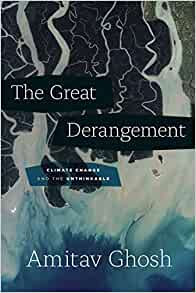
L: For one of your Writers Review contributions, you chose Amitav Ghosh’s The Great Derangement, in which he asks: ‘What is it about climate change that the mention of it should lead to banishment from the preserves of serious fiction?’ In the eight years since his book’s publication, that’s changed, with books such as The Overstory, Orbital and The Deluge featuring on shortlists. But still, fiction that portrays the climate emergency in the context of ordinary present-day lives seems rare. Some of your stories do just that – Fire-Ready, set in Australia, sees Kayla preparing for the very real threat of wildfire, while others look at likely changes to society and adaptations in our behaviour. Climate concerns run through this collection but without dominating – did you feel that the balance between bleakness and hope was important?

J: Like many people, I am haunted by the climate emergency, and the thought of the devastated world we are leaving to our descendants. I set out to write a novel on the topic, soon after reading The Great Derangement. To begin with I read as much future fiction as I could find, and quickly realised that novels which simply focus on a very bleak future are simultaneously depressing and rather preachy. There are a lot; I could give you a list of titles not to read, but that would be cruel! Two which deal with the topic much more imaginatively are Bewilderment by Richard Powers, and The Ministry for the Future by Kim Stanley Robinson. Both highly recommended. There’s no point in writing doom and gloom, everyone knows it and it doesn’t make anything better. I don’t think I was trying to create a balance between bleakness and hope (though I am glad if that’s the effect!) I think I was trying to examine specific situations through the minds and experiences of my characters. Human beings are wonderfully adaptable, so that even in bleak situations, hope and joy can be found. For example, in Hope, the child Kara who has been evacuated from a no-longer-viable Earth, is thrilled by the sight of distant stars and galaxies in deep space. As individuals, we feel pleasure as well as pain, and good writing describes individual experiences which are universally recognisable.

L: The hope in many of the stories comes through a kind of epiphany, and I love the way you show these – not in any flash-of-light sense but more a kind of quiet acceptance, especially for your older characters. More than one of these is faced with a rearrangement of their life following release from the duty of care to a relative or partner – situations I feel sure will resonate with many readers.

J: Yes, there’s quite a lot about growing older – I guess the topic is on my mind, now I’m in my eighth decade! Again, I’m interested in the pleasure, or relief, of letting things go in older age – as well as the grieving for the past. ‘Letting things go’ is probably the story I am most pleased with, because I was afraid readers might find it quite mad that my protagonist can happily lose himself for hours in sounds from the distant past; but so far the responses have been very positive.

L: There’s humour too, in Weeping Beech and in The DNA of Bats. You must have given a lot of thought to the ordering of the stories?

J: Ha. Indeed. And since I carefully ordered them, they have been re-ordered so many times by my editor that I honestly can’t tell if it works or not. Readers will have to let me know!

L: I want to ask about the final story, The Night Before, without giving too much away. Anyone who’s campaigned (as we both have) with Extinction Rebellion has been told, in connection with roadblocks etc, “I like what you do but not the way you’re going about it”. But what actually does make the kind of difference needed to confront the climate emergency? Your character here, Szandra, is on the brink of doing something most activists would (fortunately) baulk at – but can such an action be justified? She’s questioning herself about that, right up to the abrupt shock of the ending. Can you tell us how this story took shape?

J: It began as a ‘What if?’ What if you were asked to do something which is really dangerous, which will have tragic consequences, in the service of a cause in which you believe passionately? I love the fact that you can explore an idea in a story, test it out, see how far you can go. I have been asked if I agree with or condemn the characters’ plan in that story. And the answer is, neither. That’s not the point. Any more than I agree with or condemn Jessie Lamb’s action, in my novel of that name. The point is to honestly explore an idea, an action, the potential consequences. In fiction you can test things out and examine both sides of a question. I write to explore.

L: More generally, how does a short story idea come to you? Does it arrive in your head complete, as it were – I mean the shape of it, the point? Or do you discover that through writing?

J: It really varies, from story to story. That’s one of the maddening things about writing, isn’t it? It never gets any easier, you have to re-invent the wheel each time. I usually have a sense of what’s at the heart of the story, but how to reach that, or, as you put it, ‘the shape of it’ – that is something I have to work out as I go along.Weeping Beech, for example; my idea was for a tree surgeon who couldn’t bear to fell a beautiful tree. So he was conflicted. Gradually, as I worked on it, the conflict became externalised, and his opponent became, not his own appreciation of the tree, but a retired parks and gardens employee who knows all the old trees in the town. Other characters came in to take sides, and I was pleased (especially with the nosy neighbour!) because the story became funnier.

L. The reader learns to adapt quickly to each new story: learning not only about the characters and their relationships but about where we are in time, how society has changed and how new rules and conventions dominate their lives. You’re adept at conveying these things without overwhelming the reader. Does beginning a short story feel very different from beginning a novel?

J: You have to establish the world of the story very quickly – so yes, that is a difference. In a novel the reader is usually content to be drip-fed information that builds a picture of the novel’s world, and in fact, in a novel, that slow release of information can be part of the suspense. What’s fascinating is how little the reader needs, to understand they are in a different time and place. And that’s something I’ve learned through cutting my stories. For example, in Daytrip to Glastonbury, the opening paragraph describes the coach journey towards Glastonbury along recognisable A roads. But the coach stops at Wells. ‘From Wells the only way was by boat.’ Suddenly the reader is transported to a future where swathes of the country are underwater. No date or backstory is needed.

L. You’ve done a great deal of tuition and mentoring, at Sheffield Hallam and with Mslexia, Faber Academy and Oxford University Department of Continuing Education. What advice do you give to students about writing short stories?

J: Well, I could give you the outline of the five-day short story course I’m going to teach for Faber Academy in the new year . . . But that might be a bit much! I guess the single most important thing is CUT. It is amazing how much you can cut out of a story, and how every cut seems to improve it. All the cliches are true; Get in late, get out early. Cut adverbs. Strip down adjectives. Make every word work. I think short story as a craft is closer to poetry than it is to novel.

L. Finally, what are you working on now?

J: A novel! And it’s only tangentially about the climate emergency.

Thanks for your thoughtful questions, they have really made me focus on the stories and why I wrote them.

Fire-Ready is published by Comma Press.


Monday, 15 April 2024

Guest review by Susan Elkin: NEVER LET ME GO by Kazuo Ishiguro


" ... Of course, she (Kathy) is terrified but Ishiguro’s drawing of her character is a masterclass in understatement, repression and denial."

Susan Elkin
taught English in secondary schools for 36 years, latterly developing a parallel career as a writer. Since 1990 she has written over 5000 articles for newspapers and magazines, English text books, how-to books for teachers, a book about careers in theatre and latterly three volumes of memoir: Please Miss We’re Boys (2019), The Alzheimer’s Diaries (2022) and All Booked Up (2024). She lives in South London.


I read Never Let Me Go casually when it was published in 2005. Then it got taken up by several examination boards as a GCSE set text and I was commissioned by Hodder to write a study guilde – which meant a lot of very careful analytical thinking. I’ve written five of these on different titles and it’s certainly an effective way of honing very attentive reading skills – like teaching without the students.

Never Let Me Go presents a world, more or less like our own, except that there is a parallel breeding programme of clones whose organs are gradually harvested when they reach maturity. There’s a complex, albeit patchy, system for making it as humane as it can be which often, rereading again now after 11 years, reminds me of animal welfare concerns in real life: hideous things go on but meat eaters simply don’t want to think about that. In the same way, people on the periphery of Never Let Me Go need kidneys, livers and hearts for transplant but choose not to think too hard about the source.

The novel is narrated by Kathy H and although her attention to detail is punctilious, she is the most unreliable of narrators. She is coming to the end of an unusually long eleven year stint as a “carer” and looking back at Hailsham, the beloved institution, now closed, where she and her friends Ruth and Tommy were brought up. Soon she will have to start her “donations” – chilling choice of euphemism. There is nothing voluntary about this. She faces a series of four organ-harvesting operations which will end in death. Of course, she’s terrified but Ishiguro’s drawing of her character is a masterclass in understatement, repression and denial.

We never meet the organ beneficiaries or see the surgery in action. The author isn’t interested in that sort of detail. He doesn’t dwell on science and specifics either. We simply see Ruth and Tommy and others in “recovery” (another sinister euphemism) centres where there is always an officially appointed carer. Instead the novel focuses on relationships and personalities and, crucially, explores whether or not you are fully human if you are cloned and unable to reproduce. Do you have a soul because if you don’t then does that make you expendable? There’s a lot of emphasis on creative art at the enlightened Hailsham to prove that you do – but what’s the point if you’re only being bred to die?

Well, there have been other novels about organ harvesting: Spares by Michael Marshall Smith (1996), Under the Skin by Michael Faber (2000) and, in a sense, My Sister’s Keeper by Jodi Picoult, (2004) for example. So why did Ishiguro choose to visit this topic? My contention is that organ removal isn’t the main thrust of the novel. The donation programme is merely the setting.

Never Let Me Go is actually a compelling, but searingly bleak, novel about the death which awaits us all: a parable about mortality. As children “we’re told but not told” as Miss Lucy says in the novel. We know about death – vaguely. Then, as we grow up, most of us choose not to think about it much. And we bolster our denial with euphemisms.

All religions offer some sort of explanation of death in order to enable their believers to face the future without fear or despair. Unbelievers have to face knowing that their lives will “complete” (yet another Never Let Me Go euphemism) possibly after being “all hooked up” and with “drugs, pain and exhaustion”. In the novel the rumours about the possibility of deferral represent a religion of hope – which is eventually dispelled by Miss Emily. “Your life must now run the course which has been set for it” she tells Kathy and Tommy. And that, of course, is true for all of us.

Never Let Me Go, pubished by Faber, was adapted as a film in 2010 with Carey Mulligan as Kathy. Inevitably it lost most of the subtlety of this fine novel.


Susan Elkin’s Study and Revise for GCSE: Never Let Me Go by Kazuo Ishiguro was published by Hodder Education in 2016.

Monday, 23 August 2021

THE HIGH HOUSE by Jessie Greengrass, reviewed by Linda Newbery


"A disastrous near future that could be the day after tomorrow..."

Linda Newbery edits Writers Review. She has published widely for young readers of all ages, winning the Costa Children's Book Prize with her young adult novel Set in Stone. Her latest title is non-fiction: This Book is Cruelty Free - Animals and Us, a guide to compassionate living. She is currently working on a new adult novel.

When I think of the hot summer days of childhood, my memories are of a paddling pool in the garden, adults resting in the shade, the jingling tune of the ice-cream van; maybe a day at the seaside and sunburned skin in the days before we knew to take more care. We enjoyed it while it lasted, before the heat disintegrated into a thunderstorm and the days became cooler. Now the feeling is different, threatening. What if temperatures continue to rise and become unbearable? What would be the effect on wild animals, vegetation, crop-growing, and even human ability to survive? What if huge areas of the world become uninhabitable?

In The Great Derangement, recently reviewed on this blog by Jane Rogers, Amitav Ghosh asks why literary fiction so comprehensively ignores the climate emergency, the most pressing issue of our times, and why those novels that do deal with it tend to be sidelined into genre fiction. His book was published five years ago. Since then we've seen Richard Powers' The Overstory deservedly shortlisted for the Booker Prize, and Melissa Harrison wrote in The Guardian that "the 'cli-fi'  genre is growing exponentially – no surprise, given the coming crisis. In fact, as an artist in any medium it can feel self-indulgent, in 2021, to be making work about anything else."

Now here's another novel that puts climate breakdown centre stage, set in a disastrous near future that could be the day after tomorrow. Although to climate change deniers it could be seen as science fiction, the sense of foreboding in the early section of the novel - flooding, changes in the seasons, dangerous cyclones, migration patterns disrupted - is all too familiar to anyone seriously concerned about human impact on the planet. 

With its focus on a group of isolated survivors, the novel reminds me of Robert C O'Brien's Z for Zachariah and Edwin Muir's haunting poem, The Horses. The High House is located somewhere unspecified on the east coast of England (the nearby church with its carved angels and the shifting of the coast and river call to mind Blythburgh and Dunwich). Unknown to teenaged Caro, her stepmother and father have been meticulously preparing this house as a refuge for when disaster strikes; stepmother Francesca, environmentalist and climate campaigner, is more aware than most that the ways of life we take for granted cannot endure. "She didn't have the habit that the rest of us were learning, of having our minds in two places at once, of seeing two futures: that ordinary one of summer holidays and new school terms, of Christmasses and birthdays and bank accounts in an endless uneventful round. And the other one, the long and empty one we spoke about in hypotheticals, or didn't speak about at all."*

Just before he and Francesca are lost in a violent cyclone that hits Florida, where Francesca is speaking at a conference, Caro's father tells her to take her toddler stepbrother Pauly to the High House, urgently. Caro resents Francesca for neglecting Pauly in favour of campaigning, but becomes equally critical of herself for devoting herself to him as a means of shutting off from the catastrophic wider situation. Arriving, Caro is surprised to find the house already inhabited and grounds well-tended, by the practical Sal and her wise grandfather, Grandy, recruited as custodians by the prescient Francesca. When the floodwater comes, inundating the village and drastically changing the shape of the land, this little group is safe on its bulwark, carefully husbanding their resources, growing crops, keeping chickens, preserving fruit and vegetables. We move into a future where the rest of the world seems to have disappeared; as Pauly matures and is given his own viewpoint, we realise what limitations these young people have accepted, and how they must cope without medical treatment beyond what they can provide for themselves.

The novel is saved from bleakness by the immersion in daily lives, the tenderness between Caro and Pauly, Sal and her grandfather, the small satisfactions of daily life and self-sufficiency and even moments of joy. But it's a stark warning too: how we take for granted that there will be power at the flick of a switch, food available in shops or delivered to our door, "that vast net which, invisible, imperceptible, held us up," and how ill-equipped we'd be for survival if these systems failed. It's also a hymn to the natural world and a reminder of how much we face losing if we continue to behave as if the Earth's resources were infinite. "You think that you have time," Grandy says. "And then all at once you don't."

The High House is published by Swift Press.

The Bolinda unabridged Audiobook is narrated by Mariam Abu-Hejleh, Sam Newton and Camilla Rockley.

* I listened to the Audiobook, so the punctuation and sentence breaks in these quotations may differ from those in the print edition.

See also: The Great Derangement by Amitav Ghosh, reviewed by Jane Rogers


The Overstory by Richard Powers, reviewed by Tracey Mathias


Sunday, 26 April 2020

Lockdown Sunday extra: STATION ELEVEN by Emily St John Mandel, reviewed by Cindy Jefferies


"It is an odd thing, to read a dystopian novel while living in a somewhat dystopian world ..."

First published in 2001 for children, Cindy Jefferies found success with her Fame School series with Usborne Books, obtaining 22 foreign rights deals. Latterly writing fiction for adults as Cynthia Jefferies, her first title The Outrageous Fortune of Abel Morgan was published in November 2018. Her second title The Honourable Life of Thomas Chayne came out in November 2019 and is set during the English Civil Wars.

I first came across Station Eleven in a bookshop on Roncesvalles Avenue, Toronto. Having asked for advice on what Canadian fiction to read I came away with Alistair MacLeod, Hugh MacLennan and Emily St John Mandel. All were second hand because I was short of cash. I was amused to see that Station Eleven was an English edition, with the pencilled second-hand price in English money. How easy it is, I idly thought, to fly thousands of miles only to find a several times bought and sold book written on one continent, published in another and to have found its way to its author’s home town. And then I put it in my bag and flew back with it to the UK.

Since reading, I have thought several times of reviewing the book. It is a curiously uplifting dystopian novel, which charts several people through the utterly life changing experience of surviving a catastrophic virus. When Covid-19 happened I thought it would not be a review anyone would want to read, but now I’m not so sure. In common with the novel Earth Abides by the academic and names expert, George R Stewart which, published in 1950 also follows survivors of a virus which decimates the human race, it holds up a mirror to ourselves. In fact they both force us to consider. How would we react? Where would we go? What would we want to keep and what would suddenly have no importance for us?

There are many differences between those novels and our situation today. Both of the fictional viruses wipe out the majority of the population in a matter of hours or days. No daily briefing, organised food supplies or help for the most vulnerable. The heroic work to keep as many safe as possible, to manage the virus, to keep civilisation ticking along is perhaps not the stuff of enjoyable fiction. Far better to get almost straight on to afterwards, when individuals have to utterly take responsibility for their own lives.

Station Eleven moves from before to after and back again as it explores various characters. There are several motifs, which crop up from time to time. A comic book, a paperweight, an unusually named dog, and running throughout is an examination of fake and real. Before the pandemic, Clark, the business consultant suddenly understands that some people don’t even realise that they don’t enjoy their jobs, which makes him want to weep. Afterwards, an actor’s life has meaning for one girl in spite of him dying before the virus hits.

One striking thing about both novels is that they see their worlds recovering from man’s dominance in a way that is beautiful and terrible. As the years pass, how useful is it to teach children about before, when light appeared when a switch was touched, when people could speak to others many miles away, when cars moved and aeroplanes flew and when we knew what was happening across the oceans? For the people who were old enough to remember it is best in the early days not to think of lost friends and family. “Hell is the absence of the people you yearn for.”

It is an odd thing, to read a dystopian novel while living in a somewhat dystopian world. What makes both these novels acceptable to me in these perilous days is the kindness and grace within them. There is some violence, but it is never gratuitous. Both books are too intelligent to go far down that road. Station Eleven is in many ways a book about travel but the most important are the internal journeys Mandel’s characters take. Clark, one of the passengers from a last incoming flight, holes up in the airport with nowhere to go. He beds down by a departure gate. “It will be hard to come back from this,” he thinks, not yet able to understand that there is no coming back at all in his lifetime. In our own, slower pandemic we are in Clark’s middle ground between before and after. A month ago all the talk was of getting back to normal, now it’s more nuanced. We are realising as Clark did that it may not be as simple as that.

I have been struck recently at how my thoughts in some ways echo the thoughts of characters in the books. A survey just out shows that people are seeing some of the advantages to the way our lives have changed since the lockdown, in spite of the terrible cost of lives. Our air is cleaner, noises are more often birds singing than machines working. The frustration of rush hour traffic, while now many office workers are finding that home working is possible. What is normal? Why would we want to return to the hell we have created on earth for so many of its species, including many of ourselves? Have we lived through ‘before’ and will ‘after’ be radically different for us?

What would you want to save? In Station Eleven, the Travelling Symphony has a Star Trek quote as its motto… Survival is insufficient. For Kirsten it is music and Shakespeare. In Earth Abides, Ish feels that the great library needs preserving. Sitting here, in isolation, I would want to preserve memory and the verbal sharing of it with others: the beginnings maybe of a new folk memory and a new mythology.

Station Eleven is published by Picador


Monday, 20 January 2020

BODY TOURISTS by Jane Rogers, reviewed by Linda Newbery


"A clever, bold and entertaining novel with serious undercurrents concerning medical ethics, class privilege, deprivation and manipulation."

Linda Newbery edits Writers Review. She has published widely for readers of various ages and is currently completing a new adult novel.

Once a technological breakthrough has been made, it can be used for good or for evil, responsibly or recklessly: the basis of many a science-fiction novel, from Frankenstein onwards. This premise finds topical relevance in Jane Rogers' bold and inventive new novel, set in 2045.

The story's frame is the perspective of Gudrun, apparently over 100 years old, and focuses on the work of her highly intelligent nephew, Luke, who's developed a pioneering technique for inserting the cryogenically frozen minds and memories of dead people into healthy young bodies. Luke is autistic, leading to morally dubious actions and consequences when his theory is secretively put into practice.

Rogers uses a range of distinctive voices to show the effects of body tourism on both clients and hosts. Imagine the temptation, for a a financially struggling young person, of being offered £10,000 simply to drop out of consciousness for a fortnight while someone else inhabits your body! In this near-future setting, society is sharply divided into haves and have-nots. The latter, living in bleak urban estates (named Thatcher, Major, Cameron, etc) have minimal exposure to the natural world and little hope of improving their situation. Tended by the 'bots' which have reduced their employment potential, many find solace in addictive Virtual Reality. Although accepting Luke's offer entails taking a vow of secrecy, there's no shortage of applicants.

Dance teacher Paula has benefited from an extra injection of cash to ensure her silence when her boyfriend failed to return from hosting, his body having been taken over by an elderly woman who so relished the novelties of youth, lust and masculinity that she knowingly exposed her temporary new self to danger and death. Compromised by the scraps of knowledge she has, Paula recruits new volunteers, telling herself that the financial benefits outweigh the risks. But there's humour, too, when Richard K, a former rock star now in his sixties and with a much younger wife, brings back his father but finds himself escorting someone unrecognisable: a young black hunk, irresistible to desirous females. You can probably see where this is going ...

Morally grey areas are balanced by the poignant tale of middle aged lovers Elsa and Lindy. When Lindy is wrongly suspected of child abuse, Elsa's support is eroded by doubt: "There's no smoke without fire," she tells Lindy, who dies without knowing that Elsa is grief-stricken at her shameful failure of loyalty. 'Hosting' could offer the chance of reunion and forgiveness.

But it's not hard to see how body tourism will be exploited at the expense of an underprivileged underclass as it inevitably expands - depriving them even of sole possession of their own bodies. Body Tourists  is a clever, bold and entertaining novel with serious undercurrents concerning medical ethics, class privilege, deprivation and manipulation. Again, Jane Rogers proves herself as a versatile and supremely accomplished novelist -  her backlist, which includes Mr Wroe's Virgins and The Testament of Jessie Lamb,  shows the range and ambition of her work.

Body Tourists is published by Sceptre.

Monday, 11 June 2018

Guest review by Miriam Halahmy - THE RELIVE BOX AND OTHER STORIES by T. C. Boyle


Miriam Halahmy writes novels for children and young adults. Her books have been published in the UK, America and other territories. Miriam’s books look at some of the most challenging issues of our time, dealing with immigration and asylum seekers currently and in the past, as well as homelessness, racism and family relationships. A new edition of her Carnegie nominated novel, Hidden  (Troika Books, 2018), has been adapted for the stage and will tour in the autumn. Her latest novel, Behind Closed Doors (Firefly Press, July) focuses on two fifteen year old girls on the verge of becoming homeless. Behind Closed Doors examines what it means to love and be loved, and how to make a life when there is no security at home. More on Miriam's website.

T.C. Boyle, an award winning American novelist and short story writer, is not widely known here in the UK. I was first introduced to his talents in a lengthy short story called Balto, set around a court case. A drunken father forces his twelve year old daughter to drive them home from school and she hits a cyclist. Will she lie for him under oath? Great dilemma!

This new collection, The Relive Box, shows off Boyle’s mastery of the form. As in poetry, not a word, a syllable or a line break are out of place. Each story is beautifully crafted with memorable phrases such as “the light making a cathedral of the street trees” and “dandruff like sleet in her hair.” Set now or in the near future, this is a prophetic, provoking, challenging and at times, downright scary collection; a call to arms, reflecting the current state of society and the rocky road we are heading down.

In the title story, every home has a Relive Box and Boyle shows us the terrifying potential of the digital age. The Box consumes every waking minute and most of the night. The children fight the adults for access and work has become an irritating distraction from the real purpose of life – time on the Relive Box. Read this story at your peril. It still lives with me weeks later.

Are We not Men?’ opens with a man’s arm being gripped in the locked down jaws of a deep red pitbull terrier. Have no fear; the animal (like many others in the story, including the ‘dogcat’) has been genetically modified. “She’s a Cherry Pit, germline immunity comes with the package,” says her owner, the eleven year old girl next door. Babies are equally modified, every nuance picked out in a catalogue for those who can pay. Height seems to be particularly valued for females. The child with the pitbull is six foot, two inches. How far will such modification go? In the street ‘crowparrots’ screech in the trees, commenting relentlessly; “Your mother…Up yours! ... f*** you.”

Other stories take current concerns and turn them on their head. In  She’s the Bomb terrorism is the focus but as a convenience tool. A student abrogates all responsibility for fellow human beings and invokes a fake terrorist scare twice for her own selfish purposes.

The Argentine Ant is a reflection on moving between cultures, a sting in the tail and the startling way creative thought can emerge from totally unexpected quarters.

We are drowning under a deluge of films, books, op eds, etc etc on the fate of humanity in the post-digital, post-genetic modification age. What if this has already happened? What will it look like? How will it affect us? Boyle considers these questions (almost with glee) and hits below the belt, sparing no feelings. Thoroughly recommended.

The Relive Box is published by Bloomsbury.