Showing posts with label climate. Show all posts

Monday, 9 March 2026

Special feature: GREEN RISING and the Climate Fiction Writers League, by Wren James


"Writing is activism. Over a decade as a published author, I’ve come to learn this. It’s subtle, and slow working, but incredibly effective."

Wren James is the award-winning British author of many young adult novels. Their books include Last Seen Online, Green Rising and The Quiet at the End of the World (previously published as Lauren James). The Loneliest Girl in the Universe is in development as a feature film with RK Films.They have won the Sustainable Story Award and been shortlisted for the YA Book Prize, Carnegie Medal and STEAM Book Award. Their upcoming title is The Victors (May 2026), a graphic novel illustrated by Beth Fuller.

A story consultant on Netflix’s Heartstopper (Seasons 2 & 3) and a RLF Royal Fellow, Wren is also the founder of the Climate Fiction Writers League, creator of The Climate-Conscious Writers Handbook, and editor of Future Hopes: Hopeful stories in a time of climate change. 

Wren is on the Society of Authors’ Sustainability Steering Committee and works as a consultant on climate storytelling for museums, production companies, major brands and publishers, with a focus on optimism and hope. They run a Queer Writers group in Coventry. Follow them on Instagram at @wrenjameswriter or find out more at their website. 

Writing is activism. Over a decade as a published author, I’ve come to learn this. It’s subtle, and slow working, but incredibly effective. My book about climate magicians, Green Rising, was recently used to kickstart a discussion of climate-friendly investments in a book club for fossil fuel bankers and their families.

In Green Rising, teenagers can grow plants from their skin. They use their powers to rewild the planet and stand up to the profit-hungry corporations driving carbon emissions.

The fun adventure story hit home for the investment bankers in a way that a newspaper article wouldn’t. When we read about fictional characters and experience their emotional highs and lows for ourselves, it unlocks a higher level of empathy and compassion. Even after the book is long finished, these characters stick in our minds. We are able to imagine their feelings in a way that we can’t relate to a faceless population on the news.

For climate activism, this is incredibly important. So many of the effects of climate change feel so distant, both in time and location. It’s hard to connect that to our daily lives. Fiction can help inspire people to act – whether that’s talking to their employer about their pensions scheme’s investments in fossil fuels, or changing to an eco-friendly energy tariff.

More importantly, fiction can help us to feel hope. 62% of people say they hear much more about the negative impacts of climate change than they do about progress towards reducing climate change, resulting in a perceived Solutions Gap. If you feel like the world is doomed, and there’s nothing we can do to stop it, then there’s no reason to take any action.

I expected the process of writing Green Rising to be depressing and mentally exhausting. But, in fact, immersing myself in the climate debate helped me to stop feeling anxious and helpless about our future. I could see all the things that needed to be done to fix the future.

As writers, we can engineer a future world long before it exists in real life. In the forties, creators were envisioning men on the moon long before space travel existed. That cultural drive led to so much energy being invested in the Apollo missions and our successful journey into space. Without those early science fiction stories creating a cultural desire to walk on the moon, we wouldn’t have been driven to make it happen so soon.

In the 1900s, stories about a future where women had the vote encouraged support for the suffragist movement. In fact, a group was founded in the UK in 1908 called the Women Writers Suffrage League, whose mission was to encourage writers to mention the fight for the vote in their writing. As their prospectus stated, “a body of writers working for a common cause cannot fail to influence public opinion.”

Climate writers today do the same thing for our future. By creating stories about worlds filled with climate solutions, we are changing our collective picture of the future.

The Suffrage League inspired me to set up my own group, the Climate Fiction Writers League. Our guiding principle is to spread awareness of the importance of mentioning climate change in fiction of all types, from poetry to Eastenders. In my work in the writers' room for Netflix’s Heartstopper, I was able to showcase how this can be done naturally. The character Elle tours an art college when she’s applying for sixth form. An art exhibition at the college is based around climate change, meaning several scenes take place surrounded by artistic representations of the climate crisis.

The Climate Fiction Writers League now has over 300 traditionally published authors as members, who have all written climate fiction. Through the group, we partner with climate organisations and consult with museums and production companies.

It’s especially important for children to see hopeful visions of the future world they are going to grow up in. A few years ago, I pitched to my publisher a ‘positive’ climate anthology for children. The authors were given a list of solutions believed to combat climate change most effectively, and encouraged to create stories set in the future.

I told them to use their anger and frustration to drive their writing, but not to write an angry book. Their settings aren’t always positive utopias, but they don’t represent a hopeless dystopia. We want children to read stories that convey the seriousness of the situation without making it seem futile. They need to see that climate change is solvable.

I was also very careful about where we laid the blame for the climate crisis. I didn’t want to leave our readers feeling guilty about their carbon footprints. We want to inspire people, not panic them. No one will engage with climate activism if they’re just going to be made to feel guilty about not recycling!

I wanted to encourage the writers try to show the industry, economics and political factors which are to blame. To call out the companies who have been specifically working to slow climate activism, like fossil fuels companies who spread climate science misinformation in the nineties.

Adding in these elements meant I could add teaching questions and resources that would make the stories useful in a classroom setting, leading to discussions of wider issues around the climate crisis.

Ultimately, climate change is a political topic – it has to be. It’s unavoidable. The end of world is profitable. My characters are angry they’re being told to reduce their climate footprint, that they’re being made to feel guilty about their personal pollution when industry is responsible for the vast majority of emissions.

I wanted to create a book for young people who are anti-capitalist and pro-revolution, who are changing the world at an incredible pace against the enormous weight of the existing establishment.

The best climate fiction captures the feeling of being part of an ongoing green revolution. It acknowledges that we are living in a time of unprecedented existential fear. And then shows people how to turn that fear into hope and action.

This piece was commissioned by the innaugural Norwich Book Festival 2024.

Find out more about Green Rising, which is published by Walker.

For more about The Climate Conscious Writers Handbook, see Wren's website.

Monday, 6 February 2023

THE FLOW by Amy-Jane Beer, reviewed by Linda Newbery


" ... conjures natural surroundings, weathers, landscapes and of course flowing, falling and trickling water with striking immediacy." 

Linda Newbery edits Writers Review. Her latest publication, This Book is Cruelty Free: Animals and Us, is a guide to compassionate living for teenagers and adults.

"Something happens to our brains when we stare at moving water: a sort of broad, effortless attentiveness," Amy-Jane Beer wrote in a Guardian feature, and I think most of us recognise this. "Spend a quiet hour on a riverbank watching water slide by," she writes in her introduction here, "and you might find yourself wondering where it comes from, and where it might be going. You might even ask yourself What is a river? The answer is simultaneously simple enough that it is taught to nursery-age children, and vast enough that the mind struggles to hold it."

This expansion from immediate mental and physical sensations to the changes wrought over aeons of Earth history makes The Flow a thoroughly engaging read: personal, confiding and anecdotal, but also packed with information about geology, wildlife and botany, folklore and place-names. An experienced and apparently very brave kayaker, Amy-Jane Beer lost a close friend in a river accident. On a kind of pilgrimage to the river gorge in the Howgills where her friend Kate tragically died, she resolved to explore, know and appreciate waterways in all their moods and forms. She portrays natural surroundings, weathers, landscapes and of course flowing, falling and trickling water with striking immediacy.

"When we try to pick out anything by itself, we find it hitched to everything else in the Universe," wrote John Muir, and The Flow is a testament to this, showing the interconnectedness of ecosystems, how they can be damaged and how, sometimes, they can recover from human interventions, if given time and space to do so. 

No nature writing of our times can be free from a sense of grief at all we have to lose: or even, at times, seem intent on losing. There's anger and frustration here as well as appreciation: about the (now well-documented) pollution of the River Wye by run-off from intensive poultry units, and the inadequacy of the Environment Authority to prevent or even properly measure river pollution in general; about the modern love of tidiness that too often wants river-water channelled quickly downstream between neat banks, at the expense of water-meadows and floodplains which could do so much to absorb groundwater; and about the sobering fact that around 97% of rivers in England are legally the property of landowners, so in most cases to canoe, swim, paddle or snorkel in them is to trespass. (I didn't know that.) Amy-Jane Beer points, too, to the deliberate and false separation of town and country in attempts to keep control over land and resist change (something I'm well aware of, as a rural resident fiercely opposed to hunting and shooting). She comments on the hostility often shown to landscape restoration: "a minority in positions of significant influence continue stoking an 'us' and 'them' narrative." Every challenge she's met with on a river, she says, has come from a privileged white male - something that's come to media attention in recent weeks, with the attempt of Devon landowner Alexander Darwall to ban wild camping on Dartmoor; Amy-Jane Beer has been vocal about that on behalf of Right to Roam. More positively, she meets in her travels various people who share her deep love of ecosystems and work to improve them, whether by planting trees to slow the course of a river, introducing beavers to Devon rivers or rewilding their own patch of land.

Each chapter is focused on Beer's exploration of a particular place and habitat - by walking or climbing, wild camping or swimming in icy water.  She's a likeable and immensely knowledgeable companion, whose sense of wonder at the grandeur, variety and sheer incomprehensible age of the Earth pervades her writing.  Explaining rock formations to her young son, " ... for a moment I grasp a bigger picture. This weird formation isn't just on the surface. We're standing on millions of cubic metres of it - a structure that is both skeleton and shell, as much conduit as barrier - and all of it potentially subject to the influence of running water. There are rivulets and rivers down there. Some of that drizzle we walked through earlier - freshly condensed in the air above us - has already gone on below, on its way to becoming something else. Seeping, washing, leaching, dissolving, depositing, freezing or vaporising. It has no destination, only spaces and forms it passes through, and occasional organic or mineral partners, any of which might sit out of the dance for a matter of hours or billions of years, before the water whisks them back into play." Eloquent, insightful, exhilarating - it's no surprise to find in the acknowledgements that Beer is an admirer of Robert Macfarlane, whose readers will find much to enjoy and appreciate here. 

The Flow is published by Bloomsbury.

More nature writing reviewed on the blog:

Sightlines by Kathleen Jamie, reviewed by Sue Purkiss


Natural Selection: a Year in the Garden by Dan Pearson, reviewed by Linda Newbery


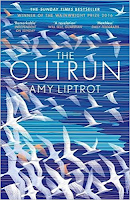
The Outrun by Amy Liptrot, reviewed by Paula Knight


12 Birds to Save your Life - Nature's Lessons in Happiness by Charlie Corbett, reviewed by Linda Sargent


Monday, 23 August 2021

THE HIGH HOUSE by Jessie Greengrass, reviewed by Linda Newbery


"A disastrous near future that could be the day after tomorrow..."

Linda Newbery edits Writers Review. She has published widely for young readers of all ages, winning the Costa Children's Book Prize with her young adult novel Set in Stone. Her latest title is non-fiction: This Book is Cruelty Free - Animals and Us, a guide to compassionate living. She is currently working on a new adult novel.

When I think of the hot summer days of childhood, my memories are of a paddling pool in the garden, adults resting in the shade, the jingling tune of the ice-cream van; maybe a day at the seaside and sunburned skin in the days before we knew to take more care. We enjoyed it while it lasted, before the heat disintegrated into a thunderstorm and the days became cooler. Now the feeling is different, threatening. What if temperatures continue to rise and become unbearable? What would be the effect on wild animals, vegetation, crop-growing, and even human ability to survive? What if huge areas of the world become uninhabitable?

In The Great Derangement, recently reviewed on this blog by Jane Rogers, Amitav Ghosh asks why literary fiction so comprehensively ignores the climate emergency, the most pressing issue of our times, and why those novels that do deal with it tend to be sidelined into genre fiction. His book was published five years ago. Since then we've seen Richard Powers' The Overstory deservedly shortlisted for the Booker Prize, and Melissa Harrison wrote in The Guardian that "the 'cli-fi'  genre is growing exponentially – no surprise, given the coming crisis. In fact, as an artist in any medium it can feel self-indulgent, in 2021, to be making work about anything else."

Now here's another novel that puts climate breakdown centre stage, set in a disastrous near future that could be the day after tomorrow. Although to climate change deniers it could be seen as science fiction, the sense of foreboding in the early section of the novel - flooding, changes in the seasons, dangerous cyclones, migration patterns disrupted - is all too familiar to anyone seriously concerned about human impact on the planet. 

With its focus on a group of isolated survivors, the novel reminds me of Robert C O'Brien's Z for Zachariah and Edwin Muir's haunting poem, The Horses. The High House is located somewhere unspecified on the east coast of England (the nearby church with its carved angels and the shifting of the coast and river call to mind Blythburgh and Dunwich). Unknown to teenaged Caro, her stepmother and father have been meticulously preparing this house as a refuge for when disaster strikes; stepmother Francesca, environmentalist and climate campaigner, is more aware than most that the ways of life we take for granted cannot endure. "She didn't have the habit that the rest of us were learning, of having our minds in two places at once, of seeing two futures: that ordinary one of summer holidays and new school terms, of Christmasses and birthdays and bank accounts in an endless uneventful round. And the other one, the long and empty one we spoke about in hypotheticals, or didn't speak about at all."*

Just before he and Francesca are lost in a violent cyclone that hits Florida, where Francesca is speaking at a conference, Caro's father tells her to take her toddler stepbrother Pauly to the High House, urgently. Caro resents Francesca for neglecting Pauly in favour of campaigning, but becomes equally critical of herself for devoting herself to him as a means of shutting off from the catastrophic wider situation. Arriving, Caro is surprised to find the house already inhabited and grounds well-tended, by the practical Sal and her wise grandfather, Grandy, recruited as custodians by the prescient Francesca. When the floodwater comes, inundating the village and drastically changing the shape of the land, this little group is safe on its bulwark, carefully husbanding their resources, growing crops, keeping chickens, preserving fruit and vegetables. We move into a future where the rest of the world seems to have disappeared; as Pauly matures and is given his own viewpoint, we realise what limitations these young people have accepted, and how they must cope without medical treatment beyond what they can provide for themselves.

The novel is saved from bleakness by the immersion in daily lives, the tenderness between Caro and Pauly, Sal and her grandfather, the small satisfactions of daily life and self-sufficiency and even moments of joy. But it's a stark warning too: how we take for granted that there will be power at the flick of a switch, food available in shops or delivered to our door, "that vast net which, invisible, imperceptible, held us up," and how ill-equipped we'd be for survival if these systems failed. It's also a hymn to the natural world and a reminder of how much we face losing if we continue to behave as if the Earth's resources were infinite. "You think that you have time," Grandy says. "And then all at once you don't."

The High House is published by Swift Press.

The Bolinda unabridged Audiobook is narrated by Mariam Abu-Hejleh, Sam Newton and Camilla Rockley.

* I listened to the Audiobook, so the punctuation and sentence breaks in these quotations may differ from those in the print edition.

See also: The Great Derangement by Amitav Ghosh, reviewed by Jane Rogers


The Overstory by Richard Powers, reviewed by Tracey Mathias