Showing posts with label intrigue. Show all posts

Monday, 20 October 2025

Guest review by David Breakell: PRECIPICE by Robert Harris


"Historical fiction is not just a passport to the past. It can also give us a new perspective on our contemporary world: some things don’t really change."

David Breakell, formerly a lawyer in the City of London and now a writer of historical fiction, reviews the latest novel from a titan of the genre, Robert Harris. Earlier this year, David published 
The Alchemist of Genoa, a novel set in the late 16th century, earlier this year. He is currently working on the sequel. Find out more from his website. 

“The past is a foreign country: they do things differently there.” L P Hartley’s famous opening line is about memory, the loss of innocence, moral decline. But it could be seen as an explanation for the allure of historical novels, a brand motto even. One writer with a much-stamped passport to that undiscovered country is Robert Harris. His novels cover the broadest sweep of history, from pre-imperial Rome to the present-day Vatican, from feudal England to fin-de-siècle Paris, all without a hint of jet lag.

This time, Harris takes on the much-visited summer of 1914 and finds something new to say. His microscope focuses on a few square yards of Political London and an odd-couple romance between the married 62-year-old Prime Minister, Herbert Asquith, and the young, unmarried, Venetia Stanley.

The affair, mostly conducted by letter and occasionally in the back of the PM’s limousine, proceeds decorously as befits the times, but is nevertheless shocking. Not only in terms of Asquith’s cavalier attitude to sharing state and military secrets with his lover, but also his sense of priorities considering what was in his ministerial red box at the time. These are the PM’s actual letters that Harris quotes from the archive – he recreates Venetia’s letters to the PM, because Asquith burnt them after resigning – and there are hundreds of them. Often, Asquith wrote to her three times a day. How on earth did he find the time?

Harris is a seasoned political observer so the context – Asquith scribbling his gushing love notes in Cabinet just as Churchill is explaining the details of the Gallipoli campaign or arguing with Kitchener – is expertly handled.

Equal prominence is given to Venetia’s side of the story. She is the daughter of an aristocratic, landed family but her perspective is thoroughly modern. We can admire her spirit but wonder at her judgment. Eventually, she realises that the affair must end and engineers it by fairly drastic means. If there is a doubt in this reader’s mind about Harris’ version of Venetia, it relates to her keeping the whole thing secret for so long, even from her closest family. Not so much the affair itself, but the state secrets she has become privy to. These feel like an intolerable burden, especially when her brothers and brothers-in-law are called up to serve and Venetia knows more – through Asquith’s indiscretions – about the military campaigns in which they’re participating than almost anyone in the country. Despite that, she shares none of this knowledge, resolutely protecting Asquith’s reputation.

To raise the stakes, Harris writes a parallel story. Detective Sergeant Paul Deemer, a Scotland Yard policeman seconded to the embryonic MI5, is on the hunt for German spies. Deemer is a bachelor whose modest background makes him an outsider in the officer-class security service. Half-way through the book, the two stories collide when Deemer starts to suspect that Asquith and Venetia are exchanging more than endearments. Deemer’s pursuit of them - pure detective work – propels the story at pace and, as importantly, gives us a moral character who points up the somewhat naïve antics of the PM. I was occasionally reminded of J B Priestley’s An Inspector Calls with its similar period milieu and its eyebrows raised at the self-indulgence of the privileged classes. But Deemer is no avenging angel like Inspector Goole. He passes no judgment, other than a legal one, on Asquith’s indiscretions and even feels uneasy about steaming open the lovers’ correspondence.

The world we left behind in 1914 is skilfully evoked. London, with its twelve postal services a day, a city where Downing Street is an unguarded backwater and a Prime Minister can walk into a large bookshop and not be recognised. But historical fiction is not just a passport to the past. It can also give us a new perspective on our contemporary world: in a novel where leaders are too powerful to prosecute, where the security services collude with media mag
nates, where politicians are playing footsie under the table – or just golf – while presiding over the fate of the world, it reminds us that some things don’t really change.

Precipice is published by Penguin.

See also David's review of Death at the Sign of the Rook by Kate Atkinson

David's novel The Alchemist of Genoa is published by Dower House Books - look out for a Q&A early next year. 

Monday, 10 October 2022

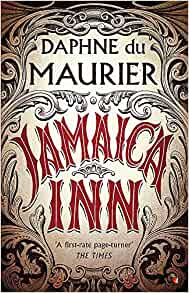
Guest review by Graeme Fife: JAMAICA INN by Daphne du Maurier


"Du Maurier weaves a careful web of intrigue, the threads of which she untangles with great dexterity."

Graeme Fife
is a regular reviewer here. He has written many plays, stories, features and talks for radio, stage plays and articles for newspapers and magazines, and is a regular contributor to BBC Radio 4's From Our Own Correspondent. He's the author of a string of books - children's stories, biography, works of history and fiction. His novel of the French Revolution, No Common Assassin, tells the story of Charlotte Corday.

‘I’m not drunk enough to tell you why I live in this God-forsaken spot, and why I’m the landlord of Jamaica Inn.’

Thus Joss to his outwardly timid niece, Mary, who, now orphaned and driven by poverty from her family farm at the death of her mother has come to stay with her mother’s sister, Patience, and her husband, a giant of a man with volatile temper to match his brutish size. Once a busy posting house on the remote market road on a bleak stretch of Bodmin Moor, the Inn now welcomes no visitors other than a local crew of boozers from time to time and is more generally shunned. Mary and Patience form a close intimacy and it’s soon clear that the aunt is sickeningly overborne by her husband’s cruel behaviour; Mary takes brief refuge from the claustrophobic atmosphere and threatening circumstances in which she now finds herself in lonely tramps across the moor. Scarce any domestic comfort, disturbing noises in the night, the raucous evenings of drink and merriment in the locked bar…it’s a grim situation and Mary stays only to support her frightened, lonely aunt. The interim nocturnal traffic of men and loaded wagons points to some nefarious activity about which Mary eventually learns and, caught in a trap of deception, unwilling to put herself or her aunt at even worse threat than already broods over them, Mary finds promise of help in an unexpected encounter, this against the backdrop of night, the solitary moors, the secret tracks, the fogs and barely suppressed violence of inebriation, the veiled menace…it all feeds into a potent sense of misery, confusion, claustrophobia, imprisonment.

Du Maurier weaves a careful web of intrigue, the threads of which she untangles with great dexterity. This is adroitly worked mystery and suspense. The evil-doing surfaces: horse theft, wrecking, smuggling (Jamaica rum, hence the name, and the rest). An apparent avenue of rescue disappoints and the dénouement works a clever, an arresting, twist.

However, in the course of building a story of sinister dealings, innocence betrayed, psychological contradiction, du Maurier also plumbs another unexpected depth: the nature of love, its conflicting power, the subversion of dream unsullied by reality. Torn in her sense of filial duties, Mary confronts another, overwhelming force: that of emotion. ‘She loved him in the weakness of her flesh.’ The Protestant overtone is clear but the raw fact does not differ for that. And this insight hits Mary even as she unearths, in her own perception, the truth of what is happening in the supposed haven to which she has fled, Jamaica Inn. She stays because she hopes to extricate her aunt to a better repose, the two of them safe in what had been the place of both sisters’ companionship and happiness, home, before life, the toils of existence snared them and death both separated them and offered reunion. Of her uncle, she says to his brother – another meeting of which I leave you to find out – ‘You’d best have a care for [him]…His mood is dangerous; whoever interferes with his plans now risks his life. I tell you this for your own safety.’ She says this in a sort of transfer because it’s more herself to whom she speaks this unseemly truth and it very nearly undoes her.

I once visited a picturesque bay on the Orkney island of Hoy, Rackwick, named for the local wreckers – active there years past as on other ironbound coasts in the British Isles principally in Cornwall and Scilly. It was sunny, peaceful, serene, that morning, the soothing wash and hiss of the tide, the yelp of the gulls, the gentle heave of the sea, a pleasant place, amiable, but what a dark story lurked in those waters. Read a version of it here in this captivating novel.

One character says to Mary who arrived as a naïve creature, now stiffened into a knowing young woman, an enterprising creature ready to grasp escape and redemption on her own initiative and courage: ‘There is a fire about you that the women of old possessed. Your companionship is not a thing to be thrown aside…Poor Mary, with your feet fast in the nineteenth century and your faun face looking up to mine, who admit myself a freak of nature and a shame upon your little world.’

The same man speaks of his rejection of Christianity, having found it to be ‘built upon hatred and jealousy, and greed – all the man-made attributes of civilisation, while the old pagan barbarism was naked and clean.’ The paradox is central to the book’s compelling force, the challenge of self-knowledge thrown full-pelt at received wisdom and supposed safety.

Jamaica Inn is published by Virago. The cover shown is of the Virago Modern Classics edition.

Read this Q & A with Graeme about his novel of the French Revolution,