Showing posts with label Katie Fforde. Show all posts

Monday, 19 December 2022

Virtual Costa Book Awards Part 1: Adèle Geras and guests


It's my great pleasure to introduce Writers Review's Virtual Costa Book Awards. We were very sad indeed to hear that the real life Costa Book Awards are no more, so we decided to set up our very own Virtual Awards. Over the next three weeks, we're putting up recommendations for the awards from some friends of Writers Review. You'll find my choice at the end of this selection from some wonderful writers. I hope they lead you to read lots of books you will enjoy.

Merry Christmas from us all!  Adèle Geras

KATIE FFORDE nominates Jane Bailey's Sorrow isn't Good Enough for the Virtual Best Novel Prize:

Jane Bailey's writing is clear and easy to read and we instantly connect to the heroine, Stephanie, both in the present day and in the past. Few people write from a child's point of view as well as Jane and the little girl she describes, desperate for love, aware of life's unfairness but accepting it nonetheless, is entirely convincing.

With her we travel back to the Sixties, a simpler, crueller time for children. No wonder there is a darker side to this coming of age story. We learn about the tragedy on the first page: the notorious murder of Stephanie's best friend. But friendship is complicated; not what it seems from a distance.

This is not always a comfortable novel but one I couldn't turn away from. Jane Bailey is a writer who should be known to more people. She is so good.

VAL McDERMID nominates Ali Smith's Companion Piece for the Virtual Costa Novel Prize:

This novel is the coda to Smith's Four Seasons quartet. She carries the reader along in a broad and diverse narrative sweep and produces a vivid portrait of contemporary life. She writes beautifully but although she shines a light on the worst things we do to each other, her work is imbued with hope. Somehow, while firmly rooted in the real world, she can be surreal and dreamlike at times.

Companion Piece is intelligent, compassionate and often very funny. I found it exhilarating. With her books, when I reach the end I always want to go back to the beginning and do it all again. But with Companion Piece, I felt compelled to go back to Autumn, the beginning of the Seasons quartet and read all five again. And I'm glad I did.

WENDY COPE nominates My Phantoms by Geraldine Riley for the Virtual Costa Novel Prize:

I've just finished this. It is a brilliantly readable study of the relationship between a daughter and her sad, inadequate and often infuriating mother. Much of the time the daughter distances herself and is sometimes unkind. When she agrees to see her mother and to help her when she's ill, her attempts at forming a relationship more satisfying to both of them meet with little success. Their encounters are often funny as well as painful. The book is only 199 pages long and it left me wanting more.

SOPHIE HANNAH nominates Ignore it all and hope it goes away by Nic Aubury for the Virtual Costa Poetry Prize:

Ignore it all and hope it goes away
 should win every poetry prize going. It is wise, witty, moving, memorable, and displays prosodic dexterity that one very rarely sees these days. It also has the most wonderful illustrations by genius cartoonist Moose Allain.


MICHAEL ARDITTI nominates Donal Ryan's The Queen of Dirt Island  for the Virtual Costa Novel Prize:

I have been particularly taken with Irish fiction this year, including Audrey Magee's The Colony and Emma Donahue's Haven, but the pick of the crop for me is Donal Ryan''s The Queen of Dirt Island. It tells of three (ultimately four) generations of women in rural Tipperary, whose menfolk are either dead, weak, absent or treacherous. In a series of short, almost self-contained chapters, Ryan tells of family love and loyalty, which endures hardship, prejudice, illegitimacy and suicide. Opening in the 1980s, both republicanism and a repressive clergy inevitably feature, but the focus is on the domestic, and often fractious but always nurturing home that the women share. Ryan's writing is by turns sharp, funny, lyrical and tinges with a winning melancholy, and when, in a metafictional twist, we learn that it's also the writing of Saoirse, the novel's central character, we can only cheer at her triumph over the odds.

AMANDA CRAIG nominates Sally Gardner's The Weather Woman for the Virtual Costa Novel Prize.

The Weather Woman 
reads like Georgette Heyer crossed with Angela Carter, being historical, magical, gorgeously written and pulsing with romantic energy. Its heroine Neva is born with an extraordinary gift: she can predict the weather at any given date. In Regency England, when society is obsessed by gambling, this is a gift that can make or break immense fortunes, so her clockmaker father conceals her in an automaton.

However, Neva is also thirsty for an education, something forbidden to women. She dresses as a man, and soon falls in love with Henri, a charismatic young French count who shares her poverty and her undeclared passion. From its opening at a Frost Fair to its climactic struggle against villainy, it is packed with drama, but it also contains a beautiful description of what making love as equals should be like.

JUDITH LENNOX nominates This is not a Pity Memoir by Abi Morgan for the Virtual Costa Biography Prize:

Screenwriter Abi Morgan comes home from buying sushi to find her partner Jacob unconscious on the bathroom floor. His seizure marks the onset of a devastating illness. He is put into an induced coma from which he emerges months later, fragile and unravelled, unable to recognise Abi, convinced she’s an imposter.

The everyday continues – taxes must be paid, scripts completed, sometimes at midnight - though life is now irrevocably divided into BC (before collapse) and AD (after disaster). Morgan’s memoir has the urgency of a thriller and is written with honesty and humour, brilliantly describing her fluctuating emotions and the exhaustion of hope and despair. Though the story is tragic, it’s never depressing, as Morgan learns to live for ‘daily glimmers of happiness,’ and they emerge into a strange new world, traumatised and altered but held together by love.

ADELE GERAS nominates The Whalebone Theatre by Joanna Quinn for the Virtual Costa First Novel Prize:

The Whalebone Theatre is a most accomplished debut. It's a family story starting before the Second World War and covering many events familiar from other novels. What marks this book out is the characters of the siblings at the heart of the action, brought together to deal with everything the world can throw at them. The eponymous Theatre   (the remains of a carcass washed up on the Devon coast) becomes the heart of the several interlocking stories.  I love "let's do the show right here" novels and this is a hugely enjoyable example of the genre.


Click here for Part 2 ...

Monday, 27 December 2021

Awards Season! Part 2


Here's the second batch of virtual awards, made by our contributors to a book of their choice. Thanks to all our reviewers for giving us such great recommendations! Come back next week for the final part.


Yvonne Coppard: The Evie Award for best unreliable narrator 
goes to Notes on a Scandal  by Zoe Heller.  Barbara is a frumpish, unpopular history teacher whom nobody warms to. Sheba, the new new pottery teacher, is the opposite: a charismatic free spirit who seems to have it all. When Sheba starts a sexual relationship with a pupil, Barbara becomes her confidante.

The depth of Barbara’s sexual repression, jealousy and malice, hidden from the world and from herself, is revealed only to the reader in this gripping, masterly novel. Shortlisted for the Booker, it’s up there with Lolita and The Great Gatsby.


Amanda Craig
awards the Craig Cup for Most Underrated Children's Book to: Philip Womack's Wildlord. It's one of a clutch of recent new YA titles about the intersection between the mortal world and supernatural beings that readers will recognise as the fiercer kind of fairy.

In the English and Celtic tradition, proper fairies aren't twee and pretty, but unpredictable, frightening, mischievous and even dangerous manifestations of nature; and these stories often also address mankind's selfish destructiveness of the natural world, and the possible revenge of it upon us.

This is Womack's eighth novel, and one with a propulsive plot, a sympathetically vulnerable hero and an evocative style. Most of all, it has a moral centre about the importance of love and trust. This story, with its universal appeal ,deserves a wider audience.

Anne Cassidy: A Book I read Again and Again -
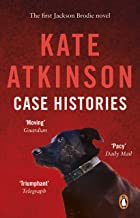
awarded to Kate Atkinson for Case Histories.  I read a lot of crime. Every couple of years I feel the need to revisit this almost perfect book. It's a crime novel that foregrounds the stories of the families of victims. This wasn’t a whodunnit but more an examination of the devastation caused by murder and loss. The examination of family life before and after the crimes is knife edge and utterly believable. The focus is on three unsolved murders and then we meet Jackson Brodie, the ex-cop, the damaged hero, who seems to blunder his way through the terrain to find the killers, to bring peace to the loved ones. There are bits of this book that I unashamedly cry at every time. A terrific crime story. Can’t wait until I read it next time!

The Celia Rees Award for Most Influential Children's Fantasy Novel goes to: The Box of Delights.

John Masefield's novel, published in 1935, is exactly that - a box of delights. It contains themes, characters and motifs that occur again and again in British children's fantasy fiction: shapeshifting, time travelling, a young protagonist on the cusp of adolescence singled out as having special powers, a wise old magician, a magical object that must be guarded at all cost, an epic battle between the forces of light and the forces of darkness, an evil, cunning and ruthless enemy and his equally unpleasant female companion, a midwinter setting with extreme weather, the timely intervention of mythical figures from British folklore - it's all there!

Katie Fforde
gives The Fforde Award for the book she didn't expect to fall in love with to The Dictionary of Lost Words, by Pip Williams. Quirky, imaginative and beautifully written, this is for people who love words, who are feminists in the very best sense. It’s about a little girl who is the daughter of a man among a team of many who are writing the dictionary. She discovers that some words are considered to be no longer useful. They are often words to do with women. We follow her life and the life of the dictionary and others involved in its creation. Highly recommended.

Adèle Geras' prize is the Snowglobe Award for the Best Short Book which Creates an Entire World, and the first winner is Claire Keegan's Small Things Like These.

A few days ago, I found a book which is as close to perfection as any I've read all year. It's tiny: a mere 75 pages and I read it in two sittings. I could have read it in one, but needed to think about it. It's the most extraordinarily beautifully- written tale, which encompasses huge themes and enormous emotions and manages to take you to the heart of a family in a specific place and time. Bill Furlong is a coal merchant in a small Irish town. He and his wife have six daughters. It's Christmas Eve, and the day before that. By the end, we are part of this town. I felt as if I'd been handed the most beautiful snowglobe, even though this place has darkness deep within it. A worthy winner of my award.

Sue Purkiss
awards the Purkiss Prize for a book (actually a whole series) that brings comfort - to the Inspector Gamache series by Louise Penny. 

Life’s a bit on the tough side at the moment, isn’t it? Of course, there are lots of good things too – but sometimes they threaten to be overwhelmed by the bad stuff.

The Inspector Gamache series offers a retreat from all this. Three Pines, where the books are mostly set, is a tiny village in the forest in Quebec. It’s not on any map, it doesn’t show up on a satnav: it’s a refuge. It’s peopled by eccentrics: Ruth, the mad old poet, Gabri and Olivier, who run the bistro and the B&B, Clara the artist – and eventually, Inspector Gamache himself, who is strong, clever, kind and incorruptible.

The characters are complex and satisfying, the stories are gripping – and the food! Ah, if only I had time to tell you about the food… Plus, there are seventeen books in the series.

John Newman of Newham Bookshop awards Newman’s Page Turner of the Year or A Reason to Remain to Sarah Winman.

Everybody loves a feel-good book and this year we really needed stories which celebrate friendship and the ties that bind. Sarah Winman gave us a real gift in the shape of  Still Life and I want to both celebrate it and of course unconditionally recommend it to you all. Spanning several decades of the last century we encounter lives interlinked by war, tragedy and change. Its roots are in London's East End but the core and real heart of it is very much centred in Italy and most especially the city of Florence which the author clearly loves. The big themes of the novel are addressed with a light touch via suitably diverse characters you quickly care about and leave behind with reluctance. This was my page turner of the year and one I felt privileged and confident to place in the hands of other like-minded souls.

Monday, 16 September 2019

Guest review by Katie Fforde: UNEXPECTED LESSONS IN LOVE by Lucy Dillon


'Deals with tough issues in a way that keeps the faint-hearted (i.e. me) reading.'


Katie Fforde has written twenty-six books, the latest of which is Rose Petal Summer, and lives in the Cotswolds surrounded by grandchildren and dogs. It’s not as idyllic as it sounds.

I want to blog about Lucy Dillon’s latest book, Unexpected Lessons in Love, because I feel it’s hard for writers who are not first-timers (everyone loves a debut), are not writing a book with a significant number attached to it, the writer isn’t particularly young, or old, or anything. They've just written consistently great books for years.

As authors we all get books sent to us through the post. Sometimes people ask first but quite often they just arrive. Depending where we are in our writing schedules this can make the heart sink. Guilt, irritation, and plain tiredness can be one’s reaction even if the book comes with biscuits or chocolate or some other inducement to read.

I can’t remember if Lucy Dillon’s editor asked if she could send me an early copy but I would have said yes because I really enjoy her books. I think she manages to deal with tough issues in a way that keeps the faint-hearted (i.e. me) reading.

Her books are often set in a town called Longborough, now peopled with previous heroines. They always involve dogs. For me it is this setting and the dogs that encourage me to read about people who are going through horrible things. I am not a fan of unadulterated misery.

In Unexpected Lessons in Love  we read about Jeannie, who is about to get married to Dan, a vet, who proposed to her on Brooklyn Bridge. He is the perfect man, a vet (who needs anything else?) handsome, kind, funny, everything. We discover this during the prologue. In Chapter 1, Jeannie is on her way to the wedding, gorgeous dress pinching agonisingly, and the unspoken doubts she’d been feeling finally burst out of her and she tells her father she can’t go through with the wedding. She texts Dan telling him she’s breaking it off, that he’s not to go to the town hall. Then he walks under a bus.

The book is about how Jeannie and Dan’s other friends and family react, how she finds out about his past and more importantly how she really feels about him. It is romantic but in an unconventional way.

As always with Lucy Dillon the characters are believable if sometimes surprising. If you’ve read previous books you will meet old friends. There are sub-plots that work well and there are issues that makes us think. And always, there are dogs.

My only criticism is the implication that adopting rescue dogs is an easy and lovely thing to do. I don’t argue with the ‘lovely thing to do’ part, but rescue dogs often have problems that would be difficult for an inexperienced owner to cope with.

If you like to read something that takes you away from your own problems I heartily recommend Lucy Dillon. She deals with real, heart breaking dilemmas, but in a way that doesn’t put off readers who really like nice happy stories with happy endings. Which sums me up pretty well.

Unexpected Lessons in Love is published by Black Swan.