Showing posts with label Adèle Geras. Show all posts

Monday, 26 June 2023

THE CHOICE by Michael Arditti, reviewed by Adèle Geras


"A work which skilfully combines many of Arditti’s strengths as a writer in one engrossing story."

Adèle Geras has written many books for children and young adults and seven novels for adults, the latest of which (under the pseudonym Hope Adams) is Dangerous Women, published by Michael Joseph. She lives in Cambridge.

Michael Arditti is a difficult writer to pin down. His religiously-themed epics (The Anointed, Of Men and Angels) stand alongside traditional novels such as Widows and Orphans, which are about real people, usually in testing and desperate situations. I reviewed his short historical novel The Young Pretender on this blog last year.

Now we have a work which skilfully combines many of Arditti’s strengths as a writer in one engrossing story. He has a deep understanding both of religion and the way faith operates in the human heart and also of the bureaucracy of the Anglican Church. He knows an enormous amount about art and he’s informed and compassionate about current debates, many of which appear in this book.

He addresses one of these above all: can you separate a morally dubious artist from his work? As reviews of The Choice appeared in the papers, in the real world a man was arrested for damaging Eric Gill's statue, Ariel, on Broadcasting House in London.

Gill’s story shadows this book and one of the main strands of the plot concerns a work of art in a village church. Should it be preserved and lauded if its creator has behaved appallingly
throughout his life? Surrounding this central moral dilemma (whose roots lie in the past) is the story of Clarissa, a woman priest, who has to deal with shocking and distressing problems both personal and professional from the very first pages. The novel unfolds in several time frames and Clarissa appears both as young girl and as she grows older. Her struggle to be accepted into the Church as a priest is another important strand in the novel. She’s a brilliant creation and we’re rooting for her from beginning to end.

As for the “you can only write from a woman’s point of view if you’re a woman “ argument, Arditti demonstrates exactly what nonsense that is.

While I was reading it, I couldn’t help thinking what a wonderful drama it would make, over several episodes. If only producers both on television and on the streaming services would turn away from adapting classics for a while and eschew superheroes who’d be more at home in a computer game, they could put something like The Choice on our screens instead. Nicola Walker was in my mind as I read, but there are many other actors who'd be excellent in the part.

Meanwhile in the immortal words of Fay Weldon, “the book abides." l loved it and urge you to read it.

The Choice is published by Arcadia Books.


Michael Arditti was our sixth birthday guest last year and chose The Rector's Daughter by F M Mayor.


Who will be our seventh birthday guest this year, on 24th July? Watch this space!

Monday, 1 May 2023

THE LAST REMAINS by Elly Griffiths, reviewed by Adèle Geras


"If you have never read these books, then start right now ..."

Adèle Geras has written many books for children and young adults and six novels for adults, the latest of which (under the pseudonym Hope Adams) is Dangerous Women, published by Michael Joseph. She lives in Cambridge.

One of the best presents I was given for my birthday this year was a copy of Elly Griffiths' latest Dr Ruth Galloway mystery. My friend Wendy Cope gave it to me ... we've been reading about Ruth and her companions alongside one another since The Crossing Places, which was the book that launched the series in 2009. For sixteen years, at the rate of almost a book a year, we've lived with Ruth and followed her life and her adventures. We've got to know her lover, Harry Nelson, a married policeman who heads a team of men and women who are all fully rounded characters. If you love the Ruth Galloway books, you belong to a kind of gang.

Appropriately, a book called The Last Remains is the final book about this particular detective and her friends. I was therefore almost bereft when I came to the end of the story. I live in hope that some years further down the line, there will be a case which brings everyone back one more time ....but till then, Elly Griffiths has created a glorious collection of stories about one of the most likeable of detectives.

From the start, Ruth was more like a normal person than most detectives. She was, for one thing, not thin. She describes herself as needing to lose weight, though this aspect, which made me warm to her, is less important as the books go on. Throughout the series, her relationship with Harry Nelson is the spine that holds the narrative together, gives it an emotional core absent from many other books, and provides a continuity that makes Griffiths' fans go back again and again to see how those two are getting on. I know Elly a little and every time I meet her I beg her to make things end well for our hero and heroine. I'm saying nothing about what happens. You will have to read the book. Of course the fact that the top policeman has a distinguished archaeologist to help him, makes the answers to the mysteries much more interesting. Their adventures take them in all kinds of unexpected directions, and there's a thread of magic, worlds beyond our own, the slightly supernatural which runs through the books. Cathbad, Ruth's friend who is a Druid, carries most of the weight of these themes in the novels and he's one of her most attractive creations. Mystery surrounds him even in the midst of the most prosaic situations.

Because we've lived with these characters for so long, we have followed a great many stories through recent history. Cathbad almost died of Covid. Ruth has a daughter with Nelson, and we watch Kate grow into a young person who reflects well on the way her mother has brought her up. Nelson's family also help in Kate's development and are present in her life. A situation which could have become very fraught has always (even through many ups and downs, some of them very dramatic) been managed in a way that's both civilised and plausible.

The stories are set in Norfolk and bring that county most beautifully to life. Ruth lives in one of three cottages on a salt marsh and we are always made aware of what every location looks like. Griffiths never over -describes, but can paint a scene in very few sentences so that we feel we are there. Her dialogue is pitch perfect. It never sounds artificial, but as though real people are talking. She's very good at animals and I have grown especially fond of Ruth's cat Flint. Cathbad's dog (called Thing) is a bull terrier of impeccable character but I have to confess to being one of those people who have a 'thing' about that breed. My bad. Thing is totally lovely in every respect.

In The Last Remains, the body of a young woman is found behind the boarded-up wall of what used to be a café back in the day. Suspicion falls on a group of students and their charismatic and creepy tutor who used to frequent the café long ago. Cathbad, who was then called Michael Malone, was one of their number. What does he know? How involved was he? When he goes missing, there's a possibility that he may have something to hide. Alongside all this, Ruth's University is about to axe the Department of Archaeology. A colleague of hers has something surprising to tell her. Nelson's wife, Michelle, who had been living apart from her husband, has returned to Norfolk. There's an awful lot going on and it's miraculous that Griffiths manages to keep all the balls in the air so brilliantly. Also, there's a reference in this novel to events that happened in the other books, so that you're reminded as you read of all that you've read before. The solution is elegant with a really poignant and unexpected revelation towards the end of the book.

I will now go and catch up with other novels by Griffiths that I haven't read yet. And yes, she has written many other novels. She's one of the most prolific writers of mysteries at work today.

Goodbye, Ruth and co. Reading about you for all these years was a real treat and I hope that one day, you might return. I want to see what Kate becomes. I want to see Ruth and Nelson as grandparents. I want more....

If you have never read these books, then start right now. You won't regret it.

The Last Remains is published by Quercus.

See also Elly Griffiths' The Postscript Murders, reviewed by Rachel Ward.  


Monday, 20 February 2023

TOMORROW, AND TOMORROW, AND TOMORROW by Gabrielle Zevin Reviewed by Adèle Geras


 "Above all it's about creativity; how it works and why it's vital to everyone's happiness."

Adèle 
Geras has written many books for children and young adults and six novels for adults, the latest of which (under the pseudonym Hope Adams) is Dangerous Women, published by Michael Joseph. She lives in Cambridge. 

If you were looking for a target audience for this novel, I would be the last person to be considered. I'm old, and it's mainly about teenagers and youngish people. It's set in a world I have no interest in at all: the world of gaming. I have never played a computer game in my life and even reading this wonderful novel has not tempted me to try any. I downloaded it firstly because my younger daughter said it was very good indeed and secondly because I have read a book by Zevin before: the fascinating YA novel called Elsewhere, which I enjoyed very much. I read it a long time ago and details I remember are hazy but it deals with the Afterlife. I knew she was a very good writer, so I started reading quite optimistically but ready to give up if the gaming became too difficult for me.

I needn't have worried. The story is about people and their relationships with one another, their difficulties, their triumphs. Every character is brought to life most beautifully and we end the book feeling we've spent time with good friends. We care about them. Also, you will need a tissue at several points in the story.

Sam and Sadie meet as very young teenagers in a hospital. Sam has a foot that causes him pain and disability throughout his life and the sections dealing with the treatment he receives are sometimes very hard to read. The two of them find they have a love of gaming in common and the story follows them through their lives. They become creators of games and for me, more than the love stories that play out, more than the sharp dialogue between the characters, more than the bonds that bind Sam and Sadie and several other characters together, more than the excitement in following their fortunes to heights neither could have imagined when they first set eyes on one another, it is the actual process of creating the games that is the most interesting and important part of the book for me.

What I learned from this novel is that building a game involves many of the same processes as those involved in writing a novel. You are making a new world. You are deciding who the characters are, and what they do and how their adventures play out. You find out how they can progress through the game. You put difficulties and obstacles in their way and give them the means to overcome these. You also find out about the Market, and how certain games succeed and make vast fortunes while others fail and come to nothing. You share the anxiety (well known to every writer) of wondering to what extent people will be able to understand your vision, sympathise with your characters, share your world. This novel can be read as a love story, the tale of a group of friends and a moment in history when games became such an important way for people to access stories, but above all it's about creativity; how it works and why it's vital to everyone's happiness.

Tomorrow, and Tomorrow, and Tomorrow is published by Chatto & Windus.


Monday, 19 December 2022

Virtual Costa Book Awards Part 1: Adèle Geras and guests


It's my great pleasure to introduce Writers Review's Virtual Costa Book Awards. We were very sad indeed to hear that the real life Costa Book Awards are no more, so we decided to set up our very own Virtual Awards. Over the next three weeks, we're putting up recommendations for the awards from some friends of Writers Review. You'll find my choice at the end of this selection from some wonderful writers. I hope they lead you to read lots of books you will enjoy.

Merry Christmas from us all!  Adèle Geras

KATIE FFORDE nominates Jane Bailey's Sorrow isn't Good Enough for the Virtual Best Novel Prize:

Jane Bailey's writing is clear and easy to read and we instantly connect to the heroine, Stephanie, both in the present day and in the past. Few people write from a child's point of view as well as Jane and the little girl she describes, desperate for love, aware of life's unfairness but accepting it nonetheless, is entirely convincing.

With her we travel back to the Sixties, a simpler, crueller time for children. No wonder there is a darker side to this coming of age story. We learn about the tragedy on the first page: the notorious murder of Stephanie's best friend. But friendship is complicated; not what it seems from a distance.

This is not always a comfortable novel but one I couldn't turn away from. Jane Bailey is a writer who should be known to more people. She is so good.

VAL McDERMID nominates Ali Smith's Companion Piece for the Virtual Costa Novel Prize:

This novel is the coda to Smith's Four Seasons quartet. She carries the reader along in a broad and diverse narrative sweep and produces a vivid portrait of contemporary life. She writes beautifully but although she shines a light on the worst things we do to each other, her work is imbued with hope. Somehow, while firmly rooted in the real world, she can be surreal and dreamlike at times.

Companion Piece is intelligent, compassionate and often very funny. I found it exhilarating. With her books, when I reach the end I always want to go back to the beginning and do it all again. But with Companion Piece, I felt compelled to go back to Autumn, the beginning of the Seasons quartet and read all five again. And I'm glad I did.

WENDY COPE nominates My Phantoms by Geraldine Riley for the Virtual Costa Novel Prize:

I've just finished this. It is a brilliantly readable study of the relationship between a daughter and her sad, inadequate and often infuriating mother. Much of the time the daughter distances herself and is sometimes unkind. When she agrees to see her mother and to help her when she's ill, her attempts at forming a relationship more satisfying to both of them meet with little success. Their encounters are often funny as well as painful. The book is only 199 pages long and it left me wanting more.

SOPHIE HANNAH nominates Ignore it all and hope it goes away by Nic Aubury for the Virtual Costa Poetry Prize:

Ignore it all and hope it goes away
 should win every poetry prize going. It is wise, witty, moving, memorable, and displays prosodic dexterity that one very rarely sees these days. It also has the most wonderful illustrations by genius cartoonist Moose Allain.


MICHAEL ARDITTI nominates Donal Ryan's The Queen of Dirt Island  for the Virtual Costa Novel Prize:

I have been particularly taken with Irish fiction this year, including Audrey Magee's The Colony and Emma Donahue's Haven, but the pick of the crop for me is Donal Ryan''s The Queen of Dirt Island. It tells of three (ultimately four) generations of women in rural Tipperary, whose menfolk are either dead, weak, absent or treacherous. In a series of short, almost self-contained chapters, Ryan tells of family love and loyalty, which endures hardship, prejudice, illegitimacy and suicide. Opening in the 1980s, both republicanism and a repressive clergy inevitably feature, but the focus is on the domestic, and often fractious but always nurturing home that the women share. Ryan's writing is by turns sharp, funny, lyrical and tinges with a winning melancholy, and when, in a metafictional twist, we learn that it's also the writing of Saoirse, the novel's central character, we can only cheer at her triumph over the odds.

AMANDA CRAIG nominates Sally Gardner's The Weather Woman for the Virtual Costa Novel Prize.

The Weather Woman 
reads like Georgette Heyer crossed with Angela Carter, being historical, magical, gorgeously written and pulsing with romantic energy. Its heroine Neva is born with an extraordinary gift: she can predict the weather at any given date. In Regency England, when society is obsessed by gambling, this is a gift that can make or break immense fortunes, so her clockmaker father conceals her in an automaton.

However, Neva is also thirsty for an education, something forbidden to women. She dresses as a man, and soon falls in love with Henri, a charismatic young French count who shares her poverty and her undeclared passion. From its opening at a Frost Fair to its climactic struggle against villainy, it is packed with drama, but it also contains a beautiful description of what making love as equals should be like.

JUDITH LENNOX nominates This is not a Pity Memoir by Abi Morgan for the Virtual Costa Biography Prize:

Screenwriter Abi Morgan comes home from buying sushi to find her partner Jacob unconscious on the bathroom floor. His seizure marks the onset of a devastating illness. He is put into an induced coma from which he emerges months later, fragile and unravelled, unable to recognise Abi, convinced she’s an imposter.

The everyday continues – taxes must be paid, scripts completed, sometimes at midnight - though life is now irrevocably divided into BC (before collapse) and AD (after disaster). Morgan’s memoir has the urgency of a thriller and is written with honesty and humour, brilliantly describing her fluctuating emotions and the exhaustion of hope and despair. Though the story is tragic, it’s never depressing, as Morgan learns to live for ‘daily glimmers of happiness,’ and they emerge into a strange new world, traumatised and altered but held together by love.

ADELE GERAS nominates The Whalebone Theatre by Joanna Quinn for the Virtual Costa First Novel Prize:

The Whalebone Theatre is a most accomplished debut. It's a family story starting before the Second World War and covering many events familiar from other novels. What marks this book out is the characters of the siblings at the heart of the action, brought together to deal with everything the world can throw at them. The eponymous Theatre   (the remains of a carcass washed up on the Devon coast) becomes the heart of the several interlocking stories.  I love "let's do the show right here" novels and this is a hugely enjoyable example of the genre.


Click here for Part 2 ...

Monday, 15 August 2022

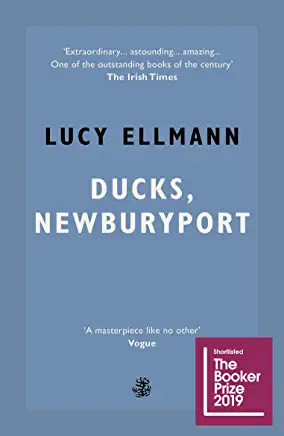
DUCKS, NEWBURYPORT by Lucy Ellmann reviewed by Adèle Geras in conversation with guest Sally Christie


"We agreed we’d learned a huge amount but also that we’d laughed aloud often."

Sally Christie has been a children's book editor and a writer of young fiction. She has also been a goat keeper and a cheese maker, both of which were a lot less stressful. She lives in Cambridgeshire with her husband; they have two grown up children.

Towards the end of March, my friend Sally Christie (author of The Icarus Show and Spirit) wrote to ask me whether I’d heard of a book called Ducks, Newburyport by Lucy Ellmann and whether I’d consider reading it so that she might have someone with whom she could discuss it. Sally thought the length might deter me (1100 odd pages) but I’d not read it up to now for quite another reason. I knew its reputation. It was shortlisted for the Booker Prize in 2019. I'd avoided it because it was written in a ‘stream of consciousness’ style and I’m very bad at that. I do not wish to read Ulysses by James Joyce (we'll return to that) and struggle sometimes with Virginia Woolf.

But Sally is a discerning reader whose judgment I trust, and the Kindle app is very obliging, so I downloaded a free sample. As soon as I’d read that, I bought the rest of the book.

It took me an entire month to read it. I can finish a normal sized book in a few days. So, on a perfect May morning, Sally and I sat in her glorious garden, and encouraged by Mouser the cat and sustained by Sally’s delicious home-made chocolate biscuits, we began to talk about Ducks, Newburyport.

I described my experience of reading it as being like jumping into someone’s head and going round and round on a kind of helter-skelter through every one of her thoughts. The unnamed heroine is a housewife in Ohio, baking cinnamon rolls at the start of the book. She has a husband and children. Her parents are dead, but her relationship with them is still very much alive.

The narrative takes the form of a list, and every separate item begins with the words: The fact that. They return like a refrain, (or less romantically, like bullet points) all through the book. Sally suggested that perhaps Ellmann was in a way laying out evidence for a case she’s making. She imagined a US attorney standing up and putting a whole lot of different facts before the jury. This makes perfect sense to me.

A case for what? We decided it was all sorts of things: the desperate state of so many aspects of life in Ohio in 2019, the weight of a history both blood-soaked, cruel and tragic but also inspirational. The works of Laura Ingalls Wilder figure large. We agreed we’d learned a huge amount but also that we’d laughed aloud often. I saw one thing coming long before it arrived in the book. And we both wondered about what we referred to as ‘the lion bits’.

There are passages scattered through the novel in which the life of a mountain lion, her cubs and their adventures are described. I have to confess I rather skim-read my way though some of these, but we decided that even though they play a part in the plot, especially for one of the characters, they were partly there as a kind of palate cleanser, for anyone who needed a break from rivers and rivers of prose.

We could both see that this book was very carefully put together and worked out. It gives the impression of a torrent erupting naturally from the earth, but in reality it's more like an intricate 18th century water feature: complex in design and spectacular in appearance. A miracle of engineering.

When you reach the end (and there are events. Things happen. People are changed...) you see the world differently. We now both miss our Ohio housewife. I think of her as Lucy, but Lucy Ellmann may or may not resemble her. One thing is true, though: she’s the daughter of Richard Ellmann, biographer of both Oscar Wilde and James Joyce. Perhaps this book is Ellmann’s tribute to Ulysses. Sally said she intends to read that. I do not.

To sum up: we both loved it and are very happy that it’s now part of the furniture of our minds. Mouser is reserving judgement….


Ducks, Newburyport is published by Galley Beggar Press

Monday, 16 May 2022

ROSE DORAN DREAMS by Berlie Doherty: a Q&A session hosted by Adèle Geras


"I decided to rename it because Rose Doran had changed, or my understanding of her had changed."

Berlie Doherty
writes novels, plays, stories, poetry and opera libretti and is translated into over twenty languages. She has written over 60 books,, mostly for children and young adults, Several of her novels have been dramatised for radio, television and the stage. She has won many awards including the Carnegie Medal twice (Dear Nobody and Granny was a Buffer Girl), and the Writers’ Guild award twice (Dear Nobody and Daughter of the Sea), received a Boston Globe-Horn Honor, and was nominated for the Astrid Lindgren award. For adults she has written many radio plays and short stories, and one other novel for adults, requiem.

The Vinegar Jar was first published by Hamish Hamilton in 1994. Berlie has now reissued it, transformed into Rose Doran Dreams. Linda Newbery, Celia Rees and I sent Berlie some questions after we'd all read her book....here they are, followed by a short review by me. Find out more from her website. 
 
Celia:  Did you feel tempted to update the novel in any way?

Berlie: No, I wanted to keep it in the period of late wartime – post war childhood.

Celia: What did you feel happy about from the original novel?

Berlie: All the ’stories’, traditional and invented. I hardly changed a word of any of those, though I did sometimes change the order to point up what was going on in Rose’s real world.

Celia: Was there anything you were itching to change?

Berlie: Gordon’s perception of Rose. I wanted to explain his sexual coldness towards her. I wanted to build up the sense that he adored her but couldn’t touch her. I found Gordon a very interesting character to develop.

And I wanted to change the ending. Interestingly, I wrote different endings for the English edition and the American edition of The Vinegar Jar - and I still wasn’t happy!

Linda: How did it feel to go back to your early work with a view to reshaping it? What made you decide to revise (and rename) rather than simply reissuing the book?

Berlie: It was a strange thing to do. I’ve never read one of my own books from beginning to end before, after the editing process. It’s so long since I wrote The Vinegar Jar that it really felt as if somebody else had written it. I was very sad when Hamish Hamilton took it out of print. It became an e-book, no cover, no publicity, and lay there like a lump of dead wood that was ready to become kindling. I’ve just thought of that and it’s quite a nice pun! Anyway, I decided to revisit it for something to do in lockdown. I felt quite a lot of it, especially in the first half, was underwritten and needed enhancing both in style and in content. Even down to the use of punctuation, it was as basic as that. A friend told me she had no idea what was going on, so I knew I had to put that right. It was a challenge.

When I re-read it I felt I liked the book but that it could be a lot better. Revising it became a major project, I loved doing it, and it really absorbed me.

I decided to rename it because Rose Doran had changed, or my understanding of her had changed. In The Vinegar Jar her stories and imaginings trap her and almost stifle her. She’s looking out on the world that she can’t escape into. In Rose Doran Dreams her stories and imaginings give her freedom and emotional release. Her imagination powers her.

Linda: I like the way you let us fully understand how Rose's longings and frustrations lead to her fantasy with Paedric, but also you allow us to see how strange her behaviour seems to Gordon and Edmund. Was this difficult to pull off?

Berlie: This was one of the things I hadn’t achieved in The Vinegar Jar. Things just happen and aren’t explained. As soon as I thought about Rose Doran being in some sort of psychological breakdown I began to understand her and could find ways of justifying her psychic relationship with Paedric. Also I was able to ask myself questions about her relationship with Gordon and Edmund, the effect on them of her alienation, and their helplessness in trying to make sense of it.

Linda: I felt that Rose was often unkind to Edmund, yet he remains devoted to her and apparently endlessly patient, despite the limitations to his own life. What do you see as his future (if you do?)

Berlie: In The Vinegar Jar he mentions a girlfriend, but the reader hears little about her, as if perhaps he’s just making her up for Rose’s benefit. But in Rose Doran Dreams she’s really there, and we meet her. Like Rose, I would want his future to be with Molly.

Adèle: Rose Doran Dreams moves from being an almost D H Lawrence-like realist story, to containing elements of fairytale and fantasy. How do you think each “strand of thought” (if I can call it that!) enhanced the other?

Berlie: I don’t think one would have worked completely without the other. Rose’s imagination is a kind of psychosis, and I hope she shocks the reader as much as she shocks Gordon with her erotic story of the shivering mountain. It’s as if she can’t help it, and she slips from reality into fantasy without being aware of it or of its effect on others. But as for the realism, although she was a child who loves stories (and who doesn’t!) I needed to show her as being rooted in earth, and not just a dreamy child with her head in the clouds.

Adèle: Some of the ‘realist’ story had such a strong feeling of being true that I wondered whether there was any autobiography in the mix. Can you tell us?

Berlie: Not to my knowledge!

Adèle: I thought parts of the novel were Angela Carteresque. Is she an influence on your work? Can you name other writers who might have had an effect on this book?

Berlie: I can’t actually, though I’m very honoured that you’ve made that connection. The fact is that I love fairy stories, and yes, magic realism, though I didn’t know that term when I wrote TVJ. I do love Angela Carter/Isabel Allende/ Neil Gaiman, Salman Rushdie/Joanne Harris …

But also D H Lawrence (that reference interested me, Adele! Barry Hines/Arthur Miller/ Shelagh Delaney … It’s strange isn’t it, you don’t know when you’re writing something how much, or if at all, you’re affected by your reading.

Adèle: Can you see RDD as a film or play? If so, where would you film it?

Berlie: Yes, a film. It is visual. Or a radio play, for the same reason. And if a film, Edale (where I live). It’s not Edale, many of the geographic features don’t apply to Edale but the railway runs through it (and is an important character in the book) and the caverns and hills of Castleton (the Mam Tor story) lie just beyond it.

Short review:

Berlie is an enormously prolific and successful writer whose prose has two distinct qualities which are blended together perfectly in this latest book. On the one hand, she's a sharp, clear realist writer, bringing historical periods to life in a plain and direct way that speaks straight to the reader. Then there's the lyrical, poetic style which comes to the fore quite often in Rose Doran Dreams. The fairy tale atmosphere of this novel provides an excellent background for what are literally flights of fancy. The writer Angela Carter would have enjoyed reading this book.

Anyone who's read reviews by me knows that I don't like giving away the plot of a novel, and in this case the narrative moves through different iterations of love, and obsession. It centres on children, and our eponymous heroine experiences young love, then an unusual marriage and then a relationship which stretches her emotions (and those of the reader) to the limit. You will end up in a glorious tangle of true and imagined and it's part of the pleasure of the story that you'll be going over it in your head long after you've finished reading it, sorting out what you think has happened or is happening. It's a very visual book...I think it would make a terrific movie.

Monday, 3 May 2021

KLARA AND THE SUN by Kazuo Ishiguro, reviewed by Adèle Geras


"The other critics were right. I’ll join the chorus. It’s a masterpiece."

Adèle Geras
has written books for readers of all ages. Her novel Dangerous Woman, under the pseudonym Hope Adams, is published by Michael Joseph.  Website: www.adelegerasbooks.com
Twitter: @adelegeras


I’ve been an Ishiguro fan since falling in love with his first novel, A Pale View of Hills. I have loved all the novels I’ve read by him but I am not a completist. I have avoided Never Let Me Go, because I know what it’s about and I don’t feel strong enough. I have also not read The Buried Giant because I’m a little allergic to anything Game of Thrones-ish or Tolkienian but I think I may try that now, after having heard Ishiguro talking about it.

Both my daughters had read Klara and the Sun and loved it, so in order to be able to discuss it with them and because it was short and because everyone was saying it was a masterpiece, I overcame my normal aversion to anything AI related and downloaded it to my Kindle.

Aversion to AI? Yes, I’m afraid so…I’m not keen on robots and not particularly interested in them. If anything, I think I’m slightly afraid of them. I admire the achievement that lies behind them. I am in awe of the science and as long as the robots are enlisted to help medical procedures, or build cars I feel safe. But once they can be substituted for humans, I’m a little more wary.

I needn’t have worried. Before I reached the end of the first page, I was bewitched. Completely happy to spend the rest of the story in the head/mind/body of Klara and by the end I was as bereft at parting from her as if she’d been fully human. The main achievement of this novel, I think, is to make the reader accept Klara totally. There’s never a moment when you forget she’s artificial (because she’s been programmed to learn from humans and part of what she’s learned is to have what must be called ‘feelings’ even though we know she is incapable of feelings on one level) but also never a moment when you don’t fully sympathise with her and when you aren’t rooting for her and longing with her for certain outcomes.

I never give spoilers when I write reviews but I can tell you that `Klara is chosen to be a companion for a sick teenager called Josie. She goes to live with the family and also meets the family who live next door and a housekeeper called Melania Housekeeper. Josie’s parents are doing all they can to keep their daughter alive. We suspect she’s ill because she’s been ‘uplifted’…. that’s to say, genetically modified in some way. The boy next door, Rick, has not been ‘uplifted’. The plot is spare but constantly gripping and I’m not going to say any more about it.

What I found most startling and striking is the way Ishiguro manages to make an entire fictional universe from so little. Just from Klara’s very limited perspective, a whole physical world is conjured up, in which the Sun is hugely important. Klara is solar powered so of course she regards the Sun as a kind of deity, but I very quickly became a believer too. It’s very hard not to.

The physical landscape is shown to us through Klara’s eyes, and I found it extraordinarily vivid. No one else I’ve read has mentioned this, but I often felt as though I were in an Edward Hopper painting. There’s one particular scene in a diner in the city which reminded me powerfully of Nighthawks. The field between the house and the Barn appeared in my head like one of those Hopper paintings where the grass grows right up to the front door. Ishiguro describes things in the most unflashy way possible. Klara is telling us what she sees, in a straight and matter of fact manner. That’s it. Also, what becomes striking as we progress through the story is the power of the emotions (that’s the only way I can describe them) that Klara is both seeing around her and experiencing for herself.

Can robots have feelings? I’ve heard Ishiguro say that Klara is designed to copy humans and so copying how they feel and how they express that emotion is part of the programming. It’s so skilfully done that by the end, I was unreservedly invested in Klara and the end…well, I won’t spoil it for new readers. What I will say is: it’s still with me. I can’t forget it. And I have a whole new attitude to the Sun.

The other critics were right. I’ll join the chorus. It’s a masterpiece.


Klara and the Sun is published by Faber.

More Kazuo Ishiguro titles are reviewed here:

The Unconsoled, reviewed by Marcus Berkmann

and The Buried Giant, reviewed by Linda Sargent


Friday, 28 July 2017

FIRST ANNIVERSARY - My Holiday Reading by Adèle Geras


Every summer, when the newspapers give us the reading choices of their great and good contributors and guests, I'm astonished at the height of the brows of everyone who responds. These people are regularly reading works of deep intellectual heft and size. Military histories. Other detailed histories. Serious, difficult novels. Works of sociology and philosophy. Poetry which needs, you'd think, a bit more attention than you can give it from a sun lounger. Or maybe I'm wrong. It's true that my son-in-law was reading MONTCAILLOU (history and small print combined) so I do believe that there are folk who genuinely do this.

I'm of the other persuasion. My holiday involved two long train journeys across Europe so I really needed 'something sensational to read on the train,' in the words of Oscar Wilde. In between, I was spending most of my time beside a pool, so I needed something involving; something that would keep me awake when my eyes were closing in the warmth of the sun. I have to say, I succeeded so well this holiday that I wanted to share my choices with readers of  this blog. 


What these books have in common, (apart perhaps from the Sam Bourne TO KILL THE PRESIDENT, to which I'll return), is that they fulfil the best (to my mind)  definition yet of what a good novel is. It's a story about "proper people in interesting situations." Proper people, to be clear, means human beings rather than spacemen or Daleks or any fantasy creation.  Jodi Picoult has dealt in proper people in not only interesting situations but skewered on the horns of some dreadful dilemmas. In SMALL GREAT THINGS, a black nurse is forbidden by a white supremacist father and mother of a newborn baby to touch him in any way. The baby dies. The nurse has tried to help him, of course, but he dies nonetheless. A court case ensues. Every single issue related to race, medical ethics, personal problems is forensically and very grippingly examined and you do end up knowing and understanding much more than you did at the beginning. I raced through it with great enjoyment but by the end I felt two things. Firstly, it was too long. I think if 100 pages had been trimmed away, it would have been a much better book. Secondly, I thought that the additional material added at the end about how the writer came to write the book was a little redundant. But the characters are well-drawn, and the trial unfolds with tension and surprises along the way. We are in the viewpoints of several people: the nurse, the white supremacist, the defence lawyer for the nurse and so on. I do recommend it, especially for anyone who enjoys a good drama largely set in court.


THE AWKWARD AGE by Francesca Segal is related to the Henry James novel with the same title but I can't talk about that, never having read the James.  I downloaded this because I so enjoyed Segal's first novel, THE INNOCENTS. I was very glad that I had. It's a cracker of a novel. A middle- aged couple is deeply in love. The woman is a widow. The man is divorced from his first wife. The man has a son, the woman has a daughter. Of course, the teenagers are appalled by the obvious passion their parents are displaying. They hate one another. And then, they stop hating one another and begin to love one another instead and this causes no end of dreadful problems. Because this book is mostly about people, their failings, their madnesses, their ambitions, and secret desires, I am not going to spoil what plot there is by telling you any more. There is anguish, humour, understanding, reconciliation, jealousy of various kinds and above all, sparkling, witty, sharp and also deeply clever writing. We know everyone; we sympathise with everyone and at the same time want to slap them very hard. It's like spending time with a family which is horrendous in many ways and yet which is at the same time fascinating and attractive and thankfully not yours! I can't imagine anyone not enjoying this book.


THE PARTY by Elizabeth Day is a very gripping story indeed. It's also about people who in many ways have nothing to recommend them. There are echoes of the Bullingdon Club, and whiffs of resemblances to various people in present day politics. But. But but but...

At the heart of the book are two  character whom we can't help liking, in spite of their many flaws. It's clear from the way the novel is (very beautifully) structured that Something Awful has happened. Martin, the damaged hero, is in a police station. Interspersed with Martin's account of what's happened, and how his whole life has led up to it, comes Lucy, his girlfriend's account of the same story from her point of view. She is writing this account at the behest of a psychiatrist...hmm, you might think and you would be right. The something awful that we're talking about happened at the Party of the title, but there are other awful things that are gradually revealed. I promise you, you will not  be able to put this book down. I raced through it, glued to every sentence. Day is a very elegant writer and even though some of these characters aren't people you'd necessarily want to have next to you on the sun lounger, they are fascinating. Day is a journalist as well as a novelist and this novel is above all, gossipy and in the know....it's terrific.

My final book is a thriller by Sam Bourne who is actually the Guardian writer, Jonathan Freedland. He's a wonderful journalist and often writes articles that are spot on both in style and in substance. I downloaded this because I assume the author knows what he's talking about and  I wanted to see how he'd manage a story about the assassination of someone who bears a very striking resemblance to Donald Trump. All the characters seem to have their equivalents in real life and that was the fascination for me. I have been wondering why no one is suing Sam Bourne but I've   worked it out now. If anyone sues, it's a kind of admission that they know the book is about them. The only possible thing for Trump and his minions to do is to say: "What me, Gov? No resemblance at all..."

All in all, four cracking books for your pleasure. Hope you agree about at least some of them. 

Monday, 3 July 2017

THE LIE OF THE LAND by Amanda Craig, reviewed by Adèle Geras


"The sort of book you want to go back to, once you've raced through it, so that you can linger over details."

After I finished reading this book, words to describe it were tumbling about in my mind.  Here are some of them: abundant, generous, overflowing, detailed, knowledgeable, thrilling, melodramatic, involving, gripping, modern, topical, controversial, political...

But in the end I decided on one word which sums up exactly what this book is. It's VICTORIAN. In the best possible sense, which is to say it's both a page- turner and a primer; a novel full of stuff happening, people getting into every variety of turmoil, and events in the Body Politic informing everything. It takes time over detail, and tells you about things which other books leave out. It's concerned with incomes and the results of the Referendum vote on Brexit but also with feelings between people and describes both with great sensitivity and enormous brio. You come away from it not only knowing about such things as conditions in a Devon pie factory for its workers both foreign  and British, but also having in your mind's eye a beautiful landscape, as well as intimate knowledge of several houses. The book is a cornucopia...that's another word that occurred to me several times while I was reading it.

It starts, perfectly, with a summing- up of the whole subject of the novel in one sentence. Again, this nods to the Victorians and also of course, to Jane Austen: "There is no money and the Bredins can't afford to divorce."

From this situation, which you know straight away, many paths and narrative strands flow towards a very satisfying ending. That's also Victorian. They were not given to ambiguity, or post-modern 'choose your own outcome' stuff.  So you know that, to all intents and purposes, the good will end happily and the bad unhappily. That, as Oscar Wilde said, is what fiction means.

But along the way your heart will be in your mouth for several of the characters. There's an unsolved murder. There are issues of every sort, from housing problems to farming subsidies, to the care of the elderly and the dreadful pain of infertility. There's neglect and love and horror and comparisons of life in London with Dorset life. There's friction between fathers and sons, and stepsons too. There's a glamorous grandmother. A rock star. A slightly spooky teenager who's also a gifted pianist. A Health Visitor, who's the wife of a sheep farmer...and so on. 

At the centre are Quentin and Lottie. He's a journalist, a bit down on his luck now and she's an architect who, like her unfaithful husband, isn't a bit keen on the idea of leaving her work and decamping to the country. Their two girls are young enough to attend the village school, and Lottie's son by another man, Xan, about to apply to university. He's the one who works in Humble's Pie factory. (That pun, too, is worthy of Dickens himself!) Close by are living Quentin's parents. Hugh is a dying poet with a couple of poems that are studied on the syllabus but not much else to show for his writing life...he reckons he's past it. Naomi is a saint, caring for Hugh. 

I could go on. The book teems with characters (Victorian, again.) Some are up to no good. There's been a murder at the cottage where Quentin and Lottie settle...the murderer is still at large. The head was missing from the body when it was found.....need I say more? If you want melodrama, look no further!

I didn't say that it's brilliantly written, but it is. It's the sort of book which you want to go back to, once you've raced through it, so that you can linger over details. It would make the perfect holiday read.

I must add my usual disclaimer: I know the author, but I would not have rushed to review this novel if I didn't genuinely love it. You'll have to trust me on that.

I'm pretty sure that anyone who picks up this book will find it hard to put down, even though (Victorian!) it's quite heavy. A Kindle edition would solve this problem but do buy it in whatever format suits you best. You will not regret it.   

The Lie of the Land is published in hardback by Little, Brown.

Monday, 22 May 2017

SIRACUSA by Delia Ephron, reviewed by Adèle Geras


Monday, 3 April 2017

WIDOWS AND ORPHANS by Michael Arditti, reviewed by Adele Geras


There are certain books - you will know the sort of book I mean - which catch the light. They bring forth reams of newsprint, both real and virtual; they gather prizes; they provide pleasing controversies; they divide opinion; people notice them. There are only a few of these because there's limited space for reviews and the world of those who read reviews is a little one, although also a very pleasant one. The really HUGE books which reach millions of people are the ones which  jump a kind of imaginary barrier and are taken up by those who would ordinarily never read a book, or call themselves 'readers.' I'm thinking of  Girl on the Train or Fifty Shades of Gray or the oeuvre of Dan Brown. 

Those books, the flashy ones that make tons of money and the less flashy but very much garlanded ones which win prizes and column inches, are very few in number. The bestseller lists are instructive in many ways, but what they do not show is the less-good sellers. And these, I have often noticed, are frequently more interesting than their more glittering sisters and brothers further up the charts.

Recently, I took a train across Europe, as is my wont whenever I go on holiday. I am flying phobic and Eurostar and trains through the continent is how I get about. This is an extraordinarily pleasant way to travel and I recommend it, but this is not the place to hold forth about free croissants and lovely scenery. It takes a long time to get anywhere and Kindle comes into its own on a trip like this. The book I read in February on my way to Switzerland and for a day or so after I'd got to my hotel was Widows and Orphans by Michael Arditti. I'd read a review in the Spectator (the only review I saw)  and it sounded just up my street.

I'm not sure that this book was widely noticed. I've not seen it in bookshops. Most people on Amazon enjoyed it very much, and I liked the fact (from the blurb) that it was about a newspaper in a small English seaside town and its editor. I'm fond of books/movies/TV/anything set in the offices of a newspaper. 

Also, I'd once appeared at a reading festival at a school in London and  Michael Arditti was speaking at the same event. I caught sight of him sitting in a Green Room eating sandwiches. I've heard him on Radio 4 from time to time on Saturday Review as one of Tom Sutcliffe's guests, but I've never met him, so for once this is a review from me of a book by someone whom I don't know.  

I realised that the title had a double meaning, too, and patted myself on the back for this. 'Widows' and 'orphans' are terms in printing, as well as meaning what we all know they mean. I thought it was a very clever title. Also, I was drawn to the rather retro cover.

This is a long introduction to what I want to do, which is to recommend this wonderful and unputdownable book to all those who like novels which are about, to quote someone very close to me, "Proper people in interesting situations." 

Duncan Neville is the editor of the Francombe Mercury, the local paper in a small seaside town. The paper has been in his family for generations and he feels a proper pride in it, and the way it has explained, described and recorded the life of the town for a very long time. The paper is now under threat. Because of the internet, all newspapers are feeling nervous. People no longer get their news in this old-fashioned way and Duncan is beleaguered. He's divorced from his wife. His ex-wife has married again and had a daughter, who is disabled. He has a teenage son, too, who gets into teenage-type trouble. His mother lives in the town and she's quite a character. He is friendly with the gay vicar. His enemy, Geoffrey Weedon,  from way back in his schooldays, is a rich, rather vulgar entrepreneurial type, who has always looked down on Duncan, even though Duncan is a much better person.

When Francombe Pier is burned to the ground, Weedon has a plan to open it again as a kind of adult entertainment centre: a sort of sex emporium on stilts. He has the Planning Committee in his pocket, according to some. Opposition to this plan forms one strand of the plot, but there are so many others that it's hard to list them all. Above all, it's Duncan's journey through a turbulent time in his life. We meet his close friends, his colleagues, his mother, and the woman he grows to love. I will not spoil anyone's fun by revealing the end, but it's a novel in which every single character is carefully taken account of. Arditti is interested in the life of the town, in the way the newspaper deals with 'all human life' and he structures the book brilliantly by starting each chapter with an extract from the newspaper itself. This means that by the end, we, too, have grown fond of this publication.

It's written straightforwardly, in plain language, with no posturing, no faux lyricism and this means that the emotional punch of the things that happen to the characters is all the stronger. We get to know and love Duncan through the book, and we are desperately wanting a good outcome for both him and his paper. 

If I were a bookshop, I'd stick a label on the cover saying: satisfaction or your money back, or some such. Please get in touch with this blog on Twitter if you read it and hate it. I'm betting that  almost everyone who picks it up and starts it will love it and thank me for putting them in touch with this brilliant writer who is  not sufficiently appreciated.

Widows and Orphans is published in paperback by Arcadia Books at £8.99. ISBN: 1910050644
£8.99